Adding a bathroom is one of the most useful upgrades a home can get, especially an older Iowa home with only one full bath. The cost, though, depends almost entirely on one thing most homeowners do not think about: how far the new plumbing has to run. This guide breaks down what a bathroom addition costs by type, why plumbing distance drives the price, and what to expect on permits and return.
TLDR: Adding a bathroom in Iowa costs $15,000 to $35,000 for a half bath and $30,000 to $75,000 or more for a full bath addition, depending on where in the home you are adding it and how far new plumbing has to run. All bathroom additions require a permit in Iowa, and the location of existing plumbing lines is the single biggest cost driver. Here is what to expect by addition type.
You need another bathroom. Maybe the morning rush has become a bottleneck, maybe you are finishing a basement, or maybe you want a primary suite with its own bath. Whatever the reason, the first question is what it costs, and the answers online rarely explain why the range is so wide.
The reason is plumbing. A bathroom near your existing plumbing is far cheaper than one on the opposite side of the house or in a basement that needs concrete cut. The fixtures and finishes matter, but the distance the water and drain lines must travel is the factor that moves the budget most.
Below, we cover the types of bathroom additions and what each costs, why plumbing distance is the biggest driver, the permit requirements, the return on each type, and what to ask before you get a quote. By the end, you will know what to budget for your specific situation.
Types of Bathroom Additions and What Each Costs in Iowa
Bathroom additions come in several types, and the cost rises with size, fixtures, and plumbing complexity. Naming your type is the first step to a real budget.
A half bath, with just a toilet and sink, is the simplest. A full bath adds a tub or shower, which means more plumbing and ventilation, and the shower-or-tub value guide can help you choose. A primary suite bathroom is the most involved, with premium fixtures and finishes. A basement bathroom depends heavily on whether the slab was already roughed in for plumbing. Because a new bathroom often extends or reconfigures the home, it follows the same care as any home addition project. These are planning estimates, and actual costs vary by scope, location in the home, and current pricing.
The table below shows typical ranges by type.
Table 1: Bathroom addition cost by type in Iowa (2026, planning estimates)
| Addition type | Typical cost range | Main cost driver |
|---|---|---|
| Half bath (toilet, sink) | $15,000 to $35,000 | Plumbing distance |
| Full bath (tub or shower) | $30,000 to $65,000 | Plumbing and ventilation |
| Primary suite bathroom | $50,000 to $120,000+ | Premium fixtures and finishes |
| Basement bath, roughed in | $8,000 to $20,000 | Existing rough-in |
| Basement bath, not roughed in | $15,000 to $35,000 | Cutting the slab |
Use these as a starting point, not a quote. Our guide to adding a bathroom and its costs and ROI covers the decision in depth, our Central Iowa bathroom remodeling cost guide sets the fixture-and-finish ranges, and our bathroom remodeling service page explains how we approach the work. For a basement bath specifically, our basement bathroom cost guide breaks down the rough-in question.
The Biggest Cost Driver: Plumbing Distance
Here is the factor that surprises homeowners most. Every foot of new drain line adds cost, and the path that line takes can double a budget.
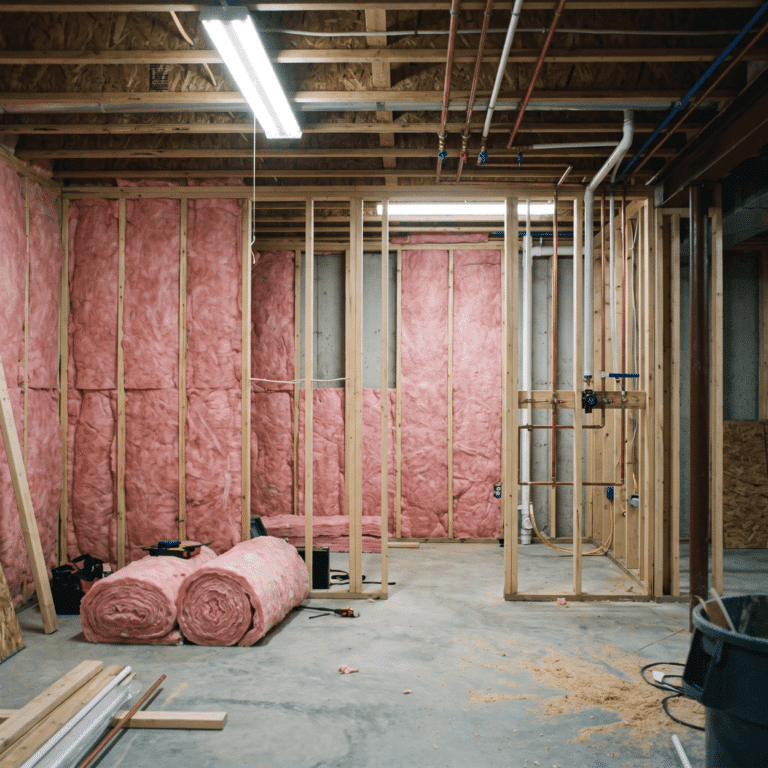
Above-grade plumbing, where the new bathroom sits near existing lines on a main floor, is the most straightforward. Below-slab plumbing in a basement is the most expensive, because it requires jackhammering the concrete floor to run drain lines, which commonly adds $2,000 to $6,000. Running new supply lines all the way from the main stack costs more than tying into nearby lines. The closer your new bathroom is to existing plumbing, the less you pay.
The table below shows the cost impact of plumbing scenarios.
Table 2: Plumbing distance cost impact (planning estimates)
| Scenario | Relative cost | Why |
|---|---|---|
| Near existing stack, above grade | Lowest | Short runs, easy access |
| Far from stack, above grade | Moderate | Longer drain and supply runs |
| Basement, slab roughed in | Lower | Rough-in already exists |
| Basement, slab not roughed in | Highest | Jackhammering adds $2,000 to $6,000 |
The takeaway: the location of your new bathroom relative to existing plumbing is the single biggest lever on cost, so a contractor needs to see the space to quote it. A primary suite bath sits at the top of the range, as our primary suite bathroom cost and ROI guide explains.
Permit Requirements for Bathroom Additions in Iowa
Every bathroom addition needs permits. There is no size exemption, and plumbing work carries its own requirement.
All bathroom additions require both a plumbing permit and a building permit in Iowa. Importantly, plumbing work must be performed by a licensed Iowa plumber. While Iowa registers general contractors with DIAL rather than licensing them, plumbers are licensed separately by the state, and your registered contractor coordinates that licensed trade work. Many Central Iowa communities use a third-party inspection provider, Veenstra & Kimm, now part of Kleinfelder, which handles inspections for dozens of area cities.
The table below shows permit needs by addition type.
Table 3: Permit requirements by bathroom addition type
| Addition type | Permits required |
|---|---|
| Half bath | Building plus plumbing permit |
| Full bath | Building plus plumbing permit |
| Primary suite bath | Building plus plumbing, sometimes electrical |
| Basement bath | Building plus plumbing permit |
The takeaway: every bathroom addition needs a building and plumbing permit, and the plumbing must be done by a licensed plumber, so budget time for review. Iowa adopted the 2024 International Residential Code under Iowa Administrative Code 481-301.8, and you can confirm a contractor is registered with Iowa DIAL and verify that registration before hiring.
ROI by Bathroom Addition Type
A bathroom addition can add real value and function, though the return varies by type and neighborhood. Industry data suggests adding a needed bathroom is among the stronger home improvements, but these figures are illustrative and not financial advice, and actual returns vary by market and project quality.
A half bath on the main floor tends to return well in Iowa, especially in a home that has only one full bath, because it solves a real daily problem. A full bath addition also tends to return well. A primary suite bath varies more, since its value depends on the neighborhood’s price ceiling. A basement bath returns best when the basement is finished or will be finished, adding usable living space.
The table below compares the types on return.
Table 4: ROI considerations by bathroom addition type
| Addition type | Return tendency | Best when |
|---|---|---|
| Half bath, main floor | Strong | Home has only one full bath |
| Full bath | Strong | Adds a needed bathroom |
| Primary suite bath | Varies | Within the neighborhood price ceiling |
| Basement bath | Good | Basement is or will be finished |
The takeaway: a bathroom that solves a real shortage, like a second bath in a one-bath home, tends to return best, while premium additions depend on the neighborhood. National construction cost data from the U.S. Census Bureau shows how much plumbing and structure drive a project budget.
What to Ask Before Getting a Bathroom Addition Quote
A few questions up front make your quote far more accurate. They all center on plumbing, electrical, and code.
Ask where the nearest existing stack is, since that distance drives the drain-line cost. Ask whether your basement slab is already roughed in for a bathroom, which can cut the cost dramatically. Ask whether your electrical panel has capacity for a new bathroom circuit, since a ventilation fan and lighting need power. And ask whether the space is large enough to meet Iowa code minimums for a bathroom. A registered contractor can answer these after a walkthrough, and proper ventilation matters in Iowa’s humidity, as the Department of Energy’s guidance on moisture and air sealing explains. If your addition extends the home’s footprint, frost-depth footings of at least 42 inches apply, per the IRC foundation chapter.
These illustrative scenarios show how bathroom additions play out across the metro. They are examples, not specific Busy Builders projects, and your costs will vary.
Illustrative scenario, half bath in Ankeny: A homeowner adds a half bath on the main floor of an Ankeny home, near the existing kitchen plumbing. The short plumbing run keeps the project around $22,000, solving the one-bathroom bottleneck.
Illustrative scenario, full bath above a garage in Johnston: A family adds a full bath to a bonus room above the garage in Johnston. Running new supply and drain lines up to the space, plus ventilation, brings the project to about $52,000.
Illustrative scenario, basement bath on roughed-in plumbing in Norwalk: A homeowner in Norwalk adds a basement bathroom where the slab was already roughed in during construction. Because no concrete cutting is needed, the project comes in around $14,000.
Frequently Asked Questions
Q: How much does it cost to add a bathroom in Iowa? It depends on the type and the plumbing. A half bath runs about $15,000 to $35,000, a full bath about $30,000 to $75,000 or more, a primary suite bath $50,000 to $120,000 or more, and a basement bath $8,000 to $35,000 depending on whether the slab is roughed in. The biggest driver is how far new plumbing must run. These are planning estimates, so get an itemized quote after a walkthrough of your space.
Q: Do I need a permit to add a bathroom in Iowa? Yes. Every bathroom addition requires both a building permit and a plumbing permit in Iowa, regardless of size. The plumbing work must be performed by a licensed Iowa plumber, since plumbers are licensed separately from registered general contractors. Your registered contractor pulls the permits and coordinates the licensed trades and inspections. Confirm the specific requirements with your city before work begins.
Q: Is it cheaper to add a bathroom in the basement or on the main floor? It depends on the rough-in. A basement bathroom is cheapest when the slab was already roughed in for plumbing, sometimes $8,000 to $20,000. If the slab is not roughed in, the cost to jackhammer and run drain lines can push it to $15,000 to $35,000, similar to a main-floor bath. A main-floor bath near existing plumbing is also relatively affordable. The deciding factor is the plumbing rough-in and distance.
Q: How long does a bathroom addition take in Iowa? A bathroom addition typically takes several weeks to a few months, depending on the type and plumbing complexity. A simple half bath near existing lines is faster, while a basement bath that needs slab work or a full bath far from the stack takes longer. Permit review adds time before construction starts. Ask your contractor for a phase-by-phase timeline for your specific addition so you can plan around it.
Key Takeaways
Cost tracks type and plumbing
- Half bath: about $15,000 to $35,000; full bath: about $30,000 to $75,000 or more.
- Primary suite bath: $50,000 to $120,000 or more.
- Basement bath: $8,000 to $35,000 depending on the rough-in.
Plumbing distance is the biggest driver
- A bathroom near existing lines costs far less.
- Below-slab plumbing adds $2,000 to $6,000 for concrete cutting.
- A roughed-in basement slab cuts cost dramatically.
Permits and licensed plumbing are required
- Every bathroom addition needs a building and plumbing permit.
- Plumbing must be done by a licensed Iowa plumber.
- Your registered contractor coordinates the trades and inspections.
Return depends on what you solve
- A second bath in a one-bath home tends to return well.
- A primary suite bath depends on the neighborhood ceiling.
- A basement bath returns best when the basement is finished.
Ready to Plan Your Bathroom Addition?
You now know what a bathroom addition costs in Iowa, why plumbing distance drives the price, and what to expect on permits and return. The next step is a contractor who will walk your home and give you an accurate, itemized estimate.
Busy Builders has completed 1,285+ projects across Central Iowa since 2020. We bring transparency, local code knowledge, and straight answers to every project. Here is what working with us looks like:
- Free consultation and a walkthrough to locate your plumbing
- Clear, itemized estimates with no surprises
- A registered Iowa contractor coordinating licensed plumbers and electricians
- Permits pulled and inspections scheduled for you
- Written warranty on workmanship (details provided in your contract)
Ready to move forward? Contact us today.
Call: 844-435-9800
Website: https://busybuildersiowa.com/
We serve West Des Moines and communities across Central Iowa.
Disclaimer: This article is for general information and is not project-specific advice. Cost figures are planning estimates that vary by scope, materials, plumbing location, and current pricing. Permit requirements vary by city and jurisdiction; verify current requirements with your local building authority before starting any project. Plumbing work must be performed by a licensed plumber. ROI and resale figures are illustrative and not financial advice; actual returns vary by market and project quality. No specific outcomes are guaranteed. Consult a registered contractor, and the appropriate licensed subcontractors for plumbing, electrical, and heating work, for guidance specific to your project.
Busy Builders | Full-Service Construction and Remodeling | Serving Central Iowa Since 2020