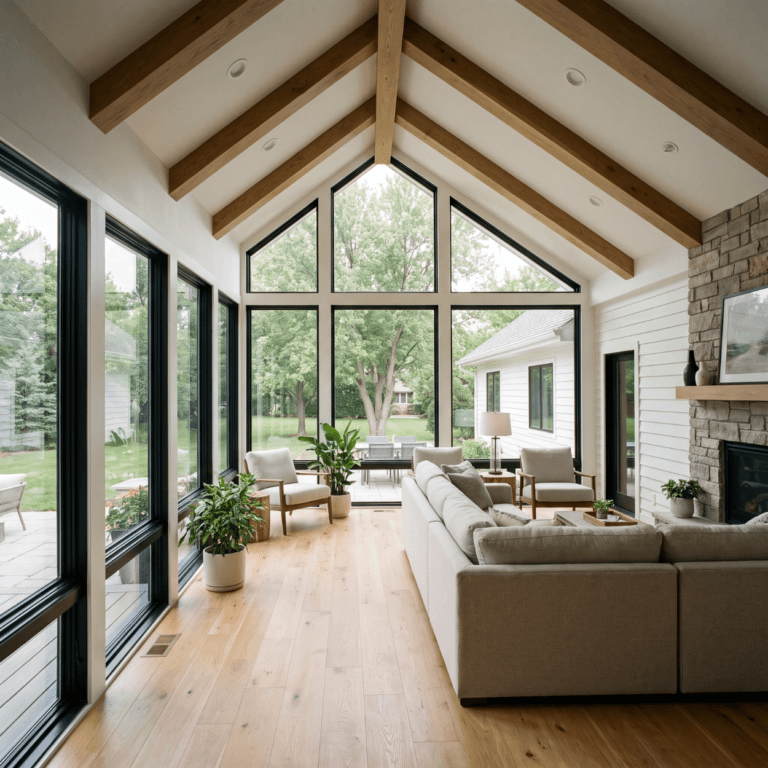
A whole house remodel is one of the largest investments a homeowner makes, and the price swings widely depending on what you mean by “whole house” and where in Iowa you live. This guide breaks down what a whole house remodel costs across the major Central Iowa cities, what drives the differences, and how to budget so the project comes in close to your number.
TLDR: A whole house remodel in Iowa costs $80 to $200 or more per square foot depending on scope and city. A cosmetic refresh of a 1,500 square foot home in Ames runs $60,000 to $90,000, while a full gut renovation of the same home in West Des Moines can reach $200,000 to $300,000. Labor costs, permit timelines, and contractor availability vary meaningfully across Iowa cities. Here is the breakdown.
You are looking at your home and seeing everything you want to change: the dated kitchen, the cramped bathrooms, the closed-off layout. Then you start pricing it and the numbers are all over the map. One source says $50,000, another says $250,000, and neither tells you why.
The reason is that “whole house remodel” is not one project. It ranges from a cosmetic refresh to a full gut to the studs, and the cost difference between them is enormous. On top of that, what you pay depends on your city, because labor, permits, and even the age of the local housing stock all vary across Iowa.
Below, we define the three scope levels, break down costs city by city, explain what drives the differences, cover permits and Iowa-specific factors, and show you how to budget. By the end, you will know which scope fits your goals and what it should cost where you live.
What “Whole House Remodel” Means in Iowa
Before you get a single quote, decide which scope you actually want. The word means three very different projects, and pricing only makes sense once you pick one.
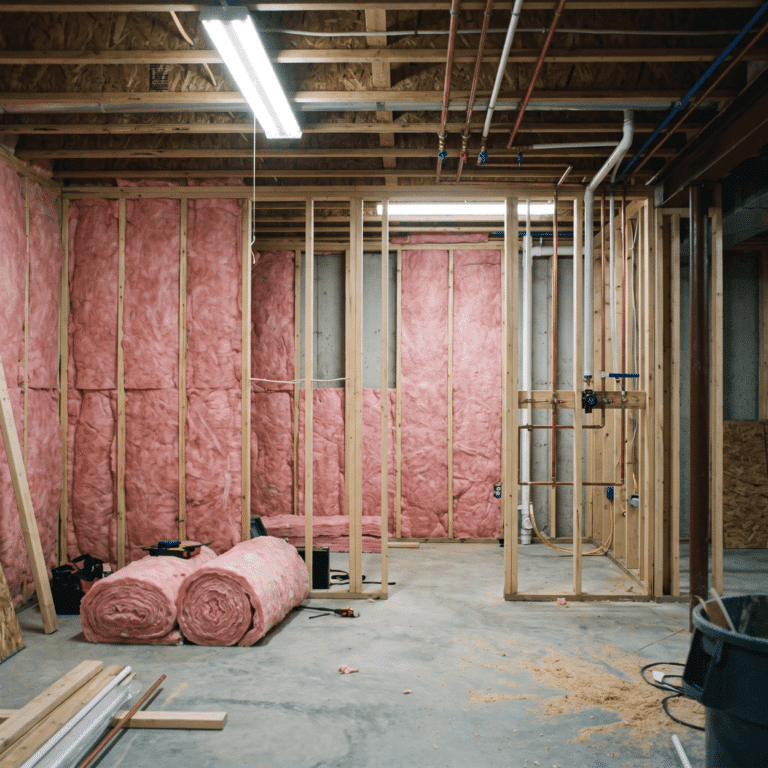
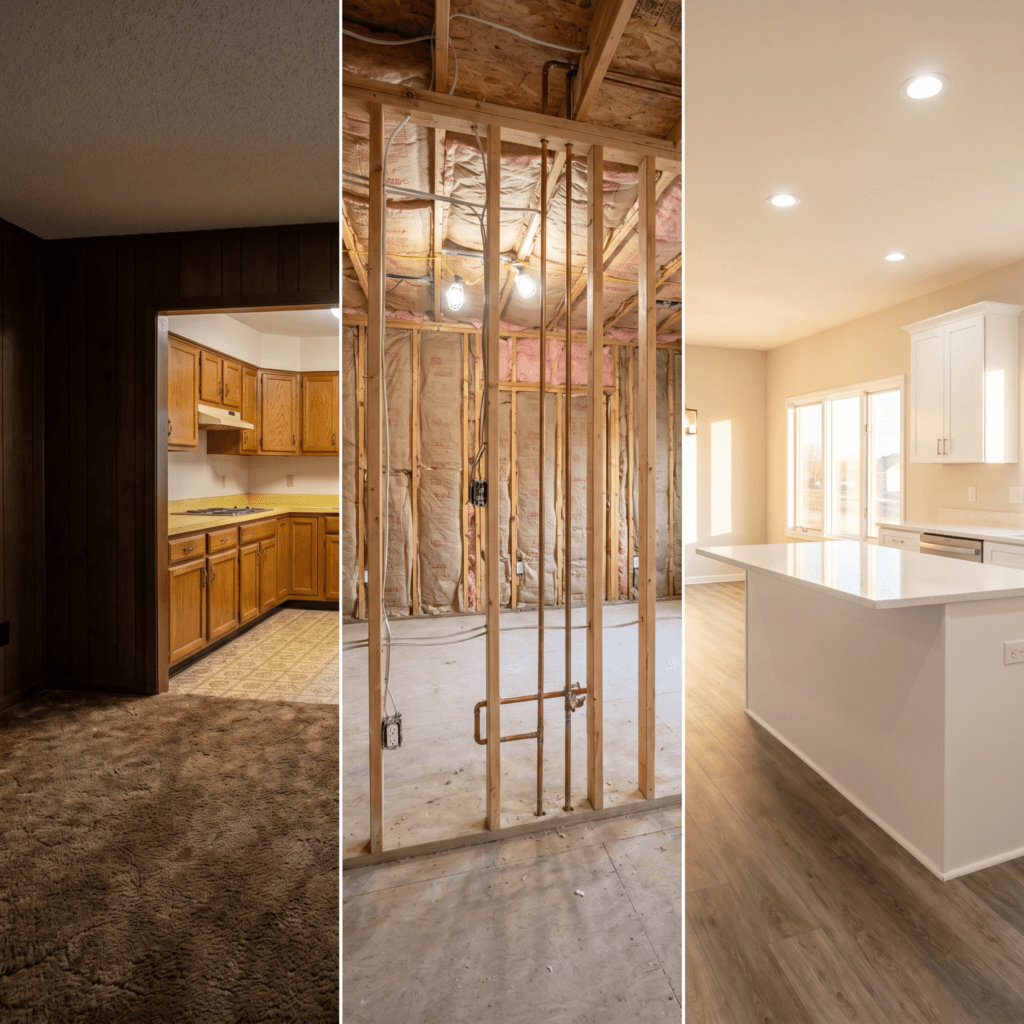
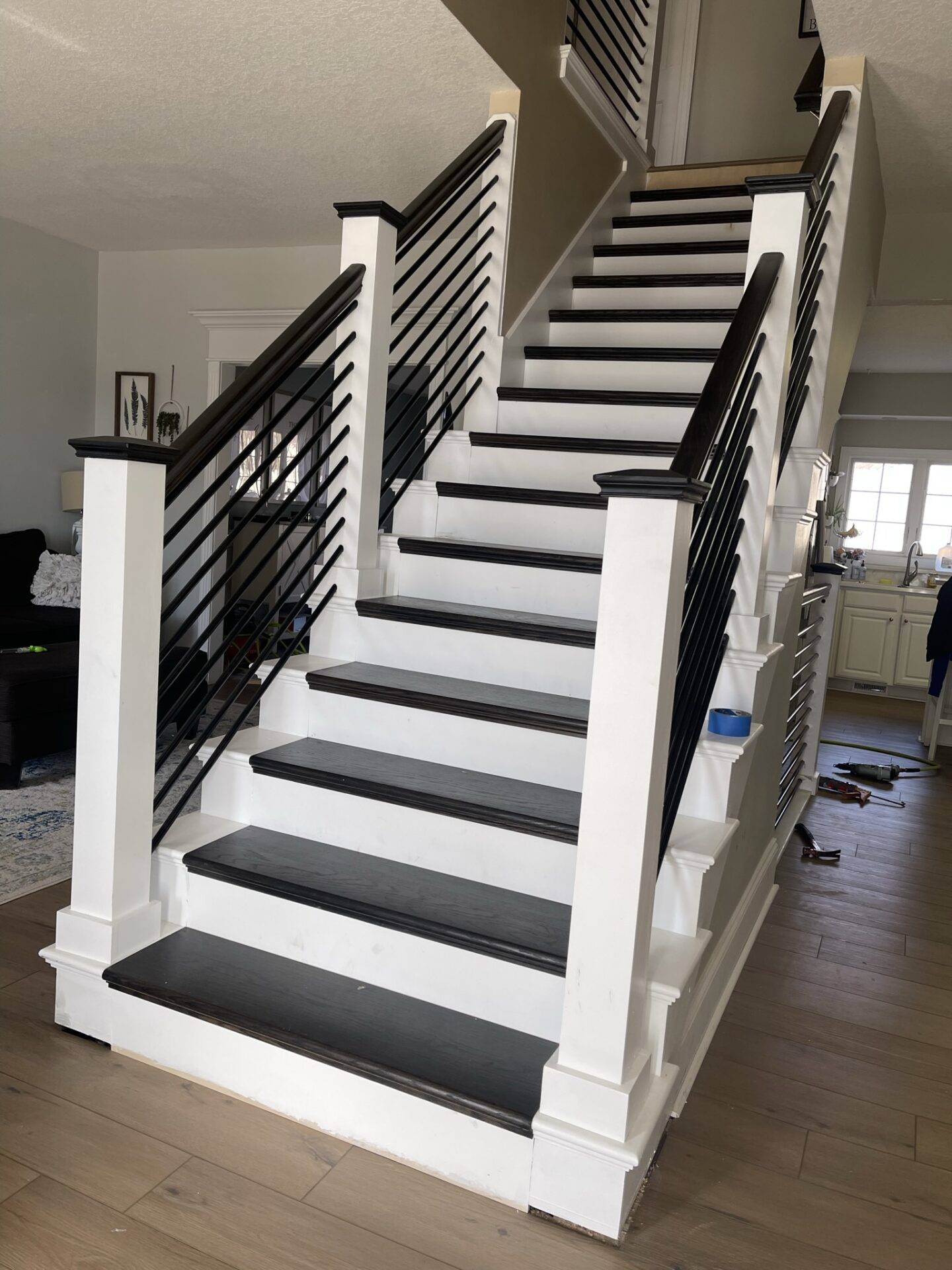
A cosmetic refresh covers paint, flooring, fixtures, and finishes, with no structural work. A moderate remodel adds a kitchen, bathrooms, and some structural changes, which is what most Iowa homeowners actually mean when they say “whole house.” A full gut renovation takes the home down to the studs, with new mechanical, electrical, and plumbing systems and often a new layout.
The table below compares the three.
Table 1: Whole house remodel scope levels
| Scope | What it includes | Structural work |
|---|---|---|
| Cosmetic refresh | Paint, flooring, fixtures, finishes | None |
| Moderate remodel | Kitchen, baths, some structural | Some |
| Full gut renovation | Down to studs, new MEP, new layout | Extensive |
The takeaway: naming your scope is the first step to a real budget, because a cosmetic refresh and a full gut are different projects at different prices. Our guide comparing a gut renovation versus a cosmetic refresh goes deeper on the distinction.
Pro Tip 1: Decide your scope before you call a single contractor. A quote for “a whole house remodel” is meaningless until everyone is pricing the same scope, so define it first and your quotes become comparable.
Pro Tip 2: Be honest about whether you need a full gut or a moderate remodel. Many homeowners get the look and function they want from a moderate remodel at a fraction of a full gut’s cost.
Whole House Remodel Costs by Iowa City (2026)
Cost varies across Central Iowa because labor markets and housing stock differ. The Des Moines metro generally runs higher than smaller cities, and West Des Moines and Johnston tend to carry higher labor costs than Ames or Marshalltown.
The table below shows typical ranges for a 1,500 square foot home by city and scope. These are planning estimates, and actual costs vary by scope, materials, home condition, and current pricing.
Table 2: Whole house remodel cost by city and scope, 1,500 sq ft home (2026, planning estimates)
| City | Cosmetic refresh | Moderate remodel | Full gut renovation |
|---|---|---|---|
| Ames | $60,000 to $90,000 | $110,000 to $160,000 | $170,000 to $250,000 |
| Des Moines | $65,000 to $95,000 | $120,000 to $170,000 | $180,000 to $270,000 |
| Ankeny | $65,000 to $95,000 | $120,000 to $175,000 | $185,000 to $275,000 |
| Waukee | $70,000 to $100,000 | $125,000 to $180,000 | $190,000 to $285,000 |
| Johnston | $70,000 to $105,000 | $130,000 to $185,000 | $195,000 to $295,000 |
| West Des Moines | $72,000 to $108,000 | $135,000 to $190,000 | $200,000 to $300,000 |
Use these as a starting point, not a quote. The ranges work out to roughly $80 to $200 or more per square foot depending on scope. Our guide to whole house remodeling costs in Des Moines covers that market in depth, and our home remodeling service page explains how we approach these projects.
Pro Tip 3: Do not assume the suburb with the highest home values is the most expensive to remodel in. Labor availability and the age of your specific home often matter more than the city’s reputation, so get local quotes.
Pro Tip 4: If you live in a smaller Iowa city, confirm contractor availability early. Fewer crews can mean longer waits, which is a scheduling cost even when the labor rate is lower.
What Drives Cost Differences Across Iowa Cities
Three factors explain most of the city-to-city variation. Understanding them helps you read your own quote.
The first is labor market tightness. The Des Moines metro has more crews but also more demand, while rural Iowa may have lower rates but fewer available contractors. The second is permit timelines. West Des Moines and Johnston commonly run six to twelve weeks for review on larger projects, while some rural Iowa jurisdictions run two to four weeks. The third is the age of the housing stock. Older homes, like many in the Ames university area, often have pre-1960 plumbing and electrical that must be updated during a remodel, which adds cost a newer home avoids.
The table below summarizes the drivers.
Table 3: What drives city-to-city cost differences
| Factor | Higher-cost areas | Lower-cost areas |
|---|---|---|
| Labor market | Tight demand in the metro | Lower rates, fewer crews rurally |
| Permit timeline | 6 to 12 weeks in some suburbs | 2 to 4 weeks in some rural areas |
| Housing stock age | Older homes need system updates | Newer homes need fewer updates |
The takeaway: the city matters, but the age and condition of your specific home often matters more, so a walkthrough beats a generic per-square-foot number. Our guide to the hidden costs in whole house remodels in Iowa covers the surprises that drive a budget up.
Pro Tip 5: Ask your contractor how your city’s permit timeline affects the schedule. A six-to-twelve-week review window is part of your project length, and knowing it up front prevents a frustrating wait.
Pro Tip 6: If your home was built before 1960, budget for the possibility of updating plumbing and electrical. Opening the walls of an older Iowa home often reveals systems that should be replaced while access is easy.
Permit Requirements for Whole House Remodels in Iowa
A whole house remodel almost always needs permits, and a full gut needs several. Knowing what is required keeps the project legal and on schedule.
Any structural, electrical, plumbing, or HVAC work requires a permit in Iowa. A full gut renovation typically needs a general building permit plus separate plumbing, electrical, and mechanical permits, each tied to licensed trade work. Your registered contractor pulls these and coordinates the inspections. Many Central Iowa communities use a third-party inspection provider, Veenstra & Kimm, now part of Kleinfelder, which handles inspections for dozens of area cities, and your contractor schedules those visits.
The table below shows permit needs by scope.
Table 4: Permit requirements by whole house remodel scope
| Scope | Permits typically required |
|---|---|
| Cosmetic refresh | Often none, if no systems change |
| Moderate remodel | Building plus trade permits for the work done |
| Full gut renovation | Building plus separate plumbing, electrical, mechanical |
The takeaway: the deeper the remodel, the more permits it needs, so budget time for review and let your registered contractor manage it. Iowa adopted the 2024 International Residential Code, effective September 10, 2025, under Iowa Administrative Code 481-301.8, and you can confirm a contractor is registered with Iowa DIAL before hiring.
Pro Tip 7: Confirm your contractor pulls every required permit, not just the general building permit. A full gut needs separate trade permits, and missing one can stall an inspection and the whole project.
Pro Tip 8: Verify your contractor’s DIAL registration yourself before signing. You can check the state’s records in minutes, and it confirms you are hiring a contractor Iowa recognizes.
Iowa-Specific Factors That Affect Whole House Remodel Costs
Iowa’s climate, code, and older housing add factors a national cost estimate misses. Each can affect your budget.
Radon belongs on the list. All of Iowa sits in EPA Radon Zone 1, the highest category, and the Iowa Radon Survey found that as many as 5 in 7 Iowa homes test above the EPA action level. If your remodel opens up the basement, it is the right time to add radon mitigation to the scope, commonly in the range of $800 to $2,500 depending on the system. Frost depth matters for any foundation work, since Iowa footings must reach below the frost line, at least 42 inches, as detailed in the IRC foundation chapter.
Older Iowa homes carry their own surprises. Knob-and-tube wiring is common in homes built before 1950, and galvanized plumbing in homes built before 1970. Both should be evaluated when the walls are open, because replacing them now is far cheaper than later. National construction cost data from the U.S. Census Bureau shows how much systems and structure drive a remodel budget.
Pro Tip 9: If your remodel opens the basement, add radon mitigation to the scope while access is easy. With all of Iowa in Zone 1, it is a smart, low-cost addition when the work is already underway.
Pro Tip 10: In a pre-1950 home, ask your contractor to check for knob-and-tube wiring early. Finding it after finishes are installed is the expensive way to discover it, so evaluate it while the walls are open.
How to Budget a Whole House Remodel in Iowa
A whole house budget that holds has two features: a real contingency and a smart order of operations. Most budgets that blow up were missing one or both.
Hold a contingency of 15 to 20 percent for any whole house project, because opening walls in an older home reveals surprises. Then sequence the work correctly: address mechanical, electrical, and plumbing before finishes, and structural before cosmetic, so you never tear out new work to fix something behind it. When the budget is limited, prioritize the systems and structure that are expensive to redo later, and phase the cosmetic work over time.
The table below offers a budgeting framework by project size.
Table 5: Contingency and budgeting guide by project size (planning estimates)
| Project size | Suggested contingency | Priority order |
|---|---|---|
| Cosmetic refresh | 10 to 15 percent | Finishes, then decor |
| Moderate remodel | 15 percent | Systems, then kitchen and baths, then finishes |
| Full gut renovation | 15 to 20 percent | Structure, MEP, then finishes |
The takeaway: budget the contingency you hope not to use, and spend on what is hardest to redo first. Our guide to preparing your Iowa home for a remodel walks through getting ready, and our look at interior remodeling in Des Moines covers what homeowners often get wrong.
Pro Tip 11: Sequence MEP and structural work before finishes, always. The most painful overrun is tearing out new drywall or flooring to fix wiring or plumbing that should have been done first.
Pro Tip 12: If your budget is tight, phase the project rather than cutting quality. Doing the systems and structure now and the cosmetic finishes later protects the parts that are expensive to redo, while letting you spread the cost. For the full picture, our home remodeling service page explains how we plan phased projects.
These illustrative scenarios show how budgets play out across the metro. They are examples, not specific Busy Builders projects, and your costs will vary.
Illustrative scenario, cosmetic refresh in Ames: A homeowner refreshes a 1,400 square foot home in Ames with new paint, flooring, lighting, and fixtures, keeping the layout and systems. The project comes in around $72,000, with no structural work and a short timeline.
Illustrative scenario, moderate remodel in Ankeny: A family does a moderate remodel of an 1,800 square foot home in Ankeny, updating the kitchen and bathrooms and opening one wall. With trade permits and quality finishes, the project lands near $145,000.
Illustrative scenario, full gut in West Des Moines: A couple takes a 2,000 square foot home in West Des Moines down to the studs, with all new systems, a new layout, and high-end finishes. The full gut, with separate building and trade permits, reaches about $260,000.
Frequently Asked Questions
Q: How much does a whole house remodel cost in Iowa? It depends heavily on scope and city. A cosmetic refresh of a 1,500 square foot home runs roughly $60,000 to $108,000 depending on the city, a moderate remodel $110,000 to $190,000, and a full gut renovation $170,000 to $300,000. That works out to about $80 to $200 or more per square foot. These are planning estimates, so define your scope and get three itemized quotes for your specific home and city.
Q: Is it cheaper to remodel in Ames vs. Des Moines? Often slightly, on labor, but the gap is smaller than people expect, and the age of your specific home can erase it. Ames and the metro draw from overlapping labor markets, and older Ames homes near the university often need plumbing and electrical updates that add cost. The city matters less than your home’s condition and scope. Get local quotes rather than assuming one city is always cheaper.
Q: Do I need multiple permits for a whole house remodel in Iowa? Usually, yes, especially for a full gut. A full gut renovation typically needs a general building permit plus separate plumbing, electrical, and mechanical permits, each tied to licensed trade work. A cosmetic refresh with no system changes may need none. Your registered contractor pulls the permits and coordinates inspections. Confirm which permits your project needs with your city before work begins.
Q: What should I remodel first in an Iowa whole house project? Start with the work that is hardest and most expensive to redo: structural changes and the mechanical, electrical, and plumbing systems, before any finishes. Doing finishes first risks tearing them out to fix something behind the walls. If your budget is limited, phase the project, completing systems and structure now and cosmetic work later. A registered contractor can help you sequence the work to protect your investment.
Q: How long does a whole house remodel take in Iowa? Timelines vary with scope and your city’s permit window. A cosmetic refresh might take a few weeks, a moderate remodel a few months, and a full gut renovation six months or more. Permit review adds time, running two to four weeks in some rural areas and six to twelve weeks in some suburbs. Ask your contractor for a phase-by-phase timeline, and see our guide to the whole house remodeling timeline in Iowa for detail.
Key Takeaways
Scope defines the cost
- Cosmetic refresh, moderate remodel, and full gut are different projects.
- Most homeowners mean “moderate” when they say “whole house.”
- Define your scope before getting any quotes.
City affects the price, but home condition matters more
- The metro generally runs higher than smaller cities.
- West Des Moines and Johnston carry higher labor costs than Ames.
- An older home’s systems can outweigh any city difference.
Permits scale with scope
- A full gut needs building plus separate trade permits.
- Review runs 2 to 4 weeks rurally, 6 to 12 in some suburbs.
- Your registered contractor pulls them and schedules inspections.
Iowa factors add cost
- All of Iowa is Radon Zone 1; add mitigation if the basement opens.
- Frost-depth footings of at least 42 inches affect foundation work.
- Older homes may have knob-and-tube wiring or galvanized plumbing.
Budget for surprises and sequence smartly
- Hold a 15 to 20 percent contingency on a whole house project.
- Do systems and structure before finishes.
- Phase the work rather than cutting quality.
Ready to Plan Your Whole House Remodel?
You now know what a whole house remodel costs across Iowa, what drives the city-to-city differences, and how to budget for it. The next step is a contractor who will walk your home and give you an honest, itemized estimate for your scope and city.
Busy Builders has completed 1,285+ projects across Central Iowa since 2020. We bring transparency, local code knowledge, and straight answers to every project. Here is what working with us looks like:
- Free consultation and a walkthrough of your home
- Clear, itemized estimates with no surprises
- A registered Iowa contractor handling permits and inspections
- Coordination with licensed subcontractors for electrical, plumbing, and heating work
- Written warranty on workmanship (details provided in your contract)
Ready to move forward? Contact us today.
Call: 844-435-9800
Website: https://busybuildersiowa.com/
We serve West Des Moines and communities across Central Iowa.
Disclaimer: This article is for general information and is not project-specific advice. Cost figures are planning estimates that vary by scope, materials, home condition, and current pricing. Permit requirements vary by city and jurisdiction; verify current requirements with your local building authority before starting any project. ROI and resale figures are illustrative and not financial advice; actual returns vary by market and project quality. Radon levels vary by home; the Iowa Radon Survey reports that as many as 5 in 7 Iowa homes test above the EPA action level, and testing is recommended when a project opens the basement. No specific outcomes are guaranteed. Consult a registered contractor, and the appropriate licensed subcontractors for electrical, plumbing, and heating work, for guidance specific to your project.
Busy Builders | Full-Service Construction and Remodeling | Serving Central Iowa Since 2020