Last updated October 2026
A whole home remodel in Des Moines is priced room by room, not with one magic number per square foot. This guide shows the planning figures we publish for kitchens, bathrooms and additions, plus the city’s current permit fees. It shows what changes when a refresh turns into a full gut, then covers lead-safe rules for older homes and the main ways homeowners pay.
TLDR: Build a whole home remodel budget from its rooms. Kitchens start at about $250 per square foot, and additions start at about $300 per square foot. A typical bathroom remodel without moving much runs about $15,000 to $20,000 in our quotes. Des Moines charges $154.50 for a renovation permit plus $77.25 for each trade permit. Hold a contingency for what older walls hide.
You want the whole house updated, and every online calculator gives you a different number. That is because “whole home remodel” can mean new paint and floors, or it can mean opening every wall to the studs.
The honest way to price it is to add up the rooms you are changing. Then add the permits, the trade work and a cushion for surprises.
Below you will find our published starting points and the 2026 Des Moines permit fees. You will also see when permits kick in and the questions that keep a big project on budget.
How Much Does a Whole Home Remodel Cost in Des Moines?
A whole home remodel in Des Moines costs the sum of its rooms, and the kitchen and bathrooms carry the largest figures we publish. Our kitchen remodeling starts at about $250 per square foot. A typical three-quarter to full bathroom remodel that does not move much lands around $15,000 to $20,000 in our quotes.
Those are planning estimates, not quotes. Actual costs vary by scope, materials, complexity and location.
The table lists the building blocks we can stand behind, with the source of each figure. Rooms like flooring and paint have no standard number because they depend entirely on your selections.
| Line item | Planning figure | Where the figure comes from |
|---|---|---|
| Kitchen, 150 square feet | From about $37,500 | Busy Builders starting price, about $250 per sq ft |
| Hall bath facelift | About $3,000 to $5,000 | Busy Builders quoted range |
| Three-quarter or full bath, layout mostly kept | About $15,000 to $20,000 | Busy Builders quoted range |
| Large primary bathroom | Up to about $60,000 | Busy Builders quoted range |
| Addition, if you add space | From about $300 per sq ft | Busy Builders starting price |
| Des Moines renovation permit | $154.50 | City fee schedule, effective Jan 1, 2026 |
| Each trade permit (electrical, plumbing, mechanical) | $77.25 | City fee schedule, effective Jan 1, 2026 |
| Flooring, paint, trim and lighting | Priced from your selections | – |
Among the rooms you remodel, the kitchen and bathroom lines carry the biggest numbers. Permit fees are small by comparison, but they still belong in the plan.
Pro Tip 1: Price the kitchen first. At about $250 per square foot to start, its size and finish level will shape the rest of the budget.
Pro Tip 2: Decide which bathrooms will move plumbing. A bath that keeps its layout stays near the typical band, while a large primary bath can climb toward the top of our quoted range.
For more on that first line, see our kitchen remodeling services. If you need more space rather than better space, home additions are priced on their own line.
What Changes the Cost Between a Refresh and a Full Gut?
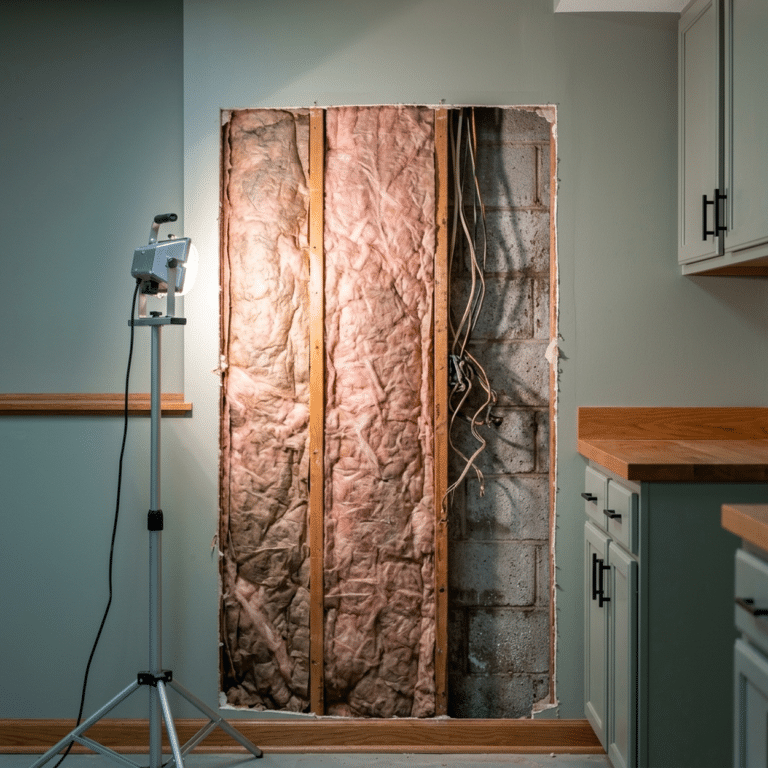
The depth of the work changes the cost more than the size of the house. A refresh keeps walls, wiring and plumbing in place. A full gut opens the walls, so it adds trade work, inspections and whatever the walls are hiding.
Des Moines draws a clear permit line between the two. Under the city’s minor repair permit exemption policy, patching drywall needs no permit. Replacing finishes on an entire wall or ceiling, or removing all interior finishes, does.
The table compares three common scope levels and what each one triggers in Des Moines.
| Scope level | What changes | Des Moines permit picture | Main cost drivers |
|---|---|---|---|
| Cosmetic refresh | Paint, flooring, fixtures, small drywall repairs | Patching, or replacing a 64-square-foot area of damaged drywall, is exempt | Square footage of flooring and finish choices |
| Mid-level remodel | Kitchen and baths updated, some wiring and plumbing | Renovation permit plus a trade permit for each trade touched | Kitchen size, bath count, cabinet and tile choices |
| Full gut | Walls opened, new systems, layout changes | Renovation permit plus electrical, plumbing and mechanical permits | Structural changes and what is found behind the walls |
Most whole-home projects land in the middle row. The jump to a full gut is where budgets need the biggest cushion.
Illustrative scenario: A Des Moines couple with a 1,400-square-foot 1950s ranch replaces a 140-square-foot kitchen and remodels one full bath. They refinish floors throughout and keep the layout. At the starting rate, the kitchen plans out from about $35,000, and the whole project lands in a planning range of about $65,000 to $90,000. City permits for the renovation, electrical and plumbing work total $309 at 2026 rates. Keeping walls in place kept the job to about three months.
Pro Tip 3: Write your scope room by room before you collect bids. Two bids only compare fairly when they price the same rooms to the same depth.
Pro Tip 4: Decide on any wall removal before you order cabinets. A layout change after ordering can mean new cabinets, new plumbing runs and a second round of drawings.
What Permits and Rules Apply to a Des Moines Home Remodel?
Most whole-home remodels in Des Moines need a renovation permit plus a permit for each trade involved. The city’s 2026 permit fee schedule lists those fees for existing homes. Ask who pulls them, and make sure every fee shows up in the estimate.
The table shows the residential fees that apply to remodeling existing homes, effective January 1, 2026.
| Permit or fee | 2026 Des Moines amount | When it applies |
|---|---|---|
| Renovations to dwellings | $154.50 | Interior remodeling beyond minor repair |
| Additions to dwellings | $257.50 | Any new square footage |
| Electrical, alterations and additions | $77.25 | New circuits or wiring changes |
| Plumbing, alterations and additions | $77.25 | New fixtures or moved lines |
| Mechanical, alterations and additions | $77.25 | Ductwork or equipment changes |
| Residential permit extension | $25.75 | If the permit needs more time |
A three-trade renovation runs $386.25 in city fees. That is a rounding error next to the kitchen, but an expired permit adds cost and delay, so keep the schedule moving.
Des Moines also offers a Residential Combination Inspection program. One inspector handles every trade inspection for new homes, basement finishes and residential additions. If your project includes a basement finish or an addition, ask whether it qualifies.
Two state rules matter on every whole-home job. First, Iowa requires contractors who earn $2,000 or more a year from construction to register, and you can check any contractor’s registration with Iowa DIAL. Electricians, plumbers and HVAC technicians hold separate state licenses.
Second, check the year your home was built. Under the EPA lead renovation rule, firms that disturb lead-based paint in homes built before 1978 must be certified and use certified renovators. Iowa is one of the states EPA authorized to run its own program.
Illustrative scenario: An Urbandale family opens the main level of a 1970s split-level. They remove the kitchen wall, remodel two baths and update the wiring. The wall removal needs a structural review, and the project needs a building permit plus electrical and plumbing permits. With a 200-square-foot kitchen from about $50,000 at the starting rate, planning lands around $140,000 to $190,000. The work runs about five to six months.
Pro Tip 5: Ask whether your house was built before 1978. If it was, ask the contractor how their firm handles lead-safe certification before any painted surface is disturbed.
Pro Tip 6: Confirm who pulls each permit and that every fee appears in your estimate. Surprise permit lines are a sign the scope was not fully priced.
Pro Tip 7: Check your contractor’s state registration before you sign. It takes a minute on the DIAL site and protects you if something goes wrong.
What Our Customers Say Matters on a Whole Home Remodel
On a whole home remodel, communication matters as much as price. In our Google reviews, the thing customers name most often is communication: being kept informed, and being able to text the crew with additions mid-project.
Busy Builders completes more than 100 projects a year, most of them additions, full remodels and basement finishes, with kitchen and bathroom remodels alongside. A whole-home job touches every one of those trades at once, so the plan for talking matters as much as the plan for building.
The order of work matters too. Our guide to how a remodel gets scheduled walks through the sequence from demolition to final punch.
The table lists what to agree on before demolition starts.
| Agree on this | Why it matters | What good looks like |
|---|---|---|
| One daily contact | Questions get answered the same day | A named lead who answers texts and calls |
| How changes are requested | Mid-project additions are common | Changes in writing, priced before work proceeds |
| Update rhythm | You are living with the work | A set check-in, weekly at minimum |
| What happens when walls reveal problems | Older homes hide surprises | Photos, options and a price before any extra work |
| Selection deadlines | Late picks stall trades | A dated list of every finish decision |
Clear answers to these five items prevent most mid-project friction. Ask any contractor to walk through them at the first meeting.
Illustrative scenario: A Johnston family pairs a whole-home refresh with a 250-square-foot mudroom addition. The addition starts at about $75,000 at our starting rate, and the full project plans out around $110,000 to $150,000. Midway through, they texted the crew lead to add a closet to the mudroom. The change came back priced in writing before framing moved ahead. The project ran about four to five months.
Pro Tip 8: Ask for change orders in writing, with a price, before the work happens. A text is a fine way to ask, but the answer should be on paper.
Pro Tip 9: Set a selection deadline for every finish. Tile, cabinets and fixtures picked late can stall the trades waiting behind them.
Pro Tip 10: Hold a contingency on any older home. We suggest 10 to 15 percent, because once the walls come open, Iowa homes have a way of surprising you.
How Can You Pay for a Whole Home Remodel?
Common ways to fund a whole home remodel are a home equity line of credit or a lump-sum home equity loan. Buyers of a dated house can also look at FHA’s 203(k) program, which rolls repairs into the mortgage. Each option puts your home up as collateral, so compare costs and terms carefully.
The table summarizes the main options from CFPB and HUD descriptions.
| Option | How it works | Often fits | Watch for |
|---|---|---|---|
| Home equity line of credit (HELOC) | Open-end line you can borrow against repeatedly during a draw period | Projects paid in stages | Fees, minimum draws, and payments that change with your balance |
| Home equity loan | Lump sum, usually at a fixed rate | A fixed scope with a signed estimate | Upfront fees and costs |
| FHA Limited 203(k) | Up to $75,000 of non-structural repairs financed into a mortgage | Buying or refinancing a dated home | Non-structural work only |
| FHA Standard 203(k) | Major rehabilitation of at least $5,000, within FHA loan limits | Larger renovations, including structural work | A HUD consultant, a work write-up and staged payments |
Home equity tools suit owners with equity, while 203(k) loans suit buyers and refinancers. Read the CFPB’s HELOC explainer and HUD’s 203(k) program types before you talk to a lender.
Pro Tip 11: Line up financing before demolition. Draw timing on a HELOC or a 203(k) should match your contractor’s payment schedule.
Pro Tip 12: Compare the total cost of borrowing, not just the rate. Fees and closing costs can change which option is cheaper for your project.
Frequently Asked Questions
Q1: How much does a whole home remodel cost in Des Moines? It depends on which rooms you change and how deep you go. Our kitchen remodeling starts at about $250 per square foot. A typical bathroom remodel without moving much runs about $15,000 to $20,000 in our quotes. Additions start at about $300 per square foot. Add the rooms you are changing, then the permits and a contingency, and ask for a room-by-room estimate.
Q2: Do I need a permit for a whole home remodel in Des Moines? Usually yes. A renovation permit costs $154.50 in 2026, and each electrical, plumbing or mechanical permit costs $77.25. Patching drywall is exempt, but replacing the finishes on a whole wall or ceiling needs a permit. Confirm your scope with the Des Moines Permit and Development Center before work starts.
Q3: Should I remodel the whole house at once or room by room? Doing it at once means one demolition phase, one schedule and one round of setup, but more disruption. Room by room spreads the cost and the mess, but each phase repeats setup and usually needs its own permits. Older homes often reveal problems that are cheaper to fix while walls are open. Map out every phase before you start the first one.
Q4: What should I know about lead paint in an older Des Moines home? If your home was built before 1978, painted surfaces may contain lead. Firms that disturb lead-based paint in those homes must be certified and use certified renovators under the EPA rule. Iowa runs its own EPA-authorized program. Ask your contractor about lead-safe certification before demolition.
Q5: How do people pay for a whole home remodel? Common choices are a HELOC or a home equity loan. Buyers and refinancers can use FHA’s Limited 203(k) for up to $75,000 of non-structural work, or the Standard 203(k) for major rehab. Every option uses your home as collateral. Compare full borrowing costs from at least two lenders before you sign.
Q6: Why can two remodels of the same size cost so differently? Scope and finishes drive the gap. In our quotes, a hall bath facelift can be $3,000 to $5,000, while a large primary bathroom can reach about $60,000. Layout changes, structural work and what is found behind the walls widen it further. Compare bids line by line, room by room.
Key Takeaways
- Price it room by room: Kitchens start at about $250 per square foot and typical bath remodels run about $15,000 to $20,000 in our quotes.
- Permits are small but real: Des Moines charges $154.50 for a renovation permit and $77.25 per trade in 2026.
- Depth beats size: A full gut adds trade work, inspections and surprises that a refresh avoids.
- Older homes need extra care: Pre-1978 homes bring lead-safe rules, and older walls call for a contingency.
- Communication keeps it on track: Agree on a daily contact, written change orders and selection deadlines before demolition.
Plan Your Whole Home Remodel With a Registered Iowa Contractor
Busy Builders is a registered Iowa contractor with 1,285+ completed projects across Central Iowa since 2020. Start with a free consultation and estimate for your home remodeling project, or see our Des Moines remodeling page for local details. Written warranty on workmanship (details provided in your contract).
Call: 844-435-9800
Disclaimer: This article is for general information and is not project-specific advice. Cost figures are planning estimates that vary by scope, materials, site conditions, and current pricing. Permit fees and requirements vary by city and change over time. Verify current requirements with the Des Moines Permit and Development Center or your local building authority before starting. Structural changes such as wall removal require evaluation by a qualified professional. Homes built before 1978 may contain lead-based paint, and federal and Iowa lead-safe rules may require testing and certified work practices. Financing terms, fees and eligibility vary by lender and program; this is not lending advice, so consult your lender. No specific outcomes are promised. Consult a registered contractor for guidance specific to your project; electrical, plumbing and HVAC work is performed by licensed subcontractors.
Busy Builders | Full-Service Construction and Remodeling | Serving Central Iowa Since 2020