Last updated October 2026
Planning a deck for spring 2027 starts with a realistic number. This guide gives Des Moines metro homeowners deck building cost ranges by material and size. It also lists the permit and code items that add to the budget. We compare wood and composite over time, too. All figures are planning estimates as of October 2026, not quotes and not 2027 prices.
TLDR: As of October 2026, plan on about $30 to $50 per square foot installed for a treated wood deck in the Des Moines metro. Plan on about $50 to $75 for composite. A 16-by-20 deck lands near $9,600 to $16,000 in treated wood or $16,000 to $24,000 in composite. Add the $77.25 Des Moines permit and footings at least 42 inches deep.
You want a deck by next summer, and the first question is the one everyone asks: what will it cost? The honest answer is a range. Where you land in it depends on a handful of choices you control.
Central Iowa adds a few costs that milder places skip. Footings go deep to stay below the frost line, and freeze-thaw cycles are hard on wood that is not kept up.
Below are planning ranges by material and size, the permit and code items, and a wood versus composite comparison. For deck building in Des Moines and the nearby suburbs, use these ranges to start a budget, not to finish one.
What Does Deck Building Cost in Des Moines for 2027?
As planning estimates for 2027 builds, a Des Moines metro deck runs about $30 to $50 per square foot installed in pressure-treated wood. Cedar runs about $40 to $60, composite about $50 to $75, and PVC or premium capped boards about $65 to $90. These ranges were set as of October 2026 and are not quotes.
The table below shows what puts a deck at the low or high end of each range.
| Decking material | Installed per sq ft (planning, Dec 2026) | Low end looks like | High end looks like |
|---|---|---|---|
| Pressure-treated pine | $30 to $50 | Low deck, simple rectangle, one short stair | Tall deck, long stair, upgraded railing |
| Cedar | $40 to $60 | Low deck, cedar railing | Elevated deck, multiple levels |
| Composite | $50 to $75 | Entry board line, simple railing | Premium board, border boards, metal railing |
| PVC or premium capped | $65 to $90 | Simple layout | Elevated deck, premium railing, lighting |
In most decks the framing under all four is pressure-treated lumber. The price difference is mostly the boards, the railing and the labor to install them.
For a national reference point, the 2023 NAR outdoor remodeling report priced a 14-by-18-foot cedar deck at about $16,900. That figure was gathered from markets nationwide, so treat it as context rather than a Des Moines quote.
Pro Tip 1: Price the deck you would actually build, with railings and stairs included. A per-square-foot number for boards alone can look far smaller than the finished deck.
Pro Tip 2: Ask each builder to quote the same board line. The word “composite” alone covers entry and premium lines at very different prices.
How Much Does Deck Building Cost by Size?
At the planning ranges above, a 12-by-12 deck runs about $4,300 to $7,200 in treated wood and $7,200 to $10,800 in composite. A 16-by-20 deck runs about $9,600 to $16,000 in treated wood and $16,000 to $24,000 in composite. Small decks tend to land at the top of each range because stairs, setup and the permit cost the same at any size.
The table below applies the planning ranges to common deck sizes.
| Deck size | Square feet | Treated wood (planning) | Composite (planning) |
|---|---|---|---|
| 12 by 12 | 144 | $4,320 to $7,200 | $7,200 to $10,800 |
| 12 by 16 | 192 | $5,760 to $9,600 | $9,600 to $14,400 |
| 16 by 16 | 256 | $7,680 to $12,800 | $12,800 to $19,200 |
| 16 by 20 | 320 | $9,600 to $16,000 | $16,000 to $24,000 |
| 20 by 20 | 400 | $12,000 to $20,000 | $20,000 to $30,000 |
Add tear-out of an old deck, extra height or a second stair on top of these figures.
Illustrative scenario: A West Des Moines couple plans a 16-by-20 composite deck about 3 feet off the ground, with black metal railings and one stair. Planning range: $18,000 to $23,000 including the permit. They collect estimates in January and build in May. The deck takes about two weeks on site after plan review.
Pro Tip 3: If you are torn between two sizes, mark the outline on the lawn with string and set your patio furniture inside it. You will see quickly whether a table and a grill both fit.
Wood or Composite: Which Costs Less Over Time?
Treated wood costs less up front, roughly a third less than composite at the same size under the planning ranges above. It needs cleaning and a fresh coat of stain or sealer every few years. Composite costs more on day one and mostly needs washing. Which one costs less over a decade depends on how much upkeep you will actually do.
The table below compares the two on the points that matter most in Central Iowa.
| Feature | Pressure-treated wood | Composite |
|---|---|---|
| Planning cost per sq ft | $30 to $50 | $50 to $75 |
| Routine upkeep | Clean, then stain or seal every few years | Wash once or twice a year |
| Framing underneath | Treated lumber | Treated lumber |
| Without upkeep | Boards can check, split and splinter | Boards can fade or scratch; no sanding or staining |
| Warranty | Limited; varies by product | Manufacturer limited warranty; terms vary by line |
Either way, the footings and framing below the boards decide how long the deck stays solid.
For upkeep costs on a wood deck, see our breakdown of deck staining and sealing costs. For a deeper look at board choices, read our guide to decking materials for Iowa homeowners.
A deck can help at resale, but no one can promise a return. In the NAR survey above, REALTORS estimated that a new cedar deck would recover most of its cost at sale. Treat that as a national signal, not a Des Moines appraisal.
Illustrative scenario: A Norwalk homeowner compares a 12-by-16 deck in treated wood ($5,800 to $9,600) and composite ($9,600 to $14,400). They choose treated wood and set aside money for a stain every few years. The build takes about a week in June, and the savings go toward a shade pergola the next spring.
Pro Tip 4: If you choose treated wood, follow the stain maker’s directions on how long new lumber should dry before the first coat. Staining too early can waste the product.
Pro Tip 5: If you choose composite, read the warranty before you buy. Coverage terms differ by brand and by product line.
What Our Finished Composite Decks Have in Common
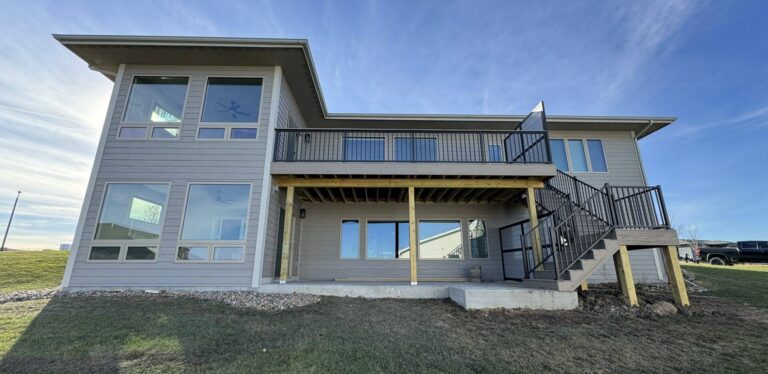
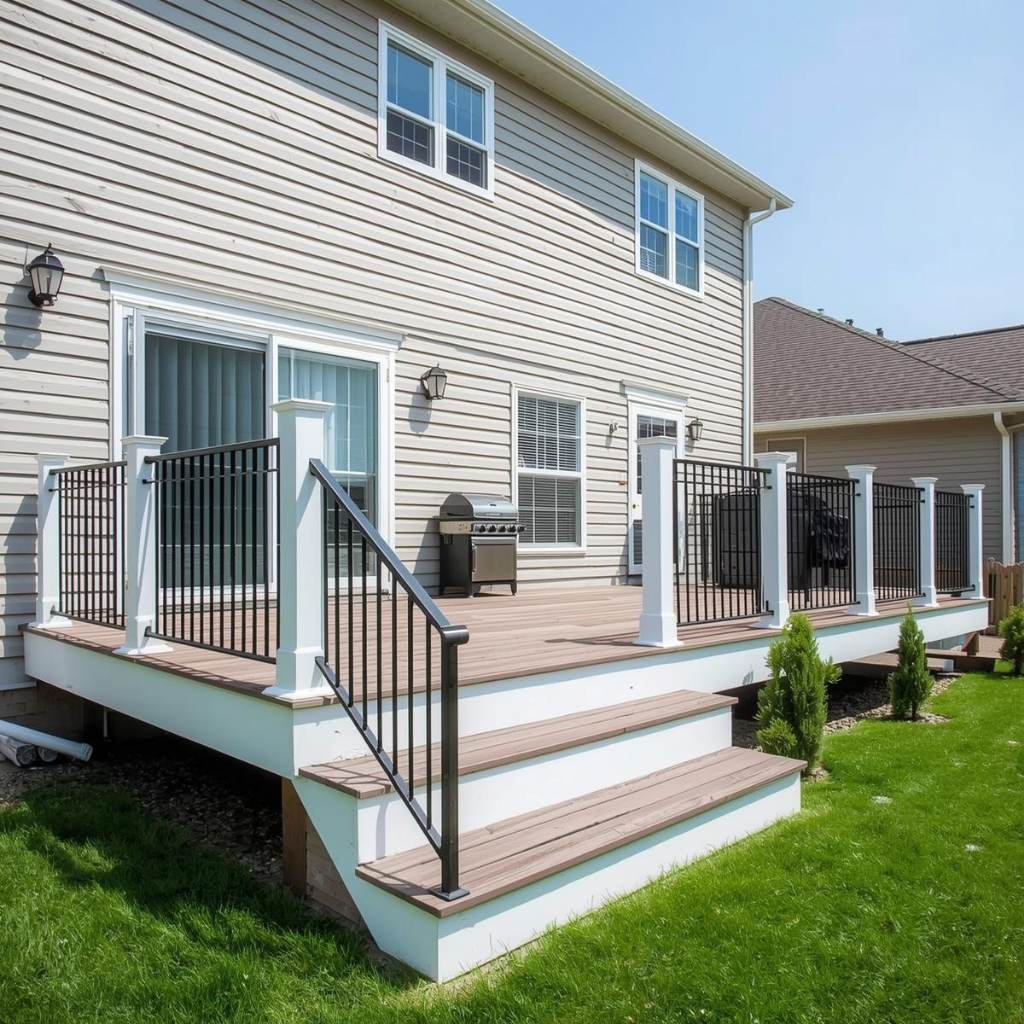
Our crew photos of finished composite decks show where a deck budget really goes. They show composite boards with black metal railings, one deck with an attached pergola and one overlooking a wooded backyard. Railings, stairs and add-ons like a pergola are separate lines on an estimate, and each one moves the total.
A homeowner who had a composite deck built in spring 2026 reviewed the project and singled out communication and the finished result. On a deck, the finished result is what everyone sees. Communication is how you know what each estimate line covers before work starts.
That is why we suggest pricing the railing and add-ons separately from the deck itself. You can then decide which ones earn their place in the 2027 budget.
Pro Tip 6: Ask to see a finished deck with the railing you are considering. Black metal, wood and composite railings look different in person than in a catalog.
What Do Permits and Code Add to a Des Moines Deck Budget?
The permit is a small line. Des Moines charges $77.25 for a deck under its permit fee schedule effective January 1, 2026. The bigger code costs are structural: deep footings, a properly fastened and flashed ledger, and guards on higher decks.
The table below lists the Des Moines items that shape a deck budget.
| Requirement | Des Moines detail | Source |
|---|---|---|
| Deck permit fee | $77.25 | City fee schedule, January 1, 2026 |
| Code edition | 2024 International Residential Code | City adoption, effective January 1, 2026 |
| Frost line depth | 42 inches | City design criteria |
| Guards (railings) | Required more than 30 inches above grade; at least 36 inches tall | 2024 IRC R321.1 |
| Footing inspection | Before concrete; confirm stops on your permit | City permit |
The city lists its code edition and frost line on its construction codes page. Before you compare bids, our guide to reading a deck building estimate line by line shows where each of these items should appear.
Pro Tip 7: Ask whether the quote includes the permit and who applies. In Des Moines, applications and inspection results run through the city’s Customer Self Service portal.
Pro Tip 8: If your deck sits more than 30 inches off the ground, budget guards on every open side. That is a code requirement, not an upgrade.
Pro Tip 9: Before footing holes are dug, Iowa Code 480.4 requires notice to the one-call center at least 48 hours ahead. Weekends and holidays do not count toward the 48 hours.
Pro Tip 10: Check that your builder is registered on the Iowa DIAL contractor registration page. Iowa requires registration once a contractor earns $2,000 a year from construction, and a first violation carries an administrative penalty of up to $500.
When Should You Book a 2027 Deck in Iowa?
Collect estimates in winter for a spring or early summer build. Footing work needs ground you can dig to frost depth, and plan review plus material orders take time. Fall is the other good window, as long as footings go in before the ground freezes.
The table below compares the seasons for a Central Iowa deck.
| Season | Why it works | What to watch |
|---|---|---|
| Winter (planning) | Time to compare estimates and finish the permit | Frozen ground delays footing work |
| Spring | Deck ready for summer | Spring rain and busy calendars |
| Summer | Long, dry working days | Heat and peak demand |
| Fall | Cooler working weather | Footings must go in before freeze-up |
Book early for spring. Book early enough in fall to beat the frost.
Illustrative scenario: An Ankeny family books a fall build for a 12-by-12 treated wood deck with one stair. Planning range: $5,000 to $7,200, near the top because small decks carry the same fixed costs. Ankeny’s valuation-based permit comes to about $49. They sign in August, and the crew finishes the deck in about a week in September.
Pro Tip 11: Collect estimates in January or February for a May build. That leaves room for plan review, material orders and any design changes.
Pro Tip 12: For a fall build, put the footing date on the calendar first. Everything after the footing inspection can move a little; the footings cannot wait for frozen ground.
Frequently Asked Questions
Q1: How much does it cost to build a deck in Des Moines for 2027? As planning estimates set in October 2026, plan on about $30 to $50 per square foot installed for treated wood. Composite runs about $50 to $75. A 300-square-foot deck lands near $9,000 to $15,000 in treated wood or $15,000 to $22,500 in composite. Height, railings and stairs move the number most. Get an itemized estimate before you set a firm deck building budget.
Q2: Do I need a permit to build a deck in Des Moines? Plan on it. Des Moines lists decks on its permit fee schedule at $77.25, effective January 1, 2026. The city adopted the 2024 IRC on the same date and lists a 42-inch frost line. Confirm the inspections your permit requires before work starts.
Q3: Is composite decking worth the extra cost in Iowa? It is worth it if you want to skip staining and sealing. Composite costs about half again as much up front under our planning ranges, but it mostly needs washing. Treated wood is the better value if you will keep up with cleaning and stain every few years. Price both on the same deck before you decide.
Q4: How long does a deck last in Iowa? It depends more on the structure and upkeep than on the boards. Footings below the frost line, a flashed ledger and corrosion-resistant fasteners keep the frame sound through freeze-thaw cycles. Wood boards last longest when cleaned and sealed on schedule. Ask any builder how they protect the framing, not just the surface.
Q5: When is the best time to build a deck in Iowa? Late spring and early fall are the most popular build windows. Winter is the best time to plan, collect estimates and finish the permit. Footings need diggable ground, so fall builds should start well before freeze-up. Book early for either window.
Q6: Does building a deck increase home value? It can, but returns vary by market and are never promised. In NAR’s 2023 national survey, REALTORS estimated a new cedar deck would recover most of its cost at sale. Your neighborhood and the deck’s condition matter more than any national average. Ask a local agent before you build mainly for resale.
Key Takeaways
- Planning ranges: As of October 2026, treated wood runs about $30 to $50 per square foot installed and composite about $50 to $75 in the Des Moines metro.
- Size math: A 16-by-20 deck lands near $9,600 to $16,000 in treated wood or $16,000 to $24,000 in composite.
- Small permit, big structure: The Des Moines deck permit is $77.25; footings, ledger and guards are where code adds real cost.
- Wood vs composite: Wood saves up front; composite saves on upkeep; the framing underneath is treated lumber either way.
- Book in winter: Collect estimates early in the year so the permit and materials are ready for a spring build.
Price Your 2027 Deck With a Registered Contractor
Busy Builders is a registered Iowa contractor with 1,285+ completed projects across Central Iowa since 2020. Schedule a free consultation and estimate for deck building in Des Moines and nearby suburbs. Written warranty on workmanship (details provided in your contract).
Call: 844-435-9800
Disclaimer: This article is for general information and is not project-specific advice. Cost figures are planning estimates as of October 2026 that vary by scope, materials, site conditions and current pricing. They are not quotes or 2027 prices. Permit fees, frost depth and code editions vary by city and change over time. Verify current requirements with your local building department before you start. Resale comments are not financial advice, and actual returns vary by market and project quality. Warranty terms are set by each manufacturer, so verify coverage and limits directly before you buy. Structural work such as footings and ledger attachment needs evaluation for your specific deck. No specific outcome is promised. Consult a registered contractor for guidance on your project.
Busy Builders | Full-Service Construction and Remodeling | Serving Central Iowa Since 2020