Iowa winters are uniquely hard on outdoor structures. Between 45 and 84 freeze-thaw cycles each year, an average of 36 inches of snowfall, and clay soil that shifts as it freezes and thaws, your deck takes more abuse here than the same deck would in nearly any warmer climate. This guide walks through how to protect it before and during winter, what’s safe to use on it, and what warning signs warrant a call to a professional rather than a DIY weekend.
TLDR: Wood decks need a water-repellent sealant applied before temperatures drop below 50°F, ideally in September or early October, before Central Iowa’s average first frost between October 11 and 20. Composite decks don’t need to be sealed, but they still need to be cleared of furniture and debris. For snow removal, use a plastic shovel parallel to the boards on either material, never metal. For ice melt, calcium chloride or magnesium chloride is the safer default for both wood and composite; rock salt accelerates damage on wood and fasteners and is the wrong choice in most cases. Any sagging, wobbling, soft underfoot, or rusted hardware warrants professional assessment before winter, not after.
The reason Iowa decks fail faster than decks in other regions has less to do with cold than with the constant cycle of freezing and thawing. Water enters wood fibers, freezes and expands inside them, then thaws and refreezes the next day. Multiply that by 45 to 84 cycles in a single winter, and you have a recipe for cracking, splitting, and accelerated rot. Composite resists this because it doesn’t absorb water in the same way, but it has its own winter vulnerabilities, especially around fasteners and warranty compliance with ice-melt products.
This is the seasonal care guide most homeowners need but rarely get straight. The information is material-specific, Iowa-specific, and built to keep your deck in good shape without giving you bad advice that could damage it or void your warranty.
Iowa Winters Are Hard on Decks: Here’s Why
The single most important thing to understand about Iowa deck winter care is that Iowa is not like other states. Phoenix has roughly zero freeze-thaw cycles per year. Atlanta has about ten. Iowa averages 45 to 84, which is among the highest counts in the entire continental U.S. Every cycle is a small mechanical event that pulls water into the deck and then forces it back out as ice expands and contracts the surrounding material.
For pressure-treated wood, this is a steady source of damage. Wood absorbs water through its surface pores and through the end grain at cut edges. When that water freezes, it expands by roughly 9% in volume, putting pressure on the surrounding cell walls. Repeated cycles eventually open small cracks. Those cracks let in more water on the next cycle, which freezes and opens them further. The progression is gradual but cumulative, which is why a pressure-treated deck that lasts 20 years in Arizona may last only 10 to 15 years in Iowa.
Composite decking, which is a mix of recycled wood fibers and plastic, doesn’t have this problem in the same way. The plastic component doesn’t absorb water, and while the wood fiber in the composite can absorb some moisture, the surrounding plastic limits how much it can absorb. That’s the core reason composite has an expected lifespan of 25 to 30 years, compared to 10 to 15 years for pressure-treated wood in Iowa specifically. If you’re weighing material choices for a new deck, our guide to the best decking materials for Iowa homeowners walks through the trade-offs in more detail.
Iowa’s clay soil adds a second layer of stress that has nothing to do with the weather above the deck. Clay expands when wet and contracts when it dries or freezes solid. Footings and ledger connections experience movement from this seasonal cycle, which is why post bases and ledger bolts deserve specific attention in any winter or spring inspection. Damage at these connection points is structural, not cosmetic, and is the most important category of deck problem to catch early.
Central Iowa’s average first frost falls between October 11 and 20, with Des Moines averaging October 15 according to National Weather Service data. That puts your action window for fall preparation squarely in September through mid-October. Sealants need 50°F temperatures and two consecutive dry days to cure properly, so waiting until late October usually means you’ve missed your shot for the year.
Fall Prep Before First Freeze
The fall-preparation steps differ significantly between wood and composite decking, but some basics apply to every deck material.
Start by clearing the deck completely. Move furniture, grills, planters, and any rugs or mats off the deck and into storage. Anything left on the surface traps moisture beneath it, and trapped moisture is the leading cause of rot on wood and surface damage on composite. Even composite decks, which resist water absorption, suffer from fastener corrosion when items left on the deck create a damp microclimate around the screws and hardware below.
Once the deck is clear, sweep thoroughly. Pay particular attention to the gaps between boards, where leaves, pine needles, and organic debris accumulate over the fall. Anything stuck in these gaps holds moisture against the boards and the joists below, accelerating rot in wood and creating freeze pockets that can damage either material.
For wood decks, the centerpiece of fall preparation is sealing. A water-repellent sealant applied annually is the single most important thing you can do to extend the life of pressure-treated or cedar decking in Iowa. The water it repels is the water that would otherwise enter the wood and drive the freeze-thaw damage cycle. Apply the sealant before temperatures drop below 50°F, and choose a stretch of weather with at least two dry days for proper cure. Pay extra attention to the cut ends of boards, which are where moisture enters fastest because the end grain is exposed.
One Iowa-specific detail for pressure-treated wood: if you’ve recently installed new pressure-treated lumber, wait roughly 30 days before sealing to allow the treatment chemicals to dry, or use a sealant specifically labeled as compatible with new pressure-treated wood. Sealing too early traps moisture from the treatment process, resulting in poor results.
For composite decks, sealing isn’t necessary because the material doesn’t absorb water the way wood does. Your fall preparation focuses on cleaning and clearing rather than chemistry. Most major composite brands (Trex, TimberTech, and others) publish specific winter care guidance for their products, and it’s worth a few minutes on your manufacturer’s website to verify their current recommendations before winter sets in. Warranty terms occasionally include winter care requirements, and skipping them can affect a future claim.
Table 1: Fall Prep by Deck Material
| Task | PT Wood | Cedar | Composite |
|---|---|---|---|
| Deep clean | Yes | Yes | Yes |
| Seal or stain | Yes, annually | Yes, annually | No |
| Remove furniture | Yes | Yes | Yes |
| Sweep gaps between boards | Yes | Yes | Yes |
| Inspect fasteners and railings | Yes | Yes | Yes |
| Check manufacturer warranty terms | N/A | N/A | Yes |
Winter Inspection: What to Look For
Before winter arrives, walk your deck looking for signs of trouble that snow will hide for the next four months. The inspection takes 10 minutes and identifies problems that are much cheaper to address before winter than after.
Walk every board and feel for soft or spongy spots underfoot, especially on older pressure-treated decks. Soft boards indicate rot beneath the surface, which often means the joists below are compromised as well. Look for cracks running with the grain of the board (normal weathering) versus cracks running across the grain (a sign of structural stress that warrants closer inspection).
Test every railing for movement. A railing that wobbles isn’t just loose; it usually means the fasteners holding it to the deck have begun to corrode, particularly if previous winters involved any rock salt exposure. The same goes for stair treads and balusters. Movement anywhere in a railing system is a safety issue, and railings carry real loads during winter when people lean on them while navigating snow and ice.
Check the connection points where structure meets structure. Joist hangers, post bases, and the ledger board, where the deck attaches to the house, are the parts of a deck that fail most catastrophically when they fail. Look for rust on metal hardware, gaps where the ledger meets the house, and any sign that the deck is pulling away from the wall it attaches to.
This is the section of the guide with the most important legal point. A blog cannot tell you whether your specific deck is structurally sound. A blog can help you recognize the warning signs that warrant a professional assessment before you trust the deck under a winter’s worth of snow. If you see any of the following, call a registered Iowa contractor for an evaluation: sagging or bending in the deck surface or any structural member, soft or spongy boards underfoot in multiple spots, rust on joist hangers or ledger bolts visible from below, a railing that moves more than slightly when pushed, or gaps between the ledger and the house indicating the deck is pulling away. None of these are DIY repairs on a working deck. All of them are reasons to get a professional eye on the structure before winter arrives.
Snow Removal Done Right
Snow removal is probably the most common winter deck question in Iowa, and getting it wrong damages more decks than the snow itself does.
Remove snow promptly rather than letting it accumulate through multiple storms. Wet Iowa snow weighs up to 20 pounds per cubic foot. Three feet of accumulated wet snow puts roughly 60 pounds per square foot of load on the deck surface, which is at or near the design limit for code-built decks (typically 40 to 60 pounds per square foot live load). A code-built deck in good condition can handle this, but the calculation assumes the deck was built to code and remains in code-built condition. Older decks, decks showing structural warning signs, or decks with any of the inspection issues above need more aggressive clearing.
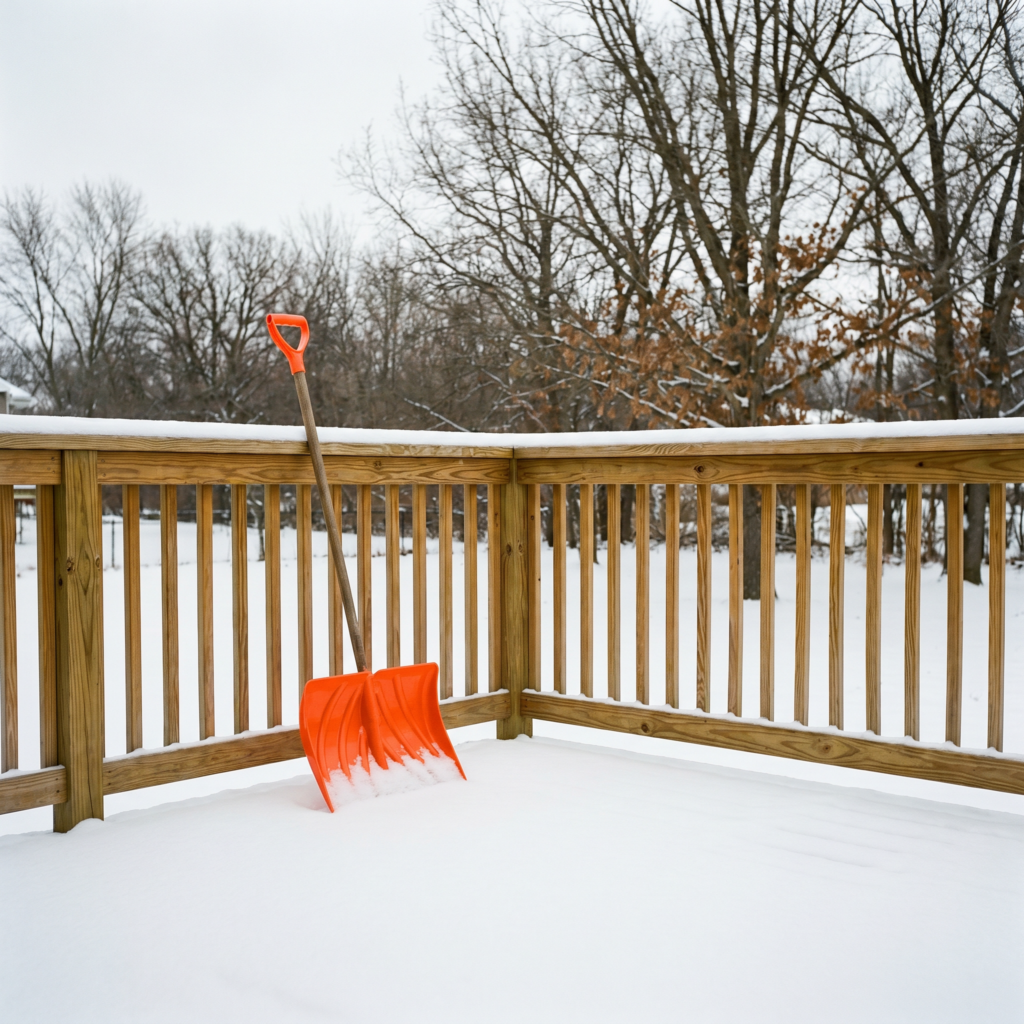
Use a plastic snow shovel or a soft-bristled push broom. Never use a metal-edged shovel on any deck material. Metal shovels gouge wood, scratch composite, and catch on the gaps between boards, ripping at fasteners and surface coatings. Plastic is non-negotiable here, regardless of how convenient your metal shovel feels.
Shovel parallel to the boards rather than across them. This serves two purposes: it reduces the chance that the shovel edge catches on a board edge or fastener, and it follows the deck’s natural drainage so meltwater runs off rather than pooling in the gaps you just cleared.
Leave a thin skim layer of snow on the surface rather than scraping all the way down to bare wood or composite. The skim layer protects the surface from the shovel’s edge and from the surface itself becoming a skating rink as residual moisture freezes. For light snow up to an inch or two, a leaf blower or a stiff broom is often a better tool than a shovel because neither has any chance of contacting the surface.
Do not use a snowblower on a deck. The auger and impeller will damage any deck surface, and the chute can throw debris that damages nearby siding and windows. Snowblowers are designed for concrete and asphalt.
Table 2: Snow Removal Quick Reference
| Snow Type | Tool to Use | What to Avoid |
|---|---|---|
| Light dusting (under 2 in.) | Soft broom or leaf blower | Metal-edged tools |
| 2 to 6 inches | Plastic shovel parallel to boards | Metal shovels, scraping to bare surface |
| 6+ inches heavy or wet | Plastic shovel, clear in stages | Letting it accumulate through multiple storms |
| Compacted ice | Calcium chloride to break it up; plastic scraper after | Chipping with metal tools |
Ice Melt: What’s Safe and What Damages Your Deck
Ice melt is where most homeowners make their biggest winter deck mistake, often without realizing it. The default product most people reach for is rock salt (sodium chloride), and it’s the worst choice for wood decks and a complicated choice for composite decks.
For pressure-treated and cedar wood decks, rock salt does three kinds of damage at once. It penetrates the wood pores and retains moisture there, accelerating freeze-thaw damage. It strips and degrades sealant and stain over time, undoing the fall preparation you just completed. And it corrodes metal fasteners, particularly joist hangers, screws, and railing hardware, where corrosion can progress from cosmetic rust to structural compromise over a few winters. Salt corrosion on fasteners is one of the leading causes of post-winter railing failures in Iowa.
The safer alternatives for wood decks are calcium chloride or magnesium chloride, used at moderate rates rather than spread generously. Better still, minimize ice melt on wood entirely by using a plastic shovel for snow management and accepting that some areas may remain slick when temperatures stay below freezing. If you do use any ice melt, rinse the deck when temperatures rise above freezing to remove residue rather than letting it dry on the surface.
For composite decks, calcium chloride and magnesium chloride are the safer defaults recommended by most manufacturers and approved by Trex, TimberTech, and other major brands. Calcium chloride continues working down to roughly -25°F, which matters during Iowa’s coldest stretches when other products stop functioning. Trex specifically permits calcium chloride or rock salt on current-generation products, but calcium chloride or magnesium chloride is the safer default across all composite brands. Always check your specific manufacturer’s current guidance before applying any ice melt product, as warranty terms occasionally exclude otherwise common products.
What to avoid on composite, beyond product choice: ice melt with added dyes or colorants (which can permanently stain composite surfaces) and abrasive materials like sand, gravel, or kitty litter, which can scratch and dull the surface. Rinse residue after melt cycles to prevent the chalky film that develops over multiple winters of repeated application.
Table 3: Ice Melt Safety by Deck Material
| Product | PT Wood | Cedar | Composite | Notes |
|---|---|---|---|---|
| Sodium chloride (rock salt) | Avoid | Avoid | Check manufacturer (Trex permits, others may not) | Corrodes fasteners, strips sealant |
| Calcium chloride | Safer in moderation | Safer in moderation | Manufacturer-approved | Works to -25°F |
| Magnesium chloride | Safer in moderation | Safer in moderation | Manufacturer-approved | Gentler than rock salt |
| Sand or gravel | Use cautiously | Use cautiously | Avoid | Abrasive on composite |
| Colored/dyed products | Avoid | Avoid | Avoid | Can stain composite permanently |
If you’ve used rock salt on a wood deck in past winters, don’t panic. The damage from any single winter is usually manageable. The point is to inspect carefully (especially fasteners and hardware) and to transition to a safer product in the future.
Spring Inspection After Winter
When the snow melts and temperatures climb back above freezing, walk the deck again with the same eye you used in the fall inspection.
Test every railing and stair tread for movement. Wobbles that weren’t there in the fall almost always mean corroded fasteners, not just loose screws. Tightening a corroded fastener rarely solves the problem; the fastener itself needs to be replaced with stainless or appropriate galvanized hardware.
Look closely at joist hangers, post bases, and ledger bolts. Surface rust is normal weathering. Pitting, scaling, or visible structural rust means the hardware needs replacement. The ledger connection is the highest-priority inspection point because ledger failures cause the most serious deck collapses.
On wood decks, check for cracking, splintering, and boards that feel soft or spongy underfoot. Test by walking the entire deck, not by spot-checking. If water no longer beads on the surface after a hose-down, your sealant has worn through, and the deck needs resealing in the spring.
On composite decks, look for surface haze, a chalky film, or staining from winter ice-melt residue. Rinse with a garden hose first. If you need to pressure wash, use low PSI and check your specific manufacturer’s guidance, as recommendations vary by brand.
If your spring inspection reveals more than surface-level issues like rotted boards, failed fasteners, or a ledger pulling away from the house, that’s a repair-or-replacement conversation, not a DIY weekend project. Our deck building service page covers what repair and replacement projects look like in Central Iowa, and our complete deck guide construction estimates walk through the costs of new construction in 2026.
Table 4: Signs of Trouble and When to Call a Pro
| Sign | Likely Cause | DIY or Pro | Urgency |
|---|---|---|---|
| Single loose deck board | Worn fastener | DIY | Address before winter |
| Wobbly railing | Corroded fasteners | Pro | Before next use |
| Sagging joist or beam | Structural overload or rot | Pro | Rot in the board or joist below |
| Rust on joist hanger | Salt corrosion or moisture | Pro | Address before winter |
| Soft/spongy board underfoot | Deck pulling from the house at ledger | Pro | Address before winter |
| Do not use the deck | Ledger failure | Pro, urgent | Do not use deck |
Illustrative Scenarios
Illustrative scenario: A Central Iowa homeowner with a 10-year-old pressure-treated deck applies rock salt all winter to keep the surface clear. By spring, joist hangers show significant rust where salty meltwater dripped through the boards. Three deck boards have cracked from repeated moisture absorption and freeze-thaw cycles. The repair (new fasteners, three boards, resealing) exceeds what proper winterization would have cost over the deck’s full life. A transition to calcium chloride and annual sealing in the future keeps the deck functional for several more years.
Illustrative scenario: An Ankeny homeowner with a composite deck skips fall cleaning and leaves an outdoor rug on the deck through winter. In spring, the rug has trapped moisture against the boards and against the screws below. The composite boards show no damage (which is what composites are designed for), but fastener rust has begun at the edge of the rug. Removing the rug each fall and clearing debris from board gaps prevents this entirely. The lesson is that even composite decks need attention; the failure mode is at the connections, not the boards themselves.
Frequently Asked Questions
Q: Can I use ice melt on my Iowa deck?
A: Yes, with the right product for your material. Calcium chloride or magnesium chloride are the safer defaults for both wood and composite. Wood decks benefit from minimizing ice melt entirely; if you do use it, rinse residue when temperatures rise above freezing. For composite, always check your specific manufacturer’s warranty before applying any product, as some warranties exclude certain ice-melt formulations.
Q: What kind of shovel should I use on a composite deck?
A: Plastic only, never metal. Shovel parallel to the boards rather than across them. For light snow under 2 inches, a stiff broom or a leaf blower is gentler than any shovel and eliminates the risk of surface contact.
Q: How much snow can my Iowa deck hold?
A: Code-built decks in good condition are designed for 40 to 60 pounds per square foot of live load. Wet Iowa snow weighs up to 20 pounds per cubic foot, so three feet of accumulation approaches that design limit. A blog cannot certify your specific deck’s capacity. If your deck is older, shows any structural warning signs, or you’re unsure about its construction, get a professional assessment and clear snow more aggressively in the meantime.
Q: Do I need to seal my deck before winter in Iowa?
A: Yes for pressure-treated and cedar wood; no for composite. Wood decks need a water-repellent sealant applied annually before temperatures drop below 50°F. Iowa’s 45 to 84 freeze-thaw cycles per winter make this annual maintenance nonoptional. Composite decks don’t absorb water in the same way and don’t require sealing.
Q: When should I winterize my Iowa deck?
A: September through mid-October. Central Iowa’s average first frost falls between October 11 and 20, and most sealants require 50°F temperatures and two dry days to cure. Waiting until late October usually means you’ve missed your window for the year, especially in a cold fall.
Q: What are the signs my deck needs professional repair rather than just winterization?
A: Wobbly railings, soft or spongy boards underfoot, sagging anywhere in the structure, rust on joist hangers or ledger bolts, or any visible gap where the deck is pulling away from the house. These are structural concerns that require a professional assessment before the deck sees another winter’s load.
Key Takeaways
Iowa is harder on decks than most states. The 45 to 84 freeze-thaw cycles per year, combined with clay soil that shifts seasonally and 36 inches of average snowfall, create conditions of damage that warmer regions never experience. Maintenance that’s optional elsewhere is essential here.
The action window is September through mid-October. Sealants need 50°F and two dry days to cure, and Central Iowa’s average first frost falls between October 11 and 20. Don’t wait until November.
Plastic shovel, parallel to the boards, leave a skim layer. This single rule prevents most snow-removal damage to both wood and composite decks. Never use metal-edged tools, snowblowers, or aggressive scraping.
Calcium chloride is the safer default ice melt for most situations. Rock salt damages wood, fasteners, and sealants. Avoid it on wood decks entirely; verify your composite manufacturer’s specific guidance before using any product.
Visual warning signs warrant professional assessment, not winter use. Wobbly railings, soft boards, sagging, rusted hardware, or ledger separation are structural concerns. A blog cannot certify the safety of your specific deck; a registered Iowa contractor can.
Ready to Plan Deck Repair or Replacement?
If your fall or spring inspection turned up more than cosmetic issues, the next step is a professional assessment rather than another season of patches. Wobbly railings, rusted hardware, soft boards, and ledger separation are not problems that winter will improve.
Busy Builders has completed 1,285+ projects across Central Iowa since 2020. Our process for deck repair and replacement begins with a free project consultation and an honest scope review. We assess the existing structure, identify which components are recoverable and which need replacement, and provide itemized estimates that distinguish necessary structural work from optional upgrades. All work is performed by registered Iowa contractors with the Iowa Department of Inspections, Appeals, and Licensing, and backed by a written warranty on artistry (details provided in your contract). You can verify any Iowa contractor’s registration at DIAL before signing.
We serve Des Moines, Ankeny, Waukee, West Des Moines, Johnston, Urbandale, Grimes, and communities across Central Iowa.
Call: 844-435-9800
Website: https://busybuildersiowa.com/
All maintenance recommendations, product guidance, and load capacity figures in this guide are general in nature and reflect industry best practices and code-built deck design criteria. A blog cannot assess the structural integrity of your specific deck. If you observe any warning signs described above, including sagging, soft boards, wobbly railings, rusted structural hardware, or separation at the ledger, consult a registered Iowa contractor before winter use. Ice melt product recommendations reflect general industry guidance; always verify your specific deck manufacturer’s current warranty terms before applying any product, because some warranties exclude specific formulations. Cost references and material lifespan figures are estimates and vary by installation quality, climate exposure, and maintenance practices. Always obtain three written quotes for repair or replacement work. Busy Builders is a registered Iowa contractor with the Iowa Department of Inspections, Appeals, and Licensing.
Busy Builders | Full-Service Construction and Remodeling | Serving Central Iowa Since 2020
Related service: our deck building service.