If you’ve done the math and landed on a $450,000 construction budget for a 2,500 square foot custom home in Central Iowa, you’re asking a fair question that almost nobody on the internet answers directly. Most contractor blogs hedge with “it depends” and leave you no closer to knowing whether your plan is realistic. This guide does the opposite. The honest answer is that $450,000 works as a construction budget in most of Central Iowa, but only as a construction budget. The all-in number you’ll actually finance is meaningfully higher, and a handful of specific decisions determine whether the math holds up or falls apart.
TLDR: $450,000 divided by 2,500 square feet equals $180 per square foot, which sits in mid-range custom home territory in Iowa for 2026. Busy Builders’ published starting price is $150 per square foot, with mid-range builds typically running $175 to $225 per square foot. The construction budget works in Ankeny, Grimes, Altoona, and most Waukee suburbs. It gets tight in West Des Moines and Johnston, where construction premiums and higher lot costs push the math past comfortable. The true all-in budget including land, soft costs, and contingency lands at $545,000 to $700,000-plus depending on location.
Before we get into specifics, here’s the framing that matters most. The headline number ($450,000) is a construction cost. It pays the builder to put a code-compliant home on a lot. It doesn’t pay for the lot itself, doesn’t pay for the design and engineering work that produces the plans, doesn’t cover the city permits and utility hookups, doesn’t fund a contingency for the surprises every custom build encounters, and doesn’t cover the interest you’ll pay on your construction loan during the eight to twelve months of active building. Those other costs typically add $95,000 to $250,000 on top of the construction budget. Understanding that distinction up front is the difference between a build that finishes within plan and one that runs over by a number that’s hard to recover from.
Why $180 Per Square Foot Lands in Mid-Range Territory
The first thing to understand is where $180 per square foot sits on the spectrum of Central Iowa custom home pricing in 2026. Busy Builders publishes a starting price of $150 per square foot for entry-level custom construction. That’s the floor for new code-compliant construction with builder-grade finishes. Mid-range custom homes typically run $175 to $225 per square foot, which is where most family homes in growing suburbs are being built right now. Upper mid-range and semi-luxury sit at $225 to $300 per square foot. True luxury (architectural design, premium materials throughout, high-end mechanical systems) starts at $300 per square foot and climbs from there.
Your $180 per square foot lands roughly $30 above the entry-level floor and roughly $45 below the top of the mid-range band. In practical terms, this means you’re not building a starter home with bare-bones finishes, but you’re also not building a luxury home with premium materials in every room. You’re building a solid, attractive, code-compliant mid-range home that should serve a family well for many years without feeling like a compromise on the day you move in.
To understand why this matters, think of custom home pricing like ordering a car. The base trim is functional but plain. The mid-trim adds features that change the daily experience (heated seats, better stereo, nicer interior materials). The top trim adds features that signal luxury (leather, premium wheels, advanced driver-assist technology). Each step up adds genuine value, but the cost curve is not linear. The jump from entry-level to mid-range adds a lot of perceived quality for the money. The jump from mid-range to luxury adds smaller increments of perceived quality at a much steeper cost. At $180 per square foot in Central Iowa, you’re at the sweet spot of that curve. You’re getting the features that change daily living without paying the premium for features that mostly signal status.
For the broader picture of how custom home costs work across the full range from entry-level to luxury, our custom home cost Iowa 2026 guide walks through pricing tier by tier.
What $180 Per Square Foot Actually Includes
Now for the concrete question of what the budget buys. At $180 per square foot in a Central Iowa custom build, here is what you can typically expect to receive.
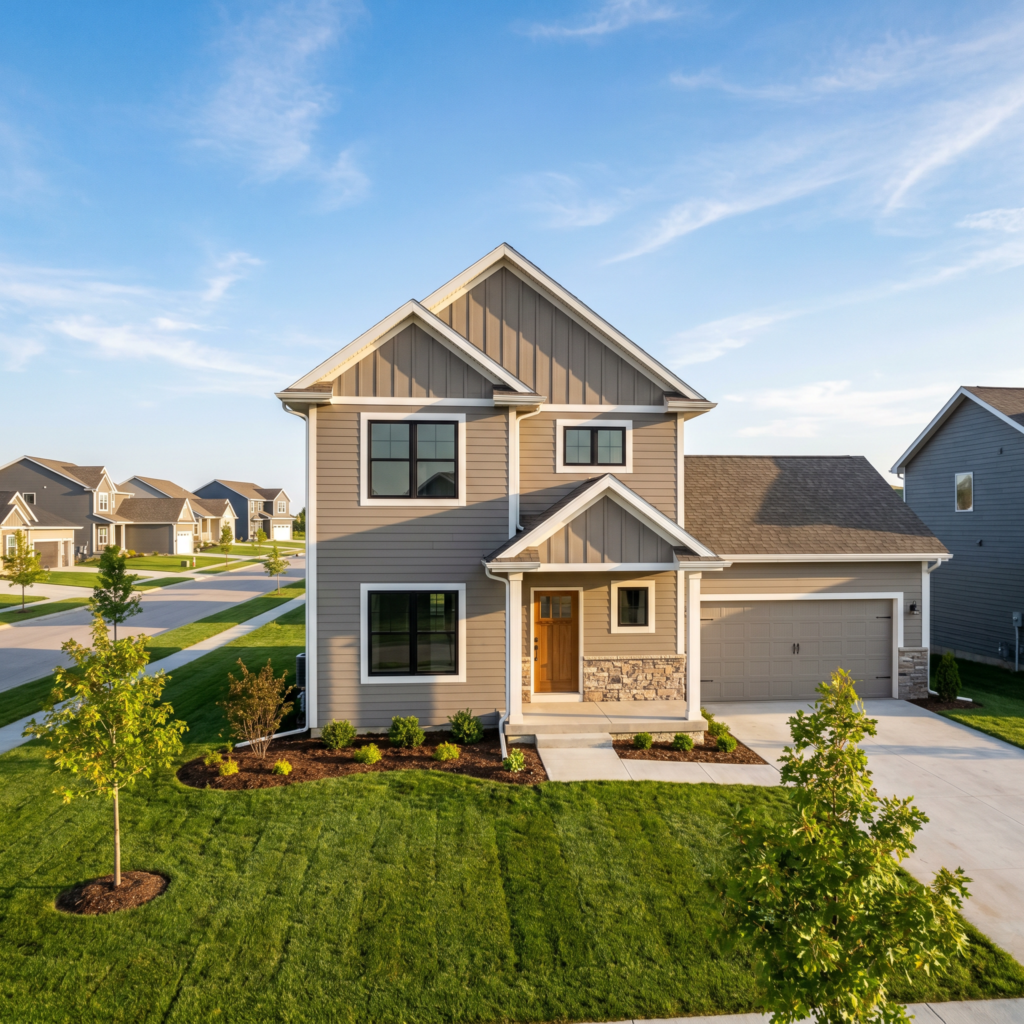
The floor plan will be a standard open layout. By standard, I mean efficient to frame and finish, without the complex roof geometry, extensive vaulted ceilings, or architectural detail work that drives cost without adding usable square footage. A clean rectangle with a simple gable or hip roof is the most cost-efficient envelope at any size, and most $180-per-square-foot plans use some version of that.
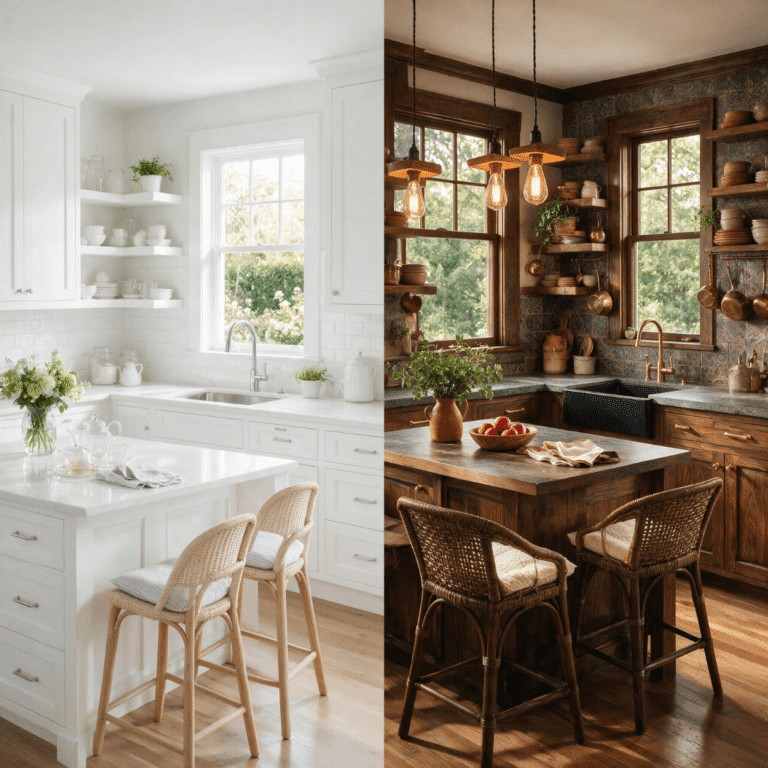
The kitchen and bathrooms will have semi-custom cabinets. The term “semi-custom” describes cabinets made in standard sizes from a manufacturer’s catalog, with a range of finish options, door styles, and minor modifications available. They look and function very similarly to fully custom cabinets at a substantially lower price. The difference between semi-custom and true custom on a 2,500 square foot home with a normal-sized kitchen and three bathrooms can easily run $15,000 to $30,000. For most buyers, the visual and functional difference doesn’t justify that cost.
Countertops will be quartz or granite in standard profiles. Quartz has become the default in mid-range builds because it’s harder than granite, doesn’t require sealing, and comes in consistent patterns. Both materials look excellent and last decades. The standard edge profile (eased or bullnose) is what you’ll typically get at this price; ogee or waterfall edges add real cost.
Flooring will typically be luxury vinyl plank or standard hardwood in the main living areas, with tile reserved for the wet areas in bathrooms. Luxury vinyl plank has improved dramatically over the past decade and is now the most popular flooring choice in mid-range custom homes. It’s waterproof, scratch-resistant, easier on the feet than tile, and indistinguishable from hardwood at a glance.
The home will include two full bathrooms plus a powder room as standard. The two full bathrooms typically include the primary suite bathroom and a shared upper-level or main-level bath. The powder room is a half bath on the main floor for guests. You’ll get an attached two-car garage as standard. Three-car garages are available but add roughly $15,000 to $25,000 in materials and labor. ENERGY STAR certified windows meeting Iowa’s Climate Zone 5A requirements (U-factor 0.30 or lower) are standard at this price point and provide meaningful energy savings over baseline code-minimum windows.
The HVAC system will be standard high-efficiency equipment with a programmable thermostat, sized correctly for the home rather than oversized. This is one of the areas where mid-range pricing actually delivers a better outcome than luxury, because correctly sized equipment is more efficient and longer-lasting than oversized equipment.
Exterior cladding will typically be vinyl or fiber cement siding rather than brick or stone. Fiber cement (commonly known as Hardie board) has become the premium choice in mid-range builds because it looks like wood, resists Iowa’s freeze-thaw cycles, and carries a long warranty. Brick and stone fronts add $20,000 to $50,000 and are typically out of reach at $180 per square foot.
The basement will be unfinished. This is the most important budget decision in this entire price tier, and we’ll discuss it in detail below. Finishing the basement adds $35,000 to $90,000 depending on scope and is one of the most common ways a $180-per-square-foot budget creeps to $200-plus.
One Iowa-specific feature that belongs in every new custom home conversation is passive radon mitigation, which I’ll cover in detail in a later section.
What $180 per square foot does not typically include: nine-foot ceilings on both floors (adds meaningful framing and finishing cost), fully custom cabinetry, tile throughout the home rather than only in wet areas, stone or brick exterior, large covered decks or porches (separate budget item, typically $15,000 to $30,000), premium appliance packages, or any basement finishing work.
Table 1: What You Get at Each Price Tier
| Feature | $150/sq ft (entry) | $180/sq ft (mid-range) | $225/sq ft (upper mid) |
|---|---|---|---|
| Cabinets | Stock from catalog | Semi-custom | Semi-custom or low custom |
| Countertops | Laminate or entry quartz | Quartz or granite | Premium quartz or granite |
| Flooring | Carpet and LVP | LVP throughout or hardwood main | Hardwood throughout main |
| Ceilings | 8 ft both floors | 9 ft main, 8 ft up | 9 ft both floors |
| Exterior | Vinyl siding | Vinyl or fiber cement | Fiber cement or partial brick |
| Bathrooms | 2 full + powder | 2 full + powder | 2 full + powder + soaking tub |
| Garage | 2-car attached | 2-car attached | 2 or 3-car attached |
| Basement | Unfinished | Unfinished | Unfinished or partial finish |
The Costs That Aren’t In Your $450K
This is the section that matters most for your actual planning. The $450,000 construction budget is what your builder charges to put the home together. Several other costs sit outside that number and have to be funded separately, often from different sources (some from cash, some from your construction loan, some from the eventual mortgage that pays off the construction loan).
Land is the first and largest cost outside the construction number. A standard suburban lot in Ankeny, Grimes, or Altoona typically runs $30,000 to $80,000 in 2026. The same lot quality in West Des Moines or Johnston runs $80,000 to $150,000-plus. Rural acreage often looks cheaper at $20,000 to $50,000, but you’ll then add $15,000 to $40,000 for utility connections (private well, septic system, longer utility service runs) that suburban lots include in the lot price. Lot choice is the single largest variable that determines whether your $450K construction budget produces an all-in number you can finance comfortably or one that breaks your plan.
Soft costs cover everything between the lot purchase and the construction work. Design and engineering typically run $5,000 to $13,000 depending on plan complexity. Permits run $500 to $2,000 in most Central Iowa cities. Utility connections (water, sewer, gas, electric, including any tap fees the municipality charges) run $3,000 to $12,000. Initial landscaping and grading add another $3,000 to $10,000. None of these is enormous on its own, but together they typically total $15,000 to $40,000 that has to be funded from somewhere.
Construction loan interest is a real cost that homeowners often underestimate. During the eight to twelve months of active construction, you’re paying interest on the construction loan based on draws as they happen. The exact amount depends on loan size, interest rate, and the draw schedule, but for a $450,000 construction budget at current rates, expect to pay $15,000 to $25,000 in interest during the build. This is one of the reasons keeping the construction timeline tight matters financially, not just emotionally.
Contingency is the line item that homeowners are most tempted to skip and most often regret. Industry standard for a custom build is 10 to 15% of construction cost, which translates to $45,000 to $67,500 on a $450,000 build. This sounds like a lot until you encounter your first surprise. Iowa-specific surprises that draw from contingency include unexpected soil conditions (clay variations that require deeper foundations or engineered footings), material price changes mid-build (tariff-driven cost increases on lumber, cabinets, or steel that arrive after your contract is signed), and the inevitable scope changes that happen when you walk through the home during framing and realize you want a window in a different place.
Add all of this up and your $450,000 construction budget translates to a true all-in cost of $545,000 to $700,000-plus depending on location and lot choice. That’s the number to compare to your real financing capacity, not the headline construction figure.
Table 2: The Real All-In Budget Breakdown
| Budget Item | Low Estimate | High Estimate | Notes |
|---|---|---|---|
| Construction ($180/sq ft × 2,500 sq ft) | $450,000 | $450,000 | The headline number |
| Land | $30,000 | $150,000+ | Geographic variable |
| Design and engineering | $5,000 | $13,000 | Plan complexity |
| Permits | $500 | $2,000 | City-specific |
| Utility connections | $3,000 | $12,000 | Sewer, water, gas, electric |
| Construction loan interest | $15,000 | $25,000 | Varies by rate and timeline |
| Landscaping and grading | $3,000 | $10,000 | Initial only |
| Contingency (10-15%) | $45,000 | $67,500 | On construction budget |
| All-in total | $545,000 | $700,000+ | Before any premium upgrades |
Estimates for planning purposes only. Actual all-in cost requires professional scope review and written estimates from your builder and lender.
Iowa-Specific Factors That Raise the Floor
Several Iowa realities raise the floor on custom home costs in ways homeowners in warmer regions don’t experience. Understanding them helps you budget honestly rather than assuming national-average costs apply to Iowa builds.
Iowa’s frost line of 42 inches means every basement and crawl space foundation must extend below that depth before any structural element rests on it. There is no code workaround. Compared to a state like Texas or Arizona, where shallow foundations are routine, this adds roughly $5,000 to $15,000 to your foundation cost on a 2,500 square foot home. The number isn’t catastrophic, but it’s real and locked in from the start.
Iowa’s clay soils add a second layer of cost variability. Clay expands when wet and contracts when dry, which puts ongoing stress on foundations and footings. Lots with heavy clay or poor drainage may require engineered footings, deeper foundations, or additional waterproofing measures that add $5,000 to $15,000 above standard pricing. These conditions are not always predictable from a visual lot inspection, which is why a soil test before lot purchase is one of the highest-value due diligence steps in any Iowa custom build. Two hundred dollars on a soil test can save you $15,000 in surprises during foundation work.
Radon is the third Iowa-specific factor, and the response is straightforward. Iowa has the worst radon levels in the country, with as many as 5 in 7 Iowa homes above the EPA action level. The decision about radon mitigation is simple math. A passive radon mitigation system installed during construction (a vertical pipe routed from beneath the slab through the roof, ready to accept a fan if testing later shows elevated levels) costs $400 to $500. Retrofitting the same system after the home is built costs $800 to $2,500 because the contractor has to work around finished spaces. Include it during construction; the cost difference makes the decision obvious.
Tariffs deserve a separate mention because they’re a 2026 reality that’s affecting actual project pricing rather than a footnote about future risks. The National Association of Home Builders estimates that current tariff policy is adding $9,200 to $10,900 to the average new home cost, primarily through lumber, cabinets and vanities, steel, and aluminum. Most builders have already adjusted their pricing to reflect this. The good news is that Iowa’s overall construction costs still run 20 to 30% below the national average even with tariffs factored in, so the relative value of building here remains strong compared to other states. The relevant question for your planning is whether the builder’s quoted price already includes current tariff impact (most reputable builders’ quotes do) and what happens if tariffs increase further mid-build (your contract should address this directly).
Permits in Central Iowa are city-specific. Des Moines’s permit plan review typically runs about three weeks. West Des Moines processes residential permits through its online permit portal at a similar pace. Ankeny, Waukee, Urbandale, Johnston, Grimes, and Altoona each have their own permit offices with slightly different application requirements. A contractor experienced in your specific city manages this in parallel with design and ordering, keeping it off the project’s critical path. Before signing a contract with any builder, you can verify their registration at Iowa DIAL, the state agency that registers contractors. Iowa registers general contractors (rather than licensing them) and separately licenses the specialized trades (electricians, plumbers, HVAC technicians) that work on your project.
Where $450K Works and Where It Gets Tight
The same construction budget produces different outcomes depending on where you build. Lot cost is the largest geographic variable, and it effectively sets the ceiling on whether the all-in math works.
Ankeny is the strongest fit at this budget. Standard lots in active development areas typically run $30,000 to $60,000 in 2026. The metro is growing quickly, which means infrastructure is current, schools have invested in new buildings, and resale demand is strong. At $180 per square foot construction plus a lot in this range, all-in budgets typically land at $550,000 to $620,000 with reasonable contingency. This is the geographic profile that makes the $450K plan work most reliably.
Grimes works similarly well. Lots typically run $40,000 to $70,000, schools rank among the strongest in the metro, and the suburb has been one of Central Iowa’s fastest-growing communities. The construction premium versus Ankeny is minimal.
Altoona offers some of the most affordable suburban lots in the metro, often $30,000 to $55,000, with good access to Des Moines, the eastern metro employment corridors, and recreation along the Des Moines River. All-in math frequently lands at the lower end of the $545,000 to $700,000 range, making Altoona one of the best-value choices at this budget tier.
Waukee’s outer ring (east of the most expensive core neighborhoods) typically offers lots in the $40,000 to $75,000 range with strong schools and growing infrastructure. This is one of the most popular targets for buyers with a $450K construction budget who want strong school district reputation without West Des Moines pricing.
West Des Moines proper is where $450K gets tight. The 10 to 15% construction premium versus surrounding suburbs (driven by labor competition for desirable projects and the city’s higher standards in certain neighborhoods) means your $180 per square foot might end up at $195 to $205 for comparable scope. Lots typically start at $80,000 and climb past $150,000 for desirable infill or established-neighborhood parcels. The combined effect pushes most $450K construction-budget homes past $700,000 all-in. It’s not impossible to build in West Des Moines at this budget, but you’ll be making trade-offs that buyers in adjacent suburbs don’t have to make.
Johnston runs similar to West Des Moines on both construction premium and lot cost. The schools are excellent and the location is desirable, which is precisely why the math is tighter. Buyers committed to the Johnston school district sometimes accept the higher all-in number rather than build in a neighboring suburb.
Rural acreage looks tempting on lot cost but rarely works out cheaper all-in once you account for utility connection costs, septic system installation, longer service runs, and the soft cost of being further from the urban services and infrastructure that suburban lots include. Lower lot prices ($20,000 to $50,000) are typically offset by these additional costs ($15,000 to $40,000), bringing rural all-in math close to suburban math but with different lifestyle trade-offs.
Table 3: $450K Construction Budget by Location
| Location | Typical Lot Cost | Construction Feasible? | All-In Range | Notes |
|---|---|---|---|---|
| Ankeny | $30,000-$60,000 | Yes | $550,000-$620,000 | Strongest fit |
| Grimes | $40,000-$70,000 | Yes | $560,000-$640,000 | Strong fit |
| Altoona | $30,000-$55,000 | Yes | $545,000-$615,000 | Most affordable |
| Waukee (outer) | $40,000-$75,000 | Yes | $570,000-$650,000 | Growing fit |
| West Des Moines | $80,000-$150,000+ | Tighter | $650,000-$750,000+ | Construction premium 10-15% |
| Johnston | $80,000-$130,000+ | Tighter | $640,000-$730,000+ | Similar to WDM |
| Rural acreage | $20,000-$50,000 | Variable | $580,000-$680,000 | Utility connections add $15K-$40K |
Estimates for planning purposes only. Final costs require lot-specific assessment.
The Five Decisions That Determine Whether $450K Works
If you want to maximize the chance your $450K construction budget actually delivers a 2,500 square foot home with finishes you’re happy with, the answer comes down to five decisions. Each of these is a use point where a single choice changes the math by tens of thousands of dollars.
The first decision is to choose your lot before locking anything else in. Lot cost is the single largest variable that determines whether the all-in math works, and lot choice has cascading effects on everything else. A flat, rectangular lot with utilities to the street is dramatically cheaper to build on than a sloped lot, a wooded lot that requires clearing, or a lot where utilities are far from the building site. A soil test before lot purchase, costing roughly $200 to $400, tells you whether the foundation will be straightforward or whether you’re walking into clay surprises. The right lot can save you $20,000 in foundation and site work; the wrong lot can cost you $30,000 in unexpected expenses.
The second decision is to keep the roof simple. Complex roof geometry (multiple gables, intersecting slopes, dormers, turrets) adds 10 to 15% to framing cost without adding usable square footage. A clean two-story rectangle with a simple gable or hip roof is the most cost-efficient envelope at any size. If you love a particular architectural style that requires complex roofing, that’s a legitimate trade-off to make, but understand that it’s coming out of finishes elsewhere in the home.
The third decision is to leave the basement unfinished. Finishing a basement during initial construction adds $35,000 to $90,000 depending on scope, with the range driven primarily by whether you add a full bathroom and how extensively you finish the rest of the space. The basement can almost always be finished later, as a separate project, when budget allows and you better understand how you actually want to use the space. Many families discover after moving in that the basement uses they originally planned aren’t what they need. Building it unfinished and finishing it later, when the rest of the home is paid for and you’ve lived with it for a year or two, is one of the highest-value sequencing decisions in any custom build. For more on the basement-versus-other-investment trade-off, see our finished basement vs. home addition comparison.
The fourth decision is to choose semi-custom cabinetry rather than fully custom. Cabinets are typically the largest single finish-cost lever in any custom home. The difference between semi-custom and fully custom on a 2,500 square foot home with a normal-sized kitchen and three bathrooms can run $15,000 to $30,000. Semi-custom from a quality manufacturer produces a result that’s visually similar and functionally equivalent for most homes. If you have a kitchen design that genuinely requires custom cabinetry (unusual ceiling heights, very specific configurations, an extensive island), make that choice intentionally and pull the budget from somewhere else. Don’t drift into custom cabinetry by accident.
The fifth decision is to build in real contingency. Ten to fifteen percent of construction cost ($45,000 to $67,500 on a $450K build) is the industry standard, and it exists because every custom build encounters surprises. Iowa-specific surprises that draw from contingency include unexpected soil conditions, material price changes mid-build, weather delays, and the scope changes that happen when you walk through framing and realize you want a window in a different place. A contingency that goes unused is a contingency well-budgeted; the family that comes through the build with $20,000 of unused contingency has options for upgrades or for finishing the basement sooner than planned. The family that built without contingency and hits a $30,000 surprise has a different problem entirely.
Illustrative Scenarios
Illustrative scenario: An Ankeny family sets a $450,000 construction budget for a 2,500 square foot home. They purchase a $55,000 lot, budget $30,000 for soft costs (design, permits, utility connections, landscaping), and maintain a $50,000 contingency. Their projected all-in is $585,000. They make the smart trade-offs throughout. The basement stays unfinished. Cabinets are semi-custom from a quality manufacturer rather than fully custom. Flooring is luxury vinyl plank throughout the main floor with tile in the wet areas. The home delivers at $178 per square foot on construction, and the family moves in with $15,000 of the contingency still available. Two years later, they finish the basement as a separate project, paid in cash from accumulated savings rather than rolled into the original mortgage.
Illustrative scenario: A Johnston couple wants the same 2,500 square foot home at the same $450,000 construction budget but falls in love with a $120,000 lot in an established Johnston neighborhood. Soft costs add $32,000. With a 10% contingency of $45,000, the all-in math comes to $647,000, which is $62,000 above what they originally planned to finance. They face three real choices: accept the higher all-in number and finance accordingly, switch to a less expensive lot in a different neighborhood, or reduce the construction scope (smaller home, simpler finishes). The lesson is that lot selection sets the ceiling on whether $450K works at all, and that ceiling can’t be raised by trimming construction costs after the lot is purchased. Lot first, everything else after.
Frequently Asked Questions
Q: Can I really build a 2,500 square foot custom home in Iowa for $450K?
A: Yes, as a construction budget, in most Central Iowa suburbs outside West Des Moines and Johnston. The math is $180 per square foot, which is mid-range custom territory in Iowa for 2026. The all-in cost including land, soft costs, contingency, and construction loan interest will land at $545,000 to $700,000-plus depending on where you build. That all-in number is what you need to compare to your real financing capacity.
Q: What does $180 per square foot actually include in Iowa?
A: Mid-range construction with semi-custom cabinets, quartz or granite countertops, luxury vinyl plank or standard hardwood flooring in main living areas, ENERGY STAR windows meeting Iowa’s Climate Zone 5A requirements, standard high-efficiency HVAC, a two-car attached garage, two full bathrooms plus a powder room, vinyl or fiber cement exterior, and an unfinished basement. It typically does not include nine-foot ceilings on both floors, fully custom cabinetry, stone or brick exterior, a finished basement, or large covered decks.
Q: What are the hidden costs that blow a $450K custom home budget?
A: Land is the largest variable, ranging from $30,000 in affordable suburbs to $150,000-plus in West Des Moines or Johnston. Soft costs (design, permits, utility connections, landscaping) typically add $15,000 to $40,000. Construction loan interest during the eight to twelve month build typically adds $15,000 to $25,000 depending on rates and draw schedule. A 10 to 15% contingency adds $45,000 to $67,500. Together these typically add $95,000 to $250,000-plus to the construction budget, which is why the all-in number is so much higher than the construction headline.
Q: How long does a 2,500 square foot custom home take to build in Iowa?
A: Design through move-in typically runs 10 to 14 months. Construction alone runs 8 to 12 months, with permit and design phases adding 2 to 4 months before construction begins. For the full breakdown of timeline factors, see our guide to how long it takes to build a custom home in Iowa.
Q: Will tariffs affect my 2026 custom home budget?
A: Yes. The National Association of Home Builders estimates that current tariff policy is adding $9,200 to $10,900 to the average new home cost, primarily through lumber, cabinets, steel, and aluminum. Most builders have already adjusted their pricing accordingly, so the tariff impact is reflected in current quotes rather than waiting to surprise you. Iowa’s overall construction costs still run 20 to 30% below the national average even with tariffs factored in, so the relative value of building here remains strong. Before signing a contract, ask your builder explicitly how their contract handles tariff increases that occur after the contract is signed.
Key Takeaways
To pull the threads together, here’s what to walk away with.
$450,000 works as a construction budget in most of Central Iowa for a 2,500 square foot home. At $180 per square foot, the math lands in mid-range territory. The fit is strongest in Ankeny, Grimes, Altoona, and most Waukee suburbs. It gets tight in West Des Moines and Johnston, where construction premiums and higher lot costs push the all-in math past comfortable.
The all-in budget is not $450,000. Land, soft costs, contingency, and construction loan interest push the true all-in cost to $545,000 to $700,000-plus. This is the number to finance, not the headline construction figure, and the gap between the two is where most planning failures originate.
Lot choice sets the ceiling. The single largest variable in whether your budget works is where and what you build. A $50,000 lot in Ankeny gives you very different headroom than a $130,000 lot in Johnston, even with identical construction plans. Choose your lot first.
Iowa-specific costs are real but not catastrophic. The 42-inch frost line adds $5,000 to $15,000 to foundations. Clay soils can add another $5,000 to $15,000 if engineered footings are needed. Tariffs add roughly $9,200 to $10,900 per NAHB data. Include passive radon mitigation during construction at $400 to $500 rather than retrofitting later at $800 to $2,500.
Five decisions determine the outcome. Choose the lot first. Keep the roof simple. Leave the basement unfinished. Choose semi-custom cabinetry rather than fully custom. Build in real 10 to 15% contingency. Following these consistently keeps $180 per square foot achievable.
Ready to Plan a Custom Home at This Budget?
You now have the framework to evaluate whether your $450,000 construction budget produces an all-in number you can finance, in the location you want to build. The next step is a conversation with a builder who will give you an honest read on whether the math holds up in your specific situation, including a realistic view of your target lot and the trade-offs you’d need to make.
Busy Builders has completed 1,285+ projects across Central Iowa since 2020. Our custom home process begins with a free project consultation and a candid budget conversation, including a realistic discussion of where your target lot price puts the all-in math. We provide itemized estimates that distinguish construction cost from soft costs and contingency, manage permits and inspections, and coordinate with the licensed trade contractors (electricians, plumbers, HVAC technicians) your project requires. Custom home construction at Busy Builders starts at $150 per square foot, with mid-range builds typically running $175 to $225 per square foot depending on finish level, scope, and lot conditions. All work is performed by registered Iowa contractors with the Iowa Department of Inspections, Appeals, and Licensing, and backed by a written warranty on workmanship (details provided in your contract).
We serve Des Moines, Ankeny, Waukee, Grimes, Altoona, Urbandale, Johnston, West Des Moines, and communities across Central Iowa.
Call: 844-435-9800
Website: https://busybuildersiowa.com/
All cost estimates, ranges, and price-per-square-foot figures in this guide are for planning purposes only. Actual construction costs vary by lot, scope, materials, finish selections, market conditions, and tariff impact, which is an active 2026 variable. Tariff impact figures cited in this guide are sourced from National Association of Home Builders industry estimates rather than Busy Builders predictions. The $150 per square foot starting price represents Busy Builders’ entry-level custom home construction; mid-range builds typically run $175 to $225 per square foot depending on scope, finish, and lot conditions. All-in budget estimates include land, soft costs, contingency, and construction loan interest, and are subject to professional scope review and written estimates from your builder and lender. Iowa-specific cost factors (frost line foundation depth, clay soil engineering requirements, radon mitigation) vary by lot and should be evaluated on a project-by-project basis. Always obtain three written quotes for your specific project. Verify any Iowa builder’s registration at the Iowa Department of Inspections, Appeals, and Licensing before signing a contract. Busy Builders is a registered Iowa contractor with the Iowa Department of Inspections, Appeals, and Licensing.
Busy Builders | Full-Service Construction and Remodeling | Serving Central Iowa Since 2020
Related service: home building in Central Iowa.