The expensive basement mistakes happen in the steps people skip on the way to picking flooring. This guide covers the errors we see most across Central Iowa basements, what each costs to fix after drywall, and the order of operations that prevents all of them.
TLDR: The costly basement mistakes are all preventable: finishing over unfixed moisture, skipping the radon test, working without permits, shorting egress requirements, and using above-grade materials below grade. Fixing any of these after drywall costs 3 to 10 times what prevention costs. Test, permit, and sequence first. Planning estimates, actual costs vary.
Mistake 1: Finishing Over a Moisture Problem
Water always wins. A basement that gets damp every spring will get damp behind your new drywall, and you will not see it until the smell arrives. Walk the basement after a hard rain. Look for wall dampness, white residue, and sump activity. Fix grading and drainage first, every time.
| Skipped Step | What It Costs Later | Prevention Cost |
|---|---|---|
| Moisture testing | $8,000 to $25,000 mold rework | Free to $300 |
| Radon testing | $1,500+ retrofit mitigation | $15 to $150 |
| Permit filing | Fines, forced rework, sale issues | Permit fees |
| Egress compliance | $5,000 to $12,000 retrofit cut | Designed in from day one |
The takeaway: every row is a small upfront step versus a five-figure repair. Prevention is the whole game. Planning estimates, actual costs vary.
Pro Tip 1: Tape a square of plastic to bare foundation wall for 48 hours. Condensation behind it means vapor is moving through.
Pro Tip 2: Insulate walls to R-15 continuous or R-19 cavity. Skipping insulation creates the cold, sweating walls that start the mold cycle.
Mistake 2: Skipping the Radon Test
Iowa is EPA Radon Zone 1 in all 99 counties, and the Iowa Radon Survey found as many as 5 in 7 Iowa homes above the action level. The EPA’s radon guidance calls for testing before renovation. Mitigation installs cleanly before drywall and painfully after.
Pro Tip 3: Test in winter when readings run highest, and rough in a mitigation pipe even on a low result.
Mistake 3: Working Without Permits
Unpermitted basements surface at the worst moments: appraisals, insurance claims, and sales. Permits buy you inspections, and inspections catch trade mistakes while they are cheap. A registered contractor carries the permit and meets the inspector for you.
Pro Tip 4: Keep the permit card and inspection records in your sale folder. Documented work closes deals faster.
Pro Tip 5: If you inherited an unpermitted finish, ask your city about retroactive permitting before listing. It goes better when you start the conversation.
Mistake 4: Shorting the Egress Requirement
A basement bedroom without proper egress is not a bedroom, legally or in an emergency. The Iowa egress standards require 5.7 square feet of net clear opening, a 44-inch maximum sill, and a compliant well. Cutting that opening after finishing means demolition next to new surfaces. Design it in from the first sketch.
| Egress Requirement | Standard | Common Shortcut That Fails |
|---|---|---|
| Net clear opening | 5.7 sq ft | Undersized replacement window |
| Sill height | 44 in max | Existing high glass block |
| Window well | 9 sq ft, 36 in projection | Narrow well, no ladder |
| Operation | Opens without tools | Painted-shut sashes |
The takeaway: an inspector measures every one of these, and so does a buyer’s inspector years later.
Pro Tip 6: Cutting egress? Do it first in the schedule, before framing. Concrete dust and finished walls do not mix.
Mistake 5: Above-Grade Materials Below Grade
Standard products fail early below grade. Hardwood cups, standard drywall wicks, and bargain pad holds moisture against concrete.
| Instead Of | Use Below Grade | Why |
|---|---|---|
| Solid hardwood | LVP or engineered | Handles humidity swings |
| Standard pad and carpet | Moisture-rated pad | Dries instead of souring |
| Wood studs on concrete | Treated bottom plates | Code and rot prevention |
| Standard drywall at wet risk | Moisture-resistant board | Cheap insurance |
The takeaway: below-grade materials cost slightly more per foot and remove whole categories of callback. Choose them once.
Pro Tip 7: Run flooring samples through a wet-basement thought experiment: if the sump failed for a day, which sample survives?
Pro Tip 8: Leave access panels at shutoffs and cleanouts, or a $5 part becomes a drywall repair.
Mistake 6: Ignoring What the Space Does to Value
Appraisers credit finished basements at roughly 60 to 75% of above-grade value under the Fannie Mae below-grade rules. That is not a reason to skip the project. It is a reason to spend where use justifies it, not where resale math cannot. Not financial advice, actual returns vary.
Pro Tip 9: Spend on dryness, lighting, and ceiling height feel. Those read as quality in every showing.
Pro Tip 10: Skip the ultra-custom theater buildout unless you will use it for years. Specialty rooms appraise as ordinary space anyway.
Illustrative Scenarios from Central Iowa
Illustrative scenario: A Waukee family bought a home with an unpermitted basement finish. Retroactive permitting required opening two walls and rewiring, about $11,000, before their basement remodeling project could proceed.
Illustrative scenario: A Marshalltown homeowner finished over spring dampness. Two years later, mold remediation and refinish ran $19,000, versus the $2,800 drainage fix that would have prevented it.
Illustrative scenario: A Norwalk couple added egress during their 700 square foot finish for $4,800. The same cut quoted at $9,600 as a retrofit behind finished walls.
Pro Tip 11: Get bids that itemize testing, drainage, egress, and inspections. A bid that skips them is not cheaper; it is incomplete.
The Order of Operations That Prevents Everything
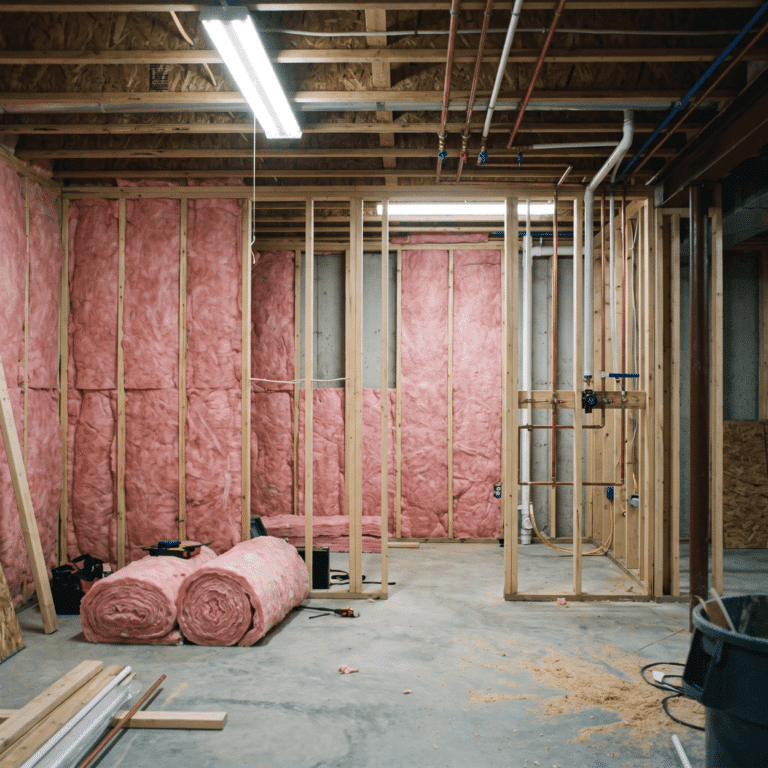
Test moisture and radon. Fix water. Pull the permit. Cut egress. Rough in trades through licensed subcontractors. Pass inspections. Insulate. Then drywall.
A full basement finishing scope runs that sequence by default, and a bathroom addition folds into the same permit alongside your bathroom remodeling selections.
Pro Tip 12: Print that sequence and tape it inside the mechanical room door. Every shortcut on the list has a five-figure price tag.
FAQs
What is the most expensive basement finishing mistake? Finishing over unresolved moisture. Mold rework behind new walls runs $8,000 to $25,000 in typical cases, versus a few hundred dollars of prevention. Planning estimates, actual costs vary. Walk your basement after a hard rain before you design anything.
Do I really need a permit to finish my basement? Yes. Habitable-space finishes are permitted work, DIY or contractor-led. Unpermitted finishes surface at sale and appraisal. Call your city desk before starting.
How do I know if my basement has radon? Test it. Most Iowa homes test above the action level per the Iowa Radon Survey. Kits cost about $15 to $30. Test before finishing and again a month after.
Can a basement bedroom use an existing small window? Only if it meets egress numbers: 5.7 square feet net clear opening, 44-inch max sill, compliant well. Most older windows fail. Measure before calling it a bedroom.
Are moisture-rated materials worth the upcharge? Yes. Below-grade rated flooring, pad, and board cost modestly more and prevent the most common callbacks. One saved incident pays the difference. Ask your bid to specify below-grade materials by name.
Key Takeaways
Water first, always
- Fix grading and drainage before design; test before finishing.
Paper protects you
- Permits, inspections, and records pay off at appraisal and sale.
Egress is non-negotiable
- 5.7 square feet, 44-inch sill, real window well, designed in from day one.
Buy below-grade materials
- LVP, treated plates, moisture-rated board beat premature failure.
Value math is different down there
- 60 to 75% credit means spend for use.
Plan It Right the First Time
Busy Builders has completed 1,285+ projects across Central Iowa since 2020. Our scopes put testing, permits, and sequencing in writing. Get a free consultation before the first wall goes up.
Call: 844-435-9800 Website: https://busybuildersiowa.com/ Written warranty on workmanship (details provided in your contract).
Disclaimer: This article is for general information, not project-specific advice. Cost figures are planning estimates that vary by scope, materials, site conditions, and current pricing. Permit requirements vary by city; verify current requirements with your local building authority before starting. Radon levels vary by home; test before and after finishing, with statistics from the Iowa Radon Survey. Below-grade moisture outcomes depend on site conditions, and no guarantee against water intrusion is made. Structural changes, including egress cuts, require evaluation by a qualified professional. Appraisal figures are illustrative, not financial advice. Trade work runs through licensed subcontractors. No specific outcomes are guaranteed. Consult a registered contractor for guidance specific to your project.
Busy Builders | Full-Service Construction and Remodeling | Serving Central Iowa Since 2020