
Your family has outgrown the house. The kids need their own rooms, or you need a main-floor bedroom, or the kitchen finally has to be bigger. You face a binary decision: build an addition, or move to a bigger home. This guide walks through the honest financial and lifestyle math for both options in Central Iowa so that you can make the right call for your specific situation.
TLDR: Moving in Des Moines in 2026 typically costs $33,000 to $45,000 in transaction fees alone, and giving up a sub-4% mortgage for today’s 6.4 to 6.6% rate can add $400 to $800-plus per month to the same loan. A home addition runs $300 to $500 per square foot in Central Iowa, returns only 30 to 35% at resale, and takes 3 to 6 months from permit approval. Neither option clearly wins on paper. The right answer depends on your mortgage rate, your neighborhood’s price ceiling, your school district situation, and whether your lot has room for what you need.
Most homeowners who arrive at this decision have already done some math, and most of them have done it incompletely. Moving feels straightforward until you total the transaction costs and run the new monthly payment at today’s rates. An addition feels like a clean answer until you learn it returns only a third of its cost at resale. The truth is that both options are expensive, and the right choice depends on factors most online calculators don’t capture. This guide walks through each piece honestly.
The Real Cost of Moving in Des Moines 2026
The cost of moving is not the cost of the new house. It is the cost of everything between selling your current home and unpacking in the next one, and most homeowners underestimate it by half.
On a typical Des Moines move from a $300,000 home to a $350,000 home, transaction costs run roughly $33,000 to $45,000 before you put a dollar toward the new house. The breakdown includes realtor commissions on the sale side, averaging about 5.7% of the sale price, seller closing costs at about 2.6%, buyer closing costs at 2 to 5% of the new home’s price, and physical moving costs running $1,077 to $3,332, depending on distance and household size. Iowa’s transfer tax is mercifully low at about 0.16%, which softens the picture slightly, but the realtor commission alone on a $300,000 sale is roughly $17,100.
The transaction fees are only the first part of the moving math. The bigger factor in 2026 is the mortgage rate gap. The 30-year fixed rate currently sits at roughly 6.4 to 6.6%. According to data from the Federal Housing Finance Agency, about 60% of homeowners with mortgages carry rates below 4%, locked in during the 2020 to 2022 window when rates touched historic lows. If you are in that group, giving up your existing rate to take on a new mortgage at current rates costs $400 to $800-plus more per month on the same loan amount. The exact figure depends on your loan size, so the right move is to calculate your specific scenario with your lender rather than relying on an online estimate.
There is also the inventory problem. Des Moines’ median home price hit roughly $285,000 to $292,000 in early 2026, with West Des Moines and Ankeny leading year-over-year price growth at 8.1% and 7.8%, respectively. Inventory in the most desirable neighborhoods remains tight. Moving doesn’t guarantee you will find a home that fits your needs in the neighborhood you want at a price you can absorb. You may pay the transaction costs, take the rate hit, and still compromise on the home you end up in.
For the broader picture on whether to remodel or sell, see our remodel vs. sell and buy guide.
The Real Cost of a Home Addition in Des Moines
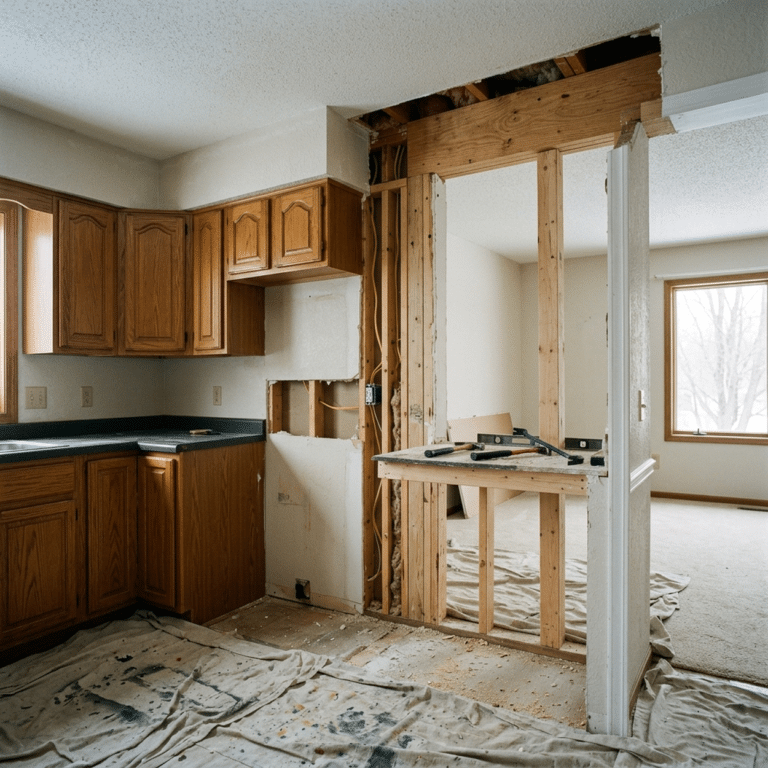
A home addition in Central Iowa runs $300 to $500 per square foot in 2026. That number does not depend on whether you choose budget finishes or premium ones; it reflects the underlying cost of building new construction tied to an existing structure, which is genuinely expensive work.
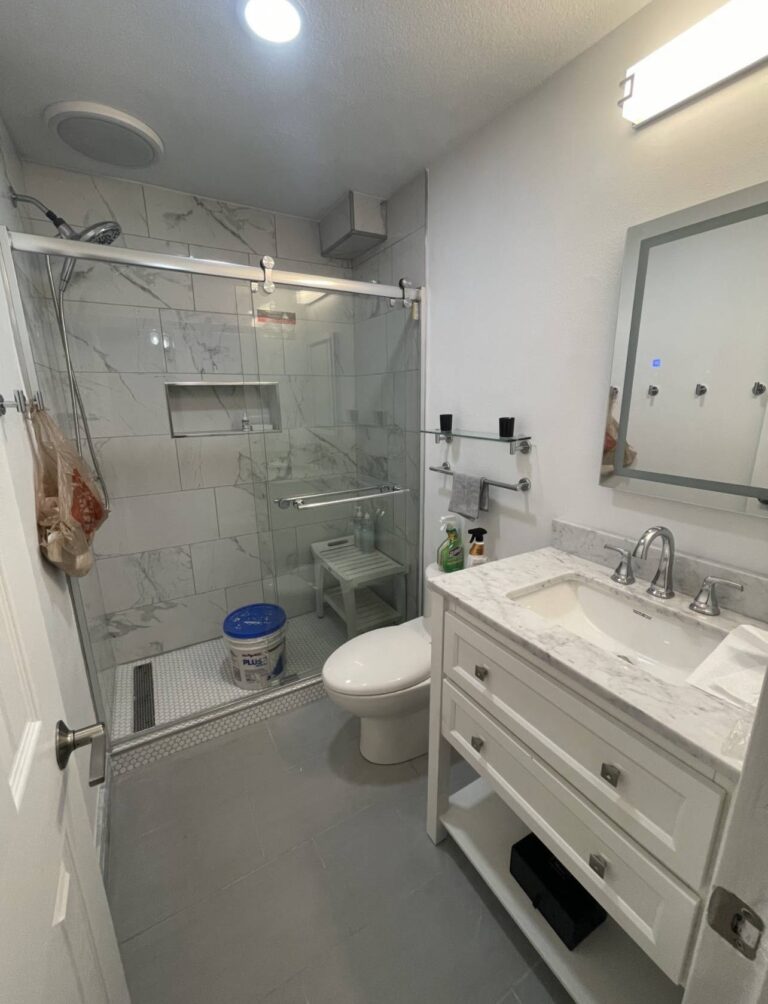
The cost-per-foot range breaks down roughly along scope lines. Basic room additions, meaning a single-story bedroom or family room with simple finishes, fall toward the $300 to $400 per square foot end. Complex additions involving a second story, a full bathroom, structural reinforcement, or custom finishes push toward the $400 to $ 600-plus-per-square-foot range. Specific project types give the clearest sense of total budget: a bedroom plus bathroom addition typically runs $100,000 to $140,000; a primary suite addition runs $145,000 to $200,000-plus; and a kitchen expansion runs $100,000 to $150,000, depending on scope and how much existing structure changes.
Iowa-specific factors raise the floor on additional costs in ways homeowners in warmer climates don’t experience. The 42-inch frost line means every addition’s foundation must extend below that depth, which adds $5,000 to $15,000 to the cost of the same foundation in, say, Texas or Arizona. Iowa’s clay soils require engineered footings for any structural addition, which adds design and engineering costs. The structural tie-in between new and existing construction is where most quality issues arise, particularly at the roofline transition, which is the most common water intrusion point. Cutting corners on any of these is the wrong place to save money.
Permits are required for every addition in every Iowa city, no exceptions. The Des Moines permit plan review typically runs about 3 weeks. West Des Moines processes residential permits through its online permit portal at wdm.iowa.gov at a similar pace. Construction itself takes 3 to 6 months from permit approval to final inspection, longer for complex projects.
Iowa construction costs run about 14% below the national average, which helps. A project that costs $200,000 in Chicago might come in at $172,000 in Central Iowa for a comparable scope. That margin is real, but it doesn’t change the fundamental math: even a modest Central Iowa addition is a six-figure investment.
For our full overview of how addition projects work, see our home additions service page.
Table 1: Financial Snapshot, Addition vs. Moving (Des Moines 2026)
| Factor | Home Addition | Moving |
|---|---|---|
| Typical project cost | $100,000 to $200,000+ | New home price plus down payment |
| Transaction/move-in costs | Permits ($1,000 to $3,000) | $33,000 to $45,000 on $300K→$350K move |
| ROI at resale | 30-35% | Depends on new home appreciation |
| Monthly payment impact | None if no new financing | $400 to $800+ more if rate gap exists |
| Timeline to use the space | 4-8 months total | 30-90 days to close, then move |
| Disruption level | High during construction | High during transition |
Costs and timelines are estimates. Run your specific scenario with a contractor and your lender.
The ROI Reality: Neither Option Wins on Paper
Here is the part that surprises most homeowners: home additions return only 30 to 35% of their cost at resale. A $130,000 addition typically adds about $40,000 to $45,000 in market value when you sell. The remaining $85,000 to $90,000 covers your living expenses in the bigger house. That is not bad, but it is not the financial home run many homeowners expect.
The reason has to do with how appraisers and buyers value homes. Appraisers determine value by looking at comparable sales in your neighborhood, not by adding up the cost of your improvements. If homes in your neighborhood top out at $290,000, an addition that pushes your home to a theoretical $350,000 value will appraise closer to $290,000 to $300,000. The phenomenon is called overimprovement, and it is the most common financial mistake in home addition projects. Cost does not determine value. Comparable sales do.
This is why a pre-project appraisal consultation matters before committing to a large addition. A licensed appraiser can pull recent neighborhood comps and give you a realistic ceiling for what your home could appraise for after the project. If your $150,000 addition plan would push your home past the local ceiling, you need to know that before you sign a construction contract, not after.
Moving has its own ROI problem. Transaction costs of 10 to 15% of your current home’s price disappear the moment you close. On a $300,000 home, that is $30,000 to $45,000 you will never see again. You can earn it back through appreciation on the new home, but only if you stay long enough for compound appreciation to overtake the transaction loss. Industry rule of thumb: You need to stay in the new home for roughly 5 to 7 years to break even financially.
The mortgage rate factor is the most underappreciated piece of the 2026 picture. If you locked a 3% rate in 2020 on a $250,000 mortgage, you are paying roughly $1,054 per month in principal and interest. The same balance at 6.5% costs roughly $1,580 per month, a difference of $526 every month for 30 years. That gap is the cost of giving up your rate, and on a longer horizon, it adds up to hundreds of thousands of dollars. Run your specific numbers with your lender before assuming you can afford the new payment.
Where the financial math favors staying: you have a sub-4% mortgage, your neighborhood’s comparable sales support the added value, your lot has room within setback requirements for the addition you need, and you plan to stay 7 or more years. Where the math favors moving: you carry a mortgage above 5% (the rate gap penalty is smaller), your addition would push value past the neighborhood ceiling, a school district change is the real underlying goal, or structural constraints on your lot prevent a good addition.
When Each Option Makes More Sense
The financial framework is the floor, but it doesn’t always make the decision. Lifestyle factors, lot constraints, and timing all weigh into the right answer.
An addition makes the most sense when several conditions line up. You have a low, locked-in mortgage rate (sub-4% is the strong case). You love your neighborhood and your schools. Your lot has room within local setback rules for the addition you need. You need a specific kind of space that adding gives you in a way moving can’t, like a main-floor primary suite for aging in place, an accessible bathroom, or a custom kitchen designed for the way you actually cook. You plan to stay 7-plus years, which gives the addition’s value-add time to mature. And neighborhood comparable sales support the post-addition appraisal.
Moving makes the most sense under different conditions. Your mortgage rate is already above 5%, so the rate-gap penalty is smaller and the math is closer to neutral. The school district change is the real underlying goal, and no amount of additional work fixes that. Your addition plan would overimprove for the neighborhood. The location itself, not the space, is the actual problem. Structural or lot constraints (small lot, awkward shape, easement issues) prevent a good addition design. Or your timeline is urgent, and waiting 4 to 8 months for construction isn’t workable.
Table 2: Decision Framework
| Your Situation | Lean Addition | Lean Moving |
|---|---|---|
| Mortgage rate below 4% | Strong yes | |
| Mortgage rate above 5% | Neutral | Stronger case |
| Love the neighborhood | Strong yes | |
| Need a main-floor bedroom or accessibility | Strong yes | |
| The lot has room within setbacks | Often yes | |
| Addition would push past the neighborhood’s ceiling. | Yes | |
| Need a main-floor bedroom or accessibility. | Yes | |
| Addition would push past the neighborhood ceiling. | Yes | |
| Plan to stay 7+ years | Strong yes | |
| Timeline is urgent | Yes |
This is a framework, not a formula. Most decisions involve trade-offs across multiple rows.
Table 3: Addition Cost by Type, Central Iowa 2026
| Addition Type | Typical Cost | Timeline |
|---|---|---|
| Bedroom plus bathroom | $100,000 to $140,000 | 3-5 months |
| Primary suite | $145,000 to $200,000+ | 4-6 months |
| Kitchen expansion | $100,000 to $150,000 | 3-5 months |
| Second story | $250,000 to $400,000+ | 5-8 months |
| Sunroom or covered porch | $40,000 to $90,000 | 2-4 months |
Cost estimates for Central Iowa 2026. Final scope requires professional assessment.
Iowa-Specific Factors That Change the Math
Iowa’s climate and soil add real costs and complexity, changing the economics compared to other regions.
The 42-inch frost line means that additional foundations go deeper. That depth adds $5,000 to $15,000 to foundation costs compared to warmer climates, where foundations can be shallower. There is no way around it; Iowa code requires footings to be below the frost line to prevent freeze-heave damage. Iowa’s clay soils compound the issue. Clay expands when wet and contracts when dry, which means additional footings often require engineering and may need to be deeper or wider than the minimum code requirement to accommodate expected soil movement.
Permits vary city by city. Des Moines’s Permit and Development Center handles plan review in about 3 weeks for typical residential additions. West Des Moines processes residential permits through its online permit portal at wdm.iowa.gov with similar timelines. Ankeny, Waukee, Urbandale, and Johnston each have their own permit offices and slightly different application requirements. A contractor experienced in your specific city handles this in parallel with design and ordering, which keeps it off the critical path. Homeowners filing their own permits often add 2 to 4 weeks of schedule risk.
Structural tie-in deserves a specific mention. The point where new construction meets existing construction is where most addition quality problems show up. The roofline transition is the most common location for water intrusion in addition to projects, both during construction and years later, as flashing and underlayment age. This is not a place to economize on the contractor or the materials. A correctly executed roof tie-in lasts decades; a poorly executed one creates ongoing moisture problems that destroy both the addition and the original structure.
Iowa law requires general contractors to register with the Iowa Department of Inspections, Appeals, and Licensing (DIAL) for any project earning $2,000 or more annually. Structural addition work is not a DIY-appropriate project. Beyond the legal requirement, the structural and waterproofing details require experienced trade-skill work that most homeowners don’t have. Verify any contractor you consider through Iowa DIAL before signing.
One more Iowa-specific consideration: if your addition includes any below-grade component, such as connecting to an existing basement or adding a new crawl space, account for radon. Iowa is the #1 state in the country for radon, with as many as 5 in 7 Iowa homes above the EPA action level. Any new below-grade construction should include passive radon mitigation as part of the design, particularly given pending state legislation that may soon require it.
The Option Most Homeowners Forget: Basement First
Before you commit to either an addition or a move, consider a third option: finishing your basement.
If you have an unfinished basement and your space problem is primarily about adding bedrooms, a family room, an office, or a guest suite, finishing the basement often solves the same problem at a fraction of the cost. A basement finish typically runs $35,000 to $90,000 compared to $100,000 to $200,000 for a comparable above-grade addition. The ROI is also dramatically better at about 70%, more than double the 30 to 35% return on an addition.
There are real limits. Finished basement space appraises at roughly 50% of the above-grade value per Fannie Mae rules. The space won’t solve a main-floor bedroom requirement for aging in place or accessibility. Natural light is limited, which matters for some uses. And in older Iowa homes with moisture or radon issues, those have to be addressed before finishing makes sense.
But for many families, the basement is the answer hiding in plain sight. For the full comparison, see our finished basement vs. home addition analysis.
Illustrative Scenarios
Illustrative scenario: An Ankeny homeowner bought in 2020 at a 2.9% rate. Three bedrooms, two baths, 1,800 square feet. They need a fourth bedroom because the kids can no longer share a room. Moving to a $400,000 home at today’s 6.5% rate would cost roughly $600 to $800 per month more in principal and interest, depending on down payment, plus $30,000-plus in transaction costs. An addition with a bedroom and a small bathroom runs about $115,000. Staying and adding is the clearer financial choice, especially because they like the neighborhood and plan to stay 10 more years.
Illustrative scenario: A Johnston homeowner bought in 2016 at 3.9%. The space is adequate, but the kids are now school-age, and the family wants a different district. An addition does not solve the location problem. They sell, absorb roughly $38,000 in transaction costs, and move to West Des Moines. The rate gap is real (3.9% to 6.5%), but the alternative (staying in the wrong district for 10 more years) is worse than the financial cost of moving.
Illustrative scenario: A Des Moines homeowner in a $220,000 neighborhood is considering a $130,000 addition. Comparable home sales in the area top out at $290,000. A pre-project appraisal consultation suggests the post-addition home would appraise around $290,000, the neighborhood ceiling. The $130,000 addition would add only about $70,000 in market value, leaving $60,000 in overimprovement loss. The recommended path: finish the basement for $55,000 instead, which solves the space problem at a fraction of the cost and within neighborhood comparable values.
Frequently Asked Questions
Q: Is it cheaper to add on to a house or move to Des Moines?
A: Neither is clearly cheaper; it depends on three factors. Your mortgage rate (sub-4% rates argue strongly for staying), the addition scope versus the new home’s price (a small addition versus moving up to a much bigger home is a different comparison than a large addition versus a modest move), and your neighborhood ceiling (which limits what an addition can return at resale). Moving typically costs $33,000 to $45,000 in fees alone; an addition typically costs $100,000 to $ 200,000 or more.
Q: How much does a home addition cost in Central Iowa?
A: Roughly $300 to $500 per square foot in 2026. A bedroom-plus-bath addition runs $100,000 to $140,000; a primary suite addition runs $145,000 to $200,000-plus; a kitchen expansion runs $100,000 to $150,000. Final cost depends on scope, finishes, structural complexity, and whether you’re adding a foundation or building over an existing structure.
Q: Will a home addition add value to my house in Iowa?
A: Yes, but only about 30 to 35% of the cost at resale. A $130,000 addition typically adds $40,000 to $45,000 in market value when you sell. The reason is that appraisers use comparable sales, not project cost, to set value. An addition in a neighborhood with a $290,000 ceiling can’t push your home much past that ceiling, no matter what you spend.
Q: How long does a home addition take in Des Moines?
A: Construction runs 3 to 6 months from permit approval to final inspection. Permit plan review in Des Moines adds about 3 weeks before construction can start. Including design and permitting, plan for 4 to 8 months total from your first design meeting to your first use of the new space.
Q: Should I add on if I have a low mortgage rate?
A: A sub-4% mortgage is one of the strongest financial arguments for staying. Giving it up to take on today’s 6.4 to 6.6% rate can add $400 to $800-plus per month to the same loan amount. Run your specific numbers with your lender to see the exact gap in your situation. The rate factor often makes the addition financially competitive with moving, even when the addition’s resale ROI is modest.
Q: Do I need permits for a home addition in Iowa?
A: Yes, every Iowa city requires permits for additions. There are no exceptions. Skipping permits creates problems at resale (buyers and their inspectors find unpermitted work), with insurance (claims involving unpermitted construction often get denied), and with code compliance (forced rework can cost more than the original permit). A registered contractor pulls permits as a standard part of the project.
Key Takeaways
Moving is expensive. Transaction costs run $33,000 to $45,000 on a typical Des Moines move, and giving up a sub-4% mortgage for today’s rates can add $400 to $800-plus per month to the same loan. Moving makes sense when location is the real problem or when the rate gap is small.
Additions are also expensive, and the ROI is modest. Central Iowa additions run $300 to $500 per square foot and return only 30 to 35% at resale. The remaining cost covers your living expenses in the bigger house. That is not a bad investment if you plan to stay long enough to enjoy it.
The neighborhood ceiling matters. Appraisers use comparable sales, not project cost, to set value. An addition that pushes your home past the neighborhood ceiling creates overimprovement loss. Get a pre-project appraisal consultation before committing to a large addition in a modest neighborhood.
The rate lock is the 2026 factor most homeowners overlook. About 60% of mortgage holders have sub-4% rates. Today’s rates run 6.4 to 6.6%. The monthly payment difference is real and material. Run your specific numbers before assuming you can afford the new payment.
The basement is the option most homeowners forget. If your space problem doesn’t require a main-floor solution, finishing the basement often solves it for half the cost of an addition and with double the ROI.
Ready to Decide What’s Right for Your Home?
You now have the framework. The right answer depends on your mortgage rate, your neighborhood, your lot, your timeline, and what kind of space you actually need. The next step is a conversation with a contractor who will tell you honestly whether your specific addition project pencils out, or whether your situation points toward moving or finishing the basement instead.
Busy Builders has completed 1,285+ projects across Central Iowa since 2020. Our process begins with a free project consultation and an honest scope review. For larger additions, we recommend a pre-project appraisal consultation to confirm the project won’t overimprove for your neighborhood. We provide itemized estimates that distinguish necessary work from optional upgrades, manage permits and inspections when required, and coordinate with the licensed trade contractors your project needs. All work is performed by registered Iowa contractors with the Iowa Department of Inspections, Appeals, and Licensing, and backed by a written warranty on artistry (details provided in your contract).
We serve Des Moines, West Des Moines, Ankeny, Waukee, Urbandale, Johnston, Grimes, and communities across Central Iowa.
Call: 844-435-9800
Website: https://busybuildersiowa.com/
All cost estimates, mortgage rate references, ROI percentages, and timelines in this guide are for planning purposes only and reflect general market conditions as of early 2026. Mortgage rate impact figures are illustrative; calculate your specific scenario with your lender before making financial decisions. ROI percentages reflect national average data from Cost vs. Value reporting and do not guarantee specific Iowa results. Permit requirements and processing times vary by city; confirm with your local building department. Neighborhood ceiling and overimprovement risk are real factors in any large addition project; consult a licensed Iowa appraiser before committing to the scope. Always obtain three written quotes for your specific project. Busy Builders is a registered Iowa contractor with the Iowa Department of Inspections, Appeals, and Licensing. Plumbers, electricians, and HVAC technicians involved in any project hold separate state licenses.
Busy Builders | Full-Service Construction and Remodeling | Serving Central Iowa Since 2020