Iowa homeowners choosing between treated lumber and composite decking face a decision that national guides get wrong. Our climate, with its deep frost line, clay soil, and dozens of freeze thaw cycles per year, affects how both materials perform. This guide breaks down the real advantages and disadvantages of each, with Iowa-specific costs, lifespans, and maintenance demands, so you can make the right call before your build starts.
TLDR: Treated lumber costs $20 to $35 per square foot installed in Des Moines and lasts 10 to 15 years with annual maintenance. Composite costs $40 to $65 per square foot and lasts 25 to 50 years with near-zero upkeep. Iowa’s freeze-thaw cycles hit wood harder than warmer states. For most Central Iowa homeowners building a deck to enjoy for 15-plus years, composite wins on total cost.
You get three bids. The PT wood deck comes in at $9,600. The composite deck comes in at $16,800. That gap feels enormous when you are standing in your backyard trying to decide.
But that gap looks different when you run the Iowa math. PT wood in Des Moines needs sealing or staining every one to two years. It experiences 45 to 84 freeze-thaw cycles annually, among the highest in the country. Most Central Iowa wood decks need significant repair or replacement by year 10 to 12. The composite deck you almost ruled out may actually cost less by year 15.
This guide covers every advantage and disadvantage of both materials using Iowa conditions, not national averages designed for warmer climates. Our deck building services in Central Iowa always start with this comparison before any material is recommended.
What you are actually comparing
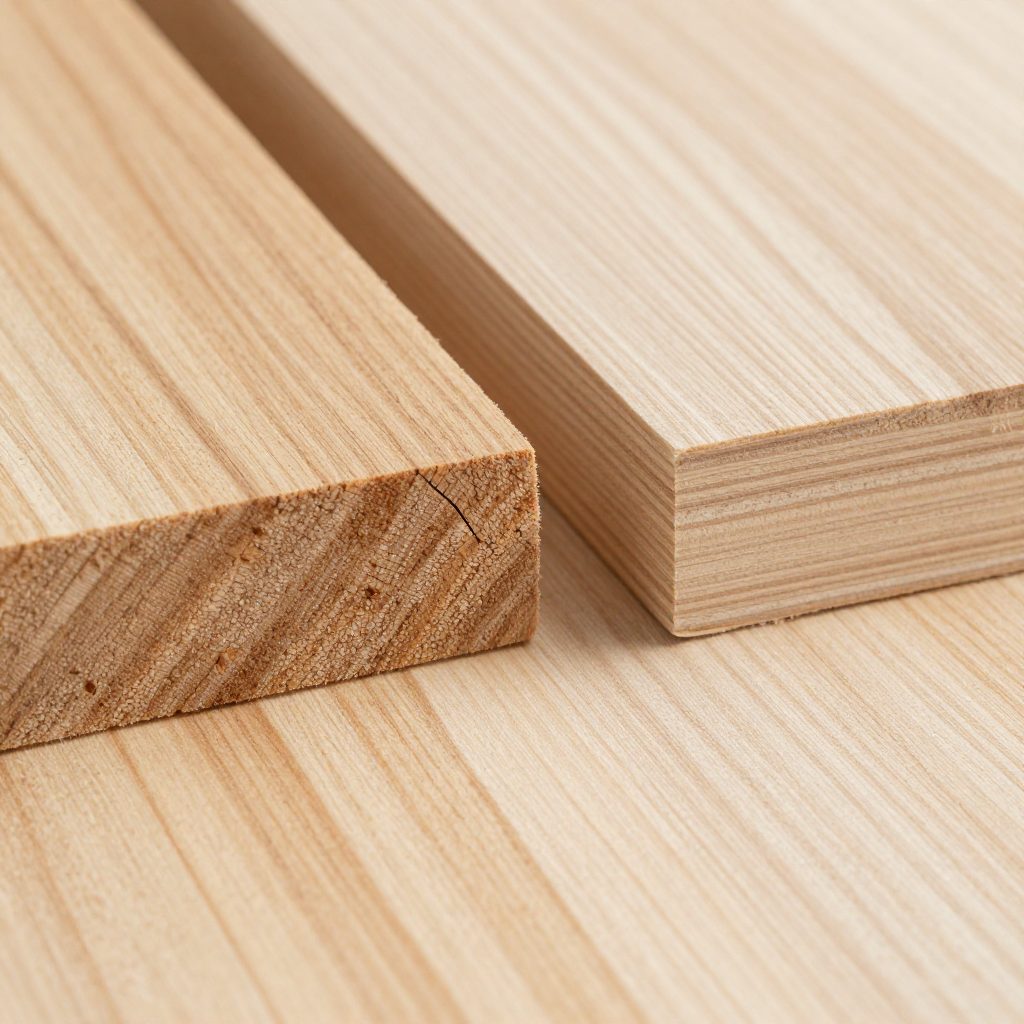
Pressure-treated wood is real lumber that has been pressure-infused with preservatives to resist rot, insects, and moisture. The current standard preservative is ACQ, alkaline copper quaternary, which replaced CCA (chromated copper arsenate) when the EPA phased out CCA for residential use in 2003. Modern ACQ-treated lumber is considered safe for residential decks under normal handling practices.
Composite decking bonds recycled wood fiber with thermoplastic, typically polyethylene or PVC. Because it does not absorb water, it resists rot, mold, insects, and UV damage without staining or sealing.
The real Iowa frame is this: PT wood is a lower entry cost with ongoing maintenance demands that Iowa’s climate amplifies. Composite has a higher entry cost but near-zero maintenance demands, which Iowa’s climate rewards.
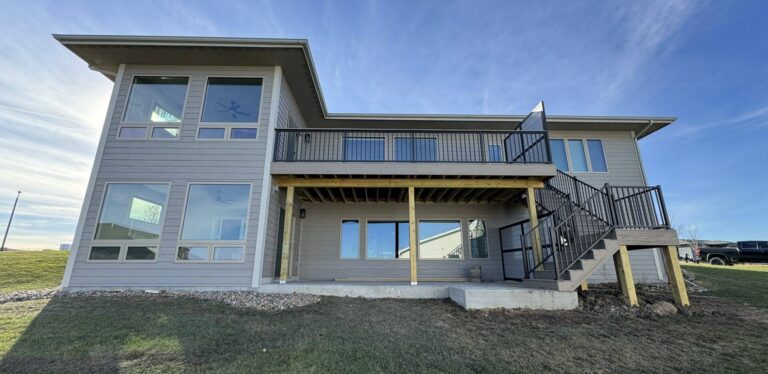
One point both materials share: every Iowa deck, regardless of what surface boards you choose, uses a PT wood substructure. Joists, beams, posts, and footings are PT lumber on every build. The Johnson County, Iowa, deck code guidelines require footings at least 42 inches deep to clear Iowa’s frost line and require that framing be pressure-treated.
Pro tip 1: Composite boards replace the walking surface. The framing underneath is still pressure-treated wood on every deck, composite or not.
The price difference between these two materials is real. So is the performance difference in Iowa’s climate.
| Pressure-Treated Wood | Composite Decking | |
|---|---|---|
| Installed cost per sqft (Des Moines 2026) | $20 to $35 | $40 to $65 |
| Typical 12×16 deck | $3,840 to $6,720 | $7,680 to $12,480 |
| Iowa lifespan | 10 to 15 years | 25 to 50 years |
| Annual maintenance | Seal and stain every 1 to 2 years | Soap and water cleaning only |
| Iowa freeze-thaw resistance | Moderate; requires sealing | High; does not absorb water |
| Structural framing use | Yes | No, PT framing is still required |
| Warranty (typical) | 10 to 20 years limited | 25 to 50 years by brand |
Before you decide based solely on the sticker price, run the Iowa-specific numbers in the sections below.
Advantages of pressure-treated wood in Iowa
PT wood earns its place on a lot of Iowa decks, and for the right situation, it remains the correct call.
The first advantage is upfront cost. At $20 to $35 per square foot installed, PT wood lets you build a quality deck now at a price composite cannot match. For homeowners on tight budgets, planning to sell within five to seven years, or building on a rental property, PT Wood’s lower entry price makes clear financial sense.
The second advantage is structural versatility. PT wood is the only material that works for both surface decking and structural framing. Composite cannot be used for joists, beams, posts, stair stringers, pergola rafters, or fence posts. For any deck that includes a pergola, a multi-level stair system, or a fence, PT lumber handles what composite simply cannot.
The third advantage is ease of repair. A damaged PT board can be replaced the same day from any Home Depot, Menards, or Lowe’s in Central Iowa. No special ordering, no color matching, no waiting. Any competent DIYer can swap a board in an afternoon.
Pro tip 2: PT wood is the right call for pergola rafters, fence posts, stair stringers, and all structural framing, regardless of what surface material you choose for the deck boards.
Pro tip 3: If you seal PT wood in the first season and maintain it every 1 to 2 years, a Des Moines wood deck can last 12 to 15 years before major repairs are needed.
Disadvantages of pressure-treated wood in Iowa
Iowa’s climate is harder on PT wood than most national maintenance guides acknowledge.
Iowa averages 45 to 84 freeze-thaw cycles per year. Each cycle pushes moisture into the wood grain, expands it, then contracts it. Boards crack, warp, and separate faster than projections built for warmer states. A PT deck rated for 15 years in Texas often shows significant wear in Des Moines at year 10 to 12, even with consistent sealing.
Maintenance costs compound quickly. Sealing or staining a 12×16 deck in Des Moines runs $200 to $600 per treatment, depending on whether you do it yourself or hire out. In Iowa’s climate, that happens every one to two years. Over 20 years, total maintenance for a wood deck runs $2,000 to $6,000 in materials and labor. Add that to the initial build cost, and the total often exceeds what composite would have cost.
Unsealed PT wood grays within one to two Iowa winters and begins splintering within three to five years. Splintering is not just cosmetic; it is a real safety issue for bare feet and children.
Pro tip 4: In Iowa, plan to seal PT wood every 1 to 2 years, not every 2 to 3 years, as warmer-state guides suggest. Our freeze-thaw cycles put more stress on the material than most maintenance schedules assume.
Pro tip 5: Splintering from under-maintained wood is a real safety hazard. If boards have not been sealed in two or more Iowa winters, run your hand along the grain before letting kids use the deck barefoot.
Illustrative scenario: A Boone family built a 250 sq ft PT wood deck for $6,250. They sealed it in the first year, then skipped year two during a busy summer. By year three, two boards had cracked, and the surface had turned gray. A professional restain cost $380. By year eight, five boards needed replacement. Total maintenance spend by year ten was $1,900. The deck was functional but visibly worn. A comparable composite deck would have needed one annual cleaning with soap and water.
Advantages of composite decking in Iowa
Composite’s biggest Iowa advantage is the one national article understates: the freeze-thaw problem that destroys wood decks simply does not apply to composite boards.
Composite does not absorb water. When there is no moisture inside the board, there is nothing to freeze, expand, and crack. The mechanism that shortens PT wood life in Des Moines has no purchase on composite. Iowa composite decking climate performance data from Suburban Lumber confirm that composite decking outperforms wood, particularly in high freeze thaw Midwest climates.
Maintenance is near-zero. Soap, water, and a scrub brush once or twice a year. No sealing, staining, sanding, or board replacement due to weathering. No gray color change, no splintering from moisture cycling. Over 20 years, composite maintenance costs run close to zero, compared with $2,000 to $6,000 for PT wood.
Modern composite also holds color in the Iowa sun and cold. UV inhibitors built into the board cap layer keep colors stable for decades. The “plastic look” of early composite products is gone in current-generation boards. Warm earth tones popular in 2026, driftwood, cedar, and walnut, are composite-native colors that hold their appearance through Iowa winters without any treatment.
Pro tip 6: The composite boards you install today will look the same in year 15 as they did in year one. No re-staining, no gray, no splinters.
Pro tip 7: Iowa’s climate is one of the best arguments for composite in the country. The freeze-thaw problem that shortens the life of wood decks simply does not apply to composite boards.
The 20-year cost comparison shows why composite is competitive for Iowa homeowners with longer ownership.
The sticker price gap between wood and composite looks different when you extend the math across a full Iowa ownership period.
| Cost Category | PT Wood | Entry Composite (Trex Enhance) |
|---|---|---|
| Initial build (320 sqft) | About $8,000 | About $12,800 |
| Annual maintenance | $200 to $600 per treatment, every 1 to 2 years | Soap and water; near $0 |
| 20-year maintenance estimate | $2,000 to $6,000 | About $200 total |
| Partial board replacement (year 10 to 12) | About $1,500 to $2,500 | Unlikely if properly installed |
| Total 20-year estimated cost | About $12,000 to $17,000 | About $13,000 to $13,200 |
| Deck condition at year 20 | Worn; likely needs replacement | Still performing well |
Illustrative scenario: A 320 sq ft Des Moines deck comparison. PT wood builds for about $8,000 and accumulates roughly $3,500 in maintenance plus a partial board replacement at year 12, totaling about $14,000 over 20 years. An entry composite deck costs about $12,800 and requires about $200 in total cleaning, for a total of about $13,000 over 20 years. The composite deck saves roughly $1,000 and is still in excellent condition at year 20, while the wood deck likely needs full replacement.
For most Des Moines homeowners who plan to stay in their home more than 10 years, composite reaches cost parity with or beats wood by year 12 to 15.
For a full per-project cost breakdown, the deck building costs in the Des Moines guide include current figures by material and deck size.
Disadvantages of composite decking in Iowa
Composite earns honest criticism in three areas.
The first is the upfront cost. Entry composite (Trex Enhance, TimberTech Terrain) runs $40 to $45 per square foot installed. Mid-range options (Trex Select, TimberTech Legacy) run $50 to $55. Premium composite and PVC run $60 to $70. PT wood runs $20 to $35. For homeowners on fixed budgets or short timelines, that gap is a real barrier.
The second is heat buildup. Composite boards absorb and retain heat more than natural wood. Dark-colored composite boards can reach temperatures above 150 degrees Fahrenheit on a 90-degree Iowa summer day, too hot for bare feet. Lighter colors, driftwood, and tan tones run 20 to 30 degrees cooler. Iowa’s hot summers, with regular 90 plus degree days in July and August, make color choice a genuine comfort decision for any south-facing deck.
The third is that a composite cannot be used structurally. Surface boards only. All framing, including joists, beams, posts, stair stringers, and pergola rafters, must be PT lumber. This matters for budget estimates because a composite deck still carries a full PT lumber substructure underneath.
Pro tip 8: Save two to three extra boards from your composite install. Colors get discontinued, and matching a repair board eight years later is much harder than matching it the day you build.
Pro tip 9: For full-sun south-facing decks in Des Moines, choose lighter composite colors. Dark boards get too hot to walk on barefoot during Iowa summers.
Not all composites are the same. Iowa builders typically recommend mid-tier or premium composite decking for homes where the deck will see heavy use and full exposure to Iowa’s sun.
| Tier | Example Products | Installed Cost per sqft | Warranty | Iowa Performance Note |
|---|---|---|---|---|
| Entry composite | Trex Enhance, TimberTech Terrain | $40 to $45 | 25 years | Good freeze-thaw resistance; solid for most Iowa builds |
| Mid composite | Trex Select, TimberTech Legacy | $50 to $55 | 25 to 30 years | Better cap layer; improved stain and scratch resistance |
| Premium composite and PVC | Trex Transcend, TimberTech Vintage | $60 to $70 | 30 to 50 years | Best cap protection; runs cooler in Iowa summer heat; best color retention |
Entry composite is a solid value for most builds; premium composite makes sense when you are investing in a full outdoor living space with lighting, railings, and built-in features.
How to decide on your Iowa deck
Most Iowa homeowners fall clearly into one category when they answer these questions honestly.
Choose PT wood when the budget is the primary constraint, and you need to build now. Choose it when the project includes pergolas, fences, stairs, or railings that require structural lumber, because PT wood is required for those elements on every deck. Choose it when you plan to sell within five to seven years and want to maximize upfront ROI. PT wood deck ROI at resale runs approximately 80 to 83 percent per Remodeling Magazine’s Cost vs. Value Report; composite runs 65 to 70 percent upfront ROI percentage, though it wins on total lifetime value for longer stays.
Choose composite when you plan to stay in your home for 10 or more years. Choose it when you want near-zero maintenance in Iowa’s high freeze-thaw climate. Choose it when you are adding features like cable railings, built-in LED lighting, or multi-level layouts, because those premium investments deserve a surface material that matches their durability. Iowa’s freeze-thaw environment tilts the math toward composite more than national averages suggest.
Pro tip 10: Iowa’s freeze-thaw environment makes composite more cost-competitive here than the national numbers suggest. Run your own 20-year math before deciding based on sticker price.
Pro tip 11: If you are adding cable railings, built-in lighting, or a pergola to your deck, use composite surface boards. A $15,000 feature investment deserves a surface that will match its lifespan.
Illustrative scenario: A Waukee homeowner plans to stay in their home for at least 12 more years and wants to build a deck with cable railings and LED stair lighting. They hate maintenance and had to restain a previous wood deck three times. For this homeowner, composite is clearly the right call. The upfront premium on a mid-range Trex Select deck pays off by year 12 to 15, and they will not spend a single weekend sanding, sealing, or repairing boards in the meantime.
Check contractor registration before signing anything. Iowa requires all general contractors to be registered with Iowa DIAL, not licensed. Verify any builder’s registration at dial.iowa.gov before your first check clears.
Most Iowa homeowners fall clearly into one category when they answer these questions honestly.
| Your Situation | PT Wood | Composite |
|---|---|---|
| Tight upfront budget | Best choice | Higher cost barrier |
| Staying 10 or more years | May need replacement in that window | Better total cost |
| Low-maintenance preference | Requires annual attention | Near-zero upkeep |
| Structural use (pergola, fence, stairs) | Required | Cannot be used structurally |
| Full-sun south-facing deck | Colors gray without maintenance | Choose lighter colors for heat |
| Selling within 5 to 7 years | Higher upfront ROI percentage | Lower upfront ROI percentage |
| Iowa freeze-thaw concern | Requires sealing to resist | Not affected; no water absorption |
If you are still unsure, a local deck builder can walk through the Iowa-specific 20-year cost comparison for your exact project size and site conditions.
Pro tip 12: Ask any contractor you are considering: “Which material would you recommend for my specific deck and how long I plan to stay?” A builder who gives you a thoughtful Iowa-specific answer is one worth trusting.
Frequently asked questions
Q: Does composite decking hold up to Iowa winters?
Yes, and it holds up better than wood specifically because it does not absorb water. Iowa’s 45 to 84 annual freeze-thaw cycles damage wood by pushing moisture into the grain. Composite has no water absorption, so that mechanism does not apply. Data from Suburban Lumber Iowa confirms that composite outperforms wood in high freeze-thaw Midwest conditions. Composite lifespan in Iowa runs 25 to 50 years; PT wood runs 10 to 15 years with consistent maintenance.
Q: How much does composite decking cost compared to wood in Des Moines?
PT wood runs $20 to $35 per square foot installed; composite runs $40 to $65 per square foot installed. On a 12×16 deck, PT wood ranges from $3,840 to $6,720, and composite ranges from $7,680 to $12,480. That gap narrows significantly over 20 years when Iowa maintenance costs and early wood replacement cycles are factored in. The wood vs. composite deck guide for Iowa includes the full 20-year comparison.
Q: Does composite decking get too hot in Iowa summers?
It can, especially dark-colored boards on south-facing decks during July and August when Des Moines temperatures regularly hit 90 degrees. Dark boards can exceed 150 degrees on a 90-degree day, which is too hot for barefoot use. Lighter composite colors, driftwood, and tan tones run 20 to 30 degrees cooler. Premium capped-composite and PVC products also handle heat better than entry-level boards. For any deck with significant south or west sun exposure in Central Iowa, ask your builder specifically about surface temperature before choosing a board color.
Q: Can I use composite boards for stairs, railings, and pergolas?
No. Composite is surface decking only. Stairs, stair stringers, railings, pergola rafters, joists, beams, and posts all require PT lumber. Iowa code requires PT lumber framing with footings reaching at least 42 inches deep to clear the frost line, and that applies to every deck, regardless of surface material. Composite boards cannot span joists, act as a beam, or support any structural load.
Q: How long does a pressure-treated wood deck last in Des Moines?
With consistent maintenance, sealing or staining every one to two years, PT wood lasts 10 to 15 years in Iowa. Without maintenance, significant wear appears by year seven to eight, and full replacement is likely by year 12. Iowa’s 45 to 84 annual freeze-thaw cycles shorten the lifespan of wood decks compared to the warmer-state averages on which most manufacturer projections are based. Total maintenance costs over 20 years range from $2,000 to $6,000 for a standard Iowa deck.
Q: Which material has better resale value for a Des Moines home?
PT wood returns approximately 80 to 83 percent ROI at resale; composite returns 65 to 70 percent in upfront ROI percentage per Remodeling Magazine’s Cost vs. Value Report. However, for homeowners staying for 10 or more years, composite wins in total lifetime value once maintenance costs and the early wood-replacement cycle are factored in. Iowa buyers recognize composite as the premium surface material, and that recognition is growing as composite installations become more common across the Des Moines metro.
Key takeaways
What each material actually is
- PT wood is real wood pressure-infused with ACQ preservatives; used for surface boards and all structural framing
- Composite is recycled wood fiber bonded with thermoplastic; surface boards only; PT framing still required underneath
PT wood is right for Iowa when
- Budget is tight, and you need to build now
- The project includes pergolas, fences, or stairs that require structural lumber
- You plan to sell within five to seven years and want the highest upfront ROI percentage
Composite is right for Iowa when
- You plan to stay in your home for 10 or more years
- You want near-zero maintenance in Iowa’s high freeze-thaw climate
- You are investing in a premium outdoor living space with lighting, cable railings, or multi-level layouts
Iowa-specific facts that change the math
- Iowa’s 45 to 84 annual freeze-thaw cycles hit PT wood harder than warmer states
- Composite does not absorb water, so freeze-thaw cycles do not affect it
- The 20 year total cost of composite often equals or beats PT wood in Central Iowa
Cost reality check
- PT wood installed: $20 to $35 per sqft; composite installed: $40 to $65 per sqft
- PT wood 20-year maintenance: $2,000 to $6,000; composite maintenance: near zero
- Both require PT lumber substructure with 42-inch frost-line footings per Iowa code
Not sure which material is right for your Des Moines deck?
You now have the Iowa-specific numbers. The next step is a conversation with a builder who can run the math for your exact yard, sun exposure, and project goals.
Busy Builders has completed 1,000+ deck projects in Central Iowa since 2020. We build with both PT wood and composite, and we will tell you honestly which one fits your situation, not just whichever costs more.
- Free on-site consultation with a detailed written estimate
- Iowa DIAL registered, insured, every project permitted and inspected
- Serving Des Moines, West Des Moines, Ankeny, Waukee, and Urbandale
Call: 844-435-9800 Website: busybuildersiowa.com
Schedule your free consultation today.
Busy Builders | Full-Service Construction and Remodeling | Serving Central Iowa Since 2020