Iowa ranks among the highest in the country for the percentage of its population age 65 and older, and the Iowa senior population grew 10.6 percent between 2020 and 2024, which is more than twice the overall population growth rate. At the same time, Iowa assisted living median cost runs approximately $58,800 to $63,600 per year (midpoint approximately $61,200) per the CareScout 2025 Cost of Care Survey, and a nursing facility typically runs $82,000 to $104,000 per year. For many Iowa families, modifying an existing home to support aging in place is both the preferred choice (AARP reports 75 percent of adults 50 and older want to stay in their current home) and the financially pragmatic choice when compared against multiple years of facility care. This guide covers the three tiers of aging-in-place modification with 2026 Iowa cost ranges, the room-by-room priorities that address the largest fall-risk areas, the Iowa-specific financial assistance programs that can offset cost for eligible households, Iowa permit rules, and the decision framework for whether staying and modifying is the right choice for a specific household. Cost figures are 2026 Iowa planning estimates. Actual costs vary.
TLDR: Aging-in-place home modifications in the Des Moines metro fall into three clean tiers: a Basic Safety Package ($2,500 to $6,000) covering grab bars, lever handles, sensor lighting, and non-slip improvements; a Moderate Accessibility Package ($8,000 to $20,000) adding a walk-in shower conversion, doorway widening, and a stair lift if needed; and a Full Universal Design renovation ($25,000 to $75,000 or more) covering a full primary suite bathroom, main-floor bedroom conversion, no-step entry, and smart home safety features. Iowa assisted living median runs approximately $58,800 to $63,600 per year (midpoint approximately $61,200), so a full universal design renovation typically costs less than one to two years of facility care. Several Iowa programs (USDA Section 504, Iowa HHS HCBS Elderly Waiver, CDBG in large Iowa cities, regional housing trust funds) may offset cost for eligible households, though eligibility varies. This is a planning comparison, not financial, medical, or elder care advice.
The sections below cover the Iowa context, the three modification tiers, the room-by-room priorities, the Iowa-specific assistance programs, the permit reality, and the decision framework.
Why This Conversation Matters in Iowa Specifically
Iowa’s demographics are pushing aging-in-place to the front of family planning conversations. Iowa’s share of residents 65 and older (approximately 18.9 percent) exceeds the national average of 18 percent, and approximately 612,400 Iowans are age 65 or older per 2024 Census Bureau estimates. AARP’s 2024 Home and Community Preferences Survey reports that 75 percent of adults 50 and older want to remain in their current home as they age, and 73 percent want to stay in their current community. Only about 40 percent of U.S. homes have even the most basic aging-ready features (a step-free entryway, plus a bedroom and full bathroom on the first floor) per U.S. Census Bureau analysis of American Housing Survey data, which means most Iowa homes need modifications to support long-term independent living. Iowa’s median household income of $75,501 (2023 American Community Survey, Census Bureau) runs below the national average, which shifts the financial case for modification relative to facility care more favorably than national guides typically acknowledge.
Pro Tip 1: Start the modification conversation before it becomes urgent. Proactive Tier 1 modifications cost a fraction of reactive renovations made after a fall or mobility change. AARP data shows 72 percent of adults 50 and older already foresee needing grab bars and 71 percent foresee needing entryway enhancements.
Three Tiers of Iowa Aging-in-Place Modification
Scope definition is the fastest way to prevent budget surprises and match the right modification package to the right household. The three tiers below are not rigid categories; they are planning ranges that help families start with the highest-impact changes and expand as needs evolve.
| Tier | 2026 Iowa Cost Range | Key Modifications | Timeline | Best For |
|---|---|---|---|---|
| Basic Safety Package | $2,500 to $6,000 | Grab bars, lever handles, non-slip floors, sensor lighting, raised toilet | 1 to 2 weeks | Proactive households, early-stage planning |
| Moderate Accessibility | $8,000 to $20,000 | Walk-in shower, doorway widening, stair lift, accessible kitchen modifications | 4 to 6 weeks | Moderate mobility challenges, fall prevention focus |
| Full Universal Design | $25,000 to $75,000 or more | Full primary bath renovation, main-floor bedroom conversion, no-step entry, elevator, smart home | 8 to 16 weeks | Significant mobility or cognitive support needs |
Planning estimates. Iowa costs vary by home age, design, existing conditions, and contractor. Busy Builders has additional scope context in its home remodeling services overview.
Pro Tip 2: Add a 10 to 15 percent contingency on Tier 2 and Tier 3 projects. Older Iowa homes frequently surface hidden conditions during construction (outdated wiring, failed plumbing, rotted subfloor) that are easier to address during the modification than to revisit later.
Pro Tip 3: Medical and safety suitability of specific modifications depends on an individual’s health status, mobility level, and care needs. Before finalizing a modification scope, consult a physician or occupational therapist about which specific modifications are appropriate for the individual who will use the home.
Room-by-Room Iowa Modification Costs
The bathroom is the highest-priority modification area in any Iowa aging-in-place plan because approximately 80 percent of fall-related injuries in the home occur in bathrooms. Entry and exterior modifications come second because they determine whether the home is accessible at all. Hallways, doorways, kitchens, and stairs follow in priority based on the specific household’s mobility patterns.
| Room | Modification | 2026 Iowa Cost Range |
|---|---|---|
| Bathroom | Grab bars (3 to 4 bars installed) | $300 to $1,400 total |
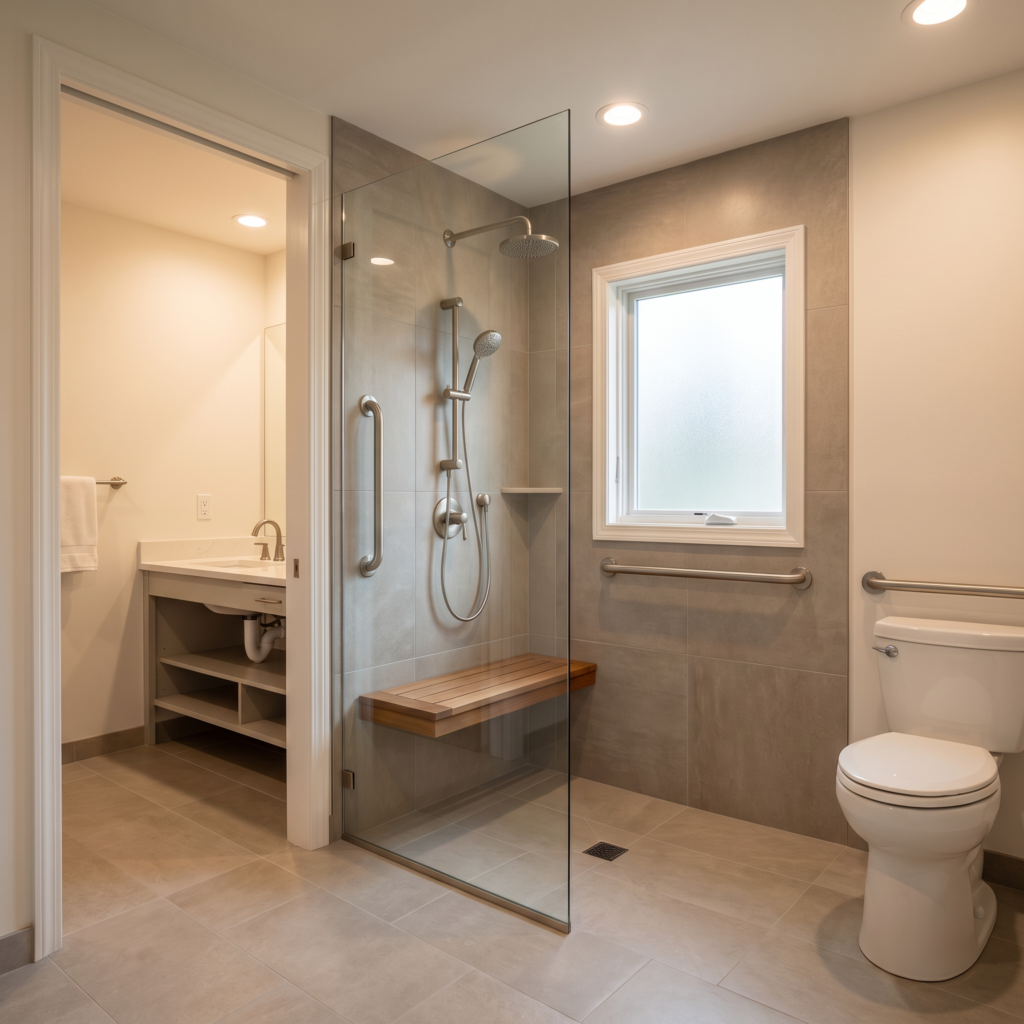
| Bathroom | Walk-in curbless shower conversion | $9,000 to $18,000 |
| Bathroom | Comfort-height toilet | $300 to $700 installed |
| Bathroom | Full primary suite renovation (Iowa mid-range) | $22,500 to $35,000 or more |
| Entryway | No-step entry or threshold adjustment | $500 to $3,000 |
| Entryway | Exterior entry door widening | $2,800 to $6,500 |
| Entryway or exterior | Ramp installation | $1,500 to $6,500 |
| Interior doors | Doorway widening (non-load-bearing) | $600 to $1,200 per opening |
| Interior doors | Doorway widening (load-bearing) | $1,200 to $6,000 per opening |
| Stairways | Stair lift | $3,000 to $6,000 installed |
| Whole home | Lever handle replacement | $150 to $350 per door |
| Whole home | Sensor or motion lighting | $350 to $500 per fixture |
Planning estimates. Actual costs vary by home condition, configuration, and contractor. Busy Builders has detailed Iowa-specific pricing in its Central Iowa bathroom remodeling costs guide for the bathroom scope that typically anchors aging-in-place projects.
Pro Tip 4: Install blocking behind bathroom walls during any bathroom renovation, whether or not grab bars are being installed right now. Future grab bar installation is significantly cheaper and safer when solid blocking is already in place behind the drywall.
Pro Tip 5: Lever-style door handles cost $150 to $350 per door installed and take 15 to 30 minutes per door. They are the single highest return on investment on this list because they resolve grip strength limitations before they become a barrier.
Pro Tip 6: Not every interior doorway needs to be widened to 36 inches. Prioritize the path from the main entry to the primary bathroom, primary bedroom, and kitchen. Other doorways can be widened later if needs evolve.
Iowa Financial Assistance Programs
Several Iowa-specific programs may offset part or all of home modification costs for eligible households. Program eligibility, terms, benefit amounts, and availability change over time and vary by income, location, and individual circumstances. Confirm current program status and eligibility directly with the administering agency before relying on any program for budget planning. Iowa’s Medicaid Home and Community-Based Services (HCBS) waiver system is undergoing significant restructuring in October 2026, which may affect home modification program terms for some enrollees. This section describes programs at a high level; it does not confirm whether any specific family or household qualifies.
| Program | Who May Qualify | Maximum Benefit | Type | Apply Through |
|---|---|---|---|---|
| USDA Section 504 Grant | Iowa rural homeowners age 62 or older; very-low-income (at or below 50 percent AMI); unable to repay a loan | $10,000 lifetime | Grant | USDA Rural Development Iowa |
| USDA Section 504 Loan | Iowa rural homeowners; very-low-income (at or below 50 percent AMI); unable to obtain affordable credit | $40,000 | 1 percent interest loan | USDA Rural Development Iowa |
| Iowa HHS HCBS Elderly Waiver | Iowa seniors 65 or older on Medicaid; nursing facility level of care need | Varies by waiver | Medicaid benefit | Iowa HHS aging services |
| CDBG (entitlement cities) | Low-income residents in Iowa cities over 50,000 (Des Moines, Cedar Rapids, Davenport, Sioux City, Iowa City, Dubuque) | Varies | Grant or loan | City housing or community development department |
| HUD Title I | Homeowners generally; no equity required for smaller amounts | $25,000 | Private insured loan | Private lenders |
| Regional Housing Trust Funds | Low-to-moderate income Iowa homeowners | Varies by region | Grant or loan | Local housing trust funds |
Eligibility requirements, income limits, and program terms change and vary by individual circumstance. Confirm current status directly with the administering agency. Iowa’s HCBS waiver system is restructuring in October 2026; program terms may change.
Pro Tip 7: USDA Section 504 applies only to USDA-designated rural areas. The Des Moines metro inner ring and most large Iowa cities are not rural-eligible. Many rural sections of Warren, Madison, Dallas, Jasper, and surrounding counties are eligible. Verify address eligibility on the USDA Rural Development Iowa website before applying.
Pro Tip 8: Iowa HHS HCBS waivers have significant waitlists. As of December 2025, approximately 26,665 Iowans were on HCBS waiver waiting lists. Families who may qualify should begin the application process well before the modification is urgently needed.
Staying and Modifying vs. Iowa Assisted Living: The Financial Planning Comparison
This table compares typical Iowa facility care costs against one-time home modification costs. This is a financial planning comparison for general reference. It is not financial, medical, or elder care advice. Individual care needs, financial situations, care trajectories, and home conditions vary significantly. Modification alone cannot substitute for facility care when a specific individual’s physical or cognitive care needs exceed what a modified home can support. Consult a licensed financial advisor, a physician, and a qualified elder care professional before making housing decisions.
| Option | Typical Iowa Cost | Notes |
|---|---|---|
| Iowa assisted living (median) | Approximately $58,800 to $63,600 per year (midpoint approximately $61,200) | Per CareScout 2025 Cost of Care Survey |
| Iowa nursing home | Approximately $82,000 to $104,000 per year | Skilled nursing facility |
| Tier 2 modification | One-time $8,000 to $20,000 | Typically less than 4 months of Iowa assisted living |
| Full universal design | One-time $25,000 to $75,000 | Typically less than 1 to 2 years of Iowa assisted living |
For planning purposes only. Individual care needs and financial situations vary significantly. This is not financial, medical, or elder care advice. Busy Builders has context on larger-scope Iowa projects in its whole-house remodeling costs overview.
Pro Tip 9: The financial comparison is only one piece of the housing decision. Clinical care needs, social connection, proximity to family, and cognitive care requirements are non-financial factors that often weigh equally or more heavily. A qualified geriatric care manager or social worker can help structure the full decision.
Iowa Permits and the Pre-1978 Lead Paint Rule
Most basic safety modifications (grab bars, lever handles, lighting, non-slip improvements) do not require a permit in Iowa. Walk-in shower conversions require a plumbing permit in Des Moines and most Iowa jurisdictions. Exterior ramp installations typically require a permit as a structural addition. Load-bearing doorway widening requires a building permit. Stair lifts and residential elevators require an electrical permit for the new circuit, and elevators often require a building permit for the shaft. Iowa general contractors are registered, not licensed, through the Iowa DIAL contractor registration system. Plumbers, electricians, and HVAC technicians hold separate Iowa state licenses and should be verified independently before work begins. Busy Builders has written a broader overview in its Iowa building permits guide.
Iowa homes built before 1978 are subject to the Iowa Renovation, Repair, and Painting (RRP) rule. Any work disturbing painted surfaces in a pre-1978 Iowa home requires at least one certified lead-safe renovator on the crew following EPA-required lead-safe work practices. This applies to doorway widening, drywall work, trim removal, and bathroom demolition in pre-1978 homes. Inner-ring Des Moines suburbs (Clive, Windsor Heights, Des Moines east side) are frequently pre-1978 and fall under this rule. Verify lead-safe renovator certification through Iowa DIAL before any work begins.
Pro Tip 10: For pre-1978 Iowa homes, budget 1 to 3 additional days on any project involving demo or drywall disturbance. Lead-safe work practices take longer than standard demo and add cost that should be in the quote from day one.
The Decision Framework: Stay and Modify, or Move
The stay-or-move decision depends on structural factors, financial factors, and clinical factors working together. No single factor determines the answer. The general guidelines below describe common patterns, not recommendations for any specific family.
Staying and modifying typically makes sense when the home is single-story or has a main-floor bedroom and full bathroom already present, when equity or income supports the modification cost, when social connections and community are anchored in the current neighborhood, and when the modification cost is less than a typical 1 to 2 years of assisted living cost for the specific individual’s care trajectory.
Moving typically makes sense when the home has structural barriers that are cost-prohibitive to modify (multi-story with no main-floor bath possible, for example), when physical or cognitive care needs exceed what home modification can address, when total modification cost would exceed 2 to 3 years of assisted living cost for the specific individual, or when medical care requirements make a facility setting the clinically appropriate choice regardless of cost.
Pro Tip 11: A qualified occupational therapist can perform a home safety assessment, typically $200 to $500, and identify the specific modifications most likely to improve safety and independence for a specific individual. That assessment is the single best starting point before committing to a modification scope.
Illustrative Iowa Scenarios
Illustrative scenario based on 2026 Iowa market data, not a verified Busy Builders project: an Ankeny homeowner age 68 lives in a two-story home where the primary suite bathroom is upstairs. Her physician recommends modifications to reduce fall risk. The family decides to convert the main-floor half-bath into a full accessible bathroom with a curbless walk-in shower, comfort-height toilet, and grab bars, rather than attempting the staircase multiple times daily. The main-floor bathroom conversion (plumbing extension from the existing stack, accessible tile shower, comfort-height toilet, grab bars, wider doorway) runs $18,000 to $28,000. The family also installs grab bars, lever handles, and sensor lighting throughout for $3,000 to $5,000. Total: $21,000 to $33,000, or less than six months of Iowa assisted living median cost. The family explores Iowa HHS Home Modification program eligibility for a portion of the cost; eligibility must be verified directly with Iowa HHS.
Illustrative scenario, not a verified Busy Builders project: a Clive homeowner age 72 with a pre-1978 ranch home wants a comprehensive aging-in-place renovation, including a walk-in shower in the primary suite, an exterior ramp at the front entrance, interior doorways widened to 36 inches on the path to the primary bedroom and bathroom, a stair lift for the basement steps, and lever handles throughout. The project requires a certified lead-safe renovator under Iowa’s RRP rule because the home is pre-1978. Total planning range: $35,000 to $55,000 for the full scope. USDA Section 504 does not apply because Des Moines metro is not USDA rural-eligible. The family contacts the City of Des Moines Community Development Division to explore CDBG eligibility; eligibility depends on income and must be verified with the city directly. At Iowa’s assisted living median of approximately $61,200 per year, the modification cost equals less than one year of facility care.
Pro Tip 12: Keep every permit, contractor invoice, engineer report, and program documentation together in one folder. The paper trail matters for Medicaid spend-down conversations later, for documentation to future occupational therapists or physicians, and for resale of the home years down the road.
Frequently Asked Questions
Q1: How much does an aging-in-place home modification cost in Iowa in 2026?
Cost depends on scope. A Basic Safety Package (grab bars, lever handles, sensor lighting, non-slip improvements, raised toilet) runs $2,500 to $6,000 in Iowa. A Moderate Accessibility Package (adding walk-in shower conversion, doorway widening, stair lift) runs $8,000 to $20,000. A Full Universal Design renovation (full primary bath, main-floor bedroom conversion, no-step entry, smart home) runs $25,000 to $75,000 or more. Iowa construction costs run approximately 14 percent below the national average. These are 2026 Iowa planning estimates; actual costs vary by home design, age, existing conditions, scope, and contractor.
Q2: Are there financial assistance programs for Iowa seniors modifying a home?
Yes. Iowa-specific options include USDA Section 504 (grants up to $10,000 for rural Iowa homeowners age 62 or older who are very-low-income; loans up to $40,000 at 1 percent interest), Iowa HHS HCBS Elderly Waiver (home modifications for Medicaid-eligible Iowans 65 or older with nursing facility level of care need), CDBG funds in Des Moines, Cedar Rapids, Davenport, and other large Iowa cities for low-income residents, and Regional Housing Trust Funds in various Iowa counties. HUD Title I insured loans are available through private lenders statewide. Eligibility requirements, income limits, and program terms vary and change over time; Iowa’s HCBS waiver system is restructuring in October 2026, which may affect program terms. Confirm current status directly with the administering agency before relying on any program for budget planning.
Q3: Is staying and modifying cheaper than Iowa assisted living?
For many Iowa homeowners, yes, but the answer depends on the specific scope of modifications needed and the level of care required. Iowa assisted living median cost runs approximately $58,800 to $63,600 per year (midpoint approximately $61,200), and Iowa nursing home costs run $82,000 to $104,000 per year. A Tier 2 modification project ($8,000 to $20,000) typically costs less than four months of assisted living. A full universal design renovation ($25,000 to $75,000) typically costs less than one to two years of assisted living for most Iowa families. However, if physical or cognitive care needs exceed what home modification can support, facility care may be clinically necessary regardless of cost. This is a financial planning comparison only. It is not financial, medical, or elder care advice. Consult a financial advisor, a physician, and a qualified elder care professional.
Q4: Do aging-in-place home modifications require permits in Iowa?
It depends on the specific modification. Grab bars, lever handles, and lighting typically do not require permits. Walk-in shower conversions require a plumbing permit in Des Moines and most Iowa jurisdictions. Ramp installations and exterior entry modifications typically require a permit. Load-bearing doorway widening requires a building permit. Stair lifts and residential elevators require electrical permits and possibly building permits. Iowa general contractors are registered, not licensed, through Iowa DIAL; plumbers and electricians hold separate Iowa state licenses. For pre-1978 Iowa homes, any work disturbing painted surfaces requires a certified lead-safe renovator under Iowa law. Confirm current permit requirements with the local building department before work begins.
Q5: What are the most important aging-in-place modifications to start with?
For most Iowa homeowners, the bathroom is the highest priority because approximately 80 percent of fall-related injuries in the home occur in bathrooms. Installing grab bars at the toilet and shower, or converting to a walk-in curbless shower, delivers high safety return per dollar invested. After the bathroom, the most impactful modifications are typically no-step or low-step entry to the home, lever-style door handles throughout, motion-sensor lighting in high-traffic areas, and removing or securing throw rugs and other trip hazards. These changes typically fit within a Tier 1 or Tier 2 scope ($2,500 to $20,000) and address the majority of fall-risk factors in a typical Iowa home. For guidance on which specific modifications are appropriate for an individual, consult a physician or occupational therapist.
Key Takeaways
Iowa’s share of residents 65 and older exceeds the national average and the senior population is growing rapidly, which makes aging-in-place modification a common and financially relevant question for Iowa households. Modifications typically fall into three tiers: Basic Safety ($2,500 to $6,000), Moderate Accessibility ($8,000 to $20,000), and Full Universal Design ($25,000 to $75,000 or more). The bathroom is the highest-priority modification area because approximately 80 percent of fall-related injuries at home occur there. Iowa assisted living median cost runs approximately $58,800 to $63,600 per year (midpoint approximately $61,200), and Iowa nursing home cost runs $82,000 to $104,000 per year, which means a typical full universal design renovation costs less than one to two years of facility care for most families. Several Iowa-specific financial assistance programs may offset cost for eligible households, including USDA Section 504 for rural Iowa seniors, Iowa HHS HCBS Elderly Waiver for Medicaid-enrolled Iowans with qualifying care needs, CDBG in larger Iowa cities, regional housing trust funds, and HUD Title I insured loans; eligibility varies and program terms change, with Iowa’s HCBS waiver system restructuring in October 2026. Most basic safety modifications do not require permits, but walk-in shower conversions, ramps, load-bearing doorway widening, and stair lifts or elevators typically do. Pre-1978 Iowa homes require a certified lead-safe renovator on any work disturbing painted surfaces under the Iowa RRP rule. Medical and safety suitability of specific modifications for a specific individual requires physician or occupational therapist guidance; this guide is not medical or elder care advice. Busy Builders is a registered Iowa contractor through DIAL, coordinates with certified lead-safe renovators for pre-1978 homes, has completed projects for over 1,000 Central Iowa homeowners since 2020, and backs the work with a written warranty on workmanship; warranty details are provided in the contract.
Ready to Plan an Iowa Aging-in-Place Project?
Busy Builders has worked with Central Iowa families on home modifications, accessible bathrooms, and universal design projects across Des Moines, West Des Moines, Ankeny, Waukee, Johnston, Urbandale, and the surrounding metro. Call: 844-435-9800 to talk through scope, priorities, and budget, or schedule a free consultation to get a written scope before committing to any program application or construction work.
Legal Disclaimer
This article is for general educational purposes only and does not constitute medical, elder care, legal, financial, investment, engineering, or construction advice. Cost figures are 2026 Iowa planning estimates; actual costs vary by home design, age, existing conditions, scope, and contractor, and results vary. The financial comparison between home modification and Iowa assisted living or nursing home costs is for general planning purposes only. Individual care needs, financial situations, care trajectories, and home conditions vary significantly; home modification alone cannot substitute for facility care when a specific individual’s physical or cognitive care needs exceed what a modified home can support. Consult a licensed financial advisor, a physician, a qualified elder care professional, and where appropriate an elder law attorney, before making housing decisions. Medical and safety suitability of specific home modifications depends on an individual’s health status, mobility level, and care needs; consult a physician or occupational therapist for guidance on which modifications are appropriate for a specific individual. Program eligibility, terms, availability, and maximum benefits for all government assistance programs (including but not limited to USDA Section 504, Iowa HHS HCBS waivers, CDBG, Regional Housing Trust Funds, and HUD Title I) change over time and vary by income, location, and individual circumstances. Confirm current program status and eligibility directly with the administering agency before relying on any program for budget planning. Iowa’s Medicaid HCBS waiver system is undergoing significant restructuring in October 2026, which may affect home modification program terms for some enrollees. Permit requirements vary by Iowa jurisdiction and change over time; confirm current requirements with the local building department before work begins. Iowa general contractors are registered, not licensed, through Iowa DIAL; plumbers, electricians, and HVAC technicians hold separate Iowa state licenses and should be verified independently before work begins. Iowa homes built before 1978 are subject to the Iowa Renovation, Repair, and Painting rule; any work disturbing painted surfaces requires a certified lead-safe renovator. Verify lead-safe renovator certification through Iowa DIAL. Busy Builders provides a written warranty on workmanship; specific terms, exclusions, and coverage details are provided in the project contract.