A heated floor is one of the most requested add-ons in a Central Iowa bathroom remodel. This guide compares the system types and explains the wiring and permit rules Iowa enforces in 2026. It also shows the monthly running cost at Iowa’s average electricity price and which floors work best.
TLDR: For most Iowa bathrooms, an electric mat or cable under tile is the practical choice. It needs a licensed electrician, GFCI protection and, in most cities, a permit. At Iowa’s 2026 average electricity price, a 40-square-foot floor heating four hours a day costs about $8 a month. Decide at the estimate, pair it with tile or stone, and treat it as a comfort upgrade.
It is 6 a.m. in January, and the bathroom tile feels like a frozen pond. That is when many homeowners in Altoona and across Central Iowa start asking about heated floors.
The idea is simple. The wiring, the floor covering and the timing are where projects go wrong.
What does a heated floor add to a bathroom remodel?
A heated floor adds a thin electric heating element under the tile that warms the floor on a schedule. Most bathroom systems are floor warmers. They take the chill off tile; they do not replace the room’s main heat.
Common mats are rated at about 12 watts per square foot. Because the element sits under the tile, it touches the electrical plan, the tile schedule and the floor height.
On Busy Builders jobs, bathroom estimates are set up front. The most common reason a bathroom job grows is the homeowner expanding scope after the first estimate. A heated floor is a textbook example, because it adds wiring and changes tile day.
Pro Tip 1: Ask for the heated floor as a line item in the first estimate, even if you are undecided. Removing it later is easy; adding it after tile is ordered is not.
Pro Tip 2: Heat only the floor you walk on. Skip the area under the vanity, toilet and tub.
Electric mat, loose cable or hydronic: which fits an Iowa bathroom?
For a single bathroom, an electric mat or loose cable is almost always the right fit. Hydronic tubing, which circulates warm water from a boiler or water heater, suits whole floors in a new build or addition.
The table below compares the three systems.
| Factor | Electric mat | Loose cable | Hydronic tubing |
|---|---|---|---|
| Best fit | Square or rectangular floors | Odd shapes and tight layouts | Whole floors in new homes or additions |
| Height added | Very little; some mats are about 1/8 inch | Thin membrane plus cable | More; often a poured layer or panels |
| Retrofit effort | Low once the floor is open | Low to moderate | High in an existing bathroom |
Mats and cables win in a remodel because they add little height and need only a circuit.
Pro Tip 3: Building new or adding on? Decide on hydronic heat before the subfloor goes down.
Pro Tip 4: Over a basement slab or an unheated garage, ask about an insulating underlayment under the mat. It sends the heat up into the tile instead of down into the cold.
What wiring does a heated bathroom floor need in Iowa?
A heated bathroom floor needs a circuit sized by a licensed electrician, GFCI protection and, in most cities, an electrical permit. GFCI is the safety device that cuts power when current leaks.
House File 2800, signed June 2, 2026, set Iowa’s code as the 2023 National Electrical Code with a short list of state changes. Iowa’s electrical permit and inspection program posts the notice. The law also bars cities from adopting a stricter local electrical code.
The National Electrical Code has required GFCI protection for electrically heated bathroom floors since its 1999 edition. Many floor-heat thermostats have the GFCI built in. HF 2800 also bars receptacles inside or directly over a tub or shower stall.
Iowa’s state rules waive the permit only for small jobs with no work inside the panel. A new heated-floor circuit usually starts at the panel. In Altoona, the city’s remodeling permit list covers any electrical change, filed through the Building Department portal.
Pro Tip 5: Ask for a resistance test on the mat before tile, after thinset and after grout. A nicked wire is cheap to fix before tile and costly after.
Pro Tip 6: Photograph the layout with a tape measure in the frame before tile goes down.
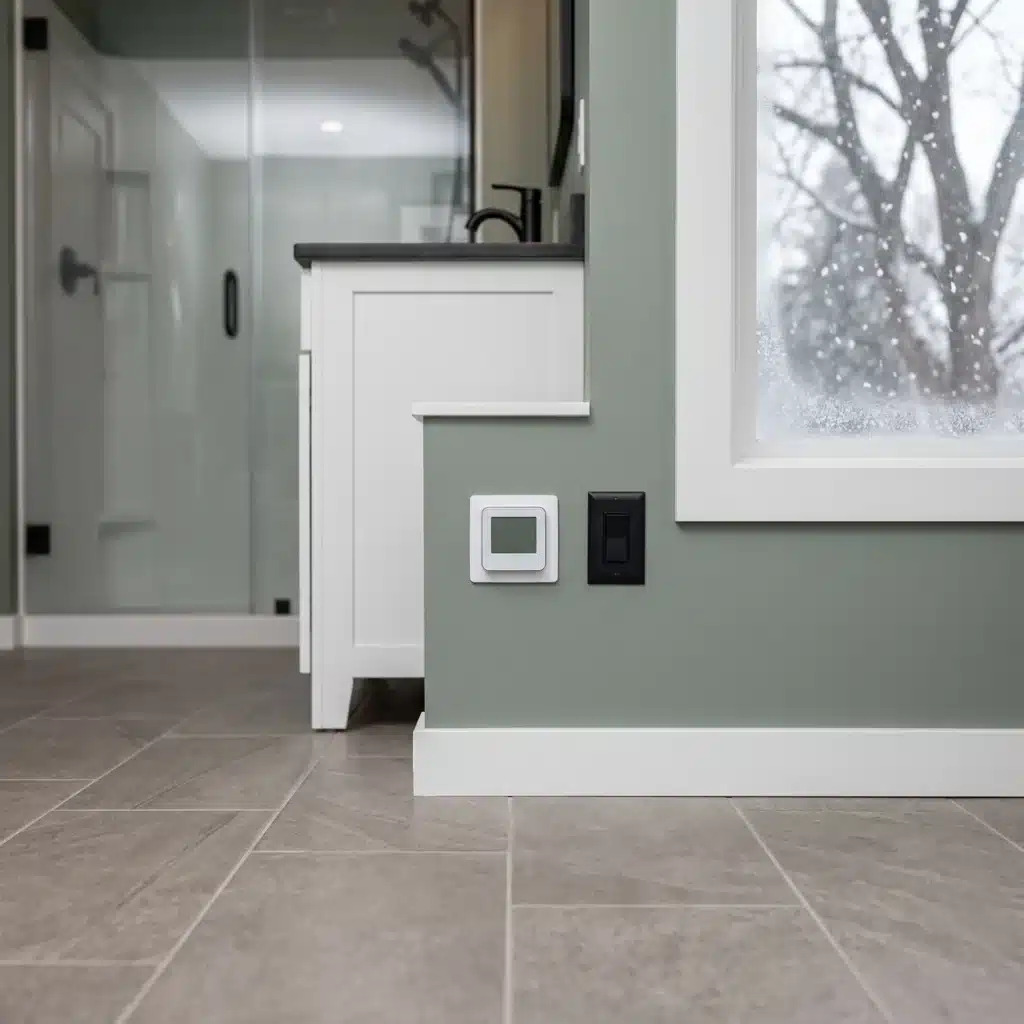
Pro Tip 7: Mount the thermostat where you will reach it, outside the splash zone.
Wondering what this would run at your place? Call or text 844-435-9800. Most of the time we can give you a ballpark on that first call. Nobody has to come out first.
What does a heated bathroom floor cost to run on Iowa electricity?
Less than most people expect. A 40-square-foot heated area at 12 watts per square foot draws about 480 watts. Four hours of heating a day costs about $8 a month at Iowa’s average price.
The U.S. Energy Information Administration’s state electricity price table put Iowa’s residential average at 14.20 cents per kilowatt-hour for January through July 2026. Here is the math at that rate, counting only hours the mat is actually heating.
| Heated area | Heating hours per day | Energy per 30 days | Cost per 30 days |
|---|---|---|---|
| 40 sq ft | 2 | 29 kWh | About $4 |
| 40 sq ft | 4 | 58 kWh | About $8 |
| 80 sq ft | 4 | 115 kWh | About $16 |
| 40 sq ft | 24, no schedule | 346 kWh | About $49 |
A schedule is the whole game. The same floor costs about $4 or about $49 a month, depending on run time.
Pro Tip 8: Program short morning and evening windows. The floor sensor shuts the heat off once the tile reaches your set point.
Which flooring works over a heated bathroom floor?
Tile and stone are the best match, because they spread heat well and many mats are made only for them. Vinyl plank, laminate and wood work only when the flooring maker allows it.
One vinyl maker’s guidance caps the floor surface at 85 degrees and rules out its vinyl over heating mats entirely. Two full bathroom remodels completed in 2026 were reviewed by the homeowners, and one included new luxury vinyl plank flooring. Vinyl’s heat rules need checking first.
The table below sorts common bathroom floors.
| Floor covering | Works over electric heat? | What to check |
|---|---|---|
| Porcelain or ceramic tile | Yes, the most common pairing | Mat set in thinset per the mat maker |
| Natural stone | Yes | Stone thickness and sealing |
| Luxury vinyl plank | Only if the vinyl maker approves | Temperature limit and approved heat type |
| Laminate or engineered wood | Some products allow it | Temperature limit and underlayment |
| Carpet | Poor match | Pad and carpet trap the heat |
If the bathroom is getting vinyl plank, read its installation guide before you buy a mat.
Pro Tip 9: Keep the flooring maker’s radiant heat statement with your selections to settle warranty questions early.
When does a heated floor pay off in a bathroom remodel?
It pays off in comfort when the bathroom gets daily winter use and the floor is already being replaced. It rarely makes sense alone, because the tile has to come up.
Busy Builders has quoted hall bathrooms from about $3,000 to $5,000 for a light facelift. Quotes run up to about $60,000 for a large primary bathroom. A typical three-quarter to full bathroom remodel without moving much lands around $15,000 to $20,000. Where a heated floor lands depends on floor size, circuit work and flooring.
Here is the quick call for common cases.
| Your situation | Heated floor makes sense? | Why |
|---|---|---|
| Full remodel with new tile | Usually yes | The floor is open and the electrician is on site |
| Guest bath used a few times a month | Often no | Little use for the added wiring |
| Basement bath on a cold slab | Often yes | Slabs feel coldest; add underlayment |
| Cosmetic refresh, floor staying | No | The tile would have to come up |
Add heat when the floor is already open.
Illustrative scenario: An Altoona couple turns a hall bath into a three-quarter bath and adds an electric mat under porcelain tile. The project lands around $17,000 to $20,000 over about four weeks. A two-hour schedule on 45 square feet runs near $5 a month.
Illustrative scenario: An Ankeny homeowner planning vinyl plank learns the vinyl maker does not allow electric mats. They tile the zone in front of the vanity and shower instead. Budget about $32,000 to $38,000 over five to six weeks.
Illustrative scenario: An Indianola family finishing a basement bathroom adds an insulating underlayment and cable under tile. The bath runs about $24,000 to $28,000 over five weeks, heated floor included, and the cold-slab complaint goes away.
Choosing which bathroom to do first? See our guide to primary bath versus hall bath priorities and our bathroom remodeling services.
Pro Tip 10: On a tight budget, heat a smaller zone in front of the vanity and shower. A smaller mat means a smaller electrical load.
Pro Tip 11: Lock the heated floor before the tile order. A late change can push tile day.
Pro Tip 12: File the mat’s warranty card, layout photo and thermostat manual with your house papers.
Frequently Asked Questions
Q1: How much does a heated bathroom floor cost to run in Iowa? At Iowa’s 2026 average residential price of 14.20 cents per kilowatt-hour, a 40-square-foot mat heating four hours a day costs about $8 a month. Two hours a day cuts that to about $4. Pull the rate from your own utility bill and run the math before you set a schedule.
Q2: Do I need a permit for a heated floor in a bathroom remodel? Usually, yes. Iowa’s state rules waive the permit only for small jobs with no panel work, and a new circuit typically starts there. Altoona lists any electrical change in a remodel as permit work. Ask your electrician to file the permit before tile is set.
Q3: Can a heated floor go under luxury vinyl plank? Only if the vinyl maker allows it. Some products cap floor temperature, and at least one rules out electric mats entirely. Get the vinyl’s installation guide before you buy the mat.
Q4: Will a heated floor heat my whole bathroom? Most bathroom mats are floor warmers, not a replacement for the room’s main heat. If the room stays cold with the floor warm, have a licensed HVAC technician check the heat supply first.
Q5: Can I add a heated floor without removing my tile? Not with an embedded mat or cable, because the element sits in the thinset under the tile. That is why heated floors pair best with a full remodel. Plan the heat into whichever project replaces your floor.
Q6: Who installs a heated floor during a bathroom remodel? The tile installer typically lays the mat, and a licensed electrician connects it, wires the thermostat and files the permit. A registered contractor coordinates both trades. Ask for them in one written estimate.
Key Takeaways
- Pick electric for one bathroom: Mats and loose cable need only a circuit.
- Wire it to Iowa code: Iowa enforces the 2023 National Electrical Code under HF 2800, and heated bathroom floors need GFCI protection.
- Schedule the heat: At Iowa’s 2026 average rate, a 40-square-foot floor costs about $4 or about $49 a month, depending on run time.
- Match the floor: Tile and stone pair best; vinyl, laminate and wood depend on the maker’s rules.
- Decide at the estimate: A heated floor added after the first number is classic scope growth.
Plan Your Heated Bathroom Floor With a Registered Contractor
Busy Builders is a registered Iowa contractor with 1,285+ completed projects across Central Iowa since 2020. We plan the heated floor, tile and wiring together, starting with a free consultation and estimate. Written warranty on workmanship (details provided in your contract).
Call: 844-435-9800
Disclaimer: This article is for general information and is not project-specific advice. Cost and operating figures are planning estimates based on published averages. Actual costs vary by scope, materials, site conditions, current pricing and your utility rate. Permit requirements vary by city; verify current requirements with your local building authority before starting. Electrical work must be done by licensed electricians under the code Iowa enforces at installation. Heating products and floor coverings carry manufacturer installation rules and warranty terms; verify coverage directly with the manufacturer before purchasing. No specific outcomes are guaranteed. Consult a registered contractor for guidance on your project, with trade work handled by licensed subcontractors.
Busy Builders | Full-Service Construction and Remodeling | Serving Central Iowa Since 2020