Iowa fall is short and the winter behind it is not forgiving. The weeks between the first cool nights and the first hard freeze are when a homeowner either gets ahead of winter or spends the season paying for what got skipped. This checklist walks through what actually matters on a Central Iowa home before the cold sets in, why each item matters here specifically, and which jobs are worth handling before a remodel or addition rather than after.
Busy Builders Team, Registered Iowa Contractor #C140184.
Published: September 7, 2026 | Last Updated: September 7, 2026
TLDR: The highest-value fall maintenance in Iowa targets water and cold: seal gaps before the freeze, protect exterior water lines, clear gutters and grade water away from the foundation, and get heating and detectors checked. All 99 Iowa counties are EPA Zone 1 for radon, so fall, when the house closes up, is the right time to test. A few hours now prevents the expensive failures that show up in January.
Why Fall Maintenance Matters More in Iowa
Iowa runs a genuine freeze-thaw climate. Water gets into a gap, freezes, expands, and forces the gap wider, then thaws and does it again. Over a single winter that cycle can turn a hairline crack into a real one and a small leak into a soaked framing member.
The other factor is the swing. A Central Iowa home can see a forty-degree temperature change in a day during shoulder season, which stresses seals, joints, and anything that expands and contracts. The homes that come through winter well are the ones that got buttoned up in the fall.
Pro Tip 1: Do the water-related items first. In Iowa, water plus freeze causes more winter damage than cold alone ever does.
The Exterior Checklist
| Task | Why it matters in Iowa | Rough timing |
|---|---|---|
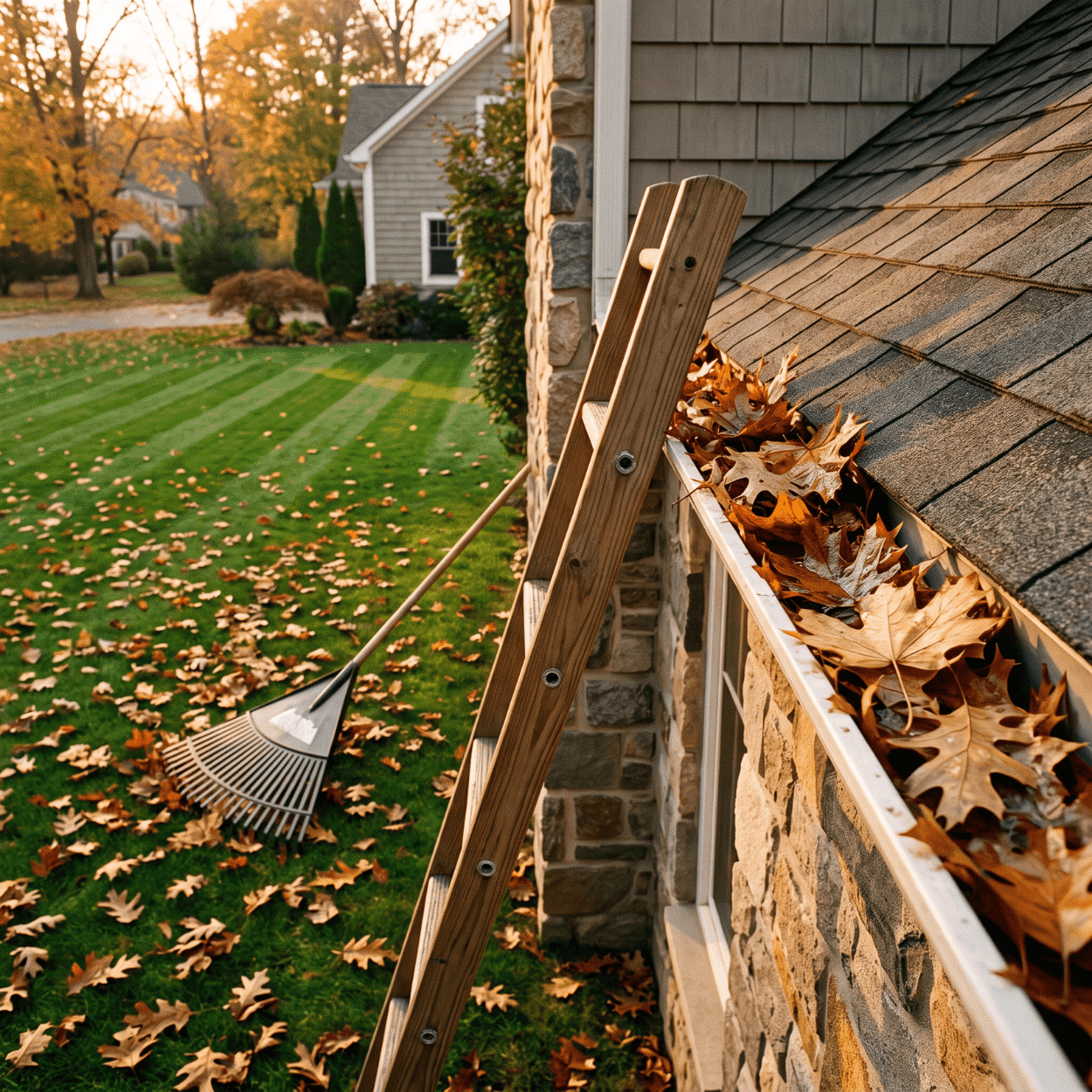
| Clean gutters and downspouts | Clogged gutters overflow, freeze, and dump water at the foundation | Before first freeze |
| Extend downspouts away from foundation | Water pooling at the wall is the top cause of basement seepage | Anytime in fall |
| Check and regrade soil sloping toward the house | Grade should carry water away, not toward the foundation | Early fall |
| Drain and shut off exterior spigots | Trapped water in a hose bib freezes and splits the line | Before first hard freeze |
| Seal foundation and sill-plate cracks | Freeze-thaw widens any gap it can enter | Early fall |
| Inspect and seal window and door gaps | Air leaks waste heat and let cold reach pipes | Early fall |
| Trim branches away from the roof and lines | Ice-loaded branches break and take lines with them | Before ice season |
The downspout and grading items are the ones people skip and regret. A finished or unfinished basement stays dry mostly because of what happens outside the wall, not inside it.
Pro Tip 2: Walk your foundation after a heavy fall rain and watch where water goes. Wherever it pools against the wall is where you will have a problem in a wet spring.
Pro Tip 3: Disconnect and drain garden hoses before the first hard freeze. A hose left connected traps water in the spigot, and a split spigot line often does not show until it thaws and floods.
The Interior and Systems Checklist
| Task | Why it matters | Rough timing |
|---|---|---|
| Have the furnace inspected and filter changed | A failure in January is an emergency; in October it is a repair | Early fall |
| Test smoke and carbon monoxide detectors | Heating season is peak CO risk; detectors save lives | Early fall |
| Test for radon | The house closes up in winter, concentrating radon | Fall |
| Reverse ceiling fans to clockwise | Pushes warm air down, evens out heat | Anytime |
| Check attic insulation depth | Heat loss through the attic drives ice dams | Early fall |
| Inspect the water heater and clear its area | Sediment and clearance issues are cheaper to catch early | Anytime |
| Check basement humidity and sump pump | A frozen or failed sump line floods on the first thaw | Before freeze |
Carbon monoxide deserves singling out. Heating season is when furnaces run hardest and when CO risk is highest, and a working detector is the cheapest life-safety device in the house.
Pro Tip 4: Change the furnace filter and have the system checked before you need heat, not the week the first cold snap hits and every HVAC company is booked solid.
Pro Tip 5: Test for radon in the fall. All 99 Iowa counties are EPA Zone 1, the highest radon potential category, and levels tend to read higher in winter when the house is sealed up. A test kit is inexpensive and the results shape whether you need mitigation.
Ice Dams: The Iowa-Specific Threat
Ice dams deserve their own section because they are common here and misunderstood.
An ice dam forms when heat escaping through the attic melts snow on the upper roof, the meltwater runs down to the cold eave, and it refreezes there. The ridge of ice that builds up blocks the next round of meltwater, which backs up under the shingles and into the house.
The fix is not on the roof, it is in the attic. Adequate insulation and proper attic ventilation keep the roof deck cold and even, so snow does not melt unevenly in the first place.
| Contributor | Fall action |
|---|---|
| Insufficient attic insulation | Check depth, add where thin |
| Poor attic ventilation | Confirm soffit and ridge vents are clear |
| Air leaks into the attic | Seal gaps around fixtures and the attic hatch |
| Clogged gutters | Clean before freeze so meltwater has somewhere to go |
Pro Tip 6: If you had ice dams last winter, address attic insulation and ventilation this fall. Roof heat cables treat the symptom; attic work treats the cause.
Pro Tip 7: Do not assume more attic insulation alone fixes ice dams. Insulation without ventilation can trap moisture; the two work together.
Timing Maintenance Around a Remodel
If a remodel, addition, or basement finish is on your horizon, fall maintenance and project planning overlap in useful ways.
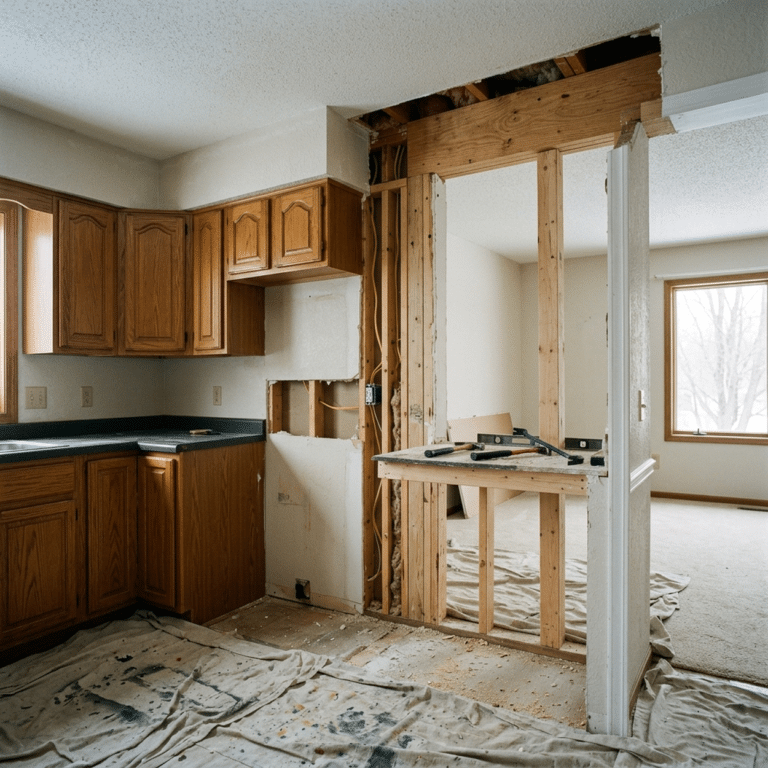
Some maintenance is worth doing before a project because the project makes it harder to reach later. Some is worth folding into the project itself. And some tells you something the project needs to account for.
| Situation | Do it before, during, or flag it |
|---|---|
| Basement seepage found this fall | Flag it: fix water before any basement finish |
| Attic insulation is thin | Fold into an addition or roof-adjacent work |
| Panel is full | Flag it: an addition or kitchen may need a service upgrade |
| Old windows leaking air | Consider timing replacement with other exterior work |
| Radon reads high | Fold mitigation into a basement finish while it is open |
The basement seepage row is the important one. Finishing a basement over an unresolved moisture problem buries the problem behind drywall, where it becomes expensive to reach. Fall is when seepage shows itself, so it is the right time to catch it.
Pro Tip 8: If you are planning a basement finish, run this fall’s water items first and watch for seepage. What you find changes the scope.
Pro Tip 9: If a kitchen or addition is coming, have your electrical panel evaluated this fall. Modern kitchens and new additions often need more circuits than an older panel can carry, and knowing early prevents a mid-project surprise.
A Simple Fall Sequence
For a Central Iowa home, this order works: water first, then air sealing, then systems, then the attic. Water items prevent the most expensive damage. Air sealing saves heat and protects pipes. Systems keep you safe and warm. Attic work prevents ice dams.
Pro Tip 10: Knock out the whole exterior water list in one weekend before the first hard freeze. It is the single highest-value block of fall work on an Iowa home.
Pro Tip 11: Keep a short written record of what you checked and when. Next fall it turns a half-day of remembering into a quick pass.
Pro Tip 12: For anything involving the roof, electrical panel, or structural questions, bring in a qualified professional rather than guessing from a ladder. The cheap version of a fall on the roof does not exist.
Our home remodeling service page covers the larger projects that fall maintenance often reveals a need for. For basements specifically, our Des Moines basement finishing cost guide covers what finishing costs once the space is dry. To see the communities we serve, visit our service area page.
For primary sources, radon guidance comes from the EPA radon program. Home energy and weatherization guidance is published by the U.S. Department of Energy. For residential construction data, see the U.S. Census Bureau.
Frequently Asked Questions
What is the most important fall maintenance for an Iowa home? The water-related items: clearing gutters, extending downspouts, grading soil away from the foundation, and draining exterior spigots. In Iowa’s freeze-thaw climate, water plus cold causes more winter damage than cold alone, so protecting against water intrusion delivers the most value.
When should I get my furnace checked? Early fall, before the first cold snap. A furnace inspection and filter change in October is a routine service. The same failure in January is an emergency, often during a stretch when every HVAC company is fully booked and prices reflect it.
Why test for radon in the fall? Radon tends to read higher in winter when the house is sealed against the cold, and fall is when you close the house up. All 99 Iowa counties are EPA Zone 1 for radon, and testing in the fall gives you results before you spend the winter breathing whatever is in the lowest level of the home.
What causes ice dams and how do I prevent them? Ice dams form when attic heat melts roof snow unevenly, and the meltwater refreezes at the cold eave and backs up under the shingles. The fix is attic insulation and ventilation that keep the roof deck cold and even, not roof heat cables, which only treat the symptom.
Should I do maintenance before a remodel or after? It depends on the item. Fix basement moisture before any basement finish, since finishing over seepage buries the problem. Fold radon mitigation or attic insulation into a related project while things are open. Flag a full electrical panel before a kitchen or addition that may need more circuits.
Can I do fall maintenance myself? Much of it, yes: gutters, downspouts, spigots, filters, and detectors are homeowner-level tasks. Roof work, electrical panel questions, and structural concerns are worth a qualified professional. The savings from doing the roof yourself never justify the risk of a fall.
Key Takeaways
Water comes first
- Clear gutters and extend downspouts before the freeze
- Grade soil to carry water away from the foundation
- Drain exterior spigots before the first hard freeze
Systems and safety
- Have the furnace checked before you need heat
- Test smoke and carbon monoxide detectors
- Test for radon in the fall, all 99 Iowa counties are Zone 1
Ice dams
- The fix is attic insulation and ventilation, not roof cables
- Address the attic this fall if you had dams last winter
Around a remodel
- Fix basement seepage before any basement finish
- Evaluate a full panel before a kitchen or addition
- Fold radon mitigation into an open basement
Planning a Project This Fall?
We have completed 1,285+ projects across Central Iowa since 2020, and fall maintenance often surfaces the bigger jobs worth planning for winter and spring. If your checklist turned up a wet basement, a tired kitchen, or a house that has outgrown itself, we will walk it with you honestly.
Free consultation, no pressure, no obligation.
Call: 844-435-9800
Written warranty on workmanship (details provided in your contract).
Disclaimer: This article is for general information and is not project-specific advice. Maintenance needs vary by home age, condition, and site. Roof work, electrical work, and structural questions should be handled by qualified professionals. Radon testing and mitigation should be performed by qualified professionals; all 99 Iowa counties are EPA Zone 1. Homes built before 1978 may contain lead paint, and federal RRP rules may apply to work disturbing painted surfaces. No specific outcomes are guaranteed. Consult a registered contractor for guidance specific to your project, and note that electrical, plumbing, and mechanical work is performed by licensed trade professionals.
Busy Builders | Full-Service Construction and Remodeling | Serving Central Iowa Since 2020