Central Iowa homeowners ask two questions before building a deck: how much value will it actually add, and is it worth the cost? This guide gives honest ROI data from two different measurement methods, real Iowa cost ranges for 2026, permit rules, and material guidance built around Iowa’s freeze-thaw climate. The goal is clarity, not sales pitch.
TLDR: Decks are one of the highest-ROI home improvements available. Wood deck additions recoup up to 94.9 percent of cost at resale nationally, while appraiser-based studies put the Midwest property value increase closer to 37 to 50 percent. Both numbers are real. They measure different things. Either way, a deck consistently ranks among the top home investments you can make in Iowa.
You have been thinking about a deck. Maybe it is a place to grill, somewhere for family to spread out, or just a better backyard. Before you call a contractor, you want to know the real number: does this actually add value to your home?
The honest answer depends on how you measure value, what material you choose, and how long you plan to stay. This guide walks through both of the main ROI numbers buyers see online, Iowa-specific costs, permit rules, and what makes the difference between a deck that adds value and one that does not.
The Short Answer: Yes, Decks Add Value in Iowa
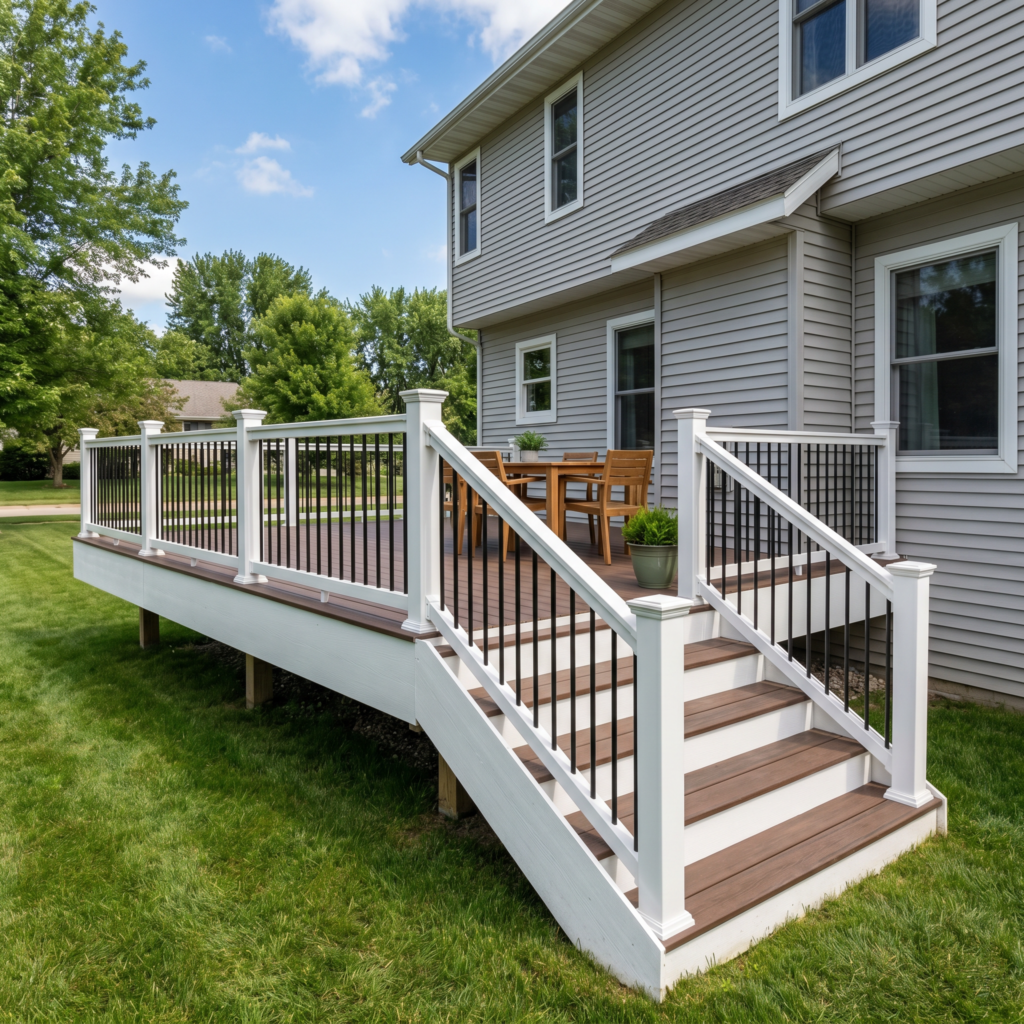
Decks consistently rank among the top ten home improvements for ROI nationally. The 2025 Zonda Cost vs. Value Report found that wood deck additions recoup 94.9 percent of cost at resale, and composite decks return 88.5 percent. That data comes from a 16 by 20 foot deck with bench, stairs, and railing.
There are two different ways ROI is measured, and both matter. The Cost vs. Value Report tracks what percentage of your project cost you recoup at resale. Appraiser-based studies, including data from TimberTech and the National Association of Realtors, show closer to 37 to 50 percent of project cost added to formal Midwest property value. The difference reflects buyer demand and negotiating power, which are not the same as appraised value.
| Measurement Method | Wood Deck | Composite Deck | Source |
|---|---|---|---|
| Cost vs. Value Report, resale recoup | 94.9% | 88.5% | 2025 Zonda |
| Appraiser-based property value, Midwest | ~37 to 50% of cost | ~39 to 44% of cost | TimberTech, NAR |
| Dollar value added, national average | ~$8,559 to $17,323 | ~$9,325 to $22,199 | Zonda, NAR |
These are planning benchmarks, not guarantees. ROI varies by market, project quality, materials, and buyer demand at time of sale. Pro Tip 1: Do not plan a deck around one specific resale number. Build for how your family will use it, and treat the ROI data as supporting math, not a promise.
Iowa construction costs run about 14 percent below the national average, which improves your cost basis compared to coastal markets. Iowa buyers also specifically value low-maintenance outdoor living because they know what the climate does to poorly built structures.
What Does a Deck Cost in Iowa?
Installed deck costs in Iowa run roughly $13 to $43 per square foot, with Des Moines metro prices stretching to $20 to $65 per square foot depending on material and complexity. Labor represents 50 to 70 percent of total cost, and Iowa skilled labor averages around $39 per hour. Iowa’s 42-inch frost line also adds foundation cost compared to warmer states because every footing reaches that depth.
| Deck Size | Sq Ft | Pressure-Treated Wood | Mid-Range Composite | Premium Composite |
|---|---|---|---|---|
| 10 by 12 ft | 120 | $2,400 to $5,160 | $6,000 to $9,000 | $9,600 to $13,200 |
| 12 by 16 ft | 192 | $3,840 to $6,720 | $7,680 to $12,500 | $12,000 to $18,000 |
| 16 by 20 ft | 320 | $6,400 to $13,760 | $16,000 to $22,400 | $22,400 to $32,000 |
| 20 by 24 ft | 480 | $9,600 to $20,640 | $24,000 to $33,600 | $33,600 to $48,000 |
These are planning estimates for Central Iowa based on 2026 regional data. Actual costs depend on footing requirements, stair count, railing style, site access, and current material pricing. Pro Tip 2: Always get a written, itemized estimate. A single per-square-foot number hides footings, permits, site prep, and finish choices. For a fuller breakdown, our custom deck cost guide for Des Moines walks through each line item. Pro Tip 3: Get three bids from registered Iowa contractors. A 10 percent labor spread adds up fast on a 320 square foot build.
Wood vs. Composite: What Works in Iowa’s Climate
Iowa sees 45 to 84 freeze-thaw cycles annually and temperature swings of more than 120 degrees from winter to summer. Material choice matters more here than in milder climates. Pressure-treated wood costs less upfront and returns a slightly higher percentage at resale, but it absorbs water and requires staining or sealing every one to three years. Composite costs more upfront, does not absorb water, and handles freeze-thaw cycles better over time.
| Factor | Pressure-Treated Wood | Mid-Range Composite | Premium Composite |
|---|---|---|---|
| Material cost per sq ft | $3 to $8 | $5 to $9 | $10 to $12 |
| Installed cost per sq ft | $15 to $25 | $25 to $35 | $30 to $45 |
| Lifespan in Iowa | 10 to 15 years (often 10 to 12 in Iowa) | 25 to 30 years | 25 to 50+ years |
| Maintenance | Stain or seal every 1 to 3 years | Wash twice a year | Wash twice a year |
| Freeze-thaw resistance | Moderate | High | Highest |
| Water absorption | Yes, can crack or warp | No | No |
| Best for | Budget, short-term owners | Mid-range, long-term value | Low-maintenance, longevity |
Lifespan figures are general ranges and depend on installation quality and ongoing maintenance. Pro Tip 4: Ledger flashing is the single most common structural failure on Iowa attached decks. Water runs behind a poorly flashed ledger board, rots the home’s band joist, and the damage shows up years later. A registered contractor flashes the ledger correctly from day one. Pro Tip 5: Iowa clay soil shifts year-round. Post base brackets are preferable to posts set directly in concrete because they allow the structure to move slightly with seasonal ground changes. For more material detail, see our guide on best deck materials for Iowa weather. Pro Tip 6: If you choose wood, budget for stain or seal every one to three years. Skipping maintenance is how Iowa wood decks die early.
Iowa Permit Requirements You Need to Know
Most decks in Iowa need a permit. Attached decks always require one. Any deck over 30 inches above grade or larger than 200 square feet also requires a permit in most Iowa cities. Scott County requires permits for all decks regardless of size.
| City or County | Permit Required | Footing Depth | Typical Fee | Review Time |
|---|---|---|---|---|
| Des Moines | Attached, over 30 in., or over 200 sq ft | 42 in. | $75 to $300, valuation-based | 5 to 10 days |
| Cedar Rapids | Attached, over 200 sq ft, or over 30 in. | 42 in. | $75 to $250 | 5 to 10 days |
| Davenport, Scott County | All decks, no exemption | 42 in. | $50 to $200 | 5 to 10 days |
| Johnson County, Iowa City | Attached, or detached over 200 sq ft | 42 in. | Varies | 5 to 10 days |
| Bondurant | Yes, permit required | 42 in. | Varies | Contact city |
| Nevada, Iowa | Yes, permit required | 42 in. | Varies | Contact city |
Iowa adopted the 2024 International Residential Code effective January 1, 2026, and Des Moines uses a valuation-based fee schedule. Separate electrical and plumbing permits apply if you add outdoor lighting circuits, outlets, or a kitchen rough-in. Pro Tip 7: Pull the permit. Unpermitted decks create title issues at resale, lender problems, and potential insurance gaps. Pro Tip 8: Check setbacks and guardrail rules with your local planning office before finalizing a footprint. Guardrails are required on any deck over 30 inches above grade, and spindle spacing cannot exceed 4 inches. For a full code walkthrough, see our Iowa residential construction regulations guide. Pro Tip 9: Verify your contractor’s active DIAL registration at dial.iowa.gov. Iowa requires all general contractors earning more than $2,000 per year to hold active registration. Always verify current requirements with your local building department before starting.
What Actually Makes a Deck Add More Value?
Not every deck adds the same value. Size matters: decks large enough to seat eight to ten people for outdoor dining consistently drive stronger buyer demand. Functionality beats features. A deck that flows naturally from the main living area, has partial shade, and includes built-in seating reads as usable space to buyers. A poorly maintained wood deck can actually hurt a sale.
Multi-level decks often add 65 to 80 percent of construction cost in value because they maximize yard terrain and create distinct use zones. Matching deck materials to the home’s architectural style improves curb appeal and appraisal outcomes. In 2026, outdoor kitchens, pergolas, and integrated lighting are growing buyer priorities in Central Iowa. A deck with thoughtful extras adds more perceived value than a larger but plain one.
Iowa buyers specifically favor low-maintenance materials. Composite’s “just wash it” appeal resonates in a market where buyers know what a bad winter does to poorly sealed wood. A well-designed Iowa deck is usable roughly six months of the year, and buyers calculate that value when they tour the home.
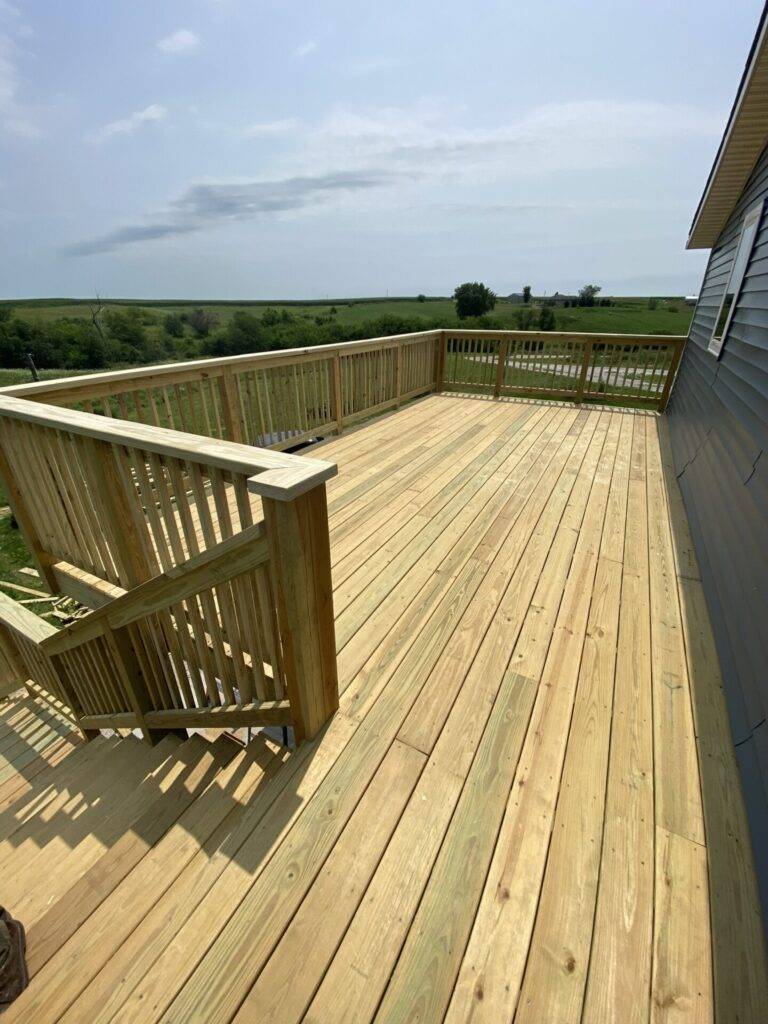
Illustrative scenario one: A Johnston homeowner adds a 16 by 20 foot pressure-treated wood deck with stairs, railing, and basic lighting. Iowa installed cost: approximately $10,000 to $16,000. Based on 2025 Cost vs. Value data, this type of project nationally recouped up to 94.9 percent of cost at resale. Illustrative planning example only, not a verified Busy Builders project.
Illustrative scenario two: A Waukee family adds a multi-level deck with upper dining zone and lower ground-level lounge, composite materials. Project cost: approximately $30,000 to $45,000. Multi-level decks typically return 65 to 80 percent of construction cost in added home value. Illustrative planning example only, not a verified Busy Builders project.
Is a Deck Worth It If You Are Not Selling?
Decks score 9.8 out of 10 on the National Association of Realtors joy score, the highest of any remodeling project measured. For Iowa families staying in their homes long-term, the lifestyle value of a functional outdoor space is a real return beyond resale math. A deck also extends usable living area at a lower cost per square foot than a full addition.
One practical note: a permitted deck adds to your home’s assessed value, which may modestly increase annual property taxes. That is a factual consideration, not a reason to skip the permit. Pro Tip 10: If you plan to sell within three years, pressure-treated wood typically delivers the fastest ROI recovery. If you plan to stay ten years or more, composite’s lower lifetime maintenance cost usually wins on total value. Pro Tip 11: Schedule your project early. Iowa contractors book up fast in spring and summer. Planning and permitting in late winter often gets you better build-season scheduling. Pro Tip 12: Concrete footings should not be poured in sustained temperatures below 40 degrees without proper precautions. If you want a spring deck, start the permit and design process in January or February.
Frequently Asked Questions
Q: Does adding a deck increase home value in Iowa? Yes. Wood decks recoup up to 94.9 percent of cost at resale nationally according to the 2025 Cost vs. Value Report, and composite decks return 88.5 percent. Appraiser-based studies show Midwest property value increases closer to 37 to 50 percent of project cost. Both numbers are real; they measure different things. Either way, decks consistently rank among the top ROI home improvements available. These are planning benchmarks, not guarantees. Get an appraisal specific to your property for accurate value estimates.
Q: How much does it cost to build a deck in Des Moines? Installed deck costs in Des Moines metro run $20 to $65 per square foot depending on material and complexity. A 12 by 16 foot pressure-treated wood deck typically costs $3,840 to $6,720 installed. The same size in composite runs $7,680 to $12,500. Iowa construction costs run about 14 percent below the national average. These are planning estimates only. Get a written, itemized estimate for your specific project.
Q: Do I need a permit to build a deck in Iowa? Almost always, yes. Attached decks always require a permit. Any deck more than 30 inches above grade or larger than 200 square feet requires a permit in most Iowa cities. Scott County requires permits for all decks regardless of size. Footings must go at least 42 inches deep to reach below the Iowa frost line. Permit fees typically run $50 to $300. Always verify current requirements with your local building department.
Q: Wood or composite deck, which is better for Iowa weather? Both work, but Iowa’s 45 to 84 freeze-thaw cycles and 120-degree temperature swings favor composite for long-term performance. Composite does not absorb water, resists cracking, and requires minimal maintenance. Wood costs less upfront but needs staining or sealing every one to three years. For most Iowa homeowners planning to stay long-term, composite delivers better lifetime value. For short-term owners, wood offers strong upfront economics.
Q: How long does it take to build a deck in Iowa? A standard deck build takes one to three weeks after permit approval. Permit review typically adds 5 to 10 business days in Des Moines, Cedar Rapids, and Iowa City. Spring through fall is peak building season, so plan ahead. Winter deck builds are possible but require weather flexibility for concrete footing pours.
Key Takeaways
ROI
- Wood decks recoup up to 94.9 percent of cost at resale nationally, 2025 Cost vs. Value Report
- Composite decks recoup 88.5 percent at resale nationally, same source
- Midwest appraiser-based property value increase runs 37 to 50 percent of cost
- Both metrics are valid and measure different things
Cost in Iowa
- Installed costs: $13 to $65 per square foot depending on material and complexity
- Iowa costs run about 14 percent below national average
- Labor is 50 to 70 percent of total cost
Material
- Composite handles Iowa freeze-thaw cycles better long-term
- Wood costs less upfront but needs stain or seal every 1 to 3 years
- Post base brackets beat direct-in-concrete post setting in Iowa clay soil
Permits and Code
- 42-inch minimum footing depth statewide
- Permits required for attached decks and most larger builds
- Iowa adopted 2024 IRC effective January 1, 2026
- Verify contractor DIAL registration at dial.iowa.gov
Ready to Price Your Deck Addition?
Busy Builders has completed more than 1,285 projects since 2020. We build decks throughout Des Moines, West Des Moines, Waukee, Ankeny, Johnston, Grimes, Urbandale, Ames, and Polk City. Every project starts with a free consultation, a line-item written estimate, and a registered contractor who pulls permits and handles inspections. For more on our deck work, see our deck building services page.
Call: 844-435-9800 Website: https://busybuildersiowa.com/
We would rather give you an honest number up front than a low bid with surprise charges later. Reach out whenever you are ready.
Legal Disclaimer
All cost and ROI figures in this article are general planning estimates and national or regional benchmarks. Actual costs and returns vary by project scope, lot conditions, materials, finishes, market timing, and current labor and material pricing. ROI data from the 2025 Zonda Cost vs. Value Report reflects national averages for resale cost recoup, not appraised value. Midwest appraisal-basis figures reflect formal property value increases and may differ from actual market outcomes. No specific returns on investment or resale outcomes are guaranteed. Permit requirements and fees vary by city and change over time; always verify current rules with your local building department. Illustrative scenarios are planning examples, not verified Busy Builders projects. Consult a registered Iowa contractor, a licensed engineer where applicable, and a certified Iowa appraiser or real estate professional for guidance specific to your property and project.
Busy Builders | Full-Service Construction and Remodeling | Serving Central Iowa Since 2020