Building a custom home in Iowa is not the same as building one anywhere else. Central Iowa’s heavy clay soils, all-99-counties radon zone, deep frost line, and state-specific contractor registration system change the order of operations, the cost mix, and the questions that matter most at each phase. This guide walks through the full custom build process so a family planning a home in the Des Moines metro or surrounding counties knows what to expect, what to verify, and what to ask before signing a contract. Cost figures are 2026 Des Moines metro planning estimates. Actual costs and timelines vary by lot, scope, lender qualification, and market conditions.
TLDR: A typical Central Iowa custom home takes 8 to 12 months from permit issuance to Certificate of Occupancy, with another 60 to 120 days on the front end for lot closing, design, and permit review. Iowa-specific items most national checklists miss: geotechnical soil testing on clay lots, radon-resistant rough-in at foundation, the at-least-42-inch frost line, DIAL contractor registration verification, and the 2024 IRC, adopted September 10, 2025. Plan the loan first, the lot second, and the build schedule third.
Custom home building in Iowa starts with decisions that national checklists often gloss over. The soil under alot in Central Iowa is usually heavy clay. Every county in the state is an EPA Radon Zone 1. The frost line is deep. The contractor registration system is state-specific. Skipping any of these steps can turn a dream build into a repair bill long before move-in. The sections below walk through each phase in typical order.
How Long a Custom Home Build Actually Takes in Iowa
A typical Central Iowa custom home runs 8 to 12 months from permit issuance to final Certificate of Occupancy. National Association of Home Builders and Census data support this range as the average for single-family custom builds. Add another 60 to 120 days on the front end for lot closing, design, and permit approval. Weather events, change orders, and supply chain delays can move the schedule in either direction. Timelines are typical averages, not guarantees.
| Phase | Typical Duration | Key Milestone |
|---|---|---|
| Lot closing and survey | 30 to 60 days | Title clear, site survey complete |
| Design and engineering | 60 to 120 days | Stamped plans ready for permit |
| Permit and plan review | 15 to 45 days | Building permit issued |
| Site prep, excavation, foundation | 30 to 60 days | Foundation passes inspection |
| Framing and rough mechanicals | 60 to 90 days | Rough-in inspections pass |
| Insulation, drywall, interior finish | 60 to 90 days | Interior substantially complete |
| Exterior finishes and flatwork | 30 to 60 days | Siding, windows, driveway in |
| Final inspections and punch list | 14 to 30 days | Certificate of Occupancy issued |
The total window from contract to Certificate of Occupancy typically ranges from 12 to 16 months, including design and permitting time. A qualified builder will provide a more specific schedule based on lot conditions and scope.
Pro Tip 1: Add a 30- to 60-day schedule buffer for Iowa weather and change orders. Rain delays, freeze days, and material lead times are routine in Central Iowa builds.
Pro Tip 2: Lock design decisions before permit submission. Post-permit changes trigger plan revisions, re-reviews, and avoidable schedule slips.
Step 1: Lot Selection and Iowa Soil Reality
Central Iowa sits on glacial till with heavy clay content in most counties. Clay expands when wet and shrinks when dry, which causes the foundation to expand and contract under seasonal stress. A geotechnical soil test before final design typically costs $800 to $2,500 and tells the structural engineer what footing depth, wall thickness, and drainage detail the site actually needs. Skipping the soil test is one of the most expensive shortcuts an Iowa builder can make. Illustrative scenario: a Polk County homeowner built on unverified clay; the foundation settled unevenly in year two, and repairs to the foundation and interior finishes cost approximately $45,000. Only a licensed Iowa geotechnical or structural engineer can confirm what a specific site requires.
The table below summarizes Iowa-specific pre-construction and foundation costs that national custom home checklists often omit.
| Iowa-Specific Cost | Typical 2026 Range | When Incurred |
|---|---|---|
| Geotechnical soil report | $800 to $2,500 | Before final design |
| Site survey and staking | $500 to $1,500 | Before excavation |
| Radon-resistant rough-in | $300 to $600 | Foundation phase |
| Frost-depth footing (42 inches or deeper) | Included in foundation cost | Foundation phase |
| Well and septic (rural lots) | $15,000 to $30,000 combined | Site prep phase |
Planning ranges only. Actual costs vary by lot, soil conditions, and jurisdiction requirements.
Pro Tip 3: Budget $800 to $2,500 for a geotechnical soil report on any Central Iowa lot before finalizing foundation design. The report protects the build and often satisfies lender requirements.
Pro Tip 4: Iowa’s frost line is at least 42 inches. All residential footings must extend below frost depth to prevent seasonal heave. Some jurisdictions or site conditions require deeper footings.
Step 2: Construction Loan and Financing
Construction loans work differently from traditional mortgages. Disbursements happen in phased draws tied to inspections, not in a single lump sum at closing. Planning ranges for 2026 Central Iowa borrowers: down payments typically run 10 to 25 percent of total project cost, depending on the lender, credit profile, and whether the borrower already owns the lot; credit score minimums usually sit at 680 or above; and rates during construction often price 1 to 2 points above conventional 30-year mortgages. These figures are planning ranges only. Individual qualification depends on the lender, the builder, the lot, and the borrower’s full financial picture. This section is not financial advice. Consult a qualified Iowa lender before making any financing decision.
| Loan Feature | Typical 2026 Planning Range |
|---|---|
| Down payment | Typically, 1 to 2 points above conventional 30-year |
| Credit score minimum | 680 or above (varies by lender) |
| Construction-phase rate | Typically, 1 to 2 points above the conventional 30-year |
| Draw schedule | Disbursed at phase milestones, tied to passed inspections |
| Construction term | Typically 12 months, extendable with fees |
All figures are planning ranges only. Actual rates, fees, and qualification requirements vary by lender and borrower. Results vary. Consult a qualified Iowa lender for a quote tailored to your specific situation.
Pro Tip 5: Secure pre-approval for a construction loan before signing a builder contract. The pre-approval letter sets the realistic budget ceiling and protects against scope creep once design begins.
Step 3: Design, Iowa Code, and Permit Review
Iowa adopted the 2024 IRC effective September 10, 2025, under Iowa Administrative Code Chapter 481-301. Iowa adopted the 2024 UPC effective March 26, 202,5 and currently follows the 2023 NEC statewide. Most Iowa jurisdictions follow state code adoption, but local amendments vary, so confirm with the local building department before finalizing the design. Iowa is primarily IECC Climate Zone 5A, with the northernmost counties in Zone 6A. Both zones require R-15 continuous or R-19 cavity on basement walls. Plan review timelines typically range from 15 to 45 days, depending on the jurisdiction’s workload and design complexity. Busy Builders has written a detailed guide to navigating home-building permits in Iowa that covers the permit workflow in greater depth.
Pro Tip 6: Iowa general contractors are registered, not licensed, through Iowa DIAL’s contractor registration system. Verify any builder’s registration before signing. Electricians, plumbers, and HVAC installers hold separate state licenses that should also be verified in the installing trades.
Pro Tip 7: Radon-resistant new-construction rough-in during the foundation phase typically costs $300 to $600. The same system retrofitted after occupancy typically costs $800 to $2,500. Every Iowa county is EPA Radon Zone 1 per Iowa HHS, and as many as 5 in 7 Iowa homes test above the EPA action level per the Iowa Radon Survey. Rough-in reduces radon entry pathways but does not replace a post-build radon test.
Step 4: Site Prep, Foundation, Framing, and Mechanicals
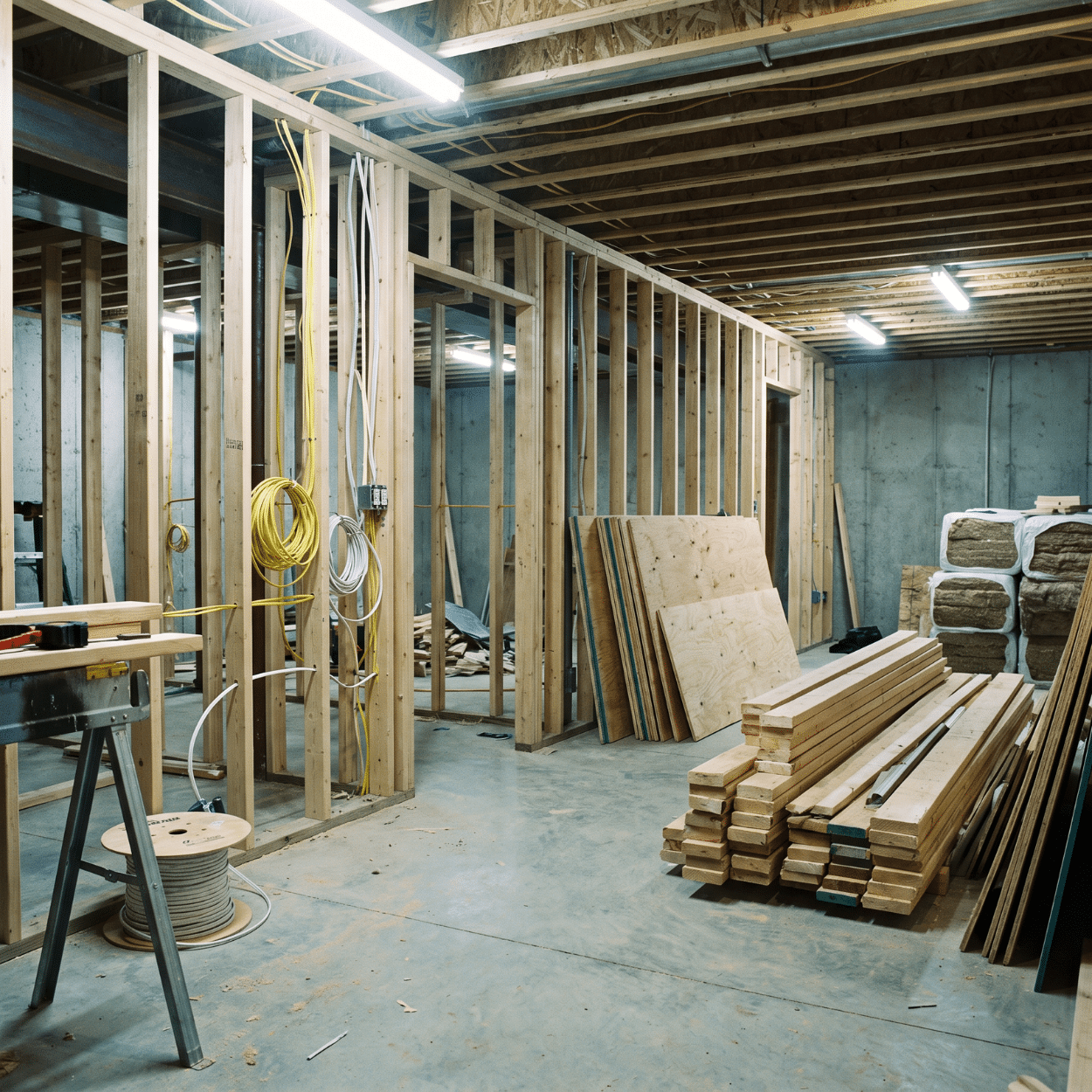
Excavation and foundation work typically run 30 to 60 days in Central Iowa, weather permitting. Concrete cannot be safely poured below 40°F without cold-weather additives or heated protection, which can extend timelines in the November through March window. After the foundation passes inspection, framing and rough mechanicals take another 60 to 90 days. Rough plumbing, electrical, and HVAC inspections happen at framing completion before insulation closes the walls. The table below shows typical phase cost allocation for a Central Iowa custom home.
| Phase | Typical Share of Total Build Cost |
|---|---|
| Site prep, excavation, foundation | 10% to 15% |
| Framing and structural | 15% to 20% |
| Rough mechanicals (plumbing, electrical, HVAC) | 10% to 15% |
| Exterior envelope (roof, siding, windows) | 15% to 20% |
| Interior finishes (drywall, flooring, trim, paint) | 20% to 25% |
| Kitchen and bath finishes | 10% to 15% |
| Flatwork, landscaping, final | 5% to 10% |
Percentages are typical planning ranges. Actual allocation varies by finish level, lot conditions, and design complexity.
Pro Tip 8: Lock in allowances for kitchen, bath, flooring, and lighting before framing begins. Mid-build selections tend to cost more and delay ordering.
Pro Tip 9: Iowa’s adopted energy code requires R-15 continuous insulation or an R-19 cavity on basement walls in both Climate Zones 5A and 6A. See the Iowa Insulation Institute’s energy code summary for the full-envelope minimum values.
Step 5: Interior Finishes and Change Order Control
Interior finishes typically run 60 to 90 days. Drywall goes up after insulation and rough mechanical inspections pass. Cabinets, flooring, trim, paint, and fixtures follow in sequence. This phase generates most change order requests because the house finally looks like a house, and homeowners notice details they had not pictured on paper. Change orders themselves are normal. Uncontrolled change orders destroy budgets and schedules.
Pro Tip 10: Ask the builder for a written change order policy before signing the contract. A clear policy protects both parties and keeps costs predictable through the finish phase.
Step 6: Final Inspections and Certificate of Occupancy
An Iowa homeowner cannot legally occupy a new custom home until the local building department issues the Certificate of Occupancy. The CO confirms that all final building, mechanical, plumbing, electrical, and any fire or life-safety inspections have passed. Moving in before CO issuance typically voids homeowner insurance, violates lender occupancy clauses, and can trigger code enforcement penalties. The final walkthrough and punch list happen in the days leading up to CO issuance. This is the homeowner’s last structured opportunity to document any item the builder needs to address under the written artistry warranty. Specific warranty terms and coverage details are provided in the project contract.
Pro Tip 11: Walk the house with the builder twice: once about a week before CO for the punch list, and once at CO handoff to confirm each punch item is closed.
Putting It Together: A Typical Central Iowa Custom Build
A typical Central Iowa custom build moves from lot closing to Certificate of Occupancy in 12 to 16 months once front-end design and permit time are included. The phases run sequentially in the order above, with inspections gating each transition. The items that most commonly derail Iowa builds are soil surprises, weather days, change orders, and lender draw delays. Each is manageable with the right team, the right schedule buffer, and the right contract terms. Busy Builders has completed new home construction projects for over 1,000 Central Iowa homeowners since 2020, backed by a written warranty on artistry. Details of the warranty are provided in the contract.
Pro Tip 12: Request a detailed draw schedule before signing the contract. The draw schedule shows which inspections trigger which lender disbursements and helps you forecast cash flow through the full build.
Frequently Asked Questions
Q1: How long does it typically take to build a custom home in Iowa?
A typical Central Iowa custom home takes 8 to 12 months from permit issuance to Certificate of Occupancy. Add another 60 to 120 days on the front end for lot closing, design, and permit review. Timelines are typical averages, not guarantees. Iowa weather, change orders, and material availability move dates in both directions.
Q2: Do I really need a geotechnical soil test for an Iowa build?
For most Central Iowa lots, yes. Heavy clay, common in Polk, Dallas, Warren, Story, and surrounding counties, can shift seasonally and damage foundations not designed for the site. A geotechnical soil test typically costs $800 to $2,500 and informs the foundation design. Only a licensed geotechnical or structural engineer can confirm what a specific site requires.
Q3: What is Iowa’s foundation frost line?
Iowa’s frost line is at least 42 inches. All residential footings must extend below this depth to prevent seasonal frost heave. Some jurisdictions and site-specific conditions require footings deeper than 42 inches. Confirm the exact requirement with the local building department before excavation begins.
Q4: How much down payment does an Iowa construction loan typically require?
Central Iowa construction loans in 2026 typically require 10 to 25 percent down on total project cost, depending on the lender, credit profile, and whether the borrower already owns the lot. Minimum credit score requirements usually sit at 680 or above. Rates during construction often price 1 to 2 points above conventional 30-year mortgages. These are planning ranges, not quotes. Individual qualifications vary widely by lender and borrower. This is not financial advice. Consult a qualified Iowa lender for specifics.
Q5: Is radon-resistant new construction worth it in Iowa?
Every Iowa county is in PA Radon Zone 1, and as many as 5 in 7 Iowa homes test above the EPA action level, according to the Iowa Radon Survey. Radon-resistant rough-in at the foundation phase typically costs $300 to $600. The same system retrofitted after occupancy typically costs $800 to $2,500. Rough-in reduces radon entry pathways but does not replace a post-build radon test or remove the need for active mitigation if the finished home tests high.
Q6: Can I move into my new Iowa home before the final inspection?
No. Iowa homeowners cannot legally occupy a new custom home until the local building department issues the Certificate of Occupancy. The CO confirms that all final inspections have passed. Occupying the home before CO typically voids homeowner insurance, violates lender occupancy clauses, and can trigger code enforcement penalties.
Key Takeaways
Iowa custom home building is an 8- to 12-month build process within a 12- to 16-month total project window, including lot closing, design, and permit review. The Iowa-specific items that national checklists frequently miss include geotechnical soil testing on clay sites, the at-least-42-inch frost line, radon-resistant rough-in at the foundation phase, DIAL contractor registration verification, and the 2024 IR, C adopted September 10, 2025. Construction loan terms, rates, and qualifications vary by lender and borrower, so early conversations with a qualified Iowa lender set a realistic budget ceiling before design begins. Change order discipline, a written artistry warranty with full details in the contract, and a documented punch list at Certificate of Occupancy protect the investment through the first year and beyond. The single most important decision a first-time custom home buyer in Iowa can make is to treat soil conditions, financing, and contractor registration as front-end verification steps rather than afterthoughts.
Ready to Start Planning Your Custom Iowa Home?
Busy Builders has guided over 1,000 Central Iowa homeowners through new home construction and remodeling since 2020. Call 844-435-9800 to talk through your lot, timeline, and budget, or schedule a free consultation to get a written scope before you commit.
Legal Disclaimer
This article is for general educational purposes only and does not constitute financial, legal, engineering, tax, or construction advice. Loan rates, down payment minimums, and qualification requirements vary by lender and borrower; consult a qualified Iowa lender before making any financing decision, as results vary. Soil conditions, foundation requirements, and structural specifications require site-specific assessment by a licensed Iowa geotechnical or structural engineer. Building code requirements vary by jurisdiction and change over time; confirm the current code adoption and any local amendments with the relevant building department before finalizing the design or beginning construction. Cost figures are 2026 Des Moines metro planning estimates. Actual costs vary by lot, scope, finish level, and market conditions. Timelines described in this article are typical averages, not guarantees. Radon-resistant rough-in reduces radon entry pathways but does not replace post-construction radon testing or substitute for active mitigation when a finished home tests above the EPA action level. Busy Builders provides a written warranty on artistry; specific terms, exclusions, and coverage details are provided in the project contract