Your deck railing does more than keep people safe. It is the most visible design element on the deck and one of the biggest decisions you will make after choosing your decking material. Get it right and the whole project comes together. Get it wrong and you are dealing with maintenance headaches or a railing that looks out of place for the next decade or more.
Iowa homeowners face five main railing categories, each with different upfront costs, maintenance demands, and lifespans. What most generic guides skip is how Iowa’s climate factors in. With temperature swings exceeding 120 degrees annually and 35 to 40 inches of average snowfall, Central Iowa punishes some materials far harder than others. This guide compares all five options with real Des Moines installed costs, honest maintenance timelines, and code requirements so you can choose with confidence.
For overall budget context, see deck building costs in Des Moines 2026 before diving into railing specifics.
Iowa Code Requirements for Deck Railings
Before choosing a style, understand what Iowa code requires. Iowa adopts the International Residential Code (IRC) with local amendments. These are the baseline requirements for Des Moines and most Central Iowa jurisdictions:
| Requirement | Code Reference | Notes |
|---|---|---|
| Guard rail required | IRC R312.1.1 | Any deck surface 30+ inches above grade |
| Minimum rail height | IRC R312.1.2 | 36 inches minimum |
| Baluster/infill spacing | IRC R312.1.3 | No opening larger than a 4-inch sphere |
| Post load transfer | IRC R507.10 | Posts must connect to deck framing |
| Des Moines permit fee | City of Des Moines | $75 for deck permits |
Inspections are required at three stages: footing, framing, and final. Iowa’s frost line runs 42 inches in the Central Iowa metro and up to 48 inches in northern Iowa, which affects post footing depth.
One important note on cable railing: the 4-inch sphere rule applies even under cable deflection. Some Iowa inspectors check this under load. Verify the current adopted code edition with your local building department before finalizing your railing design.
Wood Railings
Installed cost: $30 to $75 per linear foot
Pressure-treated pine and cedar are the most common wood railing choices in Iowa. Both offer the lowest upfront cost of any material and unlimited customization. You can stain them any color and build nearly any style.
The trade-off is maintenance. Wood requires staining or sealing every one to three years. Iowa’s freeze-thaw cycles accelerate cracking and warping faster than in milder climates. Skip a maintenance cycle and pressure-treated pine degrades noticeably within a season or two.
Lifespan with consistent maintenance: 10 to 15 years for pressure-treated pine, 15 to 20 years for cedar. Cedar naturally resists insects and moisture better than pine and is worth the modest price premium for Iowa homeowners who want wood.
Wood works best for budget builds, custom designs, or homeowners who genuinely enjoy outdoor maintenance and want a traditional look.
Composite Railings
Installed cost: $48 to $100 per linear foot for mid-range to premium composite; Trex systems specifically $20 to $60 per linear foot
Composite railing is the most popular choice in the Central Iowa market, and for good reason. It requires no staining, sealing, or painting. Cleaning is soap and water. It resists rot, mold, and insects, and it handles Iowa’s freeze-thaw cycles well.
Trex and TimberTech both offer 25-year warranties on their railing systems. Composite is available in a wide range of colors and pairs naturally with composite decking, which is itself the most common deck surface in Iowa. For guidance on pairing materials, see best decking materials for Iowa homeowners.
One note on pricing: Trex raised railing and fastener prices on January 1, 2026. Get current quotes before budgeting.
Composite works best for families who want low ongoing maintenance and a railing that matches their decking material.
Aluminum Railings
Installed cost: $50 to $100 per linear foot
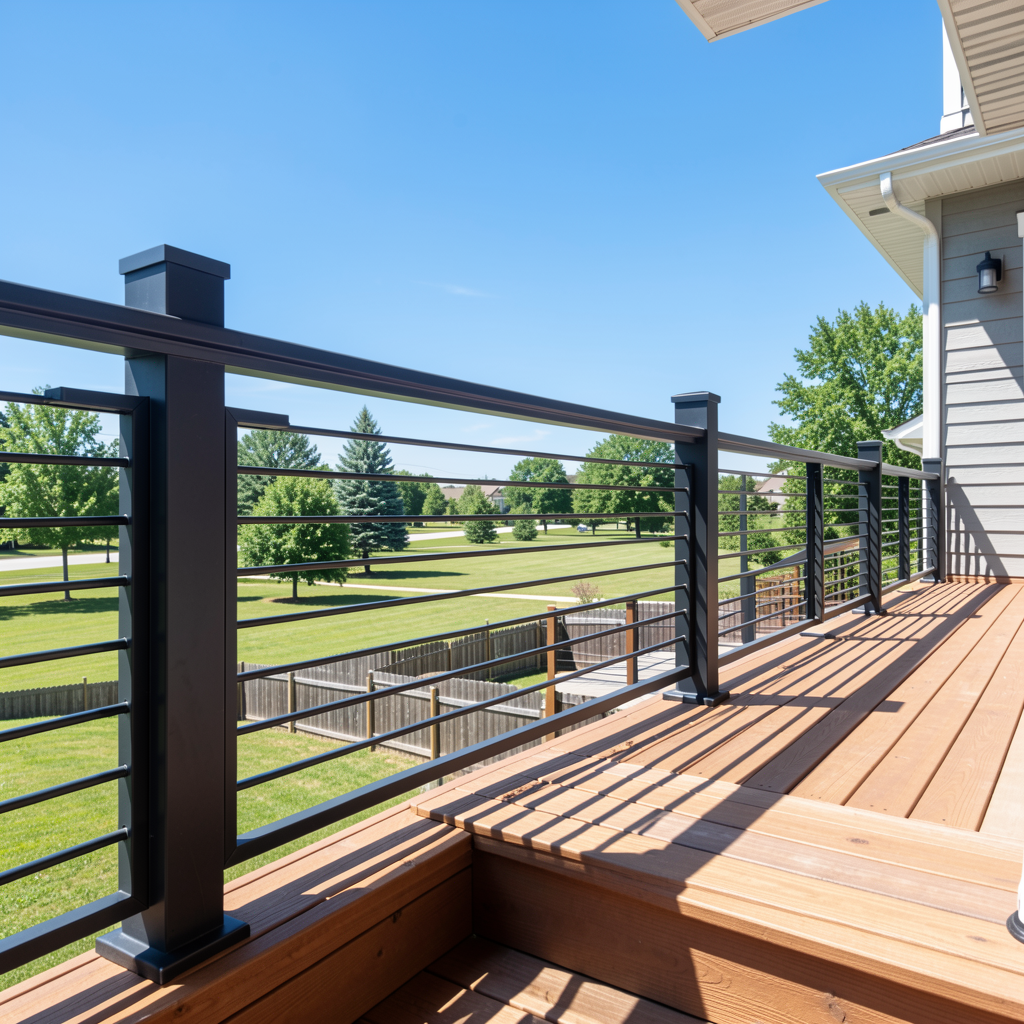
Aluminum offers the best long-term value of any railing material for Iowa conditions. It is rust-proof, corrosion-resistant, and powder-coated to handle road salt, humidity, and freeze-thaw cycles without issue. Annual maintenance is a simple rinse.
Lifespan runs 30-plus years with virtually no upkeep. The slimmer profile of aluminum balusters also preserves sightlines better than wood or composite. Major brands include Fortress, Westbury, AFCO, and Deckorators.
The one minor drawback in Iowa: aluminum conducts cold. The top rail can feel uncomfortable to grip on January mornings. Homeowners who use their decks primarily in warmer months will not notice this at all.
Aluminum pairs with any decking material and works well for homeowners who want a modern look with decades of low-cost ownership.
Cable Railings
Installed cost: $150 to $250 per linear foot for marine-grade stainless steel cable with aluminum or composite posts
Cable railing uses horizontal stainless steel cables stretched between posts of aluminum, composite, or wood. The result is a clean, open look that maximizes views and airflow. Cable is the right choice when the view from the deck is worth preserving.
The cost is significant: two to three times higher than wood or composite. Beyond cost, there are practical Iowa considerations. Cables collect ice in winter. Temperature-related expansion and contraction means tension checks one to two times per year are standard maintenance. Some Iowa HOAs prohibit cable railing, so verify your covenants before committing.
The “ladder effect” is also worth considering for families with young children. Horizontal cables are climbable. This does not disqualify cable railing, but it is a real factor for households with kids under 10.
Marine-grade stainless steel cable has a 20 to 30-plus year lifespan. Cable railing is code-compliant when properly installed, but confirm with your local inspector that the 4-inch sphere rule is met under deflection for your specific system.
Glass Railings
Installed cost: $200 to $400-plus per linear foot
Glass railing provides the most unobstructed view of any material and also adds wind protection that cable cannot. Tempered or laminated safety glass panels come in framed, semi-frameless, and standoff hardware styles.
The Iowa-specific risks are worth knowing. Hail is a real hazard: tempered glass is impact-resistant but not indestructible. Snow and ice buildup on panels needs regular clearing. For exposed or elevated Iowa decks, wind-rated panels are recommended.
Maintenance is ongoing. Glass shows fingerprints, pollen, and water spots, making it the highest-cleaning railing on this list. Lifespan for quality tempered glass panels runs 20-plus years.
Glass is the right choice for premium projects where budget is secondary to unobstructed aesthetics. It is the highest cost option by a wide margin.
Side-by-Side Railing Comparison
| Factor | Wood | Composite | Aluminum | Cable | Glass |
|---|---|---|---|---|---|
| Installed Cost/LF | $30 to $75 | $48 to $100 | $50 to $100 | $150 to $250 | $200 to $400+ |
| Lifespan | 10 to 20 yrs | 25 to 30 yrs | 30+ yrs | 20 to 30 yrs | 20+ yrs |
| Maintenance | High (annual staining) | Low (soap and water) | Minimal (rinse) | Moderate (tension checks) | High (frequent cleaning) |
| Iowa Weather | Poor (freeze-thaw damage) | Good | Excellent | Good (ice on cables) | Good (hail risk) |
| Best For | Budget builds, custom looks | Low-maintenance family decks | Long-term value, modern look | View preservation | Premium unobstructed views |
Total Cost for a 40 Linear Foot Deck Perimeter
Most standard decks run 40 linear feet of railing or more. Here is what total installed cost looks like by material:
| Material | Estimated Total (40 LF) |
|---|---|
| Wood (pressure-treated) | $1,200 to $3,000 |
| Composite | $1,920 to $4,000 |
| Aluminum | $2,000 to $4,000 |
| Cable | $6,000 to $10,000 |
| Glass | $8,000 to $16,000+ |
Planning estimates only. Actual costs vary by site conditions, post spacing, hardware, and labor.
How to Choose the Right Railing for Your Iowa Deck
Match the railing to your priorities:
Budget-conscious: Wood or entry-level composite (Trex Select runs $20 to $60 per linear foot installed).
Low-maintenance priority: Aluminum or composite. Both handle Iowa winters without annual upkeep.
View preservation: Cable or glass. Glass adds wind protection; cable allows more airflow.
Families with young children: Composite or aluminum with traditional vertical balusters. Avoids the ladder-effect concern of horizontal cable.
HOA neighborhoods: Check your covenants first. Composite and aluminum in neutral tones are most commonly approved. Cable and glass face restrictions in some Central Iowa neighborhoods.
Mixed material combinations: Aluminum balusters with composite posts, cable infill with wood posts, and similar hybrids typically run $85 to $120 per linear foot installed and blend the strengths of two materials.
If your project timeline is flexible, see benefits of building your deck in the winter for scheduling and pricing advantages.
Illustrative Scenarios
Illustrative scenario: An Ankeny family with two young children builds a 16×20 composite deck. They choose Trex Select composite railing to match their decking. At 40 linear feet, railing costs about $1,200 to $2,400 installed. The railing matches the deck color, requires no staining, and traditional balusters meet the 4-inch sphere rule without any ladder-effect concern.
Illustrative scenario: A West Des Moines homeowner with a backyard view of a pond prioritizes sightlines over cost. They choose cable railing with aluminum posts on a 400 sq ft deck. At 40 linear feet, total railing cost runs approximately $6,000 to $10,000 installed. The homeowner plans seasonal tension checks and budgets for cable ice removal in winter. Views from inside the home are preserved year-round.
Illustrative scenario: A Johnston homeowner replacing deteriorating 12-year-old pressure-treated wood railing switches to aluminum. At $50 to $100 per linear foot, the 40 linear feet of new railing costs $2,000 to $4,000 installed. With a 30-plus year lifespan and only an annual rinse for maintenance, the homeowner avoids the ongoing staining and repair costs that come with wood, which can add up meaningfully over time depending on how diligently maintenance was done.
Frequently Asked Questions
Q: Do I need a permit for deck railing in Des Moines?
A: Yes, if the deck itself requires a permit. Des Moines charges $75 for a deck permit, which covers the full structure including railing. Permits are required for decks attached to the house, decks over 200 sq ft, or decks more than 30 inches above grade. Verify current requirements with the Des Moines Permit and Development Center.
Q: Which railing material handles Iowa winters best?
A: Aluminum handles Iowa’s freeze-thaw cycles better than any other material. It does not expand and contract significantly, resists road salt and humidity, and needs no seasonal maintenance. Composite is a close second. Pressure-treated wood is the most vulnerable to Iowa’s climate and requires consistent maintenance to reach its projected lifespan.
Q: Is cable railing code-compliant in Iowa?
A: Yes, when properly installed. Cable railing must meet the 4-inch sphere rule even under cable deflection, which some Iowa inspectors verify under load. Work with a registered contractor experienced in cable railing installation and confirm compliance with your local building department before ordering materials.
Q: How long does composite railing last compared to wood?
A: Composite railing from major brands like Trex and TimberTech carries 25-year warranties and typically lasts 25 to 30 years with minimal maintenance. Pressure-treated wood lasts 10 to 15 years with consistent annual maintenance. Cedar lasts 15 to 20 years. In Iowa’s climate, the gap between composite and wood performance is larger than in milder regions due to freeze-thaw stress.
Q: Can I mix railing materials on the same deck?
A: Yes, and it is fairly common. Aluminum balusters with composite posts, cable infill with wood posts, and glass panels with aluminum frames are all standard combinations. Mixed systems typically run $85 to $120 per linear foot installed. The main consideration is that all components still need to meet Iowa code requirements for spacing and height. A registered contractor can help you confirm a mixed design is compliant before you order materials.
Q: What is the cheapest deck railing option that still looks good?
A: Entry-level composite, such as Trex Select, runs $20 to $60 per linear foot installed and looks significantly cleaner than pressure-treated wood over time because it holds its appearance without annual maintenance. If upfront cost is the top priority and you are comfortable with a maintenance commitment, pressure-treated wood at $30 to $75 per linear foot is the lowest starting point. Cedar is worth the modest step up over pine if you choose wood, particularly in Iowa’s climate.
Ready to Choose Your Deck Railing?
Busy Builders has helped over 1,000 Central Iowa homeowners plan and build decks in Des Moines, West Des Moines, Ankeny, Waukee, Urbandale, Johnston, and Grimes. We work with all five railing categories and can help you match material to budget, lifestyle, and Iowa climate requirements.
Call: 844-435-9800
Contact us for a free consultation and current material pricing.
Busy Builders | Full-Service Construction and Remodeling | Serving Central Iowa Since 2020
All cost estimates in this guide are for planning purposes only. Actual costs vary by project scope, materials, site conditions, post spacing, and labor rates. Iowa code requirements and permit fees are subject to change; verify current requirements with your local building department. Verify contractor registration with Iowa DIAL. Consult a registered contractor for structural and code compliance questions specific to your project.
Local service: Deck building in Des Moines, Iowa.