Central Iowa homeowners pay an average of $220 per month in utilities, which comes to roughly $2,640 per year, though actual bills vary by home size, age, and utility rates. A lot of that bill is heating. Iowa sits in IECC Climate Zone 5A, one of the coldest major-metro zones in the country, and gas furnaces run hard from November through March. The good news is that most of the projects that actually move the needle on an Iowa utility bill are weekend jobs a homeowner can do with a caulk gun, a ladder, and a couple of trips to the hardware store. This guide walks through ten verified projects in order of how quickly they pay back, flags the two or three that pose real safety risks, and points out the 2026 Iowa utility rebates and federal tax credits that further cut out-of-pocket costs. Savings figures are planning estimates from DOE, ENERGY STAR, and utility sources. Actual savings vary by home size, age, existing insulation, thermostat habits, and utility rates.
TLDR: The highest-payback DIY energy projects for a Des Moines home are weatherstripping exterior doors, caulking windows and penetrations, installing a smart thermostat (with MidAmerican Energy rebate up to $100), and air-sealing plus insulating the attic to Climate Zone 5A targets of R-49 to R-60. Two projects pose real safety risks: wrapping a gas water heater is dangerous and should never be done, and disturbing attic insulation in pre-1980 Iowa homes carries an asbestos risk. Verify all rebate amounts at midamericanenergy.com before purchasing, and consult a qualified professional for any gas appliance work.
The ten projects below are ordered by approximate payback speed for a typical Central Iowa home. Most pay for themselves in the first heating season. The one with the largest dollar savings, attic air sealing and insulation top-up, takes one to three heating seasons to pay back, but produces the biggest annual bill reduction.
Project 1: Weatherstrip Exterior Doors
Worn door weatherstripping is one of the biggest sources of air leaks in an Iowa home. The Department of Energy estimates air leaks account for 25 to 40 percent of heating and cooling energy in a typical home. Replacing weatherstripping on the sides and top of the door, plus the door sweep at the bottom, typically costs $15 to $25 per door in materials and takes one to two hours. For a typical three-exterior-door home, the total material cost ranges from $45 to $75. Savings typically run $100 to $200 per year for a Des Moines home, meaning the project pays back in less than a year.
Pro Tip 1: Do the paper test. Close an exterior door on a dollar bill. If the bill slides out with no resistance, the seal has failed and needs to be replaced.
Project 2: Caulk Windows and Exterior Penetrations
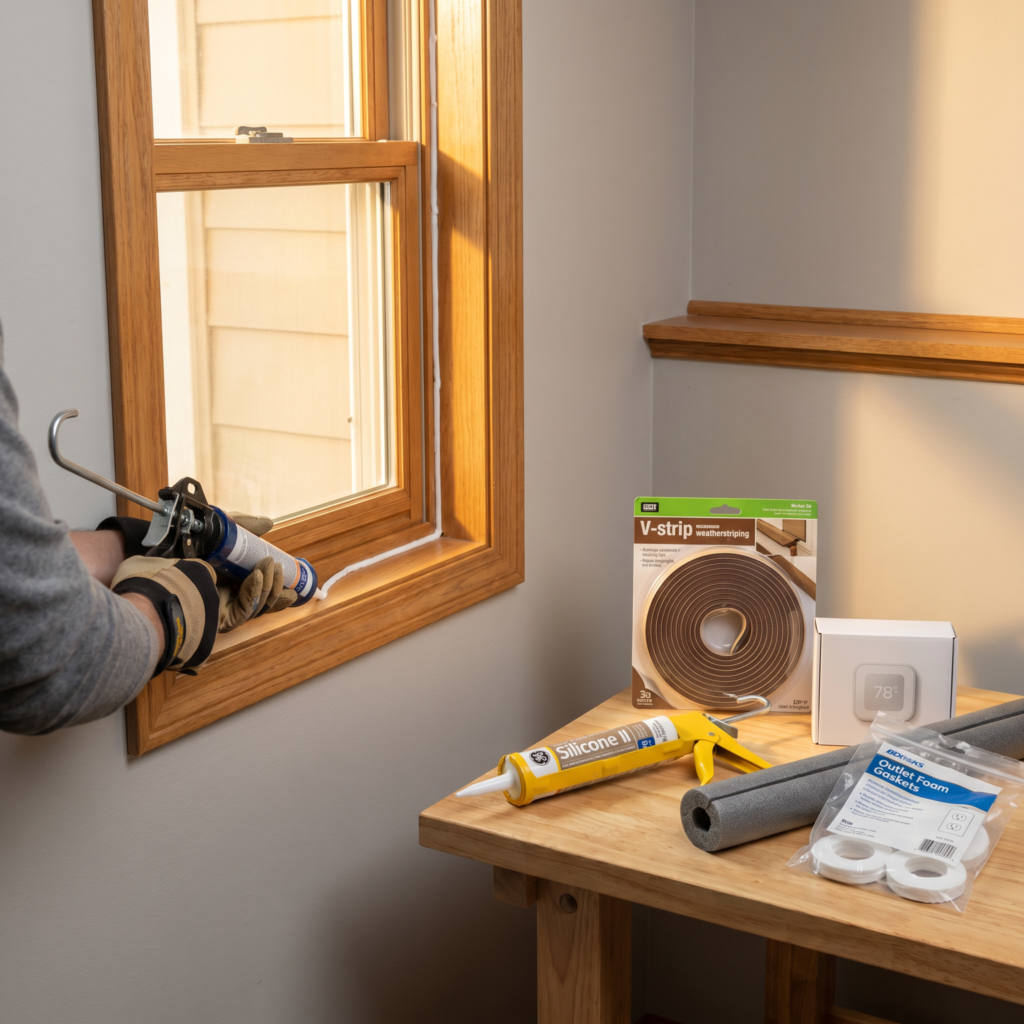
Exterior-grade silicone or latex caulk seals gaps around window frames, pipes, conduit, hose bibs, and other wall penetrations where cold air can enter. Material costs $5 to $15 per tube, and most houses need two to four tubes in total. Time commitment is two to four hours for a typical Des Moines ranch. The Department of Energy states that caulking and weatherstripping pay for themselves within one year through energy savings, which are roughly $50 to $100 per year for a home at the Des Moines average bill.
Pro Tip 2: Iowa’s freeze-thaw cycles crack caulk faster than mild-climate freeze-thaw cycles do. Inspect exterior caulk every spring and touch up before the next heating season.
Project 3: Install Foam Gaskets Behind Outlet and Switch Plates
On exterior walls, cutouts for electrical boxes create a direct path for infiltration from the wall cavity into the living space. Foam insulating gaskets behind the outlet and switch plate covers block that path. A pack of 25 to 50 gaskets covers a whole house for $5 to $15 and installs in 30 to 60 minutes. Savings are part of a broader air-sealing strategy rather than a standalone dollar figure, but the comfort improvement on an exterior wall in Des Moines in January is immediate and noticeable.
Pro Tip 3: Turn off the circuit breaker before removing any outlet or switch cover plate. This is basic electrical safety and applies even to a 15-minute gasket install.
Project 4: Install a Smart Thermostat
ENERGY STAR-certified smart thermostats save approximately 8 percent on annual heating and cooling costs, and the Department of Energy notes that setting back the temperature 7 to 10 degrees for 8 hours per day can save up to 10 percent annually on heating. Because Iowa’s heating season runs hard from November through March, those setback savings are proportionally larger here than in mild climates. Retail cost is typically $100 to $250. MidAmerican Energy offers a rebate of up to $100 for qualifying models in 2026, bringing the effective out-of-pocket cost to as low as $0 or as high as $150. Program funds are available on a first-come, first-served basis, so verify current availability and rebate amount at midamericanenergy.com before purchasing. The federal 25C tax credit ended for property placed in service after December 31, 2025, so it does not apply to a 2026 install. This is not tax advice; consult a qualified tax professional for individual eligibility.
Pro Tip 4: Most smart thermostats require a C-wire (common wire) at the thermostat. Iowa homes with older HVAC systems often lack one. If the existing thermostat has only two or three wires, either use a manufacturer-supplied C-wire adapter kit or hire a licensed Iowa HVAC technician to add one. Check compatibility at the thermostat manufacturer’s website before purchase.
The table below summarizes the four fastest-payback projects for a typical Des Moines home.
| Project | Material Cost | Time | Est. Annual Savings | Payback |
|---|---|---|---|---|
| Weatherstrip exterior doors | $45 to $75 | 3 to 6 hours | $100 to $200 | Under 1 year |
| Caulk windows and penetrations | $10 to $60 | 2 to 4 hours | $50 to $100 | Under 1 year |
| Outlet and switch plate gaskets | $5 to $15 | 30 to 60 minutes | Part of air sealing | Under 1 year |
| Smart thermostat after rebate | $0 to $150 | 1 to 2 hours | $100 to $180 | About 1 year |
All figures are planning estimates. Rebate amounts, tax credits, and qualification requirements vary by program, utility, and homeowner; verify current terms before purchasing.
Project 5: Insulate the Water Heater Tank (Electric Only)
This project carries the single most important safety caveat in this guide. A pre-cut fiberglass or foam insulation blanket wrapped around an older water heater tank costs $20 to $40 and reduces standby heat losses by 25 to 45 percent, saving 7 to 16 percent on water heating costs per DOE guidance. For a typical Iowa home, that’s roughly $30 to $70 per year, with payback in under a year.
The safety rule: this project applies only to electric water heaters. Do not wrap a gas water heater. The DOE guidance explicitly states that heat loss from a gas water heater goes up the flue, so a blanket serves no purpose, and covering the burner, air intake, or pressure relief valve on a gas water heater creates a serious fire and carbon monoxide hazard. Most Des Moines homes have gas water heaters. Before buying a blanket, confirm the heater type by checking the nameplate or looking for a gas supply line and flue. If the home has a gas water heater, skip this project entirely and consult a licensed Iowa plumber about other water heating efficiency options.
Pro Tip 5: On an electric water heater with an insulation blanket, do not set the tank thermostat above 130°F. Higher temperatures with a blanket in place can overheat the wiring.
Project 6: Insulate Hot Water Pipes
Foam pipe insulation sleeves on hot water supply lines reduce heat loss between the water heater and the fixtures. Material cost is $0.50 to $1.50 per linear foot, which puts a typical project at $20 to $60. Focus on the first three feet, leaving the water heater and any exposed pipes running through unheated spaces. Most Central Iowa homes have water heaters in unfinished basements that stay in the 50 to 60°F range, and uninsulated pipes in that environment lose real heat. This project applies to both gas and electric water heaters and is a safe DIY job on either.
Project 7: Air-Seal and Insulate the Attic to Climate Zone 5A Targets
The attic is the single most impactful DIY insulation upgrade in Iowa, and it’s also where the “careful-homeowner” warnings cluster. The project has two parts. First, seal air leaks at attic floor penetrations where pipes, wires, and HVAC chases come up from the living space below. Canned spray foam or fire-rated caulk handles most of this and costs $20 to $60 in materials for two to four hours of work. Second, if existing attic insulation is below R-49, add blown-in cellulose or batt insulation to bring total insulation up to R-49 for attics with three to four inches of existing insulation, or R-60 for essentially uninsulated attics. Material cost for blown-in cellulose in a 1,000-square-foot attic ranges from $200 to $600, and many Des Moines metro home improvement stores rent blowing machines for free with the purchase of cellulose bags. DOE and ENERGY STAR estimate that sealing and insulating can save up to 10 percent on annual energy bills. Real-world Iowa homeowners in Climate Zone 5 report cutting gas usage 30 to 50 percent after attic insulation upgrades on under-insulated homes. Busy Builders has written more details in its guide to attic and basement insulation upgrades for homeowners considering a professional job.
| Current Attic Insulation | Climate Zone 5A Target | Priority |
|---|---|---|
| Uninsulated | R-60 | Highest |
| 3 to 4 inches (~R-11 to R-15) | Add to R-49 | High |
| R-30 or more | Add to R-49 to R-60 | Medium |
| R-49 or more | Meets DOE target | Focus on air sealing penetrations |
Targets reflect DOE and ENERGY STAR recommendations for Climate Zone 5A, which covers most of Iowa. Confirm the minimum code requirements with the local building department before beginning work.
Pro Tip 6: Before adding insulation, check for existing soffit vent baffles and do not block or compress them. Blocked attic ventilation causes moisture problems and can damage the roof deck.
Pro Tip 7: For Iowa homes built before 1980, do not disturb existing attic insulation without professional testing. Old vermiculite and some loose-fill insulation products from that era may contain asbestos. Only a licensed Iowa asbestos inspector can confirm whether a specific material is safe to disturb. Air sealing around doors and windows is still safe DIY work in pre-1980 homes; attic insulation disturbance is not.
Project 8: Replace Remaining Incandescent and Older CFL Bulbs with LEDs
Lighting accounts for roughly 15 percent of an average home’s electricity use. LEDs use 75 to 85 percent less energy than incandescent bulbs and last far longer. The Department of Energy estimates the average household saves approximately $225 per year by fully switching to LEDs. Iowa electricity at roughly $0.13 per kWh is among the lowest rates in the country, so the Iowa savings figure lands closer to $150 to $200 per year for a typical Des Moines home. Material cost is $1 to $5 per bulb, and a typical home replacing twenty bulbs spends $20 to $100.
Project 9: Replace Garage Door Bottom Seals and Side Weatherstripping
Most Des Moines metro homes have attached garages, which makes the garage door a significant thermal weak point on the house envelope. A cracked or detached garage door bottom seal is a direct cold-air path that cools the garage and, through the shared wall, the adjacent living space. A full garage seal kit (bottom rubber plus side and top weatherstripping) costs $40 to $80. A worn entry door threshold replacement runs another $20 to $60. Total time is one to three hours per garage door and 30 to 60 minutes per entry door threshold. A sealed attached garage typically runs 10 to 15°F warmer in winter, which reduces heat loss through the garage-to-house wall.
Pro Tip 8: Test the garage door seal by closing the door during daylight and looking along the bottom of the door from inside the garage. Light along the bottom means an uninsulated air gap that needs a new seal.
Project 10: Install Interior Window Insulation Film on Single-Pane Windows
For older Des Moines homes with original single-pane windows, interior window film kits are a low-cost stopgap. A shrink-wrap or adhesive low-E film kit costs $15 to $40 per window, putting a whole-house application at $100 to $250 for six to ten windows. Single-pane windows have an R-value of roughly R-1. Interior film can raise that to approximately R-2 to R-3, which is a real improvement in thermal resistance, but is not a substitute for window replacement. Use this project only on pre-1980 homes still running original single-pane glass. The permanent fix is double-pane or triple-pane low-E window replacement.
Pro Tip 9: Window film is a stopgap, not a solution. If the existing windows are original single-pane with failed seals or deteriorated frames, budget for window replacement within the next two to three years.
Iowa Utility Rebates and Federal Tax Credits
The projects above get cheaper once Iowa utility rebates and federal tax credits are applied. Rebate programs change year to year, so verify current terms directly with the utility before purchasing equipment.
| Program | Source | What’s Covered | Amount |
|---|---|---|---|
| Smart thermostat rebate | MidAmerican Energy | ENERGY STAR smart thermostat | Up to $100 |
| Smart thermostat rebate | Alliant Energy | ENERGY STAR smart thermostat | Varies by program |
| Heat pump water heater | MidAmerican Energy | Qualifying HPWH | Instant discount at purchase |
| Weatherization Assistance | Iowa HHS / Iowa WAP | Insulation, air sealing, furnace | Free for qualifying income-eligible households |
| Federal 25C credit | IRS | Insulation, air sealing, windows, doors, thermostat | Ended for property placed in service after December 31, 2025 |
Rebate amounts, eligibility, and program funding change and may be first-come, first-served. Verify current terms at MidAmerican Energy’s home discounts and rebates page and Iowa HHS weatherization assistance before purchasing. This article is not tax advice; consult a qualified tax professional about any remaining federal or state incentives.
Pro Tip 10: The Iowa Weatherization Assistance Program covers full professional weatherization at no cost for income-eligible Iowa households. Average savings per household run several hundred dollars per year. Any homeowner at or below 200 percent of the Federal Poverty Guidelines should check eligibility before paying for DIY work.
When to Stop DIY and Call a Pro
Some of the projects above quickly cross from homeowner work to licensed-trade work. The table below sorts what’s safe to DIY in a typical Iowa home from what requires a licensed professional.
| Task | Safe DIY | When to Call a Pro |
|---|---|---|
| Door weatherstripping, window caulking | Yes | Not applicable |
| Outlet and switch plate gaskets | Yes | Not applicable |
| Smart thermostat with existing C-wire | Yes | Gas water heaters require a licensed Iowa plumber |
| Electric water heater insulation blanket | Yes | Pre-1980 home insulation disturbance requires a licensed asbestos inspector |
| Hot water pipe insulation | Yes | Not applicable |
| Blown-in attic insulation top-up | Yes with care | Pre-1980 home insulation disturbance requires licensed asbestos inspector |
| Air sealing around chimneys and fireplaces | No | Fire-rated materials and fire-stop detailing required |
| Furnace or gas line work | No | Licensed Iowa HVAC technician or plumber |
When a DIY energy project reveals a bigger underlying issue, whether that’s severely undersized attic insulation, failed windows throughout the house, or HVAC equipment near the end of life, the next call is to a registered Iowa contractor. Busy Builders has written more about broader energy-efficient remodeling upgrades for homeowners ready to go beyond weekend work. Iowa general contractors are registered, not licensed, through the Iowa DIAL contractor registration system; verify registration before signing any contract.
Pro Tip 11: Do DIY projects first, then get a professional energy audit. The audit will pinpoint remaining leaks and upgrade priorities more accurately once the easy wins are in place.
Pro Tip 12: Save receipts for all insulation, air-sealing, and smart thermostat purchases. Utility rebates require proof of purchase, and documentation matters. Consult a qualified tax professional for eligibility specifics.
Illustrative Example: A Johnston Homeowner’s Weekend Plan
Illustrative scenario based on verified DOE and Iowa utility data, not a verified Busy Builders project: a Johnston homeowner with a 1988 ranch paying around $280 per month in utilities completes Projects 1 through 7 over three weekends. Weatherstripping three doors runs $60, caulking the exterior $30, foam gaskets on exterior outlets $12, a smart thermostat net of MidAmerican rebate $50, attic air sealing plus blown-in cellulose top-up $440, and LED bulb replacement $45. Total invested: approximately $637. Estimated annual savings: $450 to $600 based on DOE and ENERGY STAR ranges applied to this home’s baseline bill. Payback: roughly 12 to 17 months. Actual savings vary by home condition, thermostat habits, and utility rates.
Frequently Asked Questions
Q1: Which DIY energy project saves the most money in Iowa?
Attic air sealing combined with insulation top-up produces the largest dollar savings for most Central Iowa homes. DOE and ENERGY STAR estimates up to 10 percent on annual bills, and Iowa homeowners in Climate Zone 5 have reported cutting gas usage by 30 to 50 percent in homes that started significantly under-insulated. Weatherstripping and caulking have the fastest payback at under one year because the material cost is low. The combination of attic work plus basic air sealing is usually the best first move.
Q2: What is the attic insulation target for Des Moines homes?
The Department of Energy recommends R-49 for attics with three to four inches of existing insulation and R-60 for uninsulated or minimally insulated attics in Climate Zone 5A. Most of Iowa sits in Zone 5A, with the northernmost counties bordering Minnesota in Zone 6A; both zones carry the same R-49 to R-60 attic target. Many older Des Moines ranch homes have R-11 to R-19 in the attic, well short of current DOE recommendations.
Q3: Does MidAmerican Energy offer rebates for smart thermostats in Iowa?
Yes. MidAmerican Energy offers rebates up to $100 for qualifying ENERGY STAR smart thermostats in 2026. Alliant Energy runs similar programs with varying amounts. The federal 25C tax credit ended for property placed in service after December 31, 2025. Program funds are available on a first-come, first-served basis, and terms may change; verify current availability at midamericanenergy.com before purchasing. This is not tax advice; consult a qualified tax professional about federal credit eligibility.
Q4: Can I wrap my water heater for better efficiency in Iowa?
Only if it is electric. DOE guidance confirms that an insulation blanket on an electric water heater reduces standby heat losses by 25 to 45 percent and saves 7 to 16 percent on water-heating costs, with a payback period of under a year. Gas water heaters should not be wrapped. Heat escapes up the flue on a gas tank, and covering the burner, air intake, or pressure relief valve is a serious fire and carbon monoxide hazard. Most Des Moines homes have gas water heaters; confirm the type at the nameplate before buying a blanket. For gas water heater efficiency options, consult a licensed Iowa plumber.
Q5: My Des Moines home was built before 1980. Are there any DIY energy projects I should avoid?
Yes. Disturbing attic insulation in pre-1980 Iowa homes carries asbestos risk. Old vermiculite and some loose-fill insulation products from that era may contain asbestos, and disturbing those materials can release fibers into the living space. Only a licensed Iowa asbestos inspector can confirm whether a specific attic material is safe to disturb. Weatherstripping, caulking, LED bulb replacement, outlet gaskets, and electric water heater insulation are all safe DIY work in pre-1980 homes. Attic insulation top-up and any major air sealing in the attic should wait until after professional testing.
Q6: Do these projects actually pay back, or is that marketing?
The payback figures in this guide come from DOE, ENERGY STAR, and Iowa utility data. The fastest-payback projects (weatherstripping, caulking, outlet gaskets, electric water heater insulation) typically pay back in under a year. Smart thermostat, after rebate, pays back in about a year. Attic insulation pays back in one to three heating seasons. LED lighting pays back in one to two years. Actual payback varies with home size, age, existing condition, thermostat habits, and utility rates. All figures are planning estimates, not guarantees. The best way to confirm real savings is to compare the prior year’s utility bills with those for the same months the year after the work is done.
Key Takeaways
The ten DIY projects above are ranked by approximate payback speed for a typical Des Moines home, with the fast ones (weatherstripping, caulking, outlet gaskets) paying back in under a year and the highest-dollar-savings project (attic air sealing plus insulation to R-49 or R-60) paying back in one to three heating seasons. Two safety rules matter most: never wrap a gas water heater, and never disturb attic insulation in a pre-1980 Iowa home without professional asbestos testing. The 2026 Iowa utility rebate landscape offers real discounts on smart thermostats and heat pump water heaters. The federal 25C credit ended for property placed in service after December 31, 2025, and rebate eligibility and funding change, so verify before you buy. Income-eligible Iowa households should check the Iowa Weatherization Assistance Program first, since it covers full professional weatherization at no cost. When a DIY project reveals a bigger underlying issue, a registered Iowa contractor is the right next call; Iowa general contractors are registered, not licensed, through Iowa DIAL.
Ready to Go Beyond the Weekend Projects?
Busy Builders has guided 1,285+ Central Iowa homeowners through energy-efficient remodeling, insulation upgrades, and whole-house improvements since 2020, backed by a written workmanship warranty. Details of the warranty are provided in the contract. Call: 844-435-9800 to talk through a professional energy-efficiency upgrade, or schedule a free consultation to get a written scope before committing to larger work.
Legal Disclaimer
This article is for general educational purposes only and does not constitute engineering, electrical, plumbing, tax, legal, or financial advice. Savings figures are planning estimates based on Department of Energy, ENERGY STAR, and Iowa utility source data; actual savings vary by home size, age, existing insulation levels, thermostat habits, and utility rates. Rebate programs, eligibility requirements, and program funding change over time and may be first-come, first-served; verify current terms directly with the utility or program administrator before purchasing equipment. Federal tax credits require individual eligibility verification; consult a qualified tax professional about your personal situation. Water heater insulation blankets are appropriate only for electric water heaters; wrapping a gas water heater is a fire and carbon monoxide hazard. Attic insulation in Iowa homes built before 1980 may contain asbestos and should not be disturbed without testing by a licensed Iowa asbestos inspector. Smart thermostat compatibility varies by HVAC system; systems without a C-wire require a licensed Iowa HVAC technician to modify. Gas appliance work, furnace replacement, and gas line work require a licensed Iowa plumber or HVAC technician and are not DIY work. Busy Builders provides a written warranty on workmanship for professional services; specific terms, exclusions, and coverage details are provided in the project contract
Related service: home remodeling in Central Iowa.