
Basement Finishing
Norwalk, IA
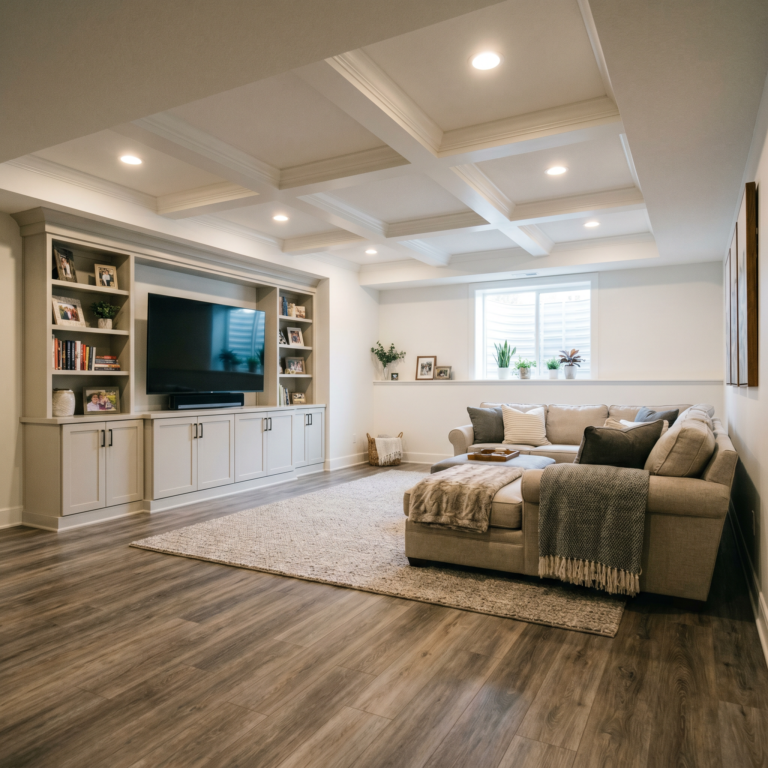
Norwalk is one of Warren County’s fastest-growing communities, and a large share of its 2000s and 2010s homes are sitting on unfinished basements that were always meant to be finished later. Later is now.
Busy Builders frames, insulates, wires, and finishes Norwalk basements from the ground up, so you get livable space built to code and built to last.
Written scope, fixed estimate, and zero surprise charges before a single wall goes up.
Full-Service Basement Finishing Norwalk
About Us
Since 2020, Busy Builders has completed over 400 basement finishing projects across Central Iowa, including projects throughout Warren County and the growing communities south of Des Moines. We built this company on one principle: tell homeowners exactly what their project needs, price it honestly, and do the work right the first time.
Norwalk buyers increasingly expect finished basements. We help you deliver one that holds up, appraises well, and gets used every single day.
Our Mission
Every Norwalk basement finishing project starts with a full assessment before any scope is written. We check for radon, moisture, ceiling height, structural walls, rough-in locations, and permit requirements first.
Then we give you a written plan, a fixed price, and a realistic timeline. We do not start work until you have signed off on every detail.
A finished basement your family uses for the next 20 years is the only outcome we are working toward.
Our Vision
We want to be the registered general contractor that Norwalk homeowners call first for basement finishing in Central Iowa and recommend to their neighbors without hesitation.
Every project we finish in Norwalk, Carlisle, Des Moines, and across Central Iowa is a chance to earn that reputation one basement at a time.
- Basemnet Finishing Step By Step
How Do We Finish Your Basement
In Norwalk?
MOISTURE PROTECTION
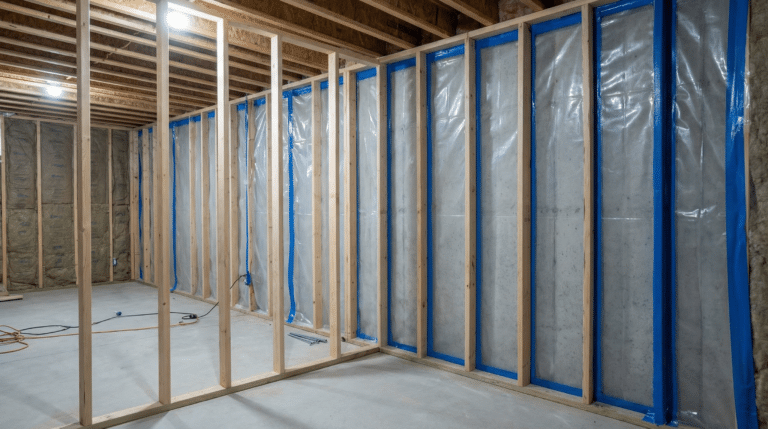
Every basement finishing project in Norwalk starts with moisture control. Central Iowa’s clay soil holds groundwater against foundation walls under constant lateral pressure, and as many as 5 in 7 Iowa homes test above the EPA action level for radon according to Iowa HHS data.
Before we frame a single wall, we inspect for cracks, efflorescence, sump pump performance, and window well drainage throughout your basement. We seal foundation walls, install vapor barriers where needed, and confirm your sump pump is handling the load.
Addressing moisture before framing adds $1,500 to $5,000 on most projects and protects every dollar you spend after it. Finding moisture after drywall is up costs $3,000 to $15,000 more to fix. We check first, every time. Learn what to fix before finishing your Iowa basement before any scope is written.
- Interior drainage system inspection and sump pump testing
- Foundation crack repair and waterproof wall coating
- Radon testing and mitigation system installation when needed
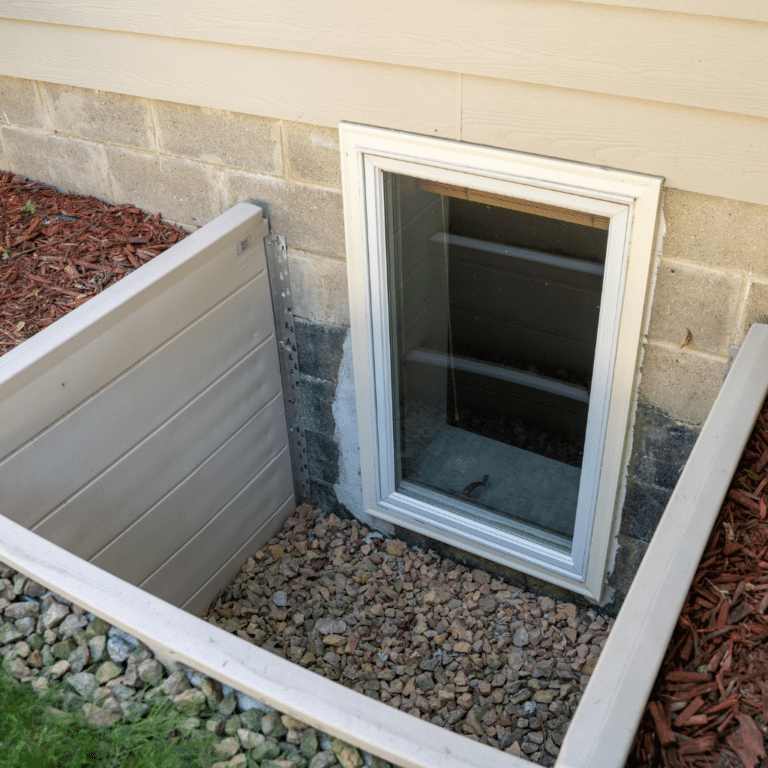
Iowa’s building code, adopted under Iowa Administrative Code 481-301.8, requires at least one emergency escape and rescue opening in every basement and in each basement sleeping room. Under the 2015 IRC as adopted in Iowa, that opening must provide a minimum net clear opening of 5.7 square feet, a minimum clear height of 24 inches, a minimum clear width of 20 inches, and a maximum sill height of 44 inches above the finished floor.
A basement bedroom without a code-compliant egress window cannot be appraised or marketed as a bedroom at resale. This is one of the most common and costly code violations uncovered during Norwalk home sales. We see it frequently in 2000s-era homes throughout Warren County where owners planned to add a bedroom later and never addressed the egress requirement.
We cut into the foundation, install a code-compliant window and window well with proper drainage, and handle all permit filings and inspections. Egress window installation runs $2,500 to $5,000 per opening, including excavation and the well. We include this in the scope of every project with a planned bedroom below grade.
The International Residential Code sets the national standard that Iowa follows for egress window requirements. Your local Norwalk building official confirms compliance during inspection.
- Egress window installation meeting Iowa's 5.7 sq ft minimum opening
- Window well with drainage to prevent water buildup
- Natural light planning to reduce the below-grade feel
WINDOWS & EGRESS
FRAMING
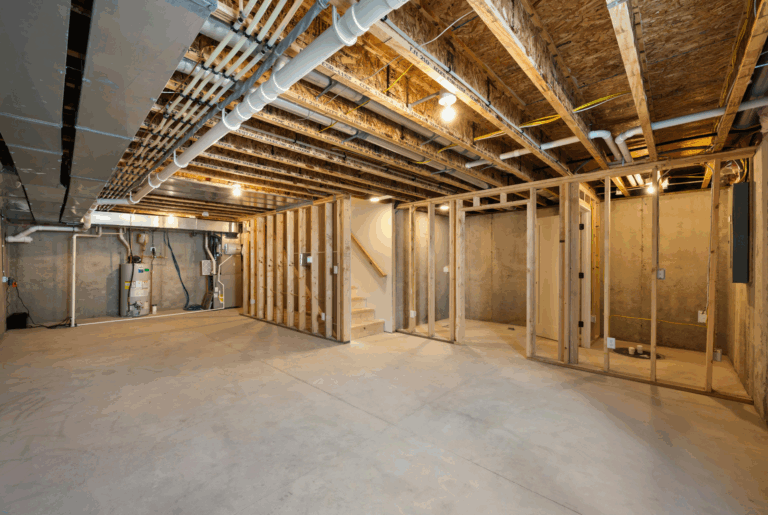
Framing is where your Norwalk basement floor plan takes shape. We use pressure-treated lumber on every piece of wood that contacts concrete, because Iowa’s humidity causes untreated lumber to rot within a few years in a below-grade environment.
Our crew frames bedrooms, bathrooms, closets, and open living areas according to your approved layout. We also build soffits and chases to conceal ductwork, pipes, and beams so your finished basement has clean sight lines throughout.
Norwalk homes built in the 2000s and 2010s generally have solid ceiling heights. We measure every basement before framing begins to confirm what can legally be built in your space. Iowa code requires 7 feet of clearance in all habitable areas under the 2015 IRC as adopted in the state.
- Pressure-treated bottom plates on all concrete contact points
- Room layout framing for bedrooms, bathrooms, and living areas
- Soffit and chase construction to conceal mechanical systems
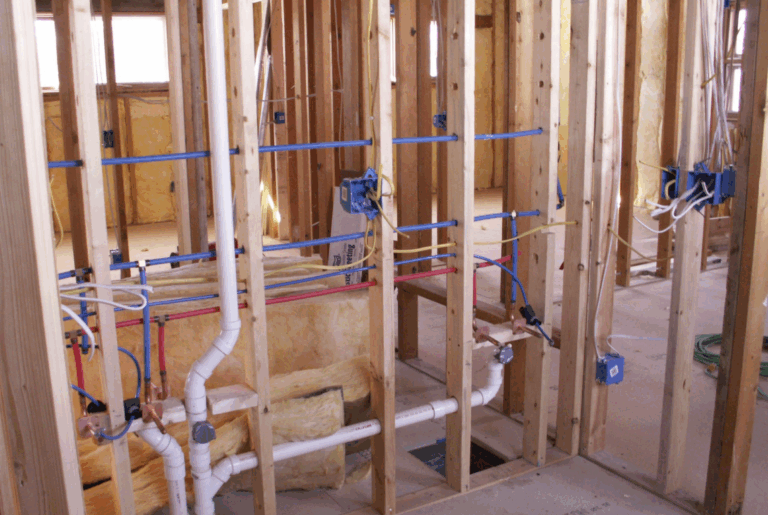
Adding a bathroom, wet bar, or laundry area to your Norwalk basement means running new plumbing lines. We do this work while the walls are open because it is the fastest and least expensive time to route supply and drain pipes.
If your basement has no existing plumbing rough-ins, slab trenching is required to install drain lines below the concrete floor. Slab trenching adds $8,000 to $15,000 to a project. A full bathroom remodeling scope with slab trenching runs $20,000 to $50,000 depending on fixtures and finishes.
We pull all required permits and schedule inspections so your project stays code-compliant from the first day of work. Our licensed plumbers hold separate state licenses as required under Iowa law. Estimates vary by project scope and existing rough-in availability. For a look at what a bathroom adds to the budget, see what a basement bathroom really costs in Central Iowa.
- Bathroom rough-in for toilet, sink, and shower or tub
- Wet bar drain, supply lines, and laundry hookups
- Permit filing and inspection scheduling with your city
PLUMBING
ELECTRICAL
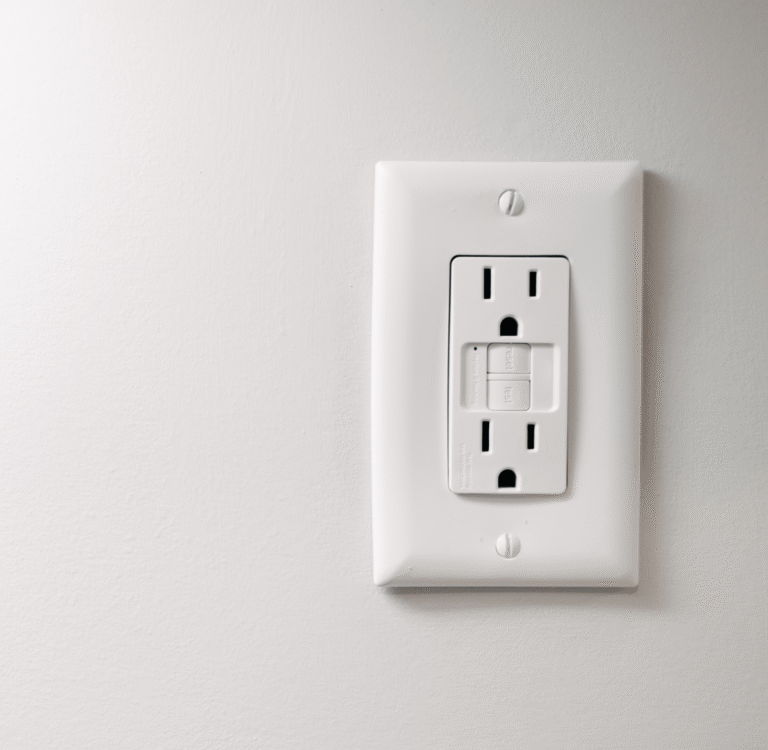
Every basement finishing project in Norwalk needs a solid electrical plan. We map every outlet, switch, circuit, and lighting fixture while your walls are still open. Iowa follows the NEC 2023 with state-specific amendments under Iowa Administrative Code 481-404.
Iowa’s amended Article 210.8(A)(5) requires GFCI protection on every 125-volt, 15- and 20-ampere receptacle in your basement, finished or unfinished. That applies to every standard outlet in the space, not just outlets near water. Iowa also requires GFCI protection on sump pumps, dishwashers, and microwave ovens under its amended Article 210.8(D), which goes beyond the base NEC 2023 standard.
Norwalk homes from the 2000s and 2010s generally have newer panels, but we assess your panel capacity at the walkthrough so there are no surprises mid-project. We also wire for future use. If a home theater, dedicated office circuit, or workshop outlet is on your list down the road, we run the wiring now so you do not have to open walls later. Costs vary by room count, circuit needs, and scope. For a complete look at budget drivers, see the full cost breakdown for finishing a basement in Des Moines.
- Outlet and switch placement per Iowa electrical code spacing
- GFCI-protected circuits in bathrooms, bars, and laundry areas
- Future-proofed wiring for home theater, office, and workshop use
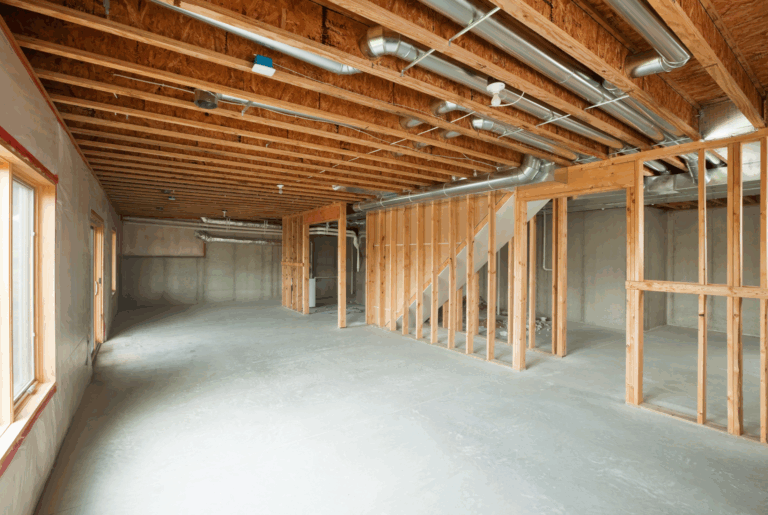
Before we run a single vent, we check whether your current HVAC system can handle the added square footage. A finished basement in Norwalk can add 500 to 1,500 square feet to your home’s heating and cooling load. If your system is already working near capacity, pushing more air to the basement means less comfort on the main floor.
We perform a load calculation to find out if your existing system covers the new space or if you need a supplemental unit, an upgrade, or zoned controls. Then we extend ductwork and add supply and return registers in every new room.
Iowa basements sit below the frost line at 42 inches, so they naturally stay cooler in summer and hold heat well in winter. Proper ventilation prevents the musty conditions that shorten the life of flooring, drywall, and cabinetry in a below-grade space. We also install bathroom exhaust fans and balance airflow across your whole home so every level stays comfortable year-round.
- Supply and return vent installation in every finished room
- Bathroom exhaust fan setup for moisture and odor control
- Whole-house airflow balancing after basement HVAC extension
HVAC & VENTILATION
INSULATION
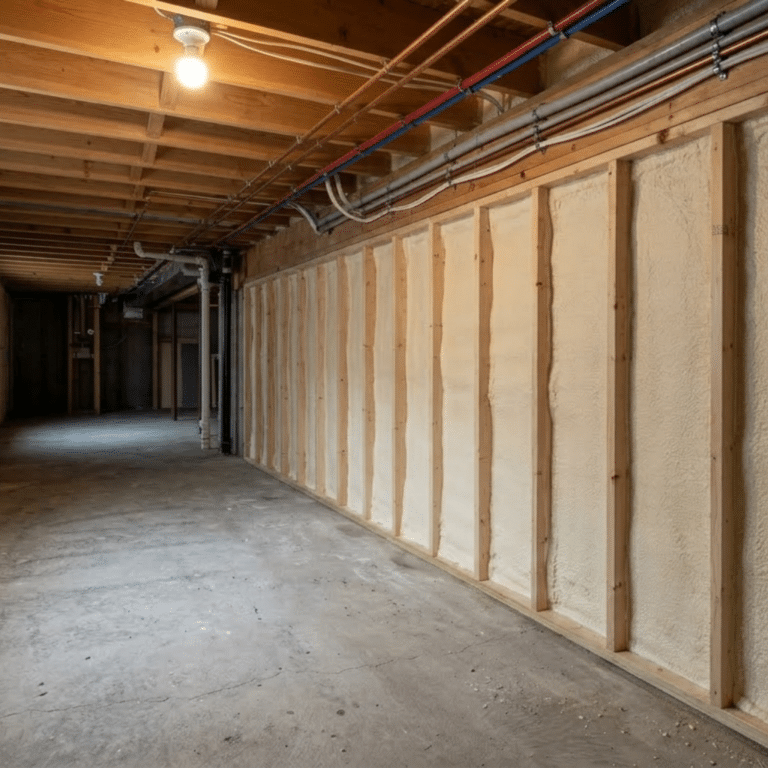
Proper insulation makes your finished Norwalk basement comfortable year-round and protects your investment from Iowa’s moisture conditions. Iowa’s residential energy code, adopted under Iowa Administrative Code 481-301.24, requires basement wall insulation based on the climate zone applicable to your project location. Norwalk sits in Iowa Climate Zone 5A, which sets the minimum R-value requirements for foundation walls.
We specify closed-cell spray foam or rigid foam board on every foundation wall in Central Iowa basements. Fiberglass batt insulation pressed directly against a concrete foundation wall absorbs ground moisture, promotes mold, and fails within a few years. It is not the right material for Iowa below-grade walls. Closed-cell foam and rigid board create the thermal and moisture barrier the wall requires.
Standard fiberglass batt insulation is appropriate for interior partition walls only, where it is not in contact with concrete. We specify the right material for every surface on every project, with no shortcuts. For more on insulation choices and their long-term impact, see our guidance on insulation upgrades for Iowa basements. Costs vary by basement size, wall condition, and insulation type selected.
- Rigid foam or closed-cell spray foam on foundation walls
- Rim joist air sealing and insulation to stop heat loss
- Sound dampening insulation between basement and first floor
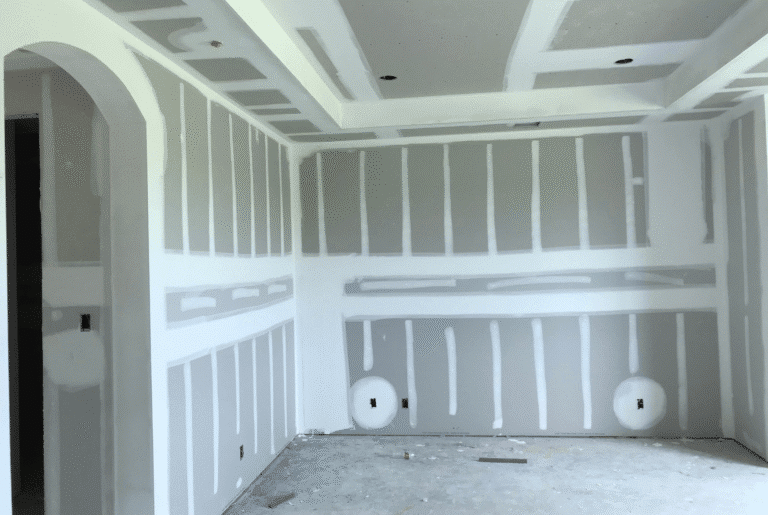
Drywall transforms your framed Norwalk basement into finished, livable rooms. We hang, tape, mud, and sand every surface to a smooth, paint-ready finish.
In bathrooms and areas near water sources, we use moisture-resistant drywall to prevent mold and long-term damage. For ceilings, you choose between drywall for a clean, seamless look or a drop ceiling that keeps plumbing and wiring accessible above. Drop ceilings save money but reduce usable ceiling height , an important consideration in Norwalk’s 2000s-built homes where mechanical runs can already eat into clearance.
Iowa’s residential building code, adopted under Iowa Administrative Code 481-301.8, requires a minimum 7-foot ceiling height for all habitable basement spaces. Bathrooms are allowed at 6 feet 8 inches. Beams, ducts, and other obstructions may drop to 6 feet 4 inches in non-habitable areas. We plan every ceiling layout around these clearances to give you the most usable height in every room.
- Moisture-resistant drywall in all bathrooms and wet areas
- Level 4 or Level 5 smooth finish for paint-ready walls
- Drywall or drop ceiling options based on access needs
DRYWALL & CEILINGS
PAINTING
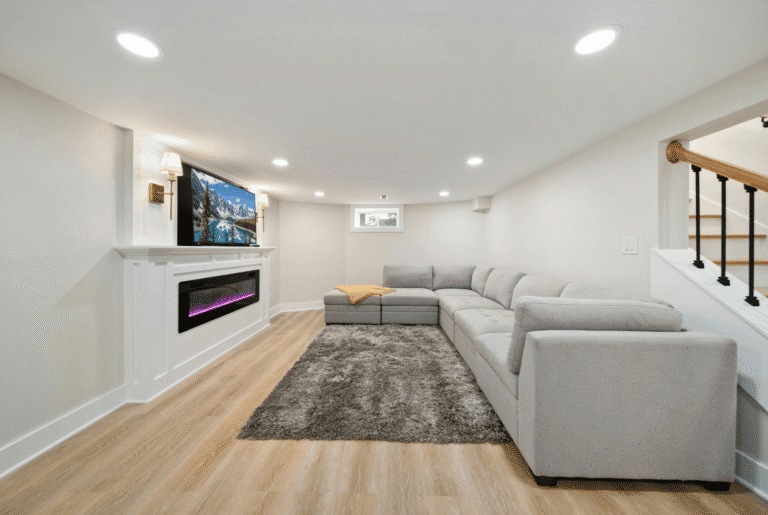
We paint basement walls and ceilings before the new floors go in. This keeps drips, dust, and overspray off your finished flooring and speeds up the final phase.
Norwalk basements need a moisture-resistant primer coat and high-quality, low-VOC paint rated for below-grade spaces. Light, neutral colors help reflect limited natural light and make rooms feel larger. We work with you to choose colors that connect your finished basement to the rest of your home’s style.
- Moisture-resistant primer on all new drywall surfaces
- Two coats of low-VOC, below-grade-rated paint
- Color planning to maximize brightness in low-light spaces
Basement floors sit on a concrete slab, so not every flooring material holds up well below grade. Iowa’s temperature swings and seasonal humidity changes make this especially true in Norwalk homes built throughout the 2000s and 2010s.
Luxury vinyl plank is the standard recommendation for Iowa basements. It handles moisture-level variations without gapping, cupping, or retaining allergens. Porcelain tile and engineered hardwood are also solid options depending on scope and budget. We install a subfloor system when needed to add warmth, cushion, and a moisture barrier between your new floor and the concrete. For more on choosing the right material, read about Iowa flooring options: LVP, hardwood, or tile for basements. Basement flooring typically runs $3 to $12 per square foot installed. Estimates vary by project, material, and scope.
- Luxury vinyl plank, porcelain tile, and engineered hardwood options
- Subfloor system for warmth, cushion, and moisture protection
- Radiant heated floor options for bathrooms and living areas
FLOORING INSTALLATION
LIGHTING
Basement permits here follow Norwalk’s process: The City of Norwalk Community Development Department handles permits at City Hall, 705 North Avenue, Norwalk, IA 50211.
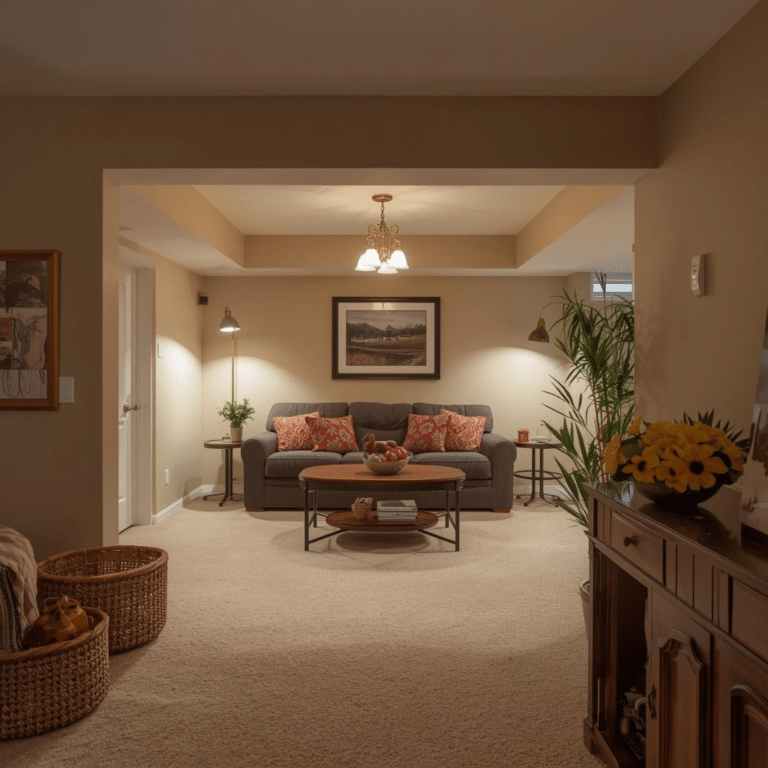
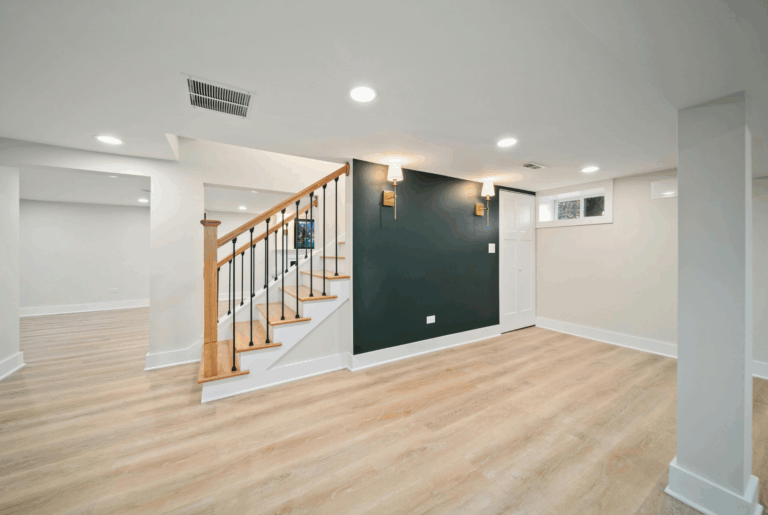
Norwalk basements have little to no natural light. A smart lighting plan is what makes yours feel like a real part of your home instead of an afterthought.
We install recessed LED can lights for even, energy-efficient coverage throughout the space. Task lighting goes in work areas and home offices. Accent lighting adds atmosphere in entertainment spaces and wet bars. Dimmer switches and smart controls let you adjust the mood for movie night, game day, or everyday use. We plan lighting room by room based on ceiling height, layout, and how you plan to use each space.
- Recessed LED can lights sized for your ceiling height
- Task lighting for bars, offices, and workspaces
- Dimmer switches and smart lighting control options
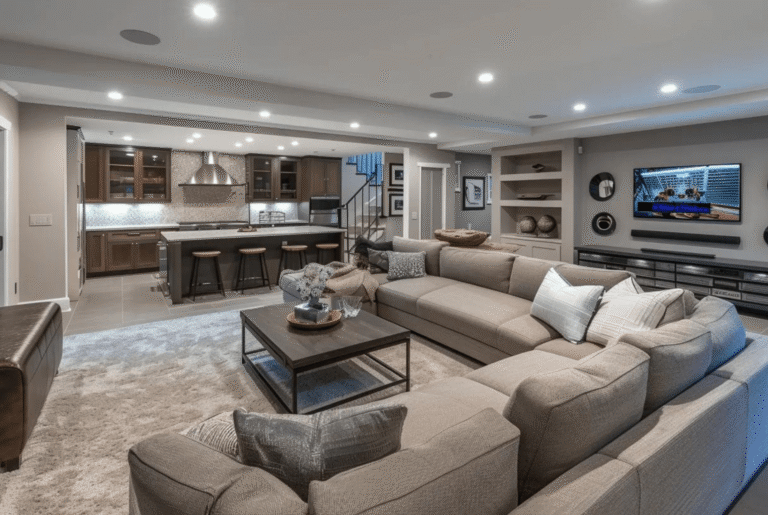
This is where your Norwalk basement becomes something your family actually uses every day. Busy Builders designs and builds custom features that fit your layout and your lifestyle.
We build wet bars, entertainment centers, built-in shelving, dedicated home offices, and storage systems. Want a home gym, craft area, or kids’ play space? We build it to fit your basement’s footprint and your family’s needs. Every custom feature matches the look and feel of the finished space above it. For layout ideas before you commit, see best basement layouts for Iowa homes in 2026.
- Custom wet bars, entertainment centers, and built-in storage
- Home office, gym, playroom, and hobby room buildouts
- Design-matched cabinetry and millwork for a seamless look
CUSTOM FEATURES
FINAL FINISHES & WALKTHROUGH
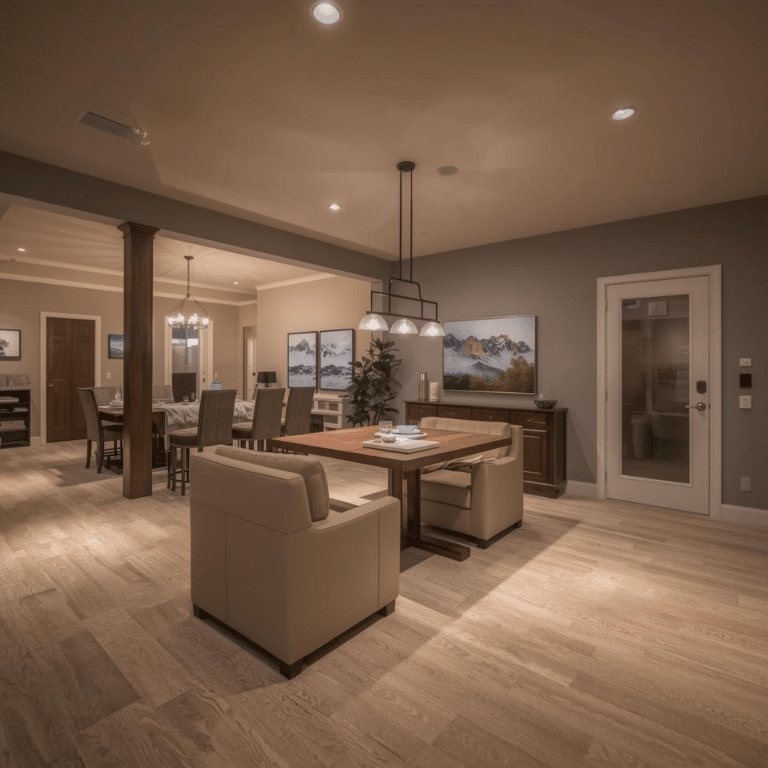
Final finishes bring your entire Norwalk basement project together. We install baseboards, door casings, trim, and all final hardware. Cabinet pulls, outlet covers, light switch plates, and towel bars go in last.
Then we do a detailed walkthrough with you to check every corner, every switch, and every surface. We do not consider the project complete until you are satisfied with every detail. Most basement finishing projects in Norwalk run 6 to 12 weeks from permit to this final step, depending on scope and whether a bathroom is included.
- Trim, baseboards, door casings, and hardware installation
- Final detail placement for a polished, move-in-ready space
- In-person walkthrough and quality review before project handoff
- Achievement
Trusted Basement Finishing Contractors in Norwalk
Since 2020, Busy Builders has completed 1,285+ projects across Central Iowa, earning a 99% satisfaction rate. Norwalk homeowners trust us to turn unfinished square footage into livable, code-compliant space, with a written scope and fixed estimate before work ever begins.









- Frequently Asked Questions
FAQs About Basement Finishing
In Norwalk
How long does it take to finish a basement?
Most basement finishing projects in Norwalk take 6 to 10 weeks from permit to final walkthrough. A basic family room in a clean, dry basement runs closer to 6 weeks. A full guest suite with a bathroom and egress window installation runs 10 to 16 weeks.
We provide a written timeline before work begins so you know exactly what to expect at every phase. Norwalk permit timelines through the city’s building department are factored into your schedule from day one. Learn more about basement finishing permit requirements and how they affect your costs.
Do I Need a permit to finish my basement?
Yes, virtually every basement finishing scope in Norwalk requires permits. New electrical circuits, plumbing installation, HVAC modifications, structural framing, and conversion to bedrooms or bathrooms all trigger permit requirements under local building codes.
Busy Builders handles every permit application and inspection coordination for you. An unpermitted basement bedroom cannot be marketed as a bedroom at resale, creates insurance complications, and triggers disclosure obligations that cost far more than the permit itself. We pull every required permit on every project, without exception. You can verify our registration status at Iowa DIAL before signing anything.
how much does a basement finishing cost in des moines?
Norwalk operates under Iowa State building codes, including the International Building Code (IBC), International Residential Code (IRC), 2020 National Electrical Code (NEC), and Uniform Plumbing Code. Our crews build to those editions from the first framing plan.
Basement finishing in Norwalk typically costs between $35,000 and $90,000 or more, depending on size and scope. A basic 800 sqft family room runs $28,000 to $36,000. A full bedroom-and-bath suite runs $50,000 to $75,000. Mid-range projects on a 1,000 sqft basement run $35,000 to $65,000.
Bathrooms, egress windows, and moisture remediation are the three biggest budget drivers. None are optional when they are needed. Always budget a 15 to 20 percent contingency. For a full breakdown, read about basement finishing costs in Des Moines in 2026. Costs vary by scope, materials, and complexity. Busy Builders provides a written, itemized estimate after a full walkthrough, before any work begins.
How Do You prevent moisture problems in a basement?
Every Busy Builders project in Norwalk starts with a full moisture check before a single wall is framed. Central Iowa’s expansive clay soil holds water against foundation walls under constant lateral pressure. We check for wall cracks, efflorescence, sump pump performance, and window well drainage before framing begins.
Moisture found after drywall is installed costs $3,000 to $15,000 more to address than catching it first. We also specify closed-cell spray foam or rigid foam board insulation against all foundation walls. Fiberglass batt insulation pressed against concrete absorbs moisture, promotes mold, and fails within years. That specification is never acceptable on a Busy Builders project. Learn more about what to fix before finishing your Iowa basement.
Does Finishing a basement, add value to my home
A finished basement in Norwalk adds real, usable square footage that buyers in Warren County’s growing market actively seek. Norwalk has seen rapid growth throughout the 2000s and 2010s, and buyers comparing homes in this market often pass on unfinished lower levels entirely.
Since 2022, Fannie Mae requires appraisers to use the ANSI Z765-2021 standard, which excludes below-grade square footage from gross living area calculations. Finished basement space typically receives 50 to 70 percent of above-grade per-square-foot credit. Plan for 60 to 75 percent ROI at resale, plus years of daily use. Read more about how appraisers really value finished basements in Iowa before finalizing your scope.
Is finishing a basement better than building an addition?
Norwalk Community School District serves the city, operating elementary schools (PreK-5), middle school (6-8), and Norwalk High School (9-12). Family demand like that keeps finished basements moving at resale.
For most Norwalk homeowners with a functional unfinished basement, finishing that space is the right first move. It costs $35,000 to $90,000 and returns 60 to 75 percent at resale. A home addition costs $100,000 to $200,000 or more and returns 30 to 35 percent at resale, but provides full above-grade gross living area that counts directly in appraisals.
If your basement is already partially finished but needs to be fully rebuilt or reconfigured, see our basement remodeling for existing finished spaces service instead. For homeowners weighing both options, we put together a detailed guide on finished basement vs. home addition, which is the better investment in Des Moines. Busy Builders gives a straight assessment at the consultation, including when an addition is actually the right call.
Trustindex verifies that the original source of the review is Google.
Quality work, fair pricing, followed through on what we discussed without delay, and personable guys to deal with. Will be using them again.Blake and his guys were top notch all the way. I would highly recommend them. They did a wonderful job on our bathroom and our new luxury vinyl floors. We will definitely use them again in the future.Beautiful job. Josh and Isaiah paid attention to what we wanted and asked lots of questions. Stairs are wonderful!+4We have used Busy Builders before, and recently hired them again for a full bathroom remodeling project. They are perfectionists and got the job done timely. We love our new bathroom, and plan on hiring them again to remodel our kitchen in 2027.Blake is very good at communicating. He built my brand new composite deck at my house. We are really satisfied with the results. We will be happy to use him in the future.Had a great experience. Timely consult, great styling suggestions, fair price and quality work.My daughter (Tricia) and I want to thank Blake at Busy Builders for having Nate Schumacher (Manager of Schumacher Plumbing) repair our shower faucet and dedicating his time over the weekend. Nate was very knowledgeable and explained what he had to do to repair the faucet! We really appreciated Nate's help!If I leave a 5 star review, it's only because a company or an individual has gone above and beyond my expectations!! Busy Builders is definitely the company to go with if you're looking to finish or remodel your basement! My guy Blake came to check out the project I had in mind, he was willing to sit down then and there and work some numbers to give me a fair and honest estimate. Not only did he work with me on my set budget, he beat every other estimate by a long shot! I got everything I asked for plus a few extras as an added bonus. Every project is a bit different and Blake helped me navigate this project and was in constant communication with me throughout the whole process. We've come to a quality finished product on a phenomenal timeline and at an amazing price!! Thank you Blake and the Busy Builder team!! If you're looking for a fair, honest, and hardworking company, Busy Builders is really the only way to go!+3Busy Builders finished our new deck and remodeled our basement. We had a really bad experience with a different company before Busy Builders so we were pretty leary but they cane thru with everything promised and there was never a problem when we'd text them with more stuff to do! We really appreciated how nice everyone was. Even the dogs loved them!Great company that did great work at my place putting on a new deck and some decorative beamsBlake and his team helped us with a few different projects. They did quality work and were easy and willing to communicateProject went as expected. Thank you.Blake with Busy Builders LLC is an outstanding guy to work with! Love doing work with Blake and hope to continue our working relationship! Thank you to Busy Builder LLC for being an outstanding company to work for! Keep up the great work!Very responsive and friendly from the first call to job completion. Great work. I will definitely hire again when I need further work done.Hired them to remove an old deck and build a nice composite deck with metal railings for me. They did it really quickly and I’m super happy with the work!+0Ripped out my old deck and replaced with a nice concrete patio in no time flat. Also help me with some weeds that were overgrown.I hired Blake's team to paint my 91 year old mother-in-law's house in West Des Moines. They did an excellent job. It had extensive wood-pecker damage to the siding, and some rot, which they first repaired. Since I don't live there, I appreciated the good communication keeping me informed of their progress. My mother-in-law commented on how kind the entire crew were to her. Since she is quite frail, they took her arm and steadied her as they walked around the house to show the results. The job was finished for the agreed upon price and completed in a timely manor, pausing only for rainy days. I feel that you can hire these people with confidence.Busy Builders did great work. The craftsmanship was on another level. We will definitely use them again. Look at the before and after.+1Great job! I had a small project and they were able to fit me in the schedule quickly. Josh did a fantastic job, was courteous and cleaned up before he left. I’ll definitely call them again for my next project!Verified by TrustindexTrustindex verified badge is the Universal Symbol of Trust. Only the greatest companies can get the verified badge who has a review score above 4.5, based on customer reviews over the past 12 months. Read more


- Newest Blogs
Basement Finishing Resources
for Norwalk Homeowners
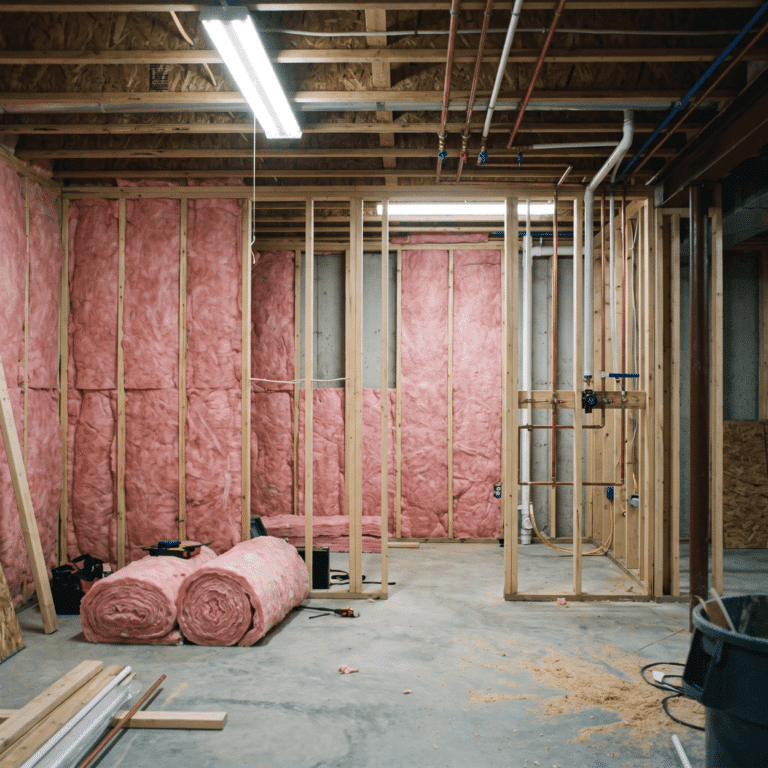
Basement Finishing Cost in Maxwell, Iowa: 2026 Guide
Read MoreMost Maxwell basement projects run $29,000 to $75,000. Cost by scope, Iowa egress rules, and why radon testing comes before framing.Most Maxwell basement projects run $29,000 to $75,000. Cost by scope, Iowa egress rules, and why radon testing comes before framing.Most Maxwell basement projects run $29,000 to $75,000. Cost by scope, Iowa egress rules, and why radon testing comes before framing.
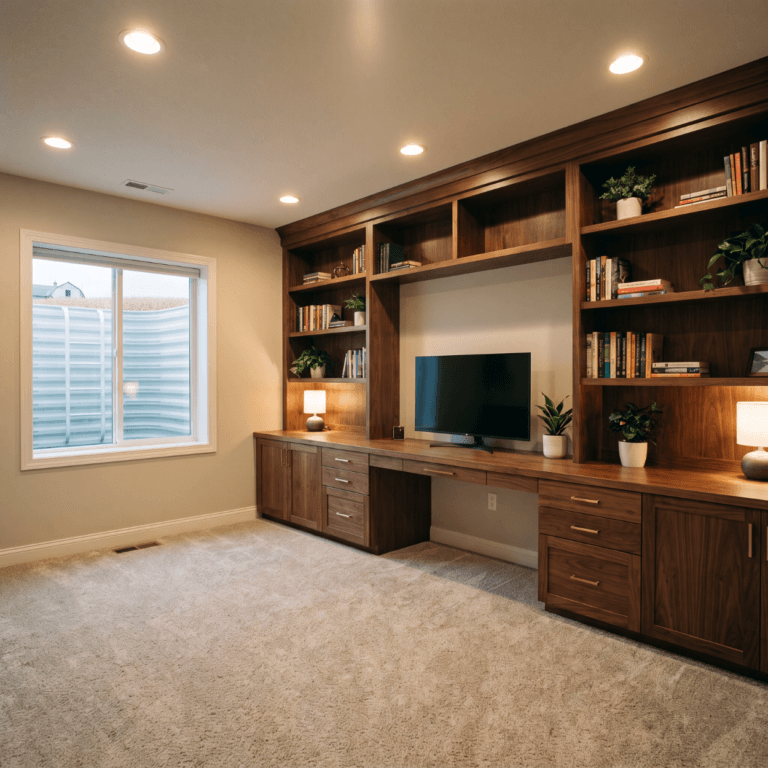
Basement Finishing Cost in Dallas Center, Iowa: 2026 Guide
Read MoreMost Dallas Center basement projects run $30,000 to $76,000. Cost by scope, Iowa egress rules, and why radon testing comes before framing.Most Dallas Center basement projects run $30,000 to $76,000. Cost by scope, Iowa egress rules, and why radon testing comes before framing.Most Dallas Center basement projects run $30,000 to $76,000. Cost by scope, Iowa egress rules, and why radon testing comes before framing.
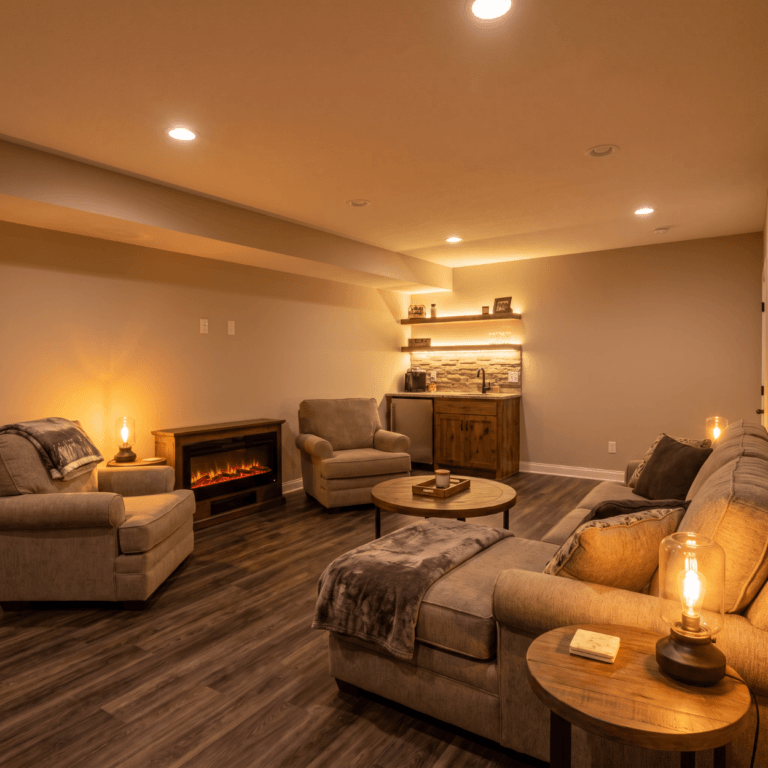
Basement Finishing Cost in Marshalltown: 2026 Guide
Read MoreMost Marshalltown basement projects run $30,000 to $76,000. Cost by scope, the city's permit process with contracted inspections, and Iowa egress rules.Most Marshalltown basement projects run $30,000 to $76,000. Cost by scope, the city's permit process with contracted inspections, and Iowa egress rules.Most Marshalltown basement projects run $30,000 to $76,000. Cost by scope, the city's permit process with contracted inspections, and Iowa egress rules.