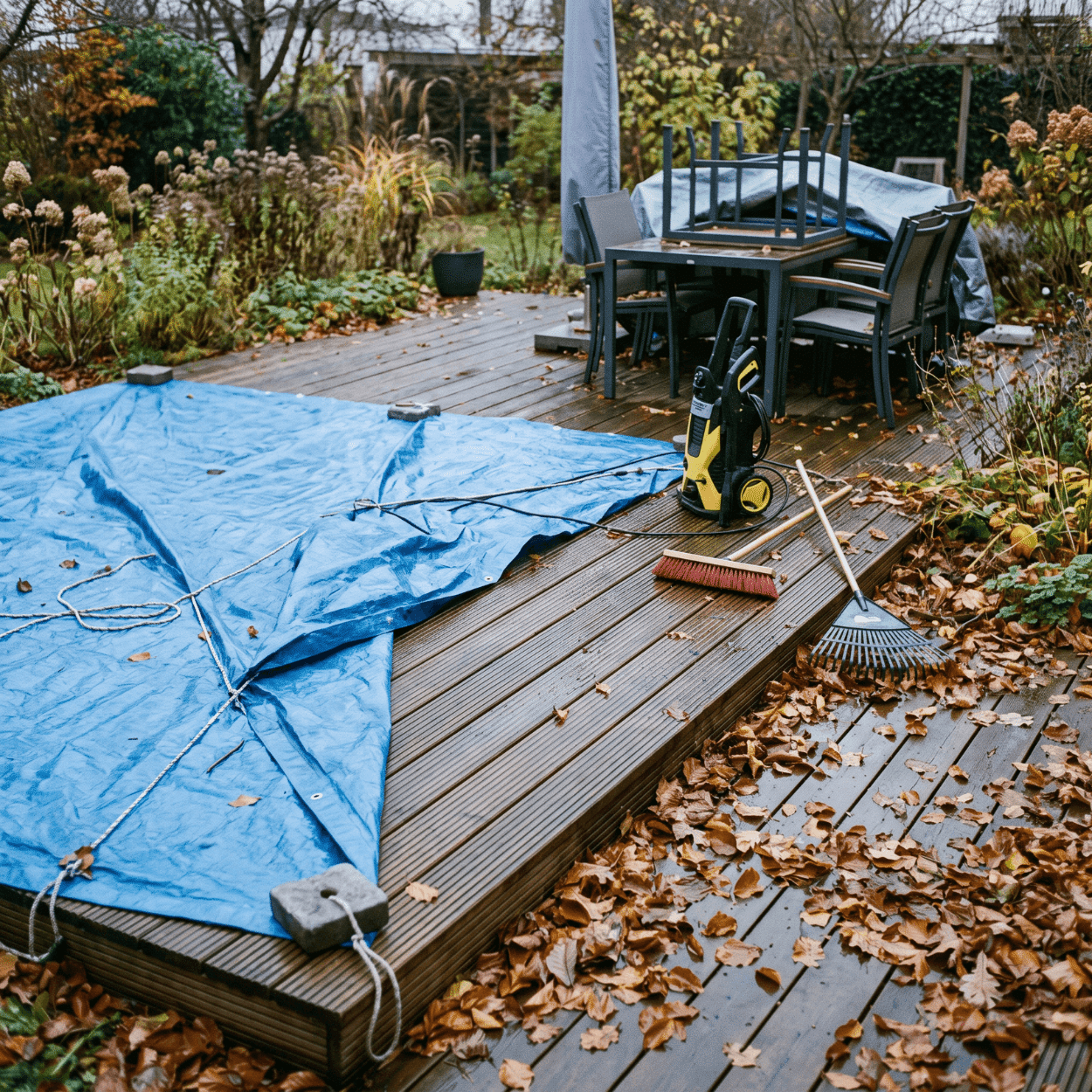
Iowa winters are hard on decks. Freeze-thaw cycles, heavy snow load, ice melt chemicals, and months of moisture all work against wood and, to a lesser degree, composite. The homeowners whose decks last twenty years are the ones who spend an afternoon each fall getting them ready for what is coming. This guide walks through what actually protects a deck through an Iowa winter, what to skip, and how to spot the early warning signs of the failures that get expensive.
Busy Builders Team, Registered Iowa Contractor #C140184.
Published: September 13, 2026 | Last Updated: September 13, 2026
TLDR: Preparing an Iowa deck for winter comes down to clearing debris, checking and protecting the surface, and inspecting the structure, especially the ledger where the deck meets the house. Skip the rock salt; it damages wood, concrete, and hardware. A clean, dry, well-drained deck that goes into winter in good repair comes out of it in good repair. The failures that cost real money start small and show themselves in fall if you look.
Why Iowa Winters Are Hard on Decks
A deck lives outside through everything Iowa’s climate does, and winter is the worst of it.
Freeze-thaw is the core problem. Water gets into a checked board, a fastener hole, or a gap in the finish, freezes, expands, and forces the opening wider. Then it thaws and does it again, dozens of times over a single winter. Snow load adds weight the structure has to carry for months. And ice melt chemicals, if you use the wrong kind, chew at wood fibers, corrode fasteners, and pit concrete footings.
None of that is avoidable. What is avoidable is going into winter with a deck that is already compromised, because winter finds every weakness and makes it worse.
Pro Tip 1: Do your deck prep before the first snow, not after. Once snow and ice arrive, you cannot inspect or treat the surface, and problems compound until spring.
The Fall Deck Checklist
| Task | Why it matters in Iowa | Priority |
|---|---|---|
| Clear all debris between boards | Trapped leaves hold moisture against the wood all winter | High |
| Sweep and wash the surface | Dirt and organic matter trap moisture and grow mildew | High |
| Check that the finish is intact | Bare wood absorbs water and freeze-thaw damage | High on wood decks |
| Clear gutters that drain onto the deck | Overflow ices the deck and adds moisture | Medium |
| Move or cover furniture and grills | Standing items trap moisture in rings and stain | Medium |
| Trim back branches over the deck | Ice-loaded branches break and fall | Medium |
| Confirm good drainage off the deck | Standing water freezes and damages the surface | High |
The debris row is the one people underestimate. A gap packed with wet leaves is a strip of wood held under moisture for four months, which is exactly how rot starts.
Pro Tip 2: Clear the gaps between deck boards completely. A putty knife or a narrow tool pulls out packed leaves and dirt that a broom leaves behind, and those gaps are where rot begins.
Pro Tip 3: If water pools anywhere on the deck surface, note it now. A low spot that holds water becomes a patch of ice all winter and a soft board by spring.
Protecting the Surface
Wood and composite decks need different winter prep.
A wood deck depends on its finish. If water beads on the surface, the finish is doing its job. If water soaks in and darkens the wood, the finish has worn through and bare wood is exposed to a winter of freeze-thaw. Fall is the last good window to reseal before the cold, though the surface must be clean and dry and temperatures warm enough for the product to cure.
A composite deck does not need sealing, but it still needs cleaning. Organic debris left on composite grows mildew and can stain, and packed gaps still trap moisture against the framing below.
| Deck type | Winter prep |
|---|---|
| Pressure-treated or cedar | Clean, dry, confirm finish is intact, reseal if worn and weather allows |
| Composite | Clean thoroughly, clear gaps, no sealing needed |
| Any deck | Clear debris, confirm drainage, inspect structure |
Pro Tip 4: Test your wood deck’s finish by sprinkling water on it. Beading means the finish is intact. Soaking in means it is time to reseal, and fall is the window before winter.
Pro Tip 5: Do not reseal a wood deck that is damp or when a freeze is coming before it can cure. A finish applied over trapped moisture or in the cold fails, and it can seal water in rather than out.
The Ice Melt Mistake
This is where good intentions do real damage.
Rock salt, or sodium chloride, is cheap and everywhere, and it is one of the worst things you can put on a deck. On a wood deck it draws out moisture unevenly and accelerates checking. On any deck it corrodes metal fasteners and connectors. On concrete footings and pads it causes surface pitting and scaling.
If you must melt ice on a deck, calcium magnesium acetate is far gentler on wood, hardware, and concrete than rock salt. Better still is preventing ice by keeping the deck clear of snow so it never gets a chance to compact and melt-refreeze.
Pro Tip 6: Never use rock salt on a deck. If you need traction, sand adds grip without chemical damage, and a gentler ice melt like calcium magnesium acetate does far less harm than sodium chloride.
Pro Tip 7: When you shovel snow off a deck, push it parallel to the boards rather than across them, and use a plastic shovel rather than metal. Both protect the surface from gouging.
Inspect the Structure Before the Snow Load
Snow is heavy, and it sits on the deck for months. Before winter, the structure is worth a real look, because a weakness under load in January is a dangerous thing.
| Element | What to check | Why it matters |
|---|---|---|
| Ledger board | Flashing intact, fasteners tight, no rot where deck meets house | The most common point of deck failure |
| Posts and footings | No movement, no rot at the base, no heaving | Frost heave shows here first |
| Joist hangers and connectors | No corrosion, all fasteners present | Rust and missing fasteners weaken the frame |
| Railings | Solid, no wobble, secure posts | Ice and use loosen railings over time |
| Boards | No soft spots, no severe checking or rot | Soft boards fail under load and foot traffic |
The ledger is the one that matters most. Deck failures overwhelmingly begin where the deck attaches to the house, and a ledger with failing flashing or loose fasteners is a problem that a winter of moisture and snow load makes worse.
Pro Tip 8: Check the ledger where the deck meets the house every fall. Look for gaps in the flashing, rusted or loose fasteners, and any darkening that suggests moisture is getting behind it. This is the connection that fails.
Pro Tip 9: Press on deck boards near the house and around the perimeter, looking for soft spots. Soft wood is rot, and rot found in fall is a repair; rot found when a board gives way under snow load is worse.
When Fall Inspection Finds a Real Problem
Sometimes the fall check turns up something beyond routine prep: a heaving footing, a rotting ledger, a soft section of framing. These are not winter-prep items, they are repairs, and it is worth being honest about which is which.
A footing that has heaved because it never reached frost depth will keep heaving. A ledger that is rotting or improperly flashed is a safety issue. Severe rot in framing is structural. None of these is fixed by cleaning and sealing, and none should be ignored through a winter of snow load.
Pro Tip 10: If you find a heaving footing, a compromised ledger, or soft structural framing, have it evaluated rather than hoping it holds through winter. These are the failures that turn into injuries or expensive rebuilds.
Pro Tip 11: An older deck that heaves every winter usually has footings that never reached Iowa’s 42 to 48 inch frost depth. That is a rebuild question, not a maintenance one, and worth pricing honestly.
Pro Tip 12: For any structural concern, bring in a qualified professional. A deck that feels a little off in the fall is telling you something, and the cheap version of a structural failure does not exist.
Our deck building service page covers repairs and rebuilds when winter prep turns up something structural. For what a new deck costs, our Des Moines deck cost guide breaks down pricing. To see the communities we serve, visit our service area page.
For primary sources, national residential code text is published by the International Code Council. Contractor registration is administered by the Iowa Department of Inspections, Appeals, and Licensing. Wood span and connection guidance comes from the American Wood Council.
Frequently Asked Questions
What is the most important thing to do to prepare a deck for winter in Iowa? Clear all debris from the surface and especially from the gaps between boards, then confirm the deck drains well and its structure is sound. Trapped moisture and standing water cause the most freeze-thaw damage, and a debris-packed gap is a strip of wood held wet all winter.
Should I seal my deck in the fall? If it is a wood deck and the finish has worn through, fall is the window to reseal before winter, provided the surface is clean and dry and temperatures allow the product to cure. Test by sprinkling water; if it soaks in rather than beading, reseal. Composite decks do not need sealing.
Can I use salt to melt ice on my deck? Avoid rock salt. It damages wood, corrodes fasteners and connectors, and pits concrete footings. If you need to melt ice, calcium magnesium acetate is far gentler. For traction, sand works without chemical damage. The best approach is keeping the deck clear of snow so ice never forms.
How do I check if my deck is safe for winter snow load? Inspect the ledger where the deck meets the house for intact flashing and tight fasteners, check posts and footings for movement or rot, confirm connectors are not corroded, and press on boards for soft spots. The ledger is the most common failure point and deserves the closest look.
What if I find rot or a heaving footing in the fall? Those are repairs, not maintenance, and should be evaluated rather than left through winter. A heaving footing that never reached frost depth will keep heaving, and a rotting ledger is a safety issue. Snow load makes structural problems worse, so address them before winter.
How do I shovel snow off a deck without damaging it? Use a plastic shovel rather than metal, and push snow parallel to the boards rather than across them. Both protect the surface from gouging. Avoid letting snow compact and melt-refreeze, which is how damaging ice builds up.
Key Takeaways
Clean first – Clear all debris, especially between boards – Wash the surface and confirm good drainage – Note any spot where water pools
Protect the surface – Reseal a worn wood deck in fall if weather allows – Composite needs cleaning, not sealing – Never use rock salt; it damages wood, hardware, and concrete
Inspect the structure – Check the ledger where the deck meets the house – Look for heaving footings and soft boards – Snow load makes existing weaknesses worse
Know repair from maintenance – Heaving footings and rotting ledgers are repairs, not prep – Have structural concerns evaluated before winter – An annually heaving deck often has footings below frost depth
Deck Problems This Fall?
We have completed 1,285+ projects across Central Iowa since 2020, and fall inspections often reveal decks that need more than cleaning. If yours has a heaving footing, a questionable ledger, or soft framing, we will look at it honestly and tell you whether it is a repair or a rebuild.
Free consultation, no pressure, no obligation.
Call: 844-435-9800
Written warranty on workmanship (details provided in your contract).
Disclaimer: This article is for general information and is not project-specific advice. Deck condition and maintenance needs vary by age, material, construction, and site. Structural concerns, including ledger, footing, and framing issues, should be evaluated by a qualified professional; do not rely on winter snow load with a compromised structure. Product application depends on manufacturer instructions and weather. No specific outcomes are guaranteed. Consult a registered contractor for guidance specific to your project.
Busy Builders | Full-Service Construction and Remodeling | Serving Central Iowa Since 2020