Every fall, Central Iowa homeowners ask the same question: is it too late to start a new home this year? This guide explains what Iowa’s 42-inch frost line means for a foundation, how late in the season a footing can be poured in Story County, what cold-weather concrete costs, and what a smart fall start looks like.
TLDR: Iowa foundations must reach at least 42 inches below grade, below the frost line. A fall start works if the excavation and footings are in before the ground freezes hard, usually by mid to late November in Story County. Cold-weather concrete adds cost for blankets, heat and accelerators. Get the foundation in this fall and framing can run through winter, which often puts you in the house months sooner.
Why the frost line runs everything
Water in soil expands when it freezes. A footing that sits above the frozen zone gets lifted and dropped every winter, and the house cracks with it. That is why Iowa’s building code, the 2024 IRC as adopted under Iowa Administrative Code 481-301.8, requires footings to bear below the frost line, at least 42 inches down. Story City’s own ordinance says 42 inches. Never plan for less.
If you are planning a new home in Story County, the calendar question is really a soil question. The frost line rule is about where the footing bears, not the weather on pour day. The weather decides whether you can dig and cure.
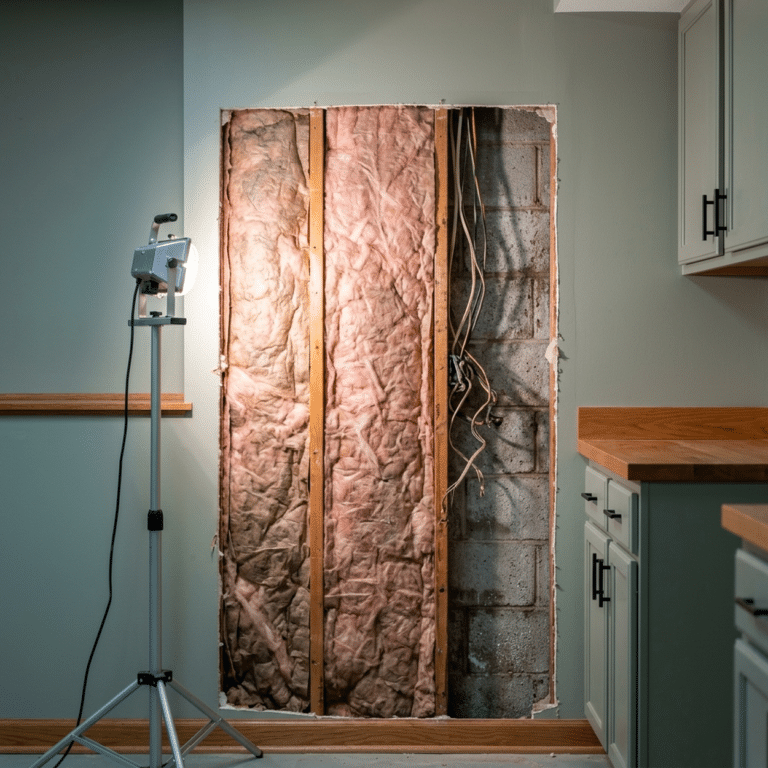
Busy Builders has completed more than 1,285 projects across Central Iowa since 2020, and the fall foundation question comes up every September. One of our addition framing photos shows exactly what a fall start looks like: stud walls up on a fresh poured foundation before the snow.
How late can you pour in Story County
Ground freeze in the Ames area typically begins in late November and deepens through January. The National Weather Service Des Moines office publishes the daily climate records that show when it happens each year. The frost depth on a given day is tracked by the Iowa Environmental Mesonet at Iowa State.
Pro Tip 1: Watch the 4-inch soil temperature, not the air temperature. Excavation gets hard once the top few inches freeze, and concrete cures slowly below 50 degrees.
The table below shows the typical fall windows.
| Window | Typical timing in Story County | What is realistic |
|---|---|---|
| Ideal | September to mid-October | Normal excavation and curing, no added cost |
| Workable | Mid-October to mid-November | Blankets on the pour, some accelerator, small added cost |
| Cold-weather | Mid-November to December | Heated enclosures, ground thaw, higher cost, weather delays |
| Stop | Hard freeze, usually December | Wait for spring unless already excavated |
Every year is different. A warm November has let us pour into December; an early freeze has ended the season by Thanksgiving.
Pro Tip 2: Have the permit in hand by October 1 if you want a fall pour. Plan review in Ames and the smaller Story County cities takes two to four weeks.
What cold-weather concrete costs
Concrete needs to stay above about 50 degrees for its first days to gain strength. Below that, crews use blankets, heated enclosures, warm mix water and accelerating admixtures. All of it costs money and time.
Pro Tip 3: Insulated blankets are cheap insurance from mid-October on. A cracked footing from a cold night is not.
| Cold-weather measure | When it is used | Typical added cost |
|---|---|---|
| Insulated curing blankets | Nights below freezing | About $500 to $1,500 per pour |
| Accelerating admixture | Pours under 50 degrees | About $5 to $15 per cubic yard |
| Heated mix water | Consistent cold | Small per-yard charge |
| Ground thaw or heated enclosure | Frozen subgrade | About $2,000 to $6,000 per week |
| Excavation in frozen ground | After hard freeze | Often not worth attempting |
These are planning estimates; actual costs vary by scope, site conditions and current pricing. On a full-basement foundation the added cost of a November pour is often a few thousand dollars, which is far less than the carrying cost of a four-month delay.
Pro Tip 4: Never let a footing be poured on frozen subgrade. When it thaws, the footing settles. This is the one rule every crew knows and every schedule pressure tests.
What a fall start buys you
The reason to push for a fall foundation is the calendar. Once the foundation is in and backfilled, framing, decking the roof structure and closing in the shell can happen through winter. Interior work runs in the cold months with temporary heat.
Pro Tip 5: A home with a foundation poured in November is usually framed by January and finished by late spring. The same home started in April finishes in fall.
Illustrative scenario: A family building a 2,200-square-foot ranch near Nevada gets the permit in late September and pours footings the third week of October. Framing runs through December. Move-in is May, about four months sooner than a spring start.
Illustrative scenario: A couple in Huxley excavates the first week of November. Two cold nights require blankets and an accelerator, adding about $1,800. The walls are poured and backfilled before Thanksgiving.
Illustrative scenario: A buyer near Story City waits until mid-December to decide. The ground is frozen eight inches down. The builder recommends a March excavation instead of paying for ground thaw.
Pro Tip 6: If the site needs a septic system or a well, get those permits moving with the building permit. County health department review runs on its own clock.
Pro Tip 7: Backfill against the foundation walls before freeze-up. Frozen backfill is a spring problem you do not want.
Story County specifics
Story County includes Ames, Nevada, Huxley, Story City, Gilbert and Maxwell. Ames and Nevada run their own building departments. Smaller cities and unincorporated county land may route permits through the county or a contracted inspector. Confirm before you schedule a pour.
Pro Tip 8: Story City’s ordinance states the 42-inch depth outright. Other cities defer to the state code, which reaches the same number.
Pro Tip 9: Rural Story County lots often carry heavier clay soils. Ask for a soil evaluation before the foundation is designed. Clay holds water, and water is what heaves.
Pro Tip 10: Radon is a fall-start item too. The gravel layer and vent pipe stub for a passive radon system go in before the slab, and Iowa’s new law will require them on new homes once adopted.
Pro Tip 11: Photograph the footings, the rebar and the drain tile before backfill. Those photos are your record for inspectors and future buyers.
Pro Tip 12: Ask for the winter framing plan in writing. Temporary heat, snow removal and material protection should be in the schedule, not improvised.
The table below sets out the pre-pour checklist.
| Item | Done before excavation | Why |
|---|---|---|
| Building permit issued | Yes | No pour without it |
| Plat and setbacks confirmed | Yes | Wrong footing location is a tear-out |
| Soil evaluation | Yes | Bearing and drainage design |
| Septic and well permits (rural) | Started | Separate review clocks |
| Radon rough-in on the plan | Yes | Goes in under the slab |
| Cold-weather plan and pricing | Yes | No surprises on a cold night |
A fall start with this list done is a normal start with a better move-in date.
Frequently Asked Questions
Q1: How deep does a foundation have to be in Story County, Iowa? At least 42 inches below grade, below the frost line. Story City’s ordinance states 42 inches; the state code reaches the same depth. Footings above that line heave in winter and crack the house over time.
Q2: What is the latest you can pour a foundation in Central Iowa? Usually mid to late November, depending on the year. Once the subgrade is frozen, pouring requires ground thaw and heated enclosures, and most builders wait for spring. A warm fall can extend the window into December.
Q3: How much more does a cold-weather pour cost? On a full foundation, blankets and admixtures often add a few thousand dollars. Heated enclosures and ground thaw add more. These are planning estimates; actual costs vary. The added cost is usually far less than a four-month delay.
Q4: Can framing happen in an Iowa winter? Yes. Framing, sheathing and closing in the shell are routine winter work. Crews protect materials and use temporary heat once the house is enclosed. Interior finishes run through the cold months.
Q5: Does a fall start change the move-in date? It usually moves it earlier. A foundation in by November often means a finished home by late spring, instead of fall with a spring start. Weather delays are possible, so ask for a schedule with float built in.
Q6: How do I find out if a fall start still works this year? Call: 844-435-9800. We will look at your lot, the permit timeline and the current soil conditions and give you a straight answer.
Key Takeaways
The rule
- Footings at least 42 inches deep, never on frozen ground.
The window
- Ideal through mid-October; workable to mid-November with blankets.
- Stop at hard freeze unless already excavated.
The payoff
- Foundation this fall, framing through winter, move-in months earlier.
Find Out If Your Lot Can Start This Fall
Busy Builders is a registered Iowa contractor building custom homes across Story County and Central Iowa since 2020. We will tell you honestly whether a fall foundation makes sense for your site. Free consultation. Written warranty on workmanship (details provided in your contract).
Call: 844-435-9800
Disclaimer: This article is for general information and is not project-specific advice. Cost figures are planning estimates that vary by scope, materials, site conditions and current pricing. Permit requirements, code editions and inspection processes vary by city and jurisdiction; verify current requirements with your local building authority before starting any project. Foundation and soil decisions are structural and require evaluation by a qualified professional; do not rely on general guidance for bearing or depth decisions. No specific outcomes are guaranteed. Consult a registered contractor for guidance specific to your project.
Busy Builders | Full-Service Construction and Remodeling | Serving Central Iowa Since 2020