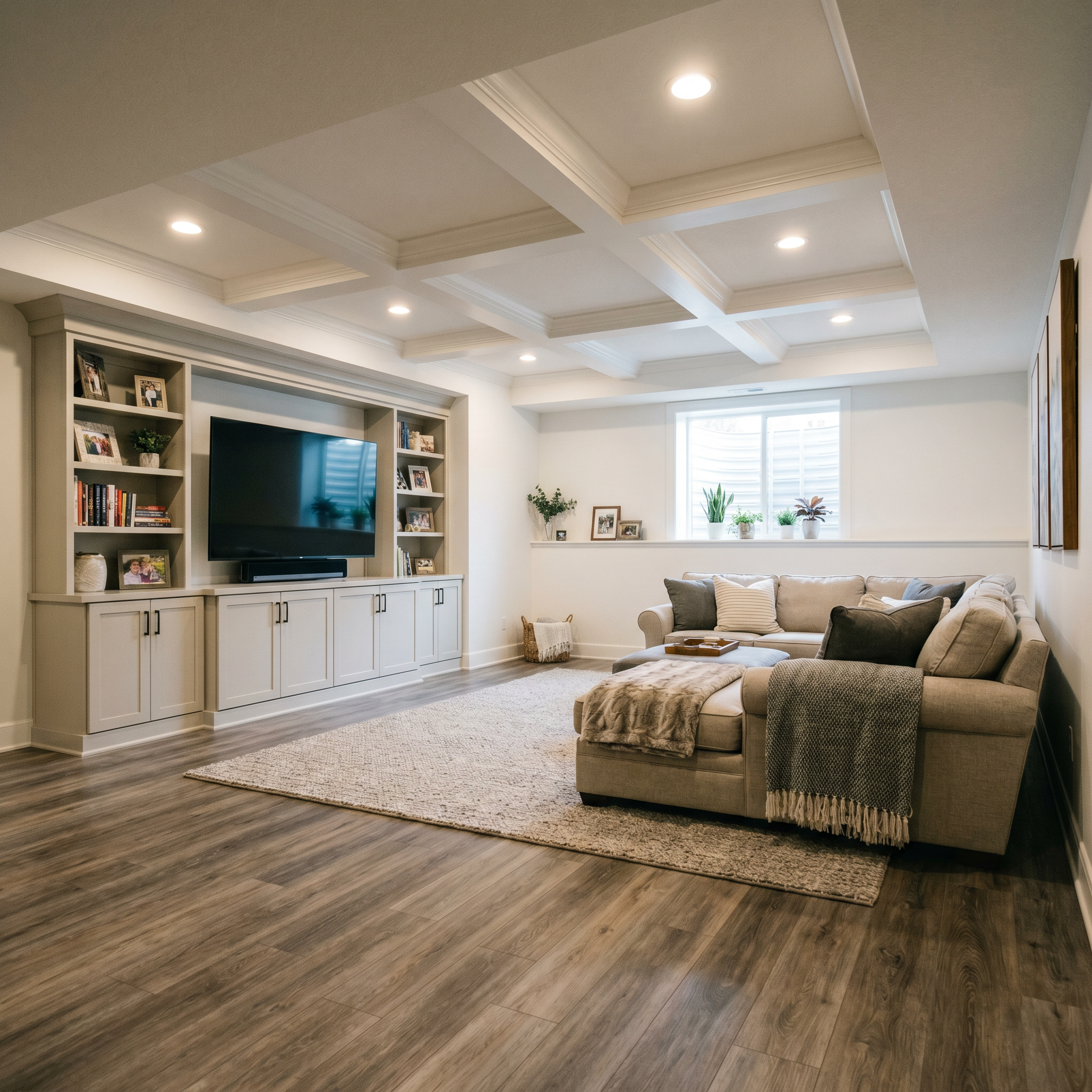
Finishing a basement yourself can save real money, and it can also cost you more than hiring it out on day one. This guide breaks down which parts of an Iowa basement finish are realistic DIY work, which parts the law reserves for licensed trades, and how the math actually plays out in Central Iowa homes.
TLDR: DIY suits painting, trim, and some framing if you have the time. Electrical, plumbing, and HVAC work runs through licensed subcontractors, and permits plus inspections apply either way. A pro-managed finish typically runs $35,000 to $75,000 in Central Iowa; committed DIYers save 20 to 40% but spend 300 to 500 hours. Planning estimates, actual costs vary.
The Real Question Is Not Skill, It Is Scope
Plenty of Iowa homeowners can hang drywall. The question is whether you can do it after framing around ductwork, passing rough-in inspections, and giving up four months of weekends. A basement finish is a stack of trades, and each carries its own answer. Some suit weekend work. Others are regulated, dangerous, or brutal to redo.
Pro Tip 1: List every task in your project before pricing anything. The list itself usually makes the decision.
What You Can Legally DIY in Iowa
Iowa homeowners can pull owner permits for their own home. The trades are the exception, because electrical, plumbing, and HVAC mistakes burn houses or flood them. Here is where the line sits for common basement finishing tasks.
| Task | DIY Friendly? | Why |
|---|---|---|
| Painting, trim, doors | Yes | Low risk, fixable mistakes |
| Framing walls | Usually | Layout errors surface at inspection |
| Insulation to R-15 | Usually | Detail work, big comfort payoff |
| Drywall finish | Grinding | Skill shows in every seam |
| Electrical, plumbing, HVAC | No | Licensed trades, permits, inspections |
| Egress window cutting | No | Structural cut into foundation |
The takeaway: the closer a task sits to structure, water, or wiring, the faster it leaves DIY territory.
Pro Tip 2: Confirm any contractor you hire is registered with Iowa DIAL using the state contractor search. Registration is the Iowa credential for general contractors.
Pro Tip 3: Homes built before 1978 can hide lead paint. Federal RRP rules under the EPA lead program apply to disturbance of painted surfaces.
The Cost Math, Honestly
DIY savings are real but smaller than the internet promises, because materials cost the same and mistakes cost extra.
| Approach | Typical Central Iowa Cost | Timeline | Hidden Costs |
|---|---|---|---|
| Full DIY | $20,000 to $40,000 | 4 to 12 months | Tools, redos, permit re-inspections |
| Hybrid (DIY finish work) | $30,000 to $55,000 | 3 to 5 months | Coordination gaps between phases |
| Full professional | $35,000 to $75,000 | 6 to 10 weeks | Fewer, priced into the contract |
The takeaway: hybrid projects capture most of the savings with far less risk than full DIY. Planning estimates, actual costs vary.
Pro Tip 4: Price your time honestly. 400 hours at even $25 per hour is $10,000 of labor you are donating.
Pro Tip 5: Buy materials on the pro schedule, not all at once. Basements swallow storage space fast.
Where DIY Projects Go Sideways
The pattern is consistent: the project starts strong, hits the licensed trades, and stalls on coordination nobody planned.
| Common Stall Point | What Happens | Prevention |
|---|---|---|
| Rough-in scheduling | Subs juggle you behind full projects | Book trades before framing starts |
| Failed inspection | Rework behind finished surfaces | Inspect before covering anything |
| Moisture surprise | Mold behind new drywall | Test and fix water first |
| Egress requirement | Bedroom plan dies at permit desk | Design to R319 from day one |
The takeaway: most stalls trace back to sequencing, which is exactly the thing a general contractor sells.
Pro Tip 6: Schedule required inspections in writing before you start. Iowa cities differ on what they want to see and when.
Pro Tip 7: If your plan includes a basement bedroom, the egress window comes first, not last. Concrete cutting is loud, dusty, and structural.
When Hiring the Pro Wins Outright
Some situations end the debate. Basement bedrooms need egress meeting the Iowa egress code standards. Wet basements need diagnosis before drywall. And if you need the space within three months, the calendar decides.
A registered contractor carries the permit, sequences licensed subcontractors, and owns the inspection schedule. You buy back your weekends and get a warranty. Compare that against your home remodeling goals for the rest of the house before committing the budget.
Pro Tip 8: Get three bids and make every bid itemize the same scope. Identical scopes are the only honest comparison.
Pro Tip 9: Ask each bidder who manages inspections. The answer tells you who actually runs the job.
Illustrative Scenarios from Central Iowa
Illustrative scenario: An Urbandale homeowner framed and painted an 800 square foot basement himself and hired out electrical, HVAC, and drywall. Total cost landed near $42,000 over five months, about $14,000 under full-service bids.
Illustrative scenario: An Indianola family hired the whole 900 square foot project: rec room, bath, and guest room. It ran $68,000 over nine weeks with permits, egress, and inspections handled for them.
Illustrative scenario: An Ogden couple stalled a DIY finish at the wiring stage for a year. A contractor rescue, including rework on out-of-level framing, added $9,500 before the $31,000 finish resumed.
Pro Tip 10: If a stalled project sits more than six months, get a professional assessment before winter. Unconditioned half-finished spaces grow problems.
A Middle Path That Usually Works
The hybrid model fits most handy homeowners. The contractor handles design, permits, framing, trades, and inspections, then hands you paint, trim, and flooring. You save on the phases where labor is the whole cost.
Browse the full lineup on our services to see what a coordinated project includes.
Pro Tip 11: Put the DIY handoff in the contract, including what happens if your phase delays the schedule.
Pro Tip 12: Photograph every wall before insulation and drywall close up. Future you needs to know where the wires run.
FAQs
Q1: Can I finish my own basement in Iowa without permits? No. Finishing habitable space requires permits, DIY or not. Unpermitted work surfaces at appraisal and sale. Call your city permit desk before the first board goes up.
Q2: What work must be hired out? Electrical, plumbing, and HVAC go to licensed professionals, and egress window cuts belong with pros. A registered contractor coordinates all of it under one schedule. Everything else is legally yours if you can pass inspection.
Q3: How much does DIY actually save? Committed DIYers in Central Iowa typically save 20 to 40% versus full-service, before valuing their time. Planning estimates, actual costs vary. Run the math with your real hourly value included.
Q4: How long does DIY take compared to a pro? Pro finishes run about 6 to 10 weeks. DIY runs 4 to 12 months of nights and weekends, with stalls at the trade phases. Set a hard calendar before choosing.
Q5: Is a hybrid approach worth it? Usually, yes. Let the pro handle structure, trades, permits, and inspections, then do your own paint, trim, and flooring. You keep most of the savings and lose most of the risk. Ask for hybrid pricing in your bids.
Key Takeaways
The law draws the line
- Electrical, plumbing, and HVAC run through licensed pros; permits apply either way.
DIY savings are real but capped
- 20 to 40% in typical projects, paid for in 300 to 500 hours of your time.
Sequencing is the hard part
- Stalls happen at trade handoffs, which is what a registered contractor manages.
Hybrid wins for most
- Pro structure and trades, DIY finishes, contract-defined handoff.
Get a Bid Worth Comparing
Busy Builders has completed 1,285+ projects across Central Iowa since 2020, including hybrid finishes. Get a free consultation and an itemized scope you can compare line by line.
Call: 844-435-9800 Website: https://busybuildersiowa.com/ Written warranty on workmanship (details provided in your contract).
Disclaimer: This article is for general information, not project-specific advice. Cost figures are planning estimates that vary by scope, materials, site conditions, and current pricing. Permit requirements vary by city; verify current requirements with your local building authority before starting. Structural changes, including egress cuts, require evaluation by a qualified professional. Homes built before 1978 may contain lead paint, and federal RRP rules may require certified practices. Trade work runs through licensed subcontractors. No specific outcomes are guaranteed. Consult a registered contractor for guidance specific to your project.
Busy Builders | Full-Service Construction and Remodeling | Serving Central Iowa Since 2020