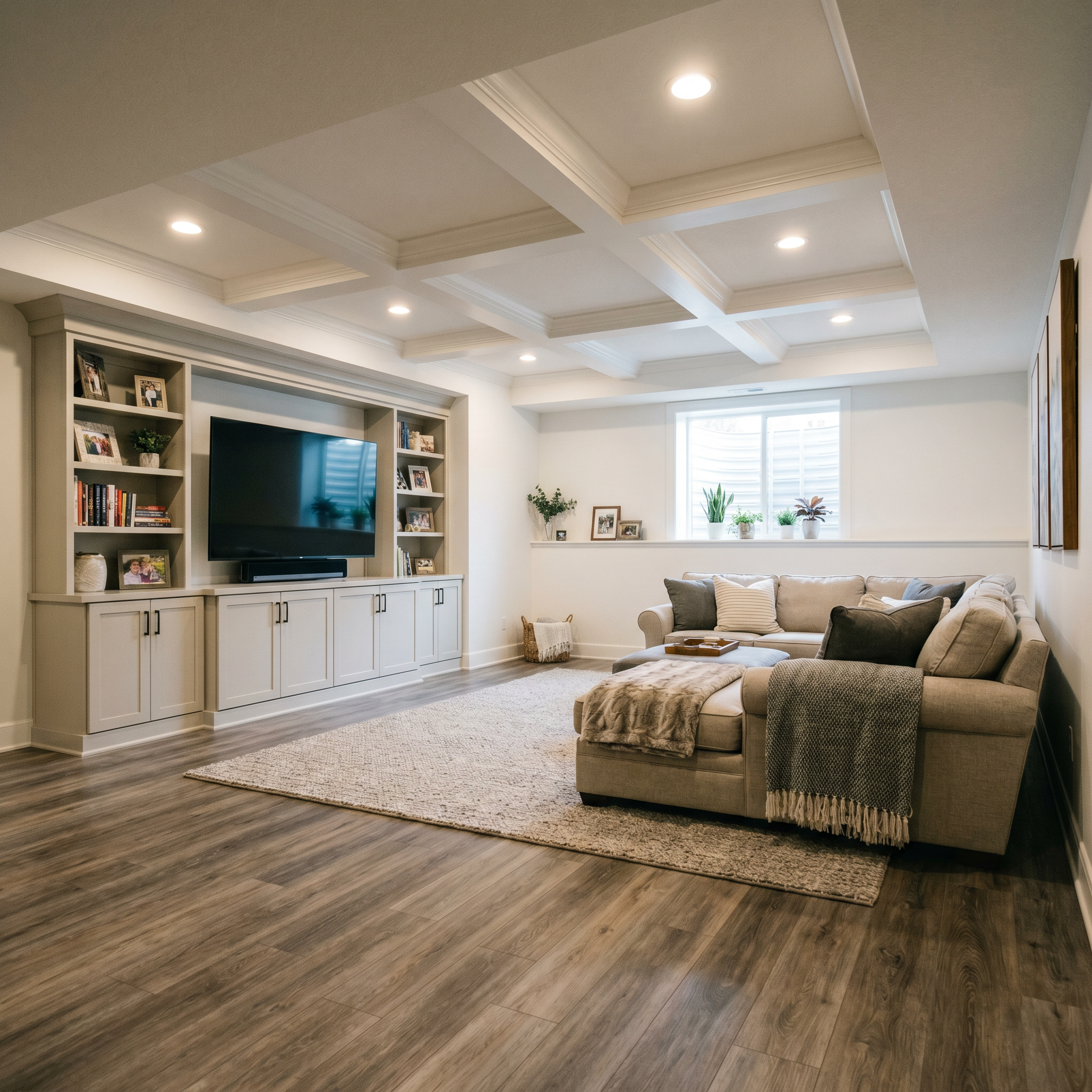
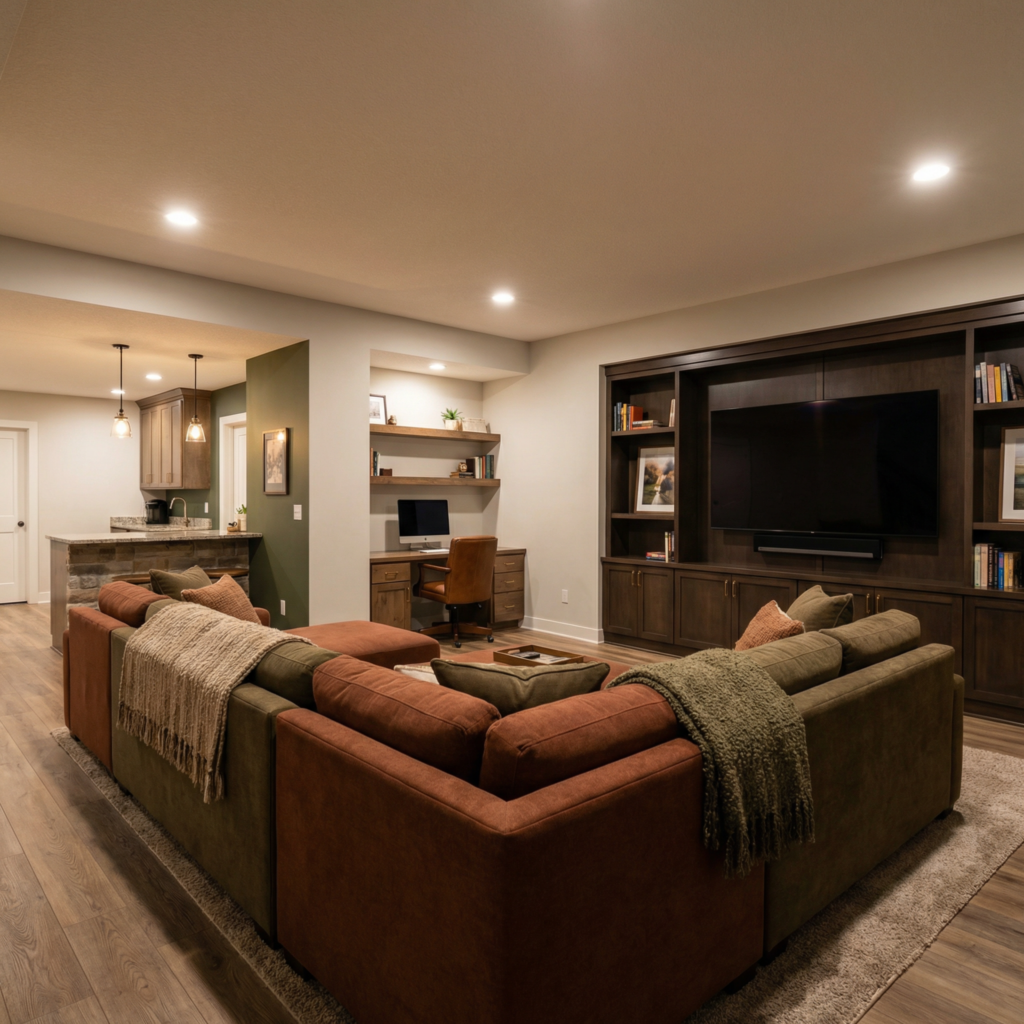
Iowa homeowners are finishing basements at a faster rate than in previous years, and the reasons have shifted. It is no longer just about adding a rec room. In 2026, the biggest basement remodeling trends focus on flexibility, livability, and long-term value. This guide covers the six leading trends, what each one costs in Des Moines, and two Iowa-specific issues that must be addressed before any of those trends can apply.
TLDR: Basement finishing earns a NAR Joy Score of 8.8 out of 10 and recovers roughly 67% of cost at resale, but in Iowa, radon and code requirements come first. Six trends are driving demand in 2026: flexible layouts, warm finishes, home offices, bathrooms and wet bars, ADUs under Iowa’s new 2025 law, and wellness spaces. Read on to see what each costs and what to address before breaking ground.
Why 2026 Is a Strong Year for Basement Finishing
Americans spent an estimated $603 billion on home remodeling in 2024. According to the NAR 2025 Remodeling Impact Report, basement conversions to living area earn a Joy Score of 8.8 out of 10 and recover approximately 67% of project cost at resale. REALTORS consistently cite finished basements as increasing buyer appeal and reducing time on market.
Iowa homeowners hold a structural advantage that most other states do not. Because of the 42-inch frost line requirement, virtually every home in Central Iowa already has a full basement. The hardest part of adding square footage, excavating and pouring a foundation, is already done. Finishing that space runs $30 to $70 per square foot in the Des Moines market, compared to $100 to $200 per square foot for a full home addition. See the full Des Moines basement finishing cost breakdown for detailed pricing at every finish level.
ROI percentages are industry estimates from NAR. Actual returns vary by property, location, and market conditions and do not constitute financial advice.
Trend 1: Multi-Purpose, Flexible Layouts
The single-purpose basement is fading. In 2026, homeowners want a single space that handles multiple tasks and adapts as life changes. Popular combinations include a home office that converts to a guest suite with a Murphy bed, a media room with a partitioned workout zone, and a kids’ playroom designed to transition into a teen lounge within a few years.
The design tools that make flexibility work are movable partitions, zone-specific lighting that shifts a room’s mood, and built-in storage that removes visual clutter. Central Iowa families tend to stay in their homes longer than the national average, which makes a flexible layout a stronger long-term investment here than in faster-moving housing markets.
Trend 2: Warm, Natural Finishes
The cold basement with white drywall and gray concrete flooring is out. In 2026, the goal is making the basement feel like a continuation of the main floor. Luxury vinyl plank (LVP) flooring with realistic wood grain leads every category of basement flooring choices. It handles moisture better than real hardwood, costs less, and installs faster, meaningful advantages in Iowa’s climate, where seasonal humidity swings make solid wood a real risk in a below-grade space.
Light wood wall panels, shiplap accents, and stone accent walls, used in small doses, add warmth without feeling heavy. Bold colors such as deep greens, warm terracottas, and navy are replacing the all-neutral palettes of the previous decade. The Iowa flooring options guide covers LVP, hardwood, and tile in detail if that comparison matters for your project.
Trend 3: Dedicated Home Offices
A basement home office has a practical edge over any other room in the house: natural separation from main-floor noise, cooler summer temperatures, and the quiet that a focused work environment requires. In 2026, buyers in Central Iowa’s tech, insurance, and financial services sectors will actively seek finished-basement offices as move-in-ready features.
The upgrades that matter most are acoustic drywall or insulation between ceiling joists (typically $1,000 to $3,000 for a standard office area), a hardwired Ethernet connection rather than Wi-Fi through concrete walls, and dedicated HVAC registers. Iowa basements run 5 to 10 degrees cooler than upper floors in winter, a properly balanced heating system is the difference between a usable workspace and a space people avoid.
Trend 4: Basement Bathrooms and Wet Bars
A basement bathroom is the single highest-ROI upgrade available in a basement finish. According to NAR data, a bathroom addition recovers approximately 80 to 85% of its resale cost, more than almost any other basement project. A full basement bathroom in the Des Moines market typically runs $15,000 to $25,000. Without a bathroom, a finished basement has limited practical value regardless of how well the rest of the space turns out.
Wet bars rank among the most-requested features for homeowners who use their basements for entertaining. A basic dry bar with stock cabinetry typically runs $5,000 to $15,000. A full custom bar with a sink, stone countertop, and beverage center typically runs $15,000 to $40,000. Adding a sink requires a plumbing permit, and Iowa plumbers hold separate state licenses, confirm credentials before any plumbing work begins.
Trend 5: Basement ADUs, Iowa’s 2025 Opportunity
Iowa’s SF 592, signed by the Governor on May 1, 2025, and effective July 1, 2025, requires every Iowa city and county to allow at least one accessory dwelling unit (ADU) on a single-family lot. Before this law, many Iowa municipalities banned or severely restricted ADUs. That has changed, creating a genuine new option for homeowners considering a basement remodel.
A basement ADU is a self-contained living unit with its own kitchen, bathroom, and sleeping area. A legal, code-compliant ADU conversion in Iowa typically costs $60,000 to $100,000. Industry estimates put ROI for ADU conversions at 90 to 110%, with the potential to recoup project costs over 5 to 8 years, depending on the local rental market.
One critical distinction: a finished basement recreation room or bedroom is not an ADU. A rentable unit must meet full ADU-level building code compliance, and local zoning rules still vary by city under the new state law. Consult your city’s planning department and a qualified attorney before starting any ADU project intended for rental income. This section is informational only and does not constitute legal or financial advice.
Trend 6: Wellness and Lifestyle Spaces
Home gyms, saunas, and dedicated wellness corners are appearing in Central Iowa basements at an increasing rate. A dedicated workout zone with flooring, mirrors, basic equipment storage, and lighting typically runs $5,000 to $15,000 and recovers about 65 to 70% of its cost at resale. A pre-built infrared sauna insert costs $1,500 to $6,000 installed. Golf simulator bays are also growing in popularity in Iowa, with a basic setup running $2,000 to $5,000 in a 10 x 15-foot space with adequate ceiling height.
NAR research shows the remodeling projects with the highest daily satisfaction scores are the ones people use consistently. A basement gym that gets used four days a week delivers more practical value than a guest room that sits empty most of the year.
Two Iowa Issues That Come Before All Six Trends
Test for Radon First
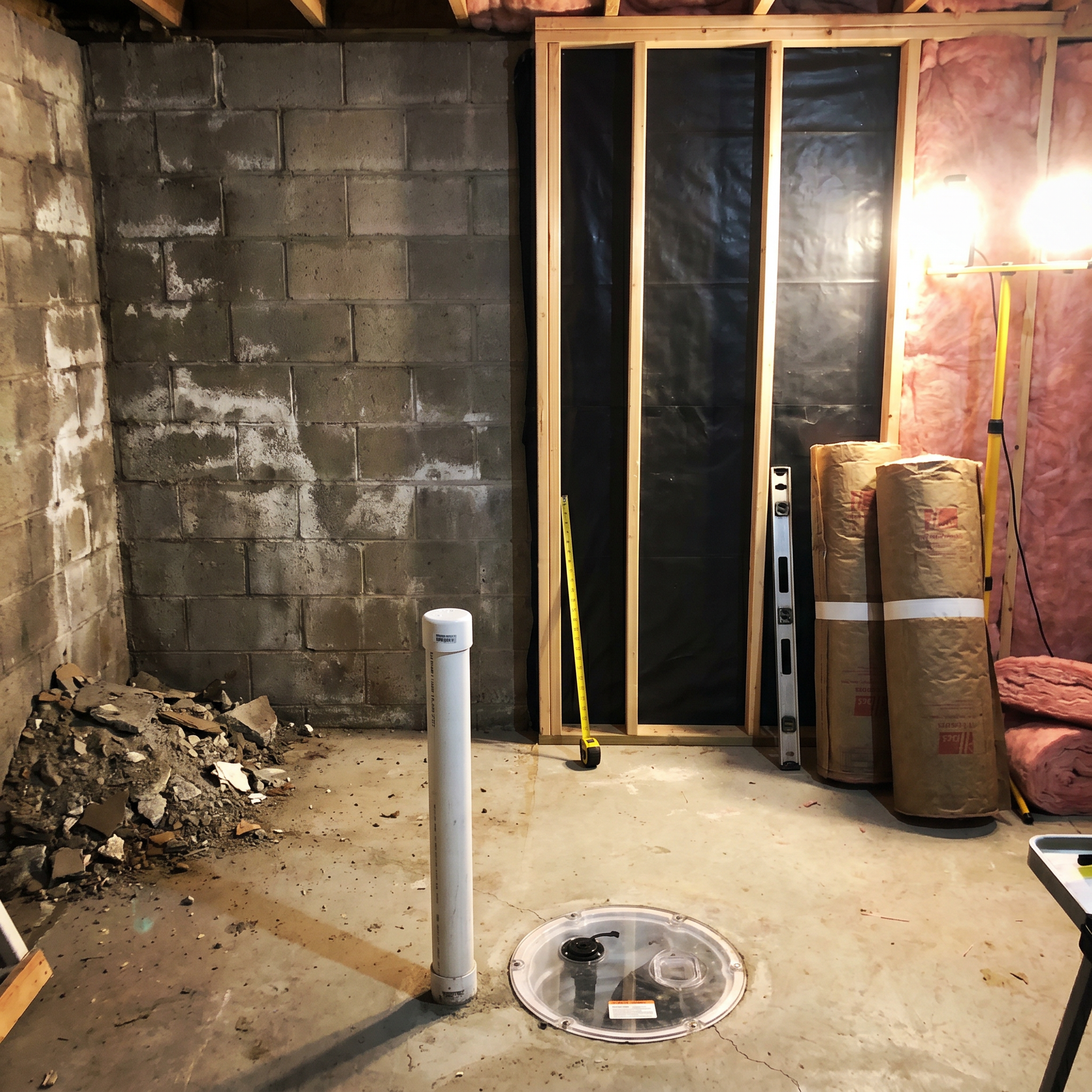
Iowa is the only state where every county is in EPA Radon Zone 1, the highest risk classification. According to the Iowa Radon Survey, about 71.6% of Iowa homes test above the EPA action level of 4 pCi/L. Finishing a basement without addressing radon first seals the problem in. Mitigation in an unfinished basement typically costs $1,800 to $2,500. Retrofitting a system through finished walls costs significantly more.
The right sequence is: test first, mitigate if results are at or above 4.0 pCi/L, then finish. The guide to fixing basement problems before you finish walks through the full pre-finish checklist. Always use a qualified professional for testing and mitigation. This information is general in nature and does not constitute health or medical advice.
Iowa Code Requirements
These requirements determine what a finished basement can legally be called on an appraisal and what happens at resale. Any room marketed as a bedroom needs a legal egress window with a minimum net clear opening of 5.7 square feet above grade (5.0 square feet below grade), minimum dimensions of 20 inches wide by 24 inches tall, and a 36-inch-wide window well if the sill is below ground. Habitable spaces require a minimum ceiling height of 7 feet. Every bathroom needs a dedicated 20-amp GFCI-protected circuit.
A basement bedroom without a legal egress window cannot be listed as a bedroom on an appraisal, which directly reduces resale value. The cost to add an egress window during finishing is $2,500 to $5,000. Retrofitting one through a finished wall costs more. Always pull permits, Grimes, Ankeny, West Des Moines, and Des Moines each maintain separate building departments with different requirements. Unpermitted work creates resale liability and insurance problems. See the Iowa building permits guide and the best basement layouts guide for Iowa homes before planning your project.
2026 Basement Cost Summary
Des Moines metro planning estimates. Actual costs vary by scope, finishes, and contractor. These are not quotes.
| Project Type | Estimated Cost | Estimated ROI |
|---|---|---|
| Basic rec room (800 sqft) | $28,000 to $36,000 | 60 to 75% |
| Full suite (bedroom + bath, 800 sqft) | $50,000 to $75,000 | 67 to 85% |
| Home office (dedicated) | $5,000 to $15,000 | 65 to 70% |
| Basement bathroom addition | $15,000 to $25,000 | 80 to 85% |
| Wet bar (basic to custom) | $5,000 to $40,000 | Varies |
| Basement ADU | $60,000 to $100,000+ | 90 to 110% |
| Home gym area | $5,000 to $15,000 | 65 to 70% |
| Full finish, 1,000 sqft mid-range | $30,000 to $70,000 | 67 to 75% |
ROI estimates from the NAR 2025 Remodeling Impact Report. Actual returns depend on property, location, and market conditions.
FAQs
Q: What are the biggest basement remodeling trends in 2026? The six leading trends are flexible, multi-purpose layouts; warm, natural finishes (especially LVP flooring and wood accents); dedicated home offices with soundproofing; basement bathrooms and wet bars; basement ADUs made possible by Iowa’s 2025 state law; and wellness spaces like home gyms and saunas. The common thread across all six is building a basement that gets used every day, not just on special occasions.
Q: How much does it cost to finish a basement in Des Moines in 2026? Finishing typically runs $30 to $70 per square foot in the Des Moines market. A basic 800-square-foot family room runs about $28,000 to $36,000. A full suite with a bedroom and bathroom typically lands between $50,000 and $75,000. Adding a bathroom, addressing radon, or installing an egress window are the biggest budget drivers. The full Des Moines basement finishing cost breakdown covers every finish level in detail.
Q: What is the ROI on finishing a basement in Iowa? According to the NAR 2025 Remodeling Impact Report, basement conversions recover about 67% of project cost at resale nationally, with a Joy Score of 8.8 out of 10. Adding a bathroom can push ROI to 80 to 85%. A compliant ADU conversion with rental income potential can achieve 90 to 110% of the cost. These are industry estimates from NAR, not financial guarantees, actual returns vary by property and market conditions.
Q: Do I need to test for radon before finishing my Iowa basement? Yes, and the order matters. Iowa is the only state where every county is an EPA Radon Zone 1, and about 71.6% of Iowa homes test above the action level. Finishing without addressing radon first makes remediation significantly more expensive. Test first, mitigate if needed ($1,800 to $2,500 in an unfinished basement), then finish. Always use a qualified professional. This is general information only and does not constitute health or medical advice.
Q: Do I need permits to finish my basement in Iowa? Yes. Every Central Iowa municipality requires a building permit for basement finishing, and requirements differ by city. Always pull permits, unpermitted work creates resale liability, can affect homeowners’ insurance, and removes legal recourse if problems arise. See the Iowa home building permits guide for how the process works in your city.
Q: Can I legally rent out a finished basement in Iowa? Iowa’s SF 592, signed on May 1, 2025, and effective July 1, 2025, gives single-family homeowners the right to add an ADU on their property. But a finished basement bedroom is not a legal rental ADU. A rentable unit must be self-contained with its own kitchen, bathroom, and sleeping area and must meet all applicable building codes. Local zoning rules still vary by city. Consult your city’s planning department and a qualified attorney before starting any project intended for rental income.
Key Takeaways
Do these before anything els.e
- Test for radon before any finishing work begins, 71.6% of Iowa homes test above the EPA action level
- Pull permits with your specific municipality; requirements vary by city
- Confirm egress, ceiling height, and circuit requirements before finalizing your layout
2026 trends worth knowing
- Flexible layouts that adapt as household needs change over time
- LVP flooring and warm finishes that make basements feel lika e main-floor living space
- Home offices with soundproofing and hardwired internet are now a buyer-facing feature
- Bathrooms carry the strongest single-item ROI at 80 to 85%
- Iowa’s 2025 ADU law opened the door to legal rental units for the first time in many communities
- Wellness spaces like home gyms earn a 65 to 70% ROI and high daily-use satisfaction
Cost context
- Finishing costs $30 to $70/sqft in Des Moines versus $100 to $200/sqft for a home addition
- NAR Joy Score for basement conversions: 8.8/10, a strong satisfaction score among all remodeling projects tracked
- ROI ranges from 60 to 75% for a basic rec room up to 90 to 110% for a compliant ADU
Ready to Talk Through Your Basement Project?
Busy Builders has completed more than 1,285 projects across Central Iowa since 2020. Basement finishing is one of the most common conversations, and one where the details genuinely matter. The right sequence, the right permits, and the right layout protect the investment and make the project appraiser-ready from day one.
Call us: 844-435-9800 Website: busybuildersiowa.com
For a full look at how basement finishing compares to other remodeling options in the Des Moines metro, see the guide to whole-house remodeling costs in Des Moines. Busy Builders serves Des Moines, West Des Moines, Ankeny, Grimes, Waukee, Johnston, and communities across all ten Central Iowa service counties.
Busy Builders | Full-Service Construction and Remodeling | Serving Central Iowa Since 2020
Related service: full basement remodeling.