
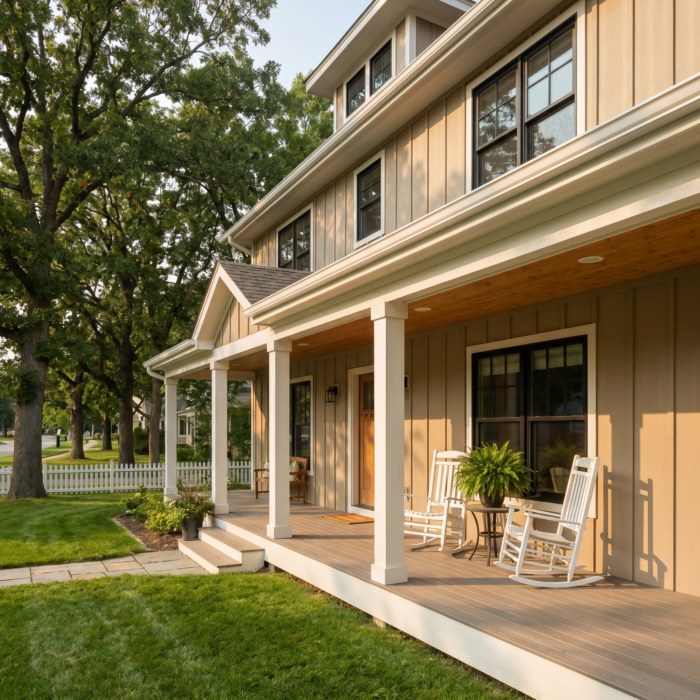
Front Porch vs Wraparound Porch: Choosing for Your Iowa Home
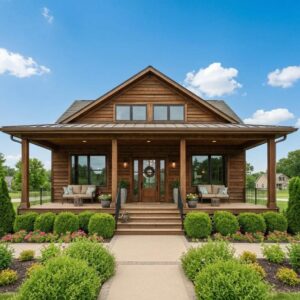
You are planning a porch addition and are stuck on the big question: standard front porch or wraparound? This guide breaks down real Iowa-adjusted costs, permit rules, ROI, and...
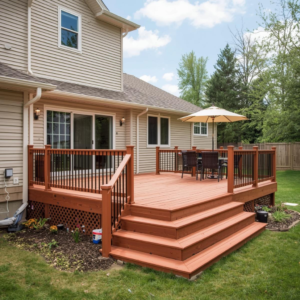
Clive summers are short, and an established Polk County backyard without a deck is outdoor space that never reaches its potential.
Whether your original pressure-treated deck has aged past the point of repair or you are starting from scratch on a mature lot, Busy Builders designs and builds outdoor structures that hold up through Iowa’s freeze-thaw cycles, Polk County clay soil movement, and every season Central Iowa delivers.
A deck built right in Clive lasts, and we build it right.

Since 2020, Busy Builders has completed over 1,285 construction and remodeling projects across Central Iowa, including established Polk County communities like Clive.
We have built decks through Iowa winters, seen what happens to shallow footings and improperly maintained wood surfaces, and know exactly what Clive’s tree-lined lots and older homes demand from an outdoor structure built to survive this climate.
We build every deck to last and stand behind the work after we leave.
Honest material guidance and no upselling features the homeowner does not need.
If a pressure-treated deck fits the budget and the plan, we say so. If a Clive homeowner’s long-term goals warrant composite, we make that case with real numbers, not a sales pitch.
Before any material is ordered, we walk the yard and assess everything that affects the build: grade changes, soil type, drainage patterns, proximity to the home’s foundation, and sun and wind exposure.
Clive is an established Polk County suburb with mature trees and older housing stock. Lots often have grade changes, root interference near foundation lines, and drainage patterns that affect where footings can be placed and how posts are set from day one.
We discuss layout options, material choices, and budget at this stage so you have a complete picture before signing anything.
Permit requirements are confirmed for Clive specifically at this step, since processing timelines and submission requirements differ across Central Iowa cities.
You receive a written design with cost and timeline before any work begins.
Most attached decks and elevated decks in Iowa require a building permit, and skipping this creates problems at resale, with insurance, and with lenders.
The Iowa Building Code is administered through DIAL, and Clive has its own submission and review process that differs from neighboring cities like Des Moines, Urbandale, or Waukee.
We pull all required permits, submit structural drawings where required, and schedule all inspections as part of the project scope.
Permit processing times in Clive are factored into the project timeline from the start so there are no surprises mid-build.
Review the Iowa DIAL permit submission process for Clive-specific requirements before work begins.
The layout is staked out and footing locations are marked before any digging begins.
Iowa’s 42 to 48 inch frost line is non-negotiable in Clive. Footings set above that depth will heave during freeze-thaw cycles and compromise the entire structure within a few winters.
Polk County clay soil expands when wet and contracts when dry. That seasonal volume shift adds lateral pressure to posts year-round and demands careful attention to footing diameter to provide adequate bearing capacity across moisture cycles.
We call Iowa 811 before digging to identify underground utilities, which is required by Iowa law before any excavation. Footing holes are inspected by the city before concrete is poured in jurisdictions that require it.
Concrete is poured into tube forms at each footing location and allowed to cure before posts are set.
Post bases are embedded in the footing or attached with hardware rated for the load at that connection point.
We never set wood posts directly in concrete, which traps moisture and accelerates rot from the base up.
Post height is cut to level so the beam sits flat across all posts. Clive’s Polk County clay soil shifts seasonally, and proper footing depth combined with post base hardware is what keeps a deck level year after year in this part of Central Iowa.
Beams span between posts, joists run perpendicular, and the ledger attaches the deck to the home’s band joist. This is the skeleton that carries everything above it.
Ledger attachment is one of the most critical steps on any attached deck. In Clive, where many homes were built in the 1970s through 1990s and original decks were added without proper water management, improper ledger flashing is the leading cause of rot and structural failure we see on replacement projects.
We install flashing above the ledger to direct water away from the home, using materials compatible with pressure-treated lumber.
All framing lumber is pressure-treated and sized for the span and load per the Iowa building code. Joist hangers and structural hardware are galvanized or stainless steel because standard hardware corrodes within a few years in outdoor Iowa conditions.
Deck boards go down once the frame passes structural inspection. Board spacing is set to allow drainage and account for seasonal wood movement unique to Clive’s temperature swings and humidity cycles.
Boards installed too tightly in summer will buckle when Iowa’s humidity peaks and wood expands.
Composite boards are installed per the manufacturer’s specs for gap, fastener type, and end spacing because Iowa’s wide temperature range causes composite to expand and contract more than most homeowners expect.
Hidden fastener systems are available for a clean, screw-free surface on composite decks.
Wood boards are face-screwed and pre-drilled to prevent splitting during installation.
Railings and stairs go in after the deck surface is complete.
Iowa code requires railings on decks 30 inches or more above grade, with a minimum height of 36 inches and balusters spaced no more than 4 inches apart.
Stair stringers are cut and set to code-compliant riser and tread dimensions, which is what the inspector checks at final inspection on every Clive project.
Post bases for railing posts are surface-mounted or through-bolted to the frame, never toe-nailed, which loosens over time under Iowa freeze-thaw stress.
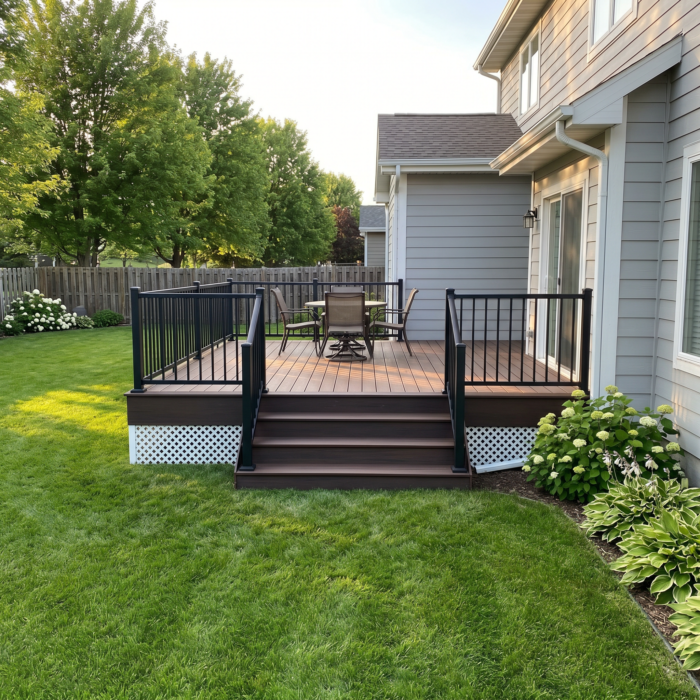
Aluminum and composite railings are the best low-maintenance choice for Central Iowa weather and hold their appearance through years of temperature cycling in Polk County.
Lighting and electrical rough-in occur after framing so wiring can be run cleanly through the structure before decking goes down.
Post-cap lights, recessed step lights, and outdoor GFCI outlets are the most common additions on Clive deck projects where homeowners want to use outdoor space well into the evening during Iowa’s short warm season.
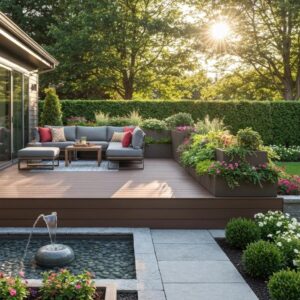
Custom features including pergolas, built-in benches, planters, outdoor kitchens, and fire pit areas are built at this stage for homeowners who want a complete outdoor living space.
All electrical is done by separately licensed electricians and inspected to code. If you want to know whether a quality deck fits your budget before adding features, read our guide on building a quality deck under $10k.
Basement permits here follow Clive’s process: The City of Clive Community Development Department issues permits through its online portal at cityofclive.com.
Wood decks need a stain or sealer applied before they are handed off. Bare pressure-treated wood left unfinished in Clive’s climate will gray, check, and absorb moisture within the first season.
We apply stains and sealers rated for exterior use: transparent options show the wood grain, semi-transparent add color while showing grain, and solid stains cover grain for a painted look.
Composite and PVC decks do not require staining but receive a final inspection for proper gapping, fastener seating, and trim details before we call the project complete.
We do a detailed walkthrough with the homeowner at the end of every project.
Most Clive deck builds run 1 to 3 weeks from footing dig to final walkthrough, depending on size, features, and permit processing time.
Since 2020, over 1,285 Central Iowa homeowners have trusted us to build and remodel their outdoor spaces, and our 99% satisfaction rate reflects what that commitment looks like in practice.









Costs depend on size, material, and features, and there are three main tiers to understand.
A basic pressure-treated wood deck with no custom features typically runs around $40 per square foot installed in Central Iowa.
A mid-range composite deck with railings and stairs falls in the $50 to $75 per square foot range.
A high-end composite or PVC deck with a pergola, lighting, and built-in seating runs $75 to $100 or more per square foot.
Online calculators typically miss permit costs, deep footing requirements for Iowa’s 42 to 48 inch frost line, and Clive site prep variables like mature tree roots, grade changes, and clay soil drainage. Budget 15 to 25 percent above the base quote.
Busy Builders provides a detailed written estimate before any work begins. See our guide to custom deck costs in the Des Moines area for a full breakdown of what drives price.
Yes, permits are required for most attached decks and for freestanding decks over a certain size or height in Clive.
Permits ensure footings, framing, railings, and stairs all meet the Iowa building code, and unpermitted decks create real problems at resale when buyers’ lenders and inspectors catch them.
Iowa Building Code is administered through DIAL, and Clive has its own submission and inspection timeline separate from Des Moines, Urbandale, or any other neighboring city.
Busy Builders handles all permit filings and inspection scheduling for every project. Review the Iowa DIAL permit submission process to understand what Clive requires before work begins.
Composite decking is the best all-around performer for Clive’s freeze-thaw cycles, humidity swings, and UV exposure across long summer days.
Pressure-treated wood costs less upfront but needs to be sealed every one to two years in Iowa’s climate. Skipping that step leads to cracking, graying, and rot within a few seasons. This is exactly what we find on older Clive decks where maintenance was deferred.
PVC decking offers the highest moisture resistance and is the best choice for shaded sites, which are common on Clive’s mature, tree-lined lots.
Cedar is naturally rot-resistant but still requires regular finishing in Iowa and sits at a higher price point than pressure-treated wood.
See the full breakdown in our composite deck vs wood deck pros and cons guide to compare options before your estimate.
Most Clive deck projects run 1 to 3 weeks from footing dig to final walkthrough.
Smaller ground-level decks with straightforward designs can often be completed in about a week.
Larger builds with multi-level layouts, pergolas, outdoor kitchens, or custom features take 3 to 4 weeks.
Permit processing time is the most common variable. Clive, Urbandale, and surrounding Polk County communities each process at their own pace, and we build those timelines into the project schedule upfront so there are no surprises mid-build.
Iowa’s frost line sits at 42 to 48 inches, and footings set above that depth will heave during freeze-thaw cycles, throwing the deck out of level and stressing every connection in the structure.
Clive’s Polk County clay soil expands when wet and contracts when dry, adding lateral pressure to posts and footings throughout every season. On mature lots with established grade patterns, this movement is compounded by drainage that concentrates moisture near foundation lines.
A deck built on shallow footings in Clive will show movement within 2 to 3 winters, with loose railings, uneven boards, and shifting stairs as the early warning signs.
Every Busy Builders footing is set below the frost line on every project, no exceptions. According to the National Weather Service in Des Moines, frost conditions in the metro area typically persist from October through April, making deep footing installation a non-negotiable requirement for any structure meant to last.
Yes.
Pergolas, built-in seating, planters, fire pit areas, outdoor kitchens, and covered sections are all available and can be added to a new deck build or to an existing deck during a deck rebuild.
For larger outdoor projects, a deck can connect directly to a home addition like a sunroom or screened porch, which Clive homeowners increasingly pursue to extend usable living space across more of Iowa’s short warm season.
Custom features are scoped and priced during the design phase so there are no cost surprises mid-build.
You are planning a porch addition and are stuck on the big question: standard front porch or wraparound? This guide breaks down real Iowa-adjusted costs, permit rules, ROI, and...
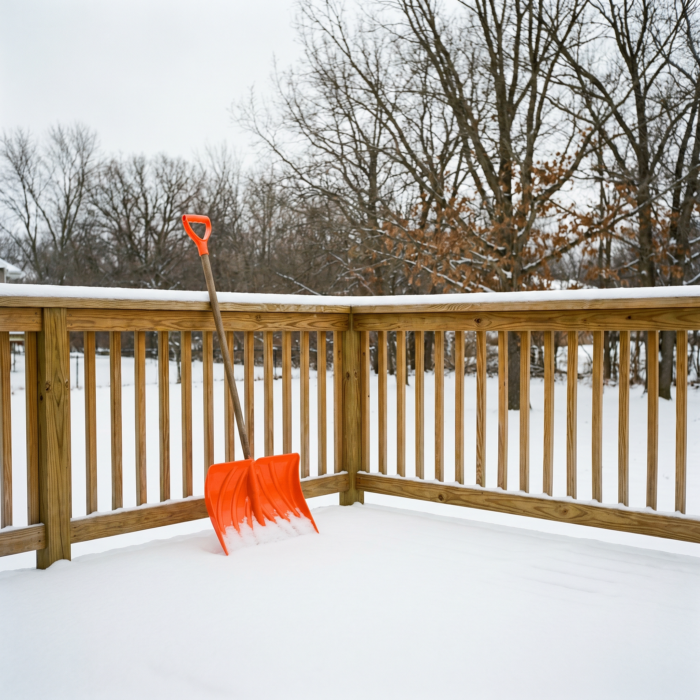
Iowa winters are uniquely hard on outdoor structures. Between 45 and 84 freeze-thaw cycles each year, an average of 36 inches of snowfall, and clay soil that shifts as...
Ankeny is one of Iowa’s fastest-growing cities, with median home values around $338,000 to $352,000 and a median household income of about $106,603. A well-built, permitted deck fits the...