
Home Building
West Des Moines, IA
Building a Custom Home in West Des Moines, IA
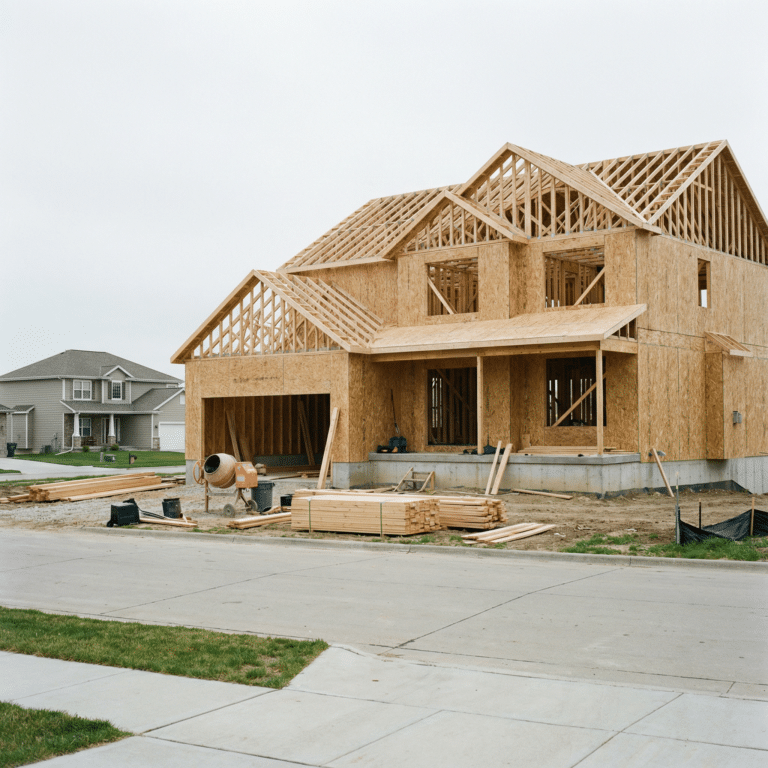
About Us
Our Mission
Our Vision
- Home Building Step by Step
How Do We Build Your Home in West Des Moines?
SITE ASSESSMENT AND DESIGN
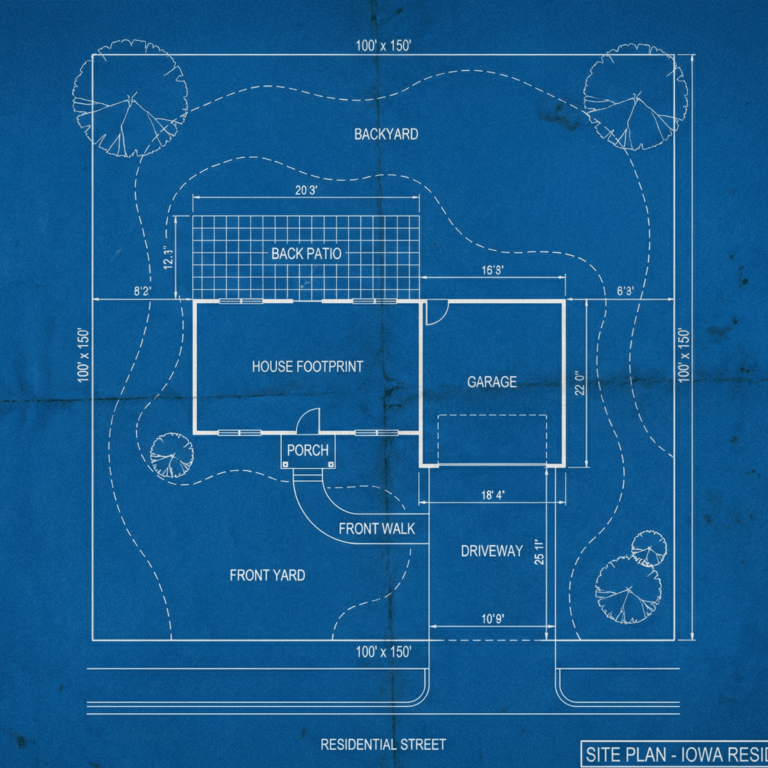
Every home build in West Des Moines starts with the land. Before any design work begins, we assess the lot for grade changes, drainage patterns, soil conditions, utility access, setback requirements, and orientation for solar exposure and prevailing Iowa winds. West Des Moines has some of the tightest lot inventory in the Des Moines metro. Infill parcels near established neighborhoods require careful attention to existing drainage patterns and neighboring structures. New platted lots near developing corridors require verification of utility stub locations and subdivision covenants before design begins. Our Iowa foundation and soil reality review is a standard step on every West Des Moines build.
- Full lot assessment covering grade, drainage, soil, utility access, and setbacks
- Floor plan and home style options presented with Iowa climate performance context
- Written scope of work, design, and budget confirmed before any permits are filed
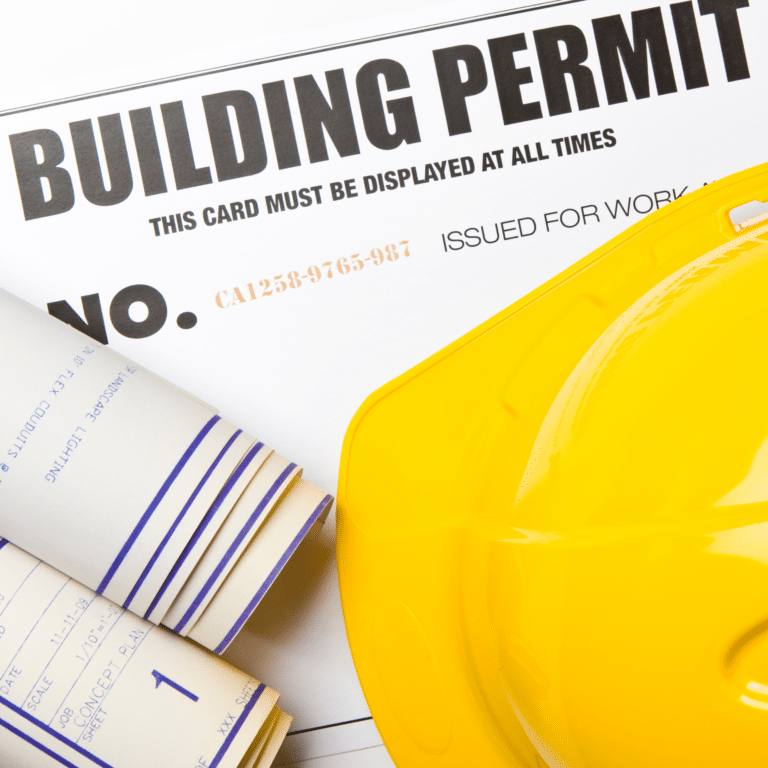
New home construction requires a building permit in every Iowa jurisdiction, including West Des Moines. The City of West Des Moines handles permit review through its Development Services department. West Des Moines follows the 2015 IRC with Iowa amendments for all residential construction. Energy compliance documentation under Iowa’s adopted energy code is required with every permit application. Most complete applications in the West Des Moines market move through review within a few weeks. Learn more about navigating home building permits in Iowa before your project starts. Busy Builders handles the full permit process from application to final inspection sign-off.
- Full permit application, structural drawings, and energy compliance documentation submitted
- Iowa Administrative Code and IRC compliance confirmed on every West Des Moines project
- All inspections scheduled and coordinated so the homeowner does not manage a thing
PERMITS AND APPROVALS
SITE PREP AND EXCAVATION
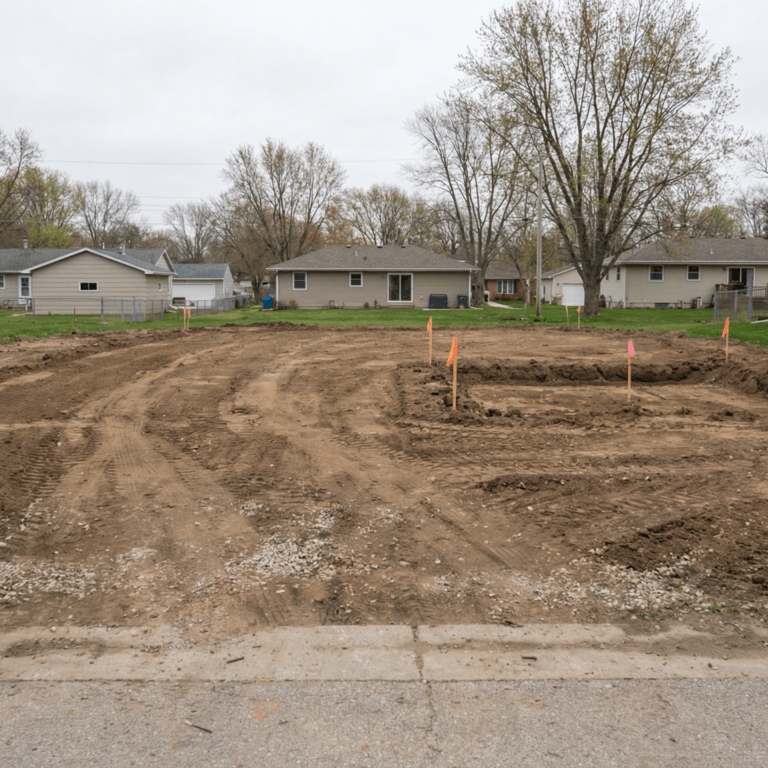
Site prep covers clearing, grading, and excavating the lot to the design elevation before foundation work begins. Iowa clay soil requires careful grading so surface water drains away from the foundation during both construction and after the home is occupied. West Des Moines lots in established neighborhoods often sit in mature drainage patterns where grading changes to a new build can affect adjacent properties. We plan drainage before a blade touches the lot. All utility locate calls through Iowa 811 are completed before any excavation begins, as required by Iowa law. A geotechnical assessment, typically around $2,700, confirms the soil bearing capacity before footing design is finalized. Per IBC Chapter 18, expansive clay soils require special foundation design to prevent long-term structural movement.
- Site clearing, grading, and excavation to design elevation before foundation work begins
- Iowa clay soil drainage planning to protect the foundation after the home is occupied
- 811 utility locate completed before any excavation begins, per Iowa law
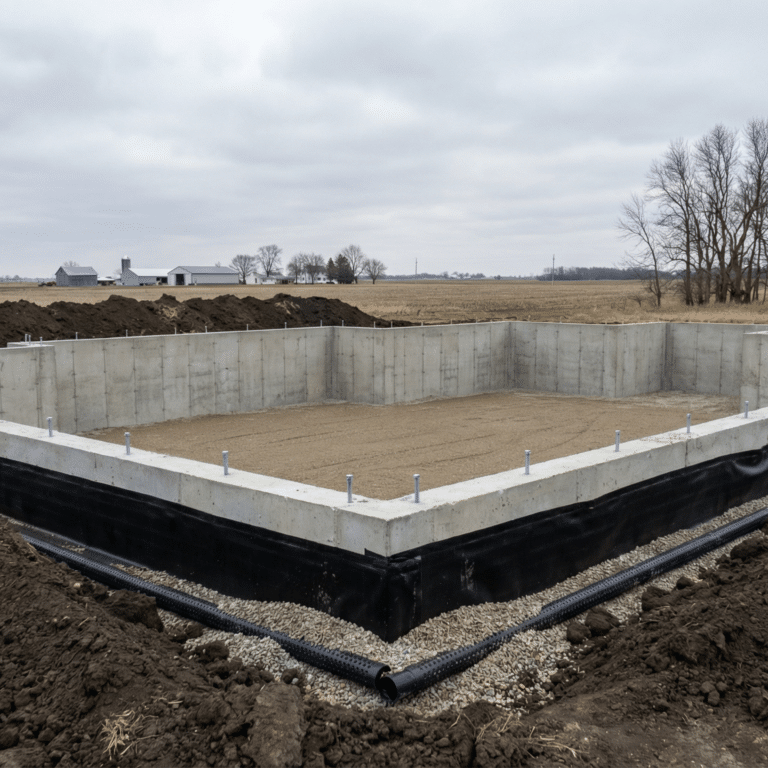
The foundation carries every load in the home and determines whether the structure stays level and dry for decades. Iowa’s frost line sits at 42 inches, and footings are set below it on every project. Skipping this step or relying on national cost guides that do not account for Iowa’s frost depth creates expensive problems that show up years after move-in. West Des Moines sits on expansive clay that swells when wet and contracts when dry. That cycle puts lateral pressure on foundation walls and upward pressure on slabs. A geotechnical assessment before design begins prevents $30,000 to $100,000 in future foundation repairs, according to industry benchmarks. We treat that assessment as a standard step, not an optional add-on. The NAHB’s 2024 Cost of Construction Survey confirms that foundation work is consistently one of the highest-value investments in a new build.
- Footings poured below Iowa's 42 inch frost line on every West Des Moines project
- Foundation wall design accounting for Iowa clay soil lateral pressure
- Exterior waterproofing membrane and perimeter drain tile installed before backfill
SETTING THE FOUNDATION
HOUSE FRAMING
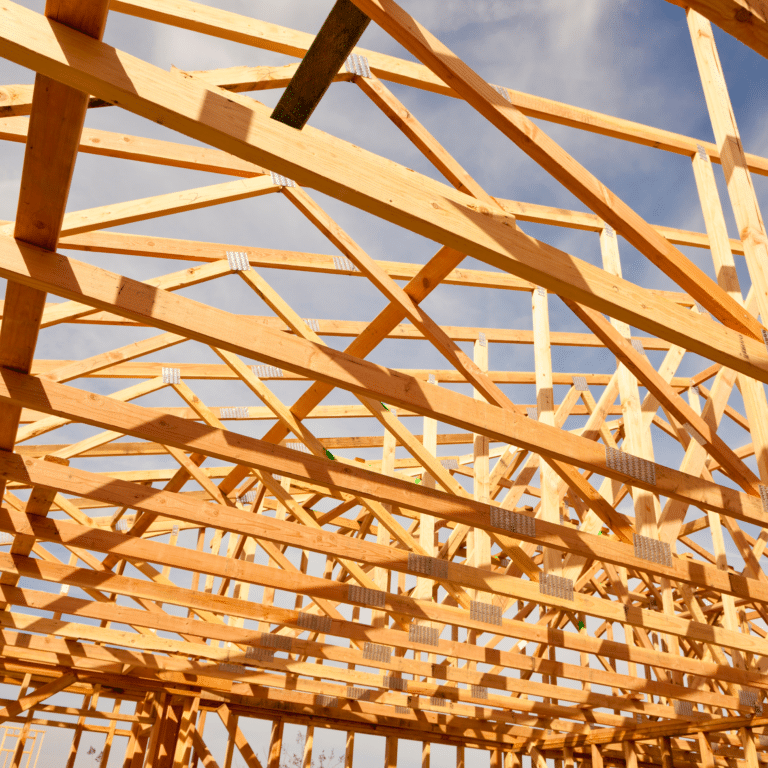
- Floor, wall, and roof framing built to structural drawings and Iowa building code
- Load-bearing walls and beams placed to structural plan and inspected before mechanical work
- Pressure-treated lumber at all concrete contact points per Iowa and IRC code
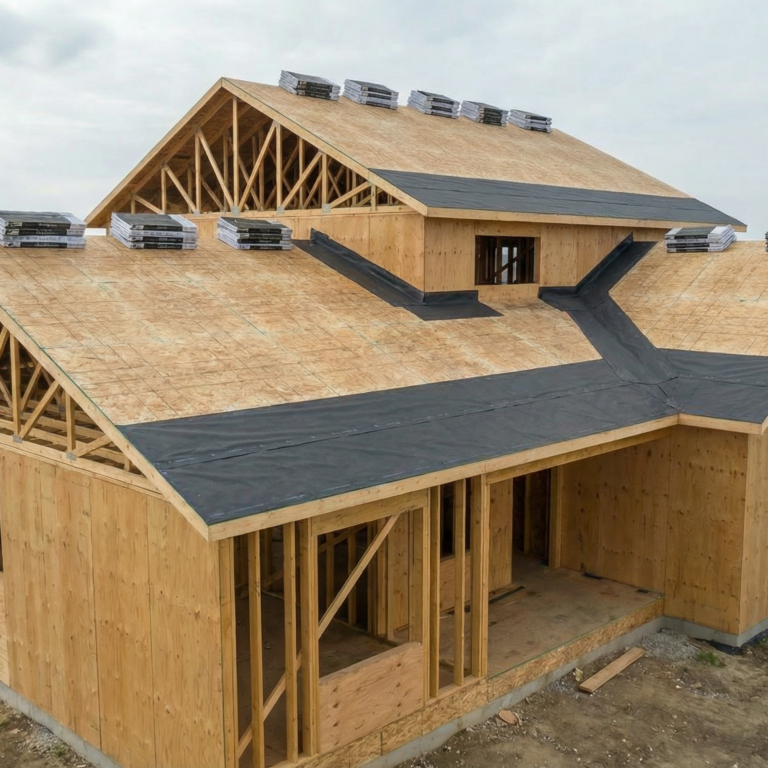
Roofing and exterior sheathing close the structure, so mechanical work can begin inside regardless of Iowa weather. West Des Moines winters bring freeze-thaw cycles that put real stress on any exterior assembly not installed to code. Iowa sits in Climate Zone 5A under the International Residential Code, which sets specific requirements for roof assemblies, air barriers, and wall sheathing performance. Roof sheathing, underlayment, and shingles are installed with proper flashing at all valleys, penetrations, and wall-to-roof transitions. Continuous housewrap provides the air and moisture barrier from foundation to roofline. Window and door rough openings are fully flashed before units are set.
- Roofing with full flashing at all valleys, penetrations, and wall-to-roof transitions
- Continuous housewrap air and moisture barrier from foundation to roofline
- Window and door rough openings flashed before units are set
ROOFING AND EXTERIOR ENVELOPE
WINDOWS AND EXTERIOR DOORS
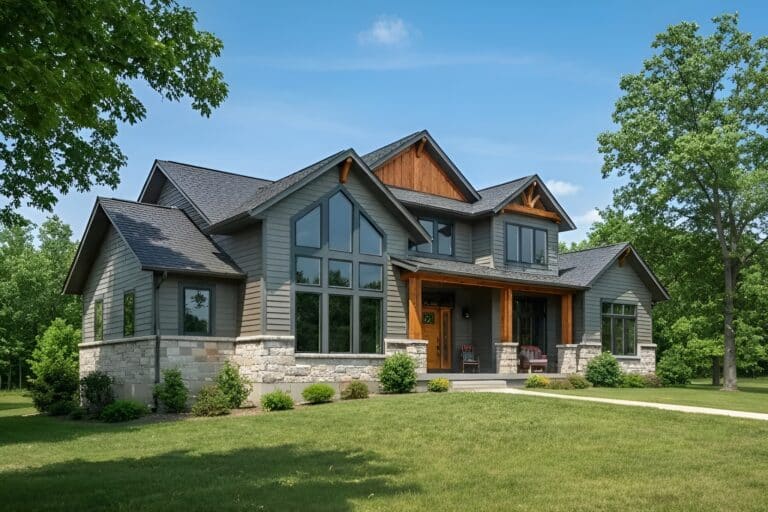
- Low-E glass windows and insulated exterior doors meeting Iowa energy code requirements
- All units tested for operation, seal, and weathertightness before interior work begins
- Egress windows installed in all below-grade bedrooms per Iowa building code
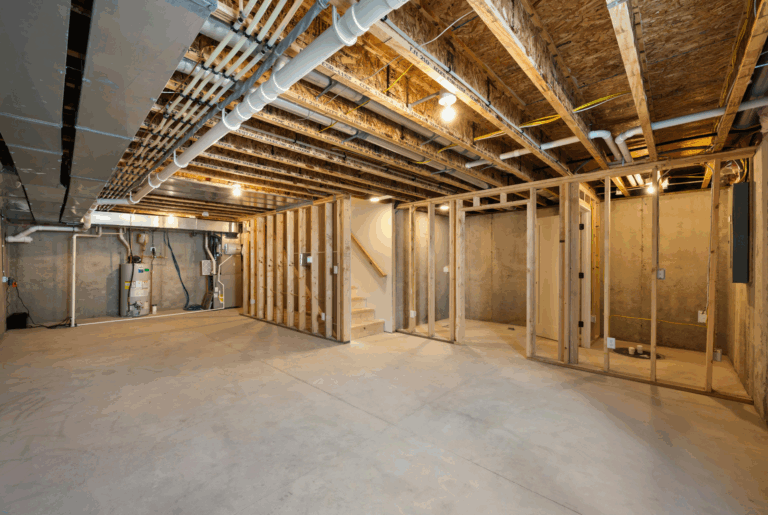
Mechanical rough-in is the most complex coordination step in a new home build. Plumbing drain lines, supply lines, and vent stacks are roughed in before concrete floors are poured where applicable. Electrical circuits and panel locations are laid out per Iowa NEC 2023 requirements under Iowa Administrative Code 481-404. HVAC ductwork and equipment locations are confirmed before walls close. West Des Moines homes at higher finish levels often include dedicated circuits for home automation, whole-home audio, or EV charging. All of these are planned during rough-in, not added as afterthoughts. Licensed electricians and plumbers perform all trade work. Iowa DIAL registration covers our general contracting role, and you can verify our registration at dial.iowa.gov.
- Plumbing, electrical, and HVAC rough-in coordinated across all trades before drywall
- Iowa NEC 2023 electrical compliance under Iowa Administrative Code 481-404
- Licensed electricians and plumbers on all mechanical work, permitted and inspected
MECHANICAL ROUGH-IN: PLUMBING, ELECTRICAL, AND HVAC
INSULATION INSTALLATION
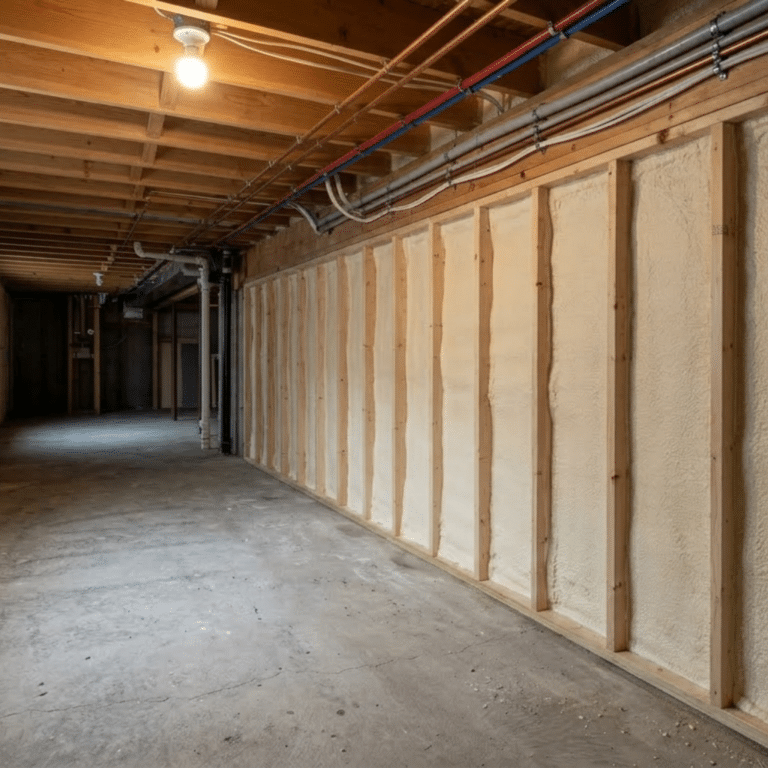
Insulation in a Central Iowa home has to perform across a temperature range that runs from well below zero in January to above 90 degrees in July. Iowa’s energy code requires exterior walls at R-20 or R-13 plus R-5 continuous, attic assemblies at R-49, and basement walls at R-15 continuous or R-19 cavity. West Des Moines homes at mid-range and higher-end price points often use spray foam in rim joist cavities and band joists to reduce air infiltration where walls meet the foundation. Proper insulation also supports radon control. Iowa is the only state with every county in EPA Radon Zone 1, and as many as 5 in 7 Iowa homes test above the EPA action level according to Iowa HHS. Radon-resistant new construction techniques per IRC Appendix F are integrated during every build. Doing it during construction costs $500 to $800. Retrofitting after occupancy costs $1,800 to $2,500 or more.
- Spray foam air sealing at rim joists and all penetrations before cavity insulation is ever installed
- Wall and attic insulation meeting Iowa energy code R-value requirements for Climate Zone 5A homes
- Radon-resistant construction details built into every West Des Moines foundation from day one
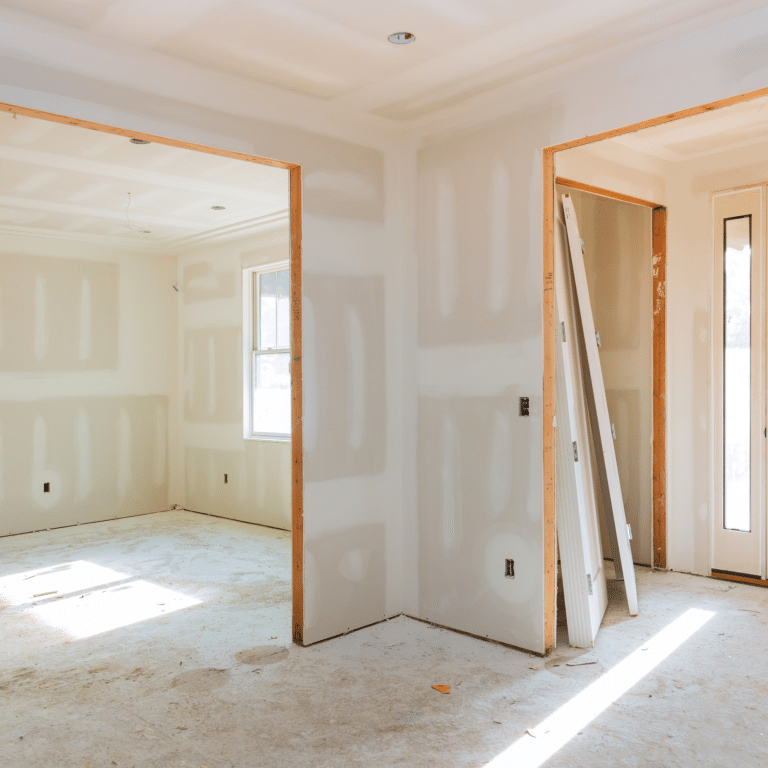
- Level 4 or Level 5 drywall finish on all walls and ceilings, smooth and ready for paint throughout
- Interior doors, trim, baseboard, and stair components installed in the proper sequence after drywall
- Cabinet installation coordinated with countertop fabrication to keep the West Des Moines build schedule moving
DRYWALL & INTERIOR FINISHES
FLOORING, FIXTURES & EXTERIOR FINISH
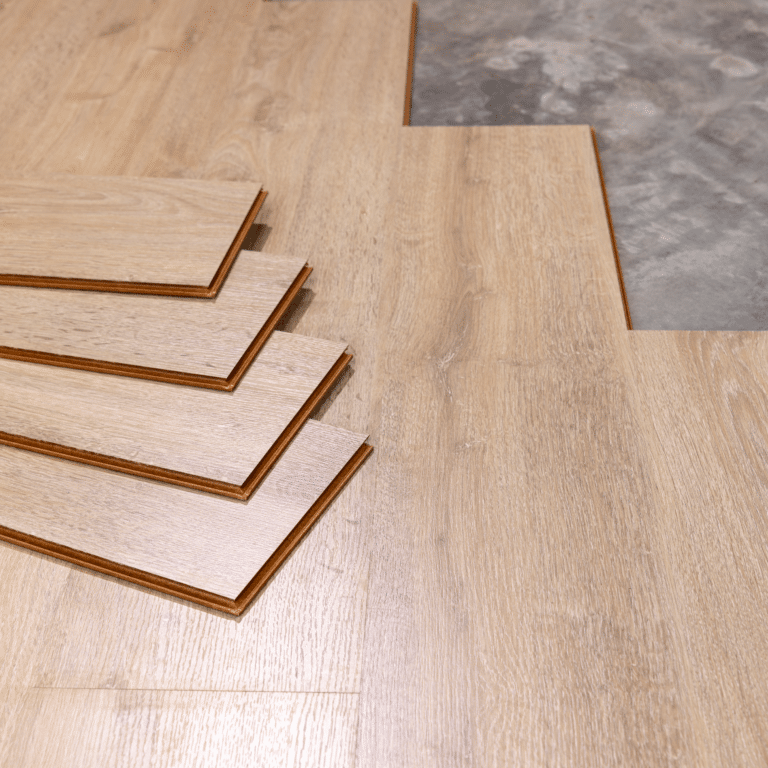
- Flooring installed after paint is complete to protect every finished surface in the new home
- Plumbing fixtures, light fixtures, hardware, and electrical devices installed and fully connected th
- Exterior siding, gutters, concrete flatwork, and final grading completed before the walkthrough date
- Full room-by-room inspection of every surface, connection, fixture, and finish detail completed with the homeowner
- Function test on all plumbing, electrical, HVAC, and GFCI circuits before handoff to the homeowner
- Complete clean up and delivery of all permit documentation, inspection records, and warranties at project close
FINAL WALKTHROUGH & CLEAN UP
- Achievement
Trusted Home Building Contractors in West Des Moines, IA









- Frequently Asked Questions
FAQs About Home Building in West Des Moines
How much does it cost to build a home in Central Iowa?
How long does it take to build a custom home in Central Iowa?
Do I need a permit to build a home in Iowa?
Should I build a ranch or a two-story home in Iowa?
Can I build a custom home for under $500,000 in Central Iowa?
What is the difference between a custom build and a spec home?
Trustindex verifies that the original source of the review is Google.
Quality work, fair pricing, followed through on what we discussed without delay, and personable guys to deal with. Will be using them again.Blake and his guys were top notch all the way. I would highly recommend them. They did a wonderful job on our bathroom and our new luxury vinyl floors. We will definitely use them again in the future.Beautiful job. Josh and Isaiah paid attention to what we wanted and asked lots of questions. Stairs are wonderful!+4We have used Busy Builders before, and recently hired them again for a full bathroom remodeling project. They are perfectionists and got the job done timely. We love our new bathroom, and plan on hiring them again to remodel our kitchen in 2027.Blake is very good at communicating. He built my brand new composite deck at my house. We are really satisfied with the results. We will be happy to use him in the future.Had a great experience. Timely consult, great styling suggestions, fair price and quality work.My daughter (Tricia) and I want to thank Blake at Busy Builders for having Nate Schumacher (Manager of Schumacher Plumbing) repair our shower faucet and dedicating his time over the weekend. Nate was very knowledgeable and explained what he had to do to repair the faucet! We really appreciated Nate's help!If I leave a 5 star review, it's only because a company or an individual has gone above and beyond my expectations!! Busy Builders is definitely the company to go with if you're looking to finish or remodel your basement! My guy Blake came to check out the project I had in mind, he was willing to sit down then and there and work some numbers to give me a fair and honest estimate. Not only did he work with me on my set budget, he beat every other estimate by a long shot! I got everything I asked for plus a few extras as an added bonus. Every project is a bit different and Blake helped me navigate this project and was in constant communication with me throughout the whole process. We've come to a quality finished product on a phenomenal timeline and at an amazing price!! Thank you Blake and the Busy Builder team!! If you're looking for a fair, honest, and hardworking company, Busy Builders is really the only way to go!+3Busy Builders finished our new deck and remodeled our basement. We had a really bad experience with a different company before Busy Builders so we were pretty leary but they cane thru with everything promised and there was never a problem when we'd text them with more stuff to do! We really appreciated how nice everyone was. Even the dogs loved them!Great company that did great work at my place putting on a new deck and some decorative beamsBlake and his team helped us with a few different projects. They did quality work and were easy and willing to communicateProject went as expected. Thank you.Blake with Busy Builders LLC is an outstanding guy to work with! Love doing work with Blake and hope to continue our working relationship! Thank you to Busy Builder LLC for being an outstanding company to work for! Keep up the great work!Very responsive and friendly from the first call to job completion. Great work. I will definitely hire again when I need further work done.Hired them to remove an old deck and build a nice composite deck with metal railings for me. They did it really quickly and I’m super happy with the work!+0Ripped out my old deck and replaced with a nice concrete patio in no time flat. Also help me with some weeds that were overgrown.I hired Blake's team to paint my 91 year old mother-in-law's house in West Des Moines. They did an excellent job. It had extensive wood-pecker damage to the siding, and some rot, which they first repaired. Since I don't live there, I appreciated the good communication keeping me informed of their progress. My mother-in-law commented on how kind the entire crew were to her. Since she is quite frail, they took her arm and steadied her as they walked around the house to show the results. The job was finished for the agreed upon price and completed in a timely manor, pausing only for rainy days. I feel that you can hire these people with confidence.Busy Builders did great work. The craftsmanship was on another level. We will definitely use them again. Look at the before and after.+1Great job! I had a small project and they were able to fit me in the schedule quickly. Josh did a fantastic job, was courteous and cleaned up before he left. I’ll definitely call them again for my next project!Verified by TrustindexTrustindex verified badge is the Universal Symbol of Trust. Only the greatest companies can get the verified badge who has a review score above 4.5, based on customer reviews over the past 12 months. Read more


- Newest Blogs
Home Building Blogs for West Des Moines and Central Iowa
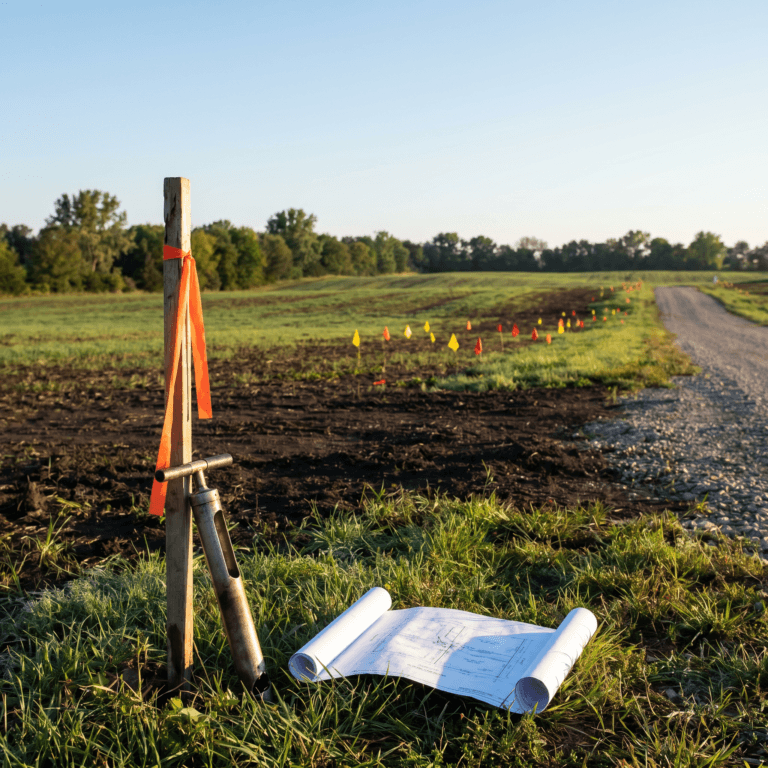
Building on Your Own Land in Iowa: What to Know Before You Start
Read MoreOwning a piece of land and picturing your custom home on it is one of the most exciting places to start a build. It also comes with a set of questions an in-development lot never raises: soil, utilities, access, and zoning. This guide walks through what to evaluate before you…Owning a piece of land and picturing your custom home on it is one of the most exciting places to start a build. It also comes with a set of questions an in-development lot never raises: soil, utilities, access, and zoning. This guide walks through what to evaluate before you break ground, what site work […]Owning a piece of land and picturing your custom home on it is one of the most exciting places to start a build. It also comes with a set of…
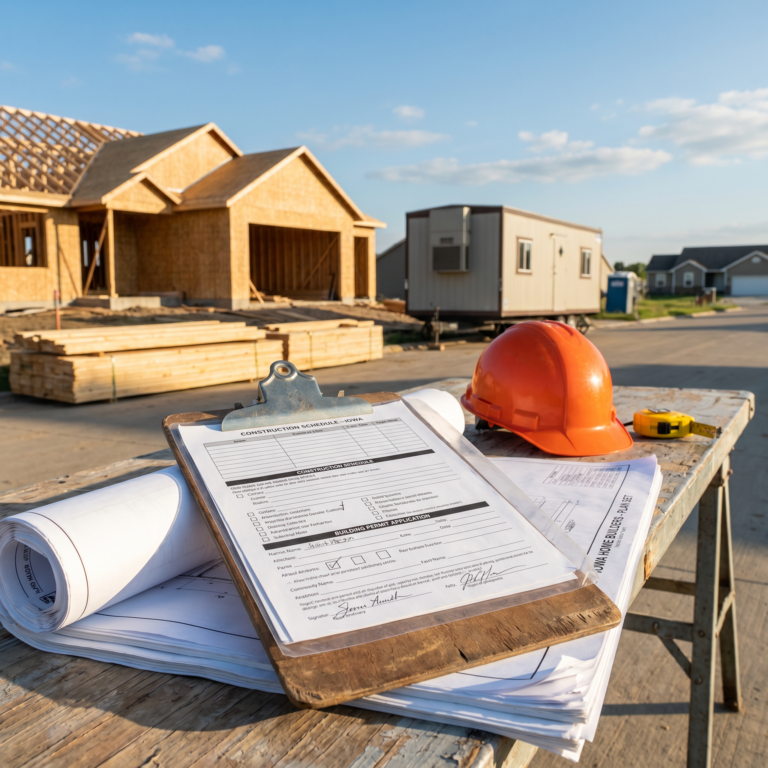
What Does a General Contractor Do in Iowa? A Homeowner’s Complete Guide
Read MoreHiring a general contractor is the single biggest decision in most home projects, yet many homeowners are not sure what a GC actually does or what Iowa requires of one. This guide explains exactly what a general contractor manages, what “registered with DIAL” means in Iowa, what you are paying…Hiring a general contractor is the single biggest decision in most home projects, yet many homeowners are not sure what a GC actually does or what Iowa requires of one. This guide explains exactly what a general contractor manages, what “registered with DIAL” means in Iowa, what you are paying for, and how to vet […]Hiring a general contractor is the single biggest decision in most home projects, yet many homeowners are not sure what a GC actually does or what Iowa requires of one.…
What Does a General Contractor Do in Iowa?
Read MoreA general contractor turns a project you can describe into a building you can live in. In Iowa, the role carries legal duties, registration requirements, and coordination work most homeowners never see. This guide explains what a GC actually does, what Iowa law requires, and how to tell a professional…A general contractor turns a project you can describe into a building you can live in. In Iowa, the role carries legal duties, registration requirements, and coordination work most homeowners never see. This guide explains what a GC actually does, what Iowa law requires, and how to tell a professional from a guy with a […]A general contractor turns a project you can describe into a building you can live in. In Iowa, the role carries legal duties, registration requirements, and coordination work most homeowners…