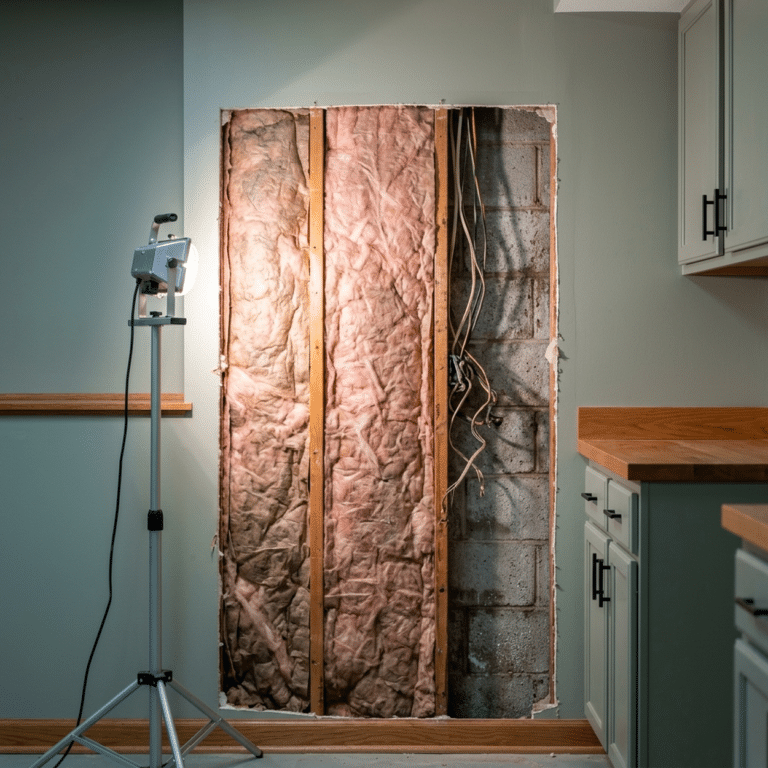
Iowa signed a radon law in May 2026 that will change how every new house in the state gets built. This guide explains what House File 2297 requires, when it actually kicks in, what a passive radon system is, and what it adds to the cost of a new home in Central Iowa.
TLDR: House File 2297 was signed May 19, 2026 and took effect July 1, 2026. It tells the State Building Code Commissioner to require a passive radon mitigation system in every new single-family and two-family home. The rule applies once the Commissioner adopts it into the state building code. Most good builders already install these systems. Plan on it for any home you start in 2027.
Why Iowa passed a radon law
If you are planning a new home build in Central Iowa, you have probably heard that Iowa has a radon problem. It does. Iowa’s average indoor radon level is about 8.5 picocuries per liter, against a national average of 1.3, according to Iowa HHS. About 5 in 7 Iowa homes test above the EPA action level of 4 pCi/L. All 99 counties sit in EPA Zone 1, the highest risk zone.
Radon is a naturally occurring gas that comes up from the soil. It has no smell and no color. Long-term exposure is the second leading cause of lung cancer after smoking. Central Iowa’s soils and deep basements make it a bigger issue here than in most of the country.
Busy Builders has completed more than 1,285 projects across Central Iowa since 2020, and basement radon comes up in almost every new home conversation. This post gives you the facts so you can plan with your eyes open.
What HF 2297 actually says
The law is short. It directs the State Building Code Commissioner to amend the state building code to require a passive radon mitigation system in new single-family and two-family homes. The full text is in 2026 Iowa Acts chapter 1124.
Three details matter for a homeowner planning a build:
- It was signed May 19, 2026 and became effective July 1, 2026.
- The code requirement applies to construction that starts after the Commissioner adopts the amendment. As of September 2026, that adoption date has not been published.
- It covers passive systems, not active fan-driven systems. You can add a fan later if a test shows high levels.
Pro Tip 1: Ask your city permit office whether the radon amendment has been adopted before you pull a permit. The answer decides whether the system is required or simply smart.
The table below shows how the timeline breaks down.
| Milestone | Date | What it means for you |
|---|---|---|
| Passed Iowa House | March 2026 | Bill was moving |
| Signed by Governor | May 19, 2026 | Law is final |
| Effective date | July 1, 2026 | Commissioner may begin rulemaking |
| Code adoption | Not yet published | Requirement becomes enforceable for new starts |
| Your 2027 build | Spring 2027 or later | Assume the system is required |
The safe move is to build as if the requirement already applies. The cost is small and the system cannot be added cheaply after the slab is poured.
What a passive radon system is
A passive system uses no fan. It relies on the natural draft of a vertical pipe to pull soil gas from under the basement slab and vent it above the roof. The EPA’s radon-resistant construction basics list five parts.
Pro Tip 2: A passive system is a foundation-stage item. The gravel layer and the pipe stub go in before the concrete. That is why this cannot wait until framing.
Here is what each part does and where it goes in the build sequence.
| Component | What it does | When it goes in |
|---|---|---|
| 4-inch gravel layer under the slab | Lets soil gas move freely | Before the slab pour |
| 6-mil plastic sheeting over the gravel | Blocks gas from entering the slab | Before the slab pour |
| Sealed cracks and slab penetrations | Closes the paths gas would take into the house | After the slab cures |
| 3 to 4 inch vertical vent pipe to above the roof | Carries gas out by natural draft | Framing stage |
| Electrical junction box in the attic | Ready for a fan if a test shows high levels | Rough electrical |
Most of these parts are cheap. The gravel and plastic are already part of a good slab. The pipe run is the only added labor.
Pro Tip 3: Have the pipe routed through an interior wall or a mechanical chase. A pipe run through an exterior wall in an Iowa winter can build frost inside and cut the draft.
What it costs in Central Iowa
A passive radon system on a new home typically runs about $500 to $1,500 in materials and labor when it is planned from the start. These are planning estimates and actual costs vary by scope, materials, site conditions and current pricing. Adding an active fan later runs roughly $300 to $600 more.
Compare that with a retrofit. A full mitigation system installed after the fact in an existing home usually runs about $1,200 to $2,500 in the Des Moines metro. The difference is the cost of coring the slab and finding a pipe route through a finished house.
Pro Tip 4: Budget the fan and the electrical box even if you never use them. A post-construction test above 4 pCi/L is common in Iowa, and a fan turns a passive system into an active one in an afternoon.
The table below compares the three paths.
| Approach | Typical cost range | Best for |
|---|---|---|
| Passive system during construction | About $500 to $1,500 | Every new home starting in 2027 |
| Passive system plus fan at build | About $800 to $2,100 | Lots with known high radon nearby |
| Retrofit after move-in | About $1,200 to $2,500 | Existing homes with a high test |
Planning the system into the build is the least expensive path by a wide margin.
How this changes a 2027 new home build
Your builder should show you the radon system on the foundation plan, not as a change order later. When Busy Builders builds a new home in Central Iowa, the slab prep, pipe route and attic box go on the plan set before the permit is pulled.
Pro Tip 5: Ask to see the pipe route on the drawings. If the builder cannot point to it, the system is not really planned.
Pro Tip 6: Test after you move in, even with a passive system. A short-term test kit costs about $15 to $30. Iowa HHS lists approved testers and kits.
Pro Tip 7: If you are finishing the basement right away, run the test before drywall. Fixing a slab crack behind a finished wall costs far more than fixing it while it is exposed.
Illustrative scenario: A family building a 2,400-square-foot ranch in Ankeny asks for the passive system on the plan. The builder adds a gravel layer, sheeting, a 3-inch pipe through a mechanical chase and an attic box. Added cost is about $900. The post-move-in test reads 2.1 pCi/L. No fan needed.
Illustrative scenario: A couple building on a rural lot near Huxley in Story County skips the attic box to save $150. The first winter test reads 6.8 pCi/L. Adding the fan now means fishing wire through a finished attic and costs about $700 instead of $400.
Illustrative scenario: A buyer in Grimes picks a spec home that started in late 2026, before the code adoption. No system was installed. Retrofit after a 9.2 pCi/L test runs about $1,900.
Radon and the rest of the basement
Radon is one of three below-grade issues Central Iowa homeowners run into. The other two are moisture and the 42-inch frost line that sets foundation depth. All three are cheaper to handle at the foundation stage.
Pro Tip 8: Ask for the slab-to-wall joint to be sealed at the same time the radon penetrations are sealed. Same crew, same day, one less path for gas and water.
Pro Tip 9: If you plan a basement bedroom, add the egress window now. The Iowa code requires a 5.7-square-foot net clear opening. Iowa Administrative Code 481-301.8 carries the state amendments.
Pro Tip 10: Have the radon pipe labeled at the attic and at the basement. Future owners and inspectors need to know what it is.
Busy Builders coordinates the licensed electricians and plumbers who touch these systems as part of the overall build.
Pro Tip 11: Keep the post-construction test result in your closing file. Lenders and future buyers ask for it more every year.
Pro Tip 12: A passive system with a low test is a selling point in Iowa. Put it in the listing.
The table below sums up the three foundation-stage items.
| Item | Why it matters in Iowa | Cost to add at build | Cost to add later |
|---|---|---|---|
| Passive radon system | 5 in 7 homes test high | About $500 to $1,500 | About $1,200 to $2,500 |
| Slab and joint sealing | Moisture and gas paths | Minimal | Requires access behind finishes |
| Egress window | Required for basement bedrooms | About $2,500 to $5,000 | About $4,000 to $8,000 |
Every item on this list is a fraction of its retrofit cost when it is on the foundation plan.
Frequently Asked Questions
Q1: Is a radon system required on new homes in Iowa right now? The law is signed and effective, but the code requirement applies once the State Building Code Commissioner adopts the amendment. As of September 2026 no adoption date has been published. Ask your city permit office for the current status. Build as if it is required either way.
Q2: Does HF 2297 apply to additions or basement finishes? No. The law covers new single-family and two-family homes. An addition or a basement finish on an existing home is not covered. Testing before you finish a basement is still a smart step.
Q3: What is the difference between a passive and an active radon system? A passive system uses a vent pipe and natural draft. An active system adds an in-line fan that pulls gas continuously. Passive systems are built to accept a fan later. Most Iowa homes with a high test end up adding the fan.
Q4: How much does a passive radon system add to a new home? About $500 to $1,500 when planned from the start. These are planning estimates and actual costs vary. Retrofit costs are usually two to three times higher.
Q5: Should I still test if my new home has a passive system? Yes. A passive system lowers levels but does not guarantee a reading below 4 pCi/L. Test in the first heating season and again after any basement finishing. Keep the result with your closing documents.
Q6: Who installs the radon system on a Busy Builders home? The foundation crew places the gravel, sheeting and pipe stub. The pipe run and attic box are coordinated with the framing and licensed electrical subcontractors. Call: 844-435-9800 to talk through your plan.
Key Takeaways
The law
- HF 2297 signed May 19, 2026, effective July 1, 2026.
- Requirement applies once the Commissioner adopts it into the state code.
The system
- Gravel, sheeting, sealing, vent pipe, attic box.
- Passive now, fan later if needed.
The money
- About $500 to $1,500 at build.
- Two to three times more as a retrofit.
The next step
- Put the system on the foundation plan before the permit.
- Test after move-in and keep the result.
Plan Your 2027 Build With the Radon System Already Drawn In
Busy Builders is a registered Iowa contractor building custom homes across Central Iowa since 2020. We will put the radon system, the egress windows and the frost-depth foundation on the plan set before you pull a permit. Free consultation. Written warranty on workmanship (details provided in your contract).
Call: 844-435-9800
Disclaimer: This article is for general information and is not project-specific advice. Cost figures are planning estimates that vary by scope, materials, site conditions and current pricing. Permit requirements vary by city and jurisdiction; verify current requirements, including the status of the HF 2297 radon amendment, with your local building authority before starting any project. Radon levels vary by home; test before and after construction, and attribute statistics to Iowa HHS. No specific outcomes are guaranteed. Consult a registered contractor for guidance specific to your project; electrical work is performed by licensed subcontractors.
Busy Builders | Full-Service Construction and Remodeling | Serving Central Iowa Since 2020