Nevada sits just east of Ames in Story County, with a housing stock that runs older than the newer metro suburbs. That age shapes what a bathroom remodel costs here. This guide covers 2026 pricing by project tier, how Nevada handles permits, what older Story County homes tend to hide behind the walls, and how to build a budget that survives demolition.
TLDR: Most Nevada bathroom remodels run $11,000 to $34,000, with older homes carrying more risk of surprises behind the walls than newer builds. Nevada handles permits through its Planning and Zoning Department at 515-382-5466, located at City Hall, 1209 6th Street. Keeping the existing layout is the single biggest cost saver available.
Why Older Homes Change the Math
A bathroom remodel in a 2015 house and a bathroom remodel in a 1955 house are different projects even when they look identical on paper.
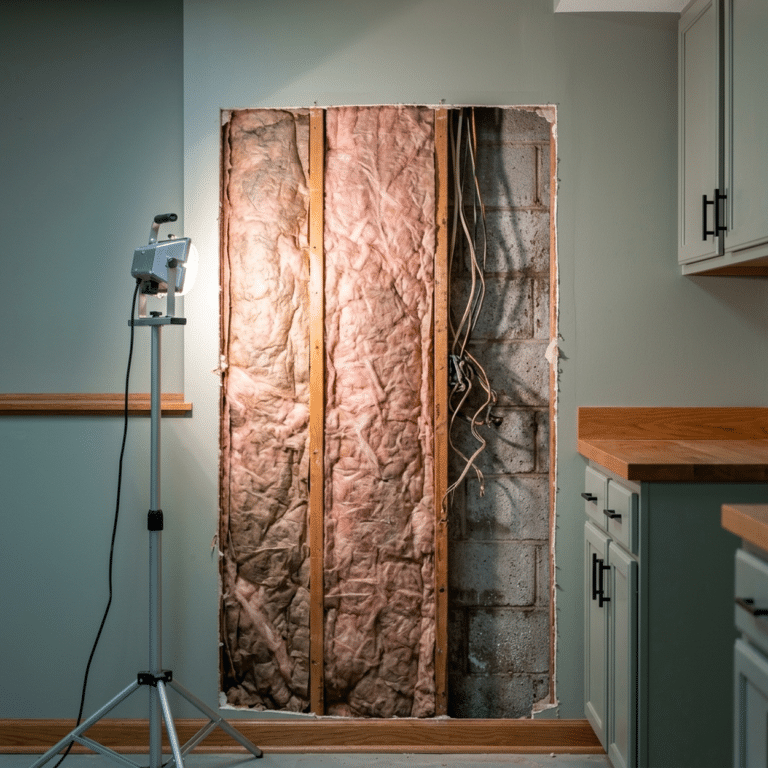
Newer homes generally have PEX or copper supply lines, PVC drains, grounded circuits, and framing that is reasonably square. Older homes may have galvanized supply lines that are corroding from the inside, cast iron drains, ungrounded circuits, and framing that has settled.
None of that makes an older home a bad remodel candidate. Plenty of Nevada’s older houses are better built than newer ones. It means the demolition phase reveals more, and your budget needs room for what it reveals.
Pro Tip 1: Find out what your supply lines are made of before you get quotes. A magnet sticks to galvanized steel and does not stick to copper. Thirty seconds of testing changes how you read every bid.
Bathroom Remodel Cost in Nevada by Tier
A refresh runs $5,500 to $11,000 and a standard full remodel $11,000 to $21,000. Upgraded baths cost $21,000 to $34,000, and a primary suite runs $30,000 to $52,000 or more.
| Project tier | Typical range | What it includes | Timeline |
|---|---|---|---|
| Refresh | $5,500 to $11,000 | Vanity, toilet, fixtures, paint, flooring. Layout unchanged. | 1 to 2 weeks |
| Standard full remodel | $11,000 to $21,000 | Full gut, new tub or shower, tile, vanity. Layout unchanged. | 3 to 4 weeks |
| Upgraded bath | $21,000 to $34,000 | Tile shower, custom vanity, better fixtures, minor layout change. | 4 to 6 weeks |
| Primary suite | $30,000 to $52,000+ | Large tile shower, double vanity, layout change, possible expansion. | 6 to 10 weeks |
Ranges here run slightly below the newer western suburbs, which reflects local labor and material pricing rather than lower quality. What Nevada homeowners give back is a higher likelihood of hidden-condition work in older houses.
Pro Tip 2: Ask each bidder what they assumed about your plumbing and wiring. Two bids that differ by $6,000 usually differ in assumptions, not in profit margin.
Layout Changes Are Still the Big Lever
Moving a toilet, tub, or vanity means moving drains, and drains need slope. In a home over a basement, that means opening the ceiling below. In a slab home, it can mean cutting concrete.
That decision moves a budget more than any tile or fixture choice you will make.
Pro Tip 3: Get every bathroom priced two ways, same layout and new layout. Seeing both numbers is the fastest way to know whether the change is worth it to you.
Nevada Permits and Process
Nevada handles building permits and inspections through its Planning and Zoning Department. The department can be reached at 515-382-5466, and City Hall is located at 1209 6th Street in Nevada.
Bathroom remodels involving plumbing, electrical, or structural changes require a permit. Purely cosmetic work such as paint, a mirror swap, or a like-for-like vanity replacement generally does not, though confirming your specific scope with the city before starting is always the right move.
Iowa’s statewide residential floor moved to the 2024 International Residential Code effective September 10, 2025 under Iowa Administrative Code 481, chapter 301. Cities adopt building and fire code editions on their own schedules, so confirm current local adoption with Planning and Zoning rather than assuming the state edition applies to every aspect of your project.
Iowa also requires contractors earning $2,000 or more annually to register with the Department of Inspections, Appeals, and Licensing. That is registration, not licensing. Electricians, plumbers, and HVAC technicians hold separate state licenses. Busy Builders is a registered Iowa contractor, Registration #C140184.
Pro Tip 4: Call Planning and Zoning with your scope before you sign anything. A five-minute conversation tells you whether you need a permit and what they want to see.
Pro Tip 5: Verify contractor registration through the state yourself. It takes two minutes and it is the cheapest due diligence available.
What Drives Nevada Bathroom Costs
Hidden conditions in older homes add the most cost. Replacing galvanized supply lines adds $1,200 to $4,000, and converting a tub to a tile shower adds $3,000 to $7,000.
| Cost driver | Typical added cost | Likelihood in older Nevada homes |
|---|---|---|
| Replacing galvanized supply lines | $1,200 to $4,000 | Moderate to high in pre-1970 homes |
| Moving toilet or shower drain | $2,500 to $6,000 | Only if layout changes |
| Cast iron drain replacement | $1,500 to $5,000 | Occasional |
| Adding a grounded circuit and GFCI | $500 to $1,500 | Common in older homes |
| Subfloor repair from past leaks | $600 to $3,500 | Common around tubs and toilets |
| Out-of-square framing correction | $400 to $2,000 | Common in settled older homes |
| Converting tub to tile shower | $3,000 to $7,000 | Frequently requested |
The rows that separate an older Nevada home from a newer one are the first, third, fourth, and sixth. None are catastrophic individually. Two or three together is what turns a $16,000 project into a $23,000 project.
Pro Tip 6: Budget a 12% contingency on any bathroom in a home built before 1980. Ten percent is fine for newer construction.
Pro Tip 7: If your home was built before 1978, ask how the contractor handles lead-safe work practices. Federal RRP rules may apply to disturbing painted surfaces.
Illustrative Scenarios
Illustrative scenario: A Nevada family updated a 1990s hall bath. Copper supply lines, grounded circuits, layout unchanged. New tub with tile surround, vanity, flooring, and lighting. The project came in near $15,500 across three weeks with no surprises.
Illustrative scenario: A Story County couple remodeled a 1962 bathroom. Demolition revealed galvanized supply lines and subfloor damage around the toilet flange. Replacing the supply lines and repairing the subfloor added roughly $4,200 to a planned $18,000 project, finishing near $22,200 over five weeks.
Illustrative scenario: A Nevada homeowner converted a cramped tub-shower combo into a curbless tile shower with a bench, kept the toilet and vanity in place, and added a heated floor. The project landed around $27,500 across five and a half weeks.
Pro Tip 8: If you want a curbless shower, decide before demolition. Recessing the shower pan requires framing changes that are far cheaper to plan than to retrofit.
Timeline
Most Nevada bathrooms take three to four weeks of construction once permits clear. Design and selections take one to three weeks before that, and permit review adds one to two weeks.
| Phase | Duration | Notes |
|---|---|---|
| Design and selections | 1 to 3 weeks | Order early, this protects everything downstream |
| Permit review | 1 to 2 weeks | Confirm timing with Planning and Zoning |
| Demolition | 1 to 3 days | Fast, and where surprises appear |
| Rough plumbing and electrical | 3 to 6 days | Licensed trades, inspection follows |
| Inspection | 1 to 3 days | Scheduled around city availability |
| Tile and surfaces | 5 to 10 days | Waterproofing and grout cure time |
| Finish and punch list | 4 to 7 days | Vanity, fixtures, trim, paint |
Most Nevada bathrooms finish in three to four weeks of construction once permits clear. The things that stretch a schedule are material backorders and inspection scheduling, not the crew.
Pro Tip 9: Order tile and the vanity before demolition begins. A three-week backorder found mid-project idles the whole job.
Pro Tip 10: In a one-bathroom home, plan where you will shower before demolition day. It matters more than homeowners expect.
Comparing Quotes Honestly
A quote you can compare lists what gets demoed, what gets installed, which fixtures by model, who supplies what, and what the tile allowance covers. A single number with a paragraph underneath is not a quote.
Pro Tip 11: Get every bid on the same written scope. If one includes a tile shower and another a fiberglass insert, you are comparing different projects, not different prices.
Pro Tip 12: Ask what happens if galvanized pipe or subfloor damage is found. The answer should be a documented process and a rate, not a shrug.
Our bathroom remodeling service page explains how we scope these projects. For what we do here specifically, see bathroom remodeling in Nevada. For the wider regional picture, our Central Iowa bathroom cost guide covers metro-wide ranges.
For primary sources, Iowa’s residential building requirements are published as Iowa Administrative Code 481-301. Water-efficient fixture options are listed through the EPA WaterSense program. Contractor registration is administered by the Department of Inspections, Appeals, and Licensing.
Frequently Asked Questions
How much does a bathroom remodel cost in Nevada, Iowa? Most run $11,000 to $34,000. A cosmetic refresh can come in under $11,000, while a primary suite with a large tile shower and layout changes can exceed $50,000. Older homes carry more risk of hidden-condition costs, so budget a 12% contingency on anything built before 1980.
Do I need a permit for a bathroom remodel in Nevada? Yes, if the work involves plumbing, electrical, or structural changes. Nevada handles permits through its Planning and Zoning Department at 515-382-5466, with City Hall at 1209 6th Street. Purely cosmetic work generally does not require one, but confirm your specific scope with the city first.
What should I expect in an older Nevada home? Galvanized supply lines, cast iron drains, ungrounded circuits, subfloor damage from past leaks, and out-of-square framing are all common in pre-1980 homes. None are dealbreakers. They are reasons to carry a larger contingency and to hire someone who has worked on homes of that era.
How long does a bathroom remodel take? Three to four weeks of construction for a standard full remodel, six to ten weeks for a primary suite. Add one to three weeks ahead of that for design, selections, and permit review. Material lead times and inspection scheduling cause more delay than construction does.
What is the difference between a registered contractor and a licensed tradesperson in Iowa? Iowa requires general contractors earning $2,000 or more per year to register with the Department of Inspections, Appeals, and Licensing. That is registration, confirming insurance and tax compliance. Electricians, plumbers, and HVAC technicians hold separate state licenses involving testing. A quality remodel uses a registered general contractor coordinating licensed trades.
Is it worth moving the plumbing? Only if the current layout genuinely does not work. Moving a drain typically adds $2,500 to $6,000. If the layout is merely dated, that same money spent on a better shower, better lighting, and better storage usually delivers more daily satisfaction. Price it both ways before deciding.
Key Takeaways
Cost
- Most Nevada bathrooms run $11,000 to $34,000
- Keeping the layout is the single biggest saver
- Carry 12% contingency in homes built before 1980
Older home realities
- Galvanized supply lines are common in pre-1970 homes
- Subfloor damage around tubs and toilets is frequent
- Ungrounded circuits often need GFCI upgrades
Nevada process
- Planning and Zoning at 515-382-5466
- City Hall at 1209 6th Street
- Confirm local code adoption rather than assuming the state edition
Before you sign
- Test whether a magnet sticks to your supply lines
- Get every bid on the same written scope
- Ask what happens if hidden damage is found
Ready to Price Your Nevada Bathroom?
We have completed 1,285+ projects across Central Iowa since 2020, including plenty of older homes where what is behind the wall matters. We will walk your bathroom, tell you what we expect to find, and give you a scope you can compare.
Free consultation, no pressure, no obligation.
Call: 844-435-9800
Written warranty on workmanship (details provided in your contract).
Disclaimer: This article is for general information and is not project-specific advice. Cost figures are planning estimates that vary by scope, materials, site conditions, and current pricing. Permit requirements and adopted code editions vary by city and change over time; the Nevada details cited here were verified in July 2026 and should be reconfirmed with the city before you rely on them. Structural changes require evaluation by a qualified professional. Homes built before 1978 may contain lead paint, and federal RRP rules may apply to work disturbing painted surfaces. No specific outcomes are guaranteed. Consult a registered contractor for guidance specific to your project, and note that plumbing and electrical work is performed by licensed trade professionals.
Busy Builders | Full-Service Construction and Remodeling | Serving Central Iowa Since 2020