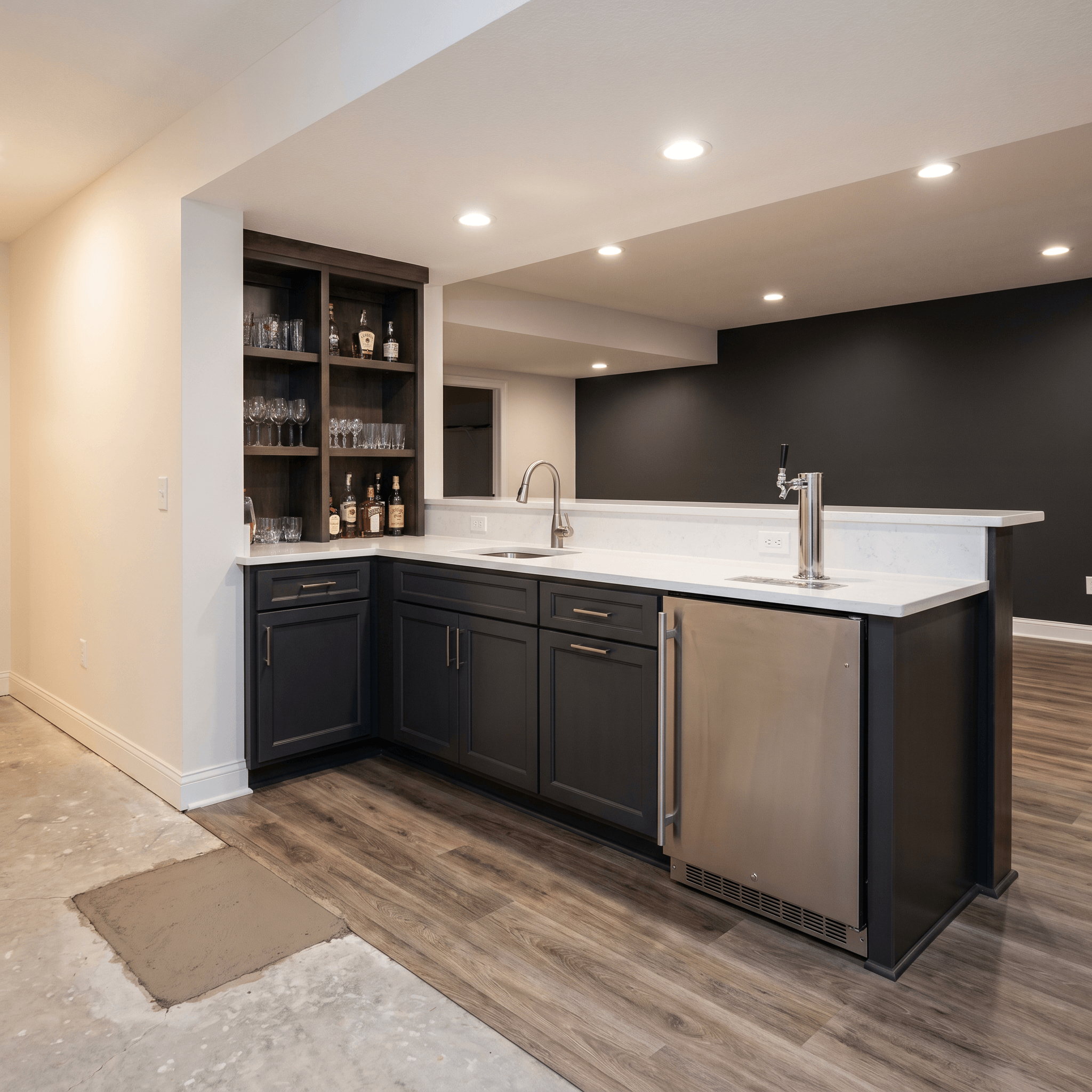
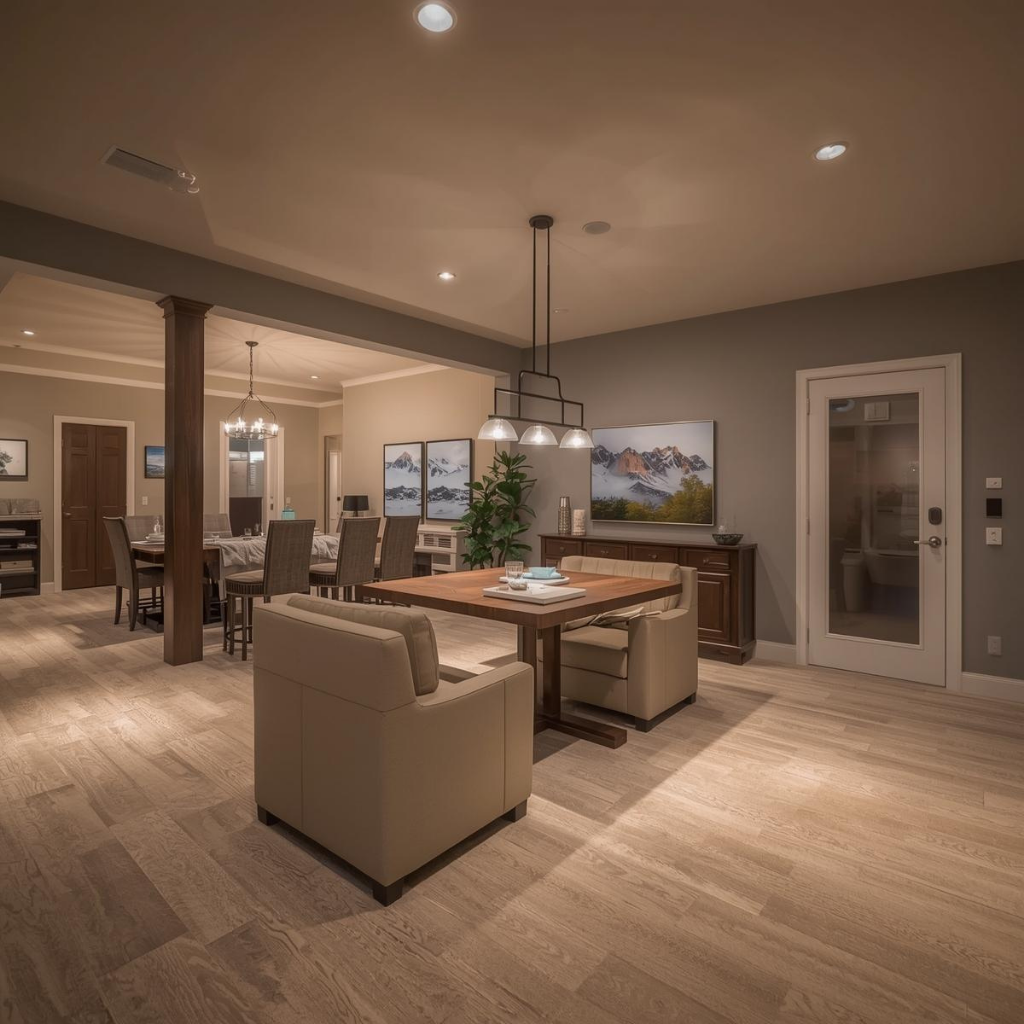
Your basement layout holds serious potential. But before you start planning that guest bedroom or home theater, you need to understand what Iowa building codes actually allow. Egress windows and ceiling height requirements determine which rooms you can legally create, how banks will appraise your finished space, and whether your family will be safe in an emergency. This guide explains exactly what you can and cannot do with your basement based on these two critical factors.
TLDR: Iowa code requires a 7-foot ceiling minimum for habitable basement spaces and 5.0 square feet of egress window for any bedroom. These requirements directly shape what layouts work for your space. Understanding them before you design helps you avoid costly mistakes and ensures your finished basement adds real value to your home.
You have probably looked at your unfinished basement and imagined the possibilities. A guest suite for visitors. A home gym. A place for the kids to play without taking over the living room. But here is the challenge most Central Iowa homeowners face: they do not know where the line is between what they want and what they can legally build.
Building codes exist for good reasons. Egress windows save lives during fires and emergencies. Ceiling height requirements ensure spaces are actually comfortable and functional. And these requirements have real consequences for your home’s value when it comes time to sell.
In this guide, we will walk through Iowa’s specific basement requirements, show you which layouts work at different ceiling heights, and help you understand how appraisers view basement bedrooms. By the end, you will know exactly what is possible for your basement.
What Iowa Code Requires for Basement Ceiling Height
Ceiling height determines whether your basement space can be considered “habitable” under Iowa’s building code, which follows the 2015 International Residential Code (IRC) with state amendments.
Habitable Space Requirements
For bedrooms, family rooms, living rooms, and dens, Iowa requires a minimum ceiling height of 7 feet (84 inches). This measurement is taken to the lowest obstruction point, meaning any beam, duct, or pipe that hangs down affects your usable height.
Non-habitable spaces like bathrooms, laundry rooms, and hallways only need 6 feet 8 inches (80 inches) of ceiling clearance. This gives you more flexibility when planning utility areas.
The Beam and Duct Exception
Here is where many homeowners get confused. Iowa code allows beams, girders, and ducts to project down to a minimum of 6 feet 4 inches (76 inches), but this is an exception, not the standard. Most of your ceiling must still meet the 7-foot requirement for habitable rooms.
The following table shows what different ceiling heights allow in your basement finishing project:
| Ceiling Height | Habitable Rooms Allowed | Non-Habitable Rooms | Appraisal Impact |
|---|---|---|---|
| 7 feet or more | Yes, all types | Yes | Full finished value |
| 6 feet 8 inches to 7 feet | No bedrooms or living areas | Bathrooms, laundry, storage | Reduced value credit |
| Below 6 feet 8 inches | No | Storage only | Minimal or no value |
Tip: Before planning your layout, measure your basement ceiling at its lowest point. Account for any ductwork, beams, or pipes that might reduce clearance after finishing.
Iowa Egress Window Requirements for Basement Bedrooms
If you want to call any basement room a “bedroom,” you need proper egress. This is not optional, and it is about more than just code compliance. Egress windows provide emergency escape routes that could save your family’s lives.
Minimum Egress Dimensions
Iowa follows IRC standards requiring basement egress windows to have:
- Net clear opening area: 5.0 square feet minimum for below-grade spaces
- Minimum width: 20 inches
- Minimum height: 24 inches
- Maximum sill height: 44 inches above the floor
Here is the critical detail most people miss: using both the minimum width (20 inches) and minimum height (24 inches) gives you only 3.33 square feet of opening, which does NOT meet the 5.0 square foot requirement. Your window must be larger in at least one dimension.
Window Well Requirements
When your egress window sill sits below ground level, you need a properly sized window well:
- Minimum horizontal area: 9 square feet
- Minimum projection from wall: 36 inches
- Minimum width: 36 inches
- Ladder required: If well depth exceeds 44 inches
The ladder must have rungs at least 12 inches wide, projecting 3 inches from the wall, spaced no more than 18 inches apart. Any grate covering the well must be removable without special tools.
Pro tip: Adding an egress window typically costs $2,500 to $5,000 in Des Moines area homes, depending on foundation type, window well depth, and site conditions. Get multiple quotes from registered contractors. This investment is the difference between a “bonus room” and a legal bedroom that adds real value.
Best Basement Layout Options by Square Footage
Your basement’s size and ceiling height determine which layouts make the most sense. Here is what works at different sizes:
Small Basements (500 to 800 Square Feet)
With limited space, avoid over-dividing. Open concept layouts work best for smaller basements because they maximize natural light flow and prevent cramped, dark rooms.
Best options include:
- Single open family room or recreation area
- Family room with dedicated laundry corner
- Family room plus three-quarter bathroom
If you have 7-foot ceilings and want a bedroom, you will need to dedicate significant space to the room itself (minimum 70 square feet with 7-foot minimum dimension) plus the egress window installation.
Medium Basements (800 to 1,200 Square Feet)
Medium-sized basements give you room for zoned spaces without sacrificing openness. Consider layouts like:
- Open concept with defined activity zones using furniture placement
- Bedroom plus bathroom plus entertainment area
- Home gym plus recreation room with flexible partition
| Layout Type | Egress Windows Needed | Best For | Considerations |
|---|---|---|---|
| Open concept | 1 (code minimum) | Entertainment, family gathering | Better light flow, easier HVAC |
| Bedroom suite | 2 (bedroom plus emergency) | Guest accommodations | Adds appraisal value |
| Split layout | 1 to 2 | Dual-purpose use | Soundproofing may be needed |
Large Basements (1,200+ Square Feet)
Larger spaces allow for multiple defined zones or even separate rooms. Popular layouts include:
- Complete guest suite with bedroom, full bath, and sitting area
- Multi-zone entertainment with game area, home theater, and wet bar
- In-law suite with kitchenette and separate living space
Important: Even with a walk-out basement, any space partially below grade is still considered below-grade for appraisal purposes. Plan accordingly when budgeting for your return on investment.
What Banks Actually Count: Fannie Mae Appraisal Rules
Understanding how appraisers view finished basements helps you make smarter layout decisions. Fannie Mae guidelines, which most lenders follow, have specific rules about below-grade spaces.
Key Appraisal Facts
Basement bedrooms and bathrooms are NOT counted in your home’s main room count. They are reported separately on the “Basement & Finished Rooms Below-Grade” line. Even walk-out basements must report below-grade portions separately.
Basement square footage typically receives 50 to 75 percent credit compared to above-grade living space. This means a 500-square-foot finished basement might add the equivalent value of 250 to 375 square feet of above-grade space.
The following table shows what qualifies as a bedroom for both code and appraisal purposes:
| Requirement | Code Compliant | Appraisal Value |
|---|---|---|
| Egress window (5.0 sq ft) | Required | Essential for bedroom credit |
| 7-foot ceiling | Required for habitable | Required for finished value |
| 70 sq ft minimum, 7-foot dimension | Required | Required |
| Closet | Not required by Iowa code | Often expected by buyers |
| Heating/cooling | Required | Required |
| Smoke detector (hardwired) | Required | Required |
Tip: While Iowa building code does not require a closet for a legal bedroom, adding one improves resale appeal and buyer expectations. Many Central Iowa counties, including Polk and Dallas, reference closets in their bedroom definitions for real estate listings.
Common Basement Layout Mistakes to Avoid
Working with Central Iowa homeowners on basement remodeling projects, we see certain mistakes repeatedly:
- Calling a room a “bedroom” without proper egress violates Iowa building code, creates serious safety hazards in emergencies, and can result in liability issues at resale or rental
- Finishing space with less than 7-foot ceilings expecting habitable credit wastes money on improvements that will not add proportional value
- Ignoring beam and duct obstructions when planning layout leads to awkward room configurations
- Over-dividing small basements creates cramped, dark spaces that nobody wants to use
- Placing furniture in front of egress windows is a code violation and dangerous
- Assuming walk-out basement bedrooms count as above-grade leads to disappointment at appraisal time
Central Iowa Considerations
Iowa presents unique challenges for basement finishing. With as many as 5 in 7 Iowa homes testing above the EPA’s radon action level, any basement space in Ankeny or surrounding areas should include radon mitigation planning.
Our clay-heavy soils in the Des Moines metro require careful attention to moisture management. Water intrusion ruins finished basements, so proper waterproofing should be addressed before any layout planning begins.
Building permits are required for basement finishing throughout Central Iowa. Your local building department will verify egress compliance, ceiling heights, and electrical work. Budget for permit fees and inspection time in your project timeline.
FAQs
Q: How much ceiling height do I need for a basement bedroom in Iowa?
A: Iowa requires a minimum of 7 feet (84 inches) ceiling height for any habitable space, including bedrooms. Beams and ducts can drop to 6 feet 4 inches in spots, but most of the room must meet the 7-foot standard. Measure at your lowest point before planning.
Q: Do I need an egress window for every basement room?
A: No. Egress windows are specifically required for bedrooms and as emergency exits. Every basement needs at least one means of emergency escape. Rooms like home theaters, gyms, and family rooms do not individually require egress windows, but the basement must have an escape route.
Q: Does a basement bedroom need a closet in Iowa?
A: Iowa building code does not require a closet for a legal bedroom. However, many buyers expect closets in bedrooms, and some counties reference closets in real estate listing requirements. Adding a closet improves resale appeal even though it is not legally required.
Q: Will my finished basement count toward my home’s square footage?
A: Finished basements are reported separately from above-grade living space in appraisals. Banks typically value basement square footage at 50 to 75 percent of above-grade value. This applies even to walk-out basements where part of the space is below grade.
Q: What is the minimum egress window size for a basement bedroom?
A: Iowa requires a minimum of 5.0 square feet of net clear opening, at least 20 inches wide and 24 inches high, with the sill no more than 44 inches above the floor. The window well must be at least 9 square feet with 36 inches of projection from the wall.
Q: Can I finish my basement if the ceiling is only 6 feet 10 inches?
A: You cannot create bedrooms or living rooms with less than 7-foot ceilings. However, you can finish the space for bathrooms, laundry, storage, or utility purposes with 6 feet 8 inches clearance. Consider whether dropping the floor is feasible to gain height.
Key Takeaways
Ceiling Height Rules
- 7 feet minimum for bedrooms, living rooms, family rooms
- 6 feet 8 inches minimum for bathrooms, laundry, hallways
- Beams and ducts can drop to 6 feet 4 inches as an exception
Egress Requirements
- 5.0 square feet minimum opening for basement bedrooms
- 20 inches minimum width, 24 inches minimum height
- 44-inch maximum sill height from floor
- Window wells need 9 square feet with ladder if deep
Layout Decisions
- Small basements work best as open concept
- Always verify ceiling height before designing rooms
- Consider future resale when planning bedrooms
Appraisal Reality
- Basement bedrooms do not count in main room total
- Below-grade space valued at 50 to 75 percent of above-grade
- Walk-out basements still considered below-grade
Important Disclaimer: Building codes are subject to local amendments and interpretation. The information in this guide is for educational purposes and should not replace professional advice. Always consult with a registered contractor, architect, or your local building department before making design decisions. Code requirements may vary by municipality within Iowa.
Ready to Plan Your Basement Layout?
Now you understand what Iowa code allows and how to maximize your basement’s potential. The next step is working with professionals who know Central Iowa building requirements and can help you design a layout that meets code, adds value, and gives your family the space you need.
Busy Builders has helped over 1,000 Central Iowa homeowners transform their basements since 2020. We understand local permit requirements, egress installation, and how to work with the ceiling heights Iowa homes typically have.
Here is what we offer:
- Free consultation to assess your basement’s potential
- Code-compliant design recommendations
- Egress window installation when needed
- Complete basement finishing from start to finish
- Transparent pricing with no surprises
Ready to discuss your basement project? Contact us today:
Call: 844-435-9800
Website: https://busybuildersiowa.com/
We serve Des Moines, West Des Moines, Ames, Waukee, and all Central Iowa communities. Let us help you create a basement layout that works for your home and your family.
Busy Builders | Full-Service Construction and Remodeling | Serving Central Iowa Since 2020