Adding a bathroom to your basement sounds simple enough. A toilet, a sink, maybe a shower. How expensive can it really be? If you’ve started getting quotes and found yourself staring at numbers in the $30,000 range, you’re not alone. This guide explains exactly why basement bathrooms cost what they do in Central Iowa, and how to plan your budget realistically.
TLDR: Basement bathrooms in Central Iowa typically cost $12,000 to $50,000+, depending on complexity. The biggest cost driver is whether you have existing plumbing rough-ins. Without rough-ins, expect to add $8,000 to $15,000 for slab trenching and new drain lines. Plumbing alone often runs $2,000 to $10,000+, and labor makes up 50 to 60 percent of total project cost. Read on to understand every factor that affects your final price.
You’ve probably been researching basement bathroom costs online and found wildly different numbers. One article says $8,000. Another says $40,000. Both could be accurate for very different situations. The challenge with basement bathrooms is that they’re fundamentally different from adding a bathroom on your main floor. Below-grade plumbing, code requirements, moisture considerations, and Iowa’s unique radon concerns all factor into the final price.
This guide gives you the honest breakdown Central Iowa homeowners need. We’ll walk through typical cost ranges, explain why rough-ins matter so much, detail where every dollar goes, and share real-world scenarios that show why one bathroom costs $15,000 while another hits $45,000. By the end, you’ll understand exactly what drives basement bathroom costs and how to make smart decisions for your project.
Why Basement Bathrooms Cost More Than You Expect
Let’s address the elephant in the room. Most homeowners dramatically underestimate basement bathroom costs because they think only about the fixtures they can see: toilet, vanity, shower. What they don’t see is everything that happens behind the walls and under the floor.
Basement bathrooms are fundamentally different from main-floor bathrooms for several critical reasons.
Below-Grade Plumbing Challenges
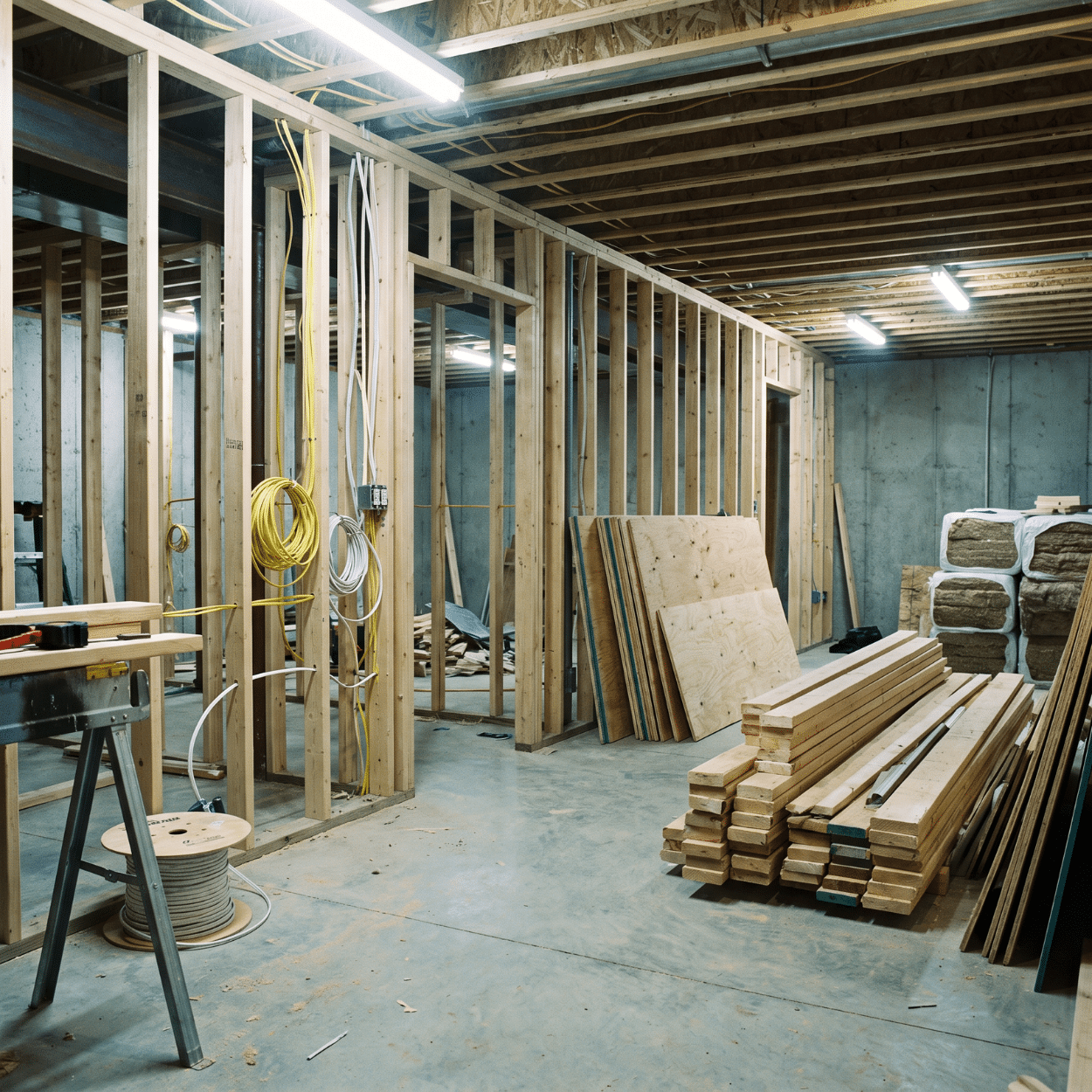
Your basement floor is a concrete slab, often 4 to 6 inches thick, sitting on compacted soil. To install drain lines for a toilet or shower, contractors must cut through that concrete, excavate below it, install new pipes, backfill properly, and repour the concrete. This isn’t a weekend project. It’s major construction that requires specialized equipment and expertise.
Venting and Code Requirements
Every drain in your home needs proper venting to prevent sewer gases from entering your living space. In basements, connecting to existing vent stacks can be complicated depending on where your bathroom is located relative to the main plumbing stack. Iowa building codes are specific about proper venting, and shortcuts here lead to chronic odor problems.
Moisture and Waterproofing Considerations
Basements in Central Iowa deal with moisture issues that the main floors don’t face. Clay soils hold water near foundations, and Iowa has the highest radon levels in the nation, with as many as 5 in 7 Iowa homes above the EPA action level. The Department of Energy emphasizes that controlling moisture is essential for creating energy-efficient and comfortable basement living spaces. Adding a bathroom means addressing moisture intrusion and potentially radon mitigation to ensure the space is safe and healthy.
Ejector Pump Requirements
Many basements sit below the main sewer line, which means wastewater can’t flow out by gravity alone. This requires a sewage ejector pump system, adding both equipment cost and ongoing maintenance considerations.
When contractors quote $20,000 to $35,000 for a basement bathroom, they’re not overcharging. They’re accounting for all these hidden complexities that most homeowners don’t initially consider.
Typical Cost Ranges in Central Iowa for 2026
Before diving into details, let’s establish realistic ranges for what basement finishing projects with bathrooms typically cost in the Des Moines metro and surrounding areas.
| Tier | Typical Cost Range | What’s Included | When It’s Realistic |
|---|---|---|---|
| Basic | $12,000 to $20,000 | Existing rough-in nearby, simple layout, basic fixtures, fiberglass shower surround | Close to main stack, minimal slab work needed |
| Mid-Range | $20,000 to $30,000+ | Some layout flexibility, tile surround, nicer fixtures, more storage | Some plumbing adjustments but not worst-case |
| High-End/Complex | $30,000 to $50,000+ | No rough-in, bathroom far from stack, ejector pump, custom tile, premium fixtures | Significant trenching required, luxury finishes |
These ranges align with what contractors across Central Iowa report for 2026 projects. They’re also consistent with national data, though Central Iowa tends to run slightly more affordable than coastal markets.
How Central Iowa Compares Nationally
National guides often cite basement bathroom costs starting around $8,000 to $15,000 for basic projects. These numbers assume favorable conditions that many Iowa basements don’t have. When you factor in Central Iowa’s clay soils, frost line requirements of 42 inches, and high radon prevalence, projects often land in the higher ranges.
The good news? Labor rates in Central Iowa remain more competitive than many metro areas. Skilled tradespeople in Des Moines, West Des Moines, and surrounding communities charge reasonable rates compared to national averages, helping offset some complexity costs.
Rough-In vs No Rough-In: The Cost Difference Explained
The single biggest factor affecting your basement bathroom cost is whether your home has existing plumbing rough-ins.
What Is a Rough-In?
A plumbing rough-in means the builder installed drain lines, vent stubs, and water supply connections during original construction, even though the bathroom wasn’t finished. These rough-ins are typically located near the main plumbing stack and include capped pipes ready for future connection.
If your basement has a circular PVC cap sticking up from the floor near your water heater or utility area, you likely have a rough-in. This simple feature can save you thousands of dollars.
Benefits of Having Rough-Ins
Having existing rough-ins means:
- Less slab cutting because drain lines are already in place
- Shorter pipe runs since the location is optimized for plumbing
- Fewer surprises during excavation
- Significantly lower labor time for plumbers
Cost Impact: With vs Without Rough-In
| Factor | With Rough-In | Without Rough-In | Cost Impact |
|---|---|---|---|
| Slab Cutting | Minimal or none | Extensive trenching | +$2,000 to $5,000 |
| Plumbing Labor | Connection work only | Full drain line installation | +$3,000 to $7,000 |
| Ejector Pump | May not be needed | Often required | +$1,500 to $3,500 |
| Project Timeline | 2 to 4 weeks | 4 to 8 weeks | Longer disruption |
| Risk of Issues | Lower | Higher potential for complications | Variable |
The difference isn’t subtle. Eastern Iowa contractors report that even with rough-in plumbing already in place, a full basement bathroom typically starts at $30,000 and goes up from there. Without existing plumbing access, projects commonly hit $50,000+ when trenching and pumps are involved.
Tip: Before assuming you need the most expensive option, have a contractor inspect your basement. Even if you don’t have a formal rough-in, being close to the main stack can significantly reduce costs compared to locating the bathroom across the basement.
Where the Money Goes: Line-Item Breakdown
Understanding where every dollar goes helps you make informed decisions about where to invest and where to save.
Plumbing: The Largest Single Cost Driver
Plumbing typically accounts for $2,000 to $10,000+ of a basement bathroom budget, making it the single largest variable. According to the Bureau of Labor Statistics, the median wage for plumbers is approximately $63,000 annually, which translates to about $30 per hour. With labor comprising 50 to 60 percent of bathroom project costs, plumber time adds up quickly. This includes:
- Running new supply lines for hot and cold water
- Installing drain lines and connecting to the main stack
- Adding proper venting to prevent sewer gases
- Installing valves, traps, and cleanouts
- Sewage ejector pump if required
The International Residential Code specifies requirements for proper venting and drainage that contractors must follow. These aren’t suggestions but legally required safety measures.
Electrical and Ventilation: $1,000 to $5,000+
Basement bathrooms need dedicated electrical circuits, GFCI outlets, proper lighting, and an exhaust fan ducted to the exterior. The EPA recommends that bathroom exhaust fans provide at least 50 CFM for intermittent use or 25 CFM for continuous operation to properly control moisture and protect indoor air quality. Requirements include:
- At least one GFCI-protected outlet near the vanity
- Adequate lighting for safety and functionality
- Exhaust fan capable of removing moisture (minimum 50 CFM recommended)
- Possible additional circuits for heated floors or towel warmers
Fixtures and Finishes: $700 to $5,000+
Fixtures span a huge price range depending on your preferences. The National Kitchen & Bath Association provides bathroom planning guidelines that recommend minimum clearances and fixture placement standards to ensure functionality, which also affect how much space and material your bathroom requires.
| Fixture | Budget Range | Mid-Range | High-End |
|---|---|---|---|
| Toilet | $200 to $400 | $400 to $700 | $700 to $1,500+ |
| Vanity with Sink | $200 to $500 | $500 to $1,200 | $1,200 to $3,000+ |
| Shower/Tub | $400 to $800 | $800 to $2,000 | $2,000 to $5,000+ |
| Faucets | $75 to $150 | $150 to $400 | $400 to $1,000+ |
| Mirror/Medicine Cabinet | $50 to $150 | $150 to $400 | $400 to $800+ |
For bathroom remodeling projects, fixture selection is where you have the most control over final cost. A basic toilet performs the same essential function as a premium model, so this is an area where budget-conscious homeowners can save.
Framing, Insulation, and Drywall
Creating the bathroom enclosure requires:
- Partition walls with proper framing
- Moisture-resistant drywall (greenboard or similar)
- Insulation for temperature and sound control
- Proper backing for grab bars and accessories
Expect $1,500 to $4,000 for framing and drywall work depending on bathroom size and complexity.
Flooring
Basement bathroom floors need water-resistant materials. Options include:
- Ceramic or porcelain tile: $800 to $2,500
- Luxury vinyl plank (LVP): $500 to $1,500
- Epoxy or sealed concrete: $400 to $1,200
Pro tip: Tile performs best in wet areas but costs more to install. LVP offers good water resistance at lower cost and is comfortable underfoot in basements.
Permits and Inspections
Central Iowa municipalities charge $100 to $2,000 for building permits depending on scope. Most jurisdictions require separate plumbing and electrical permits. Budget $500 to $1,500 for typical basement bathroom permits and inspections.
Labor Overhead
Here’s the reality that surprises many homeowners: labor often accounts for 50 to 60 percent of total project cost. This isn’t excessive markup. It reflects the skilled trade work required to:
- Cut and repair concrete properly
- Install plumbing to code
- Complete electrical work safely
- Frame, insulate, and drywall the space
- Install tile and fixtures correctly
According to NAHB construction cost data, labor consistently represents the majority of residential construction costs across all project types.
Example Mid-Range Basement Bathroom Cost Breakdown
Here’s what a typical $25,000 mid-range basement bathroom might look like in Central Iowa:
| Category | Cost Range | Notes |
|---|---|---|
| Plumbing | $4,000 to $6,000 | Moderate slab work, connection to nearby stack |
| Electrical/Ventilation | $1,500 to $2,500 | GFCI outlets, lighting, exhaust fan |
| Fixtures | $1,800 to $2,800 | Mid-range toilet, vanity, fiberglass/tile shower |
| Framing/Drywall | $2,000 to $3,000 | Partition walls, moisture-resistant drywall |
| Flooring | $800 to $1,500 | Ceramic tile |
| Permits | $500 to $800 | Building, plumbing, electrical |
| Labor (Included Above) | 50 to 60% of each category | Skilled trade work |
| Contingency | $1,500 to $2,500 | 10 to 15% for unexpected issues |
| Total | $22,000 to $28,000 | Mid-range project with reasonable complexity |
Code, Venting, and Below-Grade Plumbing: The Invisible Cost Drivers
Some costs aren’t negotiable. Building codes exist to keep your family safe, and cutting corners on these requirements creates serious problems.
Proper Fixture Venting
Every drain needs a vent that allows air into the system and prevents siphoning of trap water. Without proper venting, you’ll experience:
- Slow drains
- Gurgling sounds
- Sewer gas odors
- Failed inspections
Some contractors attempt to use air admittance valves (AAVs) in basements, but many Iowa jurisdictions don’t allow them for below-grade applications. Verify requirements with your local building department.
Exhaust Fan Requirements
Basement bathrooms need exhaust fans ducted to the exterior, not just into the basement space. This prevents moisture buildup that leads to mold growth. Fans should be sized appropriately for the bathroom square footage, typically 50 to 100 CFM.
Clearance and Safety Requirements
Building codes specify minimum clearances around toilets, doors, and showers. These requirements ensure:
- Adequate space for safe use
- Accessibility for maintenance
- Compliance for future resale
Egress Requirements for Bedrooms
If your basement bathroom is part of a bedroom suite, the bedroom must have proper egress. The IRC requires a minimum net clear opening of 5.7 square feet for egress windows, with a minimum height of 24 inches and minimum width of 20 inches. The sill can’t exceed 44 inches from the finished floor.
Sewage Ejector Pump Systems
Many Ankeny, Urbandale, and Des Moines basements sit below the main sewer line. Wastewater must be pumped up to the sewer connection, requiring:
- Sewage ejector pump ($500 to $1,500 for the unit)
- Sealed basin installation
- Check valve to prevent backflow
- Electrical connection
- Access for maintenance
Total installed cost for an ejector system typically runs $1,500 to $3,500. While it adds to your project cost, it’s essential for proper function.
Important: A basement bathroom built without respecting code requirements can fail inspections, cause chronic problems, and become a massive expense if corrections are required later. The cost of doing it right the first time is always less than fixing problems later.
Why One Basement Bathroom Costs $12K and Another Costs $40K+
Let’s walk through three scenarios that illustrate why costs vary so dramatically.
Scenario 1: Simple Case Near Existing Plumbing
Illustrative scenario: A Dallas Center family wanted a half bath in their partially finished basement. Their home was built with plumbing rough-ins located just 8 feet from the main stack. The slab already had drain stub-outs capped during original construction.
What they chose:
- Standard toilet and pedestal sink
- No shower (half bath only)
- Basic drywall and paint finishes
- Vinyl flooring
Why it cost less:
- Minimal slab cutting required
- Short pipe runs to existing stack
- No ejector pump needed
- Simple fixtures
Total cost: Approximately $12,000 to $15,000
Scenario 2: Moderate Case with Some Complexity
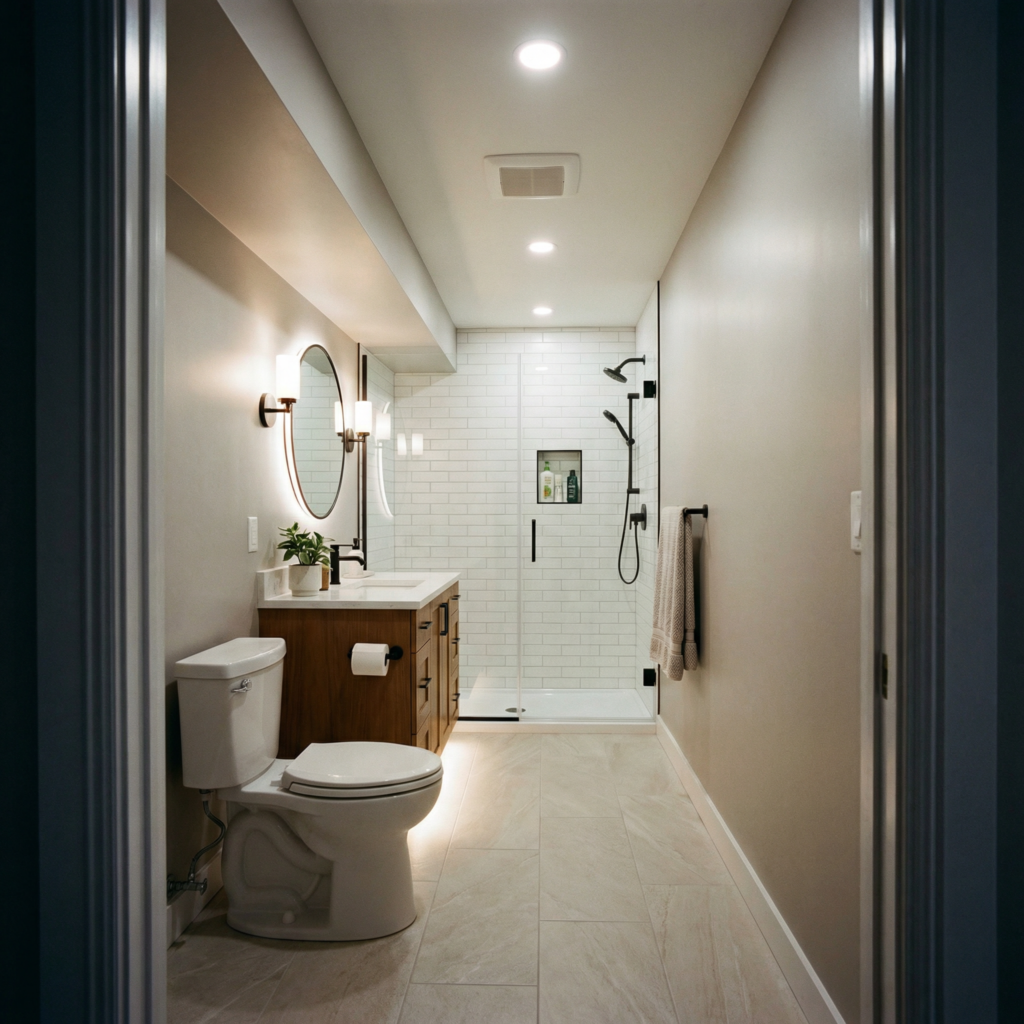
Illustrative scenario: A West Des Moines couple finishing their basement wanted a full bathroom with shower for their guest suite. The bathroom location was on the same side of the basement as the main stack but required some trenching for proper drain slope.
What they chose:
- Mid-range toilet with slow-close seat
- 30-inch vanity with quartz top
- Tiled shower surround with glass door
- Tile flooring
- Good lighting and ventilation
Why it cost more:
- Some slab cutting and trenching needed
- Better fixtures and finishes
- Tile work requires skilled labor
- More electrical for improved lighting
Total cost: Approximately $24,000 to $32,000
Scenario 3: Complex Case Far from Stack
Illustrative scenario: A family in Waukee wanted a luxury bathroom suite on the opposite side of their basement from the main plumbing. The bathroom would include a large tiled shower, double vanity, and premium fixtures.
What they chose:
- Custom tiled shower with bench and niche
- Double vanity with quartz countertop
- Premium toilet with bidet seat
- Heated tile floor
- Custom lighting and frameless glass
Why it cost significantly more:
- Extensive slab trenching across basement
- Ejector pump required
- Complex venting route
- High-end fixtures and custom tile work
- Heated flooring system
Total cost: Approximately $42,000 to $55,000
Cautionary Tale: The Cheap Job That Had to Be Redone
Illustrative scenario: A homeowner hired a handyman to add a basement bathroom for $8,000. The work was completed quickly without permits. Within two years:
- Sewer odors appeared due to improper venting
- The shower drain backed up because of inadequate slope
- Moisture issues developed from lack of proper exhaust
- The home inspector flagged multiple code violations when selling
Result: The homeowner spent $18,000 to tear out the work and have it redone correctly, then faced additional costs for damage remediation. Total cost ended up exceeding $30,000 for what should have been a $22,000 project done right the first time.
How a Basement Bathroom Fits into the Overall Basement Budget
Understanding how bathroom costs relate to overall basement remodeling budgets helps you plan effectively.
Typical Des Moines Metro Basement Finishing Ranges
Complete basement finishing in the Des Moines metro typically runs $35,000 to $90,000 depending on size, finishes, and scope. A bathroom is often one of the largest single line items in that budget.
Consider these scenarios:
| Basement Finish Type | Typical Range | Bathroom Impact |
|---|---|---|
| Basic family room (no bathroom) | $25,000 to $40,000 | N/A |
| Family room with half bath | $35,000 to $55,000 | Adds $12,000 to $18,000 |
| Full finish with bedroom and full bath | $50,000 to $75,000 | Bathroom is $20,000 to $30,000 |
| Premium finish with bathroom | $70,000 to $100,000+ | Bathroom is $25,000 to $40,000+ |
According to the 2025 Cost vs. Value Report from Zonda, basement remodels offer approximately 71 percent ROI at resale, making them one of the more consistent investments for homeowners planning to stay in their homes.
Strategic Planning Questions
Before committing to a bathroom in your basement finish, consider:
Do you need a full bathroom now, or could you rough-in only? Installing rough-ins during initial finishing costs $1,500 to $3,000 but saves $8,000 to $15,000 if you complete the bathroom later.
Where can you locate the bathroom to minimize cost? Placing it near existing plumbing reduces expenses significantly. Work with your contractor to identify the most cost-effective location.
Does your home really need a full bath vs. a half bath? Half baths cost significantly less and may serve your needs adequately, especially for entertainment spaces.
Pro tip: If budget is tight, consider finishing the basement with bathroom rough-ins only. You’ll have a functional family room now with the option to add the bathroom later without major disruption.
Real-World Style Example Scenarios
Here are four detailed examples showing different approaches Central Iowa homeowners have taken:
Example 1: The Budget-Conscious Half Bath
A retired couple in Indianola finished their basement as a craft room and exercise space. They wanted a half bath for convenience but didn’t need a shower.
Starting conditions:
- 1970s ranch with plumbing rough-ins near the main stack
- Dry basement with no moisture issues
- Existing finished walls in utility area
Choices made:
- Basic toilet ($275)
- Simple pedestal sink ($200)
- Minimal tile flooring (24 sq ft)
- Standard lighting and exhaust
What they spent money on: Quality plumbing connections to ensure longevity
Where they saved: Kept fixtures simple, used existing wall locations
Total cost: $14,500
Example 2: The Family-Friendly Full Bath
A young family in Grimes finished their basement with a full bath for their kids’ play area and future guest use.
Starting conditions:
- 2015 home with builder-installed rough-ins
- Good drainage, sump pump already present
- Unfinished basement ready for build-out
Choices made:
- Mid-range toilet and vanity
- Fiberglass shower surround (easy maintenance)
- Durable LVP flooring
- Bright LED lighting
What they spent money on: Durable finishes that handle kids and easy-clean surfaces
Where they saved: Fiberglass shower instead of tile, LVP instead of ceramic
Total cost: $22,000
Example 3: The Entertainment Suite Bath
A couple in Clive created a basement entertainment area with a spa-like bathroom for hosting guests.
Starting conditions:
- No rough-ins, but main stack accessible
- Some slab cutting required
- Walkout basement with good natural light
Choices made:
- Premium toilet with soft-close seat
- 48-inch double vanity
- Tiled walk-in shower with glass enclosure
- Tile floor with radiant heat
What they spent money on: Quality tile work and premium fixtures for the “wow factor”
Where they saved: Selected mid-range tile rather than natural stone
Total cost: $38,000
Example 4: The Complex Conversion
A multigenerational family in Ames converted their large basement into an in-law suite, requiring a full bathroom on the opposite side from existing plumbing.
Starting conditions:
- No rough-ins present
- Bathroom location required 35+ feet of trenching
- Below sewer line, requiring ejector pump
- Radon mitigation system already in place
Choices made:
- Comfort-height toilet
- Roll-in shower with grab bars (aging in place features)
- Large vanity with accessible height
- Non-slip tile flooring
What they spent money on: Accessibility features and quality plumbing to ensure reliability
Where they saved: Selected durable but not luxury fixtures
Total cost: $52,000
Frequently Asked Questions
Q: What’s a realistic starting point for a basement bathroom in Central Iowa?
A: For a basic half bath near existing plumbing rough-ins, expect to start around $12,000 to $15,000. A full bath with shower typically starts at $18,000 to $22,000 under favorable conditions. Complex projects with significant plumbing work commonly reach $30,000 to $50,000+.
Q: Why are basement bathrooms more expensive than upstairs bathrooms?
A: Below-grade plumbing requires cutting through concrete slabs, installing proper drainage slopes, and often adding ejector pumps. Main-floor bathrooms can connect to existing drain lines without these complications. The concrete work alone often adds $3,000 to $8,000 to basement projects.
Q: How much more does it cost if I don’t have rough-ins?
A: Expect to add $8,000 to $15,000 or more without rough-ins. This covers slab cutting, trenching, new drain line installation, and potentially an ejector pump system. The farther your bathroom is from the main stack, the higher this cost.
Q: Will putting the bathroom next to existing plumbing really save money?
A: Absolutely. Locating near the main stack can save $5,000 to $12,000 compared to placing it across the basement. Short pipe runs mean less labor, less material, and fewer complications. Always discuss placement options with your contractor before finalizing plans.
Q: How long does it take to add a basement bathroom?
A: Simple projects with rough-ins typically take 2 to 4 weeks. Mid-range projects run 4 to 6 weeks. Complex projects with extensive plumbing work may take 6 to 10 weeks depending on scope and permit timing. Weather doesn’t impact basement work, making it ideal for Iowa’s variable climate.
Q: Do I always need a pump for a basement bathroom?
A: Not always. If your basement floor sits above the main sewer line, gravity drainage works fine. However, many Central Iowa basements require ejector pumps. Your contractor can assess this during the initial evaluation. Budget $1,500 to $3,500 for pump installation if needed.
Q: Can I DIY parts of the job to save money? Which parts are off-limits?
A: Some tasks are DIY-friendly for handy homeowners: painting, installing bathroom accessories, and basic flooring. However, plumbing and electrical work require permits and licensed professionals in most Iowa jurisdictions. Attempting these yourself can void insurance, create safety hazards, and complicate resale. The labor savings rarely justify the risks.
Q: How important are permits and inspections for a basement bathroom?
A: Essential. Permits ensure work meets safety codes. Inspections catch problems before they’re hidden behind walls. Unpermitted work creates major headaches when selling your home, as buyers and lenders flag it during transactions. The permit cost of $500 to $1,500 is minimal insurance compared to the consequences of unpermitted work.
Q: Will a basement bathroom help my home’s resale value?
A: Yes, when done properly. Adding a bathroom increases functionality and appeal, particularly for buyers wanting flexible space. However, below-grade spaces have specific appraisal rules that limit how they’re valued. A basement bathroom won’t add as much value as an above-grade bathroom, but it contributes to overall marketability and buyer interest.
Q: How does Busy Builders approach estimating and controlling bathroom costs?
A: We start with a thorough assessment of your basement’s existing conditions, including plumbing access, slab thickness, moisture levels, and radon presence. We identify the most cost-effective bathroom location before creating detailed line-item estimates. Throughout the project, we communicate about any discoveries that might affect cost, ensuring no surprises at completion.
Key Takeaways
Cost Ranges
- Basic basement bathrooms with rough-ins: $12,000 to $20,000
- Mid-range full bathrooms: $20,000 to $30,000+
- Complex projects without rough-ins: $30,000 to $50,000+
- Labor accounts for 50 to 60 percent of total cost
Critical Cost Factors
- Rough-in presence saves $8,000 to $15,000+
- Distance from main plumbing stack affects trenching costs
- Ejector pumps add $1,500 to $3,500 when required
- Fixture selection offers the most homeowner control over budget
Iowa-Specific Considerations
- as many as 5 in 7 Iowa homes have elevated radon levels
- Frost line requirements mean deeper foundations
- Clay soils impact moisture management
- Registered contractors (not licensed) handle general construction work
Smart Planning Strategies
- Get multiple quotes from registered contractors
- Consider rough-in only if budget is tight now
- Locate bathroom near existing plumbing when possible
- Budget 10 to 15 percent contingency for unexpected issues
- Always pull proper permits
- Explore financing options through the CFPB Home Loan Toolkit or government home repair assistance programs if needed
Ready to Plan Your Basement Bathroom?
You now understand the real costs, code requirements, and planning considerations for adding a bathroom to your Central Iowa basement. The next step is talking with professionals who can evaluate your specific situation and provide accurate estimates.
Busy Builders has helped over 1,000 Central Iowa homeowners with basement finishing and bathroom projects since 2020. We specialize in the unique challenges Iowa basements present, from moisture management to radon considerations.
Here’s what we offer:
- Free consultation to assess your basement’s current conditions
- Honest evaluation of plumbing options and cost implications
- Clear, line-item estimates so you know where every dollar goes
- Guidance on whether a half or full bath makes sense for your needs
- Transparent timeline and communication throughout your project
Ready to get started?
Call: 844-435-9800
Website: https://busybuildersiowa.com/
We serve Des Moines, West Des Moines, Ankeny, Waukee, Urbandale, Ames, and all Central Iowa communities. Schedule your free basement bathroom planning visit today. Bring photos, rough measurements, and your questions. We’ll help you understand exactly what your project will cost and how to get the most value from your investment.
Busy Builders | Full-Service Construction and Remodeling | Serving Central Iowa Since 2020