Walk-in showers dominate every 2026 design trend list. But the “one-tub rule” in real estate is still alive, and in Iowa, where buyer demographics are shifting fast, which option is right depends more on your household situation than any national design trend. Here is the honest breakdown.
This article provides general planning information only. Cost figures are estimates that vary significantly by project scope, site conditions, and contractor. Nothing in this article constitutes a financial guarantee or professional advice. Verify permit requirements with your local building department before starting any project.
TLDR: In most Iowa homes, the decision comes down to how many bathrooms you have and who will buy your home. Single-bathroom home: keep the tub. Multi-bathroom home with young kids: keep at least one tub in the hall bath. Primary suite with two or more bathrooms and adult or empty-nester households: the walk-in shower wins on daily use and aging-in-place value. Zillow’s 2026 research shows wet rooms add a 3.3% sale premium nationally, but removing your only bathtub can narrow your buyer pool in ways that hurt your sale price. The five scenarios below determine the right call for your specific home.
The National Trend vs. the Iowa Reality
Walk-in showers and spa-inspired bathrooms are genuinely gaining ground. Zillow’s 2026 Home Trends Report found that mentions of spa-inspired bathrooms are up 33% in home listings, and wellness features are increasingly cited as selling points. A walk-in shower nationally averages about $9,000 installed, while a tub-to-shower conversion averages $3,000. Iowa construction costs run about 14% below the national average, so Central Iowa homeowners typically pay at or slightly below those figures.
But Iowa’s buyer demographics complicate the trend. The median age of all U.S. home buyers reached a record high of 59 in 2025. First-time buyers now average 40 years old. Only 24% of buyers have children under 18 at home, an all-time low. Iowa’s population 65 and older stands at 18.9%, above the national average of 18%, and growing. By 2030, Iowa will have more residents 65 and older than under 18, according to LeadingAge Iowa’s 2025 data. Put those numbers together, and the average buyer for your home in five to ten years looks very different from the young-family-with-toddlers buyer profile that made the one-tub rule a near-universal rule a generation ago.
That does not make the tub obsolete. It makes your specific situation, bathroom count, household stage, neighborhood buyer profile, the most important variable in the decision.
The One-Tub Rule, and When It Still Applies in Iowa
Real estate professionals broadly agree: keep at least one full bathroom with a bathtub somewhere in the home. NAHB research shows 72% of first-time buyers and 74% of all buyers rate both a shower stall and a tub in the primary bath as essential or desirable, the top-ranked bathroom feature in the survey. Families with infants and young children bathe kids in a tub; removing the only one from a home can eliminate it from serious consideration by that buyer group.
The rule applies most firmly in one scenario: single-bathroom homes. If your home has only one bathroom and you convert it to a shower-only bathroom, you have narrowed your buyer pool significantly, particularly in Central Iowa suburbs, where families remain a major buyer segment.
The rule loosens in multi-bathroom homes, particularly in primary suites. In 2026, new construction, primary bathrooms are increasingly designed without a tub at all. In neighborhoods with older or adult-skewing buyer demographics, a walk-in shower in the primary bath signals the right things to the right buyers.
The key is knowing which situation you are in.
Five Iowa Scenarios, The Decision Framework
Rather than a single answer, these five scenarios cover the situations most Central Iowa homeowners face. Each reflects general guidance, not individual advice.
Single-bathroom home. Keep the tub. This is the clearest guidance on the topic. Removing the only tub from a one-bath home significantly limits your buyer pool, regardless of the neighborhood.
Multi-bathroom home, family with young children. Keep at least one tub in the home, typically the hall bath. The primary suite can convert to a walk-in shower, but families need at least one accessible tub for bath time. Grimes, Ankeny, and Norwalk neighborhoods skew toward this buyer profile.
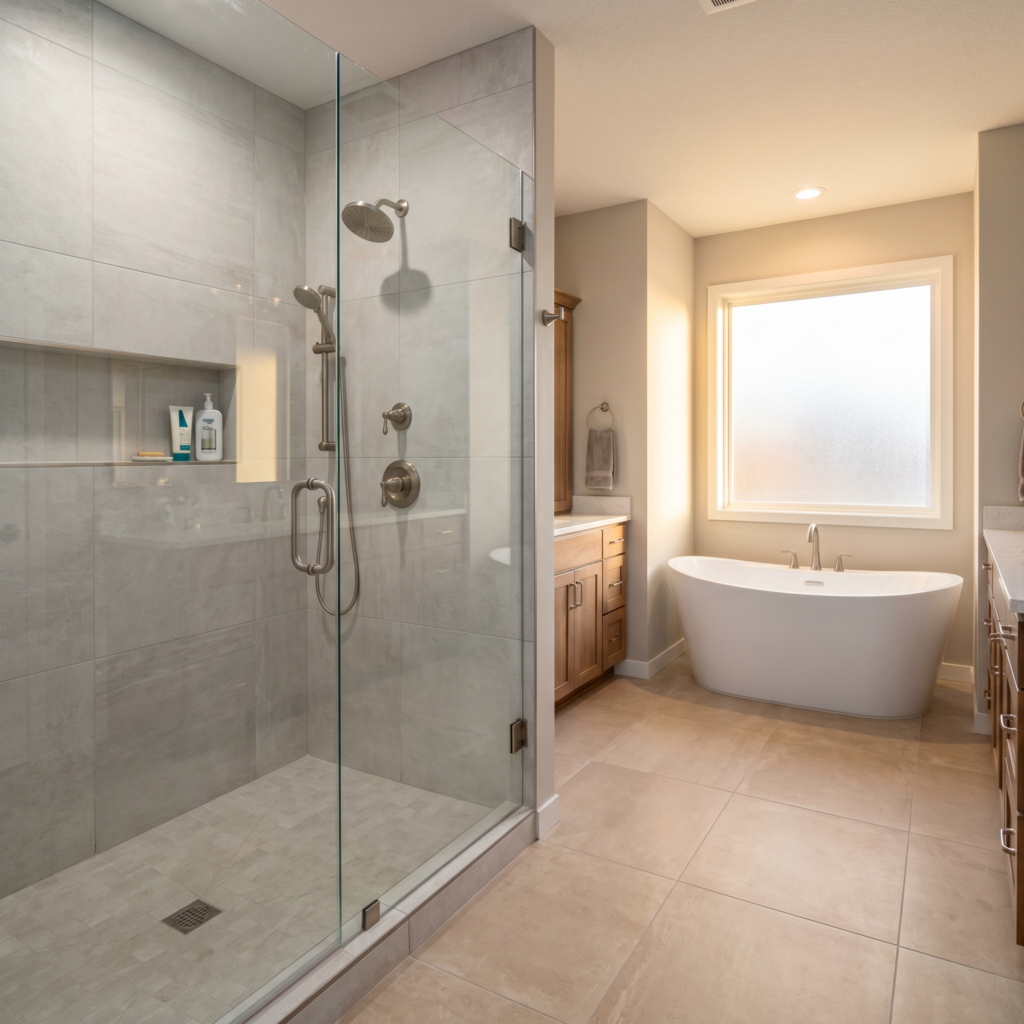
Primary suite, two or more bathrooms, empty nesters, or aging-in-place focus. Walk-in shower wins. Curbless, barrier-free showers eliminate the step-over fall risk, align with the practical direction Iowa’s demographics are heading, and deliver the daily comfort that adult buyers prioritize. Iowa HHS provides aging-in-place home modification resources at hhs.iowa.gov/health-prevention/aging-services/home-modification for homeowners planning for accessibility. West Des Moines and Johnston neighborhoods skew toward this buyer profile.
Planning to sell in one to three years. Match the neighborhood buyer profile. In family-heavy suburbs, tub preservation matters. In mature neighborhoods attracting downsizers or older buyers, an upgraded walk-in shower may serve resale better. Consult a local real estate agent who knows your specific neighborhood before removing your only bathtub, this is genuinely neighborhood-specific advice that no national trend can replace.
The budget allows both, the clearest resale choice. A primary suite with a freestanding tub and a separate walk-in shower appeals to the widest possible buyer pool and eliminates the dilemma. It is also the most expensive path, typically $11,000 to $23,000 or more for a full hybrid setup.
Illustrative scenario: An empty-nester couple in Ankeny converts their primary bath’s dated tub-shower combo to a curbless walk-in shower with custom tile and a frameless glass door. The project runs approximately $9,000 to $13,000. Their two-bathroom home keeps a tub in the hall bath, so no buyer pool is narrowed. This is an illustrative scenario, not a quote or guarantee.
Cost Comparison: Iowa 2026 Planning Estimates
| Project | Typical Iowa Range | Notes |
|---|---|---|
| Tub-to-shower conversion (prefab/kit) | $1,500 to $5,000 | Same footprint; fastest timeline |
| Tub-to-shower (custom tile) | $3,500 to $15,000 | Tile selection, waterproofing, and plumbing scope drive range |
| Walk-in shower (new install, mid-range) | $6,000 to $12,000 | National average ~$9,000; Iowa runs slightly lower |
| Wet room | $5,000 to $35,000 | Average ~$13,000 nationally; Iowa discount applies |
| New tub installation | $4,000 to $9,000 | Acrylic alcove average ~$5,700 installed |
| Hybrid: separate tub and walk-in shower | $11,000 to $23,000+ | Highest cost; widest buyer appeal |
Planning estimates for the 2026 Central Iowa market conditions. Actual costs vary significantly by scope, materials, site conditions, and contractor. These are not quotes.
The most important cost variable before any of these figures is the proximity to plumbing. A conversion that uses an existing drain location costs far less than one requiring drain relocation. Get a plumbing assessment before finalizing a budget. See the Central Iowa bathroom remodeling cost guide for a detailed per-scope breakdown.
Iowa Code Basics for Shower Projects
Iowa adopted the 2024 Uniform Plumbing Code effective March 26, 2025. Under the current Iowa code, a shower compartment requires a minimum interior area of 1,024 square inches and must be capable of accommodating a 30-inch circle, roughly a 32-by-32-inch minimum floor area. There is a code exception: tub-to-shower conversions with the same 30-by-60-inch footprint are permitted at that dimension without meeting the standard minimum.
All bathroom outlets require GFCI protection. Exhaust fans must vent directly outdoors, not into the attic. Waterproofing behind tile is a code requirement and a practical necessity, tile and grout are not waterproof, and skipping the membrane can lead to mold and structural damage that can cost $8,000 to $15,000 or more to remediate.
| Work Type | Permit Required? | Notes |
|---|---|---|
| Tub resurfacing or reglazing | No | Cosmetic only |
| Full tub-to-shower conversion | Yes, plumbing | Moving drain or supply lines |
| Walk-in shower installation | Yes, plumbing | New plumbing fixtures |
| Tile work, no plumbing changes | No | Cosmetic |
| Heated floors or new circuit | Yes, electrical | Separate permit required |
Always verify permit requirements with your specific municipality before starting work.
Iowa general contractors must be registered, not licensed, with the Iowa Department of Inspections, Appeals, and Licensing (DIAL). Verify any contractor at dial.iowa.gov before signing a contract. Plumbers and electricians hold separate state licenses, confirm all subcontractors are properly credentialed. For more on navigating Iowa permits across Central Iowa municipalities, see the Iowa building permit guide.
ROI, The Honest Take
Bathroom renovations recoup about 50% of the project cost at resale, on average, per the NAR 2025 Remodeling Impact Report. Midrange bathroom remodeling projects are currently tracking near their highest ROI levels in years. Zillow’s 2026 research shows wet rooms add a 3.3% sale premium, and steam showers add 2.9% nationally.
These are national averages. Actual returns vary significantly by property, location, market conditions, and timing, and do not constitute financial advice.
The honest take: the strongest ROI move is to keep at least one tub if the home has only one bathroom, and to invest in a quality walk-in shower in any additional bathrooms. A well-built, properly waterproofed shower, regardless of whether it replaces a tub, adds value through quality and finish condition, not just fixture type. Condition and artistry matter more than the tub-versus-shower choice in most resale scenarios in Iowa.
FAQs
Q: Does removing a bathtub hurt resale value in Iowa? It depends on how many bathrooms the home has and your likely buyer profile. Removing the only tub from a single-bathroom home can significantly narrow your buyer pool, particularly for families with young children. In a multi-bathroom home where at least one bath has a tub, the impact is typically minimal. NAHB research shows 72% of first-time buyers rate both a shower and tub in the primary bath as essential or desirable, but that number is shifting as the median buyer age rises. Consult a local real estate agent who knows your specific neighborhood before removing your only tub.
Q: How much does a tub-to-shower conversion cost in Iowa? A tub-to-shower conversion in Central Iowa typically runs $1,500 to $5,000 for a prefab or kit installation and $3,500 to $15,000 for a custom-tiled walk-in shower, depending on tile selection, plumbing scope, and glass enclosure. Iowa construction costs run about 14% below the national average, so Central Iowa projects tend to come in slightly below national quotes. These are planning estimates, actual costs vary by scope, site conditions, and contractor. Always get three quotes.
Q: Do I need a permit to replace a bathtub with a shower in Iowa? Yes, in almost all cases. Any plumbing changes, including rerouting drain lines or relocating supply connections, require a plumbing permit under Iowa’s 2024 UPC (effective March 26, 2025). Electrical changes require a separate electrical permit. A tub-to-shower conversion in the same 30-by-60-inch footprint with no plumbing relocation is the closest thing to a permit-exempt conversion, but always confirm with your city’s building department before starting.
Q: What is the minimum size for a walk-in shower in Iowa? Under Iowa’s 2024 Uniform Plumbing Code, a shower compartment must have a minimum interior area of 1,024 square inches and be capable of accommodating a 30-inch circle, approximately 32 by 32 inches. Standard comfortable design runs 36 by 48 inches or larger. Tub-to-shower conversions in a 30-by-60-inch footprint have a code exception allowing that dimension. See the Iowa Administrative Code for the 2024 UPC for the exact text.
Q: Is a walk-in shower better for aging in place in Iowa? Yes, curbless, barrier-free walk-in showers are the standard recommendation for aging in place. Eliminating the curb or threshold removes the most common tripping hazard in the bathroom. Grab bars, a fold-down seat, and a handheld showerhead are the core features that convert a standard shower into an aging-in-place design. Built-in wall blocking for grab bars during the original project, retrofitting afterward costs significantly more. Iowa HHS provides home modification resources through local Area Agencies on Aging for homeowners planning for accessibility.
Key Takeaways
The decision framework by household situation: single-bath home, keep the tub; multi-bath home with young kids, keep at least one tub in the hall bath; primary suite in a two-plus bathroom home for adults, the walk-in shower wins; selling in one to three years, match your neighborhood’s buyer profile; budget allows both, the hybrid setup offers the widest resale appeal.
Cost anchors (planning estimates only): tub-to-shower prefab runs $1,500 to $5,000; custom walk-in shower runs $6,000 to $12,000; a hybrid setup runs $11,000 to $23,000 or more.
Iowa-specific reminders: the 2024 UPC has been in effect since March 2025; the minimum shower compartment is 1,024 square inches; waterproofing is code-required and non-negotiable; verify any contractor at dial.iowa.gov before signing anything.
Ready to Talk Through Your Bathroom Project?
Busy Builders has completed more than 1,285 projects across Central Iowa since 2020, including walk-in shower conversions, full primary suite overhauls, and hybrid tub-plus-shower setups. The right choice depends on your home, your household, and your timeline. See the Busy Builders bathroom remodeling page and the basement bathroom cost guide if a lower-level bathroom is part of your planning.
Call us: 844-435-9800 Website: busybuildersiowa.com
Busy Builders serves Des Moines, West Des Moines, Ankeny, Grimes, Waukee, Johnston, Urbandale, and communities across all ten Central Iowa service counties.
Busy Builders | Full-Service Construction and Remodeling | Serving Central Iowa Since 2020