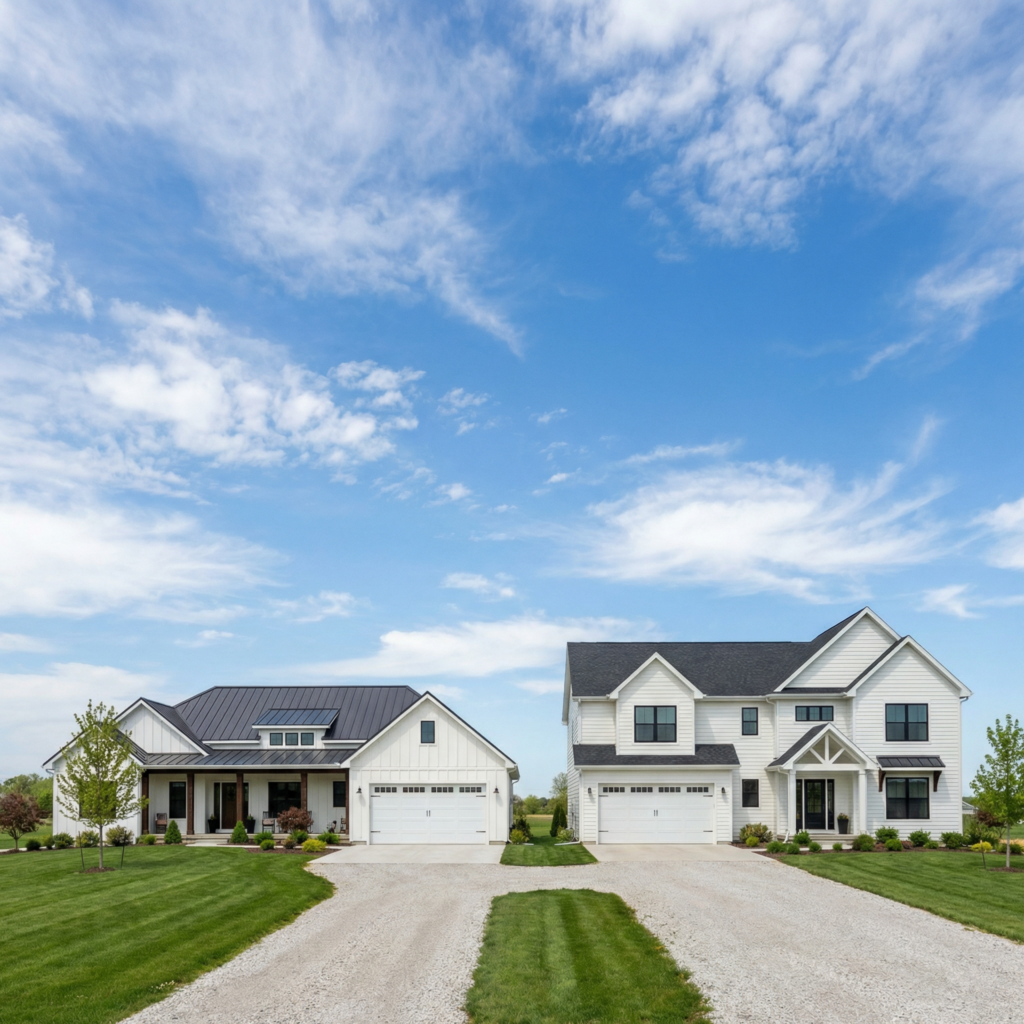
Every comparison article online will tell you that two-story homes are 10 to 14 percent cheaper per square foot to build than a ranch. In most of the country, that’s accurate. In Iowa, the math works differently, and understanding why is the single most useful thing a Central Iowa buyer can know before choosing a floor plan. This guide explains the Iowa-specific factors that change the calculation, breaks down the real cost differences, and helps you figure out which style actually fits your life and your lot.
TLDR: In Iowa, ranch and two-story homes of the same square footage cost roughly the same to build. Iowa’s frost line requires full basements on virtually every new home, which eliminates the foundation savings that make two-story cheaper elsewhere. The real cost variable is your lot size, and in premium suburbs, that difference can run $35,000 to $50,000. Read on for the full breakdown.
Why Iowa Changes the Math
Every national comparison you’ll find points to two key savings for two-story construction: a smaller foundation footprint and a smaller roof. Stack 2,400 square feet vertically instead of spreading it horizontally and you need half the foundation and half the roof. Nationally, those savings add up to roughly 10 to 14 percent per square foot.Iowa Home Building Costs
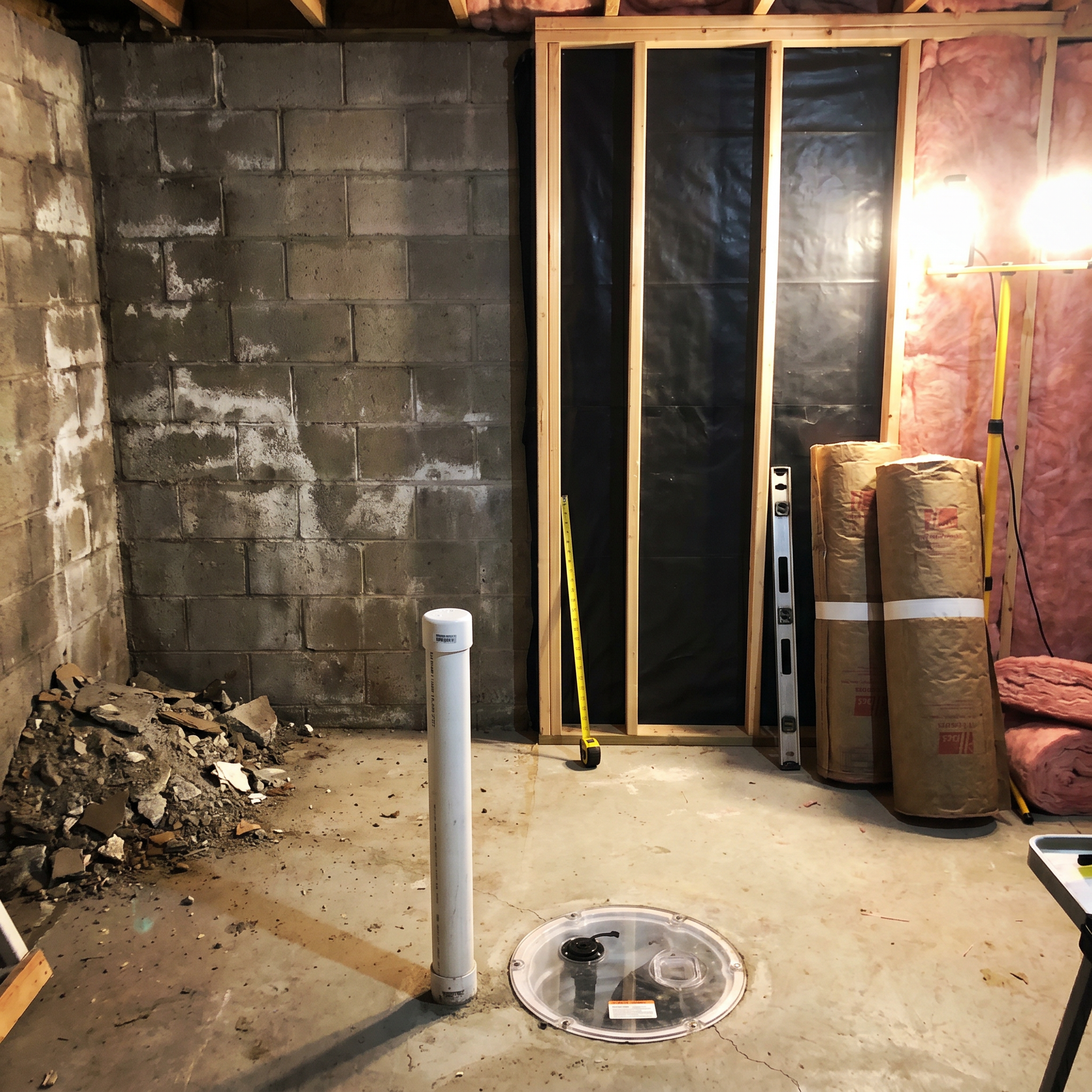
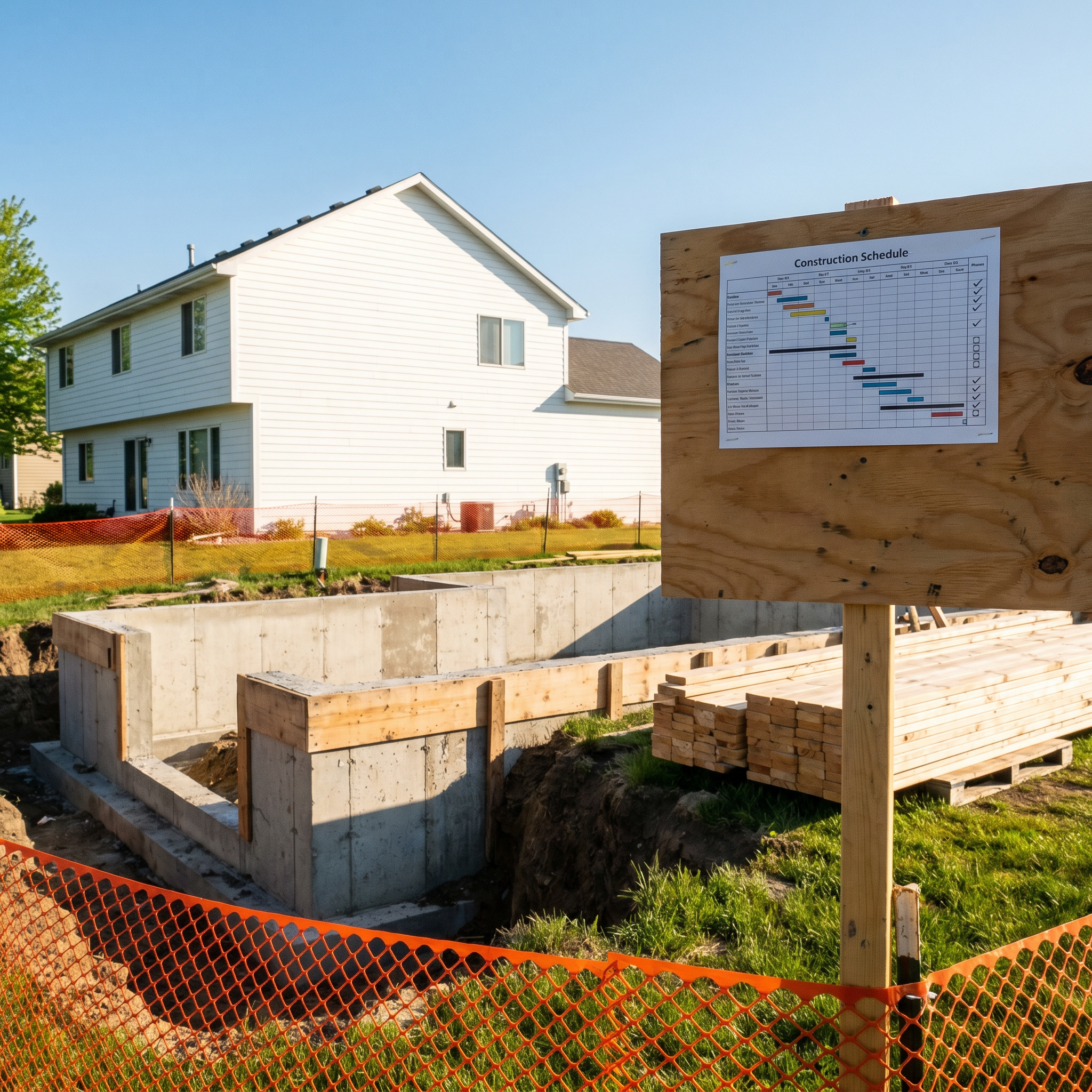
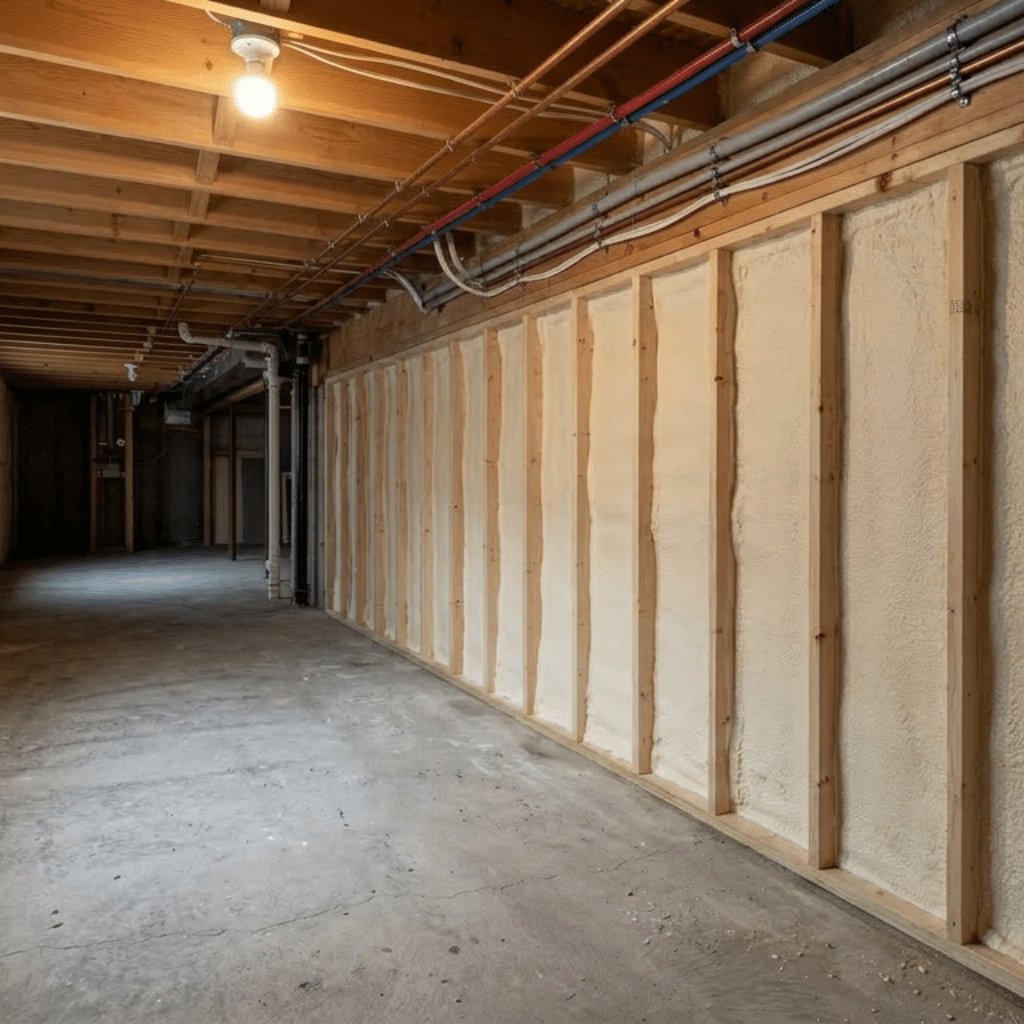
Iowa doesn’t work that way, and the reason is underground. Iowa’s frost line sits at least 42 inches below grade. That depth means nearly every new home built in Central Iowa includes a full basement, a pour of that scale is simply the most practical way to get below the frost line and make use of the space. And a full basement costs the same whether you’re building a ranch or a two-story. You’re looking at roughly $70,000 to $100,000 for a 2,000-square-foot basement foundation, and that number doesn’t change based on what sits above it.
So the theoretical foundation savings of two-story construction mostly disappear. Both styles sit on the same expensive basement. The component costs above grade just shuffle around differently: the ranch spends more on roofing and the above-grade foundation; the two-story spends more on second-floor framing, interior walls, a staircase, and often a dual-zone HVAC system. When you add it all up for a 2,400-square-foot home in 2026 Central Iowa, the totals come out roughly equal. That’s the Iowa difference, and no national cost calculator accounts for it.
Where the Real Cost Difference Lives: Your Lot
If construction costs are roughly equal, what actually separates the two styles from a budget perspective? Your lot.
A 2,400-square-foot ranch needs a footprint of about 2,400 square feet on the ground. A two-story home delivers the same square footage with roughly half that footprint, around 1,200 square feet per floor. On a suburban lot in Central Iowa, that difference matters more than almost anything in the component cost tables.
In premium suburbs like West Des Moines and Waukee, the lot size difference between a ranch and a two-story footprint can translate directly into $35,000 to $50,000 in land cost. In more affordable suburban markets like Grimes or Norwalk, or in rural areas outside Dallas County, lots are larger and cheaper, and that gap shrinks considerably or disappears.
Here’s how that plays out in practice. Illustrative scenario: A family building 2,400 square feet in a West Des Moines subdivision finds that lots are premium-priced and smaller. A ranch footprint requires a larger lot, adding an estimated $35,000 to $50,000 to their land cost compared to a two-story on a smaller lot. That land cost difference exceeds every other line item in the component cost comparison. The family chooses a two-story, not because it builds cheaper, but because their land situation makes it the budget-smart call.
Contrast that with a different illustrative scenario: A young family building near Grimes on a half-acre lot finds that land costs are much lower. The ranch and two-story options are nearly cost-neutral on a total-project basis. They choose the ranch for the open floor plan and the absence of stairs with two kids under age five. Both decisions are defensible, the land context is what changes the answer.
Side-by-Side Cost Breakdown: Iowa 2026
The table below shows how the major component costs compare for a 2,400-square-foot home in Central Iowa. These are 2026 planning estimates that will vary by lot, design, and finishes, they are not quotes and should not be treated as guarantees.
| Component | Ranch | Two-Story | Notes |
|---|---|---|---|
| Foundation (above grade) | ~$35,000 | ~$28,000 | Two-story saves ~$7,000 |
| Framing | ~$90,000 | ~$95,000 | Two-story adds second-floor framing |
| Roof | ~$18,000 | ~$12,000 | Ranch has larger roof footprint |
| Interior walls | ~$40,000 | ~$48,000 | Two-story has more partition walls |
| Staircase | None | ~$5,000 | Basic wood stairs |
| HVAC (dual-zone add-on) | Not required | +$3,200-$5,600 | Two-story often benefits from two zones |
| Estimated total build | ~$420,000 | ~$420,000 | Roughly equal in Iowa |
Planning estimates for 2026 Central Iowa market conditions. Does not include basement, land, site prep, permits, or contingency. Actual costs vary significantly by lot, design, and finish level.
The key insight in that table is that the two-story savings on foundation and roofing get absorbed almost entirely by the extra framing, interior walls, staircase, and HVAC costs. The $7,000 foundation saving is real, it just gets redirected rather than pocketed.
Energy Costs: Is One Style Cheaper to Run?
Two-story homes are theoretically more energy-efficient. Stacking floors vertically reduces the total exterior surface area per square foot of living space, which means less surface through which heat escapes in Iowa winters and enters in Iowa summers.
In practice, that advantage is very small when both homes are built to modern insulation standards. Independent research has found essentially no meaningful difference in annual utility bills between well-built single and two-story homes of equivalent size and insulation quality. The more important variables are air sealing, insulation depth, and window quality, not whether the home is one story or two.
Two Iowa-specific factors are worth noting. Ranch homes have a larger attic footprint, which means more risk of heat loss through the ceiling in cold months if attic insulation is inadequate. Two-story homes can trap heat on upper floors in Iowa’s humid summers without proper ventilation or a dual-zone HVAC system, and that system adds $3,200 to $5,600 or more to upfront costs, which partially offsets any long-term efficiency gain.
The bottom line is that energy cost should not be a primary factor in this decision. With a quality build, the difference is small enough to be irrelevant compared to the lot cost and lifestyle considerations that actually matter.
Which Style Fits Your Life?
Cost aside, lifestyle fit drives most ranch-versus-two-story decisions. The honest answer is that the right choice depends on your household more than any cost table.
| Buyer profile | Better fit |
|---|---|
| Empty nesters planning to age in place | Ranch |
| Young children (stair safety concern) | Ranch |
| Open-concept living priority | Ranch |
| Larger suburban or rural lot | Ranch |
| Family with teenagers needing privacy | Two-story |
| Premium lot in West Des Moines or Waukee | Two-story |
| Budget-conscious buyer on smaller lot | Two-story |
| Curb appeal and architectural presence priority | Two-story |
The aging-in-place consideration deserves a specific call-out in Iowa. About 77% of adults over 50 prefer to remain in their homes as they age, and single-story living is the practical foundation for that preference. Iowa has state-level resources through Iowa HHS for home modification to support aging in place. If there is any realistic chance a household member will need single-floor mobility in the next 20 years, a ranch built with that intention from the start, zero-step entry, wider hallways, curbless shower, is far easier than retrofitting a two-story later.
Illustrative scenario: An empty-nester couple in Ankeny builds a 1,800-square-foot ranch with aging-in-place features designed in from the start. Construction cost is comparable to a two-story of the same size. Smaller footprint needs in Ankeny reduce the lot cost penalty. The single-floor layout means they will not need to modify the home significantly as they age.
Resale: Which Style Sells Better?
Neither style has a clear edge in Central Iowa, and anyone who tells you otherwise is overpromising. Both ranch and two-story homes sell well. What matters more is location, condition, and price relative to the neighborhood.
That said, ranch homes have gained significant ground in resale demand as Iowa’s population ages. The mid-century modern ranch is the second most popular home style in the Midwest. Iowa’s millennial homeownership rate is among the highest in the country, and while younger families often gravitate toward two-story homes for the bedroom separation, the broader demographic trend in Iowa is aging toward a generation that prefers single-story living.
The practical advice: build for your lifestyle and for the character of the neighborhood. A well-built home in the right location will hold its value regardless of whether it has one story or two.
FAQs: Ranch vs. Two-Story in Iowa
Q: Is it cheaper to build a ranch or a two-story home in Iowa? They cost roughly the same for equivalent square footage in Central Iowa. Nationally, two-story homes run 10 to 14 percent cheaper per square foot because of foundation and roofing savings. In Iowa, the frost line requires full basements on nearly every new home, which eliminates most of that foundation saving. Component costs shuffle around between the two styles, but the totals are roughly equal. The real cost variable is your lot, see the next question.
Q: Why does Iowa change the ranch vs. two-story math? Iowa’s frost line sits at least 42 inches below grade, which means virtually every new Central Iowa home is built with a full basement. A full basement costs $70,000 to $100,000 or more for a 2,000-square-foot footprint, and that cost is identical whether a ranch or a two-story sits above it. Two-story homes are cheaper nationally because they have a smaller above-grade foundation, but when both styles share the same expensive basement, that savings mostly disappears.
Q: Which style is better for aging in place? A ranch, without question. Single-floor living means no stairs, full accessibility on one level, and a home that can adapt to changing mobility needs without structural renovation. If you or anyone in your household has a realistic chance of needing single-floor access in the next 20 years, build the ranch with aging-in-place features designed in from day one. Iowa HHS provides resources on home modification for aging in place that are worth reviewing before you finalize your floor plan.
Q: Does one style cost more to heat and cool in Iowa? Very little, if both homes are built to current insulation standards. Two-story homes are theoretically more efficient because they have less exterior surface area, but well-built homes of either style show minimal difference in annual energy bills. One practical note: two-story homes in Iowa often benefit from a dual-zone HVAC system to handle the temperature difference between floors, and that system adds $3,200 to $5,600 or more to upfront costs, which partially offsets any efficiency advantage.
Q: Which style has better resale value in Central Iowa? Neither has a definitive advantage. Both sell well. Ranch homes are seeing strong resale demand as Iowa’s population ages, while two-story homes appeal strongly to young families. Build for your lifestyle and your neighborhood’s character, resale value in Central Iowa follows location and condition far more than home style.
Key Takeaways
The Iowa cost reality
- Ranch and two-story homes of the same square footage cost roughly equal in Iowa, Iowa’s basement norms eliminate the foundation savings that make two-story cheaper nationally
- The real budget variable is lot size: ranch footprints require more land, which costs $35,000 to $50,000 more in premium suburbs like West Des Moines and Waukee
- In lower land-cost suburbs and rural areas, the two styles are nearly cost-neutral overall
Iowa-specific factors
- Frost line is at least 42 inches, full basements are standard and cost the same under both styles
- Two-story homes often benefit from dual-zone HVAC in Iowa’s climate, adding $3,200 to $5,600+ upfront
- Iowa’s aging population is driving strong ranch demand, plan for your 20-year horizon, not just today
The right decision
- Premium suburb, smaller lot: two-story is the budget-smart choice
- Larger suburban or rural lot: ranch is nearly cost-neutral and has lifestyle advantages
- Aging in place is a priority: ranch, with features designed in from the start
- Teenagers who need privacy: two-story works better for your household dynamics
Getting to a real number
- Every build is different, lot conditions, design complexity, and finish choices all move the final cost significantly
- Get a real estimate for your specific lot and floor plan before making a final decision
- Verify your builder is a registered contractor through DIAL before signing anything
Ready to Talk Through Your Floor Plan?
You now have the Iowa-specific picture that most online comparisons miss. The ranch-versus-two-story decision in Central Iowa comes down to your lot, your life stage, and your household, not a simple national cost-per-square-foot rule.
Busy Builders has completed more than 1,285 projects across Central Iowa since 2020. We build both ranch and two-story custom homes and will give you an honest read on which makes more sense for your specific lot and budget. Our full Iowa home building costs guide covers every cost line item in detail if you want to go deeper before we talk.
Call us: 844-435-9800 Website: busybuildersiowa.com
We serve Des Moines, West Des Moines, Ankeny, Grimes, Waukee, Johnston, Urbandale, Ames, and communities across all ten of our service counties. Schedule your free consultation and let’s figure out which floor plan fits your family and your budget.
Busy Builders | Full-Service Construction and Remodeling | Serving Central Iowa Since 2020