
Home Building
Ankeny, IA
Custom Home Building in Ankeny, IA
About Us
Our Mission
Our Vision
- Home Building Step by Step
How Do We Build Your Home in Ankeny?
SITE ASSESSMENT AND DESIGN
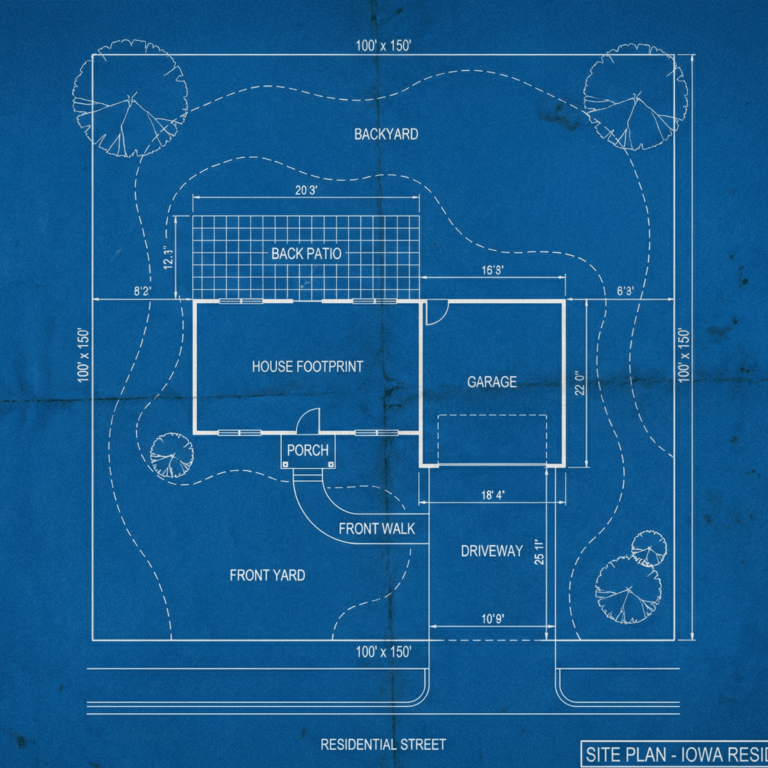
Every home build in Ankeny starts with the land. Before any design work begins, we assess the lot for grade changes, drainage patterns, soil conditions, utility access, setback requirements, and orientation for solar exposure and prevailing Iowa winds. Ankeny’s rapid growth means lot conditions vary widely across the city, from newer subdivisions with established utility stubs to infill parcels where drainage and grading need closer attention. City of Ankeny setback requirements and any HOA restrictions are confirmed before design gets underway. Understanding the Iowa foundation and soil reality is a standard step on every Ankeny build.
- Full lot assessment covering grade, drainage, soil, utility access, and setbacks
- Floor plan and home style options presented with Iowa climate performance context
- Written scope of work, design, and budget confirmed before any permits are filed
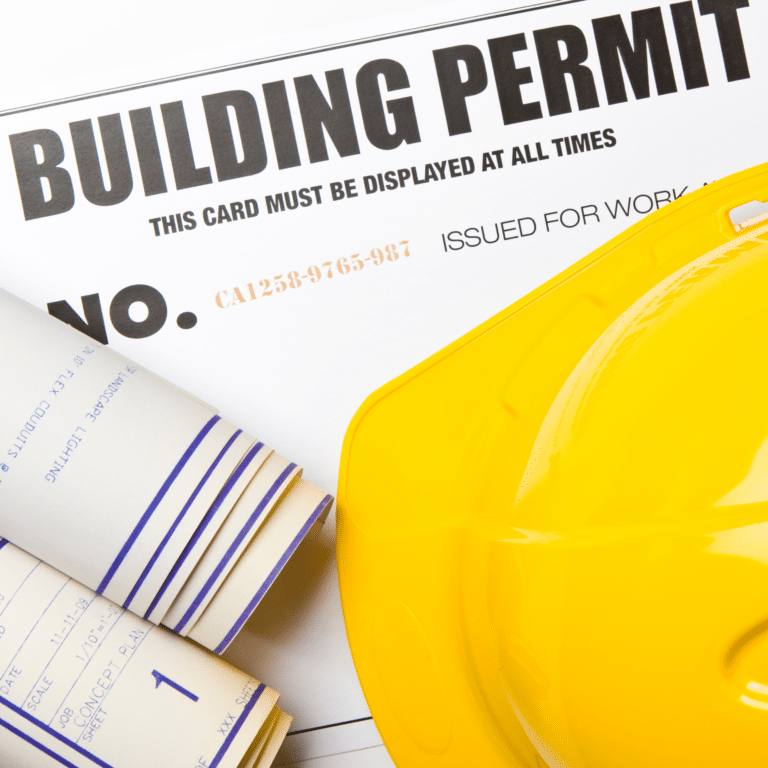
New home construction requires a building permit in every Iowa jurisdiction, including Ankeny. The City of Ankeny handles permit review and inspections in-house for projects within city limits. Ankeny follows the 2015 IRC with Iowa amendments for all residential construction. Energy compliance documentation under Iowa’s adopted energy code is required with every permit application. Metro cities like Ankeny typically approve complete permit applications within a few weeks when all documents are in order. Learn more about navigating home building permits in Iowa before your project starts. Busy Builders handles the full permit process from application to final inspection sign-off.
- Full permit application, structural drawings, and energy compliance documentation submitted
- Iowa Administrative Code and IRC compliance confirmed on every West Des Moines project
- All inspections scheduled and coordinated so the homeowner does not manage a thing
PERMITS AND APPROVALS
SITE PREP AND EXCAVATION
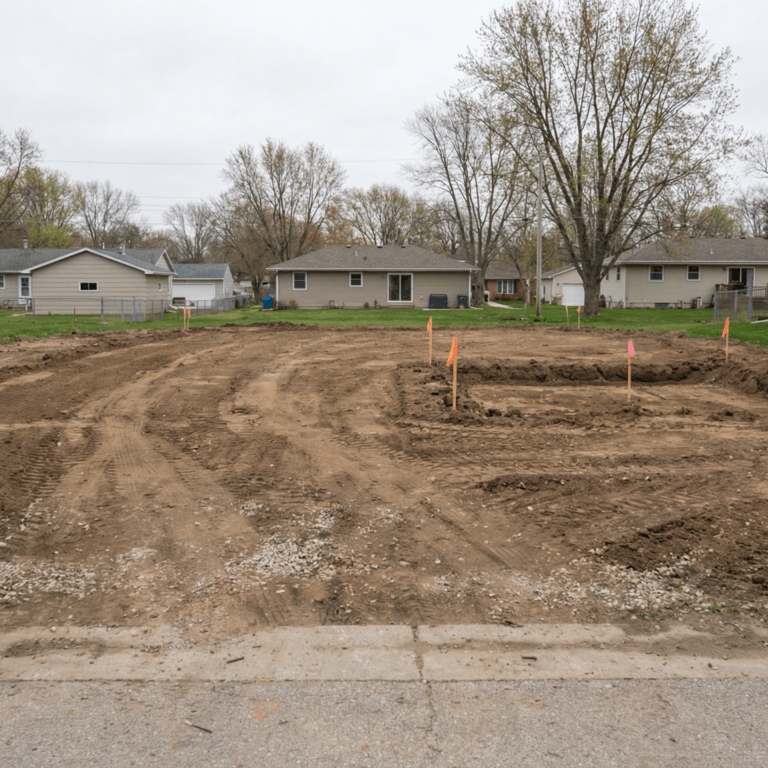
Site prep covers clearing, grading, and excavating the lot to the design elevation before foundation work begins. Iowa clay soil requires careful grading so surface water drains away from the foundation during both construction and after the home is occupied. Ankeny’s newer developments often sit on former agricultural ground, where soil compaction patterns can affect excavation planning. All utility locate calls through Iowa 811 are completed before any excavation begins, as required by Iowa law. A geotechnical assessment, typically around $2,700, confirms the soil bearing capacity before footing design is finalized. Per IBC Chapter 18, expansive clay soils require special foundation design to prevent long-term structural movement.
- Site clearing, grading, and excavation to design elevation before foundation work begins
- Iowa clay soil drainage planning to protect the foundation after the home is occupied
- 811 utility locate completed before any excavation begins, per Iowa law
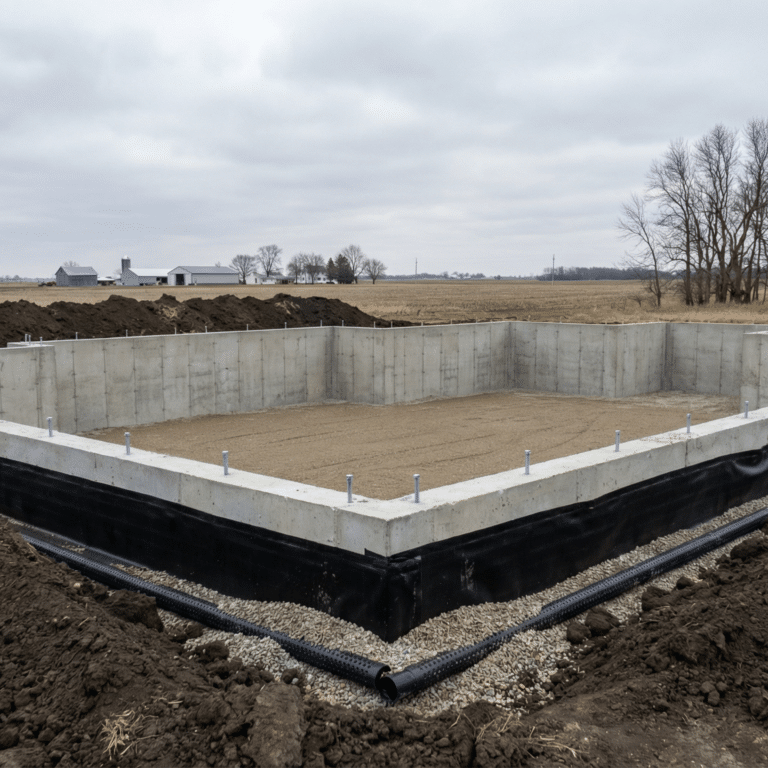
The foundation carries every load in the home and determines whether the structure stays level and dry for decades. Iowa’s frost line sits at 42 inches, and footings are set below it on every project. Skipping this step or relying on national cost guides that do not account for Iowa’s frost depth creates expensive problems that show up years after move-in. Polk County’s expansive clay swells when wet and contracts when dry. That cycle puts lateral pressure on foundation walls and upward pressure on slabs. A geotechnical assessment before design begins prevents $30,000 to $100,000 in future foundation repairs, according to industry benchmarks. We treat that assessment as a standard step, not an optional add-on. The NAHB 2024 Cost of Construction Survey confirms that foundation work is consistently one of the highest-value investments in a new build.
- Footings poured below Iowa's 42 inch frost line on every West Des Moines project
- Foundation wall design accounting for Iowa clay soil lateral pressure
- Exterior waterproofing membrane and perimeter drain tile installed before backfill
SETTING THE FOUNDATION
HOUSE FRAMING
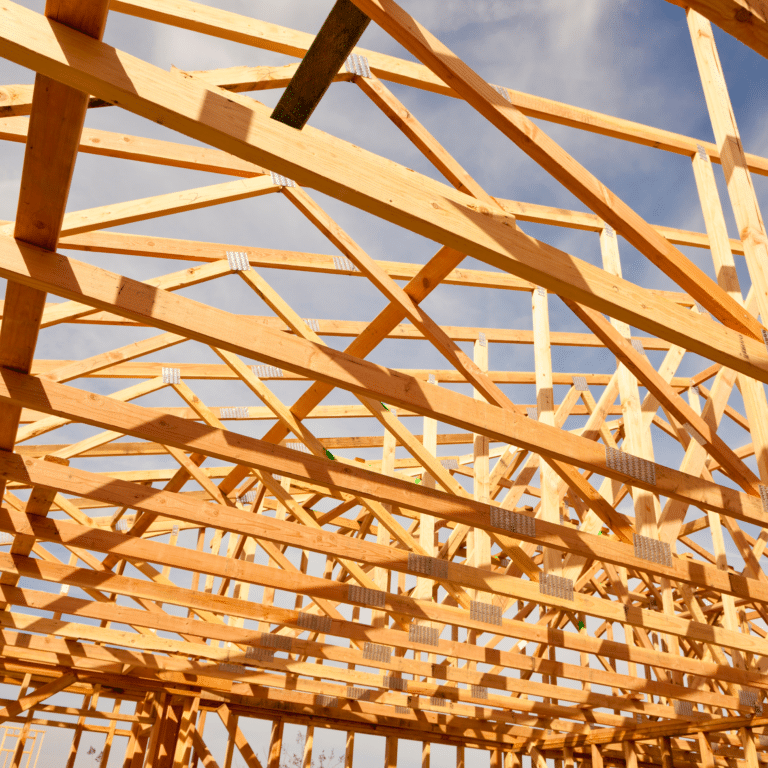
- Floor, wall, and roof framing built to structural drawings and Iowa building code
- Load-bearing walls and beams placed to structural plan and inspected before mechanical work
- Pressure-treated lumber at all concrete contact points per Iowa and IRC code
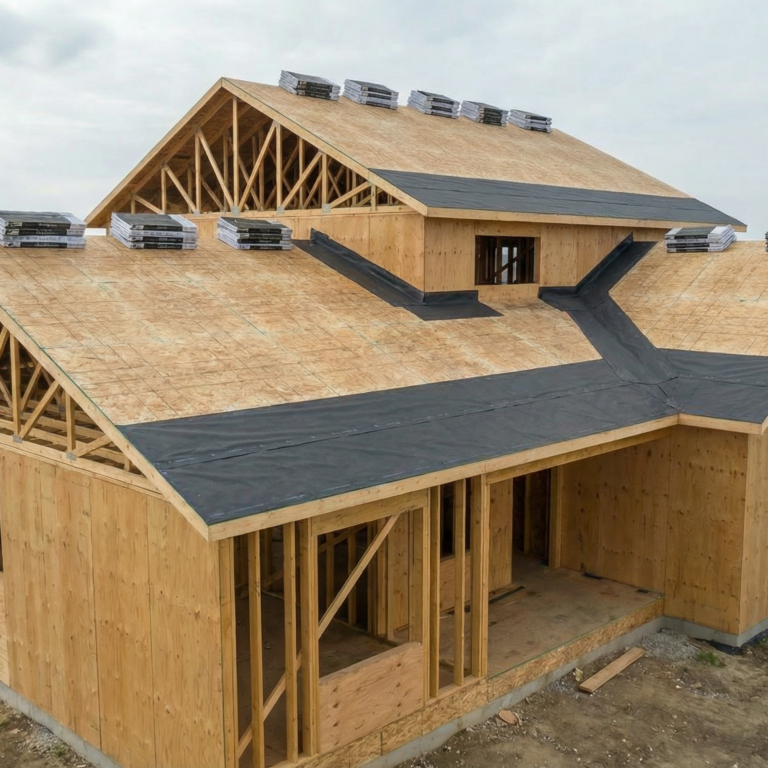
Roofing and exterior sheathing close the structure so mechanical work can begin inside regardless of Iowa weather. Ankeny winters bring freeze-thaw cycles that put real stress on any exterior assembly not installed to code. Iowa sits in Climate Zone 5A, which sets specific requirements for roof assemblies, air barriers, and wall sheathing performance. Roof sheathing, underlayment, and shingles are installed with proper flashing at all valleys, penetrations, and wall-to-roof transitions. Continuous housewrap provides the air and moisture barrier from foundation to roofline. Window and door rough openings are fully flashed before units are set. See our guide to Iowa energy-efficient construction options for what this means at the assembly level.
- Roofing with full flashing at all valleys, penetrations, and wall-to-roof transitions
- Continuous housewrap air and moisture barrier from foundation to roofline
- Window and door rough openings flashed before units are set
ROOFING AND EXTERIOR ENVELOPE
WINDOWS AND EXTERIOR DOORS
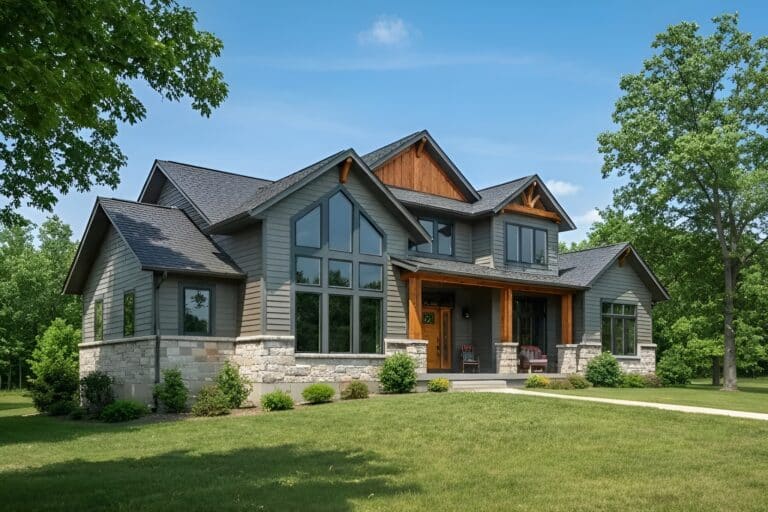
- Low-E glass windows and insulated exterior doors meeting Iowa energy code requirements
- All units tested for operation, seal, and weathertightness before interior work begins
- Egress windows installed in all below-grade bedrooms per Iowa building code
Mechanical rough-in is the most complex coordination step in a new home build. Plumbing drain lines, supply lines, and vent stacks are roughed in before concrete floors are poured where applicable. Electrical circuits and panel locations are laid out per Iowa NEC 2023 requirements under Iowa Administrative Code 481-404. HVAC ductwork and equipment locations are confirmed before walls close. Ankeny homes often include full basements and open main-floor plans, which means duct runs and plumbing chases require careful planning to avoid conflicts in the framing. Licensed electricians and plumbers perform all trade work. Iowa DIAL registration covers our general contracting role, and you can verify our registration at dial.iowa.gov.
- Plumbing, electrical, and HVAC rough-in coordinated across all trades before drywall
- Iowa NEC 2023 electrical compliance under Iowa Administrative Code 481-404
- Licensed electricians and plumbers on all mechanical work, permitted and inspected
MECHANICAL ROUGH-IN: PLUMBING, ELECTRICAL, AND HVAC
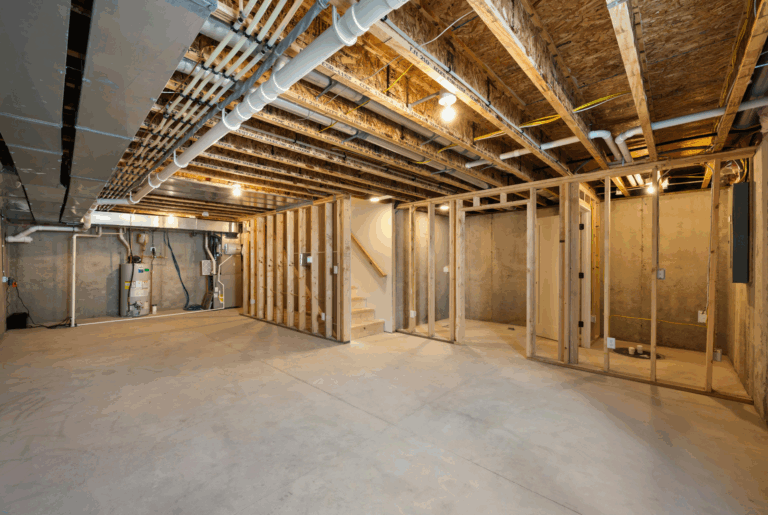
INSULATION INSTALLATION
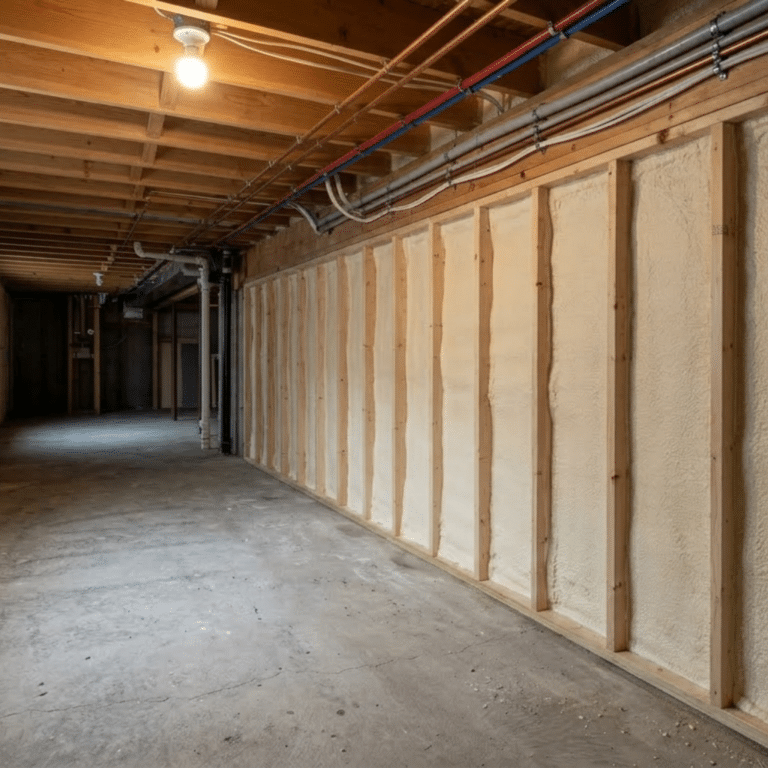
Insulation in a Central Iowa home has to perform across a temperature range that runs from well below zero in January to above 90 degrees in July. Iowa’s energy code requires exterior walls at R-20 or R-13 plus R-5 continuous, attic assemblies at R-49, and basement walls at R-15 continuous or R-19 cavity. Polk County homes benefit from spray foam in rim joist cavities and band joists to reduce air infiltration where walls meet the foundation. Proper insulation also supports radon control. Iowa is the only state with every county in EPA Radon Zone 1, and as many as 5 in 7 Iowa homes test above the EPA action level according to Iowa HHS. Radon-resistant new construction techniques per IRC Appendix F are integrated during every build. Doing it during construction costs $500 to $800. Retrofitting after occupancy costs $1,800 to $2,500 or more.
- Spray foam air sealing at rim joists and all penetrations before cavity insulation is ever installed
- Wall and attic insulation meeting Iowa energy code R-value requirements for Climate Zone 5A homes
- Radon-resistant construction details built into every West Des Moines foundation from day one
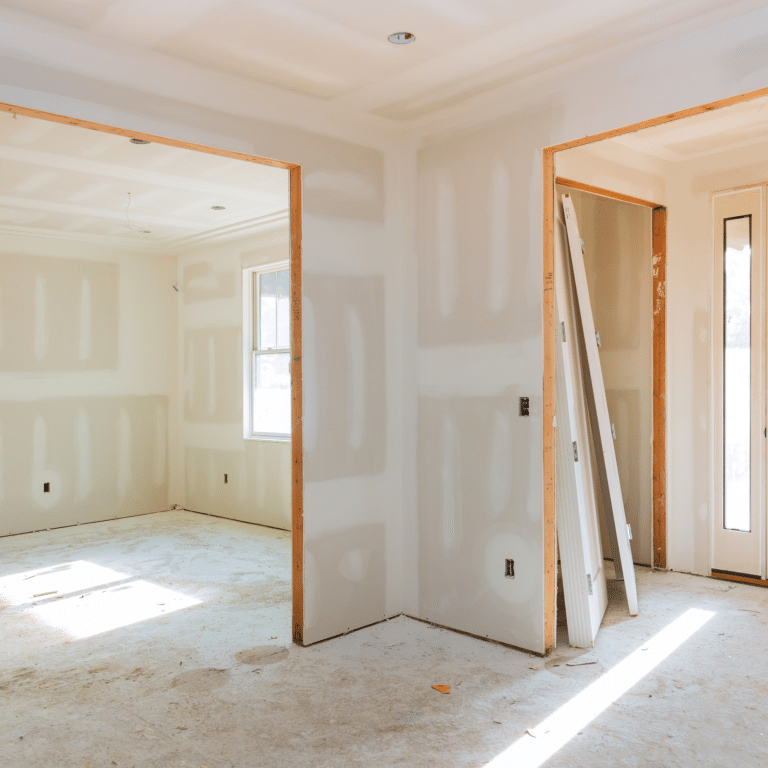
- Level 4 or Level 5 drywall finish on all walls and ceilings, smooth and ready for paint throughout
- Interior doors, trim, baseboard, and stair components installed in the proper sequence after drywall
- Cabinet installation coordinated with countertop fabrication to keep the West Des Moines build schedule moving
DRYWALL AND INTERIOR FINISHES
FLOORING, FIXTURES, AND EXTERIOR FINISH
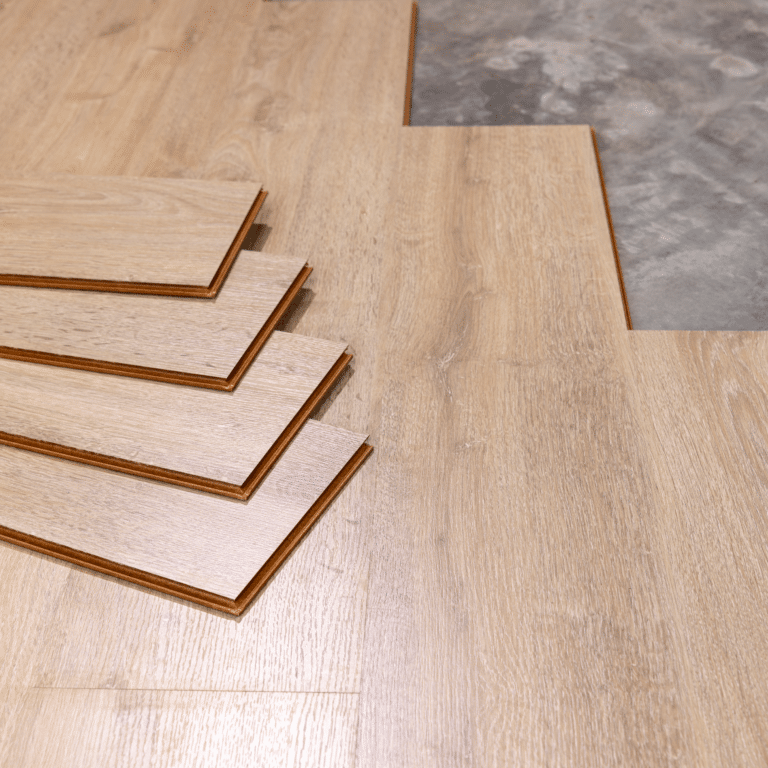
- Flooring installed after paint is complete to protect every finished surface in the new home
- Plumbing fixtures, light fixtures, hardware, and electrical devices installed and fully connected th
- Exterior siding, gutters, concrete flatwork, and final grading completed before the walkthrough date
- Full room-by-room inspection of every surface, connection, fixture, and finish detail completed with the homeowner
- Function test on all plumbing, electrical, HVAC, and GFCI circuits before handoff to the homeowner
- Complete clean up and delivery of all permit documentation, inspection records, and warranties at project close
FINAL WALKTHROUGH AND CLEAN UP
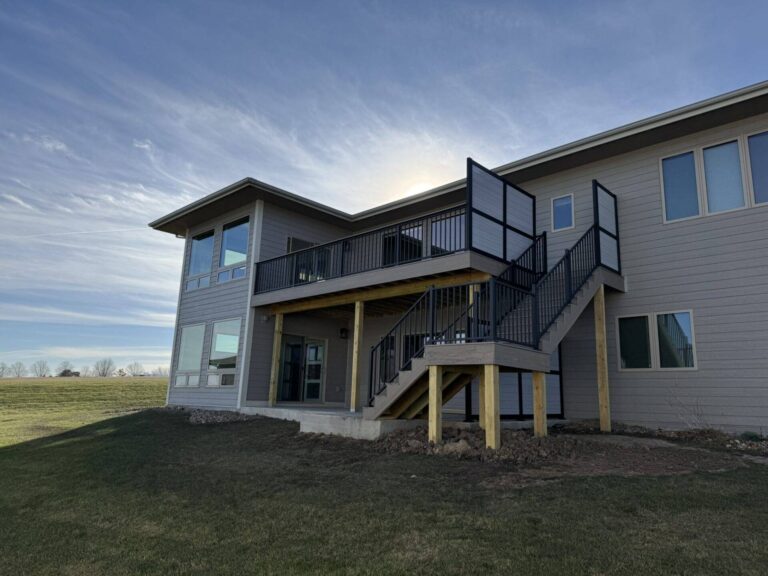
- Achievement
Trusted Home Building Contractors in Ankeny, IA









- Frequently Asked Questions
FAQs About Home Building in Ankeny
How much does it cost to build a home in Central Iowa?
New home construction in Ankeny starts at about $150 per square foot for a standard build. Total costs depend on square footage, finish level, lot conditions, and the complexity of the features you select. Costs vary by scope, materials, and complexity. A straightforward 1,600 square foot home with standard finishes lands in a different range than a 2,800 square foot custom build with premium selections. Polk County land costs vary widely depending on the subdivision and proximity to Ankeny’s school districts and amenities. Our Iowa home building costs guide covers the full pricing picture for this market. You can also review the cost to build a new home in Ankeny in 2026 for a detailed breakdown by finish level and home size.
How long does it take to build a custom home in Central Iowa?
Most custom home builds in Central Iowa run 8 to 12 months from first meeting to move-in. Size, complexity, finish level, and site conditions all affect that range. Permit processing in Ankeny is handled in-house by the city, and complete applications from established builders are typically reviewed within a few weeks. Scheduling inspection windows into the build timeline is something we plan for from day one. Our post on how long it takes to build a custom home in Iowa walks through what affects each phase of the schedule in detail.
Do I need a permit to build a home in Iowa?
Yes, without exception. New home construction requires a building permit in every Iowa jurisdiction. Ankeny requires structural drawings, energy compliance documentation, and a site plan with every permit application. Iowa adopted the 2024 IRC effective September 10, 2025, under Iowa Administrative Code 481-301.8. That update affects insulation, egress, and structural requirements across the board. We prepare every required document, submit the application, and coordinate directly with local staff so you do not have to track the process yourself. Our overview of Iowa residential construction regulations explains what to expect at each stage.
Should I build a ranch or a two-story home in Iowa?
Both are common choices for Ankeny homeowners and both have trade-offs depending on your lot, budget, and how your household plans to use the space. A ranch home puts all living space on one level, which works well for accessibility and long-term ease of use. A two-story build maximizes square footage on a smaller footprint, which can matter in Ankeny’s tighter subdivisions where lot prices reflect strong school district demand. Our guide comparing ranch vs. two-story custom homes in Iowa breaks down the cost and lifestyle differences clearly so you can decide before design begins.
Can I build a custom home for under $500,000 in Central Iowa?
Yes, and most standard custom home builds in Central Iowa land well under that number with thoughtful planning. A well-designed 2,000 to 2,500 square foot custom home with quality standard finishes can typically be built in the $350,000 to $475,000 range, depending on lot costs, site conditions, and finish selections. Ankeny’s land costs vary by neighborhood and school zone proximity, so budget flexibility depends on which part of the city you are building in. Costs vary by scope, materials, and complexity. Read more in our breakdown of whether you can build a custom home under $500K in Iowa in 2026.
What is the difference between a custom build and a spec home?
A custom home is designed from scratch around your specific needs, built on a lot you select, with you involved in every major decision throughout the process. A spec home is built on a fixed plan and sold after completion, which limits customization but can move faster if you need to close quickly. Tiny homes are a fit for minimalist buyers or secondary-use properties, though Ankeny zoning requirements must be confirmed before that path is pursued. Multi-family builds work for investors or buyers seeking multigenerational living options. Busy Builders handles all four types across Central Iowa. Our post on modern home styles Iowa builders are using covers current design directions worth considering at the planning stage.
- Newest Blogs
Home Building Blogs for Ankeny and Central Iowa
Building on Your Own Land in Iowa: What to Know Before You Start
Owning a piece of land and picturing your custom home on it is one of the most exciting places to start a build. It also comes with a set...
What Does a General Contractor Do in Iowa? A Homeowner’s Complete Guide
Hiring a general contractor is the single biggest decision in most home projects, yet many homeowners are not sure what a GC actually does or what Iowa requires of...
What Does a General Contractor Do in Iowa?
A general contractor turns a project you can describe into a building you can live in. In Iowa, the role carries legal duties, registration requirements, and coordination work most...