Building a new home in Iowa means making material decisions that a generic guide won’t prepare you for. Iowa’s freeze-thaw cycles crack vinyl siding, its hailstorms shorten roof lifespans, and 2026 lumber prices are volatile enough that locking your material costs early is real financial advice. This post cuts through the options category by category and tells you what actually holds up in Iowa conditions, what it costs, and where the upgrade is worth it. By the end, you’ll be able to walk into a builder meeting with a clear sense of what you want and why.
TLDR: Iowa’s climate runs in Climate Zones 5 and 6, which puts it among the toughest thermal environments in the country. That fact changes the math on siding, roofing, insulation, and foundations compared to most states. The cheapest material upfront is rarely the cheapest material over 20 years in Iowa conditions. This guide explains that trade-off for each major category.
Why Iowa’s Climate Is the Starting Point for Every Material Decision
Iowa sits in Climate Zones 5 and 6, meaning your building envelope faces more stress than homes in most of the country. Three conditions drive that stress: freeze-thaw cycles that repeat dozens of times each winter, hailstorms that make Iowa one of the top states for property damage claims, and summer humidity that adds moisture load to everything touching the exterior.
The materials that perform well in those conditions are not always the ones that cost the least at the lumber yard. Vinyl siding, for example, becomes brittle in Iowa cold and expands and contracts enough across the seasons to develop visible waviness and cracking over time. A standard asphalt roof carries a 30-year label, but Iowa hail regularly shortens that lifespan to 15 to 25 years. And framing lumber in 2026 is priced against a backdrop of Canadian tariffs approaching 45%, meaning a builder who locks your material costs early is doing you a real financial favor.
Pro tip 1: Before you finalize any material category on your build, ask your builder one question: “How does this perform specifically in Iowa freeze-thaw and hail conditions?” If they don’t have a concrete answer, that tells you something.
Foundation Materials: Why the Full Basement Wins in Iowa
Iowa’s frost line runs at least 42 inches deep, and that single fact shapes your foundation decision more than anything else. Your footings have to go below that depth regardless of what type of foundation you choose, which means the cost argument for a slab-on-grade largely disappears. Once you’re digging to 42 inches anyway, you might as well excavate further and capture the living and storage space a full basement provides.
Slab-on-grade can work in Iowa, but it demands very specific insulation and drainage engineering to survive repeated freeze-thaw cycles without heaving. In most Central Iowa builds, a full basement is simply the more practical and more valuable choice.
Poured concrete outperforms concrete block for Iowa basements. It’s denser, less permeable, and better suited to the hydrostatic pressure that Iowa’s clay-heavy soils can generate during wet seasons. Waterproofing is not optional in Iowa: exterior drainage board, an elastomeric membrane on the foundation walls, and a sump pump system form the standard package for any Iowa basement.
Insulated concrete forms (ICF) cost more but integrate insulation directly into the foundation wall, reducing heat loss at one of the most thermally vulnerable points in a home. Worth discussing with your builder if long-term energy performance is a priority.
For a deeper look at how Iowa soil conditions affect your foundation decision, see our Iowa foundation guide.
| Foundation Type | Cost per Sq Ft | Total Cost (2,000 Sq Ft) | Iowa Frost Protection | Best For |
|---|---|---|---|---|
| Full Basement | $35-$50+ | $70,000-$100,000 | Yes, footings below frost line | Most Iowa new construction |
| Crawl Space | $15-$18 | $30,000-$36,000 | Partial | Sloped lots, tight budgets |
| Slab-on-Grade | $6-$14 | $12,000-$28,000 | Requires careful engineering | Specific lots with proper design |
Costs vary by soil conditions, site prep requirements, and finish level. These are planning benchmarks only.
Framing: Managing Lumber Price Volatility in 2026
Your framing is the structural skeleton of the home, and in 2026 it’s priced against one of the most uncertain lumber markets in years. Softwood framing lumber in Iowa runs about $2.75 per board foot, and LVL engineered lumber runs about $4.20 per board foot. According to NAHB framing lumber price data, national framing lumber prices opened January 2026 at $872.03 per thousand board feet, a figure that can shift significantly as tariffs on Canadian softwood imports, currently approaching 45%, continue to ripple through the supply chain.
The practical implication is straightforward: work with a builder who can lock material pricing through supplier contracts before your project starts. A post-contract lumber price increase is a budget problem you don’t want mid-build.
On the material decision itself, engineered lumber, including LVL beams and I-joists, costs more per board foot than dimensional lumber but reduces waste, minimizes deflection in floor systems, and handles Iowa’s freeze-thaw stress better because it doesn’t swell, shrink, or twist the way green dimensional lumber can as it dries through the seasons. On floor systems especially, the premium is usually worth paying.
Pro tip 2: Ask your builder directly whether their material pricing is locked at contract signing or subject to market adjustment. The answer should be locked.
Siding: The Iowa Case for Fiber Cement Over Vinyl
Vinyl siding is the most popular choice in Iowa because it’s inexpensive and low-maintenance. Those are real advantages. But vinyl has a specific vulnerability in Iowa’s climate: it becomes brittle in extreme cold and undergoes significant thermal expansion and contraction across the season range. Repeated freeze-thaw cycles can cause visible waviness, cracking from hail or ice impact, and long-term cosmetic degradation that affects your home’s resale appearance.
Fiber cement siding costs more upfront at $4.50 to $6.50 per square foot in material cost, compared to $2.00 to $4.00 for vinyl. But fiber cement is dimensionally stable across temperature swings, carries a Class A fire rating, resists impact, and holds paint for 10 to 15 years without repainting. A full siding replacement in Des Moines runs $7,600 to $12,900. If vinyl requires replacement in 15 years and fiber cement does not, the 20-year cost comparison frequently favors fiber cement even though it costs more on day one. The upfront difference on a typical Iowa build is often $3,000 to $6,000. The replacement cost is often more than double that.
Illustrative scenario: an Ankeny homeowner chose vinyl to save $4,500 on a 2,400-square-foot new build. After a severe hail event two winters later, three panels cracked and several buckled from thermal movement. Repair estimate: $1,800. The cost advantage of vinyl was now $2,700, with another 25-plus Iowa winters still ahead.
| Siding Material | Material Cost per Sq Ft | Iowa Freeze-Thaw Performance | Maintenance | Iowa Lifespan |
|---|---|---|---|---|
| Vinyl | $2.00-$4.00 | Fair; brittle in extreme cold | Low | 20-30 years with repairs |
| Fiber Cement | $4.50-$6.50 | Excellent; dimensionally stable | Low to moderate | 30-50 years |
| Cedar/Wood Shake | $5.00-$8.00 | Fair; requires regular sealing | High | 15-25 years |
| Brick Veneer | $6.50-$9.00 | Excellent | Very low | 50-100 years |
Roofing: Iowa Hail Changes the Calculation
Iowa is one of the top states for hail damage insurance claims. That fact changes the roofing math compared to most of the country. A standard 30-year asphalt shingle installs at $5 to $8 per square foot in the Midwest in 2026. Its actual lifespan in Iowa hail conditions runs 15 to 25 years, shorter than the product label implies.
Class 4 impact-resistant shingles cost $7,000 to $10,000 more on a typical Iowa roof but reduce hail damage claims by 63% according to Insurance Institute for Business and Home Safety data. The Iowa Insurance Division reports that Class 4 materials qualify for insurance premium discounts of 5 to 15%. On a $2,200 annual homeowners policy, a 12% discount is $264 per year. Over 20 years, that’s $5,280 in savings on a single line item.
Illustrative scenario: a Grimes couple chose standard asphalt shingles on their new build, then called their insurance company afterward to ask about Class 4 discounts. They learned they qualified for a 12% reduction. On their $2,200 policy, that’s $264 per year and more than $5,000 over 20 years. The Class 4 upgrade would have added about $8,000 upfront, breaking even in under 16 years, with significantly fewer hail claims along the way.
Metal roofing installs at $10 to $15-plus per square foot and averages $10,000 to $12,000 for a typical Des Moines home. Its lifespan runs 40 to 70-plus years. For a homeowner planning to stay long-term, metal typically eliminates one or two full shingle replacement cycles and handles Class 4 hail events without damage.
Pro tip 3: Before you finalize your roofing material, call your homeowner’s insurance carrier and ask what discount they offer for Class 4 shingles. In Iowa, that conversation often changes the math.
| Roofing Material | Installed Cost per Sq Ft | Iowa Lifespan | Hail Resistance | Insurance Benefit |
|---|---|---|---|---|
| Standard Asphalt (30-yr) | $5-$8 | 15-25 years | Low | Standard rates |
| Class 4 Impact-Resistant | $6.50-$9.50 (planning benchmark) | 25-35 years | High | 5-15% premium discount |
| Metal Roofing | $10-$15+ | 40-70+ years | Excellent | Potential discounts vary |
Installed costs vary by roof pitch, size, and material availability. Class 4 insurance discounts vary by carrier and policy. Confirm with your insurer before making a final decision.
Insulation: Where Iowa’s Energy Code Raises the Bar
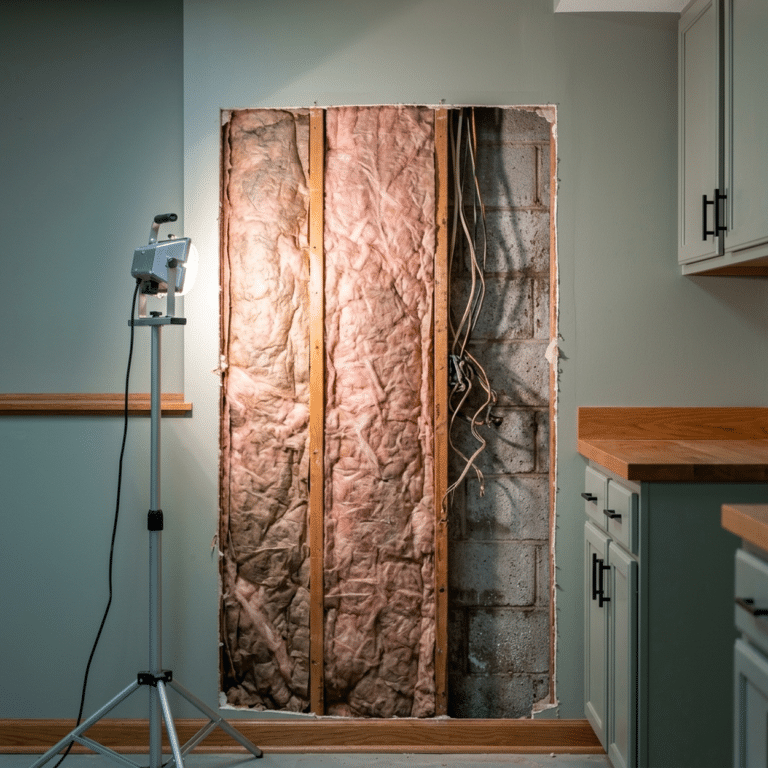
Iowa’s 2012 IECC energy code sets minimum requirements for all new residential construction: R-49 in the attic, R-20 in walls, and air leakage at or below 4 ACH50 confirmed by blower-door test. Those minimums apply to every new build.
Fiberglass batt meets code at the lowest upfront cost, running $0.40 to $0.60 per square foot installed. The real-world catch is that batts must be cut precisely. Gaps and compression reduce actual performance significantly, and Iowa’s extreme temperature differentials make those gaps costly.
Spray foam delivers more consistent performance. Open-cell spray foam runs $1.00 to $2.50 per square foot installed and works well for interior walls and attic floors. Closed-cell runs $2.00 to $5.00 per square foot, provides R-6 to R-7 per inch, and acts as a vapor barrier, making it the right choice for rim joists, roof decks, and crawl spaces.
A whole-house spray foam project runs $4,000 to $26,000 depending on scope, but Iowa homeowners typically see 30 to 50% reductions in heating and cooling costs with a 3 to 5 year payback. The Iowa HOMES program and utility rebates are available for qualifying insulation upgrades. For a detailed breakdown of what these upgrades look like in practice, see our guide to Iowa insulation upgrades.
Illustrative scenario: a Boone County homeowner asked their builder for spray foam only in rim joists and basement walls on a 2,400-square-foot new build. Cost: $3,200. Estimated energy savings: approximately $900 per year on heating. Payback period: under four years.
Pro tip 4: Rim joist insulation with closed-cell spray foam is the highest-ROI insulation upgrade most Iowa builders skip. Ask for it as a specific line item in your contract. The cost is $1,200 to $2,000 and the savings are immediate.
| Insulation Type | Installed Cost per Sq Ft | R-Value per Inch | Iowa Best Use | Vapor Barrier |
|---|---|---|---|---|
| Fiberglass Batt | $0.40-$0.60 | R-2.2-3.8 | Wall cavities, attic floors | No |
| Cellulose Blown-In | $0.60-$1.20 | R-3.2-3.8 | Attic, irregular cavities | No |
| Open-Cell Spray Foam | $1.00-$2.50 | R-3.5-4.0 | Interior walls, attic floors | No |
| Closed-Cell Spray Foam | $2.00-$5.00 | R-6.0-7.0 | Rim joists, crawl spaces, roof decks | Yes |
Frequently Asked Questions
Q: What siding holds up best in Iowa winters?
Fiber cement is the stronger long-term choice for Iowa builds. It’s dimensionally stable across the temperature range Iowa delivers, resists hail impact without cracking, and holds paint for 10 to 15 years without repainting. Vinyl costs $2 to $4 per square foot in material versus $4.50 to $6.50 for fiber cement, but a full siding replacement in Des Moines runs $7,600 to $12,900. When you factor in the likelihood of replacement, the 20-year cost of vinyl often exceeds fiber cement. The upfront difference on a typical home is $3,000 to $6,000.
Q: Is metal roofing worth the extra cost in Iowa?
For homeowners planning to stay 15-plus years, metal typically wins on long-term cost in Iowa. Metal installs at $10 to $15-plus per square foot versus $5 to $8 for standard asphalt, but metal lasts 40 to 70-plus years while Iowa hail conditions shorten asphalt lifespan to 15 to 25 years. Class 4 impact-resistant shingles offer a middle path: they add $7,000 to $10,000 upfront but reduce hail claims by 63% and qualify for insurance premium discounts of 5 to 15% through the Iowa Insurance Division. Call your carrier before you decide.
Q: What insulation is required for new homes in Iowa?
Iowa’s 2012 IECC energy code requires a minimum of R-49 in the attic, R-20 in walls, and air leakage at or below 4 ACH50 confirmed by a blower-door test. These minimums apply to all new residential construction. Most builders meet them with fiberglass batt and a blower-door test. Spray foam exceeds those minimums and delivers 30 to 50% reductions in heating and cooling costs, with a 3 to 5 year payback. The Iowa HOMES program and utility rebates are available for qualifying upgrades.
Q: What foundation type is most common for Iowa homes?
A full basement is the most practical choice for most Iowa new construction. Iowa’s 42-inch frost line means footings must go deep regardless, and at that excavation depth it makes sense to capture the living space a basement provides. A full basement runs $35 to $50-plus per square foot, or $70,000 to $100,000 for a 2,000-square-foot footprint. Slab-on-grade runs $6 to $14 per square foot and is significantly cheaper upfront, but requires specific drainage and insulation engineering to survive Iowa’s freeze-thaw cycles without problems.
Q: How do lumber prices in 2026 affect my Iowa home build budget?
Framing lumber pricing in 2026 is genuinely uncertain. National prices opened the year at $872.03 per thousand board feet against a backdrop of Canadian tariff exposure approaching 45%, and mill curtailments in late 2025 add further volatility. Softwood framing in Iowa runs about $2.75 per board foot and LVL engineered lumber about $4.20 per board foot as current benchmarks, but those figures can shift. The practical advice is to work with a builder who locks material pricing through supplier contracts at signing, so market movement becomes the builder’s risk to manage rather than yours.
Key Takeaways
Iowa’s climate zones demand performance-grade materials. Climate Zones 5 and 6 mean freeze-thaw stress, hail exposure, and humidity swings that generic national guides don’t account for. Base every material decision on Iowa conditions, not national averages.
Full basements win in Iowa. The 42-inch frost line makes deep excavation necessary regardless of foundation type. A full basement adds usable space and solves the frost problem in one step.
Fiber cement outperforms vinyl over 20 years in Iowa. The upfront cost difference is $3,000 to $6,000. A siding replacement runs $7,600 to $12,900. The long-term math usually favors fiber cement.
Iowa hail makes your roofing decision an insurance conversation. Class 4 shingles qualify for 5 to 15% premium discounts and reduce hail claims by 63%. Call your carrier before you finalize your roofing material.
Lock your lumber costs at contract signing. Tariffs on Canadian softwood and mill curtailments make 2026 framing lumber pricing volatile. A builder who locks pricing protects your budget from mid-build surprises.
Spray foam delivers the highest insulation ROI in Iowa. Rim joists with closed-cell spray foam cost $1,200 to $2,000 and pay back in under four years through heating savings. Ask for it as a specific line item.
Ready to Build in Central Iowa?
You now have a material-by-material picture of what Iowa’s climate actually demands. The difference between a well-built Iowa home and an expensive one often comes down to these decisions made early, before contracts are signed and before materials are ordered.
Busy Builders has helped 1,000-plus Central Iowa homeowners build and remodel since 2020. We bring direct experience with what holds up in Iowa conditions, transparent recommendations, and the supplier relationships to lock material pricing before the market moves.
Here’s what working with us looks like:
- Free consultation to discuss your material choices, budget, and timeline
- Transparent, itemized estimates with material specs called out clearly
- Local knowledge of Iowa freeze-thaw, hail, and energy code requirements
- Supplier relationships that help stabilize lumber and material pricing
Explore our new home construction service to learn more about how we approach every phase of a Central Iowa build.
Call: 844-435-9800 Website: busybuildersiowa.com
We serve West Des Moines, Ankeny, Grimes, Boone, Norwalk, and communities across Central Iowa. Schedule your free consultation today.
Busy Builders | Full-Service Construction and Remodeling | Serving Central Iowa Since 2020