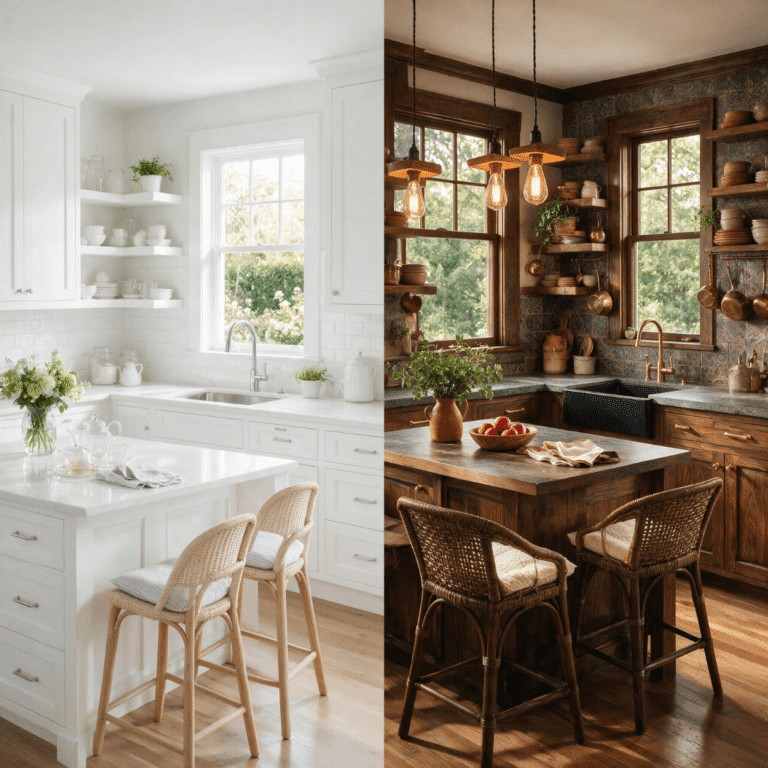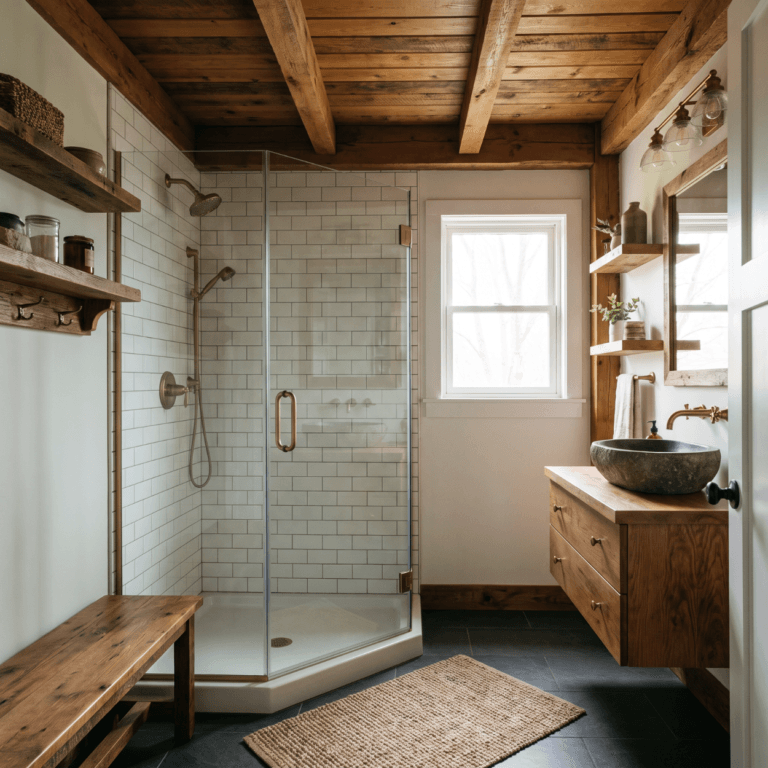
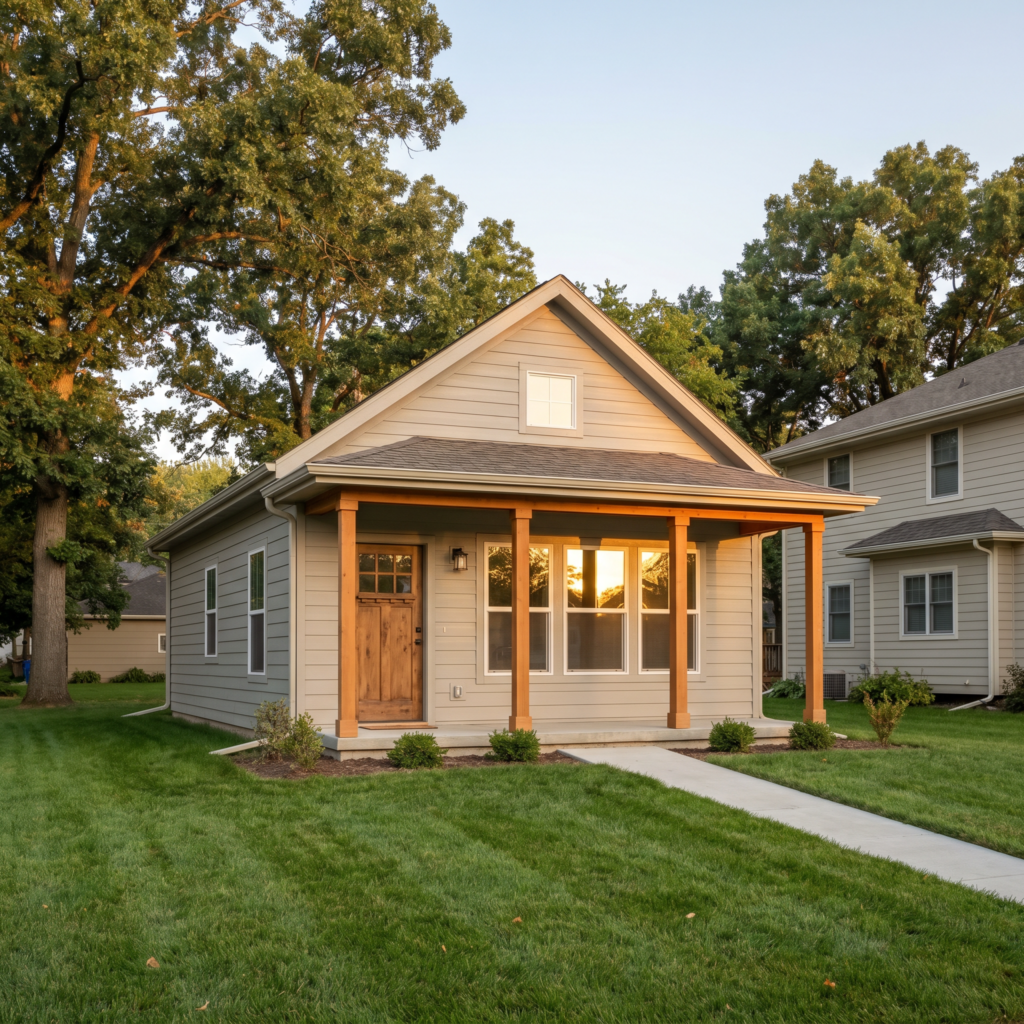
Iowa homeowners have been asking about accessory dwelling units for years, and as of July 1, 2025, the legal landscape changed in a meaningful way. This guide explains what an ADU is, what Iowa’s new law actually says, what it costs to build one in Central Iowa, and the one catch that trips up even well-prepared homeowners.
This article provides general planning information only. All cost figures are estimates that vary significantly by project type, size, site conditions, contractor, and finish choices. Nothing in this article constitutes legal or financial advice. Always consult your city’s building department, your HOA documents (if applicable), and a licensed attorney before beginning an ADU project.
TLDR: On July 1, 2025, Iowa became the 14th state to legalize ADUs statewide at the time of passage. Under Iowa Senate File 592, every single-family homeowner in Central Iowa now has the legal right to add a second living unit to their property, without special hearings, rezonings, or owner-occupancy requirements. Garage conversions start at around $60,000 and go up to $150,000. Detached backyard units run $120,000 to $250,000 or more. A legal ADU can increase property value by 20 to 30%. But HOA rules can still block you. Read on for the full picture.
What Is an ADU?
An ADU, accessory dwelling unit, is a self-contained living space with its own bedroom, kitchen, bathroom, and lockable entrance, located on the same lot as a primary home. It is not a finished basement with a spare bedroom. It is a separate, independent home that happens to sit on the same property as yours.
Common names for ADUs include granny flats, in-law suites, backyard cottages, carriage houses, and garage apartments. All refer to the same concept: separate living quarters that do not share cooking or bathroom facilities with the main house.
Four types exist in Central Iowa. A detached ADU is a standalone structure in the backyard or side yard. An attached addition connects to the main home with a private entrance. A garage conversion turns an existing detached or attached garage into living space. A basement conversion transforms an unfinished full basement into an independent unit. Under Iowa law, tiny homes on a permanent foundation can also qualify as an ADU within this framework.
According to AARP Iowa, ADUs are a practical tool for aging in place, “creating separate living quarters with a bedroom, kitchen and bathroom, spaces that aren’t shared with the main house”, allowing families to stay close while maintaining independent living.
Iowa’s New ADU Law, What SF 592 Actually Says
Before July 2025, many Iowa cities banned or heavily restricted ADUs. Some required public hearings. Some required the property owner to live on site. Some restrictions were placed on who could occupy the unit. All of that changed with Senate File 592.
Under SF 592, effective July 1, 2025:
- Every Iowa city and county must allow at least one ADU on any lot with a single-family residence
- ADUs can be up to 1,000 square feet or 50% of the primary home’s size, whichever is larger
- Permits must be approved on the same timeline as a single-family residence, no discretionary hearings
- Cities cannot require the ADU to match the roof pitch, exterior design, or materials of the main house
Cities and counties also cannot require extra parking beyond what the primary home requires, mandate owner-occupancy, require a family or marital relationship between occupants, restrict ADU occupancy by income or age, impose setbacks more restrictive than those applied to the main home, or require separate utility lines if shared utilities with separate metering are available.
The table below summarizes the law at a glance.
| Item | What SF 592 says |
|---|---|
| Who benefits | Every owner of a single-family lot in Iowa |
| Effective date | July 1, 2025 |
| Maximum ADU size | 1,000 square feet or 50 percent of the main home, whichever is larger |
| Owner-occupancy required? | No, cities cannot require it |
| Extra parking required? | No, nothing beyond what the main home requires |
| Must match the main home’s exterior? | No, cities cannot require matching design, roof pitch or materials |
| Permit hearing required? | No, approved on the same timeline as a single-family home |
| HOA restrictions? | Yes, HOA and deed restrictions still apply |
The One Catch Every Iowa Homeowner Must Know
SF 592 does not override HOA rules, deed restrictions, or common interest community agreements. Many Central Iowa subdivisions, particularly in newer neighborhoods in Waukee, Grimes, and West Des Moines, were built under HOA documents that restrict or prohibit secondary structures and ADUs. SF 592 explicitly preserves that authority.
A city permit does not override your HOA. Before spending any time or money on ADU planning, read your HOA covenants completely. If those documents are unclear about ADUs, consult a real estate attorney before proceeding. This is the most important step in the process, and it comes before everything else.
Why Iowa Homeowners Are Building ADUs in 2026
Three motivations drive most Central Iowa ADU projects.
Multigenerational living. Iowa will have more residents 65 and older than under 18 by 2030, the fastest-aging demographic shift in the Midwest. Aging parents who want independence but need proximity, or adult children who want to be close to family without sharing a kitchen, an ADU solves both situations cleanly: separate living, shared property.
Rental income. Iowa rents vary significantly by city, from approximately $1,080 per month in parts of Des Moines to $1,384 or more in suburban markets like Waukee and Ankeny as of 2026. In Ankeny, median rent ranges from approximately $1,300 to $1,425 per month, depending on unit type. In Waukee, average rents range from approximately $1,384 to $1,900 per month, depending on unit type and bedroom count. A legal, permitted ADU in either market can generate meaningful monthly income. Iowa landlord-tenant law (Iowa Code Chapter 562A) governs the relationship: security deposits are capped at two months’ rent, 24-hour advance notice is required before entry, and a written lease agreement is standard practice. Consult an attorney before renting any ADU, rental regulations vary,y and HOA restrictions can still prohibit rental use even where city rules allow it.
Property value. A legal, permitted ADU is one of the few projects that adds a second income-capable unit to a single-family lot, and appraisers can value it as such when it is permitted and separately metered or metered-ready. How much it adds depends on the property, the location, the quality of the unit and the market, and it is not guaranteed. An unpermitted ADU, by contrast, can reduce value and create liability at resale. Always build with permits.
Illustrative scenario: A couple in Ankeny has aging parents who want to remain independent but need to be nearby. They convert their detached two-car garage into a 500-square-foot ADU with a bedroom, bathroom, kitchenette, and private entrance. Estimated construction cost: $80,000 to $150,0,00, depending on the condition of the existing structure and finish level. The parents move in; the couple avoids assisted-living costs and keeps the family close. This is an illustrative scenario, not a quote or guarantee.
What Does an ADU Cost in Central Iowa?
Iowa construction costs run approximately 14% below the national average, which means national ADU cost guides tend to overstate what you will pay here. The table below applies a regional adjustment to national figures for 2026, for Central Iowa planning purposes.
| ADU Type | What It Is | Iowa Est. Range | Best For |
|---|---|---|---|
| Garage Conversion | Convert existing attached or detached garage | $60,000 to $150,000 | Most affordable path; uses existing structure. This range applies to full ADU-quality conversions with kitchen, bathroom, HVAC, and permits, basic garage-to-living-space conversions cost less but do not qualify as legal ADUs. |
| Basement Conversion | Convert unfinished basement to separate unit | $50,000 to $150,000 (est.) | Iowa homes commonly have full basements already |
| Attached Addition | Addition connected to main home, separate entrance | $100,000 to $200,000 (est.) | More space; shared wall saves foundation cost |
| Detached New Construction | Standalone backyard or side-yard unit | $120,000 to $250,000 | Maximum privacy; most design flexibility |
Planning estimates for the 2026 Central Iowa market conditions. Actual costs vary significantly by project size, site conditions, finishes, and contractor. Get a project-specific quote before budgeting.
Permit fees in Ankeny (verify with your municipality, costs vary by city):
- Detached ADU permit: $700 to $3,500, approximately 6 weeks review
- Conversion permit: $350 to $2,100, approximately 4 weeks review
- Attached ADU permit: $560 to $2,800, approximately 5 weeks review
Add a 10-15% contingency to every ADU budget. Iowa’s clay soils and older utility infrastructure regularly lead to unexpected costs during demo and excavation. See the Iowa home building costs guide for broader context on what construction costs in Central Iowa.
Iowa-Specific Factors That Affect Your ADU Budget
Frost line and foundation. Iowa’s frost line sits at least 42 inches below grade. Any detached ADU on a permanent foundation must meet this requirement, the same standard as a new home. This adds to the foundation cost compared to national estimates from warmer states. For a full overview of what this means for new construction in Iowa, see the Busy Builders home building service page.
Clay soils and site prep. Central Iowa’s clay soils affect drainage, grading, and site preparation for detached ADUs. Budget an additional $5,000 to $15,000 for site prep on challenging lots beyond the base project cost.
Radon. Iowa is the only state where every county is classified as EPA Radon Zone 1, the highest risk designation. Any new ADU should incorporate passive radon-resistant construction (RRNC) techniques during construction, cost: typically $500 to $1,500. Retrofitting after the fact costs $1,500 to $3,000 or more. Build it in from day one. Iowa’s radon law, HF 2297, was signed May 19, 2026 and directs the state to require a passive radon system in every new single-family and two-family home once the rule is adopted into the building code. Whether a detached ADU falls under it will depend on how the code amendment is written; build the system in regardless. Our guide to the new radon law covers the timeline.
Basement conversions. Central Iowa homes almost universally have full basements due to the 42-inch frost line requirement, which makes basement ADU conversions more accessible here than in most other states. If your home has an unfinished basement, a basement conversion may be your lowest-cost path to a legal ADU. See the Busy Builders basement finishing page for what a full basement conversion involves.
Contractor registration. Iowa requires all general contractors to be registered with the Iowa Department of Inspections, Appeals, and Licensing (DIAL). Verify any contractor at dial.iowa.gov before signing anything. Electricians, plumbers, and HVAC technicians hold separate state licenses, confirm all subcontractors are properly credentialed before work begins.
Financing Your ADU in Central Iowa
Three financing paths are common for Central Iowa ADU projects.
A HELOC (Home Equity Line of Credit) is the most popular option for Iowa ADU builders. It allows homeowners to draw funds as needed during construction and pay interest only on the amount used. Rates are variable, confirm current rates with your lender before planning.
A construction loan covers up to 80% of the project cost, requires a 10-25% down payment, and typically charges interest-only during the build. Construction loans in Iowa have an APR of approximately 6.5% to 9.5% in 2026. See the Iowa construction financing guide for how the process works.
A cash-out refinance converts existing home equity to a lump sum by replacing your current mortgage. This works best when your existing mortgage rate is already close to today’s rates.
Fannie Mae guidelines allow rental income from an ADU to be counted toward mortgage qualification with proper documentation, subject to lender requirements. Ask your lender directly about this if rental income is part of your plan.
Financing decisions should be made in consultation with a qualified mortgage lender or financial advisor. Interest rates and terms vary by lender and borrower profile.
Who Builds ADUs in the Des Moines Metro?
Short answer: a registered general contractor who already builds additions and finishes basements, because an ADU is one of those two jobs with a kitchen added. Busy Builders is a registered Iowa contractor (DIAL C140184) with 1,285+ completed projects across Central Iowa since 2020, most of them additions, full remodels and basement finishes; a detached or attached ADU is an addition with its own bath, kitchen and entrance, and a basement ADU is a basement finish with an egress bedroom and a kitchenette.
One of our finished two-story additions carries an upper deck and exterior finishes matched to the original house; that is the attached-with-separate-entrance shape most Central Iowa ADUs take. For a parent moving in, the choice between an ADU and a basement suite comes down to stairs and budget, and our comparison of an ADU versus a basement suite in West Des Moines prices both directions.
| What to ask an ADU builder | Why it matters |
|---|---|
| DIAL registration number | Iowa registers general contractors; verify it at dial.iowa.gov |
| Who pulls the building, electrical, plumbing and HVAC permits | Licensed trades pull their own; the GC coordinates |
| How the unit will be metered and addressed | Decides whether it can ever be rented or appraised as a unit |
| Whether the city’s zoning review has been checked against SF 592 | Setbacks and height still apply; design matching does not |
| A written schedule with inspection dates | Additions run 12 to 20 weeks; basements 8 to 12 |
Which ADU Type Is Right for You?
| Situation | Best ADU Type | Key Consideration |
|---|---|---|
| Have a detached garage you don’t use | Garage Conversion | Least disruption; existing structure reduces cost |
| Have an unfinished full basement | Basement Conversion | Lowest land impact; Iowa homes commonly have this |
| Want maximum privacy for occupants | Detached New Construction | Highest cost; most design flexibility |
| Limited lot, want to add space | Attached Addition | Shares wall with main home; saves foundation cost |
| HOA neighborhood | Check HOA documents first | SF 592 does not override HOA restrictions |
For homeowners whose project involves more square footage than a garage or basement can provide, a home addition may be worth comparing against a detached ADU. An addition connects to the primary home but can still include a private entrance, bathroom, and kitchenette that meet ADU standards.
FAQs
Q: Is building an ADU in Iowa now legal everywhere? Almost, but not unconditionally. Iowa Senate File 592, effective July 1, 2025, requires every city and county to allow at least one ADU on single-family lots. However, HOA rules, deed restrictions, and common interest community documents can still prohibit or limit ADUs, and SF 592 explicitly preserves that authority. Before planning any ADU, review your property’s HOA documents and any deed restrictions. Consult a real estate attorney if those documents are unclear.
Q: What is the most affordable ADU type in Central Iowa? Garage conversions are typically the most affordable path because the primary structure already exists. A one-car or two-car garage conversion in Central Iowa runs roughly $60,000 to $150,000, depending on condition, size, and finish level. Basement conversions are another cost-effective option for homes with existing unfinished full basements. Both are planning estimates, get a site-specific quote before committing to a budget.
Q: How much can an ADU increase my property value in Iowa? It depends on the property and the market, and no figure is guaranteed. What is reliable: a permitted ADU can be appraised as a rentable unit, an unpermitted one cannot, and the difference between those two at resale is larger than any percentage a guide can quote. An unpermitted ADU can reduce value and create liability at resale. Always build with permits pulled.
Q: Does Iowa require radon mitigation in a new ADU? Iowa is the only state in which all counties are in EPA Zone 1 for radon risk. HF 2297, signed in May 2026, will require passive radon systems in new single-family and two-family homes once adopted into the state building code; how it applies to detached ADUs depends on the final rule. Regardless, incorporating passive radon-resistant construction techniques into any new ADU is strongly recommended, construction cost: typically $500 to $1,500. Retrofitting later costs significantly more.
Q: Can I rent my ADU in Iowa? Yes. Iowa SF 592 prohibits cities and counties from restricting ADU rental use beyond the standards set by Iowa’s landlord-tenant law in Chapter 562A. Key requirements include security deposits capped at two months’ rent, 24-hour advance notice before entry, and a written lease agreement. HOA restrictions may still prohibit rental use even where city rules allow it. Consult a real estate attorney before renting any ADU.
Key Takeaways
| Topic | What to Know |
|---|---|
| Iowa ADU law | SF 592 effective July 1, 2025, ADUs legal statewide by right on all single-family lots |
| HOA exception | HOA and deed restrictions still apply and can prohibit ADUs, review them first |
| ADU size limit | Cities cannot require the owner to live on-site |
| No owner-occupancy required | Cities cannot require the owner to live on site |
| Most affordable type | Garage conversion: $60,000 to $150,000 in Central Iowa (planning estimate) |
| Detached new construction | $120,000 to $250,000 Iowa estimate (planning estimate) |
| Property value impact | 20 to 30% increase typical per NAR; not guaranteed |
| Radon | All Iowa counties are EPA Zone 1, include RRNC in any new ADU |
| Permits required | Yes, for all ADU types, Ankeny fees $350 to $3,500 depending on scope |
| Verify contractor | Check DIAL registration at dial.iowa.gov before signing |
Ready to Explore an ADU for Your Property?
Busy Builders builds ADU additions, garage conversions, basement conversions, and detached structures across Central Iowa as part of our additions work. Every project starts with a walkthrough, a registered general contractor (DIAL C140184), licensed trades for electrical, plumbing and HVAC, and full permit management before a single wall opens.
Call: 844-435-9800
Busy Builders serves Des Moines, West Des Moines, Ankeny, Grimes, Waukee, Johnston, Urbandale, Adel, and communities across all ten Central Iowa service counties.
Busy Builders | Full-Service Construction and Remodeling | Serving Central Iowa Since 2020