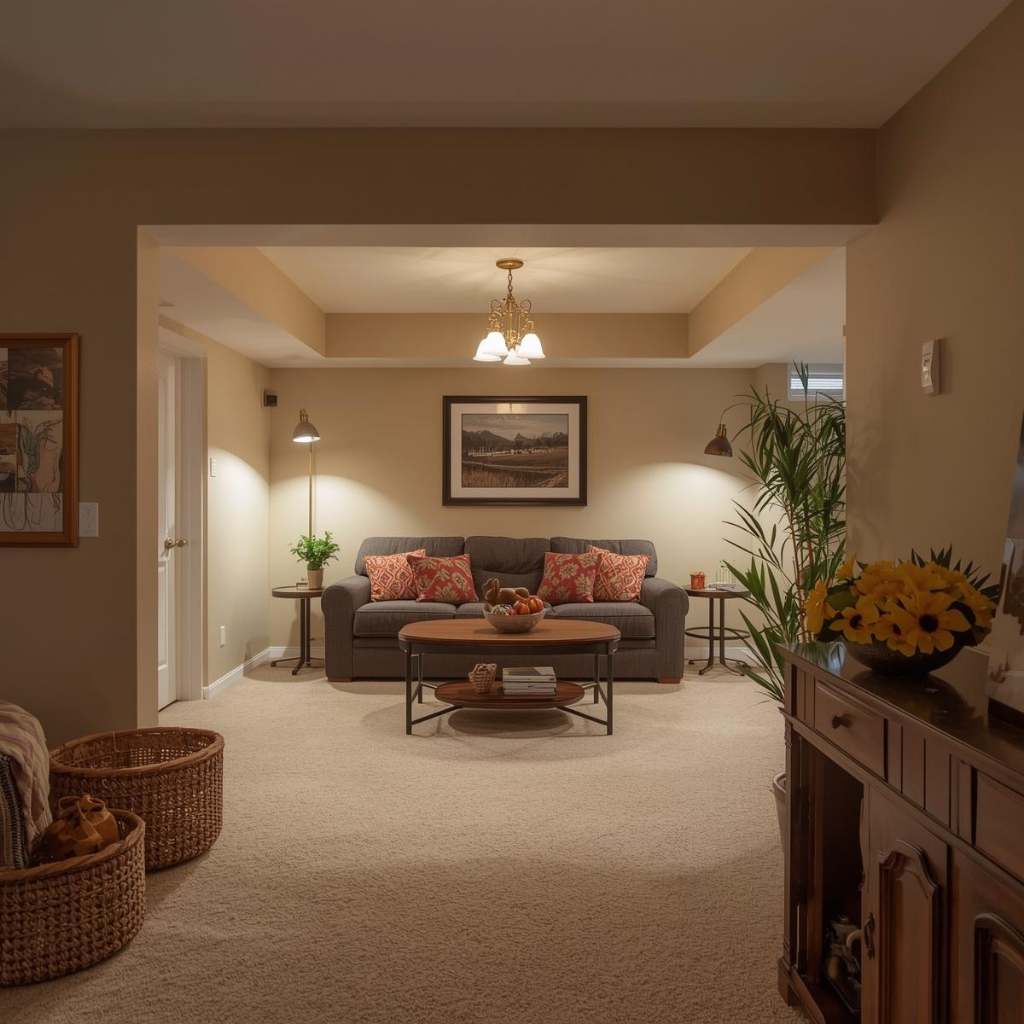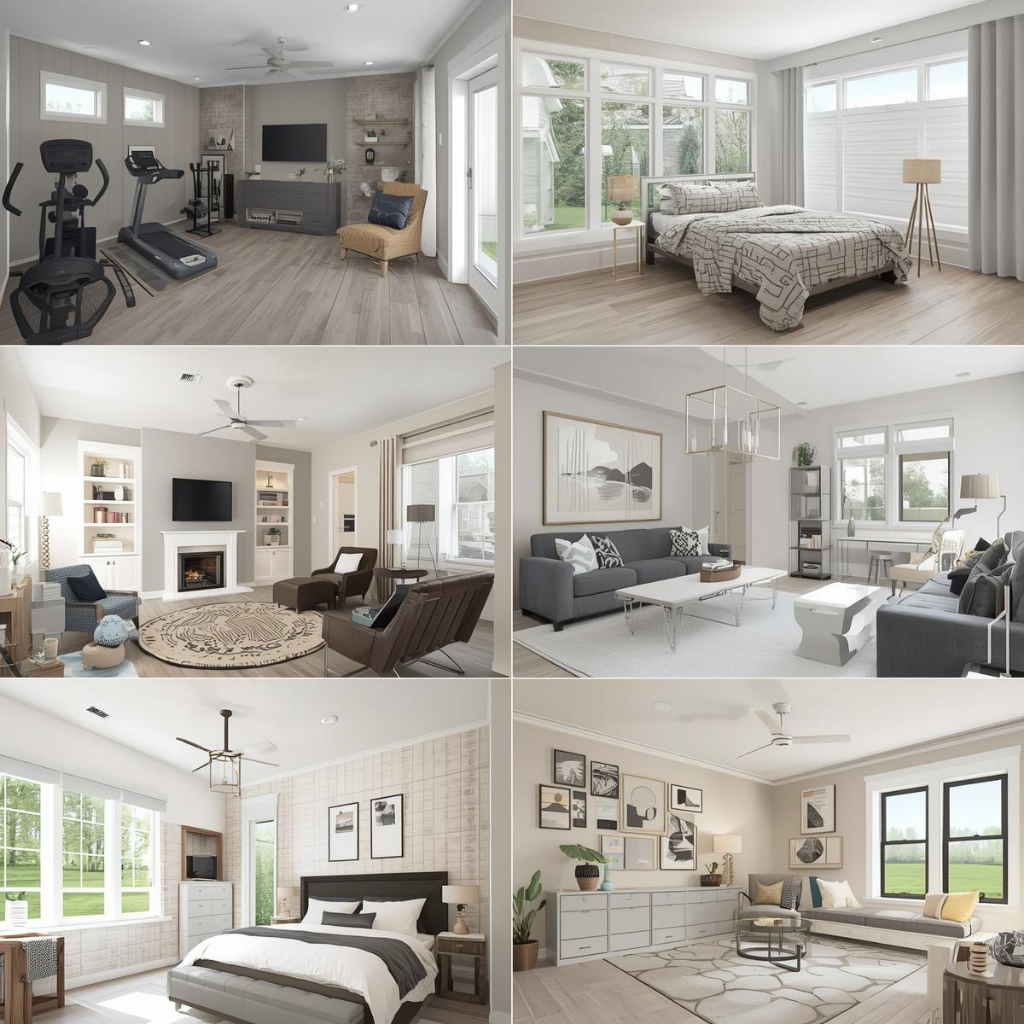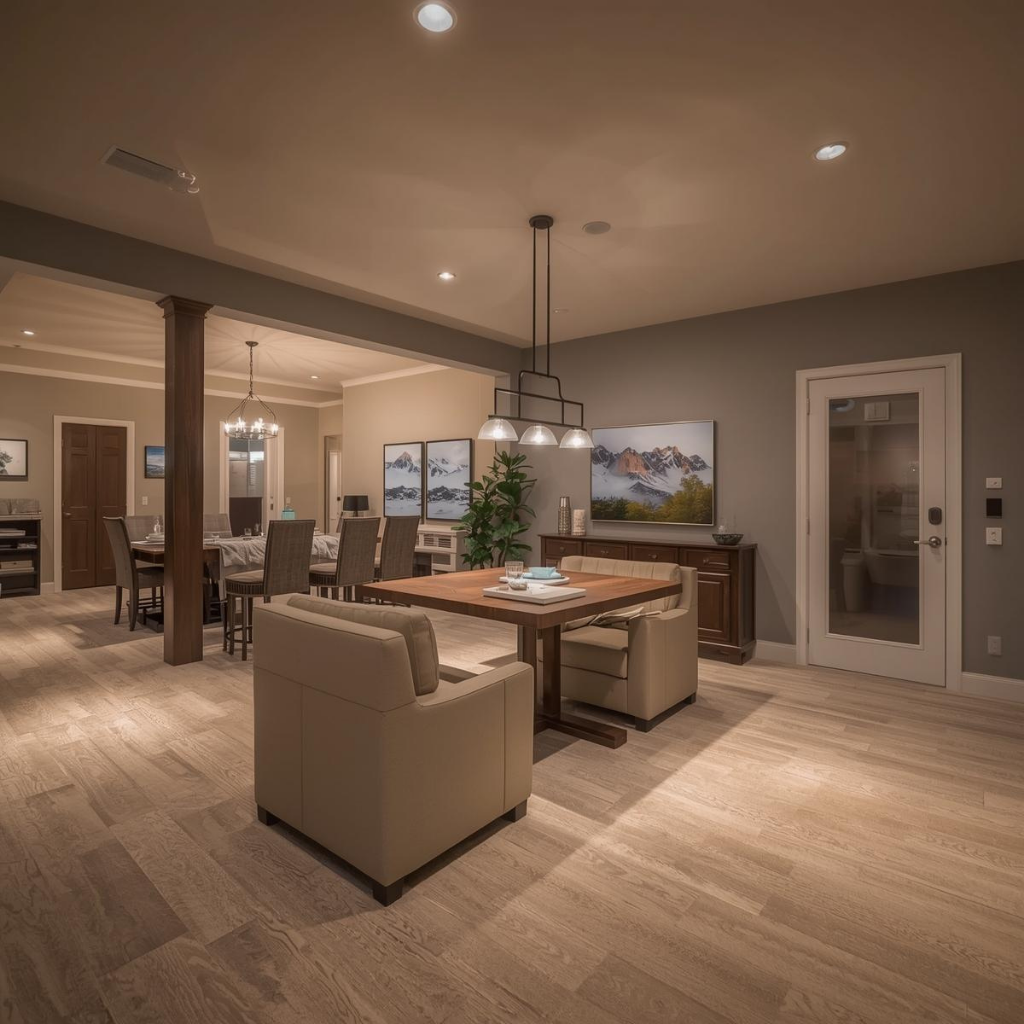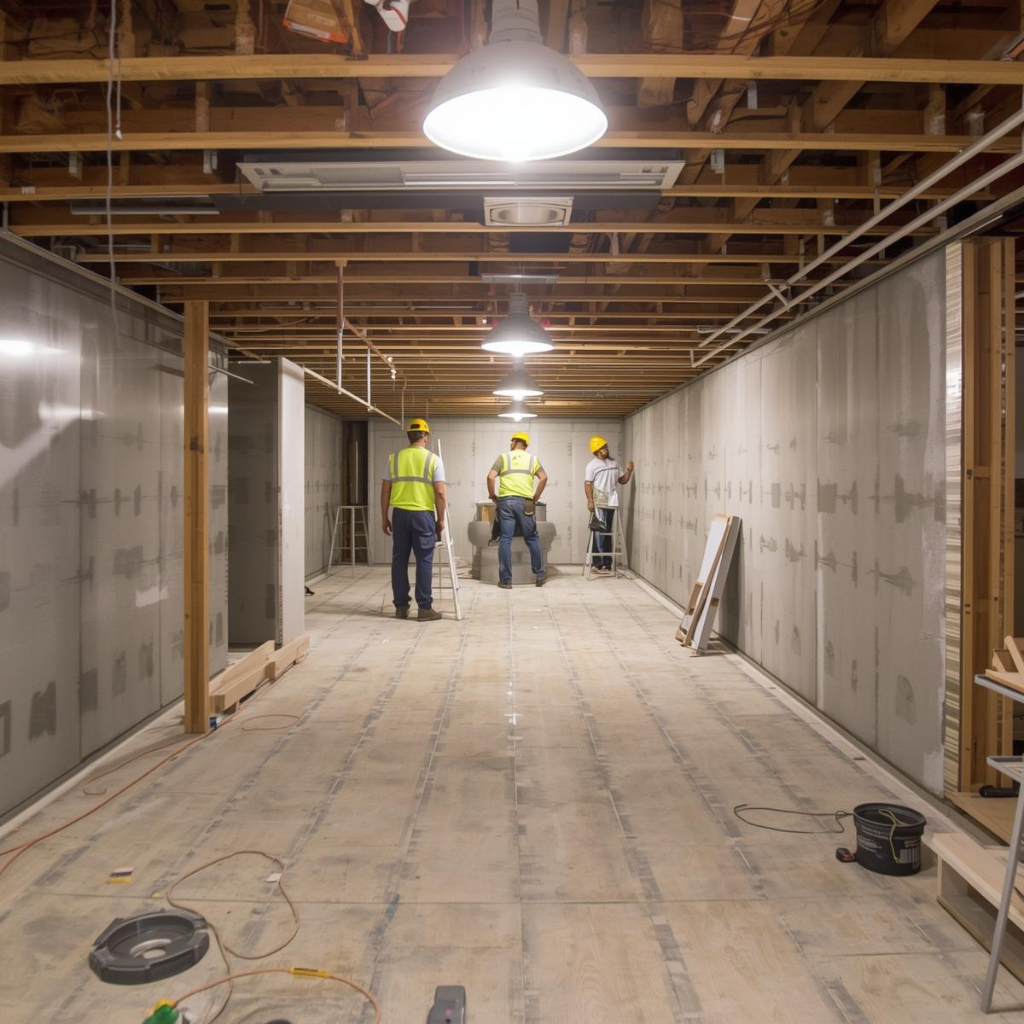
You finished your basement. It looks beautiful. Luxury vinyl flooring, recessed lights, fresh paint everywhere. You spent $40,000 making it perfect. So when the appraiser comes for your refinance and adds only $25,000 to your home’s value, you feel confused and frustrated. This happens constantly across Central Iowa, and understanding why helps you plan smarter from the start.
TLDR: Appraisers must report finished basements separately from main-floor living area under Fannie Mae guidelines. Basement space typically receives 50 to 70 percent credit compared to above-grade square footage. Plan to recoup 60 to 75 percent of your basement investment at resale, plus years of daily enjoyment and use.
Homeowners invest significant money in basement finishing projects expecting dollar-for-dollar value increases. Then they discover appraisers value basement space differently than main-floor space. The rules aren’t arbitrary. They reflect how buyers actually value below-grade living areas.
Understanding how appraisers really evaluate finished basements helps you set realistic expectations and make smarter budget decisions. This guide explains the rules appraisers follow, what that means for your basement’s value, and how to plan your project with eyes wide open.
Why Appraisers Treat Basements Differently Than Main Floors
Mortgage lending in America follows standardized measurement rules. These rules determine how appraisers classify and report different types of living space.
The ANSI Z765-2021 Standard
Since 2022, Fannie Mae requires appraisers to use the ANSI Z765-2021 measuring standard for conventional loans. This standard creates clear definitions for what counts as gross living area (GLA) and what doesn’t.
Under Fannie Mae appraisal guidelines, any space wholly or partly below grade cannot be included in GLA calculations. This applies even to walk-out basements with full windows and direct outdoor access. If more than half the wall height sits below ground level, the space is considered below-grade.
The standard also requires:
- Ceiling height of at least 7 feet for finished areas, except under beams and ducts where 6 feet 4 inches is acceptable
- Separate reporting of above-grade and below-grade finished square footage
- Clear statements distinguishing between the two types of space
This means your beautifully finished 800-square-foot basement won’t be added to your home’s 1,800-square-foot main floor to create a 2,600-square-foot listing. Instead, appraisers report it as “1,800 square feet of above-grade living area plus 800 square feet of finished below-grade space.”
Why This Separation Rule Exists
The separation isn’t arbitrary. Below-grade space has different characteristics than above-grade space:
Natural light limitations. Even with egress windows, basements receive less natural light than main floors. Many buyers strongly prefer spaces with abundant natural light.
Access requirements. Basements require using stairs for daily access, which limits appeal for aging homeowners and families with mobility concerns.
Marketability factors. Many buyers prefer main-floor living space over basement space when given the choice. Market data consistently reflects this preference.
Emergency egress concerns. Basement bedrooms need special egress windows to meet building codes and provide safe emergency exit routes.
These factors affect how buyers value the space. The measurement standard acknowledges this reality by requiring separate reporting.
Important: This doesn’t mean your basement adds no value. It means appraisers must account for it differently than main-floor space, and the market values it accordingly.
How Much Value Finished Basements Actually Add
The question every Central Iowa homeowner asks: “So what’s my finished basement worth?”
The 50 to 70 Percent Rule
Industry research and paired sales analysis show finished basements typically receive 50 to 70 percent of the per-square-foot value of above-grade space. This range varies based on several factors we’ll cover shortly.
Here’s what this looks like in practice for Des Moines area homes:
| Home Location | Above-Grade Value | Basement Credit Range | 800 Sq Ft Basement Value |
|---|---|---|---|
| Des Moines suburban | $180/sq ft | $90 to $126/sq ft | $72,000 to $100,800 |
| West Des Moines | $220/sq ft | $110 to $154/sq ft | $88,000 to $123,200 |
| Ankeny newer home | $200/sq ft | $100 to $140/sq ft | $80,000 to $112,000 |
| Urbandale established | $190/sq ft | $95 to $133/sq ft | $76,000 to $106,400 |
The wide ranges reflect quality differences. A basic finish with low ceilings lands at the bottom. A high-quality finish with 9-foot ceilings, legal bedrooms, and a bathroom pushes toward the top.
How Appraisers Determine the Percentage
Appraisers don’t simply apply a fixed percentage. They use paired sales analysis to determine what the market actually pays for finished basement space in your specific area.
Paired sales analysis compares similar homes that differ primarily in one feature. An appraiser might compare:
- Two similar homes in the same neighborhood
- Same square footage of above-grade space
- Same age, condition, and major features
- One has 600 square feet of finished basement, one doesn’t
If the home with the finished basement sold for $45,000 more, the appraiser has market evidence that 600 square feet of finished basement contributes $45,000 in value ($75 per square foot).
The appraiser then compares this to the above-grade value. If above-grade space is worth $150 per square foot, the basement contributes 50 percent of above-grade value ($75 divided by $150 equals 50 percent).
This method uses actual market data rather than assumptions. Different neighborhoods and price ranges show different results, which is why you can’t apply one universal percentage to every situation.
Value Credit Summary Table
| Space Type | Typical Value Credit | Notes |
|---|---|---|
| Above-grade living area | 100% (full GLA credit) | Primary basis for all comparisons |
| Below-grade finished space | 50% to 70% of above-grade | Varies by quality, ceiling height, light |
| Below-grade unfinished space | 10% to 25% of above-grade | Storage and utility value only |
| Walk-out basement | 55% to 75% of above-grade | Light and access boost value slightly |
Factors That Increase Your Basement’s Appraised Value
Some finished basements receive higher percentages than others. Understanding which features appraisers and buyers value most helps you budget wisely and maximize return.
Ceiling Height Makes a Big Difference
ANSI requires at least 7 feet of ceiling height for finished space. But basements with 8-foot or 9-foot ceilings feel more spacious and less “basement-like” than 7-foot minimums.
Higher ceilings allow for better lighting options, create more comfortable proportions, and reduce the cramped feeling many people associate with basements. Appraisers notice this difference, and buyers pay for it.
If your basement has 9-foot ceilings, emphasize this in your marketing. It’s a genuine differentiator that supports higher value credit.
Natural Light and Walk-Out Access
Walk-out basements with full-height windows and direct ground-level access typically receive higher value credits than fully buried basements. The closer a basement feels to main-floor living, the more buyers value it.
Features that increase natural light and appeal:
- Egress windows sized larger than code minimums
- Multiple windows across different walls
- Walk-out doors to patios or yards
- Light wells and window wells with proper drainage
- Light-colored finishes that reflect available light
A walk-out basement in West Des Moines or Ankeny might receive 65 to 75 percent credit, while a fully buried basement with minimal windows might receive only 50 to 55 percent.
Quality of Finishes Matters to Appraisers
A basement with contractor-grade finishes, smooth drywall, quality flooring, and proper trim receives more credit than obvious DIY work with mismatched materials.
Appraisers assess:
Flooring quality. Luxury vinyl plank, carpet, or engineered hardwood look professional. Peel-and-stick tiles or bare concrete read as unfinished or very basic.
Wall finishes. Smooth painted drywall with baseboards creates a finished appearance. Painted block walls or unfinished framing studs don’t count as properly finished.
Ceiling treatment. Drywall ceilings or quality drop ceilings with good lighting show as finished. Exposed joists with basic bulbs suggest incomplete work.
Mechanical systems. Properly ducted HVAC, finished electrical with appropriate switches and outlets. Extension cords and space heaters suggest the space isn’t truly finished.
Learn more about what goes into a complete basement project at our basement finishing service page.
Functional Layout and Legal Bedrooms
Open, flexible layouts with defined spaces receive better market response than mazes of small rooms. Family rooms, home offices, recreation spaces, and legal bedrooms with proper egress add the most value.
Adding a conforming basement bedroom can significantly increase value. According to appraisal research, a legal basement bedroom with proper egress adds about 50 to 70 percent of what an above-grade bedroom adds.
If an above-grade bedroom adds $15,000 to home value in your market, a legal basement bedroom with egress might add $7,500 to $10,500. This makes egress windows one of the most cost-effective basement investments in Iowa.
Feature Value Impact Table
| Feature | Value Impact | Why It Matters |
|---|---|---|
| 8+ foot ceilings | Higher value credit | Less basement-like feeling |
| Walk-out access | 10% to 15% premium | Functions more like main floor |
| Legal bedroom with egress | $7,500 to $12,000 added | Expands buyer pool significantly |
| Full bathroom | $8,000 to $15,000 added | Increases functionality dramatically |
| Quality finishes | Higher value credit | Professional appearance matters |
| Dry, waterproofed | Required for any credit | Moisture kills value instantly |
What Basement Finishing Costs vs. Value Added
The gap between cost and value explains why understanding appraisal treatment matters for your budget planning.
Typical Des Moines Area Basement Finishing Costs
| Project Type | Typical Cost | 2025-2026 Range | Est. Value Added | ROI Estimate |
|---|---|---|---|---|
| Basic family room (600 sq ft) | $25,000 | $20,000 to $35,000 | $15,000 to $21,000 | 60% to 70% |
| Mid-range with bathroom (800 sq ft) | $45,000 | $35,000 to $55,000 | $27,000 to $36,000 | 60% to 70% |
| High-end guest suite (800 sq ft) | $65,000 | $55,000 to $80,000 | $39,000 to $52,000 | 60% to 70% |
| Legal bedroom with egress added | +$8,000 | $6,000 to $12,000 | +$6,000 to $10,000 | 75% to 85% |
National remodeling data from industry reports shows finished basement ROI typically ranges from 60 to 75 percent. This aligns with the appraisal reality that basement space receives 50 to 70 percent credit compared to above-grade space.
ROI percentages represent typical market data; individual results depend on quality, location, and market timing.
The Math Homeowners Need to Understand
If you spend $50,000 finishing your basement, realistic expectations suggest:
- Added appraised value: $30,000 to $37,500
- Years of use and enjoyment: Immediate benefit starting day one
- Buyer appeal: May help home sell faster in competitive market
The “loss” of $12,500 to $20,000 isn’t really lost. You gained:
- Usable living space your family enjoys daily
- Potential rental income if configured as legal apartment
- Competitive advantage when selling in your market
- Flexibility for multi-generational living or work-from-home needs
The key is going into the project with eyes open about financial return versus lifestyle return. Both have real value, but they’re different.
Common Basement Appraisal Misconceptions
Several myths about basement value persist among homeowners. Understanding the truth helps you plan better.
Misconception 1: Walk-Out Basements Count as Main Floor
Reality: If more than 50 percent of the wall height is below grade, it’s classified as below-grade space regardless of how many windows or doors it has. Walk-outs fare better than buried basements, but they’re still reported separately from GLA.
Misconception 2: My Basement Added 800 Square Feet to My Home
Reality: Your basement added 800 square feet of below-grade finished space. It didn’t add 800 square feet to your gross living area. Appraisers must report these separately, and listings should reflect this distinction.
Misconception 3: A Bedroom Is a Bedroom, Above or Below Grade
Reality: Below-grade bedrooms with proper egress add value but typically 50 to 70 percent of what an above-grade bedroom adds. They also must be reported separately in appraisals and don’t count the same way for bedroom count purposes.
Misconception 4: I’ll Get All My Money Back at Resale
Reality: Typical ROI is 60 to 75 percent based on national data. Plan for partial return plus lifestyle benefits, not dollar-for-dollar payback. Very few home improvements return 100 percent of investment.
Misconception 5: The Appraisal Will Be Low Because My Basement Doesn’t Count
Reality: Your basement absolutely counts and adds value. It just adds value at a different rate than above-grade space. A competent appraisal should still reflect the market value of your finished basement appropriately using paired sales analysis.
Iowa-Specific Basement Appraisal Factors
Central Iowa presents unique challenges that affect how appraisers view basement spaces. Understanding these factors helps you prepare.
Radon Presence in Iowa
About 71.6 percent of Iowa homes have radon levels exceeding the EPA action level of 4 pCi/L. Appraisers often note whether radon mitigation systems are present, especially in finished basements where families spend significant time.
While a radon mitigation system alone doesn’t dramatically add appraised value, its presence reassures buyers and underwriters. Conversely, high radon levels without mitigation can raise red flags during the appraisal and sale process.
Budget $800 to $1,500 for professional radon testing and mitigation system installation. This protects your family’s health and supports your basement’s marketability.
Moisture and Foundation Condition
Iowa’s clay soils and freeze-thaw cycles create moisture challenges that appraisers watch for. Signs of water intrusion include:
- Water stains on walls or ceilings
- Efflorescence (white mineral deposits) on foundation walls
- Musty odors suggesting mold or mildew
- Cracks in foundation walls or floors
- Visible moisture or dampness anywhere
Evidence of moisture problems dramatically reduces the value credit a finished basement receives. An appraiser may discount the space significantly or note concerns that affect buyer confidence.
Before investing $40,000 in finishing, spend $3,000 to $8,000 properly waterproofing. The appraisal and your finished investment will both reflect the difference. Learn more about the real impact of basement finishing including moisture considerations.
Egress Window Requirements in Iowa
Iowa building codes require egress windows for basement bedrooms. Without proper egress, a space cannot be legally called a bedroom in listings or appraisals.
Egress windows meeting code requirements:
- Minimum 5.0 square feet net clear opening for below-grade spaces
- Minimum 20 inches wide and 24 inches tall
- Maximum 44-inch sill height from floor
- Proper window well if below ground level
Adding egress to create a legal basement bedroom typically costs $3,000 to $6,000 in Central Iowa. The added value of $7,500 to $10,500 makes this one of the highest-ROI basement improvements available. Read more about basement finishing permit requirements.
Working With Registered Contractors
Iowa requires contractors earning $2,000 or more annually to be registered with DIAL (Department of Inspections, Appeals, and Licensing). Permit records and quality workmanship from a registered contractor support your basement’s legitimacy in appraisals.
Proper permits also protect you legally. Unpermitted work can create problems during appraisals, sales, and insurance claims.
How to Budget Your Basement Project With Appraisal Reality in Mind
Smart budgeting starts with realistic expectations about value return and aligns your investment with your home’s market position.
Step 1: Get a Pre-Project Value Estimate
Before spending money, talk to a local real estate agent or appraiser. Ask specific questions:
- “What are similar homes with finished basements selling for in my neighborhood?”
- “How much value do finished basements typically add in my price range?”
- “What features do buyers in this area value most in basements?”
This conversation costs nothing but provides crucial market intelligence. You might discover that finished basements in your neighborhood typically add $30,000 to $40,000. This information helps you set appropriate budgets.
Step 2: Align Your Budget With Market Value
A general guideline: Keep basement finishing costs within 8 to 12 percent of your home’s current value for projects where you hope to recoup investment at resale.
| Home Value | Reasonable Basement Budget | Why This Makes Sense |
|---|---|---|
| $250,000 | $20,000 to $30,000 | Keeps investment proportional to home value |
| $350,000 | $28,000 to $42,000 | Aligns with typical buyer expectations |
| $500,000 | $40,000 to $60,000 | Higher-end finishes match neighborhood |
| $750,000+ | $60,000 to $90,000+ | Luxury finishes expected at this price point |
Going significantly over these ranges doesn’t necessarily hurt you, but it reduces your ROI percentage. A $70,000 basement in a $300,000 home may be wonderful to live in but likely won’t return proportional value at resale.
Compare your options with our guide to finished basement vs. home addition investment.
Step 3: Prioritize Features Appraisers and Buyers Value
Allocate your budget toward features with proven value impact:
High-value investments:
- Proper waterproofing and moisture control ($3,000 to $8,000)
- Egress window for legal bedroom ($3,000 to $6,000)
- Full bathroom ($15,000 to $25,000)
- Quality flooring and finishes ($8,000 to $15,000)
- Proper HVAC and electrical ($4,000 to $8,000)
- Radon mitigation if needed ($800 to $1,500)
Lower-value investments:
- Elaborate wet bars ($8,000 to $15,000) with niche buyer appeal
- Home theaters with custom seating ($15,000 to $30,000) that are very personal
- Extreme luxury finishes far above neighborhood standards
- Multiple small rooms instead of flexible open spaces
Step 4: Plan for the Long Term
If you plan to stay in your home five or more years, lifestyle value matters more than immediate ROI. The enjoyment you get from:
- A home office that eliminates commute time
- A guest suite that accommodates visiting family
- A recreation room where kids play without destroying your main floor
- A workout space that saves $1,000+ yearly in gym memberships
These benefits have real economic value even if appraisals don’t capture them directly. Factor lifestyle return alongside financial return when making decisions.
When Basement Finishing Makes Financial Sense
Understanding appraisal reality doesn’t mean avoiding basement projects. It means making informed decisions about timing and scope.
Finish Your Basement When:
You need the space for daily living. Extra square footage improves your quality of life regardless of ROI calculations.
Your main floor is already functional. If your kitchen and bathrooms work well, basement finishing offers the most cost-effective expansion option. Compare this to kitchen remodeling costs.
You’re staying at least three to five years. This timeframe allows you to enjoy the space and recoup reasonable value at sale.
Your basement is structurally ready. Dry foundation, adequate ceiling height, and no major moisture issues mean straightforward finishing.
Your budget aligns with market value. You’re investing proportionally to your home’s value and neighborhood standards.
You can add a legal bedroom. Bedrooms with proper egress deliver the strongest ROI among basement features.
Wait or Reconsider When:
Your main floor needs significant updates. A dated kitchen or failing roof should take priority over basement finishing.
You’re selling within 12 months. You likely won’t recoup costs in this timeframe. Fresh paint and decluttering may serve you better.
Your basement has serious moisture issues. Waterproofing must come first, or you’ll waste money finishing space that will be damaged.
Your budget is extremely tight. If financing the project strains your finances, waiting until you’re in a stronger position makes sense.
You’re hoping to profit on the project. Basement finishing rarely returns more than invested. Do it for lifestyle benefits, not profit expectations.
Frequently Asked Questions
Q: Does a finished basement count toward my home’s square footage?
A: Not in the way many homeowners expect. Finished basements must be reported separately from above-grade gross living area under Fannie Mae and ANSI guidelines. Your basement adds value but doesn’t add to your home’s advertised square footage for conventional loan purposes.
Q: Will my appraisal show the money I spent on my basement?
A: Appraisals reflect market value, not your costs. If you spent $50,000 but comparable sales show finished basements only adding $30,000 to $35,000, your appraisal will reflect the market data, not your investment. Understanding market value before spending is crucial.
Q: How do I find out what finished basements are worth in my area?
A: Talk to local real estate agents and appraisers. They can show you paired sales examples where homes with finished basements sold for more than similar homes without them. This gives you market-specific data for your neighborhood and price range.
Q: Does adding an egress window really add value?
A: Yes, when it creates a legal bedroom. Research shows legal basement bedrooms with egress typically add 50 to 70 percent of what above-grade bedrooms add. At current Des Moines values, this often means $7,500 to $12,000 added value for a $3,000 to $6,000 investment.
Q: What if I finish my basement myself to save money?
A: DIY work can reduce costs significantly. However, appraisers and buyers notice finish quality. Professional-quality work receives better value credit than obvious DIY projects with uneven results. If you have genuine skills, DIY makes sense. If not, professional work may deliver better ROI.
Q: Should I finish my basement before refinancing?
A: Only if the added value helps you reach your refinance goals. If you need $40,000 more in appraised value to eliminate PMI, and your market shows finished basements reliably adding that much, it could make sense. Run the numbers with your lender first.
Q: How long does it take to recoup basement finishing costs?
A: Through resale, you recoup immediately whatever the market assigns as value (typically 60 to 75 percent of cost). Through use and enjoyment, you “recoup” costs over the years you live there. If the space saves you $2,000 yearly or adds rental income, you recoup faster.
Q: What happens if my basement ceiling is less than 7 feet?
A: Space under 7 feet generally cannot be reported as finished area under ANSI guidelines. This dramatically reduces value credit. If your ceiling height is marginal, consult with contractors about options to gain height before finishing.
Q: Does radon mitigation affect my basement’s value?
A: In Iowa, having radon mitigation is viewed positively because buyers expect it. Missing mitigation can raise concerns. The system itself doesn’t dramatically increase value, but it removes potential objections and shows responsible ownership.
Q: How do walk-out basements compare to fully buried basements?
A: Walk-out basements with natural light and outdoor access typically receive 10 to 15 percent higher value credit than fully buried basements. The space feels more like main-floor living, and buyers respond accordingly.
Key Takeaways
Appraisal Rules You Need to Know
- Fannie Mae requires separate reporting of below-grade space from GLA
- ANSI Z765-2021 defines finished area requirements since 2022
- 7-foot minimum ceiling height required for finished space classification
- Walk-out basements still classified as below-grade despite better features
Value Expectations for Iowa Homeowners
- Finished basements often valued at 50% to 70% of above-grade space in most markets
- Expect 60% to 75% ROI at resale on basement investments
- Quality finishes and legal bedrooms receive higher percentages
- Paired sales analysis determines actual market value in your area
Iowa-Specific Factors to Address
- Radon testing and mitigation important for buyer and underwriter confidence
- Moisture control critical before any finishing work begins
- Egress windows required for legal basement bedrooms under Iowa code
- Clay soils and freeze-thaw cycles create ongoing waterproofing challenges
Budget Planning Guidelines
- Keep basement investment at 8% to 12% of home value for optimal ROI
- Prioritize features appraisers and buyers value most
- Waterproofing and egress windows deliver highest returns
- Plan for lifestyle benefits alongside financial return
Ready to Plan Your Basement Project?
Understanding how appraisers view finished basements helps you make informed decisions about scope, budget, and priorities. Now you know why basement space receives different treatment and what that means for your investment.
Busy Builders has helped over 1,000 Central Iowa homeowners finish their basements since 2020. We provide honest guidance about costs, value, and realistic expectations before you commit to your project.
Here’s what we offer:
- Free consultation to discuss your goals and budget
- Honest assessment of your basement’s potential and limitations
- Clear explanations of costs and expected returns
- Code-compliant design meeting egress and ceiling height requirements
- Quality workmanship that maximizes appraisal value
- Transparent pricing with no hidden surprises
Contact us today to discuss your basement project:
Call: 844-435-9800
Website: https://busybuildersiowa.com/
We serve Des Moines, West Des Moines, Ankeny, Waukee, Urbandale, Johnston, and all Central Iowa communities. Let’s create a basement plan that makes sense for your home and your budget.
Busy Builders | Full-Service Construction and Remodeling | Serving Central Iowa Since 2020
Disclaimer: All cost, value, and ROI figures in this guide come from national and regional data sources including ANSI Z765-2021 standards, Fannie Mae appraisal guidelines, paired sales analyses, and Central Iowa remodeling data. This information is meant for general education, not as a guarantee of specific appraisal outcomes. Appraisers must follow Fannie Mae and ANSI rules when classifying finished basements and have discretion in how they adjust for below-grade space in your market. Your results will depend on your home’s condition, location, design choices, finish quality, and market timing. Actual appraisal values vary based on comparable sales, appraiser judgment, and current market conditions. Consult with a local appraiser, real estate agent, and registered contractor before making final decisions about a basement project tied to financing or resale.