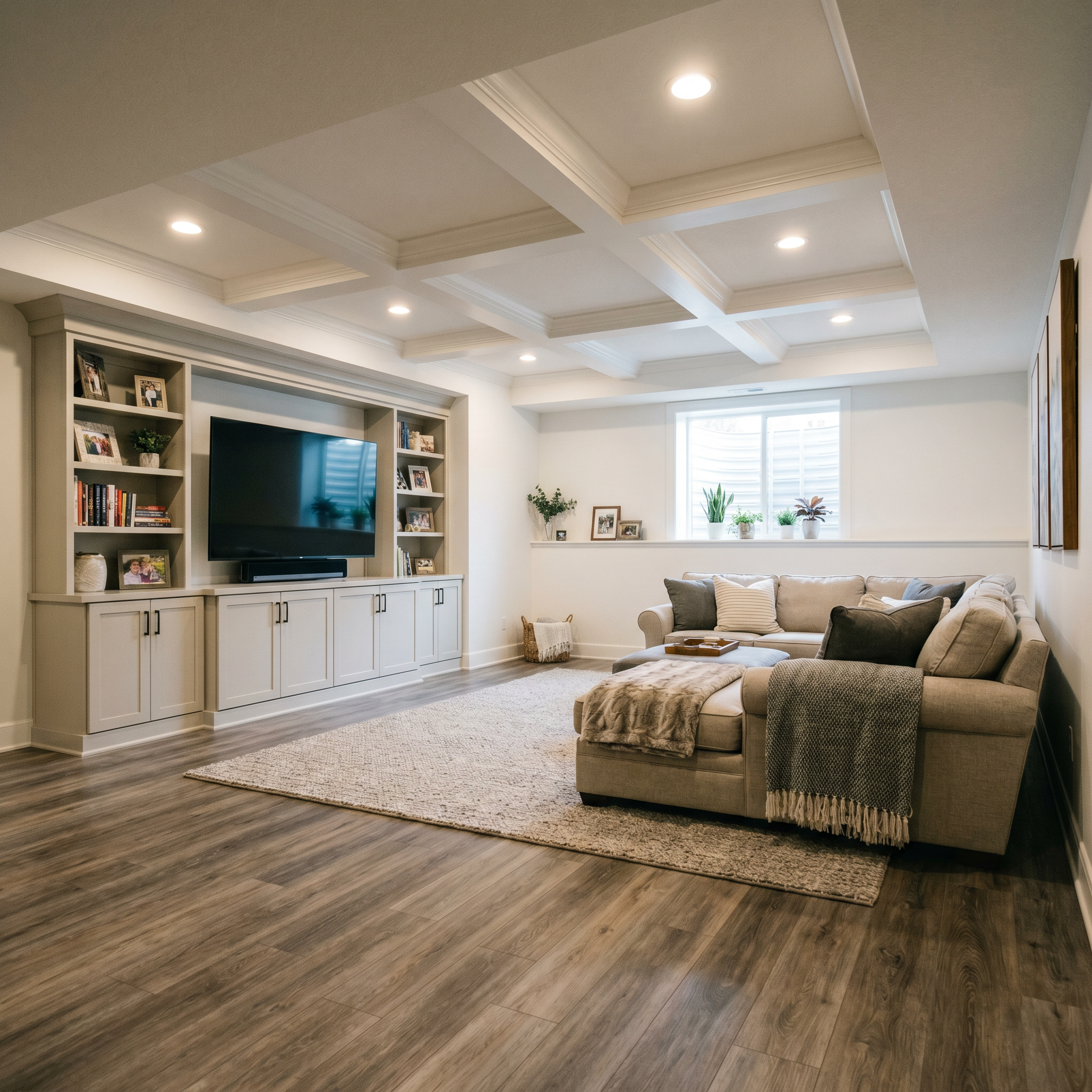

Your kitchen is one of the most energy-intensive rooms in your home, accounting for roughly 17% of your household electricity bill. An energy-saving kitchen renovation combines smarter appliances, efficient lighting, better insulation, and water-saving fixtures to cut utility costs while improving your space. For Central Iowa homeowners, local utility rebates from MidAmerican Energy and Alliant Energy make these upgrades even more affordable.
TLDR: Switch to LED lighting (saves $225/year), upgrade to ENERGY STAR appliances (15-20% more efficient), consider induction cooktops (85% efficiency vs. 40% for gas), install a smart thermostat (saves 8-10% on HVAC), and add WaterSense faucets (30% less water). Iowa homeowners can claim MidAmerican Energy rebates on refrigerators ($50), smart thermostats (up to $100), and more.
Your kitchen runs 24/7. Between the refrigerator humming, the dishwasher cycling, and the oven heating, it’s one of the highest energy consumers in your home.
The good news: a kitchen renovation is the perfect time to make changes that pay you back every month in lower utility bills. Here are the upgrades that deliver real savings for Central Iowa homeowners.
Upgrade to LED Lighting
LED lighting is the fastest-ROI upgrade in any kitchen renovation. These bulbs use 75-80% less energy than incandescent and last 25 times longer.
The Numbers
The U.S. Department of Energy reports LED lighting saves approximately $225 per year for a typical home. With Iowa electricity rates at 13 to 16 cents per kWh, those savings add up quickly.
LED bulbs cost $2 to $8 each compared to $1 to $2 for incandescent, but they last 25,000 to 50,000 hours versus 1,000 to 2,000 hours. Focus on overhead fixtures, under-cabinet task lighting, and pendant lights for maximum impact.
Tip: LED lighting offers the fastest payback of any kitchen upgrade. Switching all kitchen lighting to LED costs under $100 and saves approximately $225 per year, meaning a payback period of under 6 months.
Choose ENERGY STAR Certified Appliances
ENERGY STAR kitchen appliance savings make a measurable difference in your utility bills.
Appliance Savings Breakdown
ENERGY STAR refrigerators are 15% more efficient than the minimum federal standard and save approximately $260 over the product lifetime. ENERGY STAR dishwashers are 10% more energy-efficient and 20% more water-efficient, saving 1,900 gallons over their lifetime.
| Appliance | Energy Savings vs. Standard | Annual Savings (Iowa) | MidAmerican Rebate |
|---|---|---|---|
| Refrigerator | 15% more efficient | $45-56 | $50 |
| Dishwasher | 10% energy, 20% water | ~$50/year | N/A |
| Clothes washer | 33% energy, 50% water | ~$50/year | $45 |
| Induction range | 10-20% less than electric | $10-20/year | N/A |
Source: ENERGY STAR, MidAmerican Energy.
Illustrative scenario: A Bondurant homeowner renovates their kitchen with LED lighting (saves $225/year), an ENERGY STAR refrigerator (saves $45/year plus $50 rebate), an ENERGY STAR dishwasher (saves $50/year), and a smart thermostat (saves $75/year plus $100 rebate). Total annual savings: approximately $425. First-year rebates: $150. Actual savings vary by usage.
Consider Induction Cooktops
Induction cooking is the most efficient technology available for home kitchens.
Efficiency Comparison
Induction cooktops transfer 85-90% of energy directly to cookware through electromagnetic fields. Standard electric ranges achieve 75-80% efficiency, while gas ranges deliver only 40% efficiency.
| Cooking Method | Energy Efficiency | Annual Operating Cost | Indoor Air Impact |
|---|---|---|---|
| Induction | 85-90% | ~$42-47/year | No combustion; cleanest |
| Standard Electric | 75-80% | ~$52/year | Minimal |
| Gas | 40% | Varies by rate | Nitrogen dioxide, carbon monoxide |
Source: ENERGY STAR, SolarTech.
Induction cooktops also cook 25-30% faster than conventional methods, the surface stays cool for safety, and there are no combustion byproducts affecting indoor air quality. They require induction-compatible cookware with magnetic bottoms.
Tip: Iowa’s lower electricity rates (13-16 cents per kWh, about 17-20% below national average) make induction cooking even more cost-effective compared to gas.
Install a Smart Thermostat
ENERGY STAR certified smart thermostats save 8-10% on heating and cooling costs, translating to $50 to $100 per year for the average household.
Why It Matters for Kitchens
Kitchens generate significant heat from cooking. A smart thermostat accounts for this, adjusting your HVAC system automatically. The average American household spends over $900 per year on heating and cooling.
Both Iowa utilities offer substantial rebates. The MidAmerican Energy rebate program provides up to $100 for ENERGY STAR smart thermostats. Alliant Energy offers up to $100 plus an additional $50 with Smart Hours enrollment.
| Upgrade | MidAmerican Energy Rebate | Alliant Energy Rebate | Qualification |
|---|---|---|---|
| Smart thermostat | Up to $100 | Up to $100 + $50 Smart Hours | ENERGY STAR certified |
| Refrigerator | $50 | Check availability | ENERGY STAR, 10+ cu ft |
| Freezer | $25 | Check availability | ENERGY STAR, 10+ cu ft |
| Clothes washer | $45 | Check availability | ENERGY STAR |
| Electric clothes dryer | $35 | Check availability | ENERGY STAR |
| Old fridge/freezer recycling | $50 | N/A | Working unit, scheduled pickup |
Source: MidAmerican Energy, Alliant Energy.
Tip: MidAmerican Energy rebate applications must be submitted within 90 days of purchase or by December 31, 2026, whichever comes first. Don’t miss the deadline.
Save Water with Efficient Fixtures
The EPA WaterSense program certifies fixtures that reduce water use by 30% without sacrificing performance.
WaterSense faucets flow at a maximum of 1.5 gallons per minute compared to older models at 2.2+ gallons per minute. Replacing all fixtures with WaterSense and ENERGY STAR models can save up to $380 per year and 15,700 gallons of water. A leaky faucet dripping 60 drops per minute wastes 2,400 gallons annually.
Low-flow kitchen faucets cost $50 to $200 and pay for themselves quickly through reduced water and water heating costs.
Use Sustainable Materials
Sustainable materials complement energy-efficient upgrades and can lower long-term maintenance costs.
| Material | Cost Range | Sustainability Benefit | Durability |
|---|---|---|---|
| Bamboo flooring | $7-17/sqft installed | Regrows in 5 years | 20-25 years |
| Recycled glass countertops | 50-75% less than granite | Diverts waste from landfill | Stain-resistant |
| FSC-certified wood cabinets | Comparable to standard | Responsibly managed forests | Standard lifespan |
| Cork flooring | $5-12/sqft installed | Naturally renewable | 25+ years |
Source: HomeGuide, Wickham’s Workbench.
Bamboo flooring reaches maturity in 5 years compared to 20+ years for hardwood. Strand-woven bamboo has a Janka hardness of 3,000 to 5,000, rivaling the hardest hardwoods.
Improve Kitchen Insulation
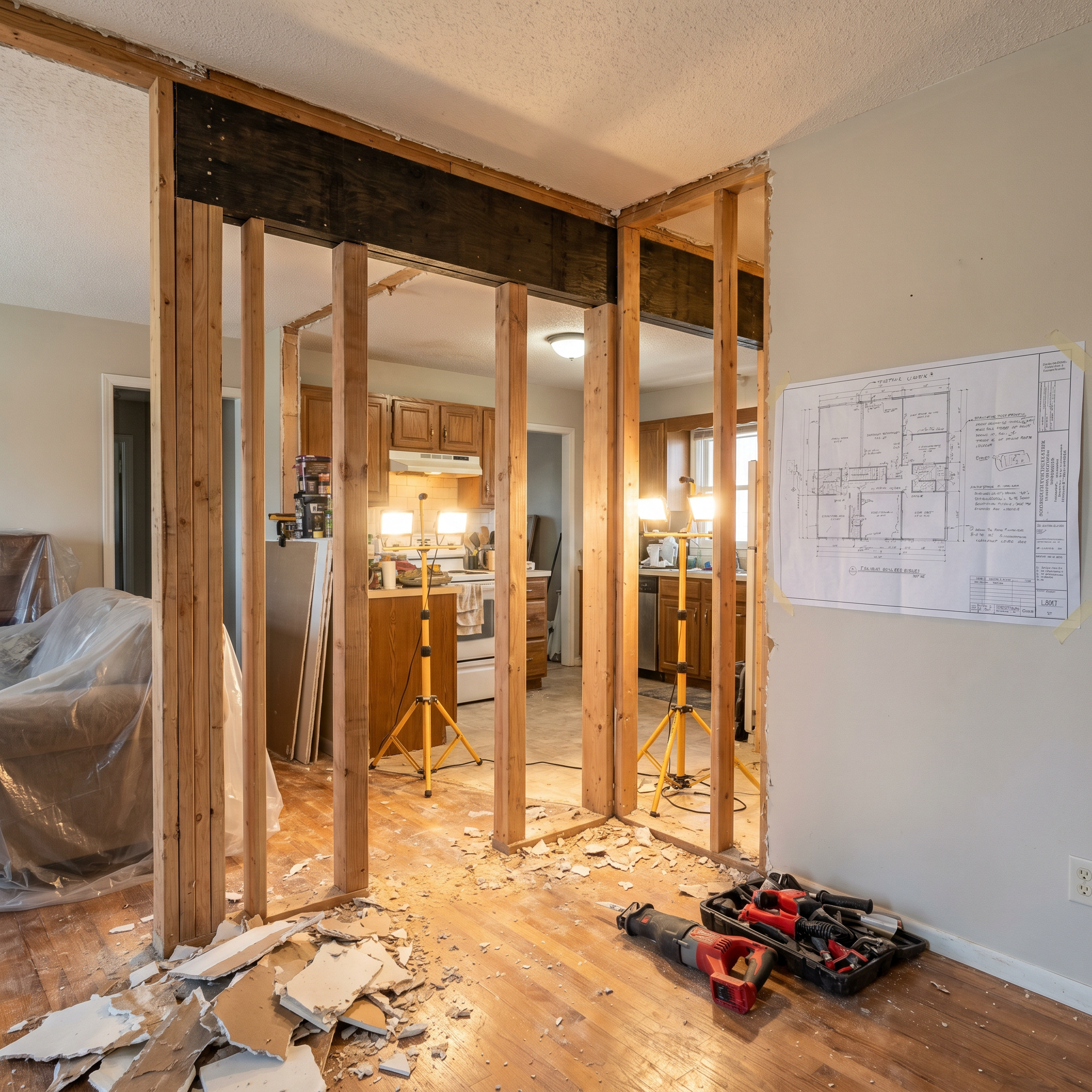
A kitchen renovation is the ideal time to address insulation while walls and cabinets are removed. Iowa’s 42-inch frost line and cold winters mean insulation improvements deliver significant savings.
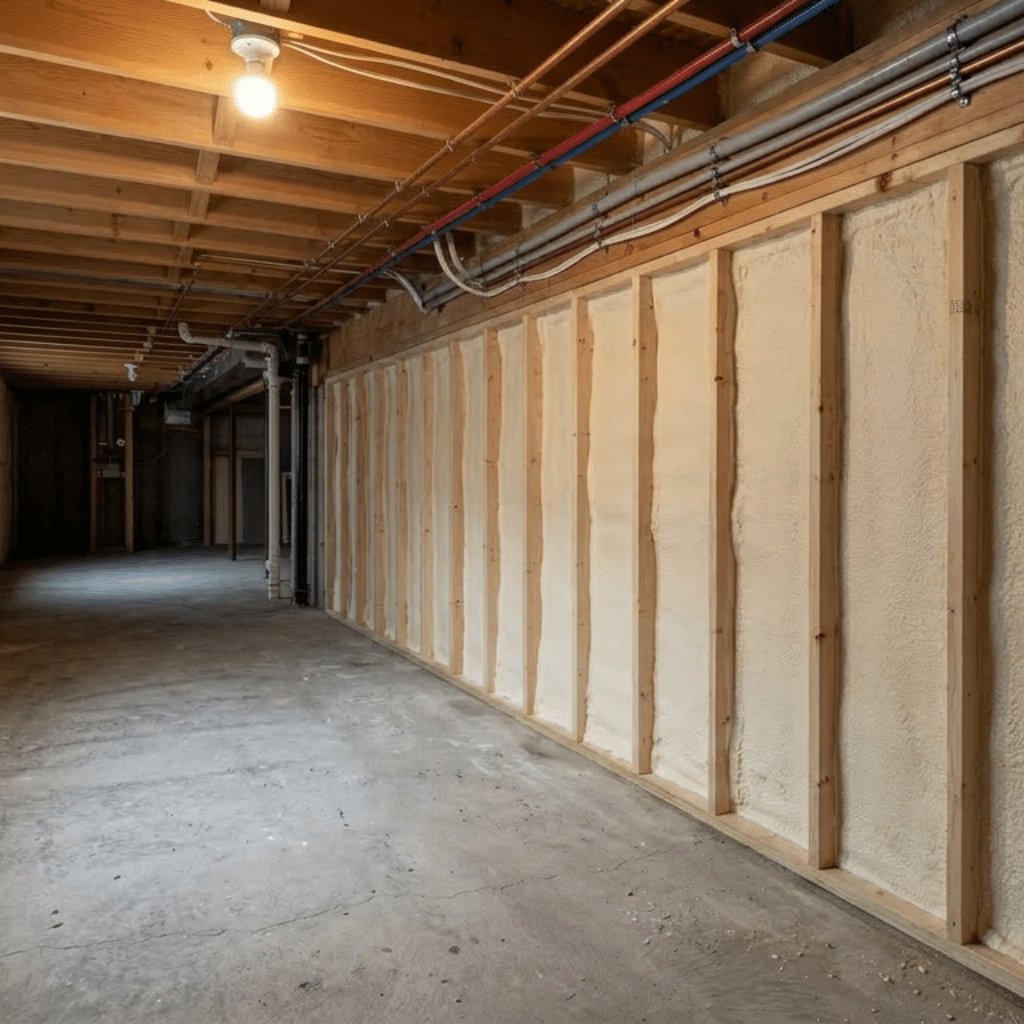
Seal gaps and cracks around windows, doors, and where walls meet. Weatherstripping and caulking cost under $20 for materials. Double-pane windows cut energy bills by approximately 12%. For exterior kitchen walls, consider spray foam insulation benefits during your remodel.
FAQs
Q: How much can I save with an energy-efficient kitchen renovation?
A: Depending on scope, homeowners can save $500 to $1,500+ per year through LED lighting ($225/year), ENERGY STAR appliances ($150-300/year), smart thermostat ($50-100/year), and water-efficient fixtures (up to $380/year).
Q: What Iowa utility rebates are available for kitchen upgrades?
A: MidAmerican Energy offers rebates on ENERGY STAR refrigerators ($50), smart thermostats (up to $100), clothes washers ($45), dryers ($35), and old fridge recycling ($50). Alliant Energy offers smart thermostat discounts up to $100 plus Smart Hours bonus. Applications due within 90 days or by December 31, 2026.
Q: Are induction cooktops worth the investment?
A: Yes. Induction is 85-90% efficient versus 40% for gas. It cooks 25-30% faster, produces no combustion pollutants, and costs about $42-47 per year to run. Requires induction-compatible (magnetic) cookware.
Q: How much does a kitchen renovation cost in Iowa?
A: Minor kitchen remodels average $27,000-29,000 nationally with 107-113% ROI. For details, see our guide on kitchen remodeling costs in Central Iowa.
Q: What is the most cost-effective energy upgrade for my kitchen?
A: LED lighting. Switching all kitchen lighting to LED costs under $100 and saves approximately $225 per year. Payback period: under 6 months.
Q: Does an energy-efficient kitchen increase home value?
A: Yes. Minor kitchen remodels return 107-113% ROI. ENERGY STAR appliances, LED lighting, and sustainable materials are selling points buyers look for.
Key Takeaways
LED Lighting
- Uses 75-80% less energy than incandescent
- Saves approximately $225/year
- Fastest ROI of any kitchen upgrade
ENERGY STAR Appliances
- 15-20% more efficient than standard
- MidAmerican rebates: $50 fridge, $45 washer, $35 dryer
Induction Cooktops
- 85-90% efficient (vs. 40% for gas)
- Cleaner indoor air, faster cooking
Smart Thermostats
- Save 8-10% on HVAC costs
- Up to $100 rebate from Iowa utilities
Ready for an Energy-Efficient Kitchen Renovation?
An energy-saving kitchen renovation combines great design with long-term savings. The upgrades above can reduce your utility bills by $500 to $1,500+ annually while improving your home’s comfort and value.
Busy Builders has helped over 1,000 Central Iowa homeowners since 2020. Our kitchen remodeling services incorporate energy-efficient upgrades that pay you back month after month.
Contact us for a free consultation today:
Call: 844-435-9800
Email: info@busybuildersiowa.com
Website: https://busybuildersiowa.com/
We serve Clive, Newton, Bondurant, and all Central Iowa communities.
Busy Builders | Full-Service Construction and Remodeling | Serving Central Iowa Since 2020