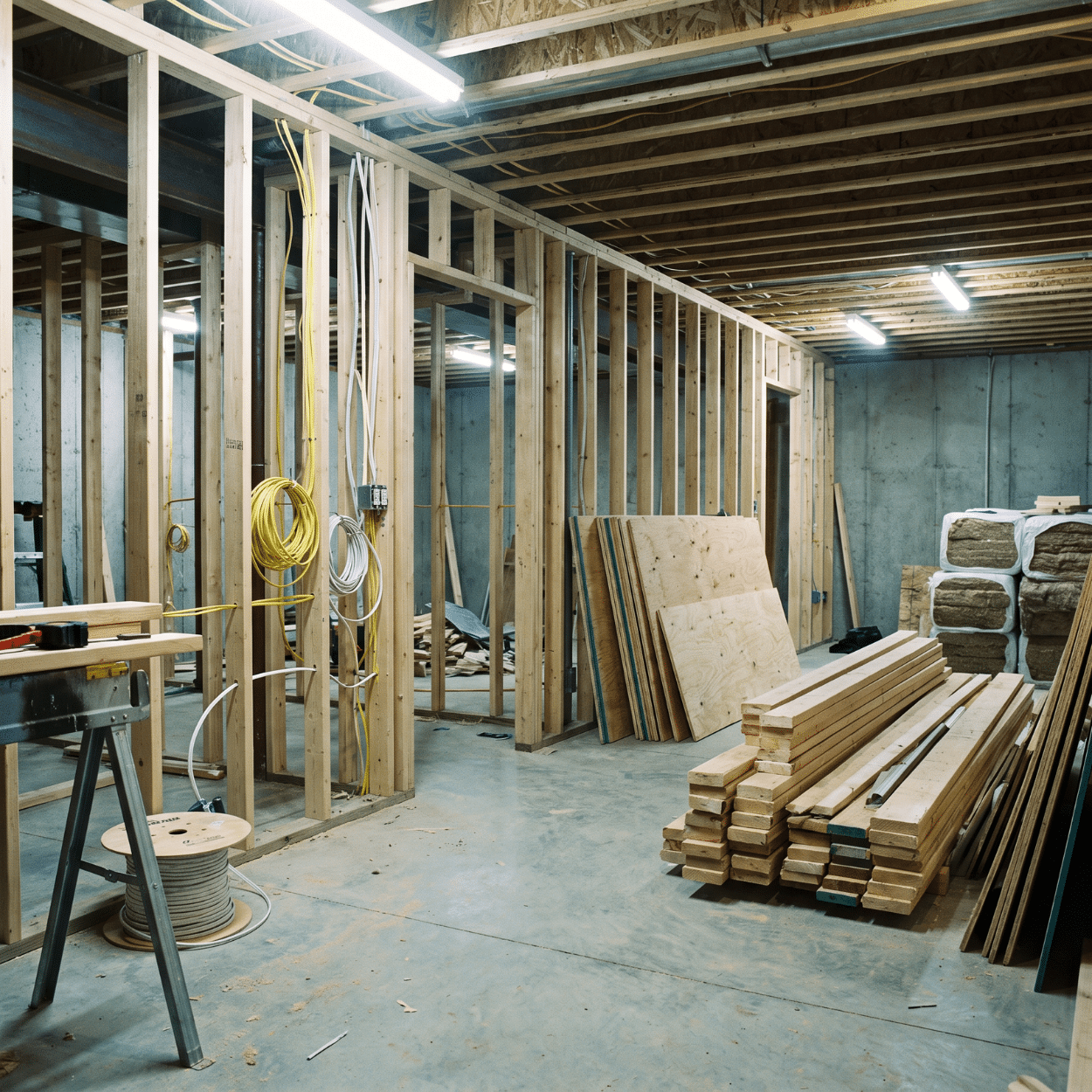
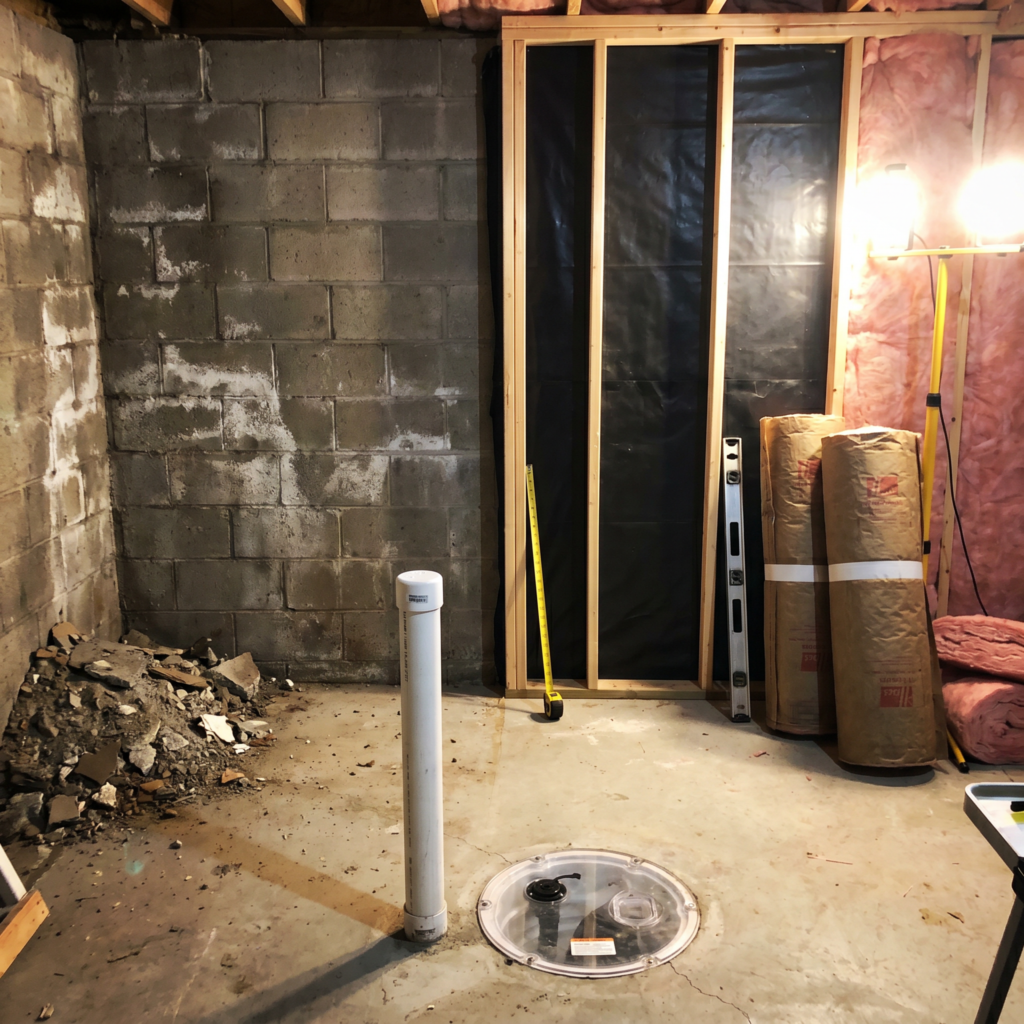
Finishing a basement is one of the best ways to add living space without changing your home’s footprint. It is also one of the easiest projects to underestimate. Iowa basements carry hidden costs, like moisture control, egress, and radon, that rarely show up in a quick online estimate. This guide explains where basement budgets blow up around the Des Moines metro and how to plan so you are not caught off guard.
TLDR: A finished basement in Central Iowa often costs more than homeowners expect because of Iowa-specific factors: moisture control, a code-required egress window, radon mitigation, and the framing needed for low ceilings. Online calculators miss these. The way to avoid an overrun is to budget for the whole job, fix any moisture or foundation problems first, and hold a real contingency. Plan for the hidden costs and the project goes smoothly.
You have priced a basement finish online, seen a tidy per-square-foot number, and felt good about it. Then the quotes come in higher, and each one mentions things you did not budget for: waterproofing, an egress window, a radon system, soffits to hide ductwork.
That gap is not a builder padding the bill. It is the difference between a generic national estimate and what it actually takes to finish a basement in Iowa. Our climate, our soil, and our code all add real costs that a calculator cannot see.
Below, we walk through exactly where basement budgets grow, the moisture and code costs people forget, a realistic cost breakdown, the biggest overrun triggers, and how to build a budget that holds. By the end, you will know how to plan a basement finish that comes in close to your number instead of well above it.
Why Basement Budgets Blow Up
The core problem is simple: most homeowners budget for the visible finishes and forget the work hidden behind them. A basement is not an empty room waiting for paint.
A quick estimate usually covers flooring, drywall, paint, and maybe a bathroom. What it leaves out is the prep work that makes those finishes safe and durable: moisture control, a code-compliant egress window, radon mitigation, framing around obstacles, and the electrical and mechanical work behind the walls. Those items can add up to a large share of the total.
Iowa adds its own layer. Our freeze-and-thaw cycles stress foundations, our soil holds moisture, and our radon levels are among the highest in the country. A basement finish that ignores these will either cost more to fix later or create problems you cannot see until they are expensive. Our guide to the cost breakdown of finishing a basement in Des Moines shows where the money actually goes.
Pro Tip 1: Treat any online basement calculator as a floor, not a real estimate. It almost certainly leaves out waterproofing, egress, radon, and framing around obstacles, which are exactly the Iowa costs that grow a budget.
The Iowa Moisture Problem: Fix It Before You Finish
The single most expensive mistake in basement finishing is covering up a moisture problem. Drywall over a damp wall is money you will spend twice.
Iowa soil holds water, and freeze-and-thaw cycles push it against your foundation, the same forces that drive Iowa’s frost-depth footing rule in the IRC foundation chapter. If your basement shows water stains, efflorescence (the white chalky residue on concrete), musty smells, or seasonal dampness, those are signals to address before you finish. Sealing finishes over active moisture leads to mold, ruined materials, and a tear-out down the road.
Fixing moisture first can mean grading and downspout work outside, interior or exterior drainage, a sump pump, or foundation sealing, depending on the cause. It adds cost up front, but it protects everything you build on top of it. Our guide to fixing basement problems before you finish walks through what to look for.
If any exterior digging is part of the fix, Iowa law requires you to call Iowa One Call (811) before excavation so underground utilities are marked. Your contractor handles this, but it is worth knowing why a moisture fix sometimes starts with a locate.
Pro Tip 2: Walk your basement after a heavy rain and again during a spring thaw before you finish it. Water that appears only at those times is easy to miss in a dry-season quote and expensive to discover after the drywall is up.
Pro Tip 3: Ask any basement contractor how they will confirm the space is dry before framing. A builder who has a clear moisture plan is protecting your investment. One who waves the question off is not.
Egress, Radon, and Code Costs People Forget
Three Iowa code and safety items routinely surprise homeowners, and all three carry real cost. Knowing them up front keeps them in your budget instead of blowing it.
First, egress. If your finished basement includes a bedroom, Iowa code requires an egress window, which is an emergency exit window large enough to climb out of. Under Iowa Administrative Code 481-301.8, it must provide a 5.7 square foot net clear opening, with a minimum 24 inch height, 20 inch width, and a sill no higher than 44 inches, plus a window well at least 9 square feet that projects 36 inches if the window is below grade. Cutting that opening into a concrete foundation wall is a real expense.
Second, radon. All 99 Iowa counties sit in EPA Radon Zone 1, the highest category, and the Iowa Radon Survey found that as many as 5 in 7 Iowa homes test above the EPA action level. Sealing up a basement is the moment to confirm radon protection. The EPA’s health information on radon explains why it matters: radon is the second leading cause of lung cancer.
Third, ceiling height and obstacles. Iowa requires a minimum 7 foot ceiling for habitable basement space, and ductwork, beams, and pipes often hang lower. Framing soffits around them, or rerouting, adds labor and material that a flat per-square-foot number ignores.
The table below shows these commonly forgotten cost items.
Table 1: Costs homeowners often forget (Central Iowa, planning estimates)
| Item | Why it is required | Budget impact |
|---|---|---|
| Egress window and well | Code for basement bedrooms | Moderate to high, cutting concrete |
| Radon mitigation | Iowa is Zone 1, high levels | Moderate |
| Moisture control | Iowa soil and freeze-thaw | Varies widely by cause |
| Soffits and framing | 7 ft ceiling, hide ducts and pipes | Adds labor and material |
The takeaway: these four items are not upgrades, they are part of doing the job right in Iowa, so budget for them from the start. Our piece on basement finishing permit needs and how they affect costs explains how the permit ties these together.
Pro Tip 4: If your basement plan includes a bedroom, price the egress window early. Cutting a code-sized opening into a poured foundation wall is one of the larger line items homeowners never see coming.
Pro Tip 5: Test for radon before you finish, and ask your contractor to rough in a radon mitigation system during construction. Installing it inside finished walls later costs far more than building it in.
The Real Cost Breakdown
A realistic budget separates the work into its actual parts. Seeing where the money goes helps you decide where to spend and where to save.
The largest shares usually go to framing and drywall, the bathroom if you add one, flooring, and the electrical and mechanical work behind the walls. Moisture control, egress, and radon sit on top of those. These are planning estimates, and actual costs vary by scope, materials, site conditions, and current pricing.
The table below shows how a typical Central Iowa basement finish tends to break down by component.
Table 2: Basement finish cost breakdown by component (planning estimates)
| Component | Share of a typical finish | Iowa note |
|---|---|---|
| Framing and drywall | 20 to 30 percent | Soffits add labor |
| Bathroom (if added) | 15 to 25 percent | Plumbing rough-in below slab |
| Flooring | 10 to 15 percent | Moisture-tolerant choices matter |
| Electrical and mechanical | 10 to 20 percent | Licensed subs, separate permits |
| Moisture, egress, radon | 10 to 20 percent | The Iowa-specific layer |
The takeaway: the finishes you can see are only part of the budget, and the Iowa-specific layer is the piece most quotes leave out. Our guide to basement finishing costs in Des Moines breaks the ranges down further.
Pro Tip 6: Decide on a bathroom early. Adding a below-grade bathroom means plumbing under the slab, which is one of the biggest single cost drivers in a basement finish. Knowing up front lets you budget accurately.
Pro Tip 7: Choose moisture-tolerant flooring like luxury vinyl over solid hardwood in a basement. It costs less to install and far less to replace if you ever get a minor water event.
The Biggest Overrun Triggers
Overruns rarely come from one big surprise. They come from a handful of predictable triggers that add up. Knowing them lets you plan around them.
The most common is discovering moisture mid-project, which forces a stop to fix the cause. Next is finding that ductwork or beams need more framing than expected. Then come change orders, like deciding to add the bathroom after framing starts, and material upgrades chosen at selection time. Each is manageable if you anticipate it.
The table below shows the typical overrun triggers and how to head them off.
Table 3: Common overrun triggers and how to avoid them
| Trigger | Why it adds cost | How to avoid it |
|---|---|---|
| Moisture found mid-project | Work stops to fix the cause | Inspect and fix before framing |
| Low ducts and beams | Extra soffits and framing | Map obstacles during design |
| Mid-project change orders | Rework already-built areas | Finalize the plan before starting |
| Finish upgrades at selection | Pricier than the allowance | Set realistic allowances up front |
The takeaway: nearly every basement overrun traces back to a problem found late or a decision changed late, so the fix is to plan thoroughly before work begins. Our guide to avoiding basement finishing mistakes in Des Moines homes covers more of these.
Pro Tip 8: Finalize your full plan, including the bathroom, the layout, and the finishes, before framing starts. The cheapest change order is the one you make on paper, not after the walls are up.
Pro Tip 9: Ask your contractor to map every duct, beam, and pipe during design and show you where soffits will go. Surprises behind the ceiling are a classic source of both cost and disappointment.
How to Budget So You Are Not Surprised
A basement budget that holds has two features: it covers the whole job, and it includes a real contingency. Most budgets that blow up were missing one or both.
Start by budgeting for every layer, not just the visible finishes: moisture control, egress, radon, framing, electrical and mechanical, plus your finishes. Then add a contingency of 10 to 15 percent for the surprises that come once walls open up. On an older home, lean toward the higher end. The Department of Energy’s weatherization guidance is a good reference for the insulation choices that affect comfort and cost in a finished basement.
The table below shows a sensible way to think about allocation, including the contingency.
Table 4: Sample basement budget framework (planning estimates)
| Budget piece | Share of total | Notes |
|---|---|---|
| Finishes you can see | 50 to 60 percent | Drywall, flooring, paint, trim |
| Systems and structure | 15 to 25 percent | Electrical, mechanical, framing |
| Iowa-specific layer | 10 to 20 percent | Moisture, egress, radon |
| Contingency | 10 to 15 percent | Higher for older homes |
The takeaway: a budget that names every piece and holds a contingency is the single best protection against an overrun. A registered contractor who itemizes the quote this way is being transparent with you.
On value, a finished basement can help your home, but appraisers treat below-grade space differently. Below-grade square footage is generally excluded from a home’s gross living area and is often credited at a lower rate than above-grade space, so a finished basement may not add dollar-for-dollar the way an above-grade addition does. These figures are illustrative and not financial advice, and actual results vary by home and market. Our basement finishing and basement remodeling service pages explain how we approach the work.
Pro Tip 10: Hold a contingency you do not touch unless you have to. Treating 10 to 15 percent of your budget as untouchable until a real surprise appears is what keeps a basement finish from going over.
When to Fix Problems Before Finishing
Sometimes the smartest move is to slow down and fix the basement before finishing it. Building on an unsound base wastes money.
If you see active moisture, foundation cracks that are growing, or a sump system that struggles, address those first. Finishing over them risks ruining the new work and forcing a tear-out. A short delay to fix the cause is far cheaper than redoing a finished space.
These illustrative scenarios show how basement projects play out across the metro. They are examples, not specific Busy Builders projects, and your costs will vary.
Illustrative scenario, budget finish in Altoona: A homeowner finishes a 600 square foot basement with a family room and no bathroom, after confirming the space was dry. By holding finishes to standard allowances and skipping the bathroom, the project lands near the low end of the range and avoids the biggest cost driver.
Illustrative scenario, mid-range finish in Bondurant: A family finishes an 800 square foot basement with a bedroom, an egress window, a bathroom, and a radon system. The egress and below-slab plumbing add real cost, and the project lands in the middle of the range over about eight weeks.
Illustrative scenario, fix-first finish in Clive: A homeowner discovers seasonal moisture, so the project starts with grading, downspout work, and a sump upgrade before any framing. The fix adds cost up front, but it protects the finished space and prevents a future tear-out.
Pro Tip 11: If you find a foundation or moisture problem, fix the cause before you finish, not after. Every dollar spent finishing over an active problem is a dollar you may spend again on the tear-out.
Pro Tip 12: Get three written, itemized quotes that each spell out moisture control, egress, radon, and the contingency. A quote that names the Iowa-specific layer is one you can trust. A suspiciously low quote that omits it is the one that becomes an overrun. For the full picture, our basement finishing service page and our guides above lay out how the costs fit together.
Frequently Asked Questions
Q: How much does it cost to finish a basement in Des Moines? Costs vary widely based on size, whether you add a bathroom, and the Iowa-specific work your basement needs, like moisture control, egress, and radon. A simple family room finish costs much less than a basement with a bedroom and bath. These are planning estimates, so get three written, itemized quotes for your specific space. The itemized detail is what lets you compare fairly and avoid a low quote that hides real costs.
Q: Why does my basement need waterproofing before finishing? Iowa soil holds moisture, and freeze-and-thaw cycles push water against your foundation. If you finish over an active moisture problem, you risk mold, ruined materials, and a full tear-out down the road. Confirming the space is dry, and fixing any source of water first, protects everything you build on top. Ask your contractor how they will verify the basement is dry before framing begins.
Q: Do I need an egress window to finish my basement in Iowa? If your finished basement includes a bedroom, yes. Iowa code requires an egress window with a 5.7 square foot net clear opening and set minimums for height, width, and sill height, under Iowa IAC 481-301.8. Cutting that opening into a poured foundation wall is a real cost, so budget for it early. If your plan has no bedroom, the requirement may not apply, but confirm with your city.
Q: Should I test for radon before finishing my basement? Yes. All 99 Iowa counties are EPA Radon Zone 1, the highest category, and the Iowa Radon Survey found that as many as 5 in 7 Iowa homes test above the EPA action level. Finishing a basement is the ideal time to test and, if needed, install a mitigation system, since doing it inside finished walls later costs much more. Test before you start, and ask your contractor to rough in a system during construction.
Q: What is the most common basement finishing cost overrun? Discovering moisture mid-project is the most common and the most expensive, because work has to stop while the cause is fixed. Close behind are unmapped ducts and beams that need extra framing, and change orders like adding a bathroom after framing starts. All three are avoidable by inspecting the space and finalizing the full plan before any work begins. Thorough planning is the best protection.
Q: Does a finished basement add to my home’s value in Iowa? A finished basement can add value and useful living space, but appraisers generally treat below-grade space differently from above-grade space, often crediting it at a lower rate and excluding it from gross living area. So a finished basement may not add dollar-for-dollar the way an above-grade addition does. These figures are illustrative and not financial advice. Focus on the living space and enjoyment it adds, and talk to a local appraiser for your specific situation.
Key Takeaways
Basement budgets blow up on hidden costs
- Online calculators miss moisture, egress, radon, and framing.
- The Iowa-specific layer can be 10 to 20 percent of the total.
- Budget for the whole job, not just the visible finishes.
Fix moisture before you finish
- Iowa soil and freeze-thaw push water against foundations.
- Finishing over active moisture risks mold and a tear-out.
- Confirm the space is dry before any framing.
Plan for Iowa code and safety
- Bedrooms need an egress window with a 5.7 sq ft opening.
- All 99 counties are Radon Zone 1; test and mitigate.
- Habitable space needs a 7 ft ceiling; soffits add cost.
Budget so it holds
- Name every layer in the budget, including systems and structure.
- Hold a 10 to 15 percent contingency you do not touch.
- Get three itemized quotes that spell out the Iowa-specific work.
Value works differently below grade
- Appraisers often credit below-grade space at a lower rate.
- A finished basement may not add dollar-for-dollar.
- Build it for the living space; confirm value with a local appraiser.
Ready to Finish Your Basement Without the Surprises?
You now know where basement budgets grow in Iowa, the moisture and code costs that quotes leave out, and how to build a budget that holds. The next step is a builder who names every cost up front and confirms your basement is sound before finishing it.
Busy Builders has completed 1,285+ projects across Central Iowa since 2020. We bring transparency, local code knowledge, and straight answers to every project. Here is what working with us looks like:
- Free consultation and an honest look at your basement’s condition
- Clear, itemized estimates that include moisture, egress, and radon
- A registered Iowa contractor handling permits and inspections
- Coordination with licensed subcontractors for electrical, plumbing, and heating work
- Written warranty on workmanship (details provided in your contract)
Ready to move forward? Contact us today.
Call: 844-435-9800
Website: https://busybuildersiowa.com/
We serve West Des Moines and communities across Central Iowa, including Ankeny, Des Moines, and Waukee.
Disclaimer: This article is for general information and is not project-specific advice. Cost figures are planning estimates that vary by scope, materials, site conditions, and current pricing. Permit requirements vary by city and jurisdiction; verify current requirements with your local building authority before starting any project. ROI and resale figures are illustrative and not financial advice; actual returns vary by market and project quality, and appraisers treat below-grade space differently from above-grade space. Below-grade moisture outcomes depend on site conditions, and no result is guaranteed against water intrusion. Radon levels vary by home; the Iowa Radon Survey reports that as many as 5 in 7 Iowa homes test above the EPA action level, and testing before and after finishing is recommended. No specific outcomes are guaranteed. Consult a registered contractor, and the appropriate licensed subcontractors for electrical, plumbing, and heating work, for guidance specific to your project.
Busy Builders | Full-Service Construction and Remodeling | Serving Central Iowa Since 2020