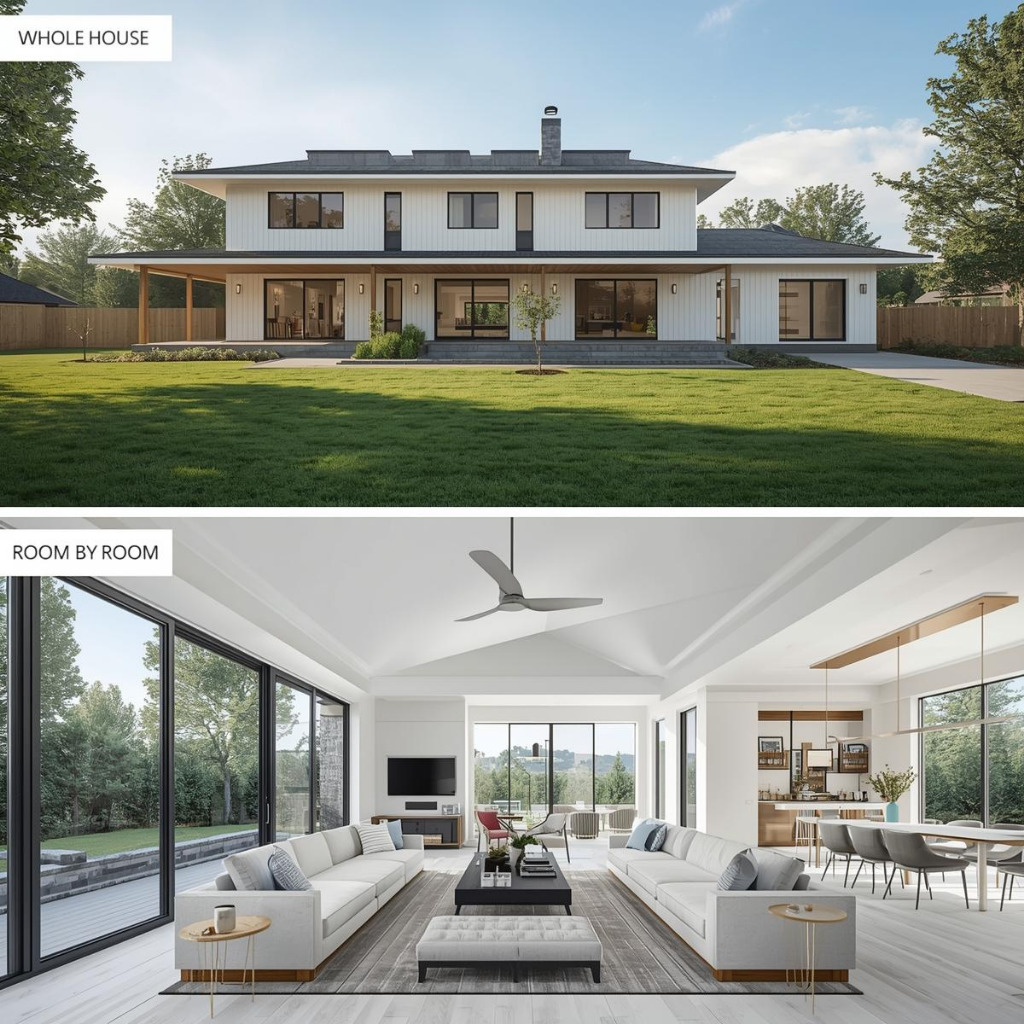
Basement finishing can transform unused space into valuable living area, but the decision requires understanding both the rewards and the risks. Central Iowa homeowners face unique challenges including radon exposure, freeze-thaw cycles, and moisture control that make proper planning essential. This guide covers what you’ll gain from a finished basement and what pitfalls to avoid.
TLDR: Finished basements deliver 70-86% ROI and nearly double your living space, but Central Iowa’s climate creates serious risks. Moisture problems cost $8,000-$15,000+ to fix if ignored, and all 99 Iowa counties sit in the EPA’s highest radon zone. Address waterproofing and radon testing before any finishing work begins.
You’ve been eyeing that unfinished basement for years. Right now it’s just concrete walls, exposed joists, and storage boxes. But you see potential – a family room, home office, guest suite, or space for the kids to spread out.
The question isn’t whether a finished basement adds value. It does. The real question is whether you’re prepared to do it right, especially in Iowa where moisture, radon, and temperature swings create challenges that don’t exist in other climates.
What Does Basement Finishing Cost in Central Iowa?
Basement finishing costs vary based on size, complexity, and features. Here’s what to expect:
| Basement Size | Estimated Cost | Cost Per Sq Ft |
|---|---|---|
| 500 sq ft | $6,000 – $7,500 | $12 – $15 |
| 800 sq ft | $12,000 – $18,000 | $15 – $23 |
| 1,000 sq ft | $15,000 – $25,000 | $15 – $25 |
| 1,200 sq ft | $18,000 – $30,000 | $15 – $25 |
Full basement projects typically range from $25,000 to $75,000 depending on finishes and features like bathrooms or wet bars. Labor accounts for roughly 40% of total costs.
Tip: Budget 10-20% extra for unexpected issues. Older Ankeny homes especially often reveal surprises once walls open up.
The Benefits: Why Finish Your Basement?
Increased Living Space and Home Value
A finished basement nearly doubles your usable square footage at a fraction of new construction costs. Basement finishing runs 10-15% cheaper per square foot than building an addition.
The ROI is compelling. According to the National Association of Home Builders, basement finishing projects recoup 70-86% of costs at resale. A $30,000 investment typically adds $21,000-$26,000 to your home’s value.
| Project Type | Typical ROI | Value Added |
|---|---|---|
| Basic finish | 70% | Lower but solid return |
| Quality finishes | 75-80% | Better materials pay off |
| With bathroom | 80-86% | Highest returns |
Versatile Use Options
Finished basements serve countless purposes:
- Family room or entertainment space
- Home office or workspace
- Guest suite with bathroom
- Kids’ playroom or teen hangout
- Home gym or fitness area
- Game room with wet bar
Real example: A Des Moines family finished their 1,000 sq ft basement for $28,000, adding a bedroom, bathroom, and family room. When they sold three years later, the finished basement helped their home sell for $125,000 more than comparable unfinished homes in the neighborhood.
The Challenges: What Can Go Wrong
Moisture Problems – The #1 Risk
Moisture is the biggest threat to basement finishing projects. Basements sit below ground level where water in surrounding soil exerts constant pressure on walls and floors. In Iowa, freeze-thaw cycles make this worse – water expands up to 9% when frozen, creating cracks that worsen each winter.
| Warning Sign | What It Means | Action Required |
|---|---|---|
| Musty smell | Moisture present | Test humidity levels |
| White powder on concrete | Water penetrating walls | Seal and waterproof |
| Water stains | Active or past leaks | Find and fix source |
| Mold growth | Serious moisture problem | Professional remediation |
Real example: A Central Iowa homeowner assumed their basement was “dry enough” and installed drywall and carpet without waterproofing. Six months later, black mold appeared behind the walls. Remediation cost $18,000. Prevention would have cost $2,000-$6,500.
Tip: Always complete a thorough moisture assessment before any finishing work. Waterproofing costs $1,900-$6,500 upfront but saves $12,000-$18,000 in potential repairs.
Radon Exposure – Iowa’s Hidden Danger
All 99 Iowa counties fall within EPA Zone 1, the highest radon risk category. Nearly 50% of Story County homes exceed the EPA’s recommended action level of 4.0 pCi/L. Radon causes approximately 400 Iowa deaths annually and is the second leading cause of lung cancer after smoking.
Radon is colorless and odorless – you cannot detect it without testing. It accumulates in basements where concentration levels are highest.
Tip: Test for radon before finishing your basement. Mitigation systems cost $1,000-$2,500 and vent the gas safely outside your home.
Egress Window Requirements
If you’re adding bedrooms, building codes require egress windows for emergency escape. Requirements include:
- Minimum opening: 5.7 square feet
- Minimum width: 20 inches
- Minimum height: 24 inches
- Maximum sill height: 44 inches from floor
Adding egress windows costs $1,500-$3,000 each but is non-negotiable for code compliance and safety.
HVAC Considerations
Your existing heating and cooling system may not adequately serve finished basement space. Basements have unique temperature and humidity needs. Solutions include:
- Extending existing ductwork
- Ductless mini-split systems (flexible, energy-efficient)
- Dedicated dehumidifiers (critical for Iowa humidity)
- Radiant floor heating
The Square Footage Reality Check
Here’s something many homeowners don’t realize: below-grade basement space typically does NOT count toward your home’s official square footage under Fannie Mae guidelines. Appraisers value finished basement space at roughly 50-60% of main-floor space per square foot.
Your home will still sell for more with a finished basement, but don’t expect to double your square footage on paper.
Frequently Asked Questions
Q: How much does basement finishing cost in Central Iowa? A: Most projects range from $25,000 to $75,000 depending on size and features. Basic finishing runs $7-$15 per square foot, while high-end projects with bathrooms reach $25+ per square foot.
Q: What ROI can I expect from finishing my basement? A: Industry data shows 70-86% ROI on basement finishing projects. Adding a bathroom increases returns. Quality finishes outperform basic materials.
Q: Do I need permits to finish my basement? A: Yes, for electrical, plumbing, and structural changes. Cosmetic updates like paint typically don’t require permits. Bedroom conversions require permits and egress windows.
Q: Should I test for radon before finishing? A: Absolutely. All Iowa counties are in the EPA’s highest radon zone. Testing is inexpensive and mitigation systems are effective. Never skip this step.
Q: How long does basement finishing take? A: Plan for 2-4 months depending on scope. Permit processing takes about 5 business days. Projects with custom features or bathrooms take longer.
Key Takeaways
- Finished basements deliver 70-86% ROI
- Waterproofing is non-negotiable in Iowa’s climate
- All 99 Iowa counties are in the highest EPA radon zone
- Below-grade space counts at 50-60% of main-floor value
- Egress windows required for bedrooms (5.7 sq ft minimum)
- Budget 10-20% contingency for surprises
Ready to Finish Your Basement?
You understand the benefits, risks, and requirements for basement finishing in Central Iowa. The next step is working with professionals who know Iowa’s unique challenges and deliver quality results.
Busy Builders has helped over 1,000 Central Iowa homeowners since 2020. We understand moisture control, radon mitigation, and local building codes. Here’s what we offer:
- Free consultation to assess your basement
- Honest estimates with no hidden costs
- Proper waterproofing and moisture control
- Code-compliant egress windows and permits
📞 Call: 844-435-9800 🌐 Visit: https://busybuildersiowa.com/
We serve Des Moines, West Des Moines, Ankeny, Waukee, and all Central Iowa communities. Contact us today to discuss your basement finishing project.
Busy Builders | Full Service Remodeling and Construction Done Right | Serving Central Iowa Since 2020
Important: This guide provides general information. Actual costs vary based on project scope and site conditions. Always test for radon and address moisture issues before finishing. Consult licensed professionals for permits and code requirements.