
Kitchen Remodeling
Des Moines, IA
Des Moines kitchens tell a story. Closed-off layouts, undersized electrical panels, and exhaust fans venting into attics are common in homes built before 1990, and they affect how you cook every single day.
Busy Builders remodels kitchens across Des Moines, from cosmetic refreshes to full gut remodels that remove walls and rewire the home’s electrical service. We handle structural changes, quartz countertop installations, LVP flooring, cabinet replacements, and the hidden conditions that show up once demo begins.
Des Moines Kitchen
Remodeling Services
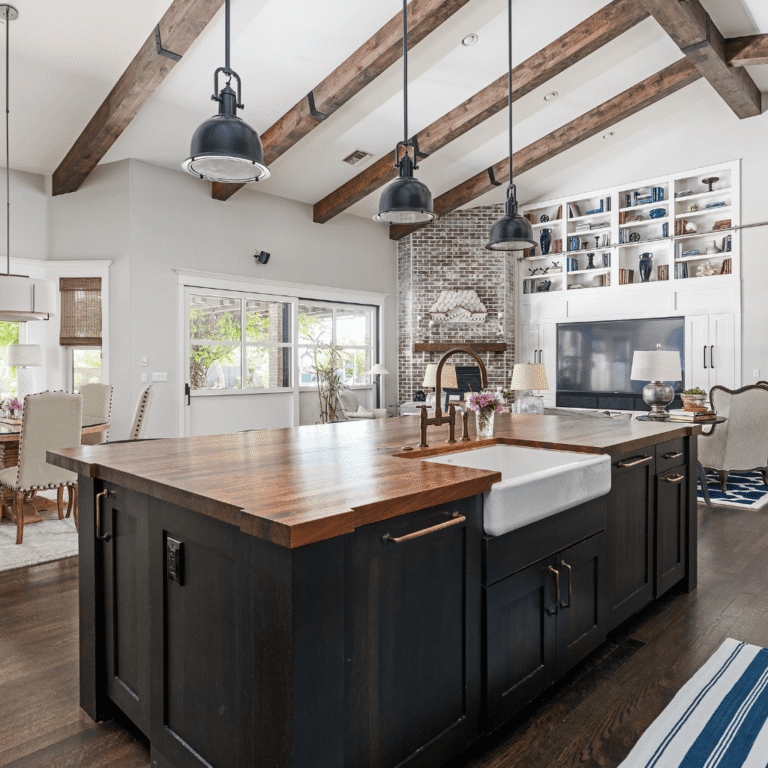
Why Des Moines
Homeowners Choose Us
Since 2020, Busy Builders has completed 1,285+ construction and remodeling projects across Central Iowa, including dozens of kitchen remodels in Des Moines and the surrounding metro.
Des Moines kitchens present specific challenges: aging galvanized supply lines, 60-to-100-amp panels that cannot support modern circuits, and walls separating kitchens from living spaces that no longer match how families use their homes. We have seen these conditions regularly, and we know how to handle them without blowing up your budget.
Our Approach
We give Des Moines homeowners a clear written scope before any demo begins. That includes an honest assessment of what we are likely to find in pre-1990 homes, a recommended 15-to-20% contingency budget for hidden conditions, and pricing that does not shift after you sign.
Why Des Moines Homeowners Choose Us
We want to be the registered contractor that Des Moines homeowners trust with their most-used room. From kitchen remodeling across Central Iowa to structural wall removal in older Des Moines homes, we bring transparency to every step.
- Kitchen Remodeling Step By Step
How We Remodel Des Moines Kitchens
ASSESSMENT & PLANNING
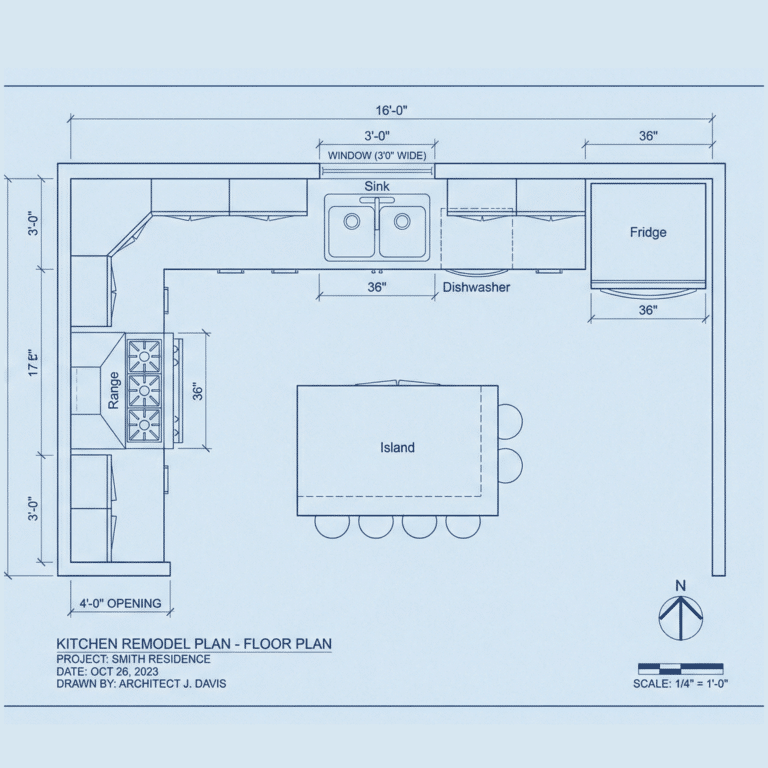
Before any demo begins, we walk through your Des Moines kitchen and assess what stays and what goes.
We check your electrical panel capacity, plumbing supply lines, exhaust fan routing, subfloor condition, and whether any walls are load-bearing. In pre-1990 Des Moines homes, we find corroded galvanized supply lines, undersized panels, and exhaust fans venting into attics on a regular basis. We identify those conditions at the walkthrough, not after demo day.
We always recommend a 15 to 20% contingency budget on any pre-1990 Des Moines kitchen. Hidden conditions in older homes are found regularly, not rarely. Knowing that going in protects your timeline and your budget.
- Full condition assessment of plumbing, electrical, ventilation, and subfloor
- Hidden damage, code violations, and system deficiencies identified before work is scoped
- Written scope of work, design, and fixed estimate confirmed before any work begins
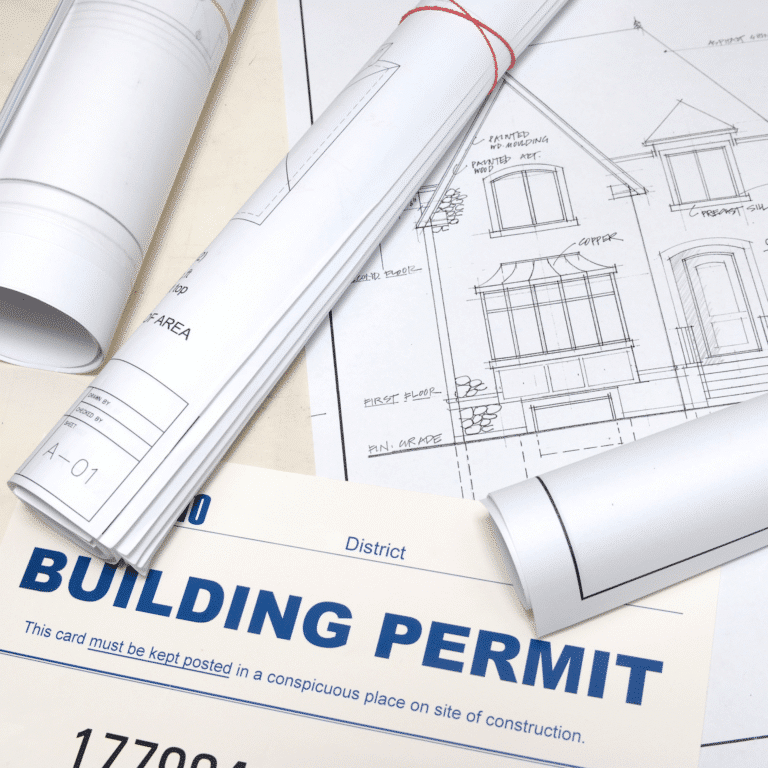
Kitchen remodeling in Des Moines requires a permit for structural changes, electrical upgrades, plumbing relocations, and HVAC modifications. Iowa Building Code is administered through Iowa DIAL under Iowa Administrative Code agency 481, and the City of Des Moines processes permits through its Development Services Department. Cosmetic updates, such as cabinet refacing, countertop replacement, or a new backsplash over existing tile, typically do not require a permit. However, any work that touches wiring, supply lines, drain lines, or load-bearing walls does. Busy Builders handles the full permit process on every Des Moines kitchen remodel, from application through final inspection, so you never have to manage that paperwork yourself.
- Permit application filed for all structural, electrical, plumbing, and HVAC scope items
- Drawings submitted where required by local building departments
- All inspections scheduled and managed, homeowner doesn't track a thing
PERMITS & APPROVALS
DEMO & HAZARD REMEDIATION
Demo is where Des Moines kitchens reveal what decades of Iowa humidity have been hiding. Pre-1990 homes in Des Moines regularly turn up water damage under appliances, corroded galvanized supply lines, asbestos floor tiles beneath existing flooring, and subfloor rot around the sink and dishwasher. These are not rare surprises. They are common findings on older Des Moines homes.
We plan for this. Every pre-1990 Des Moines kitchen remodel should carry a 15 to 20 percent contingency budget. If hazardous materials are present, licensed remediation happens before framing or installation begins.
- Selective or full demo based on remodel scope, all debris removed before rebuilding
- Mold remediation, rotted subfloor repair, and water damage correction where needed
- All hidden plumbing and electrical issues addressed before any new work begins
Open-concept conversions are the most-requested structural change in Des Moines kitchen remodels. Closed layouts from 1970s and 1980s construction separate kitchens from living and dining spaces in ways that no longer fit how families cook and entertain today. Removing those walls requires a structural assessment before demo begins.
Load-bearing walls, which are walls that hold up the house above, need an engineered header sized for the span. Depending on the scope, the City of Des Moines may require engineered drawings submitted with the permit application. Our team identifies load-bearing conditions, coordinates with structural professionals when required, and frames new openings to code before any finish work begins.
- Load-bearing wall identification and proper structural support before any removal
- Headers and beams sized per Iowa building code for all spans and loads
- Structural inspection scheduled and passed before any mechanical rough-in begins
STRUCTURAL CHANGES & FRAMING
PLUMBING ROUGH-IN
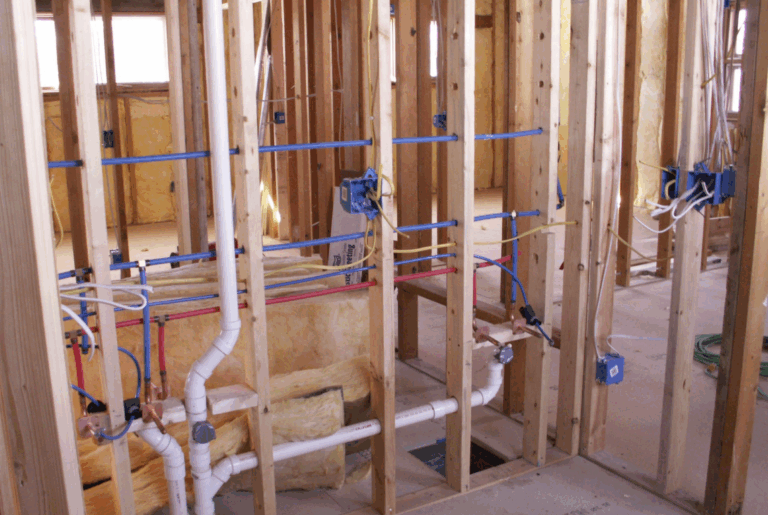
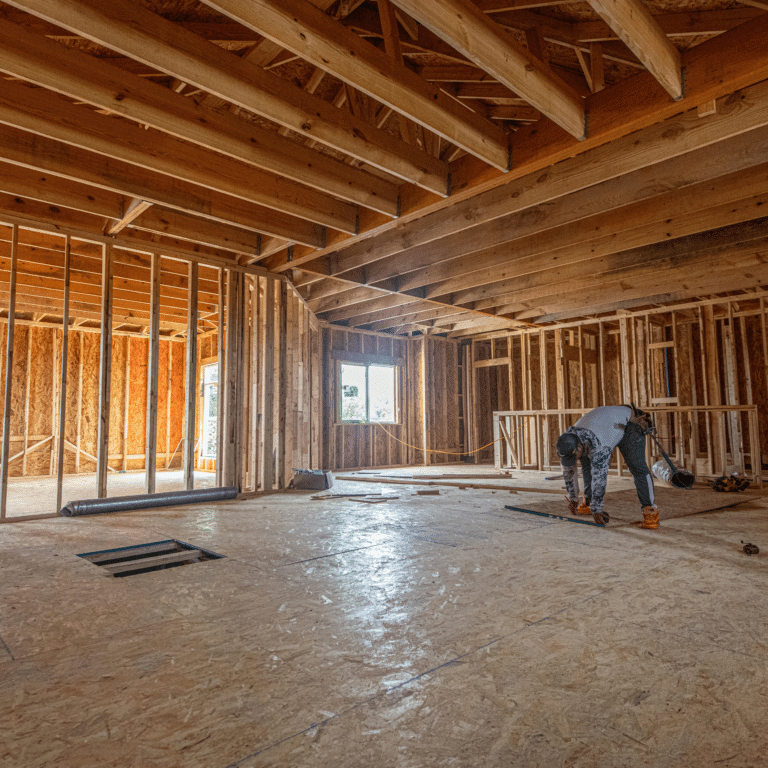
Moving the sink, adding a prep sink, relocating the dishwasher drain, or running a refrigerator water line all happen while walls and floors are open in your Des Moines kitchen.
This is the lowest-cost window to change plumbing locations. Once walls close, the same changes cost significantly more and add days to the schedule. Many pre-1990 Des Moines homes still have corroded galvanized supply lines behind the walls. We replace galvanized lines with copper or PEX during rough-in so you are not dealing with a supply failure six months after your new kitchen is finished.
- Sink, dishwasher, and refrigerator line relocation while walls and floors are open
- Supply line replacement and shutoff valve upgrades on older Central Iowa homes
- Licensed plumber on all rough-in work, permitted and inspected before walls close
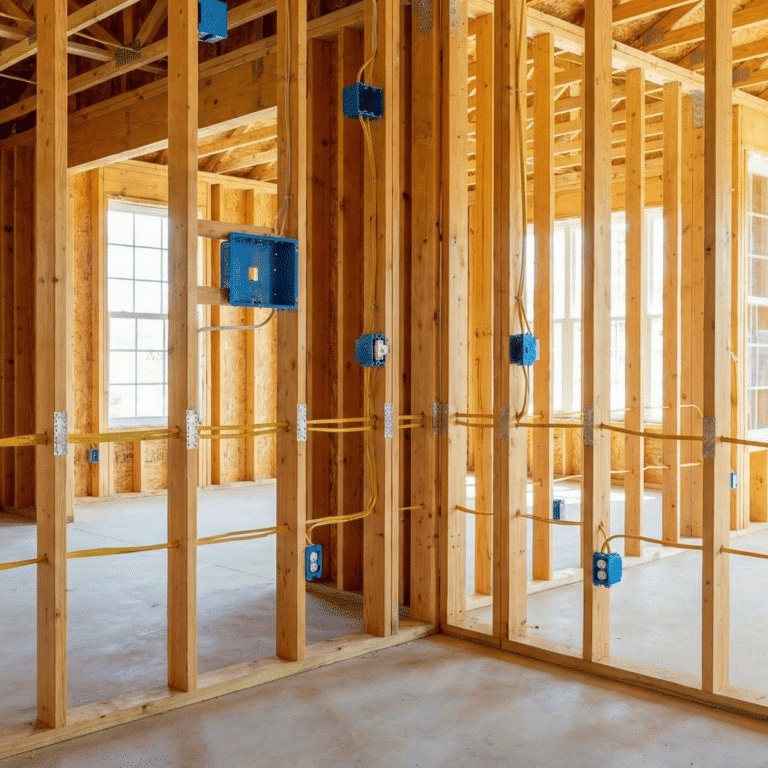
Electrical rough-in covers new circuits, outlet placement, under-cabinet lighting wiring, pendant fixture rough-in, exhaust fan wiring, and dedicated appliance circuits for the refrigerator, dishwasher, range, and microwave.
Under Iowa NEC 2023 with state amendments, GFCI protection is required on all 125-volt countertop receptacles in kitchens, and AFCI protection is required on all kitchen branch circuits in new work. Most pre-1990 Des Moines homes carry 60 to 100-amp panels that cannot support a modern kitchen’s circuit load. Panel upgrades to 150 or 200 amps are required on nearly every older Des Moines kitchen remodel. Our team identifies panel capacity at the walkthrough so there are no surprises mid-project.
- New circuits, outlet locations, and dedicated appliance circuits roughed in while walls are open
- GFCI protection on all countertop receptacles per Iowa NEC 2023 amendments
- Licensed electrician on all wiring, permitted and inspected before drywall
ELECTRICAL ROUGH-IN
VENTILATION & RANGE HOOD ROUGH-IN
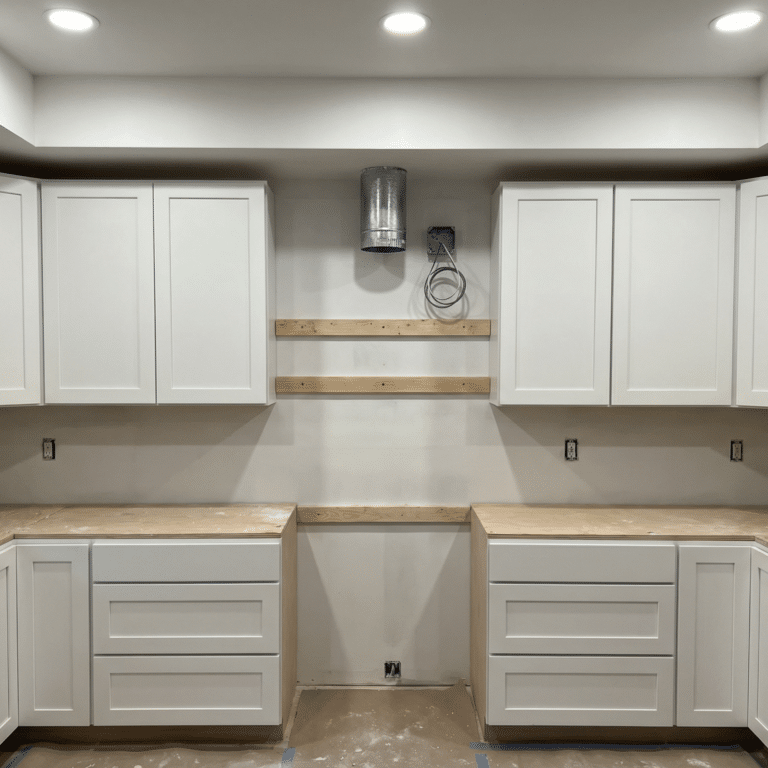
Range hood ventilation is one of the most commonly done wrong details in Des Moines kitchen remodels.
Iowa has adopted NEC 2023 and requires all exhaust fans and range hoods to vent to the exterior, not recirculate inside the kitchen or vent into the attic. Many Des Moines homes built before 1990 have exhaust fans that vent directly into attic cavities, which is a code violation and a moisture problem waiting to become a bigger issue.
During a remodel, correcting this requires routing ductwork through an exterior wall or roof penetration. It is far easier and less expensive to address this during a kitchen remodel than after walls and cabinets are back in place. Our team handles every permit and inspection tied to exhaust duct corrections as part of the project scope.
- Range hood exhaust ducted to exterior with proper backdraft damper and weather cap
- Duct sizing matched to range hood CFM rating for full ventilation performance
- Iowa code compliant venting, never recirculating or venting into the attic
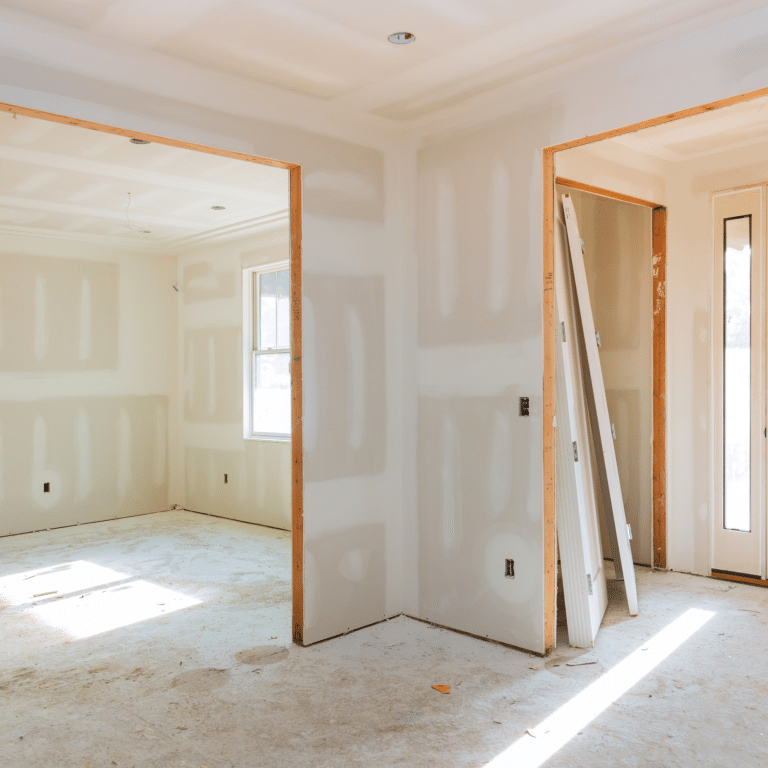
Drywall goes up after all mechanical inspections are passed in Des Moines.
We hang, tape, mud, and sand every surface to a smooth, paint-ready finish. Moisture-resistant drywall is used on all kitchen walls, particularly behind the backsplash area and above the sink where humidity and splashing are constant. Des Moines kitchens see real humidity swings between summer and winter, and standard drywall behind a sink or stove breaks down faster than it should.
Ceilings get the same attention. Any soffit removal or ceiling work tied to an open-concept conversion is finished to match the surrounding surface. No visible seams, no texture mismatches.
- Moisture-resistant drywall on all kitchen walls, particularly behind backsplash and above sink
- Smooth ceiling finish primed and ready for paint
- Soffit construction around upper cabinets and range hood built cleanly to ceiling
DRYWALL & CEILINGS
CABINET INSTALLATION
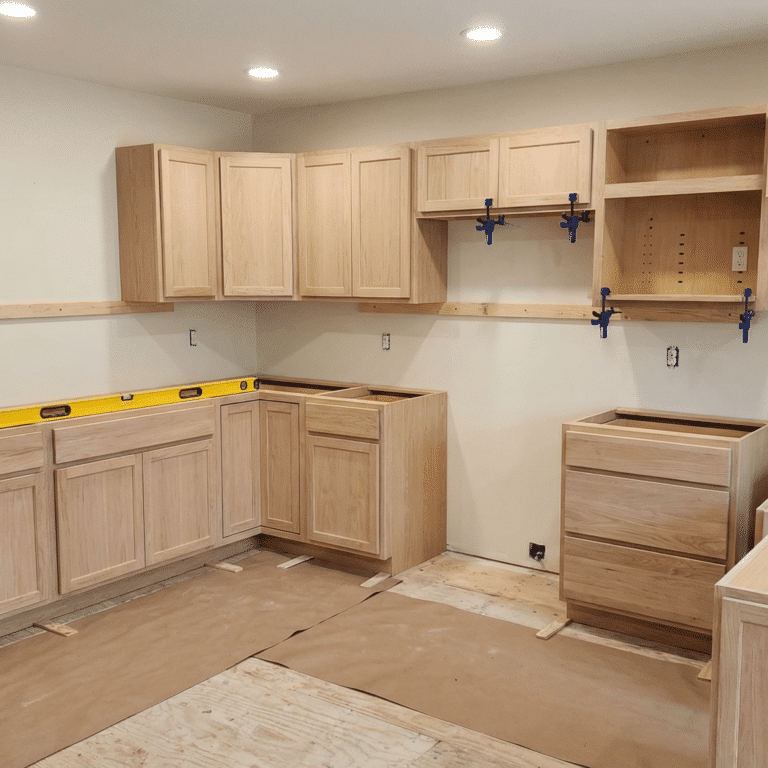
Cabinets go in after drywall is complete and walls are primed in your Des Moines kitchen.
Upper cabinets are hung first, then base cabinets are set and leveled across the floor. Every cabinet is secured to studs with proper fasteners. Iowa’s humidity swings cause wood to move seasonally, and we account for that during installation by choosing plywood box construction over particle board wherever possible. Particle board swells and warps in Des Moines kitchens where humidity spikes in summer and drops sharply in winter.
Semi-custom and custom cabinet lines give Des Moines homeowners more control over box depth, door style, and finish.
- Upper cabinets hung before base cabinets set and leveled across the floor
- All cabinets secured to studs with proper fasteners accounting for Iowa's humidity movement
- Crown molding, filler strips, and end panels fitted after cabinet runs are complete
Countertops are templated after cabinets are fully installed and leveled. In Des Moines kitchens, quartz is the most common countertop choice because it handles Iowa’s humidity swings and freeze-thaw cycles without requiring sealing or special maintenance.
Quartz and granite slabs are fabricated to the template, then installed with proper support and adhesive. Undermount sinks are set before the countertop drops in, so the cutout is clean and sealed correctly from the start. Getting this sequence right prevents water from working its way under the counter over time.
Backsplash tile is installed after the countertop is set and cured. Grout color and tile selection affect how the finished kitchen reads, so we walk through every option with you before ordering.
- Countertop templating after cabinets are fully set, fabricated and installed to spec
- Undermount sink set before countertop for a clean sealed cutout
- Backsplash tile set after countertops with sealed grout rated for Central Iowa's hard water
COUNTERTOPS, BACKSPLASH & SINK
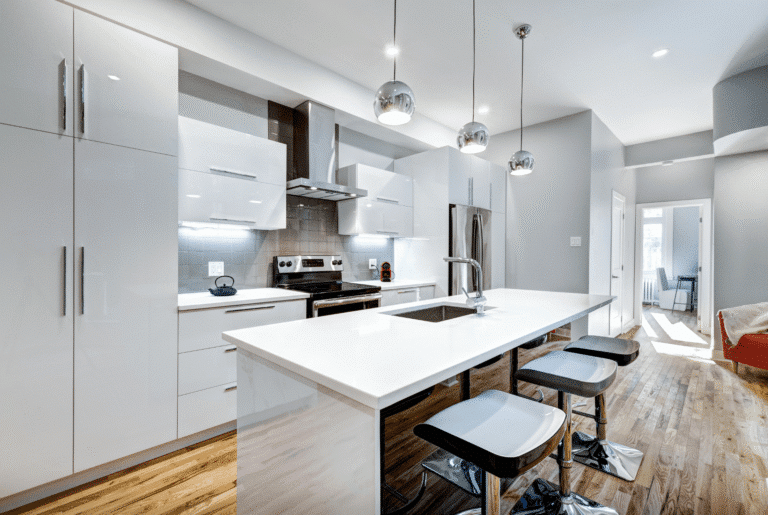
APPLIANCES, FIXTURES & HARDWARE
Appliances are delivered and installed after countertops and backsplash are complete. This sequencing protects finished surfaces from delivery damage, which matters on a high-end Des Moines kitchen remodel where countertop and tile work represents a significant share of the budget.
Refrigerator, range, dishwasher, and disposal are connected, tested, and confirmed operational before the project moves forward. In pre-1990 Des Moines homes, each appliance requires its own dedicated circuit under Iowa’s adopted NEC 2023 code. If a panel upgrade was part of your project scope, this is where that work pays off.
- Appliances delivered, installed, connected, and confirmed operational before final finishes
- Faucets, garbage disposal, and sink accessories connected and tested
- Light fixtures, pendants, and under-cabinet lighting installed and connected by licensed electrician
Flooring and final paint wrap up the project before your walkthrough begins.
We apply paint to walls and ceilings after cabinets and tile are set, so every edge is cut in cleanly against finished surfaces. We use moisture-resistant kitchen paint because standard interior paint breaks down quickly in Des Moines kitchens, where cooking heat and Iowa’s humidity swings create a tough environment for ordinary finishes.
LVP flooring goes in last so it stays protected throughout the earlier phases of the remodel. It handles Iowa’s seasonal humidity transitions far better than solid hardwood, and it holds up in a kitchen where spills and heavy foot traffic are a daily reality.
- Moisture-resistant kitchen paint applied after cabinets and tile for clean cut lines
- Flooring installed after paint is complete to protect finished surfaces
- Transition strips between kitchen and adjacent rooms fitted cleanly at project close
FLOORING & PAINTING
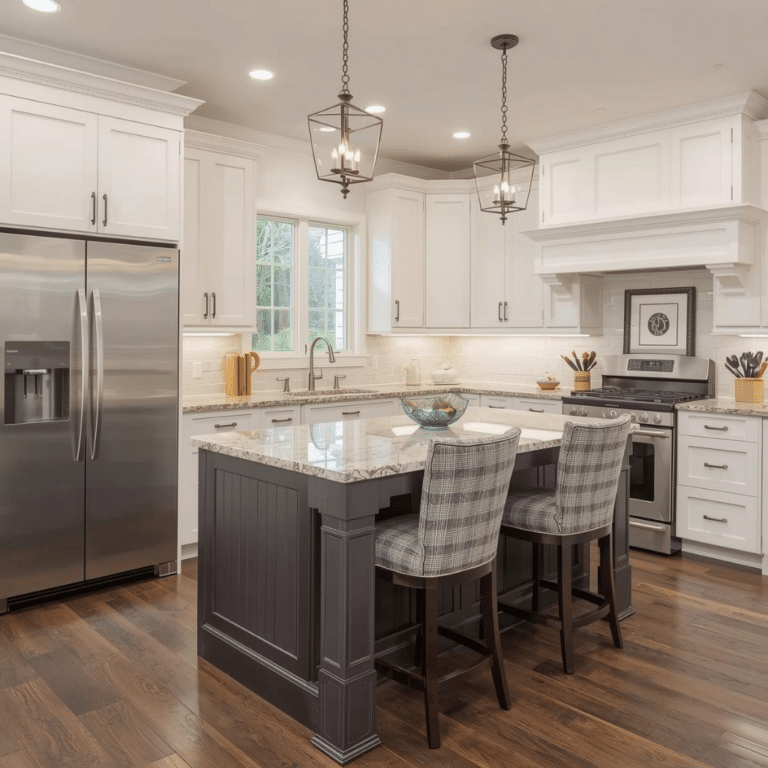
FINAL WALKTHROUGH & CLEAN UP
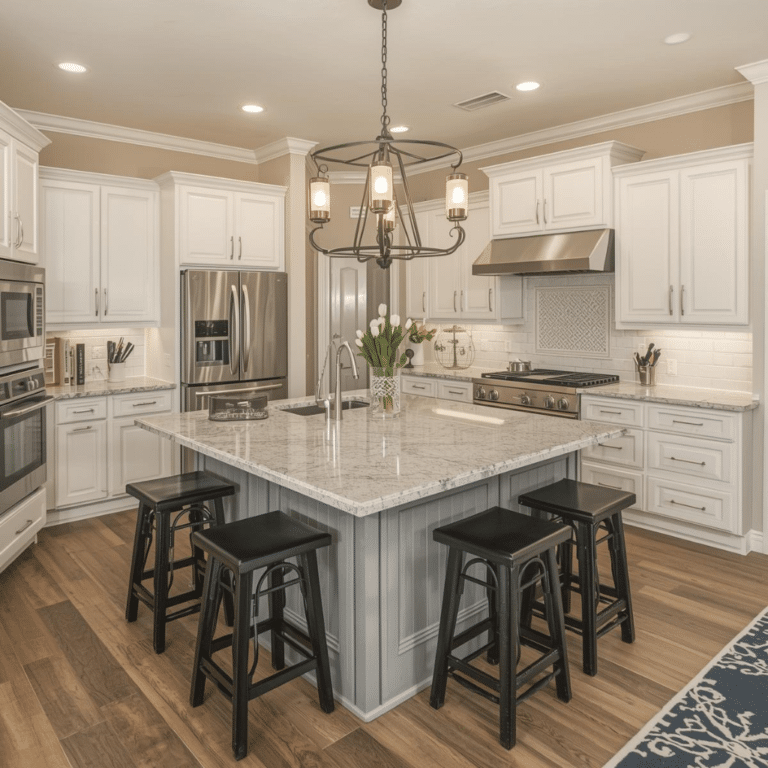
The final walkthrough is where we go through every detail of your Des Moines kitchen together before calling the project complete.
Every appliance, plumbing fixture, electrical outlet, light switch, GFCI-protected countertop circuit, cabinet door, and drawer is tested before we walk the space with you. Iowa’s adopted NEC 2023 code requires GFCI protection on all 125-volt countertop outlets, and we verify every circuit meets that standard before the walkthrough begins.
Every surface, corner, and transition is inspected. If anything needs attention, we address it before we leave. We handle all cleanup so your kitchen is move-in ready from day one. Nothing is considered done until you are satisfied with every inch of the finished space.
- Full kitchen inspection of every surface, appliance, fixture, and finish detail with the homeowner
- Function test on all plumbing, electrical, appliances, GFCI circuits, and ventilation before handoff
- Complete clean up and delivery of all permit documentation and inspection records at project close
- Achievement
Trusted Kitchen Remodeling Contractors in Des Moines, IA
Since 2020, Des Moines homeowners have trusted Busy Builders to handle kitchen remodels of every scope, from cosmetic refreshes in older neighborhoods to full structural overhauls in 1970s and 1980s homes.









- Frequently Asked Questions
FAQs About Kitchen Remodeling
in Des Moines
How much does a kitchen remodel cost in Central Iowa?
Kitchen remodeling in Des Moines starts at $250 per square foot. Final costs vary based on scope, cabinet quality, countertop material, and whether structural or mechanical changes are needed. Costs vary by scope, materials, and complexity.
A cosmetic refresh with cabinet refacing, new countertops, and updated fixtures typically runs $10,000 to $25,000. No structural changes. No demo. Just a refreshed kitchen.
A mid-range full remodel with semi-custom cabinets, quartz countertops, LVP flooring, and updated electrical typically runs $45,000 to $70,000. Layout changes and panel upgrades can affect that range.
A high-end gut remodel with custom cabinetry, structural wall removal, a full appliance package, and premium finishes runs $70,000 to $150,000 or more. Des Moines projects often run above national averages because homeowners here choose durable, low-maintenance materials that hold up through Iowa’s humidity swings.
How long does a kitchen remodel take in Central Iowa?
Most Des Moines kitchen remodels run 6 to 12 weeks from demo to final walkthrough. Timelines vary based on scope, permit processing, and what hidden conditions show up once demo begins.
A cosmetic refresh with no structural or plumbing changes can wrap in 3 to 5 weeks. A full remodel with cabinet replacement, quartz countertops, new appliances, and electrical updates typically runs 8 to 10 weeks.
A full gut remodel that includes structural wall removal, panel upgrade, plumbing relocation, and custom cabinetry can run 12 to 16 weeks. Pre-1990 Des Moines homes frequently reveal hidden conditions after demo: corroded galvanized supply lines, water-damaged subfloors, or exhaust fans venting into the attic.
Do I need a permit to remodel my kitchen in Iowa?
Yes, permits are required for any Des Moines kitchen remodel involving structural changes, electrical modifications, plumbing updates, HVAC duct changes, or new gas lines.
Cosmetic work over existing surfaces, such as countertop replacement, cabinet refacing, new hardware, or an appliance swap, typically does not require a permit in Des Moines. When in doubt, we verify with the city before work begins.
Iowa building and electrical code is administered through Iowa DIAL under Iowa Administrative Code agency 481. Des Moines kitchens must meet Iowa’s 2024 IRC adoption and NEC 2023 requirements for GFCI and AFCI protection on countertop outlets and kitchen branch circuits.
Should I keep my existing cabinets or replace them?
It depends on the condition of the boxes and how much the layout needs to change. If the cabinet boxes are solid, doors close squarely, and the layout still works for how your household cooks and lives, refacing or repainting is a cost-effective option. It updates the look without the cost of a full replacement.
If the boxes show water damage, the hinges no longer align, or the layout needs to change to open up the space, replacement makes more sense. Many Des Moines kitchens in pre-1990 homes have cabinet boxes that look fine from the outside but reveal soft spots, warping, or mold once the doors come off. We assess the boxes at the walkthrough and give you a straight answer before any scope is written.
Can you remove a wall to open up my kitchen?
Yes, and open-concept conversions are the most-requested structural change in Des Moines kitchen remodels. Closed-layout kitchens separated from dining rooms or living spaces are common in 1970s and 1990s homes throughout the city. Before any wall comes down, we identify whether it is load-bearing and what runs inside it: plumbing, electrical, or HVAC ducts.
A load-bearing wall, meaning a wall that holds up the structure above it, requires a properly sized header or beam to carry that load once the wall is removed. That work must be permitted, inspected, and in many cases supported by engineered drawings submitted with the permit application.
How do you keep my home livable during a kitchen remodel?
We seal off the work area to contain dust and debris from the rest of your home. Temporary barriers go up before demo begins, and we protect floors and hallways throughout the project.
We clean up at the end of every workday. Des Moines kitchen remodels are active job sites, but your home should not feel like one after 5 p.m. Countertops, appliances, and living areas outside the work zone stay protected throughout.
For projects involving lead paint or asbestos, which are common in pre-1990 Des Moines homes, we follow Iowa and EPA protocols for containment and disposal before any demo begins.
Trustindex verifies that the original source of the review is Google.
Quality work, fair pricing, followed through on what we discussed without delay, and personable guys to deal with. Will be using them again.Blake and his guys were top notch all the way. I would highly recommend them. They did a wonderful job on our bathroom and our new luxury vinyl floors. We will definitely use them again in the future.Beautiful job. Josh and Isaiah paid attention to what we wanted and asked lots of questions. Stairs are wonderful!+4We have used Busy Builders before, and recently hired them again for a full bathroom remodeling project. They are perfectionists and got the job done timely. We love our new bathroom, and plan on hiring them again to remodel our kitchen in 2027.Blake is very good at communicating. He built my brand new composite deck at my house. We are really satisfied with the results. We will be happy to use him in the future.Verified by TrustindexTrustindex verified badge is the Universal Symbol of Trust. Only the greatest companies can get the verified badge who has a review score above 4.5, based on customer reviews over the past 12 months. Read more


- Newest Blogs
Des Moines Kitchen Remodeling Guides
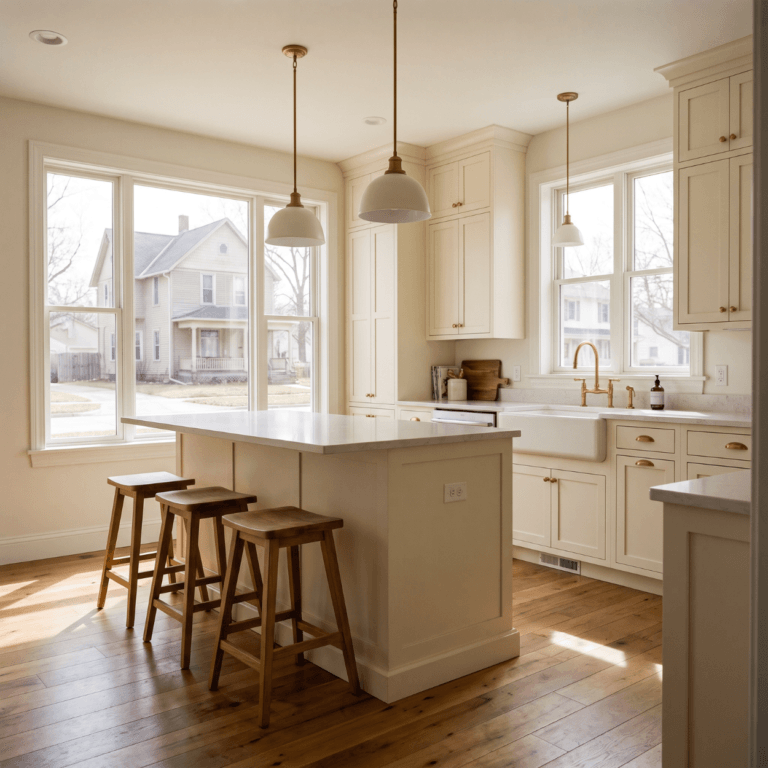
Kitchen Remodel Cost in Granger, Iowa: 2026 Guide
Read MoreMost Granger kitchen remodels run $26,000 to $80,000. Cost by tier, small-city permits, and why cabinets and labor dominate the budget.Most Granger kitchen remodels run $26,000 to $80,000. Cost by tier, small-city permits, and why cabinets and labor dominate the budget.Most Granger kitchen remodels run $26,000 to $80,000. Cost by tier, small-city permits, and why cabinets and labor dominate the budget.
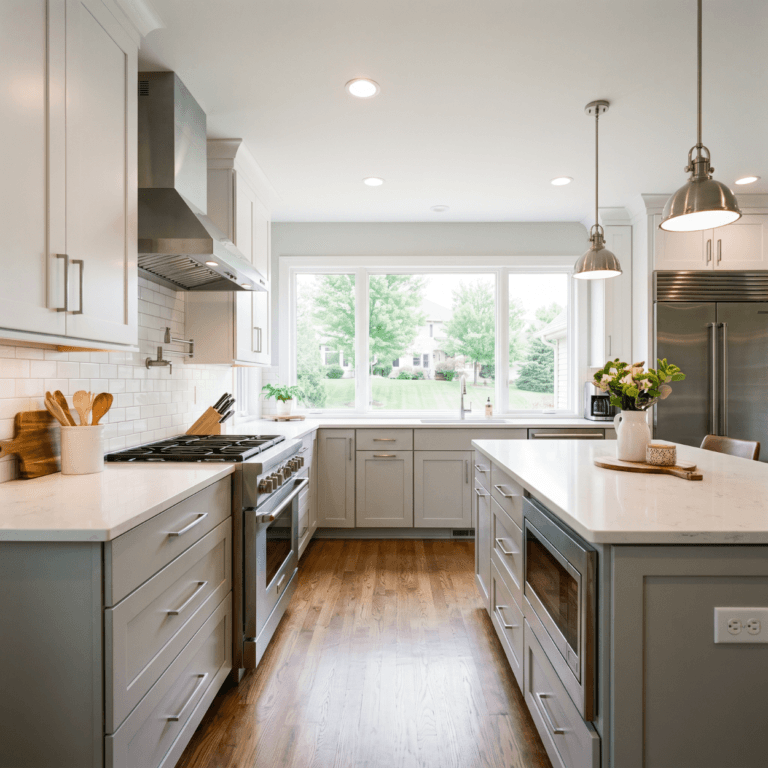
Kitchen Remodel Cost in Bondurant: 2026 Planning Guide
Read MoreMost Bondurant kitchen remodels run $26,000 to $80,000. Cost by tier, city permits, and why newer homes carry fewer surprises at demolition.Most Bondurant kitchen remodels run $26,000 to $80,000. Cost by tier, city permits, and why newer homes carry fewer surprises at demolition.Most Bondurant kitchen remodels run $26,000 to $80,000. Cost by tier, city permits, and why newer homes carry fewer surprises at demolition.
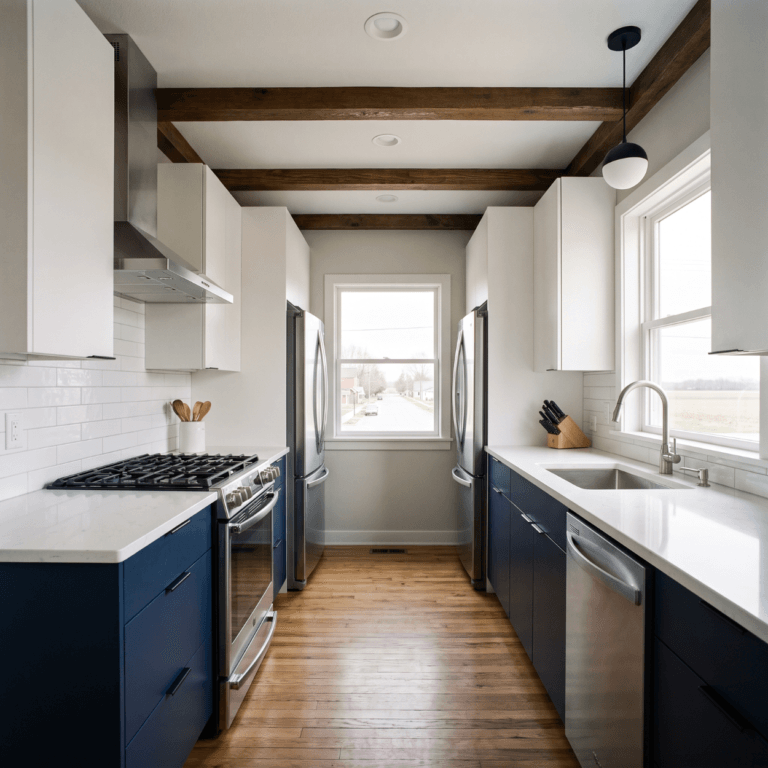
Kitchen Remodel Cost in Huxley: 2026 Planning Guide
Read MoreMost Huxley kitchen remodels run $26,000 to $80,000. Cost by tier, the city permit process, and where the money actually goes.Most Huxley kitchen remodels run $26,000 to $80,000. Cost by tier, the city permit process, and where the money actually goes.Most Huxley kitchen remodels run $26,000 to $80,000. Cost by tier, the city permit process, and where the money actually goes.