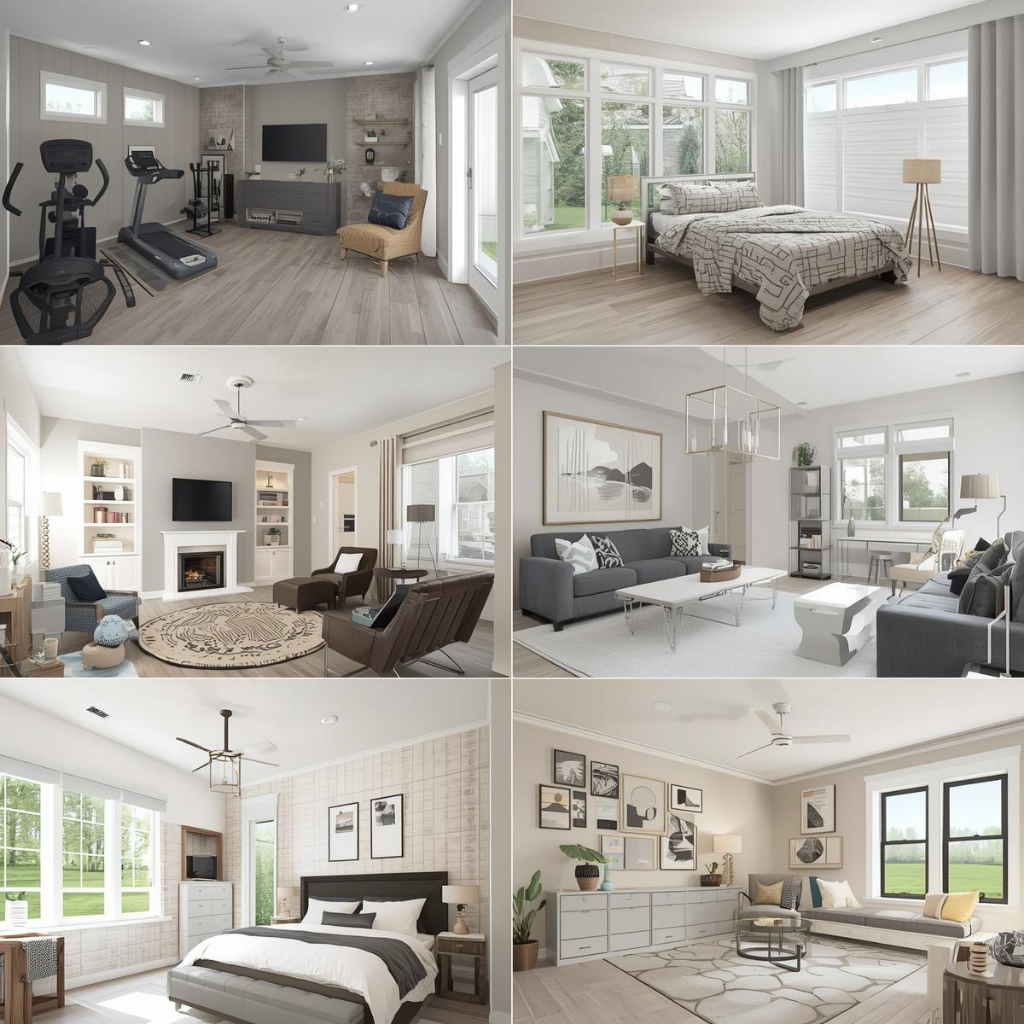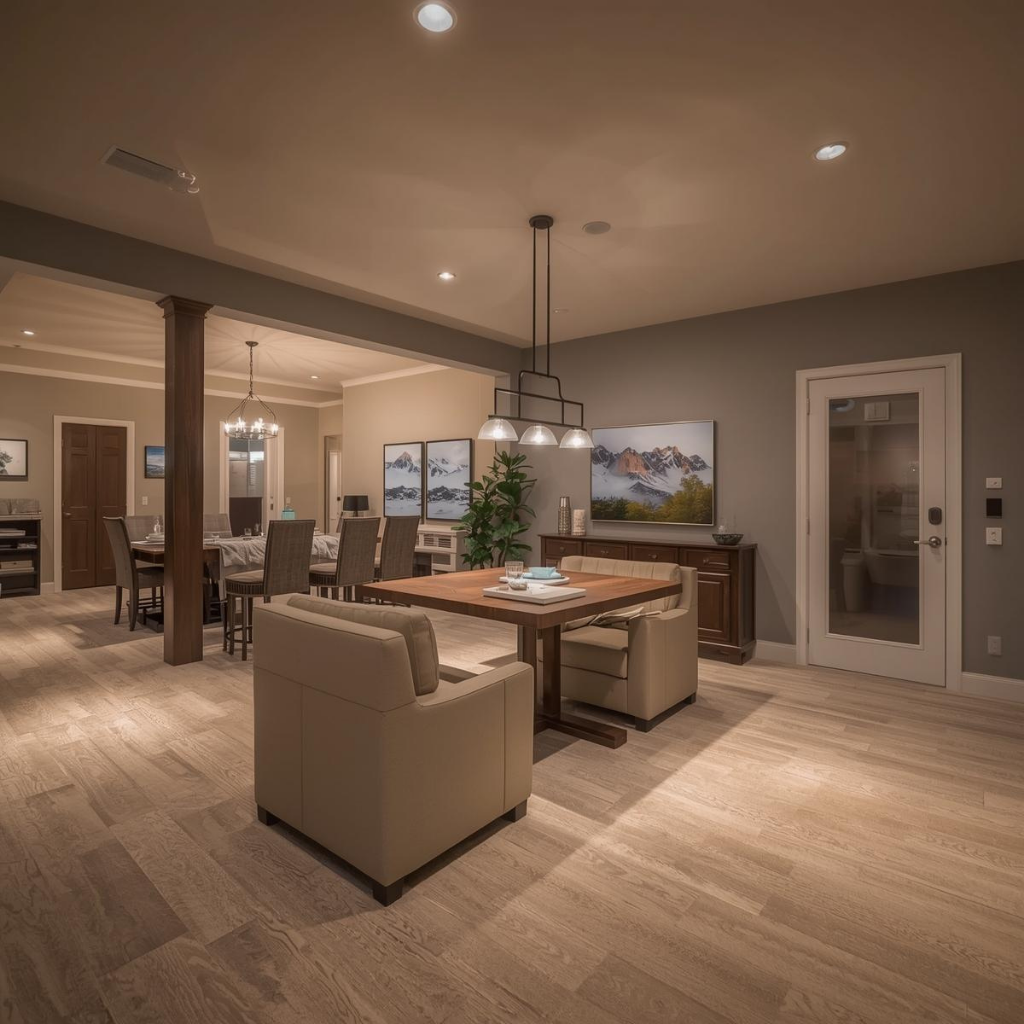
You’re building a custom home in Central Iowa. Your builder hands you the options sheet, and there it is: finish the basement now for $45,000, or leave it unfinished and do it later. The decision feels significant because it is. Choosing wrong could cost you thousands of dollars or leave you with a space that doesn’t work for your family.
TLDR: Finishing your basement during construction often costs 10 to 20 percent less in labor and allows you to finance at mortgage rates. However, finishing later gives you flexibility to customize based on actual needs and time for your foundation to settle. The right choice depends on your budget, timeline, and how certain you are about the layout you want.
The timing question comes down to money, functionality, and flexibility. Finishing during construction offers integration advantages and potential financing benefits. Finishing later gives you time to understand how you actually use your space and potentially better pricing from specialized contractors. Both paths have merit depending on your situation.
This guide breaks down the real costs, warranty implications, and practical factors that should drive your decision in Iowa. You’ll learn when each approach makes sense and how to protect your investment either way.
The Real Cost Difference: During Construction vs. Later
Understanding actual cost differences helps you make an informed decision rather than guessing.
Labor Cost Savings During Construction
Contractors often charge 10 to 20 percent less to finish a basement during new construction compared to returning later. Several factors drive this difference.
Trades already on site. Framers, electricians, and plumbers are already working on your home. They can move directly to the basement without additional mobilization costs or scheduling delays.
Material delivery is easier. Getting drywall, lumber, and finishes into your basement is simpler before you have finished floors and furniture to protect. Contractors don’t need to set up elaborate protection systems.
No disruption premium. Finishing later means contractors work around your daily life. You pay for careful protection, dust containment, and limited work hours. During construction, none of these constraints exist.
Financing Cost Advantages
Perhaps the biggest financial advantage of finishing during construction is mortgage financing.
| Financing Method | Typical 2025-2026 Rate | Term | Monthly Payment on $40K |
|---|---|---|---|
| Construction loan (mortgage) | 6.5% to 7.5% | 30 years | $253 to $280 |
| Home equity line of credit | 7.0% to 10.0% | 10-15 years | $465 to $530 (10 yr) |
| Personal loan | 9.0% to 12.0% | 5-7 years | $623 to $712 (7 yr) |
By including basement finishing in your original mortgage, you spread the cost over 30 years at lower rates. A $40,000 basement costs you about $253 monthly at 6.5 percent. The same amount on a HELOC at 9 percent costs $506 monthly over 10 years.
Over the life of the loans, you pay significantly less interest with mortgage financing. This represents real savings even if the basement itself costs slightly more through your builder.
Typical Cost Ranges in Central Iowa
During Construction with Builder:
- Basic finish: $60 to $70 per square foot
- 600 square feet: $36,000 to $42,000
- 800 square feet: $48,000 to $56,000
Finishing Later with Contractor:
- Basic finish: $32 to $55 per square foot
- Mid-range: $50 to $80 per square foot
- 600 square feet: $19,200 to $48,000
The ranges overlap significantly. Your actual costs depend on finish quality, features included, and which contractors you compare. Some builders charge premium prices for basement finishing. Others offer competitive rates because they’re already managing the project.
Tip: Get quotes from your builder and at least two independent basement finishing contractors. Compare not just price but also what’s included in each bid.
The Rough-In Middle Ground
Many Iowa homeowners choose a third option: rough-in during construction, finish later.
What Rough-In Includes
Rough-in means installing the infrastructure for future finishing without completing the visible finishes. This typically includes:
Plumbing rough-in:
- Drain lines installed in concrete slab
- Water supply lines run to future bathroom location
- Proper venting through roof
- Typical cost: $1,500 to $4,000
Electrical rough-in:
- Conduit or wiring run to future room locations
- Breaker capacity sized for basement load
- Boxes installed for future outlets and switches
- Typical cost: $800 to $2,000
HVAC considerations:
- System sized to handle basement square footage
- Ductwork stubbed for future runs
- Return air provisions planned
- Typical cost: $1,000 to $3,000
Structural preparation:
- Foundation walls at 9 feet instead of 8 feet
- Egress windows installed per code
- Proper drainage and waterproofing
- Insulation between joists
Why Rough-In Often Makes Sense
Rough-in gives you the best of both worlds in many situations.
You save on future finishing costs. Breaking through concrete slabs later to add plumbing costs $3,000 to $8,000 or more. Installing drain lines during the pour costs $1,500 to $4,000. You save thousands by planning ahead.
You maintain flexibility. You’re not committing to a specific basement layout yet. You can decide exactly where walls, bathrooms, and bedrooms go after living in the home for a year or two.
You avoid permit complications. Major plumbing work added later requires permits and inspections. Rough-in during construction gets approved as part of your overall home permit.
Foundation work happens once. You don’t need to worry about accessing plumbing under your finished concrete floor. Everything is in place when you’re ready to finish.
| Approach | Upfront Cost | Future Flexibility | Total Long-Term Cost |
|---|---|---|---|
| Full finish during construction | $36,000 to $56,000 | Low | Lower if using mortgage |
| Rough-in only | $5,000 to $10,000 | High | Moderate |
| Completely unfinished | $0 | Highest | Higher due to later work |
The rough-in approach costs more than leaving the basement completely unfinished but significantly less than full finishing. For many Iowa families, it’s the sweet spot between preparation and flexibility.
Warranty Considerations You Must Understand
Builder warranties create real financial implications for when you finish your basement.
What New Home Warranties Typically Cover
Iowa new home builders typically provide:
1-year workmanship warranty: Covers fit, finish, materials, and construction quality in the home as delivered
2-year systems warranty: Addresses plumbing, HVAC, electrical, and other “behind the wall” systems
10-year structural warranty: Protects against foundation issues, structural defects, and major failures
These warranties protect significant investments. Foundation repairs can range from $7,000 to $15,000 or more depending on severity. An HVAC system replacement costs $8,000 to $15,000. Warranty coverage matters.
How Finishing Later Affects Coverage
If you hire contractors to finish your basement after closing, here’s what changes:
Still covered:
- Original home construction and systems
- Foundation and structural elements
- Work completed by the builder before closing
- Issues unrelated to basement finishing
Not covered:
- Work done by your contractors
- New framing, drywall, electrical, plumbing added by others
- Moisture issues created by improper basement finishing
- Problems caused by alterations to builder-installed systems
The key issue: if your basement contractor modifies existing HVAC ductwork, taps into plumbing lines, or alters electrical systems, you may lose warranty coverage for those specific systems.
How to Protect Your Warranty
Option 1: Use the builder’s contractors. Many builders allow you to hire their subcontractors directly after closing. This often maintains warranty coverage because the same professionals who installed systems are modifying them.
Option 2: Document everything carefully. If using independent contractors:
- Pull all required permits
- Use registered, insured contractors
- Get inspections at each phase
- Keep detailed photos and receipts
- Avoid modifications to mechanical systems when possible
Option 3: Wait until warranties expire. If your basement can wait 1-2 years, finishing after the systems warranty expires eliminates this concern entirely. You’re free to modify as needed without warranty implications.
Important: Review your specific warranty document before making decisions. Warranty terms vary by builder. Some allow modifications with proper permitting. Others have stricter requirements.
Foundation Settlement and Moisture Concerns
Iowa’s clay soils and freeze-thaw cycles create unique basement challenges that affect timing decisions.
The Settlement Period
New construction foundations go through a settlement period as:
- Concrete continues curing and drying
- Soil compacts around footings
- The home adjusts to seasonal changes
- Minor cracks appear and stabilize
Many experienced contractors and homeowners recommend waiting 6 to 12 months after closing before finishing a basement. This allows you to observe:
Moisture patterns through all seasons. A basement that’s dry in August may show dampness in April during spring thaw. Wait through a full year to identify any water intrusion issues.
Minor settling cracks. Small hairline cracks often appear in new foundations as concrete cures and settles. These are usually cosmetic. But finishing immediately means you might need to repair drywall later if cracks develop.
Foundation performance. Iowa’s expansive clay soils can cause movement. Observing your foundation through freeze-thaw cycles helps you identify any serious issues before investing in finishes.
If you finish during construction, you eliminate the observation period. For some homes, this creates no problems. For others, it means repairing finished spaces when issues appear.
Radon Testing Timeline
Iowa has among the nation’s highest radon levels. About 71.6 percent of Iowa homes exceed the EPA radon action level of 4 pCi/L. Before finishing any Iowa basement, test for radon.
Testing recommendations:
- Test during the winter heating season for most accurate results
- Use a long-term test (90 days) rather than short-term (48 hours)
- If levels exceed 4 pCi/L, install mitigation before finishing
Radon mitigation costs $800 to $1,500 and works best when installed before you frame and drywall. Retrofitting mitigation through finished spaces costs significantly more and creates disruption.
Testing takes 3-6 months for proper long-term results. This timeline favors finishing later rather than during construction unless your builder includes radon-resistant construction techniques from the start.
Pros of Finishing During Construction
Let’s examine the specific advantages of completing your basement as part of your new home build.
Cost Efficiency
Lower labor rates. Contractors often charge 10 to 20 percent less when working as part of new construction rather than returning for a standalone project.
Bulk material pricing. Your builder purchases drywall, lumber, and other materials in volume for the entire home. You benefit from better per-unit pricing.
No mobilization costs. Trades don’t need to make separate trips, set up job sites multiple times, or schedule around other projects.
Mortgage financing. Including basement finishing in your construction loan typically saves thousands in interest compared to financing later with equity loans or credit.
Integration and Consistency
Systems properly sized. HVAC, electrical panels, and plumbing systems are designed to handle basement load from the start. Adding load later sometimes requires system upgrades.
Matching finishes. Flooring, trim, paint colors, and door styles match the rest of your home. Matching materials years later can be difficult when product lines change.
Seamless transitions. Finished basements integrate architecturally with your main floors. The result looks like planned whole-home design rather than an addition.
Single inspection process. All permits and inspections happen together. You’re not starting a new permit and inspection cycle years later.
Immediate Functionality
Move-in ready. Your basement functions as living space from day one. Guest bedrooms work immediately for visiting family. Home offices are ready when you start your new job.
No construction disruption. You never live through basement construction. No dust, noise, or contractors working in your finished home.
Complete vision realized. You designed your custom home for specific purposes. Finishing the basement during construction ensures your complete vision is executed.
Pros of Finishing Later
Now let’s examine why waiting to finish your basement often makes sense for Central Iowa homeowners.
Flexibility and Learning
Understand actual use patterns. Living in your home for 6-12 months reveals how your family actually uses space. You might discover you need a home gym more than a guest bedroom. Or that a large open rec room works better than multiple smaller rooms.
Adjust to changed circumstances. Life changes between design and occupancy. Job changes, family additions, or remote work needs may alter your basement priorities.
Avoid over-building. Many families finish entire basements during construction, then realize they rarely use certain areas. Finishing later prevents spending money on spaces you don’t need.
See actual moisture and settlement patterns. Waiting allows you to observe your specific basement through all seasons before committing to finishes.
Financial Flexibility
Spread costs over time. A $45,000 basement finished during construction increases your mortgage by about $285 monthly. Finishing later allows you to save, budget differently, or tackle the project in phases.
Potentially better pricing. While finishing during construction saves on labor, independent basement contractors often compete aggressively on price. You might find better deals than your builder offers.
DIY opportunities. Finishing later allows you to tackle some work yourself if you have skills and time. Many homeowners handle framing, drywall, or finishing while hiring contractors for plumbing and electrical.
Avoid financing costs. If you can pay cash for basement finishing within 1-2 years, you avoid all interest costs. The $45,000 basement doesn’t cost you $80,000 over 30 years of mortgage payments.
Quality Control
Choose your own contractors. You’re not limited to your builder’s subcontractors. You can research, interview, and select contractors who specialize in basement finishing specifically.
More direct oversight. When you hire contractors directly, you control communication, changes, and quality standards. You’re not working through a builder’s project manager.
Phased approach. You can finish in stages, ensuring quality at each step before moving forward. Phase 1 might be framing and rough-in. Phase 2 adds drywall and flooring. This allows course corrections.
Cons of Each Approach
Every choice has downsides worth understanding before you commit.
Cons of Finishing During Construction
Higher upfront costs. Including a $45,000 basement in your mortgage means larger monthly payments from day one. Even at favorable rates, you pay interest on that amount for 30 years.
Commitment before experience. You’re committing to a layout before knowing how your family uses the home. Changes later mean demolition and rebuilding.
Potential moisture risks. You finish before seeing how your foundation performs through seasons. Problems that appear later require repairs to finished spaces.
Locked into builder’s pricing. If your builder charges premium prices for basement finishing, you’re somewhat locked in. Getting competitive bids during construction timelines is difficult.
Cons of Finishing Later
Higher eventual costs. Contractors charge more for standalone projects. Mobilization, disruption premiums, and inflation all increase costs.
Living through construction. Contractors working in your home means dust, noise, and strangers accessing your space. This disruption can last 6-12 weeks.
Integration challenges. Matching finishes later can be difficult. HVAC might need upgrading. Electrical panels might need expansion.
Higher financing costs. Home equity loans and lines of credit carry higher interest rates than mortgages. A $40,000 basement costs significantly more over time at 9 percent than at 6.5 percent.
Decision Framework for Central Iowa Homeowners
Use this framework to determine which approach makes sense for your situation.
Finish During Construction If:
- Your budget supports it comfortably without straining finances
- You’re certain about the layout and how you’ll use the space
- You need functional basement space from day one
- Builder pricing is competitive compared to independent contractors
- You want integrated systems and matching finishes throughout
- Living through future construction would be highly problematic
Choose Rough-In During Construction, Finish Later If:
- You want flexibility but want infrastructure in place
- Budget is moderate and you prefer to spread costs over time
- You’re willing to observe foundation performance before finishing
- You might tackle some finishing work yourself
- You want time to decide on exact layout after living in the home
Finish Completely Later If:
- Budget is tight and you need to minimize upfront costs
- You’re highly uncertain about how you’ll use basement space
- You can pay cash within 2-3 years to avoid financing costs
- Foundation concerns exist due to lot conditions
- Independent contractors quote significantly less than your builder
How to Protect Yourself Either Way
Regardless of which path you choose, these practices protect your investment.
If Finishing During Construction
Review scope carefully. Ensure your builder’s proposal includes everything you expect: egress windows per code, proper insulation, quality flooring materials, adequate lighting and outlets, bathroom fixture allowances.
Understand warranty coverage. Get clarity on what the builder warrants in finished basement spaces and for how long.
Verify permit compliance. Confirm your builder pulls all required permits and ensures code compliance for bedrooms with egress.
Document everything. Take photos of rough-in plumbing, electrical, and HVAC before drywall goes up. This helps with future repairs or modifications.
If Finishing Later
Review warranty terms. Understand exactly what voids coverage and how to maintain warranty protection when making modifications.
Plan rough-in carefully. If including rough-in, work with your builder to ensure bathroom plumbing is in optimal location, electrical capacity supports planned uses, HVAC is sized appropriately, and egress windows are installed where needed.
Test for radon. Conduct long-term radon testing before beginning finishing work. Install mitigation if needed before framing.
Get multiple bids. Compare at least three contractors. Check references, verify insurance, and confirm proper registration.
Pull proper permits. Don’t skip permits to save money. Unpermitted work creates problems at resale and with insurance claims. Learn more about basement finishing permit requirements.
Use registered contractors. In Iowa, contractors earning $2,000+ annually must be registered with DIAL. Verify registration before hiring anyone.
Iowa-Specific Considerations
Central Iowa presents unique factors affecting your basement finishing decision.
Climate and Soil Conditions
Expansive clay soils. Much of Central Iowa has clay soil that expands and contracts with moisture. This creates foundation movement that’s best observed before finishing.
Freeze-thaw cycles. Iowa winters cause repeated ground freezing and thawing. Foundations experience seasonal stress. Observing performance through 1-2 winter cycles helps identify issues.
High water tables. Some Iowa areas have seasonal high water tables. Spring snow melt and heavy rains test drainage systems. Confirming your basement stays dry through wet springs is wise before investing in finishes.
Radon Prevalence
Iowa consistently ranks among states with highest radon levels. Testing all basements before finishing is essential. If your builder includes radon-resistant features during construction (sealed concrete, gas-permeable layer, vent pipes), finishing during construction makes more sense because these features work best when integrated from the start.
Market Conditions
Des Moines area home prices. Median prices around $285,000 to $330,000 mean basement finishing represents a significant percentage of home value. Consider whether a $45,000 basement makes sense proportionally for your home’s value range.
Contractor availability. Central Iowa construction labor shortages affect timing and pricing. If contractors are scarce, finishing during construction when trades are already on site offers advantages.
Frequently Asked Questions
Q: Can I change my mind after signing my construction contract?
A: Usually yes, but timing matters. Most builders allow scope changes during early construction stages. Once foundation is poured or framing begins, changes become expensive. Discuss modification timelines and costs with your builder upfront.
Q: Will finishing my basement later void my builder’s warranty?
A: Not automatically. Your original home construction and systems remain covered. However, modifications you make to those systems may not be covered. Review your specific warranty document and discuss plans with your builder before hiring contractors.
Q: How much does rough-in typically cost?
A: Basement bathroom rough-in ranges from $1,500 to $4,000 in Iowa. Electrical rough-in costs $800 to $2,000. HVAC preparations cost $1,000 to $3,000. Total rough-in typically runs $5,000 to $10,000 depending on scope.
Q: Should I include egress windows even if not finishing now?
A: Yes, if you plan to eventually include bedrooms. Installing egress during construction costs $3,000 to $5,000. Cutting through foundation and installing later costs $4,000 to $7,000 or more. The savings and easier installation make doing it during construction worthwhile.
Q: Can I finance basement finishing after closing?
A: Yes, through several options: home equity loans, HELOCs, personal loans, or cash. However, these typically carry higher interest rates (7-10 percent or more) than your mortgage rate (6-7 percent). Calculate total costs before deciding.
Q: How long should I wait before finishing if I choose to finish later?
A: Most experts recommend waiting at least 6-12 months. This allows you to observe foundation performance through all seasons, test for radon properly, and understand how your family actually uses the home. Some homeowners wait 2-3 years to save cash and avoid financing costs.
Q: Will my homeowner’s insurance cover basement finishing work?
A: Your insurance may require notification when adding finished square footage. Some insurers increase coverage automatically, others require policy updates. Notify your agent when starting basement work to ensure proper coverage during construction and after completion.
Q: What happens if I discover foundation issues after finishing during construction?
A: Your 10-year structural warranty should cover foundation defects. However, repairs may require removing and replacing basement finishes at the warranty company’s expense. This is disruptive but typically covered. Document any foundation concerns immediately and notify your builder.
Key Takeaways
Cost Considerations
- Finishing during construction often saves 10-20% on labor costs
- Mortgage financing (6-7%) beats HELOC rates (7-10%) significantly over time
- Rough-in middle ground costs $5,000-$10,000 and preserves future options
- Independent contractors may offer better pricing than builders in some cases
Warranty Impacts
- Original construction stays covered regardless of when you finish
- New work done by your contractors is not covered by builder warranty
- Modifying builder-installed systems may affect specific warranty coverage
- Using builder’s contractors often maintains warranty protection
Timing Factors
- Waiting 6-12 months allows foundation observation through all seasons
- Immediate finishing provides move-in ready space with no future disruption
- Later finishing lets you customize based on actual usage patterns
- Phased approach spreads costs and reduces financial pressure
Iowa-Specific Issues
- Clay soils and freeze-thaw cycles merit settlement observation period
- Radon testing takes 3-6 months for accurate long-term results
- Permit requirements apply regardless of when you finish
- Work only with contractors registered with Iowa DIAL
Ready to Make Your Decision?
Both paths lead to finished basement spaces your family can enjoy. The right choice depends on your specific financial situation, risk tolerance, and how certain you are about your basement plans.
Busy Builders works with Central Iowa homeowners on both new construction basements and finishing existing unfinished spaces. We’ve helped over 1,000 homeowners since 2020 and provide honest guidance about costs, timelines, and realistic expectations for your situation.
Here’s how we help:
- Free consultation to discuss your specific circumstances
- Clear cost comparisons for finishing now versus later
- Rough-in planning for future flexibility
- Code-compliant design for egress and safety requirements
- Quality craftsmanship from experienced Iowa contractors
- Transparent pricing with detailed written estimates
Contact us today to discuss your basement project:
Call: 844-435-9800
Website: https://busybuildersiowa.com/
We serve Des Moines, West Des Moines, Ankeny, Waukee, Urbandale, Johnston, Grimes, and all Central Iowa communities. Whether you’re building new or finishing an existing basement, we help you make informed decisions and create spaces your family will use and love.
Busy Builders | Full-Service Construction and Remodeling | Serving Central Iowa Since 2020
Disclaimer: Cost figures, warranty information, and financing rates in this guide reflect 2025-2026 market conditions and are meant for general education, not guarantees. Actual project costs vary based on home size, finish selections, contractor choice, and market timing. Builder warranty terms differ by company; review your specific warranty document before making decisions. Mortgage and loan rates fluctuate and depend on credit qualifications. Consult with your builder, financial advisor, and registered contractors before committing to major home construction decisions. Basement finishing requires proper permits in Iowa regardless of timing. Work only with insured contractors registered with Iowa DIAL.