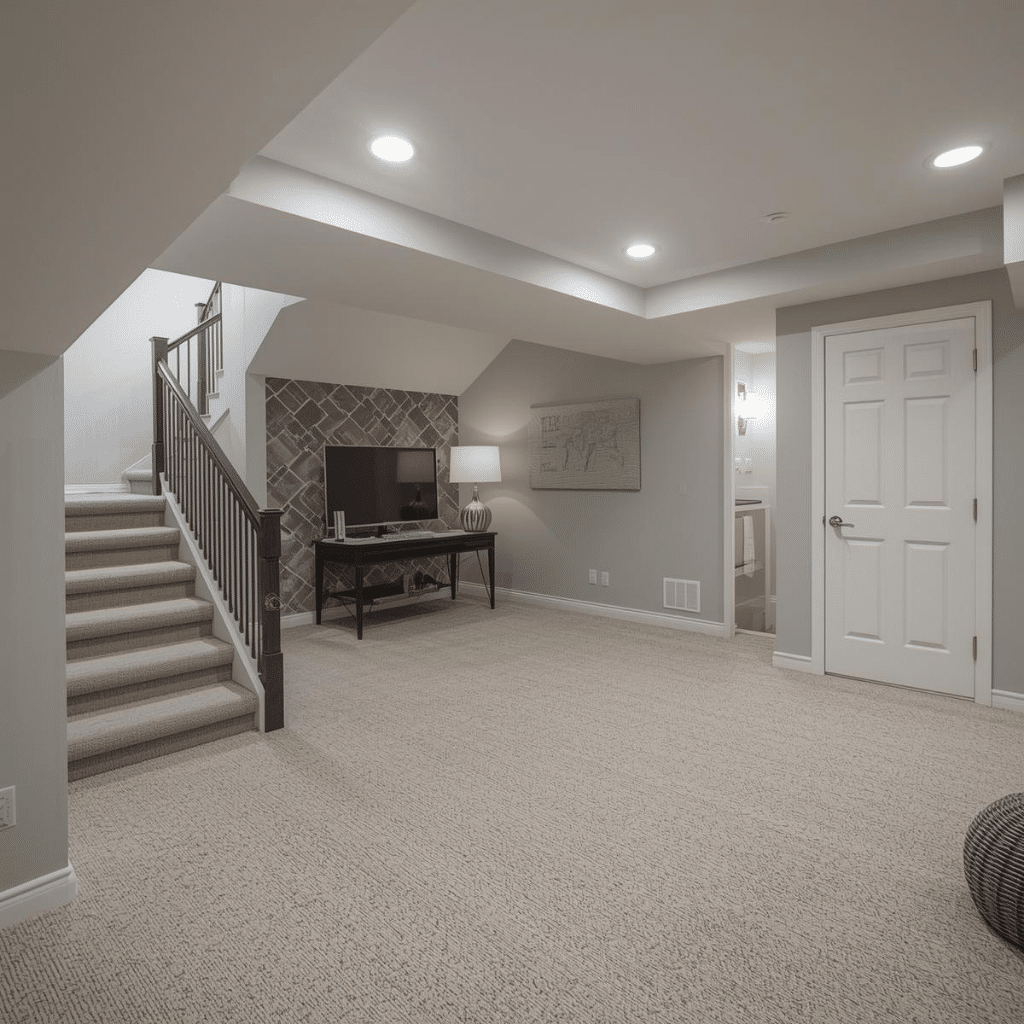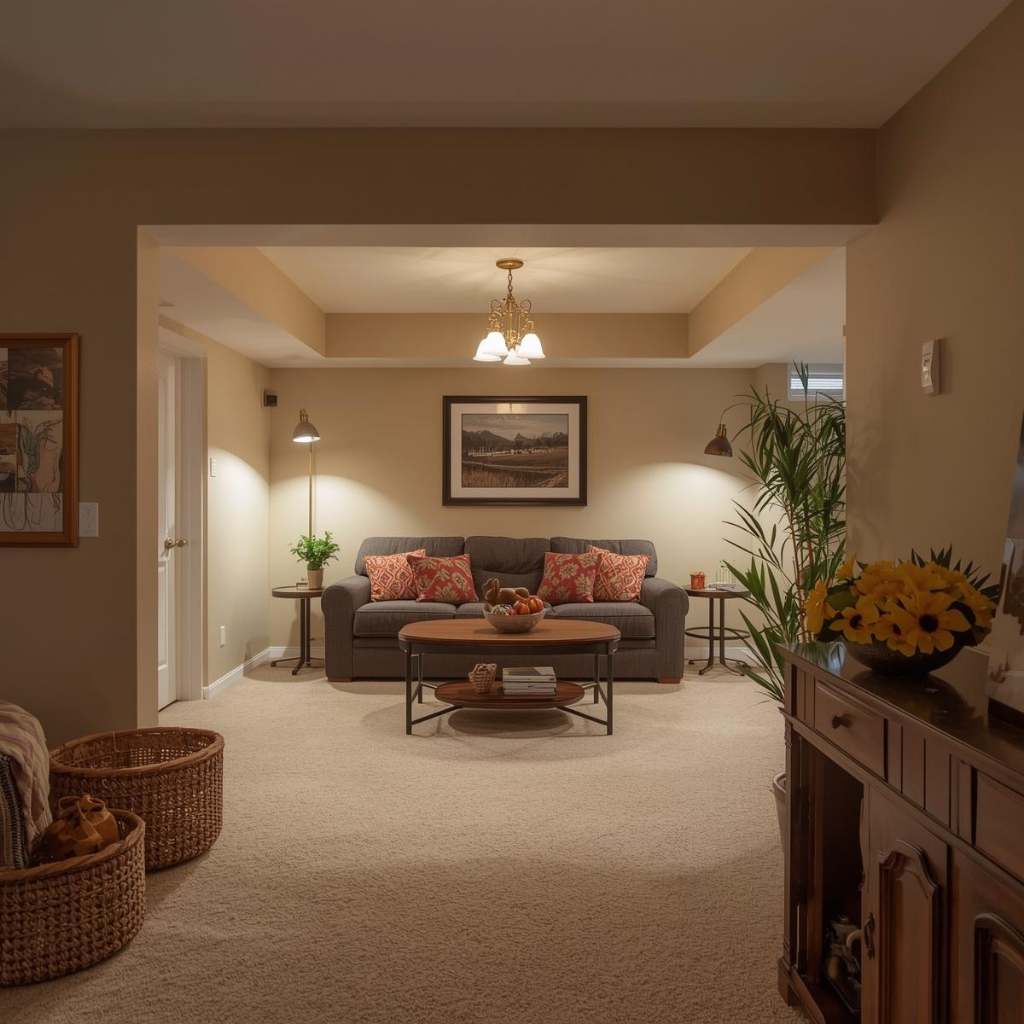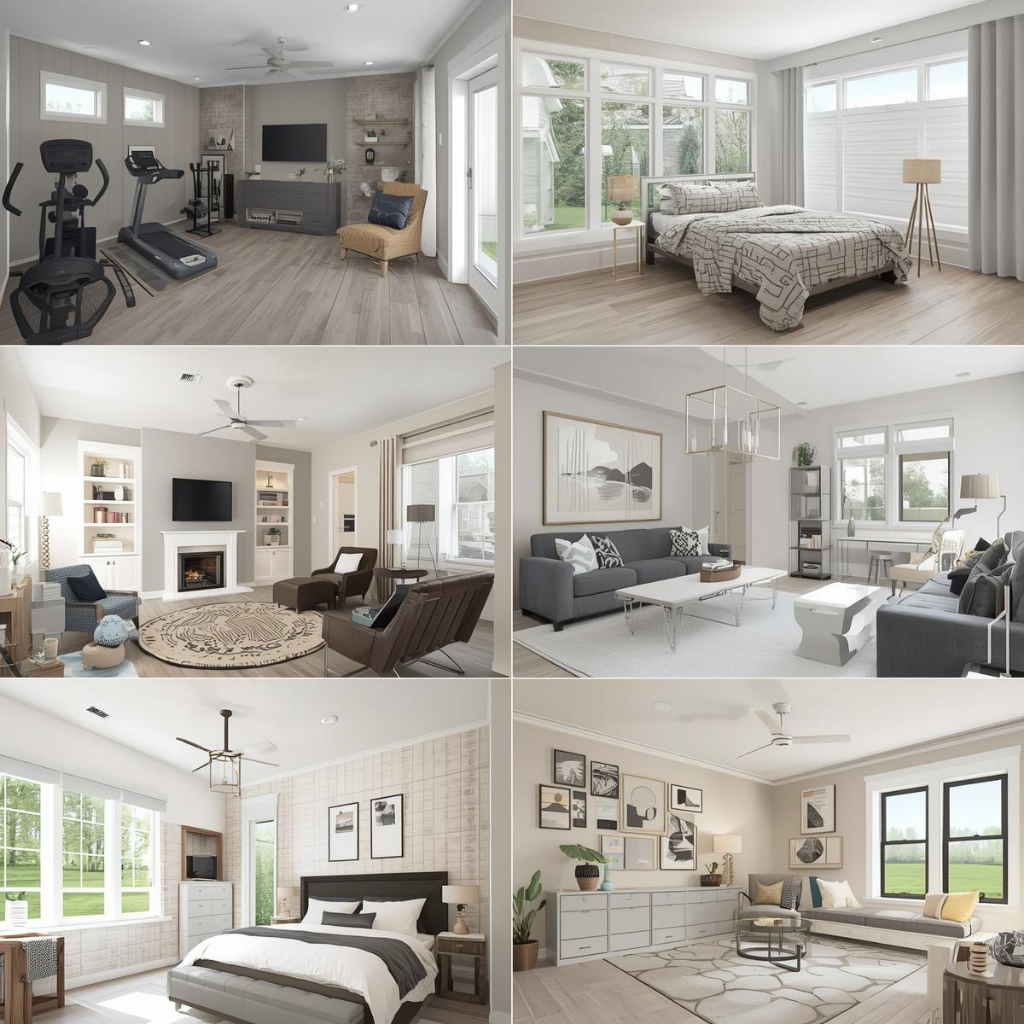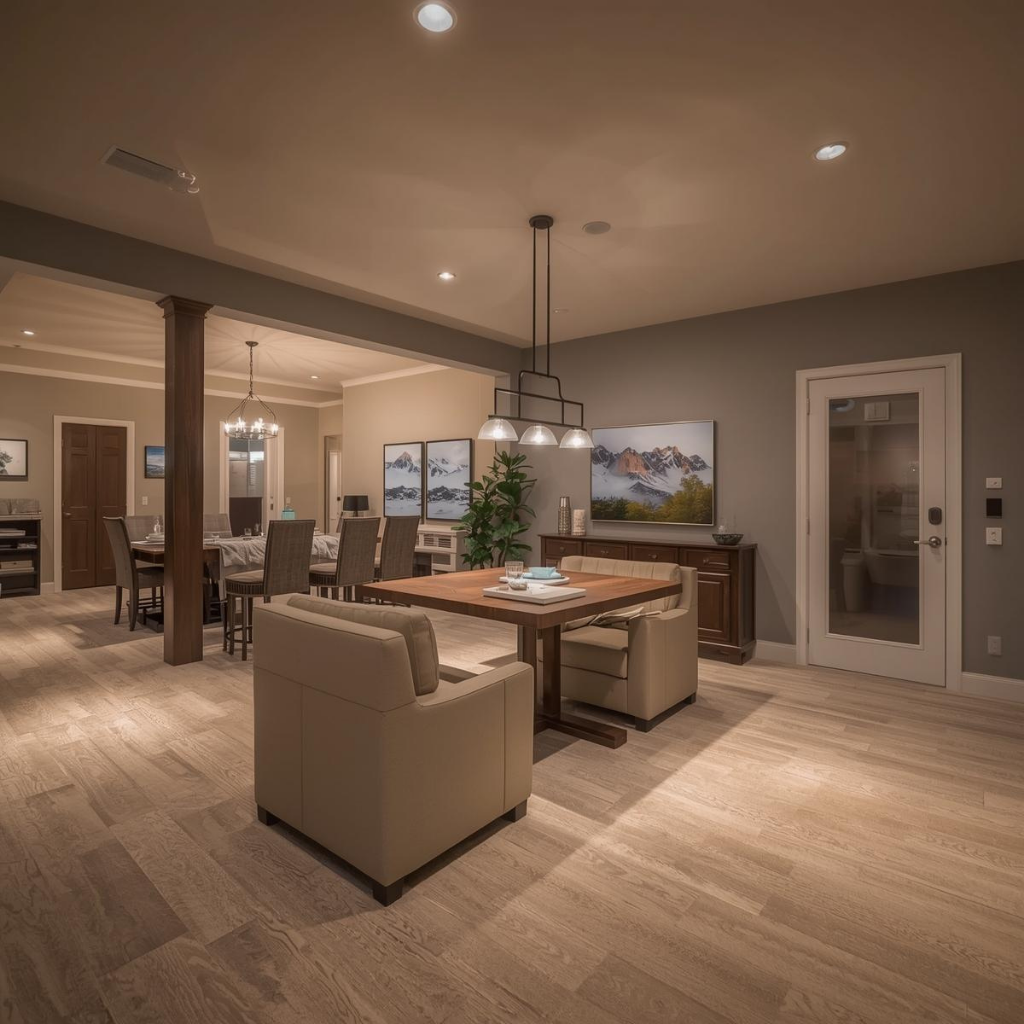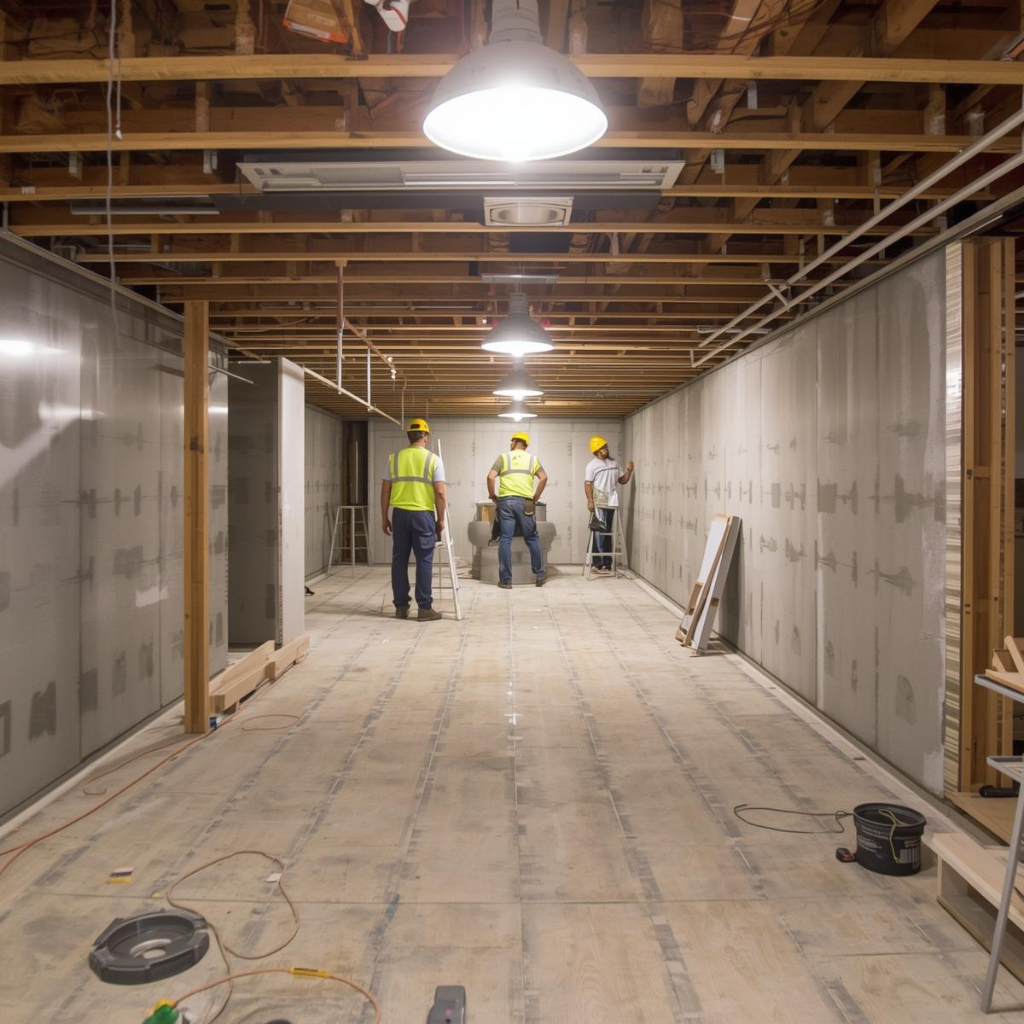
Central Iowa homeowners often face a tough choice when they have remodeling dollars to spend. Should you finish that unfinished basement or update your main living spaces? Both options can transform how you live in your home. But they affect your home’s value and appeal in different ways. This guide breaks down the costs, returns, and practical factors to help you decide which project makes more sense for your situation.
TLDR: Finished basements typically cost $25,000 to $45,000 in Des Moines and return about 60 to 75 percent at resale. Main-floor remodels cost more but add directly to your home’s primary living area. Choose based on your current needs, how long you plan to stay, and whether your main floor already works well for your lifestyle.
You’ve been staring at that unfinished basement for years. The concrete floor, exposed ducts, and bare walls represent wasted potential. But your kitchen also feels dated, and the main bathroom could use some love.
Which project should come first? The answer depends on several factors. These include your budget, how long you plan to stay, and what your home needs most right now.
In this guide, we’ll compare the real costs and returns of basement finishing versus main-floor remodeling in Central Iowa. You’ll learn how appraisers view each type of space, see typical project costs, and get a clear framework for making your decision.
How Appraisers Value Basement Space vs. Main-Floor Space
Understanding how appraisers view different spaces helps you set realistic expectations about value.
Below-Grade Space Gets Discounted
Appraisers treat basement space differently than main-floor living area. Even a beautifully finished basement doesn’t count the same as above-grade square footage.
Here’s why this matters:
Finished basements typically receive credit at about 50 to 60 percent of above-grade value on a per-square-foot basis. In competitive markets with high-quality finishes, some appraisers may credit basements at 50 to 75 percent. But this varies by market conditions and finish quality.
Under Fannie Mae appraisal guidelines, any space partially or completely below grade must be reported separately from gross living area. This means your finished basement won’t be added to your home’s main square footage calculation.
Main-Floor Space Counts Directly
Main-floor remodels enhance your home’s gross living area value. This is the primary basis for pricing and comparable sales in most appraisals.
When you upgrade your kitchen, primary bath, or main living spaces, you’re improving the areas that buyers and appraisers evaluate first. These spaces drive purchase decisions and list prices more directly than below-grade areas.
The practical takeaway: A dollar spent on a main-floor remodel typically has more direct impact on appraised value than the same dollar spent below grade.
Cost Comparison: Basement vs. Main Floor in Des Moines
Project costs vary widely based on scope, finishes, and specific conditions. These ranges reflect typical Central Iowa projects.
| Project Type | Typical Cost Range | Most Common Range |
|---|---|---|
| Basement finishing (600-800 sq ft) | $20,000 to $80,000+ | $25,000 to $45,000 |
| Kitchen remodel (mid to high range) | $65,000 to $150,000 | $75,000 to $100,000 |
| Primary suite remodel | $80,000 to $150,000 | $90,000 to $120,000 |
| Whole main-floor refresh with kitchen | $150,000 to $250,000 | Varies widely |
Why Basements Cost Less
A finished basement is often the lowest-cost way to add usable space. The structure already exists. You’re not changing the home’s footprint or adding foundation work.
Your basement already has walls, a floor, and a ceiling. The project involves finishing what’s there rather than building new. This keeps costs significantly lower than additions or major main-floor renovations.
Why Main-Floor Projects Cost More
Main-floor remodels cost more per square foot because they involve higher-visibility finishes and often require working around existing systems. Kitchen remodels include cabinets, countertops, appliances, plumbing, and electrical work in a compact space.
These projects also touch the areas buyers see and use first. The higher spend often makes sense when you need to compete with updated homes in your neighborhood.
Typical ROI: What You Can Expect to Recoup
Return on investment varies based on market conditions, project quality, and timing. These figures represent typical ranges, not guarantees.
| Project Type | Typical ROI Range | Notes |
|---|---|---|
| Finished basement | 60% to 75% | Stronger when adding bedroom and bathroom |
| Kitchen remodel (mid-range) | 60% to 75% | Kitchens heavily influence buyer decisions |
| Primary suite upgrade | 50% to 70% | Repositions home in higher price segment |
| Main-floor living upgrades | 50% to 70% | Direct impact on perceived value |
Important ROI Nuances
A main-floor addition or large remodel adds higher-value square footage. But the higher cost means total dollars recouped can be similar to a basement project, even if percentage ROI is comparable.
A finished basement delivers cheaper square footage with somewhat discounted valuation. Yet it remains one of the most cost-effective ways to make a Des Moines home feel larger and more functional.
Basement ROI tends to be stronger when the space adds a usable bedroom and bathroom. A flexible layout that works as a guest suite, in-law space, or family recreation area adds the most appeal. Learn more about why a finished basement adds value to your home.
When a Finished Basement Makes More Sense
A basement finish often delivers the best value when:
Your main floor already works reasonably well. If your kitchen and baths are functional and not seriously dated, a basement project lets you add space without tackling expensive main-floor work.
You need more room but not a six-figure project. A family room, guest bedroom, home office, or rec space can come together for $30,000 to $50,000 in many cases. That’s far less than a major kitchen overhaul.
Your basement is dry and tall enough to finish. A structurally sound basement with adequate ceiling height (at least 7 feet for habitable space) makes finishing straightforward. Serious moisture issues or low ceilings add significant cost.
You plan to stay long enough to enjoy the space. If you’ll be in your home for five or more years, the daily benefit of extra living space often matters more than chasing appraisal numbers.
From a cost-per-square-foot perspective, finishing the basement is usually the most budget-friendly way to add heated, usable space in Central Iowa.
When a Main-Floor Remodel Makes More Sense
A main-floor project can be the smarter choice when:
Your kitchen or main bath is clearly dated. If comparable homes in your neighborhood have updated kitchens and yours looks like 1995, you may struggle to compete at resale. Consider a kitchen remodeling project to address this directly.
Your main floor layout doesn’t match how buyers live. Chopped-up rooms where nearby homes offer open-concept spaces can hurt your home’s appeal. A layout update addresses this directly.
You expect to sell in the near to medium term. Main-floor improvements help you compete at the top of your neighborhood’s price range. They can shorten time on market and support a higher list price.
You already have a finished basement. If your basement is already usable, additional below-grade work adds diminishing value. Focus your dollars where they’ll have more impact.
Buyers and appraisers heavily weight kitchen and primary living spaces. Upgrading these areas raises perceived value more directly than basement work alone.
Decision Framework for Central Iowa Homeowners
Use this framework to guide your choice:
Choose Main-Floor Remodel If:
Your main floor is seriously out of date or dysfunctional. Your kitchen or baths hurt your home’s competitive position. You plan to sell within one to three years. Your basement is already finished or low priority.
Choose Basement Finishing If:
Your main floor is serviceable but you feel cramped. Your basement is unfinished but dry and structurally sound. You want more space without a six-figure budget. You plan to stay and enjoy the space for five or more years.
Consider Both (Phased) If:
You have long-term plans and can budget over time. Your main floor needs minor updates while basement needs full finishing. You want maximum lifestyle improvement and eventual resale positioning.
Iowa-Specific Considerations
Central Iowa homes have unique factors that affect basement finishing projects.
Radon Testing Is Essential
Iowa has among the highest radon levels in the nation. About 71.6 percent of Iowa homes exceed the EPA radon action level of 4 pCi/L. Any basement finishing project should include radon testing before and after construction. Mitigation systems can be installed during the finishing process if needed.
Moisture Management Matters
Iowa’s clay soils and freeze-thaw cycles create challenges for basement waterproofing. Before investing in finishes, make sure your basement stays dry through all seasons. Addressing moisture issues after finishing is expensive and disruptive.
Egress Requirements for Bedrooms
If your basement plan includes a bedroom, Iowa building codes require an egress window. This means a window large enough to escape through in an emergency. Plan for this requirement early, as adding egress windows affects both cost and layout. Learn more about basement finishing permit requirements and costs.
Work With Registered Contractors
Iowa requires contractors earning $2,000 or more annually to be registered with DIAL (Department of Inspections, Appeals, and Licensing). Always verify your contractor’s registration before signing a contract.
Frequently Asked Questions
Q: Does a finished basement count toward my home’s square footage?
A: Not in the way above-grade space does. Appraisers must report below-grade space separately under Fannie Mae guidelines. Your finished basement adds value, but it won’t be added to your home’s gross living area calculation. Expect it to be valued at roughly 50 to 75 percent of comparable above-grade space.
Q: What’s the average cost to finish a basement in Des Moines?
A: Most Des Moines basement projects for 600 to 800 square feet fall between $25,000 and $45,000 with mid-range finishes. Costs can reach $60,000 to $80,000 or more with high-end finishes, wet bars, or bathrooms. Basic finishes in smaller spaces can come in under $25,000.
Q: Will I get my money back on a basement finish?
A: Typical returns range from 60 to 75 percent at resale. You likely won’t recoup 100 percent, but you gain years of usable space. The return is stronger when the basement includes a bedroom and bathroom and offers flexible, open layout options.
Q: How long does a basement finishing project take?
A: Most basement projects take 6 to 12 weeks depending on scope and complexity. Projects with bathrooms, custom features, or structural changes take longer. Simple finishing with basic finishes can be completed in 6 to 8 weeks.
Q: Should I finish my basement before selling?
A: It depends on your market and competition. If comparable homes have finished basements and yours doesn’t, finishing may help you compete. If your main floor is dated, updating the kitchen or bath may have more impact on buyers. Talk with a local real estate agent about what matters most in your specific neighborhood.
Q: Is a basement bedroom worth the extra cost?
A: Adding a conforming bedroom with proper egress typically boosts value and appeal. Appraisers may give additional credit for a below-grade bedroom, and buyers appreciate the flexibility. Budget an extra $3,000 to $8,000 for the egress window installation plus bedroom finishes.
Q: What about a main-floor addition vs. finishing the basement?
A: Additions cost significantly more than basement finishing because they require new foundation, framing, roofing, and exterior work. A basement finish uses existing structure. If you need space on a budget, the basement typically offers better cost per square foot.
Q: How do I know if my basement is a good candidate for finishing?
A: Start with these basics: Is it dry through all seasons? Is the ceiling height at least 7 feet? Is the foundation structurally sound? If you answer yes to all three, your basement is likely a good candidate. Moisture issues, low ceilings, or structural problems add significant cost.
Key Takeaways
Cost Comparison
- Basement finishing typically costs $25,000 to $45,000 in Des Moines
- Kitchen remodels run $65,000 to $150,000
- Basements offer the lowest cost per square foot of added space
Value Impact
- Below-grade space is valued at 50 to 75 percent of above-grade space
- Main-floor improvements directly enhance gross living area
- Both project types typically return 60 to 75 percent at resale
Decision Factors
- Choose basement if main floor works and you need affordable space
- Choose main floor if kitchen or baths are dated and you’re selling soon
- Consider how long you’ll stay and enjoy the improvement
Iowa Specifics
- Test for radon before and after finishing
- Address moisture issues before finishing
- Include egress windows for any basement bedrooms
- Work only with registered contractors
Ready to Discuss Your Project?
Every home is different. The right choice depends on your specific situation, budget, and goals.
Busy Builders has helped over 1,000 Central Iowa homeowners with basement finishing and home remodeling projects since 2020. We bring honest assessments and transparent pricing to every conversation.
Here’s what we offer:
- Free consultation to evaluate your basement or main-floor project
- Honest guidance on which project makes sense for your situation
- Detailed cost estimates with no hidden surprises
- Local expertise on Iowa building codes and permit requirements
- Quality craftsmanship backed by our warranty
Contact us today to discuss your options:
Call: 844-435-9800
Website: https://busybuildersiowa.com/
We serve Des Moines, West Des Moines, Ankeny, Waukee, Urbandale, and all Central Iowa communities. Let’s figure out the right project for your home.
Busy Builders | Full-Service Construction and Remodeling | Serving Central Iowa Since 2020
Disclaimer: All cost and ROI figures in this guide are based on national and regional remodeling data and are intended as general education, not a guarantee of specific results. Actual costs and resale impacts vary based on your home’s condition, location, design choices, and market timing. Basement square footage is typically valued at only about half to three-quarters of above-grade space, and individual appraisers and buyers may vary in how they treat finished basements. Consult with a local real estate professional, appraiser, and registered contractor before making final decisions about a main-floor remodel or basement finishing project.