









Home Additions
Central Iowa
Your family has outgrown the house, but you’re not ready to move.
A well-designed home addition gives you the space you actually need without leaving the neighborhood, the school district, or the home you’ve already built equity in.
Busy Builders designs and builds home additions across Central Iowa that match the existing structure, meet Iowa building code, and hold up through decades of freeze-thaw cycles and clay soil movement.
- General Contractor
Full-Service Home Additions Construction
About Us
Since 2020, Busy Builders has completed over 1,000 construction and remodeling projects across Central Iowa. We build home additions for families who need more space and want it done right the first time.
Every addition we build is designed to match the existing home’s structure, style, and systems so it feels like it was always there.
Our Mission
Honest pricing, a clear written plan, and no surprise charges on every home addition project we take on.
We tell you what the project actually requires before a single permit is filed, and we do not upsell scope the addition doesn’t need.
Our Vision
We want to be the registered general contractor that homeowners in Des Moines, West Des Moines, Ankeny, Waukee, Johnston, and Grimes call first when the house isn’t big enough anymore.
- Home Additions Step By Step
How Do We Build Your Home Addition?
ASSESSMENT & DESIGN
Every home addition starts with a full assessment of the existing structure before any design work begins.
We evaluate the foundation, first-floor framing, roof structure, and mechanical systems to understand what the existing home can support and where connections need to be made.
Iowa clay soil and the 42 to 48 inch frost line affect foundation depth and footing design for every addition type, and we account for both before a single drawing is produced.
We discuss layout options, addition type, and budget at this stage so the homeowner has a complete picture before signing anything.
You get a written scope of work, design, and timeline before any work begins.
- Full structural assessment of existing foundation, framing, and mechanical systems
- Site evaluation covering Iowa soil conditions, frost line depth, and drainage
- Written scope of work, design, and timeline confirmed before any work starts
PERMITS & APPROVALS
Home additions require building permits in every Central Iowa city, and most require structural drawings to be submitted with the application.
Iowa Building Code is administered through DIAL, and each city has its own submission process, review timeline, and inspection sequence.
We file all required permits, submit structural drawings, coordinate with third-party engineers where required, and schedule all inspections as part of the project scope.
Skipping permits on an addition creates serious problems at resale, with insurance carriers, and with mortgage lenders.
Review the Iowa DIAL permit submission process for your city’s specific requirements.
- Permit application filed for your city as part of the project scope
- Structural drawings submitted where required by local building departments
- All inspections scheduled and coordinated, homeowner doesn't have to manage a thing
SITE PREP & DEMOLITION
Site prep includes removing existing exterior walls, siding, roofing, or other materials at the connection point between the new addition and the existing home.
This step also covers grading, drainage correction, and any tree or landscaping removal needed to clear the footprint.
In Urbandale and other established Central Iowa neighborhoods, utility locates are completed before any excavation begins, per Iowa law.
Existing mechanical penetrations at the connection point are identified and protected during demo so they can be properly integrated during the build.
- Exterior wall, roofing, and siding removal at the addition connection point
- Site grading and drainage correction before foundation work begins
- Utility locate completed before any excavation, per Iowa law
FOUNDATION & FOOTINGS
The foundation is the most critical structural element of any home addition in Iowa.
Footings are set below the 42 to 48 inch frost line on every project without exception.
Iowa clay soil expands when wet and contracts when dry, adding lateral pressure to footings and foundation walls year-round.
We match the new foundation type to the existing home’s foundation and the addition’s structural requirements.
Poured concrete walls, block foundations, and monolithic slabs are all used depending on the addition type.
Footing inspections are scheduled and completed before any concrete is poured in jurisdictions that require it.
- Footings set below Iowa's 42 to 48 inch frost line on every project
- Foundation type matched to existing home and addition structural requirements
- Footing inspection scheduled and completed before concrete is poured
FRAMING & STRUCTURAL CONNECTIONS
Framing is where the addition takes physical shape and where the connection to the existing home is made permanent.
Load-bearing connections between the new and existing structure are engineered and built to carry the full design load.
Headers, beams, and posts are sized per the Iowa building code for the spans and loads involved.
Second-story additions require particular attention at this stage because the existing first-floor framing must be confirmed to carry the new load before walls go up.
All framing lumber is pressure-treated where it contacts concrete, and structural hardware is rated for outdoor exposure at all connection points.
- Load-bearing connections between new addition and existing structure engineered and built to spec
- Headers, beams, and posts sized per Iowa building code for all spans and loads
- Pressure-treated lumber at all concrete contact points per Iowa and IRC code
ROOFING & EXTERIOR ENVELOPE
The roof transition between the addition and the existing home is one of the most detail-critical steps in the entire build.
A poorly executed roofline transition is the most common source of water intrusion in home additions across Central Iowa.
We flash all roof-to-wall connections, valleys, and penetrations using materials compatible with the existing roofing system.
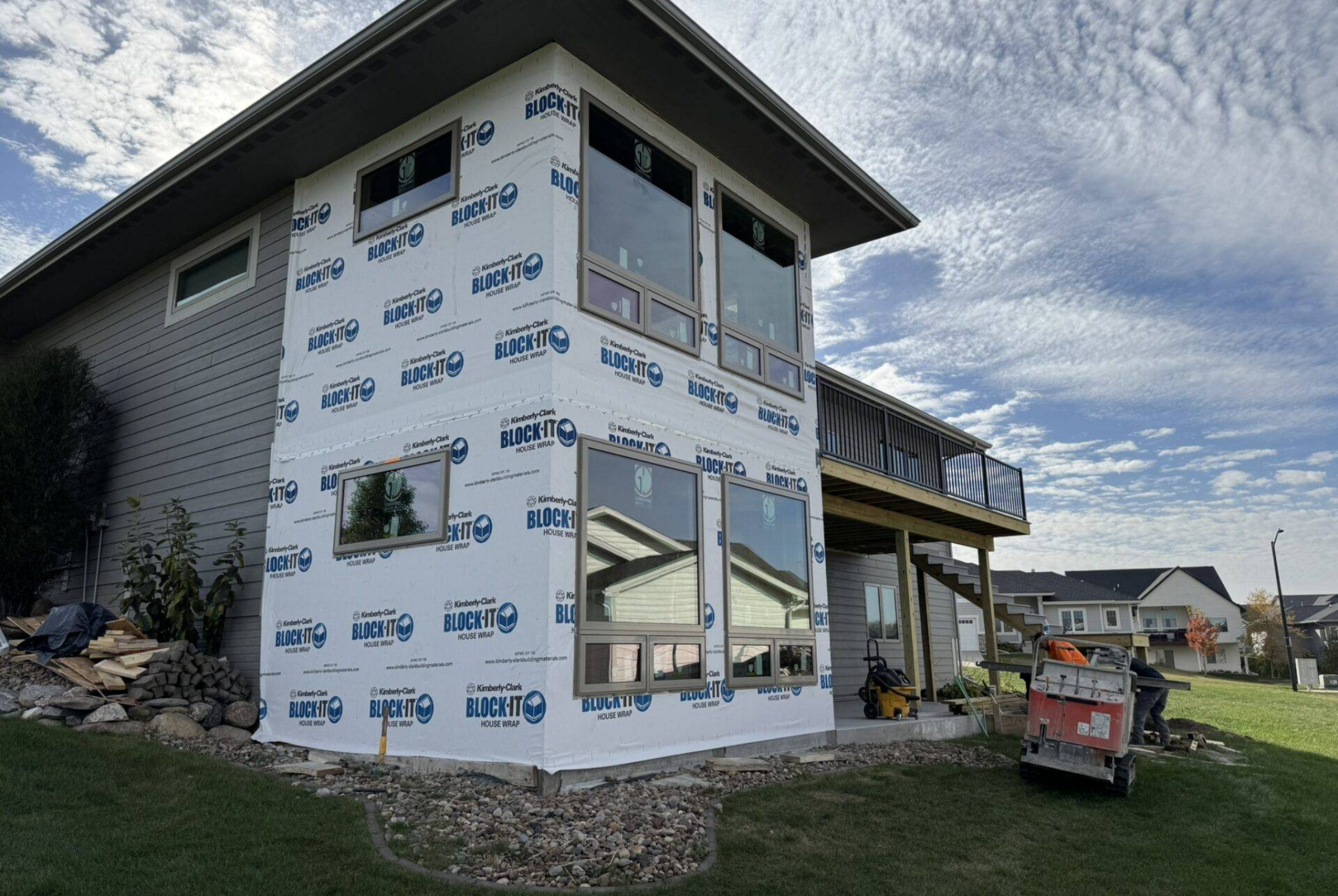
Exterior sheathing, housewrap, and siding are installed to create a continuous moisture barrier from the foundation to the roofline.
Siding is matched to the existing home as closely as possible so the addition reads as part of the original structure.
- Roofline transition flashed and waterproofed at all connection points to the existing home
- Continuous moisture barrier from foundation to roofline on all exterior walls
- Siding matched to existing home for a seamless finished appearance
WINDOWS & EXTERIOR DOORS
Windows and exterior doors go in once the framing and roofing are complete and the rough opening sizes are confirmed.
Window selection for Iowa additions balances thermal performance with Iowa’s temperature extremes.
Homes in Clive and Altoona see temperatures ranging from below 0°F in winter to above 90°F in summer, which makes low-E glass and proper installation critical for energy performance.
All windows and doors are flashed and sealed at the rough opening before interior work begins.
Egress windows are installed in any bedroom added as part of the addition per Iowa building code.
- Window and door installation with proper flashing and sealing at all rough openings
- Low-E glass and Iowa-climate-appropriate thermal performance specifications
- Egress windows installed in all addition bedrooms per Iowa building code
MECHANICAL ROUGH-IN: PLUMBING, ELECTRICAL & HVAC
Mechanical rough-in covers all plumbing, electrical, and HVAC work done while walls are open.
This is the least expensive time to run new supply lines, drain lines, circuits, and ductwork because access is open and work can be planned around the framing.
We assess whether the existing HVAC system can handle the additional square footage before extending any ductwork.
Iowa NEC 2023 with state amendments governs all electrical work, and all plumbing is inspected to Iowa code.
All rough-in work is done by licensed electricians and licensed plumbers, pulled with permits, and inspected before drywall closes the walls.
- Plumbing, electrical, and HVAC rough-in completed while walls are open
- Existing HVAC load capacity assessed before any ductwork extension
- Licensed electricians and plumbers on all mechanical work, permitted and inspected
INSULATION Installation
Insulation in a home addition must meet or exceed Iowa’s energy code requirements and perform through Iowa’s temperature extremes.
Spray foam is used on rim joists and at all penetrations where air sealing is critical. Batt insulation or blown-in insulation fills wall and ceiling cavities, depending on framing depth and R-value requirements.
Iowa’s frost line and below-grade conditions affect insulation choices for additions with basement or crawl space components.
Proper insulation at this stage is what determines whether the addition is comfortable year-round or just another room that runs cold in January.
Read more about Iowa home building costs to understand how insulation choices affect the overall project budget.
- Spray foam air sealing at rim joists and all penetrations
- Wall and ceiling insulation meeting Iowa energy code R-value requirements
- Below-grade insulation matched to Iowa frost line depth and moisture conditions
DRYWALL, FLOORING & INTERIOR FINISHES
Drywall goes up once all mechanical inspections are passed and insulation is complete.
We hang, tape, mud, and sand every surface to a smooth paint-ready finish that matches the texture and finish level of the existing home.
Flooring selection for the addition is coordinated with the existing home’s flooring so transitions between spaces feel intentional rather than patched.
Paint colors, trim profiles, door hardware, and light fixture styles are matched to the existing interior so the addition reads as part of the original home throughout.
Read our guide on how to prepare your Iowa home for a remodel to understand what to expect during the interior finish phase.
- Drywall finish matched to existing home texture and finish level throughout
- Flooring coordinated with existing home for seamless transitions between spaces
- Trim, paint, hardware, and fixture styles matched to existing interior design
FINAL WALKTHROUGH & CLEAN UP
The final walkthrough is where we go through every room of the addition together before calling the project complete.
We check every surface, connection, and finish detail side by side with the homeowner.
Every plumbing fixture, electrical outlet, light switch, HVAC register, and GFCI circuit is tested before the walkthrough begins.
If anything doesn’t meet the standard we set at the start of the project, we fix it before handoff.
The crew removes all tools, materials, debris, and protective coverings so the addition is clean and ready to use from day one.
We hand over all permit documentation and inspection records at project close, which protects your investment at resale and with your insurance carrier.
- Full room-by-room inspection of every surface, connection, and finish detail with the homeowner
- Function test on all plumbing, electrical, HVAC, and GFCI outlets before handoff
- Complete debris removal and clean up, plus permit and inspection records delivered at project close
- Achievement
Your Dream, Our Passion.
Since 2020, over 1,000 Central Iowa homeowners have trusted us to build and remodel their dreams, and it shows.
Quality Construction at the Right Price.
Additions
Based on Average Pricing in Des Moines.
Starting From
$
300
Per sqft.
Features
- Additional Story
- Tornado Shelter
- Living Room
- Bedroom
- Sunroom
- Bathroom
- Garage
- ADU
Kitchen Remodeling
Based on Average Pricing in Des Moines.
Starting From
$
250
Per sqft.
Features
- Countertops
- Appliances
- Cabinetry
- Windows
- Islands
- Lights
Home Building
Based on Average Pricing in Des Moines.
Starting From
$
150
per sqft.
Features
- Dream Build
- Multi-Family
- Tiny Home
- Spec Build
- Frequently Asked Questions
FAQs About Home Additions
Central Iowa
How much does a home addition cost in Central Iowa?
Home addition costs in Central Iowa start at approximately $300 per square foot and vary based on addition type, finish level, and structural complexity.
A basic room addition with standard finishes runs $300 to $400 per square foot.
A more complex addition with custom finishes, a full bathroom, or second-story structural work runs $400 to $600 or more per square foot.
The biggest cost variables are foundation depth requirements for Iowa’s frost line, existing structural reinforcement needs, and mechanical integration complexity.
Busy Builders provides a detailed written estimate before any work begins. See our Iowa home building costs guide for a broader context on construction pricing across Central Iowa.
Do I need a permit to build a home addition in Iowa?
Yes, without exception. Every home addition in Iowa requires a building permit, and most require structural drawings to be submitted with the application.
Iowa Building Code is administered through DIAL, and each city in Central Iowa has its own submission and review process.
Unpermitted additions create significant problems at resale, with mortgage lenders, and with homeowners’ insurance.
Busy Builders files all permits, submits all required drawings, and schedules all inspections as part of every project scope. Review the Iowa DIAL permit submission process for your specific city’s requirements.
How long does a home addition take to build in Central Iowa?
Most home additions in Central Iowa run 3 to 6 months from permit approval to final walkthrough, depending on size, complexity, and addition type.
A straightforward room addition on an existing foundation can be done in 10 to 14 weeks.
A second-story addition or ADU with full mechanical systems typically runs 4 to 6 months.
Permit processing time is the most variable factor and differs significantly across Des Moines, Ankeny, and Waukee.
We build all permit timelines into the project schedule upfront so there are no surprises mid-build.
Will the addition match the rest of my home?
Yes, matching the existing home is a core part of how we design and build every addition.
Rooflines, siding profiles, window styles, interior trim, and flooring transitions are all specified during the design phase to ensure the addition reads as part of the original structure rather than something bolted on.
We also match the mechanical systems so heating, cooling, and electrical all feel seamless throughout the connected space.
Read our guide on whole house remodel vs. room by room if you’re weighing an addition against a broader remodel.
Can you add a bathroom or kitchen to the addition?
Yes. Bathrooms and kitchens can be incorporated into any room addition, ADU, or second story addition.
Plumbing rough-in happens while walls are open during the mechanical phase, which is the most cost-effective time to run new supply and drain lines.
Bathroom additions in Central Iowa typically add $15,000 to $40,000 to the project cost, depending on size and finish level.
Kitchen additions are priced based on square footage and the complexity of the appliance and cabinet layout.
Both are scoped and priced in the written estimate before any work begins. See our kitchen remodeling and bathroom remodeling service pages for finish-level detail.
Is a home addition better than finishing my basement?
It depends on what you need the space for and what your existing home already has.
A finished basement adds usable square footage at a lower cost per square foot but appraises below grade, which means it contributes less to resale value than above-grade addition square footage.
A home addition costs more per square foot but adds fully appraised living area that moves the needle more at resale.
For families who need a bedroom, a home office, or a primary suite, an addition delivers above-grade space that a basement cannot.
Read our full breakdown of finished basement vs. home addition in the Des Moines metro before making the decision.
- Newest Blogs
Home Addition Blogs for Central Iowa
Finished Basement vs. Home Addition in Des Moines Metro: Which Is the Best Investment for 2026?
Deciding between finishing your basement and building a home addition is one of the biggest choices Central Iowa homeowners face. Both options add livable space, but costs, timelines, and...
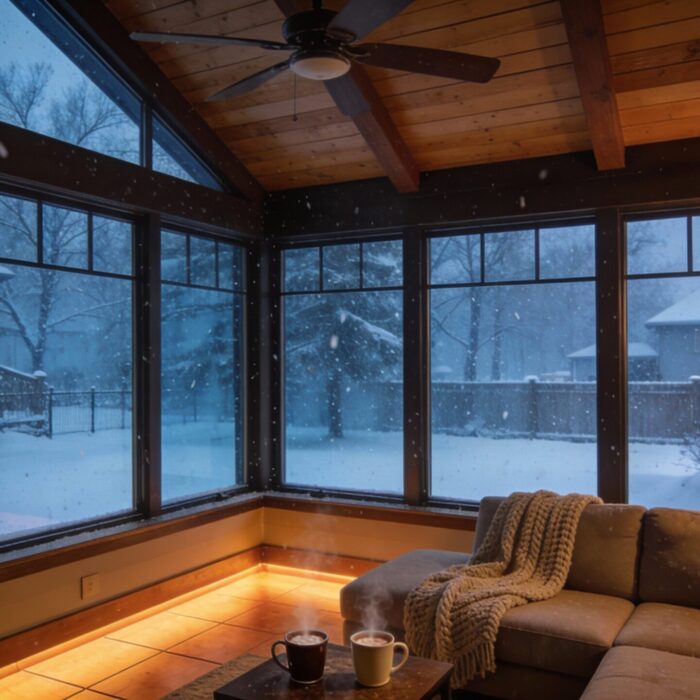
Adding a 4-Season Porch in Des Moines: 2026 Cost & Planning Guide
If you live in Des Moines and feel cramped during long Iowa winters, a 4-season porch might be the solution you have been dreaming about. This guide breaks down...
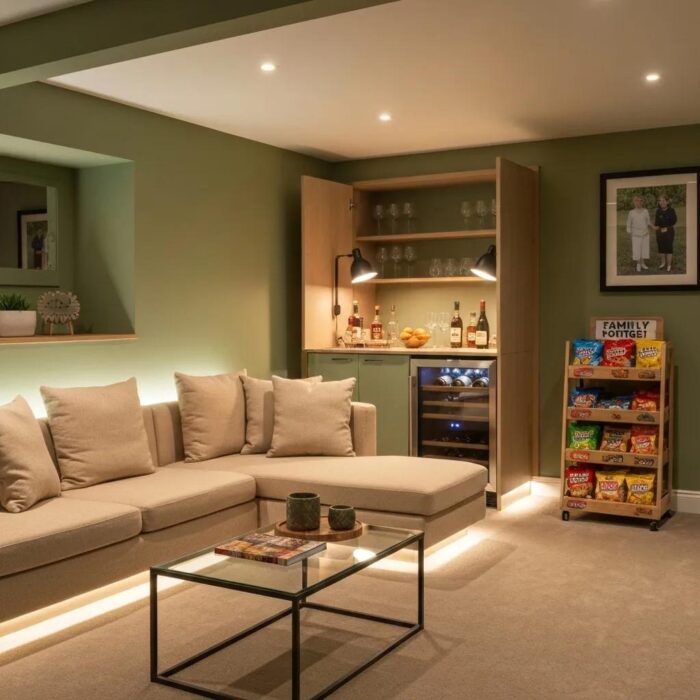
2025 Interior Color Trends: Transform Your Des Moines Home with Perfect Paint
Choosing paint colors can feel overwhelming with so many options. This guide reveals the hottest 2025 color trends from major paint brands and shows you how to pick...


