Energy-Efficient Homes in Iowa: How They Shape the Future for Residents
Iowa homeowners spend up to 30% of their annual budget on heating and cooling, making energy-efficient homes for Iowa residents essential for long-term savings and comfort. In this guide, you’ll discover what defines an energy-efficient home, which builders lead the market, the financial and environmental benefits, cost comparisons, top technologies, assessment strategies, and emerging trends shaping Iowa’s sustainable housing future. Along the way, you’ll see how The Busy Builders applies these principles through its comprehensive Home Building Process, empowering you to make informed decisions about your next energy-smart home.
What Are Energy-Efficient Homes and Why Are They Important for Iowa Residents?
Energy-efficient homes integrate advanced design, materials, and systems that minimize energy consumption while maintaining comfort. This approach reduces utility costs and carbon emissions, improving affordability and environmental stewardship for households across Iowa. For residents facing hot summers and frigid winters, these homes offer stable indoor temperatures and lower utility bills without sacrificing livability.
How Do Energy-Efficient Homes Reduce Energy Consumption?
Energy-efficient homes reduce consumption through airtight envelopes, high-performance insulation, and optimized systems that work in harmony.
- Strategic Insulation Installation ensures continuous thermal barriers in walls, roofs, and foundations.
- High-Performance Windows and Doors minimize heat transfer via low-E coatings and multi-pane glazing.
- Balanced Ventilation Systems reclaim heat from exhaust air to precondition incoming fresh air.
These measures collectively shrink heating and cooling loads, paving the way for smaller HVAC equipment and further efficiency gains.
What Makes Iowa’s Climate Unique for Energy-Efficient Home Design?

Iowa’s continental climate presents hot, humid summers and cold, windy winters. Designing for this range requires robust insulation, moisture control, and flexible HVAC solutions. During winter, airtight construction prevents drafts and reduces heating load, while summer comfort relies on solar shading, reflective roofing, and high-efficiency cooling equipment to manage peak temperatures.
Which Energy Efficiency Standards Apply to Iowa Homes?
Iowa mandates or recommends several key standards to verify performance and quality in new construction.
Before diving into technologies, it helps to understand the baseline requirements that shape home design and permit processes in the state.
| Standard | Scope | Requirement |
|---|---|---|
| IECC 2021 | State Building Code | R-20 wall insulation, 0.3 ACH50 airtightness |
| ENERGY STAR v3 | Voluntary Federal Program | ≥10% efficiency improvement over code baseline |
| HERS Index | Performance Rating System | Target score ≤55 for new home certifications |
International Energy Conservation Code (IECC), (2021)
Energy Efficiency Standards in Iowa Homes
The IECC 2021 building code in Iowa mandates specific insulation and airtightness requirements for new constructions, such as R-20 wall insulation and 0.3 ACH50 airtightness. The ENERGY STAR v3 program is also recommended, aiming for at least a 10% efficiency improvement over the code baseline. These standards guide builders and homeowners toward measurable energy savings.
These benchmarks guide builders and homeowners toward measurable energy savings, ensuring new homes exceed conventional construction targets.
Who Are the Leading Iowa Energy Efficient Home Builders?
Iowa’s top builders specialize in sustainable practices, blending local climate expertise with advanced technologies. Their credentials often include BPI training, LEED accreditation, and Passive House certifications, reflecting deep knowledge of high-performance residential construction.
What Expertise Do Iowa Builders Have in Sustainable Home Construction?
- Comprehensive blower-door testing to verify airtightness.
- Detailed thermal imaging for insulation validation.
- Coordination with energy raters to optimize mechanical and envelope design.
How Do Builders Integrate Energy-Saving Technologies in New Homes?
Builders typically combine multiple systems in a holistic design:
| Technology | Characteristic | Typical Benefit |
|---|---|---|
| Geothermal Heat Pump | Stable ground temperature | Consistent heating/cooling COP ≥5.0 |
| Solar Photovoltaic Array | On-site renewable energy | Offsets grid electricity use |
| Advanced Insulation | High R-value materials | Reduces thermal bridging losses |
By aligning these technologies with Iowa’s climate and energy codes, builders deliver homes that outperform conventional designs year-round.
What Role Does The Busy Builders Play in Iowa’s Energy-Efficient Home Market?
The Busy Builders brings local insight and turnkey solutions to energy-efficient home construction. Through its Home Building Process, the team collaborates with energy raters and trades to integrate envelope sealing, mechanical system sizing, and renewable installations from day one. This structured approach ensures each home achieves targeted performance, cost savings, and occupant comfort.
What Are the Key Benefits of Energy-Efficient Homes for Iowa Homeowners?
Energy-efficient homes deliver a trifecta of financial, environmental, and quality-of-life improvements. High-performance building practices translate directly into lower bills, reduced carbon footprint, and more consistent indoor conditions.
U.S. Department of Energy, Energy Efficiency and Renewable Energy, (2024)
Benefits of Energy-Efficient Homes
Energy-efficient homes offer financial, environmental, and quality-of-life improvements. High-performance building practices lead to lower utility bills, reduced carbon footprints, and more consistent indoor conditions. These homes can cut energy usage by 20–50%, with savings on heating bills often reaching 30%.
How Do Energy-Efficient Homes Lower Utility Costs in Iowa?
Improving envelope performance and system efficiency can cut energy usage by 20–50%. For example, enhanced insulation and sealing often yield 30% savings on heating bills. When combined with high-efficiency HVAC, solar generation, and smart controls, homeowners see utility costs drop dramatically—often paying back premium construction investments within 5–8 years.
What Environmental Advantages Do These Homes Offer?
- Lower CO₂ emissions through reduced natural gas and electricity usage.
- Decreased water waste by minimizing heat pump defrost cycles and optimizing humidity control.
- Less landfill impact via longer-lasting materials and efficient building methods.
These benefits align with Iowa’s broader sustainability goals and utility rebate programs.
How Do Energy-Efficient Homes Improve Comfort and Indoor Air Quality?
Tight construction paired with balanced ventilation maintains stable temperatures and humidity levels. Continuous mechanical ventilation filters out allergens and pollutants, promoting healthier indoor environments. Occupants experience fewer drafts, more uniform warming, and better overall air quality—all contributing to year-round comfort and well-being.
How Much Do Energy-Efficient Homes Cost in Iowa Compared to Traditional Homes?
Building energy-efficient new homes typically adds 3–7% to construction costs, depending on the scope of technologies and certifications pursued. These up-front investments yield significant lifetime savings, making high-performance homes financially competitive with conventional builds when evaluated over ownership horizons.
What Factors Influence the Cost of Building an Energy-Efficient Home in Iowa?
- Design Complexity – Custom envelope details and passive solar orientation increase architectural fees.
- Material Selection – Advanced insulation, high-performance glazing, and renewable systems carry higher unit costs.
- Labor Expertise – Skilled installers and certified energy raters command premium rates.
Understanding these factors helps homeowners prioritize upgrades that fit budgets and performance goals.
Are There Financial Incentives or Rebates for Energy-Efficient Homeowners in Iowa?
- A 30% federal tax credit on solar and geothermal installations.
- State rebate programs for ENERGY STAR homes and heat pump systems.
- Local utility incentives for heat pump water heaters and home energy audits.
Such incentives can lower net construction costs and accelerate payback periods.
How Does Long-Term Savings Offset Initial Construction Costs?
Lifetime energy savings often exceed initial premiums within 5–10 years. After that breakeven point, reduced utility bills and lower maintenance expenditures provide net positive cash flow. Over a typical 30-year ownership, total energy expenditure can be cut by 40–60% compared to conventional homes.
What Energy-Saving Technologies Are Most Effective in Iowa Homes?
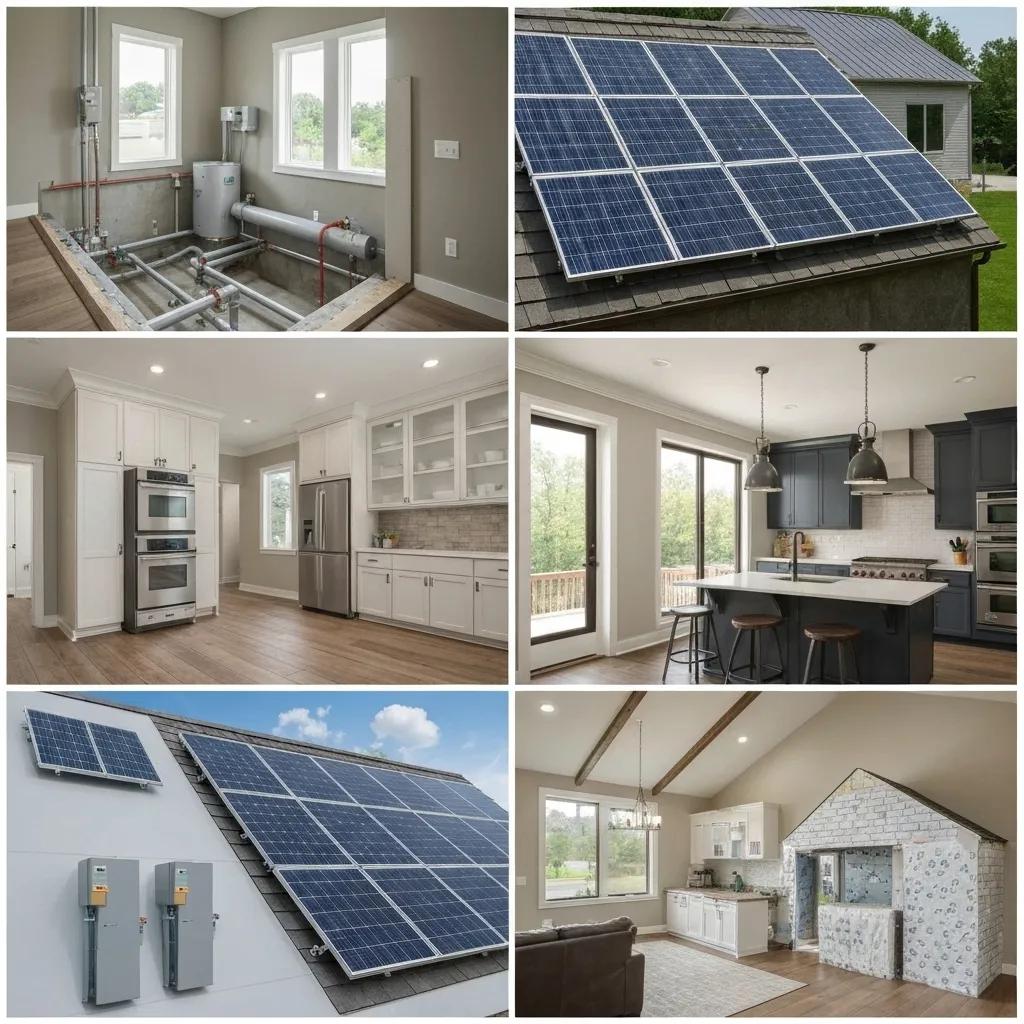
Top-performing technologies for Iowa’s climate include ground-source systems, solar generation, high-R insulation, and efficient fenestration. These components work synergistically to optimize energy balance throughout the seasons. The Busy Builders
How Do Geothermal Heat Pumps Work and Benefit Iowa Homes?
Geothermal systems circulate coolant through underground loops where soil maintains stable temperatures around 50–55°F. This steady heat source yields coefficients of performance (COP) above 4.5, delivering four to five units of heat for every unit of electricity used. Homeowners benefit from consistent comfort, lower operational costs, and extended equipment lifespan.
What Role Do Solar Panels Play in Iowa’s Energy-Efficient Homes?
Solar photovoltaic arrays convert sunlight into electricity, reducing grid reliance and lowering net energy purchases. In Iowa, average annual solar yields cover 40–60% of a typical home’s electricity needs, especially when paired with energy storage solutions.
How Does Advanced Insulation Improve Home Energy Ratings?
High-density spray foam, vacuum-insulated panels, and exterior rigid foam achieve R-values far above code minimums. By reducing thermal bridging and sealing gaps, these materials cut heat flow and enhance whole-house performance metrics like the HERS index.
What Are Energy-Efficient Windows and HVAC Systems for Iowa Homes?
Introducing the most impactful glazing and mechanical combinations helps achieve peak performance: our services
| Window Type | U-Value Maximum (Btu/ft²·°F·hr) | Impact |
|---|---|---|
| Double-pane Low-E | 0.25 | Cuts conductive heat loss in winter |
| Triple-pane Argon Fill | 0.18 | Improves overall R-value and comfort |
| Dynamic Glazing | 0.30 avg | Adjusts tint to control solar heat gain |
Balanced with right-sized systems:
| System Type | Efficiency Rating | Benefit |
|---|---|---|
| Air-Source Heat Pump | 18 SEER / 3.5 COP | Efficient heating and cooling year-round |
| Geothermal Heat Pump | 30 EER / 5.0 COP | Stable performance in extreme conditions |
| High-Efficiency Furnace | 98% AFUE | Maximizes fuel combustion for heating |
How Can Iowa Homeowners Assess and Improve Their Home’s Energy Efficiency?
A systematic audit and targeted upgrades reveal opportunities to boost performance and savings.
What Is an Iowa Home Energy Audit and How Does It Help?
An energy audit pinpoints air leaks, insulation gaps, and inefficient equipment through blower-door testing, infrared scanning, and utility bill analysis. Auditors then recommend prioritized improvements that deliver the highest savings, enabling homeowners to plan cost-effective retrofit projects.
Which Upgrades Provide the Best Energy Efficiency Returns?
- Air Sealing and Insulation upgrades to eliminate drafts and thermal bridges.
- Window and Door Replacements using high-performance glazing.
- HVAC System Retrofits or replacements with variable-speed heat pumps.
- Smart Thermostats and Zoning Controls for precise temperature management.
Prioritizing measures by cost-effectiveness maximizes ROI and shortens payback durations.
How Can Smart Home Energy Management Systems Optimize Efficiency?
Smart energy platforms integrate load monitoring, automated scheduling, and remote control of lighting, HVAC, and appliances. By adapting to occupant behavior and utility rate structures, these systems cut waste and shift consumption to off-peak hours, further reducing costs and environmental impact.
What Is the Future Outlook for Energy-Efficient Homes in Iowa?
Iowa’s housing market is moving toward net-zero and Passive House benchmarks, driven by evolving policies, consumer demand, and technological innovation. Homeowners and builders alike are embracing holistic design strategies that balance upfront investment with lifetime performance.
How Are Iowa’s Energy Policies Shaping Sustainable Home Building?
Recent state incentives, utility pilot programs, and building code updates encourage adoption of renewable energy, heat pumps, and stringent air-barrier requirements. These policies provide the framework for market transformation and support industry training for high-performance construction.
What Emerging Trends Will Influence Energy-Efficient Homes?
- Battery Storage Integration to balance rooftop solar output.
- IoT and AI-Driven Controls for predictive energy management.
- Modular and Prefabricated Panels with factory-grade insulation and sealing.
How Can Iowa Residents Prepare for Net-Zero and Passive House Designs?
- Early collaboration with certified designers and energy modelers.
- Commitment to rigorous air-tightness testing and quality control.
- Investment in high-performance windows, mechanical ventilation with heat recovery, and renewable energy systems.
Energy-efficient homes represent a smart investment for Iowa residents, delivering substantial savings, improved comfort, and reduced environmental impact. As technologies advance and policies evolve, partnering with knowledgeable builders like The Busy Builders ensures every project meets tomorrow’s standards today. Whether you’re planning new construction or retrofitting an existing property, the path to high-performance living starts with informed choices and trusted expertise.
Frequently Asked Questions
What are the long-term financial benefits of investing in energy-efficient homes?
Investing in energy-efficient homes can lead to significant long-term financial benefits. Homeowners often experience reduced utility bills, with savings ranging from 20% to 50% on energy costs. Additionally, the initial investment in energy-efficient technologies typically pays off within 5 to 10 years through lower operating expenses. Over a typical 30-year mortgage, homeowners can save tens of thousands of dollars compared to traditional homes, making energy-efficient options not only environmentally friendly but also financially savvy.
How can homeowners assess the energy efficiency of their current home?
Homeowners can assess their home’s energy efficiency by conducting a comprehensive energy audit. This process involves identifying air leaks, insulation deficiencies, and outdated appliances. Professional auditors use tools like blower-door tests and infrared cameras to pinpoint issues. Homeowners can then receive tailored recommendations for improvements, such as air sealing, insulation upgrades, and HVAC system enhancements, which can significantly boost their home’s energy performance and comfort levels.
What role do local utility companies play in promoting energy efficiency?
Local utility companies play a crucial role in promoting energy efficiency by offering various programs and incentives. These may include rebates for energy-efficient appliances, home energy audits, and financial assistance for upgrades like insulation and HVAC systems. Additionally, utilities often provide educational resources to help homeowners understand energy-saving practices. By encouraging energy-efficient behaviors and investments, utility companies contribute to reducing overall energy consumption and environmental impact in their service areas.
What are the most common misconceptions about energy-efficient homes?
One common misconception is that energy-efficient homes are significantly more expensive to build or buy than traditional homes. While there may be a slight upfront cost increase, the long-term savings on utility bills often outweigh these initial expenses. Another misconception is that energy-efficient homes are uncomfortable due to tight construction; however, they are designed to maintain optimal indoor air quality and comfort through advanced ventilation systems. Educating homeowners about these aspects can help dispel myths and promote energy-efficient living.
How do energy-efficient homes contribute to environmental sustainability?
Energy-efficient homes contribute to environmental sustainability by significantly reducing energy consumption and greenhouse gas emissions. By utilizing advanced insulation, high-efficiency appliances, and renewable energy sources, these homes minimize reliance on fossil fuels. This reduction in energy use leads to lower carbon footprints and less strain on natural resources. Additionally, energy-efficient homes often incorporate sustainable building materials and practices, further enhancing their positive impact on the environment and promoting a healthier planet for future generations.
What are the benefits of smart home technology in energy-efficient homes?
Smart home technology enhances the energy efficiency of homes by allowing homeowners to monitor and control their energy usage in real-time. Features like smart thermostats, automated lighting, and energy management systems can optimize energy consumption based on occupancy and time of day. This technology not only helps reduce waste but also provides insights into energy patterns, enabling homeowners to make informed decisions about their energy use. Ultimately, integrating smart technology can lead to greater savings and improved comfort in energy-efficient homes.