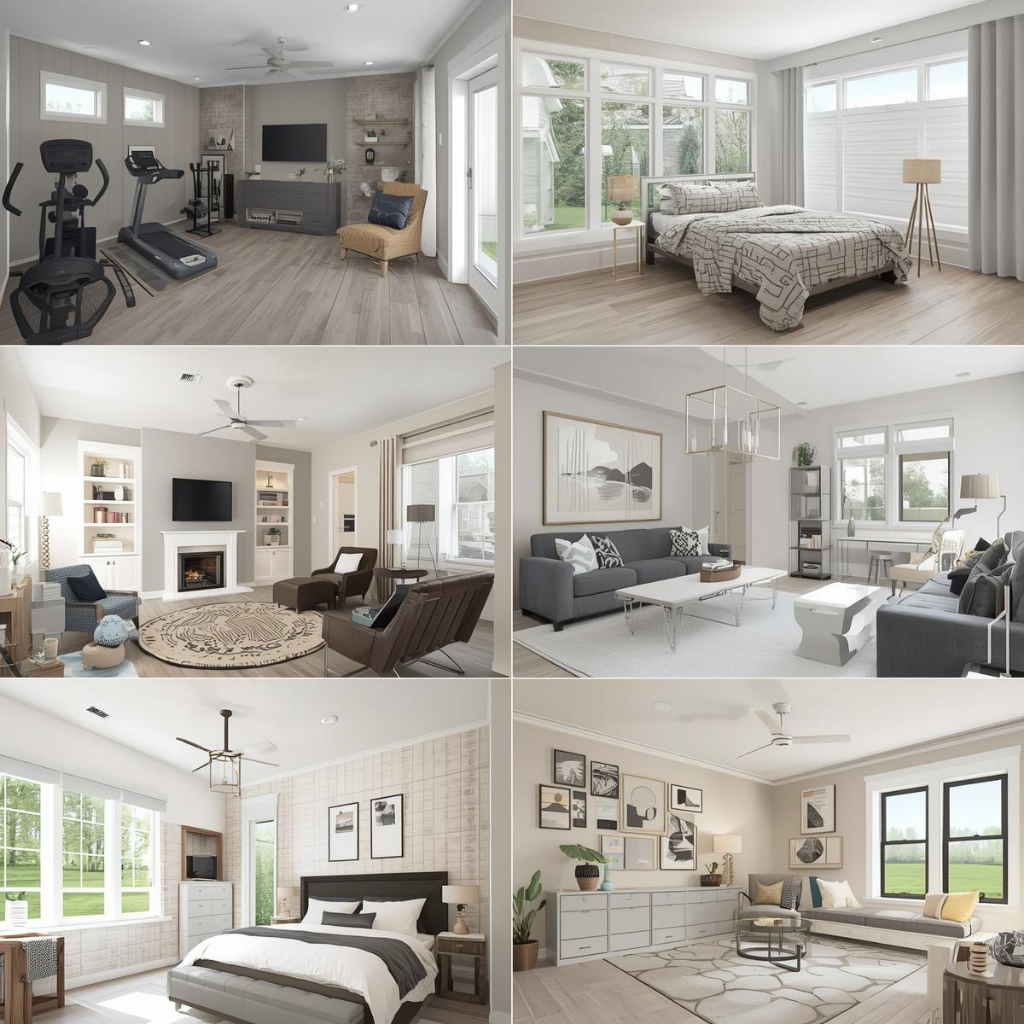
Smart home technology has evolved from luxury novelty to essential home feature, particularly for new construction in Des Moines. Installing smart systems during your build phase costs 30-50% less than retrofitting later while delivering superior integration and functionality. From automated lighting and intelligent thermostats to comprehensive security systems and voice-activated controls, today’s smart home features enhance comfort, reduce energy costs, and increase property value significantly.
This comprehensive guide explores the smart home features that make the most sense for Des Moines new builds, realistic 2025 costs, which systems integrate best during construction, and proven strategies for maximizing your technology investment while avoiding expensive mistakes.
TLDR: Smart home features in new builds typically cost $2,000-7,000 for mid-range systems, with basic packages starting at $500 and premium whole-home automation reaching $15,000+. Key features include smart lighting ($500-2,500), thermostats ($250-500 installed), security systems ($1,000-5,000), and voice control ($100-400). Installing during construction saves 30-50% versus retrofitting and enables seamless integration. Energy savings of 10-20% annually plus increased resale value make smart homes excellent investments for Des Moines homeowners.
You’re planning your new home in Des Moines—selecting finishes, reviewing floor plans, making decisions that will affect your daily life for years to come. Among cabinet styles and flooring choices, you’re also considering whether to integrate smart home technology. You’ve heard neighbors rave about controlling their entire home from their phone. You’ve read that smart homes save energy and increase property value. But you’re unsure which features actually matter versus which are expensive gimmicks.
Here’s what many homeowners don’t realize: the time to install smart home features is during construction, not after you move in. Pre-wiring for automation, planning device placement, and integrating systems with your electrical and network infrastructure costs thousands less during the build phase. Professional installers can work efficiently without damaging finished walls or floors. You avoid the “patchwork” appearance of retrofitted systems with exposed wires and awkward device placement.
This guide shows Des Moines homeowners exactly which smart features deliver real value in new home construction, what they actually cost in 2025, and how to integrate them seamlessly during your build to maximize functionality while minimizing expense.
Understanding Smart Home Technology for New Builds
Smart home technology encompasses interconnected devices that automate, monitor, and control your home’s systems through centralized interfaces—typically smartphone apps or voice commands.
Why New Builds Are Ideal for Smart Integration
Infrastructure advantages:
- Clean installation without wall damage
- Proper wire routing behind walls
- Optimal device placement from start
- Network infrastructure planned correctly
- Future-proof conduit and wiring
Cost savings:
- 30-50% less expensive than retrofitting
- No drywall repair needed
- Efficient installation timeline
- Coordinated with other construction
- Bulk wiring/device installation
Aesthetic benefits:
- No exposed wires or conduit
- Devices integrated into design
- Clean, professional appearance
- Optimized device placement
- Cohesive system design
Real example: A Des Moines couple retrofitted smart lighting in their 5-year-old home for $4,200 including drywall repair and painting. Their neighbors building new installed identical system for $2,400 integrated during electrical rough-in—44% savings for better results.
Core Smart Home Categories
Climate Control:
- Smart thermostats
- Zone control systems
- Integration with HVAC
- Cost: $250-2,500
Lighting:
- Smart bulbs and switches
- Automated scenes
- Dimming and color control
- Cost: $500-5,000
Security:
- Cameras and sensors
- Smart locks and doorbells
- Alarm integration
- Cost: $1,000-8,000
Entertainment:
- Multi-room audio
- Smart TVs and streaming
- Whole-home control
- Cost: $800-6,000
Voice Control:
- Smart speakers and displays
- System integration
- Hands-free operation
- Cost: $100-800
Smart Lighting: Flexibility and Efficiency
Smart lighting offers the best entry point for home automation—affordable, easy to understand, and delivering immediate benefits.
Smart Lighting Options
Smart Bulbs (easiest):
- Direct replacement for standard bulbs
- No wiring changes needed
- Full color control (many models)
- Cost: $15-60 per bulb
- Brands: Philips Hue, LIFX, Wyze
Smart Switches (better for new builds):
- Controls any bulb from switch
- Works with existing fixtures
- Cleaner long-term solution
- Cost: $40-100 per switch installed
- Brands: Lutron, Leviton, GE
Smart Dimmers:
- Adjustable brightness levels
- Energy saving
- Mood customization
- Cost: $50-120 per dimmer installed
Installation Costs for New Builds
| System Type | Material Cost | Installation | Total Cost | Coverage |
|---|---|---|---|---|
| Basic smart bulbs (8-10) | $200-400 | DIY | $200-400 | Main rooms only |
| Mid-range (20 bulbs) | $500-800 | DIY | $500-800 | Whole home |
| Smart switches (15) | $750-1,500 | $600-900 | $1,350-2,400 | Whole home control |
| Premium system | $1,500-3,000 | $1,000-1,500 | $2,500-4,500 | Complete automation |
Energy Savings
Smart lighting typically reduces lighting electricity use by 40-60% through LED efficiency, automated on/off, dimming, and scheduling. For typical home using 900 kWh annually on lighting, smart lighting saves 360-540 kWh worth $40-60 annually at Iowa rates ($0.11/kWh average). Compare ENERGY STAR certified products to find the most efficient lighting options for your home.
Smart Thermostats: Comfort and Savings
Smart thermostats deliver the highest ROI of any smart home feature through energy savings and enhanced comfort.
Leading Smart Thermostats
Google Nest Learning Thermostat ($250):
- Learns your schedule automatically
- Remote control via app
- Energy history and insights
- Works with most HVAC systems
Ecobee SmartThermostat ($250):
- Room sensors for better balance
- Built-in Alexa voice control
- Occupancy detection
- Excellent multi-zone support
Honeywell Home T9 ($200):
- Focus on comfort
- Smart room sensors
- Geofencing capabilities
- Traditional interface option
Installation and Costs
Professional installation essential:
- Thermostat: $180-300
- Installation: $100-250
- Total: $280-550 per unit
Realistic Energy Savings
Smart thermostats reduce heating/cooling costs by 10-15% annually through setback when away, occupancy-based control, learning optimal schedules, and remote adjustments. ENERGY STAR recommends smart thermostats as one of the most effective ways to reduce heating and cooling costs.
Average Des Moines home spends $1,200-1,800 annually on heating/cooling. Smart thermostat saves $120-270 annually, paying for itself in 2-3 years.
Real example: An Ankeny family installed Nest thermostat in new build ($320 total cost). First year savings of $185 on natural gas heating confirmed by utility bill comparison.
Smart Security Systems: Protection and Peace of Mind
Home security represents the fastest-growing smart home category, driven by affordable cameras and easy smartphone integration.
Security System Components
Video Doorbells:
- See visitors before opening door
- Two-way audio communication
- Motion detection and alerts
- Cost: $100-250 installed
- Brands: Ring, Nest Hello, Arlo
Security Cameras:
- Indoor monitoring: $30-150 per camera
- Outdoor monitoring: $100-300 per camera
- 4-camera system typical: $600-1,500
Smart Locks:
- Keyless entry via code/phone
- Remote lock/unlock
- Access logs
- Cost: $150-350 per lock installed
Security System Costs
| Package Level | Components | Equipment | Installation | Monitoring/Year | Total First Year |
|---|---|---|---|---|---|
| Basic | Doorbell + 2 cameras | $400-700 | $200-400 | $0-120 | $600-1,220 |
| Standard | Doorbell + 4 cameras + 2 locks | $1,000-1,800 | $400-800 | $180-360 | $1,580-2,960 |
| Premium | Full system + monitoring | $2,500-5,000 | $800-1,500 | $360-720 | $3,660-7,220 |
Insurance Benefits
Many insurance companies offer 5-15% discounts for professionally monitored security systems. On $1,500 annual premium, that’s $75-225 yearly savings, offsetting monitoring costs.
Voice Control and Home Automation Hubs
Voice assistants serve as the central interface for smart home control, making technology accessible to everyone in your household.
Popular Voice Assistants
Amazon Alexa (Echo devices):
- Widest device compatibility
- 100,000+ skills and integrations
- Cost: $30-250 per device
- Best for: Maximum flexibility
Google Assistant (Google Home/Nest):
- Superior natural language processing
- Tight Google service integration
- Cost: $50-400 per device
- Best for: Google ecosystem users
Apple HomeKit (HomePod):
- Strong privacy protections
- Seamless Apple device integration
- Cost: $99-350 per device
- Best for: Apple-committed households
Voice Control Benefits
Accessibility: Critical for mobility-limited residents who can control lights, locks, temperature without physical interaction.
Convenience: Hands-free control while cooking, carrying items, or occupied with children.
Routines: Single command triggers multiple actions (“Alexa, good night” locks doors, turns off lights, adjusts thermostat).
Integration During Construction
Proper planning during construction maximizes smart home capabilities while minimizing costs.
Construction Phase Integration
Design Phase:
- Identify desired smart features
- Plan device locations
- Specify electrical requirements
- Budget allocation
Pre-Drywall (Critical Phase):
- Install Cat6 ethernet throughout
- Run conduit for future upgrades
- Position device boxes correctly
- Install PoE switches if needed
All electrical and data wiring must comply with Iowa’s residential building codes. Professional installers ensure proper compliance, safety standards, and certification for your smart home installation.
Finish Phase:
- Install devices and fixtures
- Configure network
- Set up automations
- Train homeowners
Network Infrastructure Requirements
Wired Backbone:
- Cat6 ethernet to key locations
- Centralized networking closet
- PoE (Power over Ethernet) capability
- Cost: $800-2,500 for whole-home
WiFi Coverage:
- Mesh system for whole-home coverage
- Dedicated smart home network
- Guest network separation
- Cost: $200-800 for mesh system
Real example: West Des Moines builder included Cat6 to every room ($1,400 cost) in new homes as standard. Homeowners installing security cameras, smart TVs, and network equipment years later avoided $3,000+ in retrofit costs.
Budget Planning for Smart Home Features
Understanding costs by package tier helps allocate budget appropriately.
Starter Package ($500-2,000)
Includes:
- Smart speaker/voice assistant (1-2)
- Smart bulbs (8-15)
- Smart thermostat (1)
- Basic DIY installation
Energy savings: $100-200 annually
Mid-Range Package ($3,000-7,000)
Includes:
- Smart switches throughout (15-20)
- Smart thermostat with sensors
- Security system (doorbell + 3-4 cameras)
- Voice assistants (2-3 rooms)
- Smart locks (2)
- Professional installation
Energy savings: $200-400 annually
Premium Package ($10,000-25,000+)
Includes:
- Whole-home automation platform
- Complete lighting control
- Multi-zone HVAC
- Comprehensive security
- Multi-room audio
- Smart appliances
- Motorized shades
- Professional design and installation
Energy savings: $400-800+ annually
DIY vs. Professional Installation
Deciding between DIY and professional installation affects both cost and results.
DIY-Friendly Smart Home Projects
Good DIY options:
- Smart bulbs (plug and play)
- Smart plugs and switches
- Voice assistants
- Simple security cameras
- Basic thermostats
Potential savings: $500-2,000
Professional Installation Recommended
Hire professionals for:
- In-wall switch installation
- Low-voltage wiring
- Security system design
- Network infrastructure
- Whole-home automation
- Integration testing
Benefits:
- Correct configuration
- Code compliance
- Warranty protection
- Optimization
- Time savings
Cost: $50-150 per hour labor
Real example: A Johnston family attempted DIY smart switch installation. After three switches stopped working and one caused electrical short requiring emergency electrician ($450), they hired professionals ($900). Initial DIY cost $1,100 versus $1,350 if done professionally from start.
Working with Busy Builders for Smart-Enabled New Builds
At Busy Builders, we’ve integrated smart home features into new construction projects throughout Central Iowa since 2020.
Our Process:
- Planning phase consultation
- Construction phase coordination
- Device installation and configuration
- System testing and homeowner training
Why Choose Us:
- Local expertise in Des Moines building codes
- Construction integration coordination
- Vendor relationships for competitive pricing
- Future-proof infrastructure approach
Frequently Asked Questions About Smart Home Features
How much does a smart home cost for a new build in Des Moines?
Typical smart home integration costs $2,000-7,000 for mid-range systems including smart lighting, thermostat, basic security, and voice control. Starter packages cost $500-2,000. Premium whole-home automation costs $10,000-25,000+. Installation during construction saves 30-50% versus retrofitting.
What smart home features provide the best return on investment?
Smart thermostats deliver highest ROI, paying for themselves in 2-3 years through 10-15% energy savings ($120-270 annually). Smart lighting saves $40-80 annually. Security systems may reduce insurance premiums 5-15% ($75-225 yearly). Combined energy savings of $200-400 annually plus increased resale value make these features excellent investments.
Should I install smart features during construction or wait?
Install during construction. Benefits include 30-50% cost savings, no drywall damage, optimal device placement, and proper wire routing. Retrofitting requires wall opening, wire fishing, and repair—adding $1,000-3,000 to projects that cost half during construction.
What brands work best for Des Moines smart homes?
Lighting: Philips Hue, Lutron Caseta, Leviton. Thermostats: Google Nest, Ecobee, Honeywell. Security: Ring, Arlo, SimpliSafe. Voice: Amazon Alexa or Google Assistant. Hub: Samsung SmartThings or Apple HomeKit. Choose established brands with good support.
Can smart homes really reduce energy costs?
Yes, documented savings include smart thermostats reducing heating/cooling 10-15% ($120-270 annually), smart lighting reducing electricity 40-60% for lighting ($40-80 annually). Total realistic savings: $200-500 annually. Most systems pay for themselves in 3-7 years.
Do smart homes increase property resale value?
Yes, smart homes command 3-5% higher sale prices. On $350,000 Des Moines home, that’s $10,500-17,500 premium. Well-integrated smart homes sell 20-30% faster than comparable non-smart homes.
What’s the difference between DIY and professional installation?
DIY works for simple devices (bulbs, plugs, cameras) saving $500-2,000. Professional installation ($50-150/hour) recommended for electrical work, in-wall devices, network infrastructure, and whole-home integration. Professionals ensure code compliance and optimal configuration.
How reliable are smart home systems?
Quality systems from established brands are highly reliable with 95%+ uptime. Common issues include internet outages affecting cloud features and occasional app glitches. Choose reputable brands, maintain strong WiFi, and implement local control options.
What happens to smart features when internet goes out?
Cloud-based systems lose remote access but local functions continue: switches physically control lights, smart locks work via keypad, thermostats maintain settings. Critical systems like security should have cellular backup ($10-20/month).
How do I future-proof my smart home investment?
Install comprehensive network infrastructure during construction: Cat6 ethernet to every room, conduit for future wiring, quality mesh WiFi. Choose Matter-compatible devices for interoperability. Budget 10-15% of costs for upgrades every 3-5 years.
Key Takeaways
Smart homes cost less during new construction
- Installation during build saves 30-50% versus retrofitting
- Typical mid-range systems cost $2,000-7,000 installed
- Optimal device placement and wire routing
- Cleaner, professional appearance
Energy savings provide measurable ROI
- Smart thermostats reduce heating/cooling 10-15% ($120-270 annually)
- Smart lighting cuts electricity 40-60% for lighting ($40-80 annually)
- Systems pay for themselves in 3-7 years
- Increased comfort beyond dollar savings
Focus on features you’ll actually use
- Smart thermostats: Nearly universal benefit
- Security systems: High value for families
- Smart lighting: Convenient for everyone
- Voice control: Accessibility and ease
Installation during construction critical
- Pre-drywall phase optimal for wiring
- Cat6 ethernet infrastructure essential
- Professional coordination with schedule
- Future-proof infrastructure for upgrades
Choose compatible, mainstream systems
- Matter protocol ensures interoperability
- Established brands provide ongoing support
- Professional guidance prevents mistakes
Professional installation delivers best results
- Code compliance assured
- Optimal system configuration
- Warranty protection and support
Create Your Smart Home During Construction
Integrating smart home features during new construction provides the perfect opportunity to build intelligence into your home from the ground up.
Busy Builders helps Des Moines area homeowners integrate smart home features seamlessly into new construction projects. Since 2020, we’ve coordinated installations with electricians, network specialists, and technology vendors.
When you build with Busy Builders, you receive:
- Expert smart home planning included in consultation
- Infrastructure coordination ensuring proper wiring
- Vendor management with trusted local installers
- Budget guidance helping prioritize features
- Future-proof design accommodating upgrades
- Quality assurance verifying systems work correctly
- Homeowner training for your features
Ready to build your smart-enabled dream home? 📞 Call: 844-435-9800 🌐 Visit: https://busybuildersiowa.com/ to discuss smart home integration in your new construction project.
Busy Builders | Full Service Remodeling and Construction Done Right | Serving Central Iowa Since 2020