Iowa homeowners planning a deck face challenges that most national guides skip entirely. This post covers what a deck actually costs in Central Iowa, which materials hold up to Iowa winters, what permits apply, and why so many local decks fail within a few seasons. By the end, you’ll know the right questions to ask before anyone breaks ground.
TLDR: Iowa’s frost line and freeze-thaw cycles make deck building harder than most guides let on. Installed costs typically run $20 to $65 or more per square foot, and most decks require permits. Both pressure-treated wood and composite can work here, but the contractor you hire needs to understand what building in Central Iowa actually demands. Read on for the specifics.
You’ve probably searched “deck builder near me” and seen stock photos of California patios. None of that helps when your Iowa deck starts heaving in year two because a contractor set footings at 24 inches.
Iowa has a frost line of at least 42 inches, clay soil that shifts year-round, and 45 to 84 freeze-thaw cycles annually. A contractor who doesn’t account for all three will give you a deck that fails fast. This post covers the Iowa-specific numbers and code requirements so you can hire smart and build right.
Iowa’s Climate Makes Deck Building Different
The leading cause of structural failure on Central Iowa attached decks is improper ledger flashing. Water gets behind the ledger, soaks into the band joist, and causes rot you won’t see until the deck is already unsafe. Proper flashing costs under $200. Rebuilding because of it costs $12,000 or more.
Pro tip 1: Ask your contractor specifically how they flash the ledger before signing anything.
Pro tip 2: Always confirm footings will be set at least 42 inches deep. Anything less and the deck heaves within a few winters.
Pro tip 3: Iowa clay soil adds lateral pressure to posts year-round. Use post base brackets rather than setting posts directly in concrete, which traps moisture and causes rot.
Pro tip 4: Pressure-treated wood in Iowa humidity needs sealing every one to two years or it grays and softens faster than most homeowners expect.
What Does a Deck Cost in Central Iowa?
Installed costs for a custom deck building project in Central Iowa typically run $20 to $65 or more per square foot. Size is the biggest driver, but materials, footing depth, and site conditions all affect the number. Basic ground-level pressure-treated builds can come in at the lower end; elevated, multi-level, or composite projects push toward the top. Permit fees in Des Moines run $75 to $300 and are often missing from national cost estimates. Always budget 10 to 15 percent contingency above your quote.
Pro tip 5: Iowa’s 42-inch footing requirement adds real cost compared to warmer-climate builds. Any national pricing tool will likely quote you low.
Pro tip 6: Get a line-item estimate. If the quote doesn’t separate materials, labor, permits, and site prep, you can’t compare bids fairly.
The table below shows installed cost ranges by size and material type based on Central Iowa market conditions.
Table 1: Estimated Deck Cost by Size and Material (Central Iowa, 2025 to 2026)
| Project Size | Pressure-Treated Wood | Mid-Grade Composite | Premium PVC |
|---|---|---|---|
| Small (100 to 200 sqft) | $2,000 to $7,000 | $5,000 to $12,000 | $7,000 to $16,000 |
| Mid (200 to 400 sqft) | $5,000 to $15,000 | $10,000 to $25,000 | $14,000 to $34,000 |
| Large (400 to 700+ sqft) | $10,000 to $25,000 | $20,000 to $50,000 | $28,000 to $60,000+ |
Final costs depend on design, site conditions, and current material pricing. Estimates vary by project.
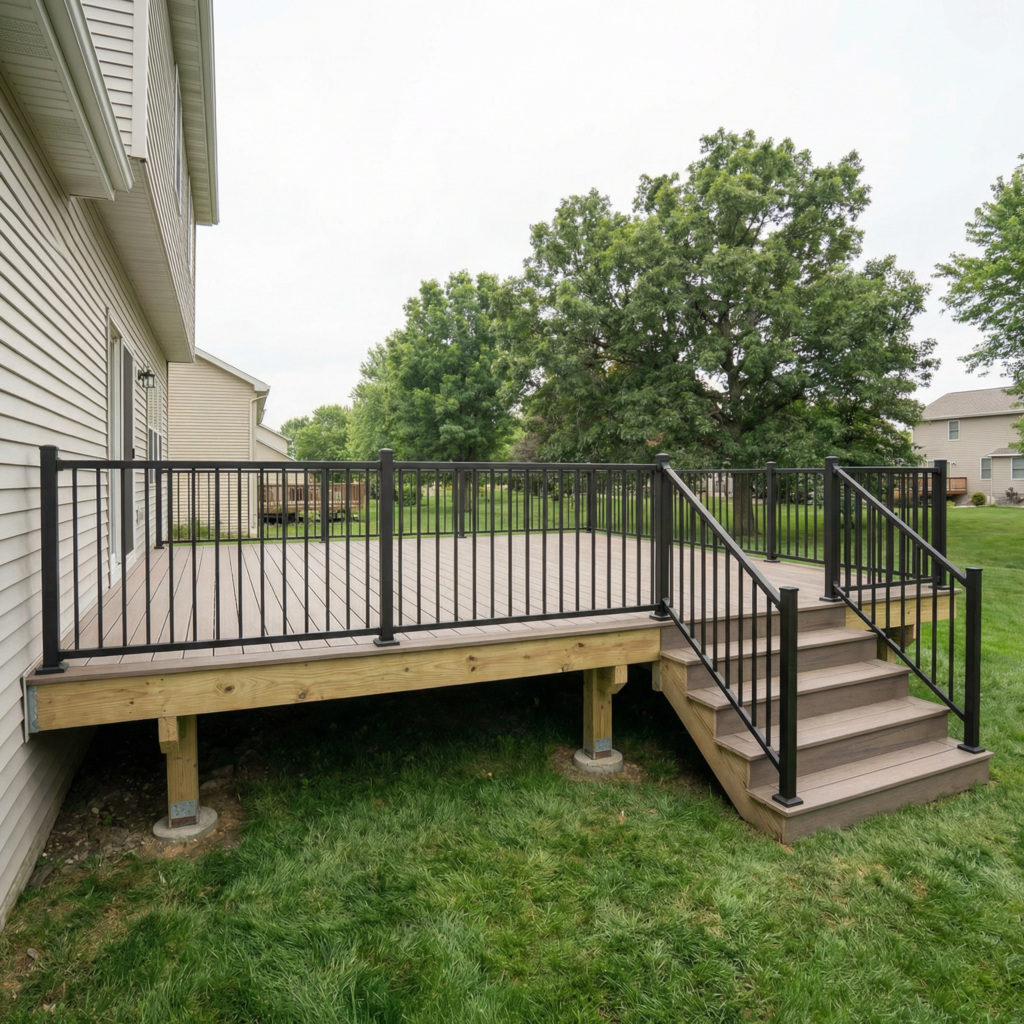
Illustrative scenario: A West Des Moines homeowner built a 16 by 20 foot composite deck at ground level with aluminum railings. Installed cost ran $14,000 to $15,000, with materials at about 45 percent and labor, permits, footings, and delivery making up the rest.
Wood vs. Composite: What’s Right for Iowa?
Pressure-treated wood costs less upfront and is easier to source locally. Composite handles Iowa’s freeze-thaw cycles better and runs about 30 percent lower in maintenance costs over a ten-year period. Both can perform well when installed correctly.
Pro tip 7: Never set wood posts directly in concrete. Use a post base bracket to keep moisture away from the base.
Pro tip 8: Composite expands and contracts with temperature. Contractors who skip manufacturer-specified installation gaps will produce boards that buckle in summer.
Pro tip 9: On shaded or wet sites, PVC outperforms composite because it absorbs no moisture.
According to the 2025 Zonda Cost vs. Value Report, a wood deck addition returns about 94.9 percent of its cost at resale, while a composite deck returns about 88.5 percent. Wood returns more at resale because of the lower upfront cost, even with its shorter lifespan.
Table 2: Deck Material Comparison for Iowa Homeowners
| Material | Material Cost/Sqft | Est. Lifespan | Annual Maintenance | ROI at Resale | Best For |
|---|---|---|---|---|---|
| Pressure-Treated Wood | $8 to $20 | 10 to 15 years | Seal every 1 to 2 yrs | ~94.9% | Budget builds, full-sun sites |
| Cedar | $15 to $30 | 15 to 20 years | Seal every 2 to 3 yrs | ~94.9% | Aesthetics, moderate maintenance |
| Mid-Grade Composite | $25 to $45 | 25 to 30 years | Annual rinse | ~88.5% | Low maintenance, longevity |
| PVC | $30 to $55 | 25 to 30+ years | Annual rinse | ~88.5% | Shaded or wet sites |
ROI figures from the 2025 Zonda Cost vs. Value Report. Actual returns vary by market, project quality, and local conditions.
Illustrative scenario: A Waukee homeowner on a shaded lot with standing drainage issues chose PVC decking over composite based on site conditions. Five-year maintenance cost came in near zero, and the lack of moisture absorption prevented the staining and board softening common on composite in persistently wet spots.
Illustrative scenario: An Ankeny homeowner hired a contractor who set footings at 24 inches. Within two winters the deck heaved noticeably, railings came loose, and boards went uneven. A full replacement was needed. Footings at 42 inches would have prevented it.
Iowa Deck Permits: What You Actually Need
Most attached decks require a permit in Iowa. So does any freestanding deck 30 inches or more above grade. Iowa’s building code is administered through the Department of Inspections, Appeals, and Licensing. Each city runs its own permit processing timeline. Unpermitted decks create problems at resale: a buyer’s inspector will flag them, and you’ll face a retroactive permit, a price reduction, or a teardown.
Pro tip 10: Busy Builders pulls all permits on every project. You don’t deal with city paperwork.
Pro tip 11: Inspectors check footing depth before the concrete pour in most jurisdictions. Confirm your contractor knows this before scheduling the dig.
Table 3: Iowa Deck Code Requirements at a Glance
| Requirement | Iowa Standard | Why It Matters |
|---|---|---|
| Footing depth | At least 42 inches | Below frost line to prevent heaving |
| Railing height | 36 inches minimum | Required for decks 30+ inches above grade |
| Baluster spacing | 4 inches maximum | Prevents entrapment hazard |
| Permit threshold | Attached decks; freestanding 30″+ above grade | Most Iowa decks require permits |
| Ledger flashing | Required on attached decks | Prevents water infiltration and rot |
| Stair riser height | 7.75 inches max per IRC | Consistent step height for safety |
Permit requirements vary by city. Verify local rules before starting any project.
Illustrative scenario: A Grimes homeowner’s contractor skipped ledger flashing to save time. Within four years the framing showed significant rot and required a full teardown and rebuild costing $12,000 or more. Proper flashing at the original build would have cost under $200.
How Long Does a Deck Build Take in Central Iowa?
Construction takes one to three weeks for most projects. Add permitting and material ordering and the realistic total is four to ten weeks. Permit processing speed varies by city and is the biggest timeline variable.
Pro tip 12: Spring and summer are peak season for deck builds in Central Iowa. If you want a deck ready by summer, start the process in late winter and confirm material lead times with your contractor before committing to a start date.
Table 4: Typical Deck Build Timeline in Central Iowa
| Phase | What Happens | Typical Timeframe |
|---|---|---|
| Design and Planning | Site visit, drawings, material selections | 1 to 2 weeks |
| Permits and Approvals | City review and permit issuance | 1 to 4 weeks |
| Material Ordering | Lumber, composite, hardware delivery | 1 to 2 weeks |
| On-Site Construction | Footings, framing, decking, railings, stairs | 1 to 3 weeks |
| Final Inspection | City sign-off, final walkthrough | 1 to 3 days |
Timelines vary by city, season, and project scope.
What to Look for in a Central Iowa Deck Contractor
Iowa general contractors are registered, not licensed. Verify current DIAL registration at dial.iowa.gov before signing anything, and always confirm the permit will be in the contractor’s name. When it’s in your name, liability shifts to you.
Before committing, get clear answers on three things: footing depth, ledger flashing method, and who handles the permit. A contractor who can’t answer all three clearly isn’t ready to build in Iowa’s climate.
Frequently Asked Questions
Q: Do I need a permit to build a deck in Iowa? Most attached decks and freestanding decks 30 inches or more above grade require a permit. Fees in Des Moines run $75 to $300. Busy Builders handles all permit filings so you don’t have to track down the paperwork yourself.
Q: What is the best decking material for Iowa weather? Composite handles Iowa’s freeze-thaw cycles better long-term and costs about 30 percent less to maintain over ten years. Pressure-treated wood costs less upfront and works well on full-sun sites with regular sealing. Never set posts directly in concrete; use a post base bracket to prevent moisture damage at the base.
Q: How much does it cost to build a deck in Des Moines? Installed costs typically run $20 to $65 or more per square foot. A 300 square foot pressure-treated deck typically runs $6,000 to $15,000; the same size in mid-grade composite runs $12,000 to $25,000. Add 10 to 15 percent for contingencies and include permit fees, which most online estimates leave out.
Q: How long does it take to build a deck in Central Iowa? Construction takes one to three weeks. Add permit processing and material ordering and the realistic total is four to ten weeks. Processing timelines vary by city, with larger metros like Des Moines and Ankeny often moving faster than smaller municipalities like Ames or Norwalk. Spring and summer are peak season, so plan early if you want a deck ready by July.
Q: How deep do deck footings need to be in Iowa? At least 42 inches below grade. Iowa’s frost line requires footings set well below the surface to prevent heaving, and Iowa clay soil adds lateral pressure year-round. Most jurisdictions require an inspection before the concrete pour. Busy Builders never sets footings above the frost line.
Q: How do I verify a deck contractor is registered in Iowa? Iowa general contractors are registered through DIAL. Verify current registration at dial.iowa.gov and ask for the contractor’s registration number before signing. Confirm the permit will be in the contractor’s name, not yours.
Key Takeaways
Iowa Climate
- At least 42 inches of footing depth is required to prevent frost heave
- 45 to 84 freeze-thaw cycles per year accelerate wear on any deck not built for Iowa
- Improper ledger flashing is the leading cause of attached deck structural failure here
Costs
- Installed costs typically run $20 to $65 or more per square foot
- Always budget 10 to 15 percent contingency above your quote
- Permit fees ($75 to $300) are frequently missing from national online estimates
Materials
- Pressure-treated wood needs sealing every one to two years in Iowa humidity
- Composite lasts 25 to 30 years with about 30 percent lower maintenance costs over ten years
- Never set posts directly in concrete
Permits and Code
- Most attached decks and freestanding decks 30+ inches above grade require permits
- Iowa code is administered through DIAL; each city processes permits on its own timeline
- Unpermitted decks create problems at resale
Hiring
- Ask about footing depth, ledger flashing, and who pulls the permit before signing
- Verify DIAL registration at dial.iowa.gov
- The permit should be in the contractor’s name, not yours
Ready to Build Your Deck?
Busy Builders has served over 1,000 Central Iowa homeowners since 2020. Every deck we build gets footings below the frost line, proper ledger flashing, and a permit handled start to finish. We offer a free consultation and an honest, itemized estimate.
Call: 844-435-9800 Website: busybuildersiowa.com
We serve West Des Moines, Ankeny, Waukee, Urbandale, Grimes, and all surrounding Central Iowa communities. Schedule your free consultation today.
Disclaimer: Cost estimates reflect general Central Iowa market conditions and vary by project scope, materials, site conditions, and contractor pricing. Permit requirements vary by city and jurisdiction; verify local rules before starting any project. ROI figures are regional estimates that vary by market conditions, project quality, and timing. No specific outcomes or returns on investment are guaranteed. Consult a registered contractor and local building official for guidance specific to your project.
Busy Builders | Full-Service Construction and Remodeling | Serving Central Iowa Since 2020