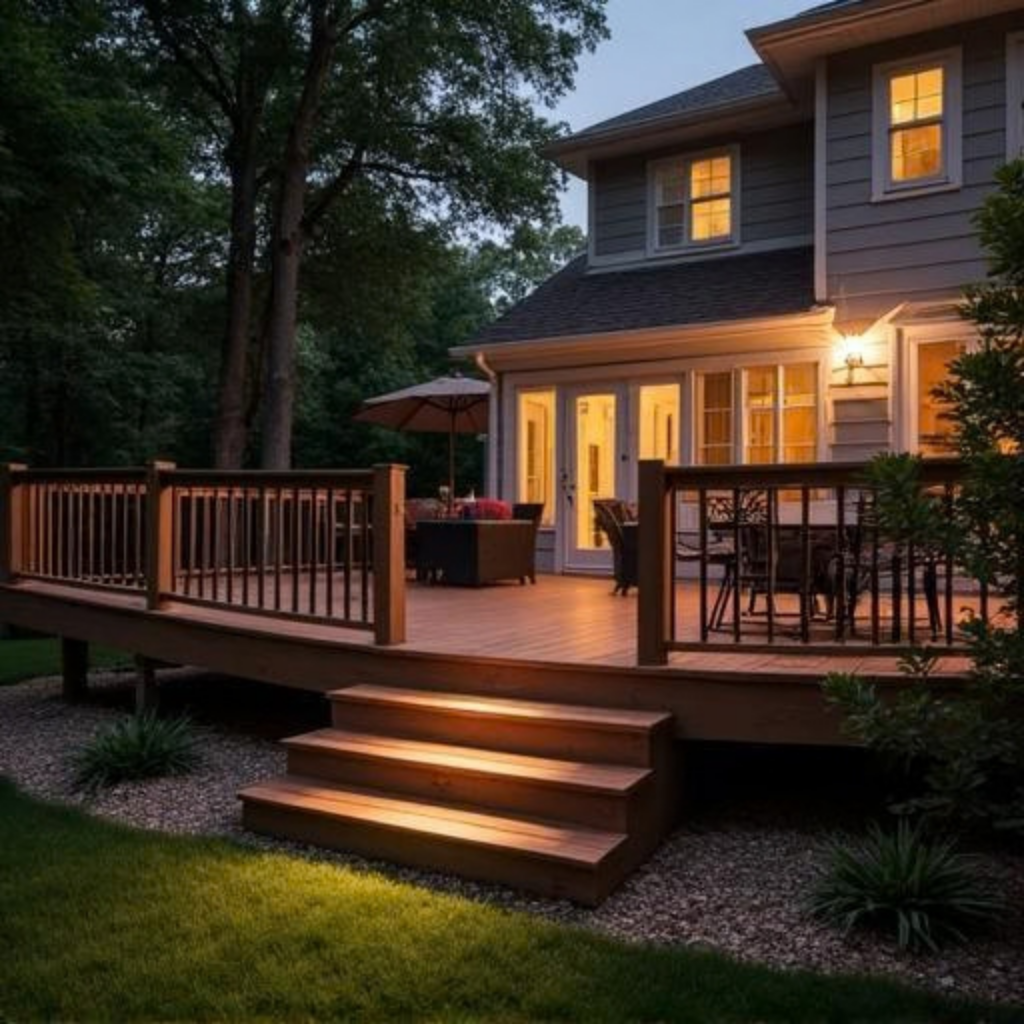
Planning a deck in Central Iowa means more than picking out boards and railings. Iowa’s freeze-thaw climate, 42-inch frost line requirements, and unpredictable spring rains all shape how you build, what you spend, and how long your deck lasts. This guide covers real Des Moines cost ranges, the best materials for Iowa weather, how to protect your basement, and what the permit process actually looks like.
TLDR: Custom decks in Des Moines run $15 to $50 per square foot, with a 300-square-foot deck costing $6,000 to $19,500 depending on materials. Composite decking handles Iowa winters better than wood and needs far less maintenance. Most attached decks require a permit, and footings must reach at least 42 inches deep. Read on for the full breakdown before you hire anyone.
You have been thinking about adding a deck. Maybe you want a place to grill, somewhere for the kids to play, or just a quiet spot outside after work. The idea sounds simple until you start getting quotes and realize how many decisions stand between you and that finished deck.
Costs in Des Moines vary more than most homeowners expect. The material you choose alone can double your budget. Iowa’s climate also adds frost-line footings, permit requirements, and a maintenance schedule that most out-of-state guides never mention.
This guide covers what you actually need to know: real cost ranges, which materials survive Iowa winters, how your deck can affect your basement, and how to handle permits in Des Moines.
What Does a Custom Deck Cost in Des Moines?
Deck costs in Central Iowa depend mostly on the material you choose and the size of the project. Most homeowners in Des Moines spend between $15 and $50 per square foot installed, which puts a 300-square-foot deck somewhere between $6,000 and $19,500.
The table below breaks down installed costs, lifespan, maintenance needs, and return on investment at resale. ROI figures come from the Zonda 2025 Cost vs. Value Report.
| Material | Cost Per Sqft | Lifespan | Maintenance | ROI at Resale |
|---|---|---|---|---|
| Pressure-treated wood | $15 to $25 | 10 to 15 years | Seal every 1 to 3 years | 94.9% |
| Cedar | $20 to $30 | 15 to 20 years | Stain every 2 to 3 years | Similar to wood |
| Composite (mid-range) | $25 to $35 | 25+ years | Clean twice a year | 88.5% |
| Composite (premium) | $35 to $50 | 30+ years | Minimal | 88.5% |
Wood returns slightly more at resale, but composite saves you time and money on maintenance over the life of the deck. See Busy Builders’ deck building services to get a project estimate specific to your yard and goals.
What Hidden Costs Do Iowa Homeowners Miss?
Iowa has a few budget surprises that out-of-state cost guides skip entirely. Our detailed guide to hidden deck building costs in Iowa covers all of them, but here is the short version.
Iowa’s frost line sits at 42 inches minimum. Every footing your contractor pours must reach that depth to prevent the deck from heaving when the ground freezes and thaws. That adds labor and concrete costs that a basic online calculator will not include.
Tip: Get an itemized quote before you sign anything. A quote that lists only a total number almost always leaves out frost footings, permit fees, or site grading.
These are the costs that rarely appear in a base deck quote but regularly show up on the final invoice.
| Hidden Cost | Typical Range | Why It Matters in Iowa |
|---|---|---|
| Frost-line footings (42 inches) | $800 to $2,500 | Required by Iowa code; prevents heaving in freeze-thaw cycles |
| Permit fees | $50 to $200 | Most attached decks require permits in Des Moines |
| Site prep and grading | $300 to $1,500 | Sloped yards need correction before building begins |
| Electrical (lighting or outlets) | $500 to $2,000 | Requires a licensed electrician; not covered in basic quotes |
| Railing upgrades | $200 to $1,500 | Aluminum and cable styles cost significantly more than standard wood rails |
| Underdeck drainage system | $1,500 to $4,000 | Protects finished basements below the deck from water intrusion |
These extras can add $1,500 to $8,000 on top of your base quote. Budget for them upfront rather than treating them as surprises after signing.
Which Materials Hold Up in Iowa’s Climate?
Iowa temperatures swing from below zero in January to over 100 degrees in August. That range punishes low-quality decking fast. Freeze-thaw cycles crack boards, warp railings, and pop screws loose every spring.
Pressure-treated wood is the most affordable option and works well when you stay on top of maintenance. Plan to stain or seal it every one to three years. Composite decking with a solid core handles freeze-thaw cycles better and carries 25 to 30-year warranties on most brands. Cedar offers natural rot resistance but still needs regular upkeep. For a full side-by-side comparison, see the guide to the best decking materials for Iowa homeowners.
Tip: Ask your contractor about composite brands with solid cores rather than hollow profiles. Solid cores resist moisture penetration and hold up better through Iowa winters.
Illustrative scenario: A family in Ankeny chose pressure-treated wood for a 250-square-foot single-level deck on a tight budget. Total installed cost came to about $7,000. They committed to annual sealing every fall and the deck has held up well through multiple Iowa winters. For homeowners willing to do the maintenance, wood delivers strong value at that price point.
Does Your Deck Affect Your Basement?
This is the part most deck guides skip, and it matters a lot in Central Iowa.
Decks built close to the house can channel water toward your foundation if the ground does not slope away from the structure. When a deck sits above a finished basement or near an egress window, drainage becomes even more critical.
Iowa gets heavy spring rains and fast snowmelt. Without proper grading, that water works its way into your basement. Because 71.6% of Iowa homes already test above the EPA radon action level, any increase in basement moisture makes the situation worse. Moisture creates pathways for radon to enter, which is a serious health concern specific to Iowa’s geology.
Illustrative scenario: A West Des Moines homeowner built a 300-square-foot composite deck above a finished walkout basement. Their contractor installed a Trex RainEscape underdeck drainage system for about $2,800, routing water to the gutters rather than the foundation. Two spring rain seasons later, the finished basement below stayed completely dry.
If your deck will sit above a finished basement or walkout, ask your contractor about an underdeck drainage system. Costs typically run $1,500 to $4,000. Busy Builders handles both deck construction and basement finishing, so they understand how these two projects connect from the start.
Tip: Book your deck project for late winter or early spring if you want the best contractor availability. Most Central Iowa deck builders are booked six to eight weeks out by late spring, so planning ahead puts you at the front of the line for the best build season.
What the Des Moines Permit Process Looks Like
Most attached decks and any deck sitting more than 30 inches above grade require a building permit in Des Moines. The process is straightforward when you have a registered contractor handling it.
Applications go through the Des Moines Permit and Development Center at 1200 Locust Street, or online through the CitizenServe portal.
| Requirement | Details |
|---|---|
| When a permit is needed | Attached to house or more than 30 inches above grade |
| Contact | 1200 Locust Street, Des Moines — (515) 283-4200 |
| Application method | Online via CitizenServe portal or in person |
| Documents needed | Site plan, deck dimensions, footing details, setback measurements |
| Minimum footing depth | 42 inches below grade per Iowa code and IRC standards |
| Inspection stages | Footing, framing, and final |
Iowa requires contractors earning more than $2,000 annually in construction work to register with DIAL (Department of Inspections, Appeals, & Licensing). Hiring a registered contractor means they handle the permit process from start to finish. Footing depth requirements align with the International Residential Code standards that Iowa follows.
Maintenance That Actually Works in Iowa
Staying ahead of maintenance saves far more than it costs. Iowa’s seasonal extremes demand a seasonal approach, and the right schedule depends on which material you chose.
| Season | Wood Deck | Composite Deck |
|---|---|---|
| Spring | Inspect for cracks, splits, loose fasteners; sand rough spots | Check for mold or staining; rinse with mild soap and water |
| Summer | Sweep debris; wash with mild soap and water as needed | Same; avoid harsh chemical cleaners that void warranties |
| Fall | Apply stain or sealant before temperatures drop below 50 degrees | Not required; clear gutters and downspouts near the deck |
| Winter | Plastic shovel and calcium chloride only; no sand or metal tools | Same approach; avoid metal tools that scratch composite surfaces |
Fall is the most important maintenance window for wood decks in Iowa. Sealing before the first hard freeze protects the wood from moisture penetration all winter.
Frequently Asked Questions
Q: How much does a deck cost in Des Moines?
Most custom decks in Des Moines run $15 to $50 per square foot installed, depending on the material. A 300-square-foot wood deck costs about $6,000 to $10,500. The same size in composite runs $12,000 to $19,500. Hidden costs like frost footings, permits, and drainage can add $1,500 to $8,000 on top of those numbers. Always ask for an itemized quote so you know exactly what is and is not included.
Q: Do I need a permit to build a deck in Des Moines?
Yes, most decks require one. If your deck attaches to the house or sits more than 30 inches above grade, you need a building permit. Contact the Des Moines Permit and Development Center at (515) 283-4200 or apply online through the CitizenServe portal. A registered contractor typically handles all permit filings on your behalf, which reduces your paperwork and ensures the application is complete.
Q: What deck material holds up best in Iowa winters?
Composite decking with a solid core handles Iowa’s freeze-thaw cycles the best. It does not crack, warp, or need annual sealing. Most premium composite brands carry 25 to 30-year warranties. Pressure-treated wood is a solid budget option but needs staining or sealing every one to three years. Hollow-core composite products tend to perform worse, so always ask about core construction before buying.
Q: Can a deck cause water damage to my basement?
It can if drainage is not planned correctly. Iowa’s heavy spring rains and fast snowmelt need somewhere to go. The ground should slope away from your foundation, gutters need to stay clear, and a deck above a walkout or egress window should include an underdeck drainage system. Hiring a contractor who understands both deck building and basement protection makes a real difference here, especially given Iowa’s high radon rate.
Q: How long does a deck project take?
Simple single-level decks typically take one to two weeks to build. Multi-level or complex projects run three to four weeks. Plan for an additional one to two weeks for permit approval before construction starts. Booking in winter for spring construction helps you avoid the summer rush and usually means better contractor availability.
Q: Does adding a deck affect my homeowners insurance?
It can. Attached decks usually fall under your home’s dwelling coverage, and adding square footage and value may affect your premium. Talk to your insurance agent before building, not after. Document your deck’s condition with photos right after construction is finished. Lack of maintenance is not covered by most policies, so keeping up with your seasonal schedule also keeps you insurable.
Key Takeaways
Costs: Pressure-treated wood runs $15 to $25 per sqft; composite runs $25 to $50 per sqft. A 300-sqft deck costs $6,000 to $19,500 depending on material. Hidden costs like frost footings and drainage can add $1,500 to $8,000 on top.
Iowa Code Requirements: The frost line is 42 inches minimum for all footings. Most attached decks require a building permit in Des Moines. Iowa uses contractor registration through DIAL, not a general contractor license.
Material Choice: Composite handles Iowa freeze-thaw cycles better than wood or cedar. Wood returns 94.9% ROI at resale; composite returns 88.5% but costs less to maintain long-term. Always ask for solid-core composite over hollow-profile products.
Basement Protection: Improper deck drainage can send water toward your foundation. Underdeck drainage systems cost $1,500 to $4,000 and protect finished basements below. Iowa’s 71.6% radon rate makes basement moisture control especially important.
Maintenance: Stain or seal wood decks every one to three years, with fall being the best window. Clean composite decks twice a year with mild soap and water. Use calcium chloride for winter ice removal and avoid sand and metal shovels.
Ready to Build Your Custom Deck in Central Iowa?
You now have the full picture: what decks cost in Des Moines, which materials survive Iowa winters, how to protect your basement, and what permits to expect. The next step is talking with a contractor who handles all of it, from permit filing to final inspection.
Busy Builders has served over 1,000 Central Iowa homeowners since 2020. Every estimate is transparent, every permit is handled, and every project is built to Iowa code. Whether you are in Des Moines, West Des Moines, Ankeny, Waukee, or anywhere in Central Iowa, the team is ready to help you plan your project.
Call: 844-435-9800
Website: https://busybuildersiowa.com/
Busy Builders | Full-Service Construction and Remodeling | Serving Central Iowa Since 2020