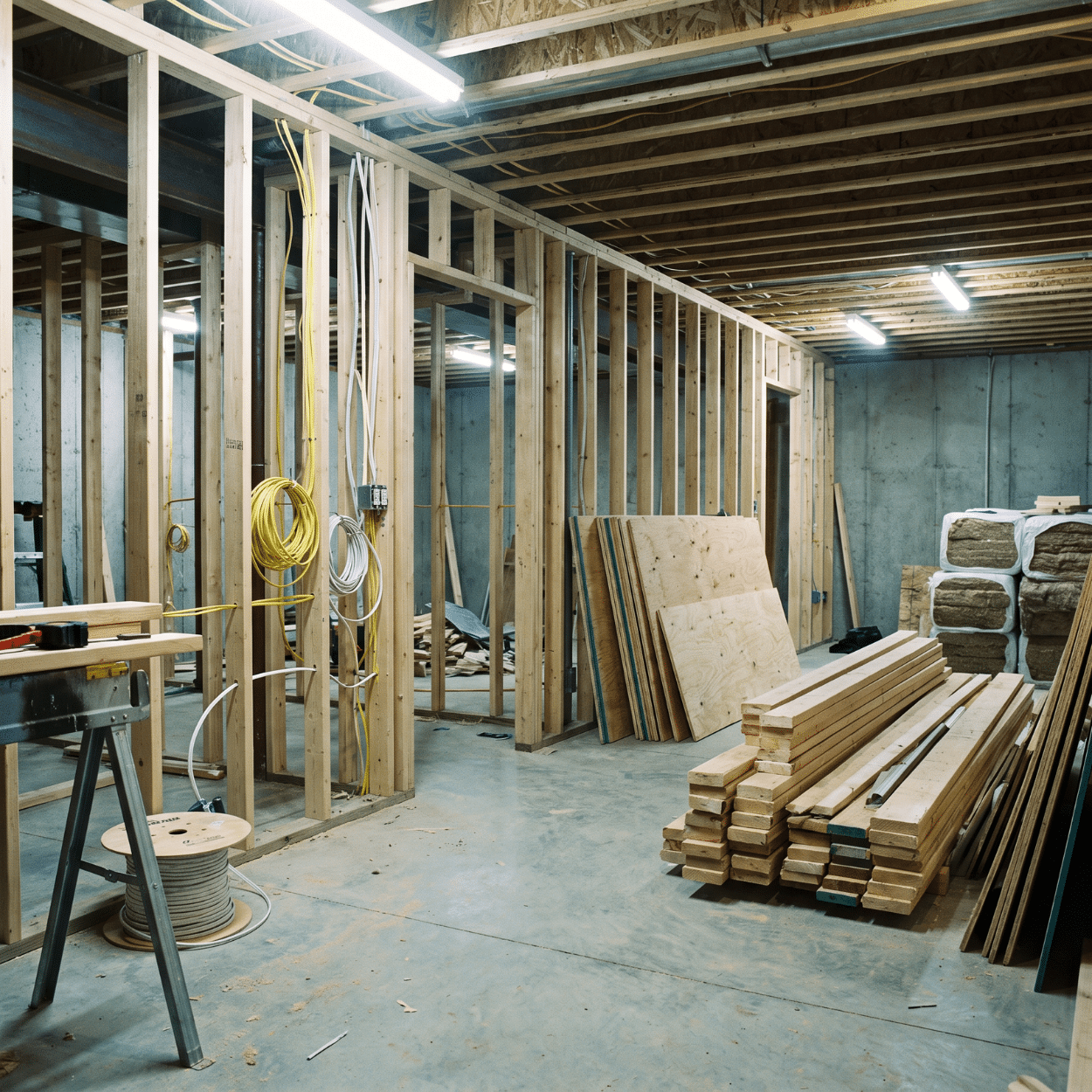
Basement finishing can transform unused space into valuable living area, but the industry’s “70% ROI” headlines hide important truths. Fannie Mae doesn’t count below-grade square footage in mortgage appraisals. Unpermitted work can tank a sale entirely. And hidden costs can cut your actual return significantly. This guide covers what most blogs won’t tell you.
TLDR: Finished basements add value but NOT square footage per Fannie Mae rules. According to the 2025 Cost vs. Value Report, basement remodels average 63.4% ROI, though hidden costs like HVAC zones, permits, and moisture control can reduce actual returns to 50-65%. Permits take 3-7 weeks before construction starts.
You’ve seen the articles claiming basement finishing delivers 70% ROI. What they don’t mention is that your finished basement might not count toward your home’s square footage when you sell, and that hidden costs routinely surprise homeowners mid-project.
The Fannie Mae Reality: Square Footage That Doesn’t Count
Here’s what most homeowners don’t know: Fannie Mae requires any space that is partially or completely below-grade to be reported as below-grade area per their Selling Guide Section B4-1.3-05. This means your finished basement doesn’t add square footage to your home’s gross living area. It adds value, but in a different category.
| What Homeowners Expect | What Actually Happens |
|---|---|
| 1,500 sq ft basement adds 1,500 sq ft to home | Reported as below-grade area, not GLA |
| Finished bedroom counts in bedroom total | Listed as “bonus room,” not official bedroom |
| Full value per square foot | 60-75% of above-grade rates (per experienced appraisers) |
Illustrative scenario: An Altoona homeowner finishes their 1,200 sq ft basement expecting it to significantly increase their home’s appraised square footage. When they refinance, the appraiser reports it as below-grade area. The project adds approximately $18,000 in value, but their gross living area remains unchanged on the appraisal.
The walkout misconception: Even walkout basements must report any below-grade portions as below-grade area with reduced valuation. Many Central Iowa basements are completely below-grade on all sides, making this distinction important.
Tip: Check with an appraiser BEFORE finishing to understand exactly how your basement will be valued. This prevents disappointment when selling or refinancing.
The Permit Trap: When Unpermitted Work Kills a Sale
Unpermitted basement work doesn’t just reduce value. It can destroy a sale entirely.
| Consequence | Impact |
|---|---|
| Lender refusal | Many lenders won’t finance homes with unpermitted additions |
| Buyer pool shrinks | Limited to cash buyers or investors |
| Insurance denial | Damages in unpermitted spaces not covered |
| Disclosure requirement | Failure to disclose = potential fraud |
| Fines | Often exceed original permit costs |
| Forced removal | Building department can require tear-down |
Real example: A Denver-area homeowner finished their basement without permits after their contractor said they weren’t needed. When they discovered the mistake, they proactively brought documentation to the building department and received retroactive permitting because the work was code-compliant. Coming forward voluntarily prevented a much worse outcome at sale.
Tip: If you have existing unpermitted work, consult your building department before listing your home. Proactive disclosure is far better than discovery during inspection.
The 7-Foot Ceiling Height Trap
Many existing Central Iowa basements have ceiling heights of 6’8″ or lower. Building codes require 7 feet minimum for habitable space.
| Ceiling Height | Code Status | Consequence |
|---|---|---|
| 7’0″ or higher | Compliant | Space counts as habitable |
| 6’4″ to 6’11” | Non-compliant | Cannot be finished as living space |
| Below 6’4″ | Non-compliant | Even beams/ducts can’t drop this low |
Illustrative scenario: An Ames homeowner measures their basement ceiling at 6’11”, one inch short of code. The inspector rejects the space as non-habitable. Their options: raise the floor ($10,000-$30,000+), lower the ceiling height expectations, or abandon the bedroom plan entirely.
Tip: Measure ceiling height at the LOWEST point (under beams, ducts, pipes) before hiring a contractor. If you’re close to 7 feet, contact your building department to understand local enforcement.
Hidden Costs That Cut Your ROI
The “70% ROI” figure assumes a straightforward project. Reality includes expenses most budgets miss.
| Hidden Cost | Range | Why It’s Missed |
|---|---|---|
| Egress window (retrofit) | $5,500-$10,000 | Required for bedrooms; expensive after walls are up |
| Ejector pump | $2,000-$4,000 | Required for bathrooms; gravity works against you |
| HVAC zone/mini-split | $3,000-$8,000 | Basement stays cold without it |
| Permits and inspections | $375-$500 | Des Moines area base permits; additional fees may apply |
| Structural engineer | $500-$1,500 | Essential before touching walls |
Illustrative scenario: A Waukee family budgets $35,000 for their basement finish but doesn’t account for the ejector pump ($3,200), HVAC extension ($4,500), or permit fees ($2,100). Final cost: $44,800. Their actual ROI drops from an expected 70% to closer to 50-55%, reflecting realistic returns after hidden costs.
The ROI reality: According to the 2025 Cost vs. Value Report, basement remodels average 63.4% ROI. This means a $32,000 project typically returns about $20,300 in added value at resale.
However, this assumes a straightforward project. Once you budget for permits, HVAC modifications, egress windows, and moisture control systems typical in Central Iowa, realistic returns often range from 50-65%:
- Spend: $32,000 + $500 permits + $3,500 HVAC + $1,500 egress + $500 misc = $38,000
- Value added: $22,000-$25,000 (per 63.4% ROI, though valued as below-grade space)
- Actual ROI: 55-63%
Tip: Add 25-30% contingency to any basement finishing quote. Hidden costs appear in nearly every project.
HVAC and Plumbing Challenges
HVAC reality: Your existing system was sized for original square footage. Adding 1,000+ sq ft without modifications means the basement stays 10-15 degrees colder than upstairs.
Plumbing reality: Basement bathrooms sit BELOW your main sewer line. Every basement bathroom needs an ejector pump to push waste up. These pumps require maintenance and eventual replacement.
Illustrative scenario: An Indianola homeowner finishes their basement and adds supply vents from existing ductwork. The basement stays 52°F while upstairs hits 70°F. The fix costs $4,200, a common issue without proper system sizing.
Tip: Have an HVAC professional evaluate your system BEFORE finishing. A $300 consultation can prevent a $5,000 surprise.
The Permit Timeline Reality
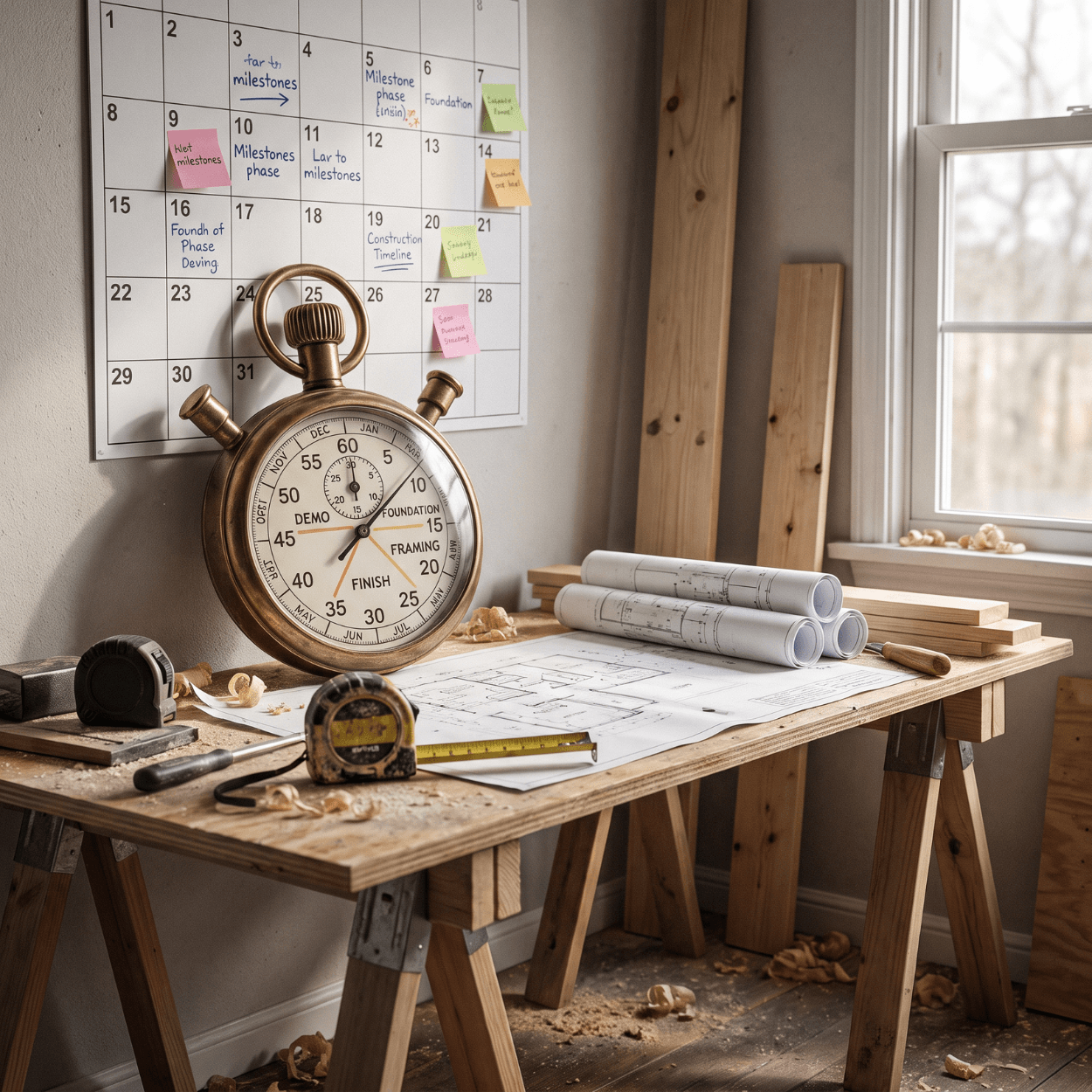
Permits take 3-7 weeks before construction even starts. Total realistic timeline: 10-16 weeks minimum including design, permitting, construction, and inspections.
What stops projects: Plan rejections (ceiling height, egress requirements, electrical code), inspector findings (structural issues, moisture problems), and required change orders.
Tip: Hire contractors who handle permits as part of their service. DIY permit applications face higher rejection rates.
Frequently Asked Questions
Q: Does my finished basement add to my home’s square footage? A: For Fannie Mae purposes, below-grade space is reported separately from gross living area (GLA). Experienced appraisers note below-grade finished space may receive 60-75% of above-grade value, depending on egress, natural light, and finishes.
Q: What happens if I finish my basement without permits? A: Unpermitted work must be disclosed when selling. Many lenders refuse to finance homes with unpermitted additions. Insurance won’t cover damages. Building departments can require removal of non-compliant work.
Q: How much does basement finishing actually cost in Central Iowa? A: Budget $25-$50 per square foot for basic finishing, $50-$75 for mid-range with bathroom, and $75-$100+ for high-end. Add 25-30% for hidden costs (HVAC, plumbing, permits).
Q: Is basement finishing worth it if it doesn’t count as square footage? A: Yes, if you understand realistic returns. Finished basements add functional living space and typically receive 60-75% of above-grade value per square foot. Just don’t expect dollar-for-dollar square footage value.
Q: Do I need an egress window for a basement bedroom? A: Yes, absolutely. International Residential Code requires egress windows in every sleeping room. No egress window means the space cannot legally be called a bedroom.
Key Takeaways
- Below-grade space may receive 60-75% of above-grade value
- While headline ROI cites 63.4%, realistic returns with hidden costs are often 50-65%
- Permits take 3-7 weeks before construction starts
- Budget for HVAC, ejector pumps, and egress upfront
- Unpermitted work can kill a home sale entirely
Plan Your Basement Finish the Right Way
You now understand the hidden challenges most homeowners discover too late. Busy Builders has helped over 1,000 Central Iowa homeowners since 2020. We handle permits, evaluate structural and mechanical requirements, and provide realistic budgets.
📞 Call: 844-435-9800 🌐 Visit: https://busybuildersiowa.com/
We serve Des Moines, Altoona, Ames, Waukee, Indianola, and all Central Iowa communities. Contact us today to discuss your basement finishing project.
Busy Builders | Full Service Remodeling and Construction Done Right | Serving Central Iowa Since 2020
Important: This guide provides general information about basement finishing considerations. Actual costs, timelines, and requirements vary by project and municipality. Consult licensed professionals and your local building department for project-specific guidance.