Iowa Custom Home Design Ideas for Modern Living: Comprehensive Guide to Modern Styles, Sustainability, and Smart Technology
Creating a custom home in Iowa combines regional charm with cutting-edge design, sustainability, and intelligent automation to deliver truly personalized living spaces. Struggling to balance aesthetic trends, energy efficiency, and seamless technology integration? This guide offers actionable Iowa custom home design ideas, detailing modern style options, eco-friendly strategies, smart home systems, and the step-by-step building process. You’ll discover:
- Popular architectural styles, from modern farmhouse to luxury estates
- Strategies for energy efficiency, green materials, and passive house principles
- In-home automation, lighting, security, and connected living solutions
- The full custom build journey, including selecting a builder and financing
- Region-specific advice on climate adaptation, codes, and Eastern Iowa trends
- Tips for marrying design, sustainability, and smart tech into a unified home
Explore our resource hub at Home Building, The Busy Builders” to learn more and start planning your dream Iowa home today.
What Are the Most Popular Modern Home Design Styles in Iowa?
Modern home design styles in Iowa blend regional character with clean lines, open layouts, and contemporary materials to deliver comfortable, functional residences. Homeowners appreciate styles that reflect both Iowa’s rural heritage and urban innovation, making these four approaches stand out across the state.
What Defines Iowa Modern Farmhouse Designs?
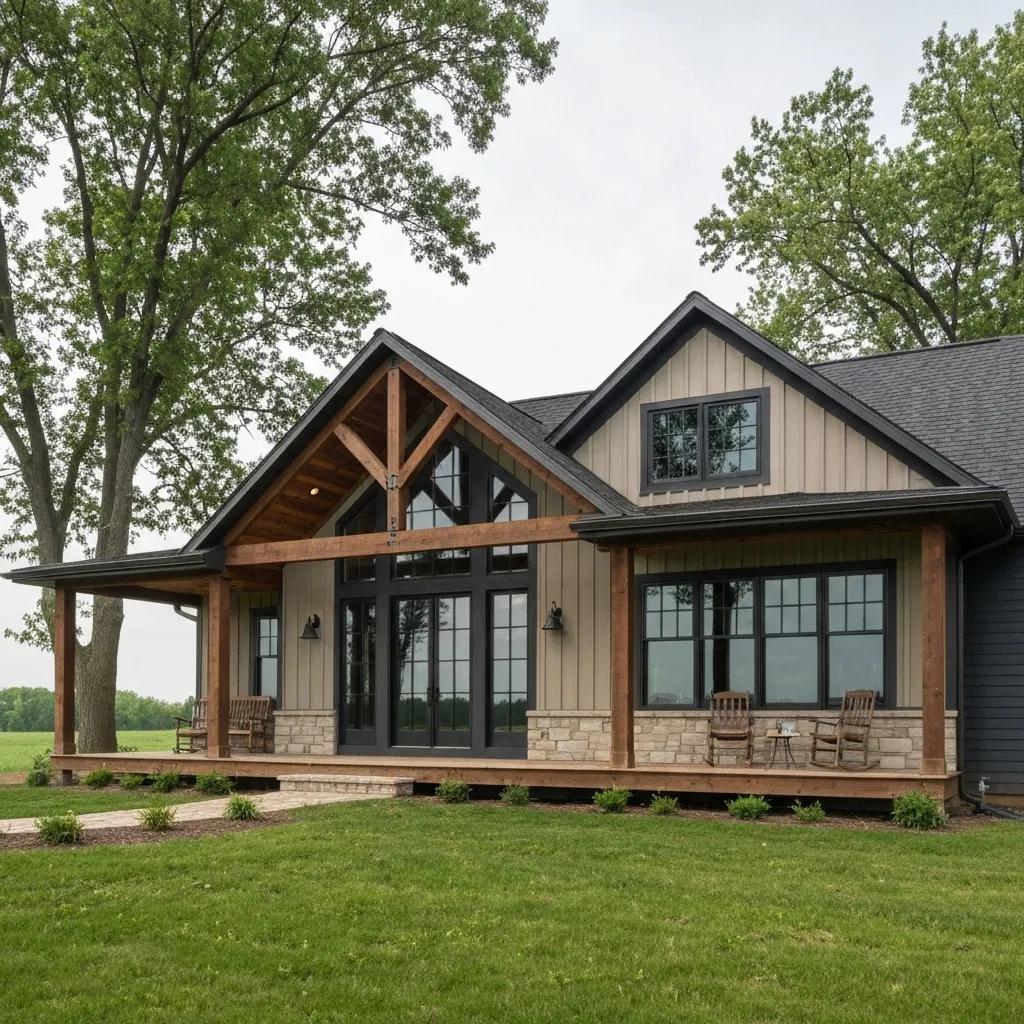
Modern farmhouse designs in Iowa merge traditional rural elements with minimalist details to create warm yet streamlined exteriors and interiors. Key farmhouse features include board-and-batten siding, metal roof accents, oversized porches with wooden beams, and neutral palettes punctuated by black-window frames. Inside, shiplap walls, barn-style doors, farmhouse sinks, and natural wood tones foster a welcoming atmosphere while preserving a refined, modern edge. Home building
Rustic beams and large windows encourage indoor-outdoor connections, guiding seamless transitions to gardens or patios with lounge seating. This synergy of tradition and contemporary styling sets the stage for smooth adoption of smart lighting and automation features in subsequent design phases.
How Does Contemporary Architecture Shape Iowa Custom Homes?
Contemporary architecture in Iowa champions flat or low-sloped roofs, asymmetrical façades, and a mix of materials such as steel, glass, and natural stone. Expansive floor-to-ceiling windows maximize daylight and frame panoramic rural vistas. Open, multifunctional living areas link seamlessly to outdoor terraces, reinforced by minimalist interior palettes and integrated storage solutions.
Clean lines and unadorned surfaces emphasize geometric volumes, creating homes that highlight structural elements as design focal points. These principles pave the way for integrating energy-efficient glazing and advanced climate-control systems explored in our sustainability section.
What Are the Characteristics of Luxury Custom Homes in Iowa?
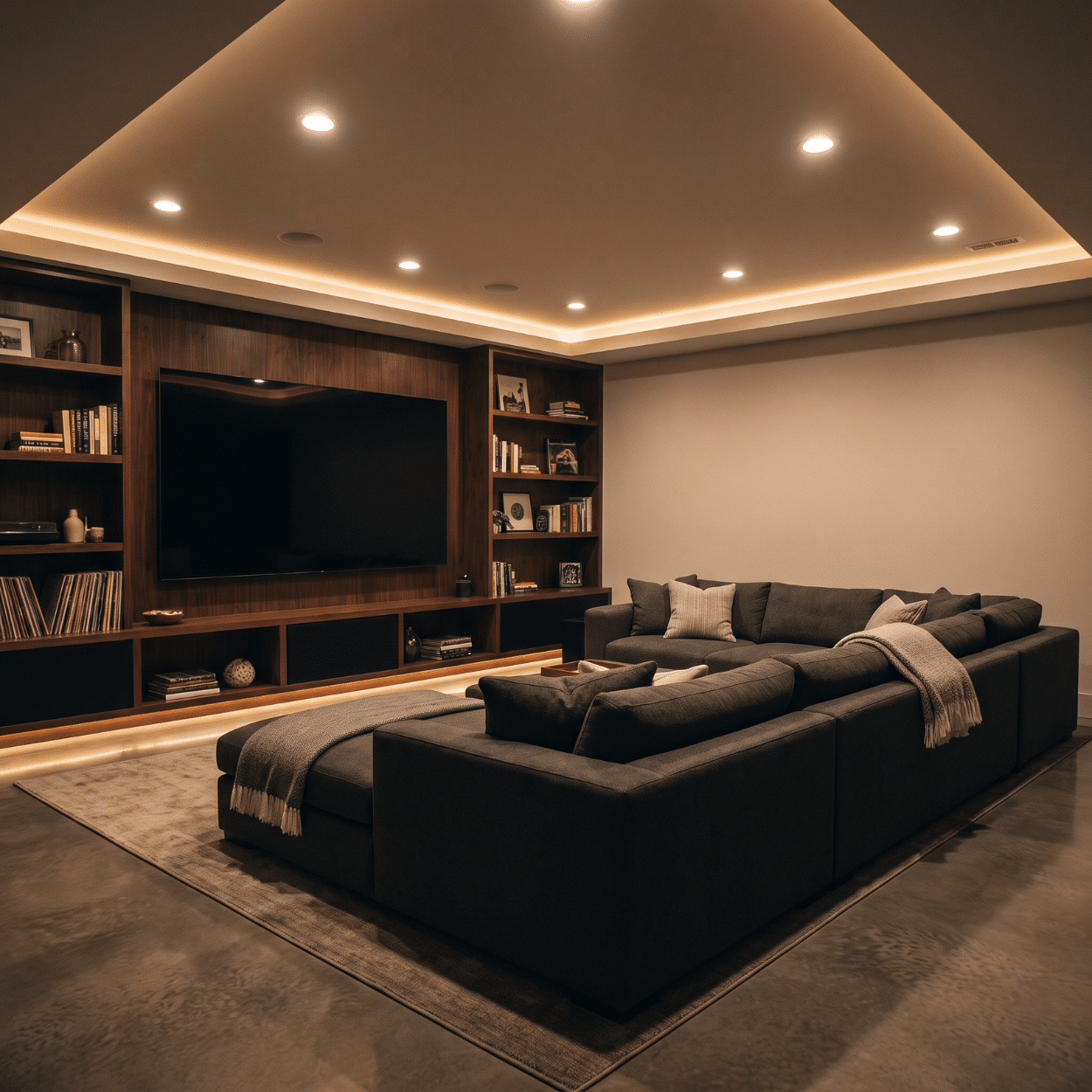
Luxury custom homes in Iowa feature high-end finishes, such as terrazzo floors, custom millwork, and imported stone, and curated amenity suites, including wine cellars, home theaters, and spa-style baths. Grand entryways with double-height ceilings set an opulent tone, while concealed pocket doors and bespoke cabinetry underscore meticulous craftsmanship.
Exterior details often include copper gutters, motorized shades, and private courtyards. These premium touches align with our later discussion on quality craftsmanship enhancing modern living environments.
Why Are Open Concept Floor Plans Trending in Iowa Homes?
Open concept layouts remove barriers between kitchens, dining, and living spaces to foster social connectivity and flexibility. This design emphasizes fluid furniture arrangements, multifunctional islands, and unobstructed sightlines for both natural light and family interaction. Hosting gatherings or supervising children while cooking becomes effortless, and integration of smart sensors and voice-activated controls further enhances convenience.
These adaptable floor plans serve as ideal canvases for the sustainable and smart home elements detailed ahead.
How Can You Incorporate Sustainable Home Design in Iowa?
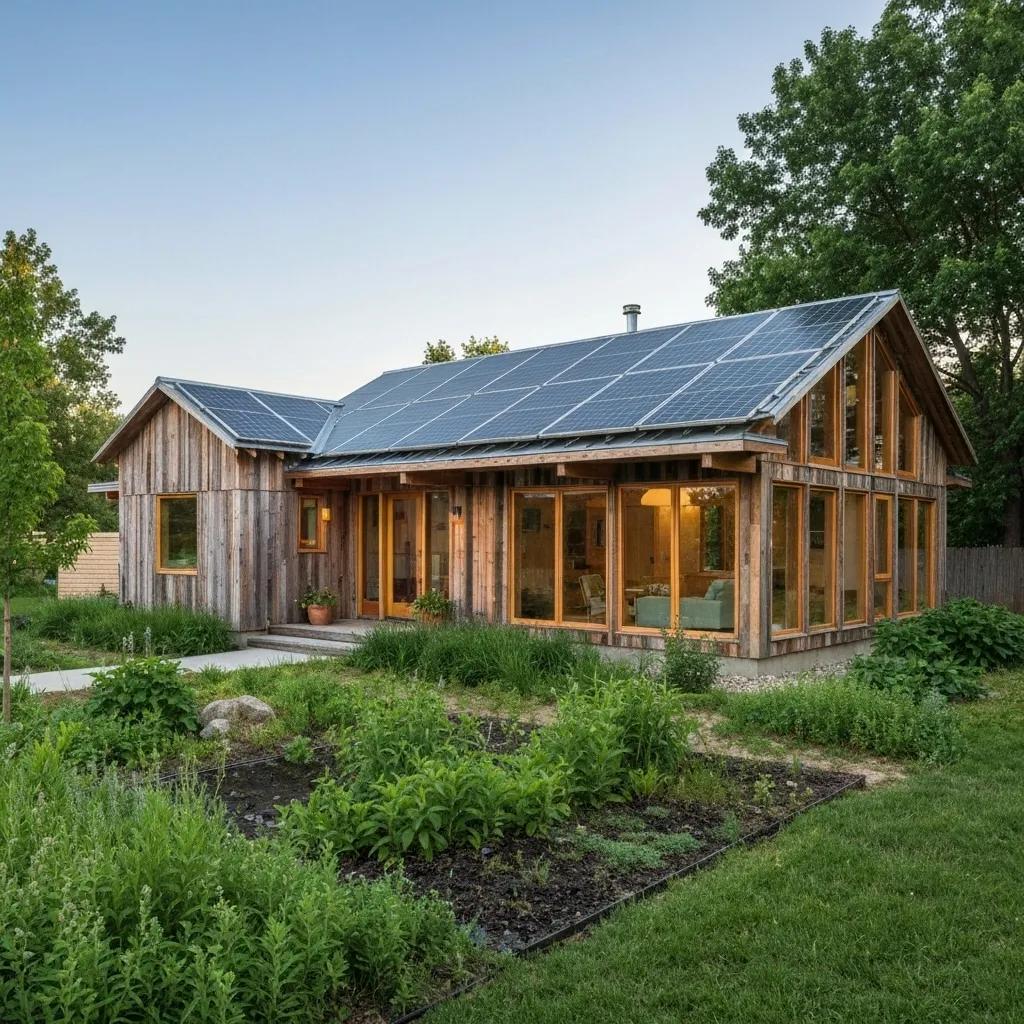
Integrating sustainable home design in Iowa involves reducing energy consumption, choosing renewable or recycled materials, and optimizing building orientation to harness natural light and heat. Sustainable strategies lower utility costs, minimize carbon footprints, and improve indoor comfort year-round.
What Are the Best Energy-Efficient Features for Iowa Homes?
- Programmable smart thermostats for zoned temperature control
- High-performance windows with low-E coatings to minimize heat transfer
- Insulated concrete forms or structural insulated panels for airtight envelopes
- Solar photovoltaic arrays on south-facing roofs to generate renewable power
- ENERGY STAR®–rated appliances that limit electricity and water consumption
These measures blend modern design with environmental stewardship and set the foundation for eco-friendly material choices.
U.S. Department of Energy, Energy Efficiency and Renewable Energy (2024)
[Energy Efficiency in Iowa Homes]
Implementing energy-efficient features, such as high-performance windows and smart thermostats, can significantly reduce energy consumption and lower utility bills for Iowa homeowners. These measures align with broader sustainability goals and contribute to a more comfortable living environment.
Which Eco-Friendly Building Materials Are Ideal for Iowa Custom Homes?
Below is a comparison of top sustainable materials suited to Iowa’s climate:
| Material | Benefit | Source |
|---|---|---|
| Reclaimed barn wood | Adds character while reducing waste | Local deconstruction suppliers |
| Bamboo flooring | Rapidly renewable, high durability | Specialty lumber merchants |
| Insulated concrete panels | Excellent thermal mass and insulation | Regional precast manufacturers |
| Recycled steel siding | Long-lasting, low maintenance | National steel recyclers |
| Low-VOC paints and finishes | Improves indoor air quality | Eco-certified building centers |
These materials support energy goals and reinforce design aesthetics, preparing for passive house principles in colder months.
How Does Passive House Design Benefit Iowa Homeowners?
Passive house guidelines optimize insulation, airtightness, and heat-recovery ventilation to maintain stable indoor temperatures with minimal mechanical heating or cooling. Benefits include up to 90 percent reduced heating energy needs, superior humidity control, and unparalleled comfort during Iowa’s harsh winters and humid summers. Adopting passive house principles lays the groundwork for next-generation net-zero or net-positive home performance.
What Smart Home Technologies Are Popular in Iowa Custom Homes?
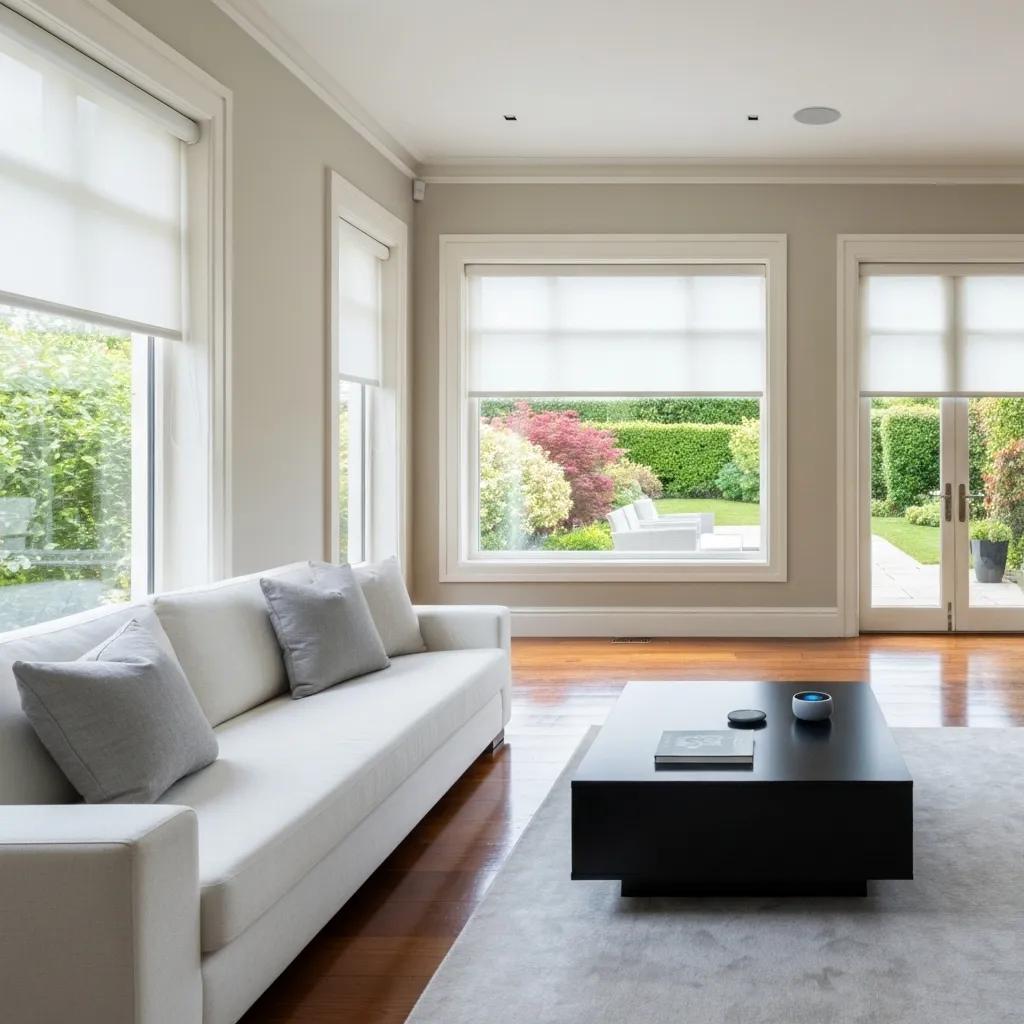
Smart home technologies transform modern Iowa residences into intuitive, efficient, and secure living environments. Automated systems integrate lighting, climate, security, and entertainment to offer personalized comfort and real-time monitoring.
Which Home Automation Systems Are Best for Iowa Homes?
The following solutions excel in customization and reliability:
| System | Functionality | Advantage |
|---|---|---|
| Savant Home Platform | Centralized control of audio, lighting, HVAC | Seamless integration, user-friendly interface |
| Elan Home Systems | Whole-home automation with mobile app | Scalable for large properties |
| Control4 | Touch-panel and voice activation | Robust third-party device compatibility |
How Do Smart Lighting and Security Enhance Modern Living in Iowa?
Smart lighting systems adjust brightness, color temperature, and scheduling to match natural light cycles, improving mood and productivity. Integrated security cameras, door locks, and motion sensors allow remote surveillance and alerts via smartphone. Combined, these features elevate daily living, reinforce safety, and support energy conservation by automating unoccupied zones.
Consumer Technology Association, Smart Home Market Study (2024)
[Smart Home Technology Integration]
Smart home technologies, including automated lighting and security systems, enhance the convenience, security, and energy efficiency of modern Iowa residences. These systems offer personalized comfort and real-time monitoring capabilities, improving daily living.
What Are Connected Living Spaces and Their Benefits in Iowa Homes?
Connected living spaces feature networked appliances, voice assistants, and media streaming accessible throughout the home.
Benefits include:
- Seamless multi-room audio and video distribution
- Voice-activated scene setting for dining, movie nights, or morning routines
- Automated window shades responding to sunlight and temperature
This level of integration promotes a cohesive modern lifestyle adaptable to every season in Iowa.
What Is the Custom Home Building Process in Iowa?
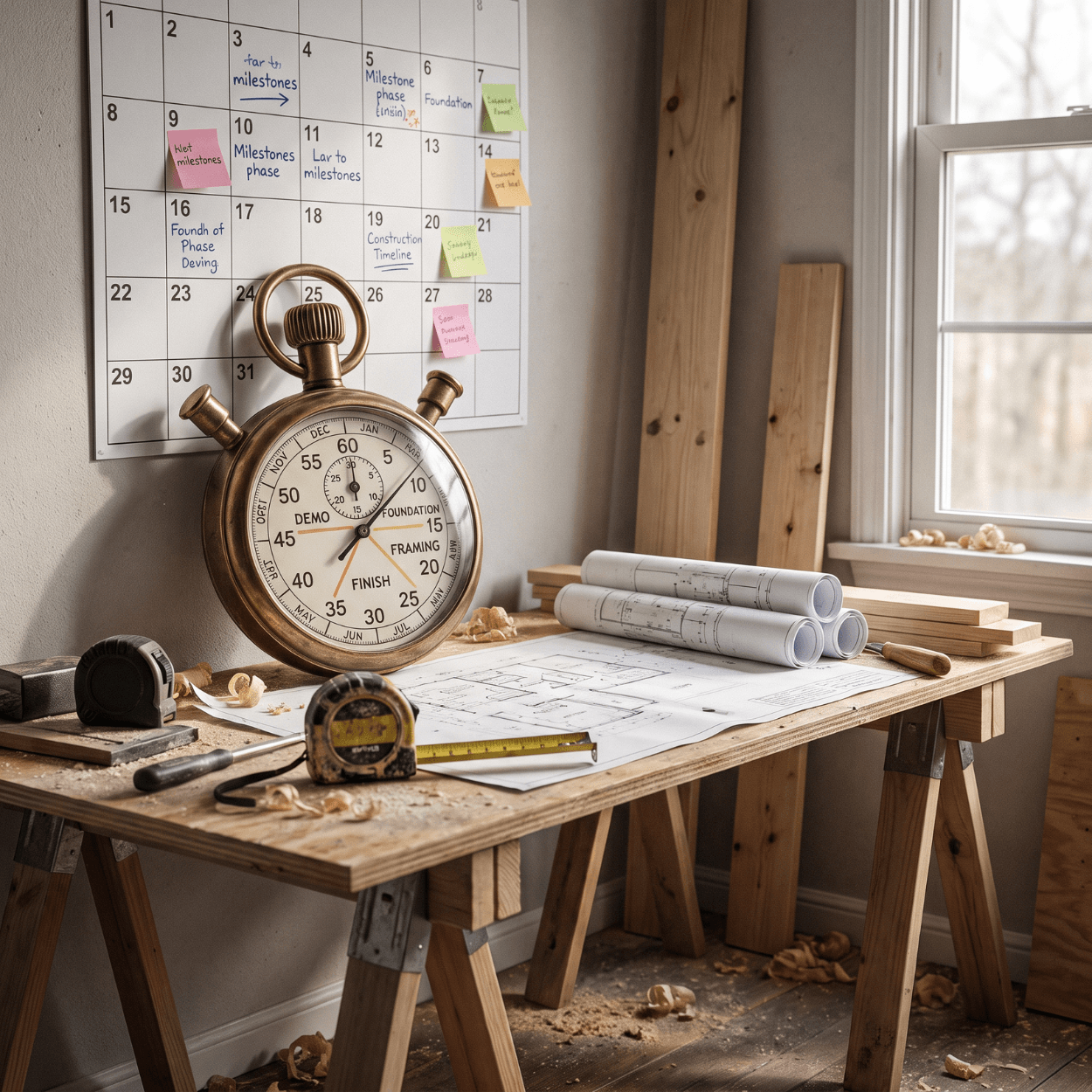
The Iowa custom home build process encompasses home building, site selection, permits, construction, and final delivery. A structured approach ensures timelines, budgets, and quality standards are met.
How Do You Choose the Right Custom Home Builder in Iowa?
Selecting an experienced builder involves evaluating:
- Proven portfolio of modern and sustainable projects
- Transparent budgeting and timeline tracking practices
- Strong communication and collaborative design processes
- Local reputation and client testimonials
These criteria guarantee alignment with your vision and protect your investment’s integrity.
What Are the Steps for Developing a Custom Home Floor Plan in Iowa?
Creating a tailored floor plan typically follows:
- Initial Consultation, Define goals, budget, and style preferences
- Site Analysis, Assess topography, views, and solar orientation
- Conceptual Sketches, Explore room layouts, flow, and spatial relationships
- Design Refinement, Finalize elevations, material palettes, and smart-tech zones
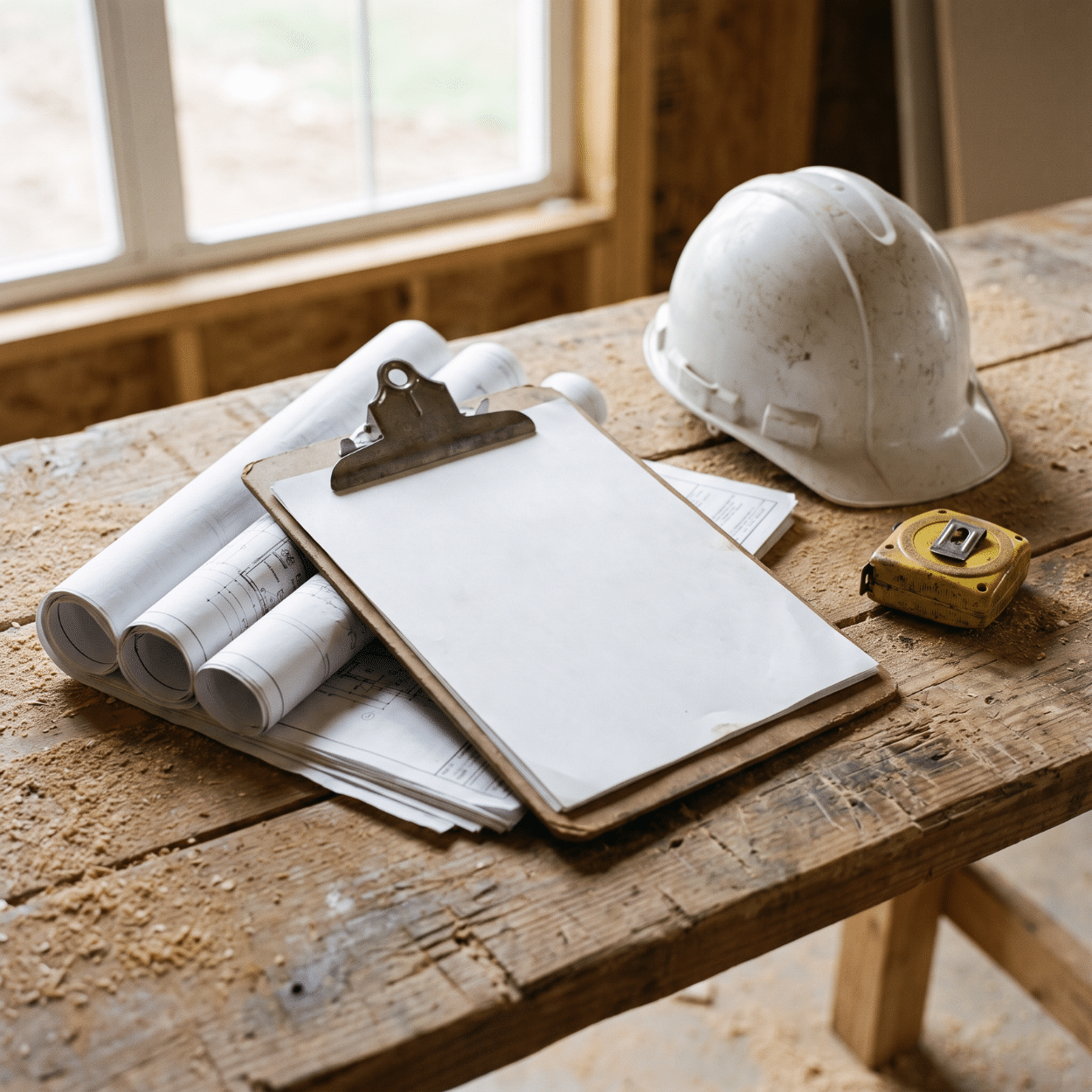
- Construction Documents, Prepare detailed blueprints, structural plans, and specifications
Following these steps ensures your custom home reflects both personal taste and practical considerations.
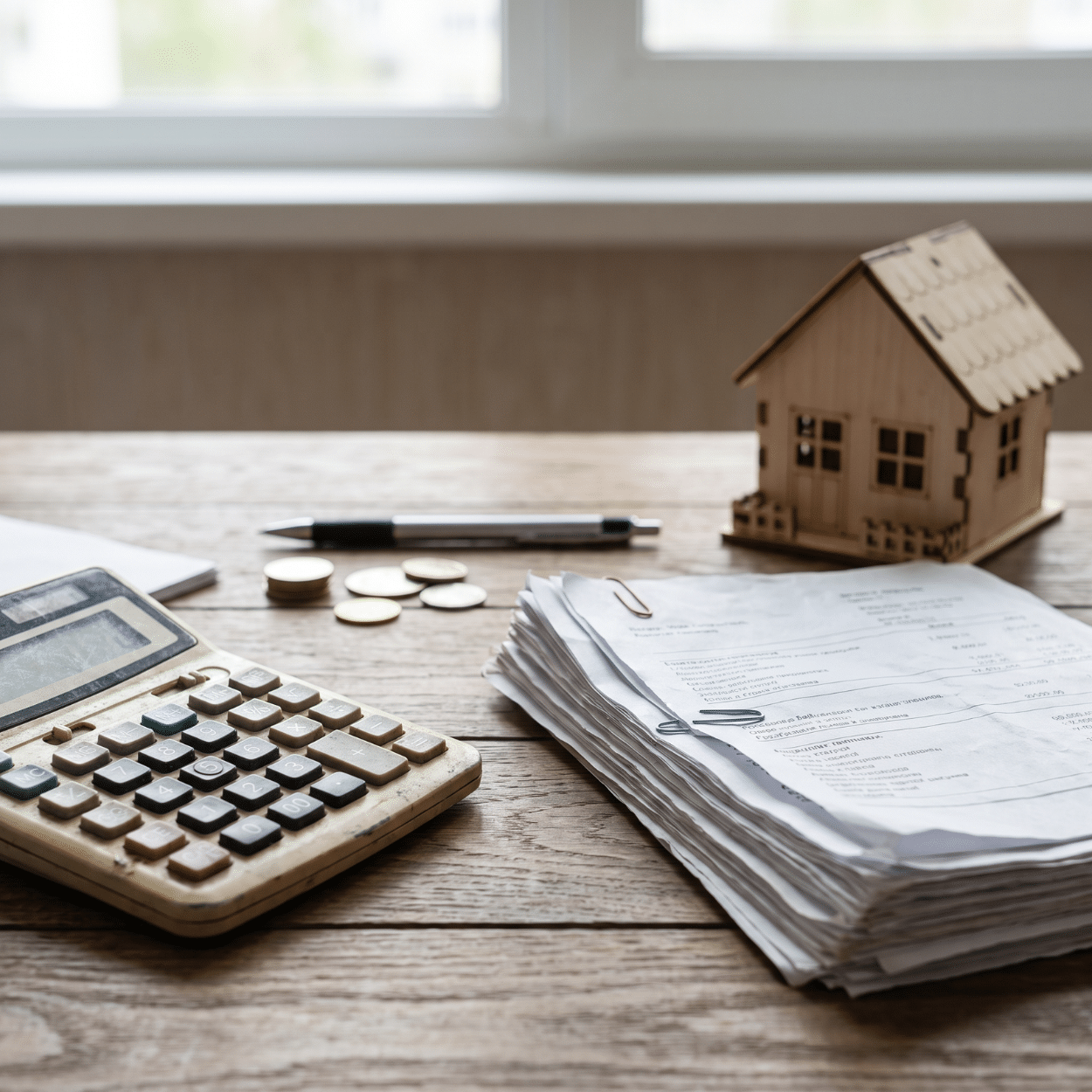
How Can You Finance Your Custom Home Build in Iowa?
Common financing options include:
- Construction-to-permanent loans combining build-phase funds and mortgage
- Home equity lines of credit on existing properties
- FHA or VA construction mortgages with favorable terms
- Portfolio loans from local banks for specialized design requirements
Selecting the right financial product depends on your timeline, equity, and credit profile.
What Iowa-Specific Design Considerations Should Homeowners Know?
Iowa’s climate, regulations, and regional preferences influence custom home design decisions, from material selection to energy systems.
How Does Iowa’s Climate Influence Custom Home Design?
Iowa’s cold winters and humid summers require:
- High R-value insulation in walls and roofs
- Air-sealing to eliminate drafts and moisture infiltration
- Durable exterior materials like fiber-cement siding or brick veneer
- Sun-shading devices and reflective roofing for summer comfort
Accounting for these factors optimizes year-round performance and occupant well-being.
What Local Building Codes and Permits Affect Iowa Custom Homes?
Iowa counties enforce regulations on:
- Structural wind and snow-load requirements
- Energy-conservation standards aligned with the IECC
- Floodplain elevation in river-adjacent areas
- Septic system approvals and well-water setbacks
Navigating these codes with your builder ensures code compliance and smooth inspections.
What Are the Latest Custom Home Trends in Eastern Iowa?
Eastern Iowa highlights include:
- Transitioning from farmhouse exteriors to mixed-material façades (stone + stucco)
- Incorporating indoor-outdoor kitchens with retractable glass walls
- Designing accessory dwelling units (ADUs) for guest suites or home offices
- Prioritizing native landscaping and rain-gardens for sustainable stormwater management
These regional insights fuel inspiration for your own Iowa new home.
How Do Modern Design, Sustainability, and Smart Technology Combine in Iowa Custom Homes?
True modern living emerges when design aesthetics, green building, and connectivity converge into integrated residences that perform, delight, and endure.
How Can Smart Home Features Complement Sustainable Design in Iowa?
Smart thermostats adjust heating and cooling based on occupancy and weather forecasts, optimizing energy use. Automated blinds reduce solar heat gain in summer, while ventilation systems recapture heat in winter, all contributing to passive house goals and lower utility bills.
What Are Examples of Modern Farmhouse Homes with Smart and Sustainable Features?
Case studies in Iowa showcase:
- A modern farmhouse with a geothermally heated slab, photovoltaic roof, and app-driven lighting scenes
- A post-and-beam home with reclaimed wood, rainwater harvesting, and whole-home audio controlled by voice commands
These exemplars illustrate how craftsmanship and technology deliver both character and efficiency.
How Does Quality Craftsmanship Enhance Modern Living in Iowa Custom Homes?
Meticulous finish carpentry, precise masonry, and integrated millwork elevate durability and aesthetics. Attention to joint detailing, material transitions, and hidden hardware support clean lines while ensuring that smart devices and sensors remain discreet, preserving the integrity of modern design.
What Are Common Questions About Iowa Custom Home Design and Building?
Below are practical insights addressing typical homeowner concerns without adopting a Q&A format, ensuring clarity and depth under each inquiry.
What Are the Typical Costs to Build a Custom Home in Iowa?
Custom home budgets in Iowa often range from $160 to $280 per square foot, influenced by site preparation, material selections, and complexity of design. Upgrading to passive house standards or luxury finishes can raise costs by 15 to 30 percent, while basic modern farmhouse builds remain at the lower end of the spectrum.
How Do You Choose Between Modern Farmhouse and Contemporary Styles in Iowa?
| Style | Defining Characteristic | Ideal Application |
|---|---|---|
| Modern Farmhouse | Rustic wood accents, pitched roofs | Rural settings, warm family gatherings |
| Contemporary | Flat planes, glass walls | Urban lots, minimalist lifestyle |
Where Can You Find Sustainable and Smart Home Builders in Iowa?
Homeowners typically locate specialized builders through:
- Membership directories of the Iowa Home Builders Association
- Referrals from energy-efficiency consultants and architects
- Online portfolios showcasing net-zero or technology-driven projects
- Local green-building expos featuring passive house and Smart Home exhibitors
These resources connect you with professionals versed in cutting-edge practices.
What Are the Benefits of Open Concept Living in Iowa Custom Homes?
Open layouts create flexible, light-filled interiors that:
- Enhance family interaction and entertaining flow
- Allow natural daylight to permeate deep into living zones
- Simplify installation of integrated audio/video and lighting controls
This spacious design approach adapts gracefully to evolving lifestyle needs.
Crafting a custom home in Iowa that marries modern architectural styles, sustainable systems, and intelligent automation delivers a living environment aligned with your values, budget, and comfort requirements. By understanding regional design considerations, energy-saving strategies, and the latest smart technologies, you can collaborate with expert builders to realize a home that endures aesthetically and functionally. Embrace these Iowa custom home design ideas to create a residence that stands out for its efficiency, innovation, and timeless appeal.
Frequently Asked Questions
What are the key benefits of building a custom home in Iowa?
Building a custom home in Iowa allows homeowners to tailor their living spaces to their specific needs and preferences. This includes selecting architectural styles, materials, and energy-efficient features that align with personal values and lifestyle. Additionally, custom homes can be designed to adapt to Iowa’s unique climate, ensuring comfort year-round. Homeowners also have the opportunity to incorporate smart technology for enhanced convenience and security, ultimately creating a residence that reflects their individuality and enhances their quality of life.
How can I ensure my custom home is energy-efficient?
To ensure energy efficiency in your custom home, focus on high-performance insulation, energy-efficient windows, and smart home technologies. Incorporating features like programmable thermostats, solar panels, and ENERGY STAR-rated appliances can significantly reduce energy consumption. Additionally, consider the orientation of your home to maximize natural light and heat during winter while minimizing heat gain in summer. Consulting with builders experienced in sustainable practices can help you implement these strategies effectively, leading to lower utility bills and a reduced carbon footprint.
What financing options are available for custom home building in Iowa?
Financing options for custom home building in Iowa include construction-to-permanent loans, which combine the construction phase and mortgage into one loan. Home equity lines of credit can also be utilized for those with existing properties. Additionally, FHA and VA construction mortgages offer favorable terms for eligible buyers. Local banks may provide portfolio loans tailored to unique design requirements. It’s essential to evaluate your financial situation and consult with lenders to find the best option that aligns with your budget and timeline.
What are the most common mistakes to avoid when designing a custom home?
Common mistakes in custom home design include underestimating the budget, neglecting future needs, and overlooking energy efficiency. Failing to communicate effectively with your builder can lead to misunderstandings and design flaws. Additionally, not considering the home’s orientation and local climate can impact energy performance. It’s crucial to conduct thorough research, plan for the long term, and maintain open lines of communication with your design team to avoid these pitfalls and ensure a successful project.
How can I incorporate smart technology into my custom home?
Incorporating smart technology into your custom home can enhance convenience, security, and energy efficiency. Start by selecting a reliable home automation system that integrates lighting, climate control, and security features. Consider smart thermostats, automated blinds, and voice-activated assistants for seamless control. Additionally, ensure that your home is equipped with a robust Wi-Fi network to support connected devices. Collaborating with builders experienced in smart home technology can help you design a system that meets your needs and enhances your living experience.
What are the advantages of using sustainable materials in custom home construction?
Using sustainable materials in custom home construction offers numerous advantages, including reduced environmental impact and improved indoor air quality. Materials like reclaimed wood, bamboo, and recycled steel are not only eco-friendly but also durable and aesthetically pleasing. Sustainable materials often contribute to energy efficiency, helping to lower utility costs over time. Additionally, incorporating these materials can enhance the resale value of your home, as more buyers are seeking environmentally responsible options. Overall, sustainable choices align with modern living values and promote a healthier lifestyle.
How do I choose the right location for my custom home in Iowa?
Choosing the right location for your custom home in Iowa involves considering factors such as proximity to work, schools, and amenities, as well as the local community and lifestyle. Evaluate the land’s topography, access to utilities, and zoning regulations. Additionally, assess the area’s climate and how it may affect your home’s design and energy efficiency. Visiting potential sites at different times of the day can provide insight into sunlight exposure and neighborhood dynamics. Collaborating with a local real estate agent can also help you find the ideal location that meets your needs.